Locksmith services are always 10% off for seniors.
Open Mon–Thu 8:30 AM–9 PM, Fri 8:30 AM–4 PM, Sun 9:30 AM–9 PM
Locksmith services are always 10% off for seniors.
Open Mon–Thu 8:30 AM–9 PM, Fri 8:30 AM–4 PM, Sun 9:30 AM–9 PM
GTA Lockman Mobile Locksmith Services · Toronto & GTA
Separate the working part of the home from the living part, for clients, stock, records and deliveries.
Related services
Decide who can enter your home, use codes or keys that can be withdrawn, and keep a record you can check.
Learn moreHandle deliveries without weakening the door, and strengthen the openings a parcel thief would try.
Learn moreReview what the departing employee could open, then rekey the affected cylinders and issue new keys with a record.
Learn moreLock and door service for offices, shops and managed properties. Plan access around the way your business operates.
Learn morePlan keyless entry around door compatibility, code management and a practical backup entry method.
Learn moreRepairs, rekeying and replacement hardware for homes, condos and apartments, with attention to the whole door.
Learn more
A home that is also a business has a set of door problems an ordinary home does not. Clients come to it. Stock sits in it. Records about other people live in it. Deliveries arrive for it, sometimes several a day, sometimes valuable.
Home businesses vary a great deal: a therapist seeing clients in a converted front room, a studio in a garage, a contractor storing tools and materials, someone selling online from a basement full of inventory, a consultant whose spare room holds client files.
The common thread is that the working part of the home needs a boundary the living part does not.
Before any hardware, decide which parts of the home are working space and which are private.
That line determines everything else: which door clients use, which rooms they can reach, where the washroom is, where stock and records sit, and which internal doors need to be lockable.
If clients walk through the family part of the home to reach the working part, that is a layout problem and hardware will only partly solve it. Where a separate entrance exists, using it is almost always better; see side and back door lock repair and basement apartment entrance locks.
An entrance that clients use is doing a different job from a family front door. It is used by people who do not know the building, sometimes on a schedule, sometimes while you are with someone else.
Things worth getting right: a door that latches reliably every time it closes, a lock that does not require a technique, a bell or intercom that works, and a way to see who is there before opening; see buzzer and intercom entry for small buildings if the home is in a small building rather than standing alone.
If clients arrive when you cannot get to the door, a keypad code for a waiting area is sometimes appropriate. That decision depends entirely on what is behind the door.
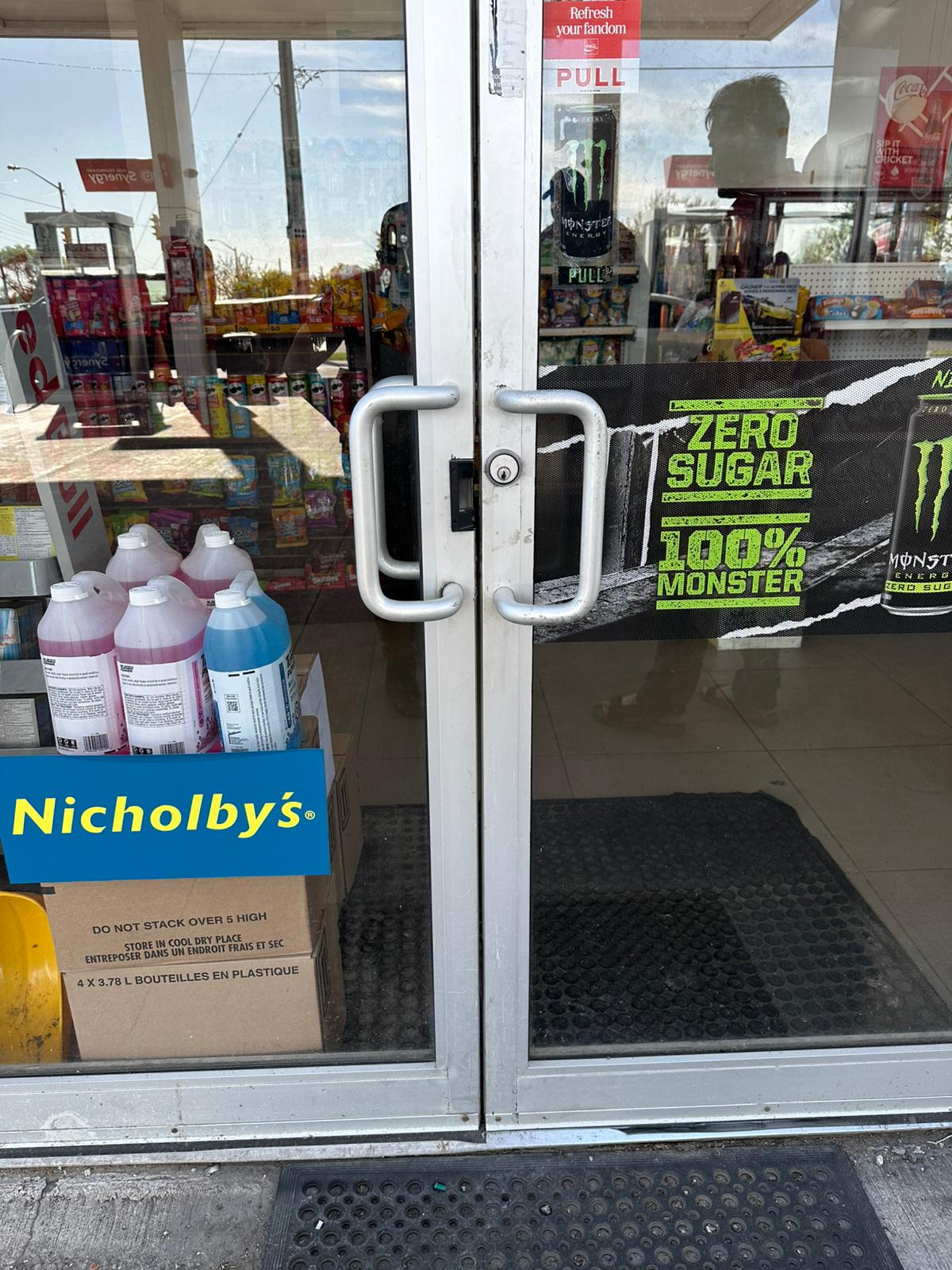
If members of the public visit, accessibility is worth thinking about early rather than after somebody cannot get in.
The parts that touch hardware are the ones to look at: levers rather than knobs, an entrance that can be opened without a firm grip, a door that is not so heavily sprung that it is hard to push, and a threshold that is not a trip hazard. The same levers, closers and thresholds help older residents at home, as with easier-to-use door hardware for seniors.
What is being protected changes the answer.
Stock and tools are usually about volume and access: a garage or basement that holds inventory deserves a better lock than the one that came with the door, and it is worth having the interior door between that space and the home lockable; see garage-to-house door locks.
Records are different. If you hold client information, you may have obligations about keeping it secure, and a lockable room or cabinet is part of that rather than an optional extra. The standard to aim at is that a visitor to the working part of the home cannot reach client information unsupervised.
A home business tends to generate far more parcels than a household, both inbound and outbound, and the risk changes with the frequency.
The options are the ordinary ones, chosen more deliberately: a secure drop location, a parcel box, delivery to a pickup point for anything valuable, or an arrangement with a neighbour. Each option has trade-offs, the same ones weighed in deliveries, parcel theft and door security.
Outbound shipments waiting on a porch for pickup are worth particular thought, because they are predictable in timing and often clearly labelled with what they contain.
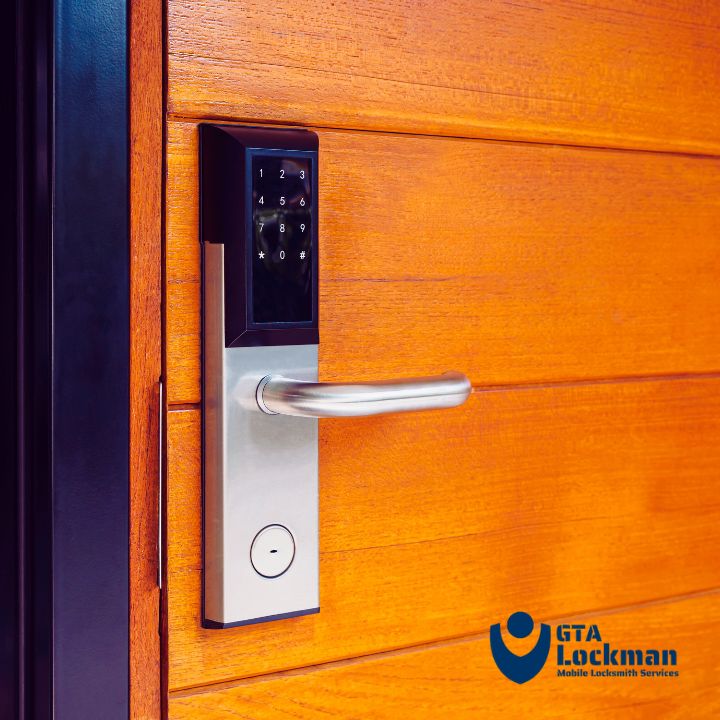
A home business often means other people have access: an assistant, a cleaner who now cleans a workspace, a contractor, a family member who covers the phone.
Keep the list deliberate and review it when arrangements change. It is worth distinguishing between people who need access to the working space and people who need access to the home, because those are frequently not the same person; see keys for cleaners, nannies and dog walkers.
If someone stops working with you, close their access the same week rather than eventually; the reasoning is the same as rekeying after an employee leaves.
Running a business from a residential property can affect home insurance, sometimes significantly, and the conditions may include requirements about doors, locks and how stock is secured.
A business may also need its own coverage for stock, equipment and liability for visitors. This is a conversation with your insurer rather than a locksmith, but the hardware questions that come out of it are ours; see home insurance and lock requirements.
Zoning and licensing are separate again, and depend on the municipality and what the business does.
At some point a home business either stays small or it does not. The signs that the door arrangement has been outgrown are practical: clients queuing, stock in living space, a steady flow of people through a family entrance, deliveries that no longer fit anywhere.
When it reaches that stage, the hardware questions change to the commercial ones; see commercial locksmith services and lock change when moving into a new office.
Two things commonly surprise people running a business from home. The first is that a standard home policy may not cover business equipment or stock at all, or may cap it at a figure well below what is actually in the basement. The second is that liability for a visitor injured while attending for business reasons often sits outside home coverage.
Neither is a locksmith question, but both change what the doors need to do, because coverage frequently comes with conditions attached to how premises are secured.
The arrangement that works in the first year tends to erode. Stock spreads into a spare room. A client starts being shown through the kitchen because the side gate sticks. The code for the studio gets given to a neighbour for a delivery and stays in circulation.
Once a year, walk the route a client takes and the route a delivery takes, and ask whether they still match the boundary you set. Check which interior doors lock, whether their keys still exist, and who holds access to the working space.
It is a short review and it catches the drift while it is still easy to reverse; see annual door and lock maintenance check.
A final practical note about signage and visibility. A business run from a home is often findable online with the address attached, which means the property is identifiable to people who have never visited. That is not a reason for alarm, but it does argue for the working entrance being the one that is visible and well lit, and for anything valuable being stored away from the window of a ground-floor room.
If the business holds anything that would be attractive in quantity, say so when we look at the doors. Volume changes the answer: a spare room of paperwork and a basement of consumer electronics are not the same brief, even though both are officially a home office.
Deciding all of this early is easier than retrofitting it. A home business that has thought about its entrance, its storage and its key list in the first year rarely has to unpick anything later, while one that grew without those decisions usually has a year where everything is rearranged at once.
Tell us what the business does, whether clients visit, what is stored on the premises, which entrance they use, and who else holds keys. If you have obligations about client records, say so, because it changes what the interior doors need to do.
We will look at the working entrance, the boundary between work and home, and the storage, rather than treating it as an ordinary house; see residential locksmith services.
Keep reading
Not always, but it helps more than any single piece of hardware. If clients walk through the family part of the home to reach the working part, that is a layout problem hardware can only partly solve. Where a side, back or basement entrance exists, using it separates the two and removes most of the awkwardness at once.
Not always, but it helps more than any single piece of hardware. If clients walk through the family part of the home to reach the working part, that is a layout problem hardware can only partly solve. Where a side, back or basement entrance exists, using it separates the two and removes most of the awkwardness at once.
Usually two things: better hardware on the door to the space that holds them, since garage and basement doors often carry whatever came with the house, and a lockable interior door between that space and the living area. The volume and value of what is stored decides how far to take it.
It can. If you hold information about other people you may have obligations to keep it secure, and a lockable room or cabinet is part of meeting them rather than an optional extra. A reasonable standard is that someone visiting the working part of your home cannot reach client information unsupervised.
Only if nobody has thought about it. Distinguish between access to the working space and access to the home, because they are often not the same person or the same need. Review the list when arrangements change, and close someone's access in the week they stop working with you rather than eventually.
A reliable bell or intercom and a way to see who is there covers most of it. Some home businesses use a keypad code for a waiting area, which works when the space behind that door contains nothing private. Whether that is appropriate depends entirely on what is on the other side.
Often yes, sometimes significantly, and the policy conditions may include requirements about doors, locks and how stock is secured. You may also need separate coverage for equipment, stock and liability for visitors. That conversation belongs with your insurer; the hardware that comes out of it is something we can handle.
Choose the arrangement deliberately rather than by default: a secure drop location, a parcel box, a pickup point for anything valuable, or a neighbour. Give particular thought to outbound shipments waiting for collection, because they sit out on a predictable schedule and are often labelled with what is inside.
Latch reliably every time, open without a firm grip, not be so heavily sprung that it is hard to push, and have a threshold that is not a trip hazard. Levers rather than knobs help most people. Thinking about this early is considerably easier than rearranging an entrance after someone has been unable to get in.
GTA Lockman Mobile Locksmith Services is a mobile locksmith working on homes, businesses and vehicles across Toronto and the GTA, with more than 14 years in the trade. Every review is written by a customer on Google, where you can read them in full.
Areas served: Toronto, North York, Scarborough, Etobicoke, Vaughan, Richmond Hill, Markham, Stouffville, Newmarket, Mississauga, Brampton, Oakville, Milton, Halton Hills, Pickering, Ajax, Whitby, Oshawa, Uxbridge.
Describe the door, hardware and service address. Contact GTA Lockman Mobile Locksmith Services to confirm the scope and scheduling for your location.