Locksmith services are always 10% off for seniors.
Open Mon–Thu 8:30 AM–9 PM, Fri 8:30 AM–4 PM, Sun 9:30 AM–9 PM
Locksmith services are always 10% off for seniors.
Open Mon–Thu 8:30 AM–9 PM, Fri 8:30 AM–4 PM, Sun 9:30 AM–9 PM
GTA Lockman Mobile Locksmith Services · Toronto & GTA
What each type of exit device does, how the outside trim and dogging change its behaviour, and what has to stay true on every exit.
Related services
Keep fire doors latching and exits releasing, with hardware suited to the assembly and no added bolts.
Learn moreSecure the premises at closing while keeping exit routes working, and fix the closer, alignment or lock fault behind it.
Learn moreMake the back door close, latch and lock every time while keeping it a safe exit for staff and customers.
Learn moreLock and door service for offices, shops and managed properties. Plan access around the way your business operates.
Learn moreHow commercial lock and door work gets scoped, authorized and scheduled around a business that has to keep trading.
Learn moreWhat Grade 1, 2 and 3 measure, what they leave out, and why the strike and frame often matter more.
Learn more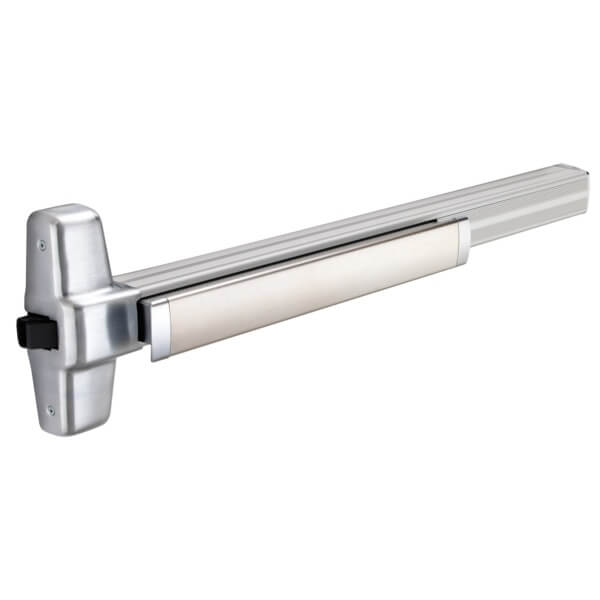
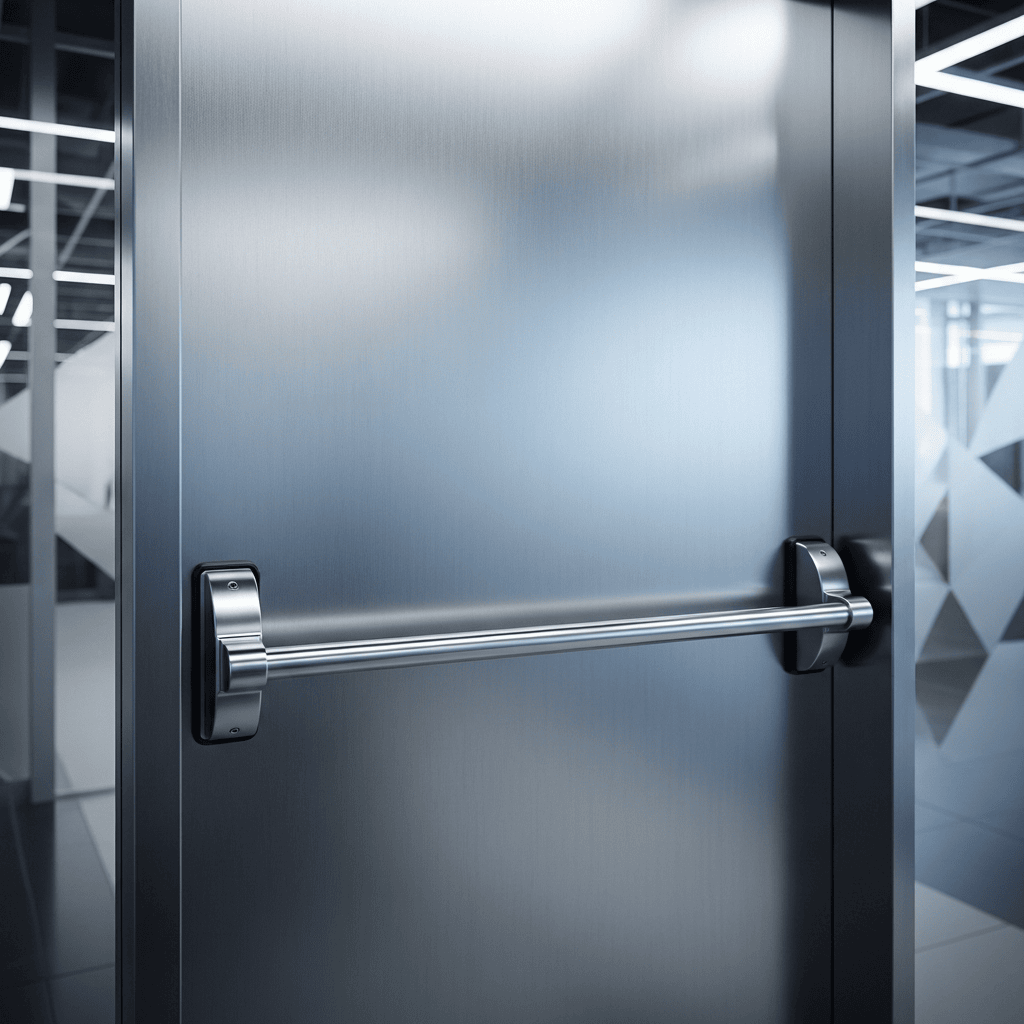
A panic bar, crash bar, push bar or exit device is a single piece of hardware with one job: anybody inside can open the door by pushing, with no key, no code, no turning and no thinking about it.
Everything else the device does, including how it locks from outside and whether it can be held open, is secondary to that. Exit devices come in several types, each with its own trim and hold-open options, and they fail in predictable ways, but some things have to stay true on every exit whatever is fitted.
For the door assembly the device sits on, see fire door hardware for businesses.
People inside must be able to get out in one motion, without a key, a code or special knowledge.
That single sentence rules out a surprising amount of what businesses ask for: a padlock and hasp on the inside of a fire exit, a keyed deadbolt above the bar, a chain "just overnight", a device dogged shut so staff use the front door instead.
Those arrangements appear because a business has a genuine problem, usually people using an exit door as a shortcut or propping it for deliveries. The problem is real; the fix has to be one that does not trap anyone. There are approved ways to control an exit door, such as alarmed devices and, in some buildings, delayed egress.
The fire authority having jurisdiction has the final say on what is acceptable in your building, not the supplier and not the locksmith.
Rim devices mount on the inside face of the door and latch into a strike on the frame at the edge. They are the most common, the simplest and usually the least expensive to maintain. They suit a single door, or the active leaf of a pair with a mullion between them.
Surface vertical rod devices run rods up and down the inside face to latch at the head and the threshold. They suit pairs of doors where no mullion can be fitted, because each leaf holds itself independently. The rods and their latches are exposed, which makes them easy to inspect and easy to knock out of adjustment.
Concealed vertical rod devices do the same job with the rods hidden inside the door. They look cleaner and are harder to tamper with. They are also harder to adjust, because reaching the mechanism means opening up the door.
Mortise devices use a mortise lock inside the door edge, driven by the bar. They suit heavier doors and give a solid, well-protected latch, and they need the door to be prepared for a mortise case.
Which suits a door depends on whether it is single or a pair, what the door is made of, how heavy the traffic is, and what is already prepared in the door.
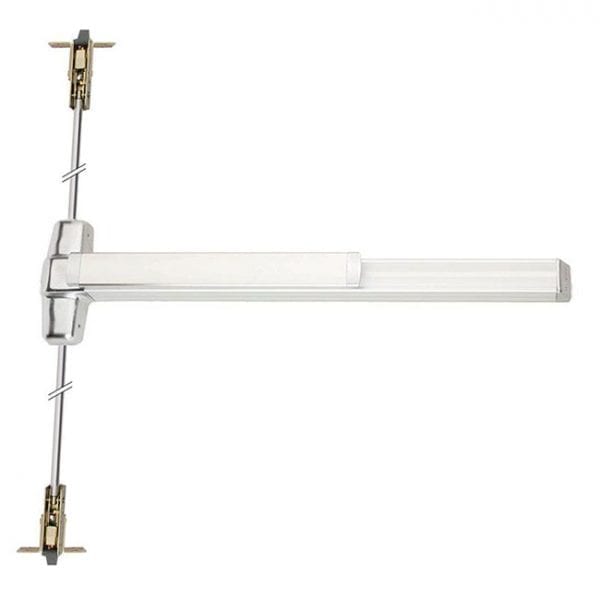
The old style is a crossbar on two pivoting arms. The current style is a touchbar: a flat pad across the width of the door.
A touchbar is easier to operate with a hip, an elbow, a cart or an armful of boxes, has fewer exposed moving parts, and generally looks better on a customer-facing door. A crossbar is mechanically simple and still found on plenty of older doors.
When replacing one with the other, the door preparation often differs, so the change is not always a swap of parts on the same holes.
The bar governs how people get out. A separate piece of hardware, the trim, governs how people get in.
No trim means the door is exit only: it opens from inside, and there is no way in from outside. Simple and common on a rear exit.
Key trim adds a cylinder that retracts the latch, so authorized staff can enter. This is the usual arrangement where a back door doubles as a staff entrance.
Lever trim gives a handle that works when unlocked, so the door can serve as a normal entrance during business hours and be secured outside them.
Electrified trim lets an access control system decide, so a card or fob releases the outside handle while the inside bar keeps working mechanically, whatever the power is doing.
The last point matters: on a properly specified exit device, cutting power should never affect getting out.
Dogging holds the latch retracted so the door pushes open freely from both sides, which is how a shop keeps its entrance usable during opening hours.
Mechanical dogging uses a hex key. Cylinder dogging uses a key, which keeps the decision with whoever holds it. Either way, the device relatches when it is undone.
The important limit: a device on a fire-rated door assembly must not be dogged, because the door has to latch to do its job in a fire. Fire-rated devices are made without mechanical dogging for that reason, and where a rated door needs to stand open, that is handled by a hold-open device tied to the alarm rather than by dogging the bar.
If somebody has dogged a fire door's device or wedged it, that is worth correcting the same week.
Where an exit door is being used as a shortcut or propped for convenience, there are two approved routes.
An alarmed device sounds a local alarm when the bar is pushed. The door still opens the moment the bar is pushed; it just announces itself. That alone stops most casual misuse.
Delayed egress holds the door for a short set period after the bar is pushed, with signage, while an alarm sounds, then releases. It is heavily conditioned: it is only permitted in certain occupancies, it must release on fire alarm and on power failure, and it requires approval from the authority having jurisdiction.
Both of these are specification work rather than something to fit and see. Tell us what problem you are actually solving and we will say which is appropriate and what approval it needs.
They live on doors that get used hard, and the failures repeat.
The latch no longer lines up with the strike, usually because the door has dropped or the closer has been adjusted. On vertical rod devices, the top or bottom latch stops engaging as the rods fall out of adjustment. The bar itself becomes stiff as dirt and lack of lubrication build up in the mechanism. The outside trim loosens or its cylinder wears. Fixings work loose under repeated impact. On an exterior door, weather and road salt take the finish and then the mechanism.
A device that has to be pulled, lifted or shoved is a device that is already failing. On an exit door, that is worth attending to rather than noting.
An exit device is a life-safety component and it is the one piece of door hardware genuinely worth checking on a schedule.
The check is short: push the bar and confirm the door opens in one motion with normal force; confirm every latch engages fully when it closes; confirm the door latches on its own from the closer with nobody touching it; confirm nothing is wedged, tied, dogged or propped; confirm the outside trim behaves as intended; look at fixings and rods.
Doing that monthly on every exit takes minutes and catches almost everything before it becomes a failure. Add the doors to the same schedule as the rest of the premises; see annual door and lock maintenance check.
Plenty of exit device problems are adjustments: alignment, rod length, strike position, closer setting, lubrication. Those are repairs, and they are usually the same visit.
Replacement makes sense when the device is obsolete and parts are no longer available, when the mechanism is worn through rather than out of adjustment, when corrosion has taken it, or when the device does not suit the door it is on, which is common where a device was fitted to whatever was in stock at the time.
Where a door is rated, the replacement has to be a listed device suitable for that assembly, and the labelling matters; see lock grades explained for what hardware grading does and does not tell you.
Tell us how many doors, whether each is single or a pair, what is fitted now, whether the doors are fire-rated, and what you need from the outside: no entry, key, lever or access control. Say what problem you are solving if it is a door being misused.
Photographs of the inside face, the door edge and the frame usually settle the specification before anyone attends; see also commercial locksmith services and working with a commercial locksmith.
Keep reading
They are the same thing under different names. "Exit device" is the trade term, "panic bar" and "crash bar" are what most people call it, and "touchbar" describes the current flat-pad style as opposed to the older pivoting crossbar. What matters is the type of latching: rim, surface vertical rod, concealed vertical rod or mortise.
They are the same thing under different names. "Exit device" is the trade term, "panic bar" and "crash bar" are what most people call it, and "touchbar" describes the current flat-pad style as opposed to the older pivoting crossbar. What matters is the type of latching: rim, surface vertical rod, concealed vertical rod or mortise.
A rim device suits a single door or the active leaf of a pair with a mullion. Vertical rod devices suit pairs where no mullion can be fitted, since each leaf holds itself. Concealed rods look cleaner and resist tampering but are harder to adjust. Mortise devices suit heavier doors and need the door prepared for a mortise case.
No. People inside must be able to leave in one motion, without a key, a code or special knowledge, and additional locks on an exit defeat that. If the real problem is staff using the exit as a shortcut or propping it for deliveries, an alarmed device or, in some occupancies, delayed egress is the approved route. The authority having jurisdiction decides what is permitted.
Dogging holds the latch retracted so the door pushes freely from both sides, which is how a shop keeps its entrance usable during opening hours. It is done with a hex key or a cylinder. A device on a fire-rated assembly must not be dogged, because the door has to latch to perform in a fire, and fire-rated devices are made without mechanical dogging for that reason.
Only if outside trim is fitted. With no trim the door is exit only. Key trim lets authorized staff in with a cylinder. Lever trim allows normal entry when unlocked. Electrified trim lets an access control system decide. In every case the inside bar keeps working mechanically, including when the power is off.
Usually alignment rather than the device: the door has dropped, the closer has been adjusted, or the strike has moved, so the latch is binding. On vertical rod devices it is often rod adjustment, so the top or bottom latch no longer engages cleanly. Dirt and missing lubrication in the mechanism account for most of the rest. All are repairable.
A short check monthly is reasonable for a life-safety component. Push the bar and confirm the door opens in one motion with normal force, that every latch engages fully on closing, that the closer latches the door on its own, that nothing is wedged, tied or propped, and that the outside trim behaves as intended. It takes minutes per door and catches most faults early.
Alignment, rod adjustment, strike position, closer setting and lubrication are repairs and usually happen in the same visit. Replacement makes sense when the device is obsolete with no parts available, when the mechanism is worn out rather than misadjusted, when corrosion has taken it, or when the wrong type was fitted for the door. On a rated door, the replacement must be a listed device suitable for that assembly.
GTA Lockman Mobile Locksmith Services is a mobile locksmith working on homes, businesses and vehicles across Toronto and the GTA, with more than 14 years in the trade. Every review is written by a customer on Google, where you can read them in full.
Areas served: Toronto, North York, Scarborough, Etobicoke, Vaughan, Richmond Hill, Markham, Stouffville, Newmarket, Mississauga, Brampton, Oakville, Milton, Halton Hills, Pickering, Ajax, Whitby, Oshawa, Uxbridge.
Describe the door, hardware and service address. Contact GTA Lockman Mobile Locksmith Services to confirm the scope and scheduling for your location.