
GTA Lockman Mobile Locksmith Services · Toronto & GTA
Lock Changes in Toronto & the GTA
Replace worn or unsuitable hardware with a lock that fits the door, its function and your access needs.
Service overview
GTA Lockman Mobile Locksmith Services changes residential and commercial locks across Toronto and the Greater Toronto Area. Call (647) 955-3277 when a lock is damaged, badly worn, no longer secure, incompatible with your preferred key system, or due for an upgrade. We review the door and existing hardware, discuss suitable options, and provide the price before authorized work begins.
A lock change means replacing the cylinder, lock body, trim, or complete lockset, depending on the hardware and reason for the service. It is different from rekeying, which changes the internal key combination while keeping compatible hardware. The technician will explain both options when either could accomplish your goal.
When a lock should be changed
Replacement is usually appropriate when the lock has been forced, the cylinder is damaged, internal parts are no longer dependable, the finish and components are badly worn, or the current lock does not provide the desired level of security. A change may also be required when switching hardware types, adding a deadbolt, or installing a compatible keypad lock.
Lost keys do not automatically mean every lock needs replacement. If the hardware is in good condition, rekeying can make the missing keys unusable. Replacement becomes more sensible when the hardware itself also needs attention.
Residential lock changes
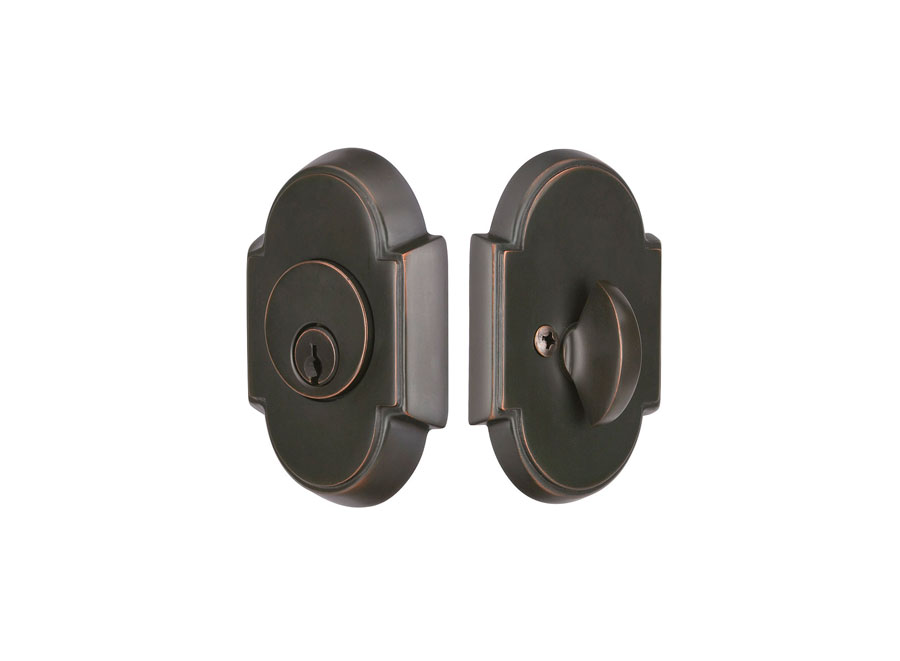
Home lock changes commonly follow a move, lost keys, attempted entry, a relationship or occupancy change, or repeated mechanical trouble. Exterior doors should be assessed individually. The front door may need a stronger deadbolt, while a side or garage-entry door may have a different preparation and hardware requirement.
For condos, confirm building rules governing suite-entry hardware. The lock must fit the door and may need to retain an approved appearance or function. Photographs and the model name help us review compatibility.
Commercial lock changes
Commercial changes may involve mortise cylinders, rim cylinders, narrow-stile storefront hardware, cylindrical levers, cabinet locks, or high-security systems. The replacement must match the opening, door thickness, handing, function, and access plan.
When several doors are involved, decide which should share a key and which need restricted access. A documented key plan prevents unnecessary duplication and makes future rekeying easier to manage.
Choosing replacement hardware
Hardware selection depends on the particular opening. Hardware should match the risk, door construction, amount of use, key-control needs, and budget. The strike, fasteners, alignment, and door condition also influence how well the lock performs.
GTA Lockman Mobile Locksmith Services works with common residential and commercial formats and can explain compatible choices. Product availability varies, so mention a specific brand, finish, or smart-lock model when scheduling.
What happens during the appointment
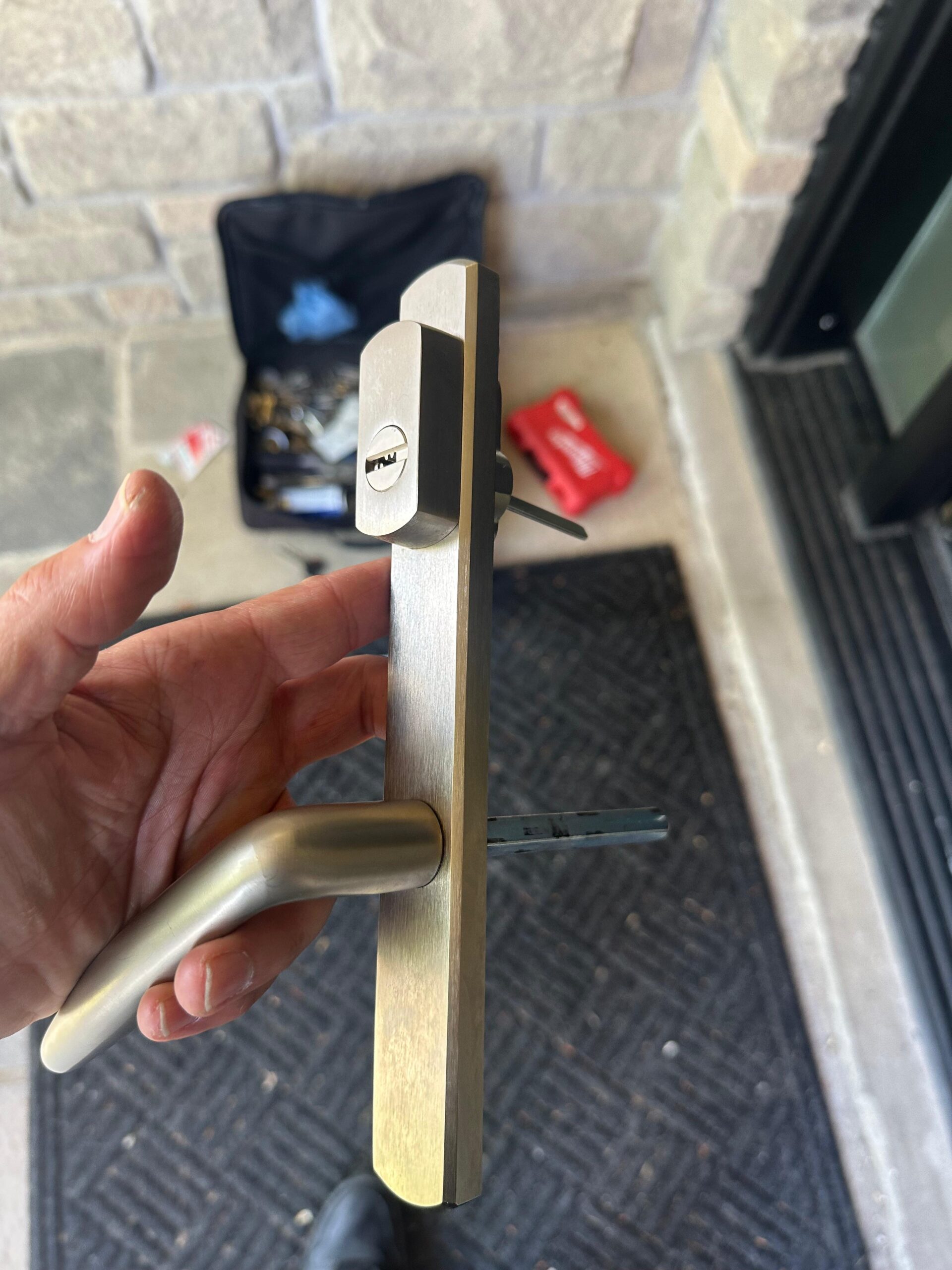
The technician verifies authorization, inspects the existing opening, identifies the lock type, and checks alignment. You receive the proposed work and price before installation. After replacement, the new lock is tested from both sides with the door open and closed, and supplied keys or codes are checked.
Decide what the lock change must achieve
There are several reasons to change a lock, and they should not be confused. Replacing unreliable hardware restores mechanical operation. Changing which key works establishes a different access arrangement. Upgrading a product may improve a particular feature or provide a new method of entry. Changing its finish addresses appearance. A useful recommendation states which of these results the proposed work will deliver.
Start with the opening that concerns you, then identify connected access points. If an old key operates three doors, replacing one lock leaves the other two unchanged. If only the front handle has failed, changing every cylinder may add work without addressing another problem. The scope should follow the hardware condition and the access objective, supported by a door-by-door assessment.
Keep expectations specific. A new lock does not correct every door problem, remove a former user from a separate alarm account or strengthen a damaged frame by itself. Explain any related concerns before the appointment so the technician can identify which services belong in the recommendation and which need separate attention.
Cylinder replacement and complete locksets
A cylinder is the keyed component of many lock arrangements. Some formats allow it to be replaced independently while the lock body and trim remain in service. Others require a more extensive change because components are integral, incompatible or damaged. Ask which parts the quote includes rather than assuming the phrase lock change describes the same work on every door.
The outside shape is only part of compatibility. Door thickness, cylinder length, cam or tailpiece configuration, mounting method and required function can matter. A part that can be inserted into an opening may still fail to operate the mechanism correctly. Identifying the existing product before purchasing a replacement reduces the risk of choosing an unsuitable component.
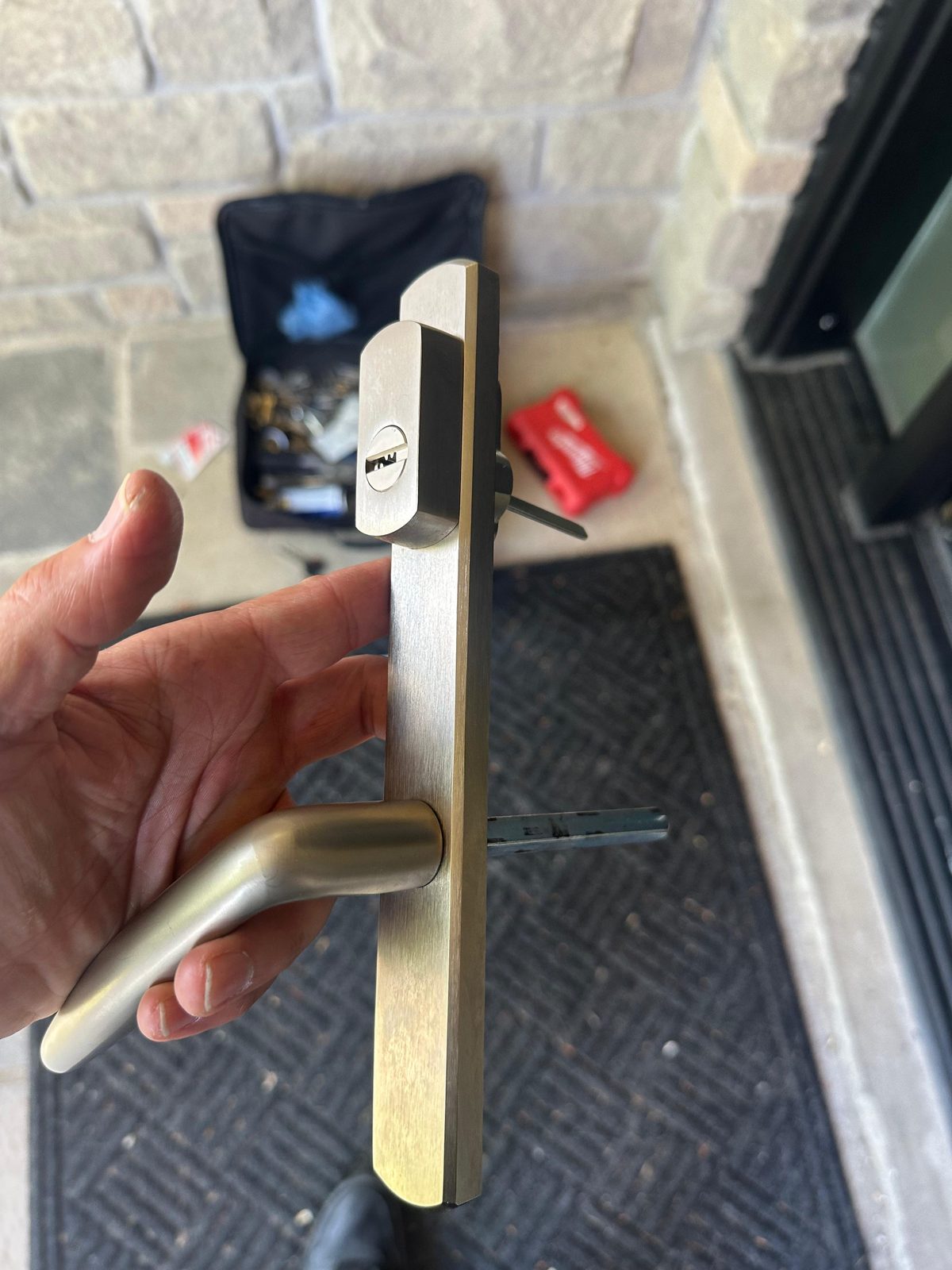
Where a handleset includes a separate lower fixing point, replacement trim may not cover the old hole or marks. Let the technician know whether the finish needs to remain untouched. On an entrance door, the appearance you want, the existing door preparation and the mechanical fit all have to agree, which is why front door lock replacement starts by measuring what is already there.
Planning a move-in change
For a new home, list all exterior and connecting entrances you intend to control. Include a garage-to-house door, basement entrance or side door where present. Gather the keys received at handover and note which locks each key operates. Do not label keys with a full address; keep any identifying schedule separately with property records.
After a move, a move-in lock change starts with the hardware you inherited, keeping what suits the door and replacing only what does not. If the locksets remain sound, move-in rekeying may achieve the access change without replacing the visible hardware. These are alternatives to compare, not automatic items that must both be purchased.
Electronic devices need a separate ownership and credential review. A mechanical replacement at the front entrance does not remove a guest code from a back-door keypad. Establish who controls each lock account and which backup keys remain in circulation. Record those changes alongside the physical work so the handover is complete.
Choosing hardware for everyday use
Explain how the door is used throughout a normal week. Frequent visitors, deliveries, children arriving separately or staff changes can influence whether a keyed lock, local keypad or connected product is suitable. Consider the person's ability to grip and turn the controls. Features are useful only when the occupants can operate and maintain them consistently.
Discuss the product's supported maintenance and replacement parts rather than relying on appearance alone. Keep model information where it can be found later. Finishes may look similar across different manufacturers while internal components remain incompatible. Matching the design of several doors does not mean they can all use the same key without further assessment.
For keypad installation, confirm the intended code-management method and backup entry plan. For a high-security upgrade, clarify whether the priority is key-copy control, tested hardware performance or the surrounding door construction. No individual product should be described as making a property impossible to enter.
The frame and strike remain part of the result
A replacement deadbolt needs room to extend fully into a correctly positioned strike opening. If the door is sagging or the frame is damaged, the new lock may bind just as the old one did. Weather stripping, loose hinges and movement in the opening can change the fit. Those conditions should be identified before the completed installation is judged.
Visible screws and trim should sit correctly without distorting the mechanism. Overtightening does not compensate for a mismatched part. The technician checks the lock with the door open and then under closed-door conditions, where pressure from the opening becomes apparent. Resistance that appears only after closing points to a different issue from resistance throughout the key's travel.
Filing or moving a keeper without first understanding why the door has shifted tends to leave an unreliable result, so latch and strike repair begins with the position of the door itself. A satisfactory handover demonstrates normal operation rather than a special sequence of pushing, lifting or pulling that masks an unresolved alignment problem.
Keeping permission and key records clear
For rentals and managed buildings, identify the person who can approve the change and any applicable property requirements. A request to alter access after an occupancy or relationship change should not be treated as authority to exclude another person. Resolve disputed access rights separately before arranging the hardware work.
After a separation, the priorities are documenting who authorized the work and reviewing every key and code in use, and lock changes after separation are carried out on that basis. It does not replace legal advice about possession or tenancy. When the work is approved, state which openings and components are included so the technician has a defined scope and the owner has a useful service record.
At completion, count the keys supplied, test each one and note which old keys should no longer operate the affected locks. Keep any product authorization card or duplication instructions private. If replacement was limited to one cylinder or one door, record that boundary explicitly. Clear records are more useful than assuming every access point at the property has changed. ## Compare a defined scope before approving parts
A useful lock-change proposal identifies the opening and the components included. It should be clear whether the work replaces only a cylinder, a complete deadbolt, a handleset or a more specialized assembly. Ask whether the strike, keys, fitting adjustments and normal-operation checks form part of that scope. If a door or frame condition requires another trade, keep that separate responsibility visible.
Compare alternatives against the same objective. A cylinder change that establishes a new key arrangement should not be compared as though it also includes a decorative handleset or electronic account setup. Likewise, a complete replacement may still leave an unrelated door-alignment issue unresolved unless that work is specified. Knowing what remains in place is as useful as knowing what is new.
If inspection reveals a different condition after access or disassembly, review the revised proposal before additional work. A photograph can help identify hardware in advance, but it cannot establish every internal condition. The authorized representative should understand why the scope changed and what result will be tested.
At handover, compare the completed work with the agreed opening list. Confirm the key arrangement, normal locking and inside release at each included door. Record any deferred component or follow-up visit. This turns a general request to change the locks into a specific result that the household or business can maintain.
Questions about lock changes in Toronto & the GTA
How do rekeying and replacement compare?
Rekeying retains suitable hardware and changes the operating key. Replacement changes physical components. The appropriate scope depends on condition, compatibility and the access arrangement you want, so ask for a comparison based on the actual opening.
Should I change locks after moving into a home?
You should make unknown old keys unusable. This can be done through rekeying or replacement, depending on the condition and quality of the current hardware.
Can you replace only the cylinder?
Sometimes. The lock format, condition, compatibility, and reason for replacement determine if a cylinder-only change is suitable.
Can you change commercial storefront locks?
Yes. Common storefront cylinders and compatible lock hardware can be replaced after the door and lock format are identified.
Can I supply my own smart lock?
Yes, if it is compatible with the door preparation and function. Send the model number and photographs before the appointment.
Will the new lock fix a door that is hard to close?
Not necessarily. Door or strike misalignment must be corrected; installing a new lock alone may leave the same problem.
Reviews from GTA Lockman Mobile Locksmith Services customers
GTA Lockman Mobile Locksmith Services is a mobile locksmith working on homes, businesses and vehicles across Toronto and the GTA, in the trade since 2010. Every review is written by a customer on Google, where you can read them in full.
Areas served: Toronto, North York, Scarborough, Etobicoke, Vaughan, Richmond Hill, Markham, Stouffville, Newmarket, Mississauga, Brampton, Oakville, Milton, Halton Hills, Pickering, Ajax, Whitby, Oshawa, Uxbridge.
Plan your locksmith visit
Describe the door, hardware and service address. Contact GTA Lockman Mobile Locksmith Services to confirm the scope and scheduling for your location.
Friday: 8:30 AM–4:00 PM
Sunday: 9:30 AM–9:00 PM
Saturday: closed