
Locksmith services are always 10% OFF for ALL SENIORS.
Are you looking for a lock that will easily and effectively keep your business safe? Mechanical keyless locks might be the best option for you. These locks are easy to program the code, have affordable maintenance, and continue to keep your business locked up even during power outages.
We offer flexible appointment times and scheduling. Reach out to (647) 955-3277 for your commercial locksmith service in Toronto & GTA
The Kaba Simplex locks are a great option if you want to keep your business safe and locked up.
This mechanical keyless lock allows to easily program the code directly on the keypad. Additionally, since the lock is mechanical, it will not stop working nor need any batteries when the power goes out, which allows you to worry less when away from your business.
Electronic locks can be costly to fix and can have issues arise as time goes on, mechanical locks are much easier to maintain and have more affordable maintenance.
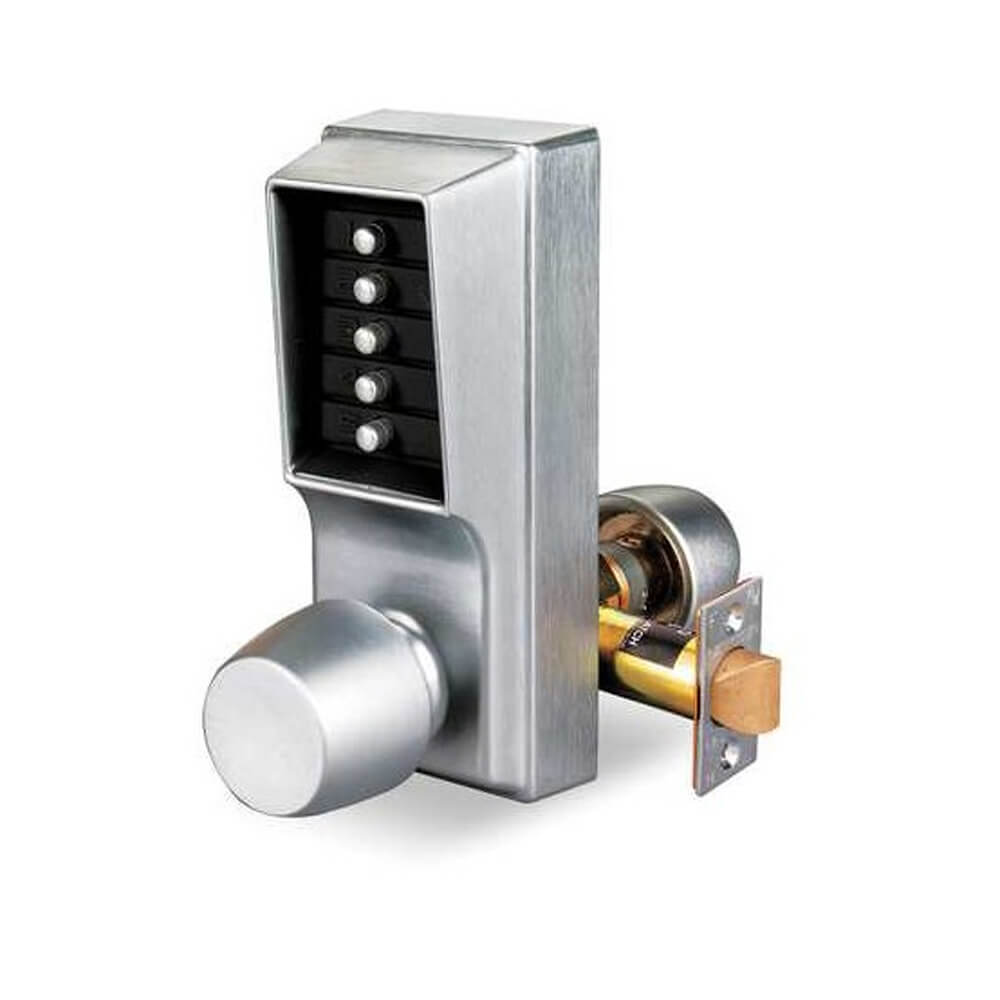

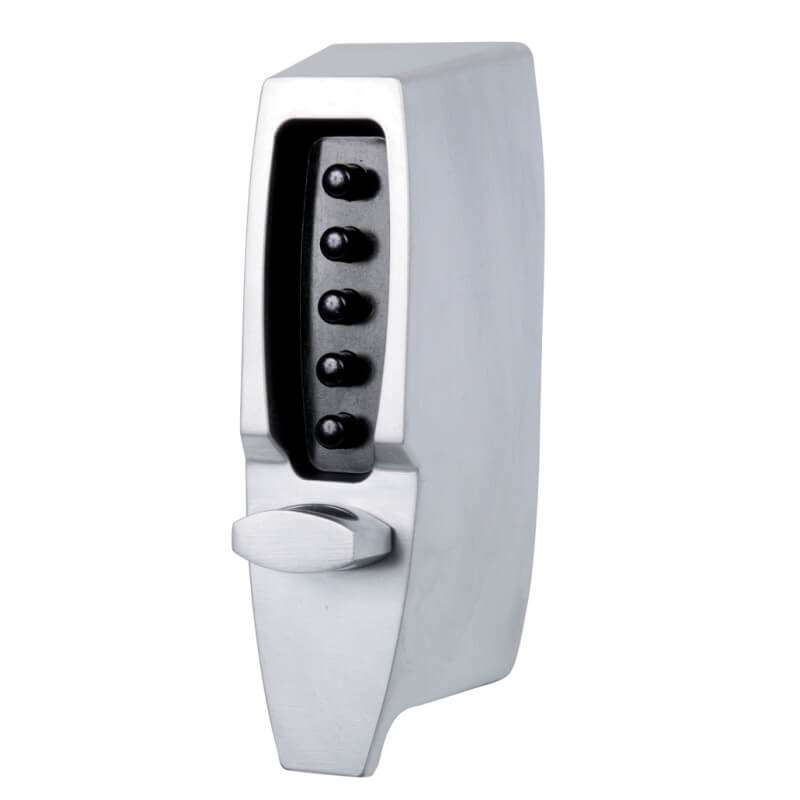
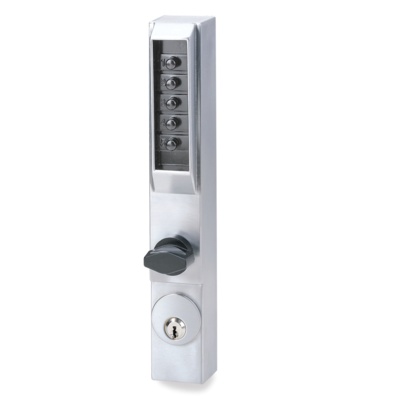
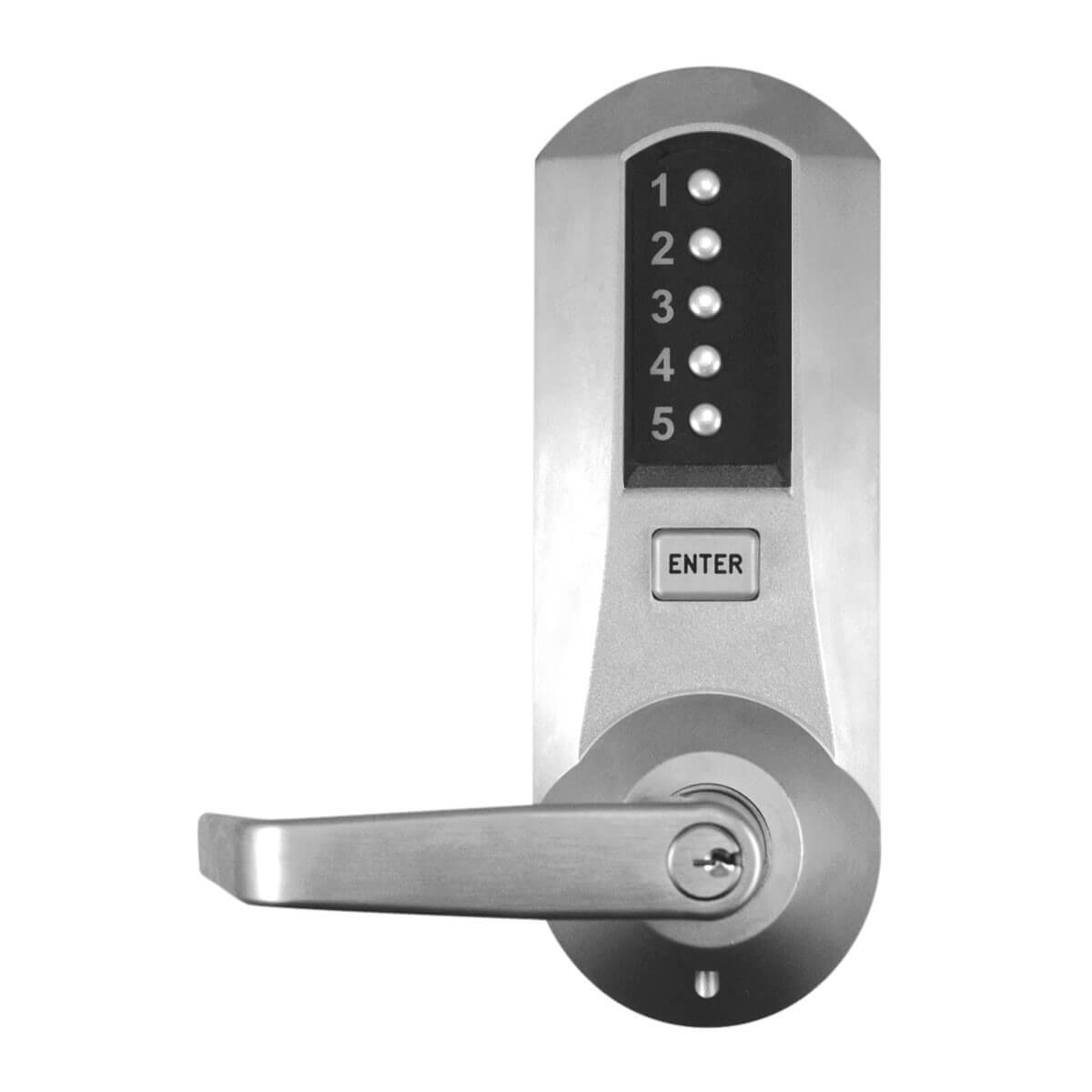
The Kaba Simplex locks have a wide variety of features that keep your business safe, here are some of them:
Overall, the Kaba Simplex has a wide variety of features that allow you to spend much less while keeping your business safe.
Additionally, the mechanical lock is easy to use, and you can purchase just the lock or with a knob.
Not to mention that a cylindrical latch is very effective and safe, which allows you to have some peace of mind when away from your business. The other safety features that Kaba Simplex has, like the Lockout, allow you to act quickly in the case of an emergency and be prepared for any issues that may occur.
This cost-effective security lock can be installed by our team of experts at The GTA Lockman – Mobile Locksmith Service. We want to keep you and your loved ones safe, and we want to go above and beyond to solve your lock problems.
Along with Keba Simplex locks, we have a wide variety of other options that may best suit your business or home’s needs.
A mechanical keyless lock provides pushbutton access to a door without requiring a physical key, a battery, or a connection to a power supply. The code is stored mechanically inside the lock body itself, which means the lock continues to function normally during a power outage and requires no wiring to operate. For businesses and commercial properties where reliable, low-maintenance access control is a priority, this makes the Kaba Simplex one of the most practical options available.
GTA Lockman supplies and installs the full Simplex range for commercial clients across Toronto and the GTA, including offices, retail stores, warehouses, stairwell doors, server rooms, staff-only areas, and any other location where keypad access is needed without the complexity of an electronic system. We also service and repair existing Simplex units where the mechanism has worn or a code change is required.
Installations are completed during a single scheduled visit. Pricing is flat-rate and confirmed before a technician is dispatched. If you are not sure which Simplex model suits your door type and application, our team can advise based on the door thickness, borehole configuration, and the level of traffic the lock will handle. Call (647) 955-3277 to discuss your requirements and get a price before booking.
Monday to Thursday 8:30 AM to 9:00 PM. Friday 8:30 AM to 4:00 PM. Sunday 9:30 AM to 9:00 PM. Saturday closed. Call (647) 955-3277 to confirm availability and schedule a visit at your commercial property.
The Simplex lock uses a five-button mechanical keypad. Buttons are pressed in a specific sequence to retract the latch or deadbolt. The code is stored inside the lock’s internal mechanism — there are no electronics, no circuit board, and no memory that can be erased by a power interruption. The mechanical pins align when the correct button sequence is entered, allowing the cam to rotate and the latch to retract.
Because the code is mechanical rather than digital, changing it is straightforward and can be done by the property owner directly on the lock using the change key included with the unit. No locksmith is needed for a routine code change, which keeps ongoing maintenance costs low for businesses that update access codes regularly — for example, after a staff departure.
The five-button layout also allows for combination codes that include single buttons, multiple buttons pressed simultaneously, and sequences of up to five steps. This gives a reasonable range of possible combinations for a shared-access environment where the same code is used by a team. For applications requiring individual user codes and an audit trail, an electronic access control system or electric strike setup would be more appropriate, and our team can advise on both.
The lock body is fully mechanical and operates without any external power connection, which means it works the same way during a power outage as it does at any other time. This is a meaningful practical advantage for server rooms, stairwells, and utility areas where access cannot be interrupted if the building loses power.
Passage mode allows the door to open freely without entering a code, useful during deliveries or high-traffic periods. Lockout mode prevents the code from being entered from outside, keeping the interior secure without affecting exit. Both modes are activated directly on the lock without tools.
The Simplex range covers cylindrical, narrow stile, mortise, and lever configurations to suit different door types and commercial applications. We confirm the correct model for your door before ordering or installing.
The most widely installed Simplex model for commercial interiors. Uses a cylindrical lock body that fits standard door preparations, making it straightforward to replace an existing knob or lever without additional door modifications. Available with knob or lever trim. Suited for office doors, staff rooms, storage areas, and rear entry points where a basic pushbutton combination is sufficient.
A lever-handled variant of the 1000 series, providing the same mechanical pushbutton function with lever operation rather than a knob. Lever trim is preferred in commercial environments subject to accessibility requirements where a knob may not be compliant. The cylindrical body fits the same door preparation as the standard 1000 series, so existing hardware can typically be replaced directly.
Designed for narrow stile aluminum-framed commercial doors commonly found on storefront and retail applications. The slim profile of the lock body fits within the stile width of these doors, where a standard cylindrical lock would not be compatible. If your business operates from a glazed storefront with aluminum door frames, the 3000 series is typically the appropriate model. We confirm frame width and door preparation before supplying this model.
A mortise-format mechanical keyless lock for heavier commercial doors that use a mortise lock body recessed into the door edge. The 5000 series provides the same five-button pushbutton function as the other Simplex models but integrates with a full mortise case, providing a deadlatch and optional deadbolt in a single unit. Suited for main entry doors of commercial buildings, hotels, and multi-tenant offices where a mortise configuration is already in use.
The 7100 is a heavy-duty pushbutton lock built for high-traffic commercial environments. The mechanism is designed for a higher number of daily operations than the standard 1000 series and is commonly specified for buildings where the same door is used by many people throughout the day — warehouses, loading bays, shared amenity rooms, and multi-unit residential common area doors. The housing is reinforced compared to lighter residential-grade mechanical locks.
Where a deadbolt function is required rather than a latch, the Simplex pushbutton deadbolt provides a full bolt throw activated by the pushbutton sequence. This configuration is appropriate for secondary entry points, equipment rooms, and any door where positive locking with a deadbolt is preferred over a spring latch. Can be combined with an existing latch if the door requires both functions. We assess door configuration before recommending this model.
Both systems provide keyless access, but they suit different situations. Here is how the two compare across the factors that matter most for a commercial installation.
| Feature | Mechanical (Kaba Simplex) | Electronic Keypad Lock |
|---|---|---|
| Power requirement | None — fully mechanical, no batteries or wiring | Requires batteries or hardwired power |
| Power outage behaviour | Operates normally with no change | Battery backup needed; hardwired versions may fail safe or fail secure depending on configuration |
| Code change process | Changed directly on the lock using the included change key — no tools or technician required | Varies — some models via keypad, others require app or software access |
| Multiple user codes | Single combination shared by all users | Many electronic models support multiple individual codes |
| Audit trail | No record of who entered or when | Most electronic systems log entry events |
| Ongoing maintenance | Minimal — mechanical mechanism has very low failure rate | Batteries require periodic replacement; firmware and connectivity issues can arise |
| Installation complexity | Straightforward — fits standard door preps, no wiring needed | Varies — some models require power supply runs or network access |
| Remote access or app control | Not available | Many electronic models support remote management |
| Best for | Low-maintenance shared access: server rooms, stairwells, staff areas, storage | Individual accountability, remote management, audit logging: main entries, high-security areas |
If individual user codes or remote management are a priority, our team can also discuss smart lock installation or electric strike access control as alternatives for your property.
Kaba Simplex locks are most commonly installed in commercial environments where a reliable, low-maintenance access control point is needed for a defined group of users who share the same code. The lack of batteries and wiring makes them straightforward to install in locations that would otherwise require an electrician to wire a power supply, such as stairwells, utility rooms, and secondary access points on older commercial buildings.
Offices use them to restrict access to server rooms, filing areas, and staff-only spaces without issuing keys to every authorized person. Retail operations use them on stockroom and loading area doors where the same team has access and the code can be changed at any time if needed. Property managers use them on common area doors in multi-unit residential buildings where keypad access for residents is more practical than distributing keys.
Warehouses and light industrial properties also use Simplex locks on equipment storage areas and internal restricted zones. The heavy-duty construction of the 7100 series handles the kind of daily use volumes found in these environments. If you need separate access codes for different zones across a larger property, a full master key system or a wired access control setup may be more appropriate — our team can outline the options based on your specific layout.
While Simplex mechanical locks are primarily specified for commercial use, they are also installed in residential settings where a homeowner or landlord wants keypad access without the cost and complexity of a connected smart lock. Garage entry doors, workshop doors, basement access points, and secondary doors where a physical key is inconvenient are all suitable applications.
For landlords and property managers with multiple tenants or frequent occupancy changes, the mechanical Simplex offers a straightforward alternative to rekeying. When a tenancy ends, the code is changed directly on the lock using the included change key, which takes only a few minutes and requires no parts replacement. This eliminates the cost of a service call for a lock rekey every time access needs to change.
For homeowners who want smart features including app control, remote locking, and individual access logs, a smart lock is likely a better fit. Our team installs both and can help you decide which suits your property and usage pattern. A lock change consultation during the visit will cover both options if you want to compare them on-site before committing.
Keypad, Bluetooth, and Wi-Fi enabled locks with individual codes, remote access, and entry logging. A strong alternative where an audit trail or app control is needed.
Wired access control for main commercial entry points. Works with keypads, fobs, and intercoms. Provides individual code management and can be monitored remotely.
Key hierarchy design and installation for commercial buildings with multiple access zones. One master key, multiple restricted sub-levels.
Mul-T-Lock, Medeco, and UL 437 certified cylinders for commercial and residential properties that require pick, bump, and drill resistance.
Full range of commercial lock and door hardware services across Toronto and the GTA, including installation, repair, rekey, and access control upgrades.
Ongoing lock and access control support for property management companies. Lock changes, rekeying, and Simplex installation across managed portfolios.
Select a question to read the answer.
A mechanical keyless lock uses a physical pushbutton mechanism to store and verify the access code. There are no electronics, no circuit board, no battery, and no connection to a power supply. The Kaba Simplex achieves this through a mechanical pin-and-cam system inside the lock body. When the correct button sequence is pressed, the internal pins align and allow the cam to turn, retracting the latch.
An electronic keypad lock stores its code digitally, requires power from a battery or hardwired connection, and typically offers features like multiple user codes, audit logs, and remote access. The mechanical lock offers far simpler operation and lower maintenance, but does not provide those additional features. The right choice depends on whether your priority is simplicity and reliability or individual user management and event logging.
Yes. Every Simplex lock includes a change key that allows the code to be modified directly on the lock without tools or any technical knowledge. The process involves inserting the change key to release the code setting mechanism, pressing the new button sequence, and then removing the change key to lock in the new code. This can be done by the property owner or manager at any time. We demonstrate the process during the installation visit before we leave.
This is one of the practical advantages of the Simplex over many electronic systems — no app, no software, and no technician visit is required to update access after a staff change or security review.
Yes, and this is one of the most commonly cited reasons businesses choose a Simplex over an electronic alternative. Because the lock is entirely mechanical, it has no dependency on electricity whatsoever. A power outage at your building has no effect on the lock’s operation. This makes it well suited to server rooms, stairwells, and utility areas where access cannot be interrupted if the building power fails. Electronic locks can be configured with battery backup, but a battery-backed system still requires monitoring and periodic replacement, whereas the Simplex requires none.
The correct model depends on your door type and configuration. The 1000 series fits standard commercial hollow-metal and wood doors with a cylindrical borehole prep. The L1000 provides the same function with lever trim where accessibility is a concern. The 3000 series is designed for narrow stile aluminum storefront doors. The 5000 series fits doors with a mortise lock body pocket. The 7100 is best for high-traffic applications where the mechanism will be operated many times per day.
When you call us, describe the door material, the existing lock type, and the application and we will confirm the right model before supplying it. If we are unsure from the description, we can assess the door during the installation visit and source the correct hardware before carrying out the installation.
Yes. Each Simplex lock is set to its own independent code during installation, but we can set multiple locks to the same combination if that suits your operation. This is common in small offices where a single shared code opens multiple restricted areas. The code on each lock is changed independently, so you can also set different codes for different zones — for example, one code for the staff room and a separate code for the server room — and update them independently at any time using the change key on each individual lock.
If you need a single credential to open multiple doors in a hierarchy, a master key system using conventional or high security cylinders is the more appropriate solution, and we can discuss that alongside the Simplex option if your access requirements are more complex.
Yes. Common issues with existing Simplex locks include a worn mechanism that no longer consistently accepts the correct code, a latch that no longer retracts cleanly, or a situation where the code has been forgotten and access needs to be restored. Our technicians can diagnose the issue on-site. In most cases the mechanism can be serviced or the lock re-configured. Where the internal mechanism has failed beyond repair, we supply and install a replacement unit of the same or equivalent model. Call us with the model if you know it and describe the problem and we will advise whether a service visit or a replacement is the likely outcome.
GTA Lockman supplies and installs the full Kaba Simplex range for commercial and residential properties across Toronto and the GTA. All technicians are Ontario-licensed, background-checked, and insured. Pricing is flat-rate with no hidden charges. Call us to describe your door and application and we will confirm a price before scheduling the installation visit.