
GTA Lockman Mobile Locksmith Services · Toronto & GTA
Multipoint Door Lock Repair
Assess the lock strip, gearbox and door alignment as one system before choosing compatible repair parts.
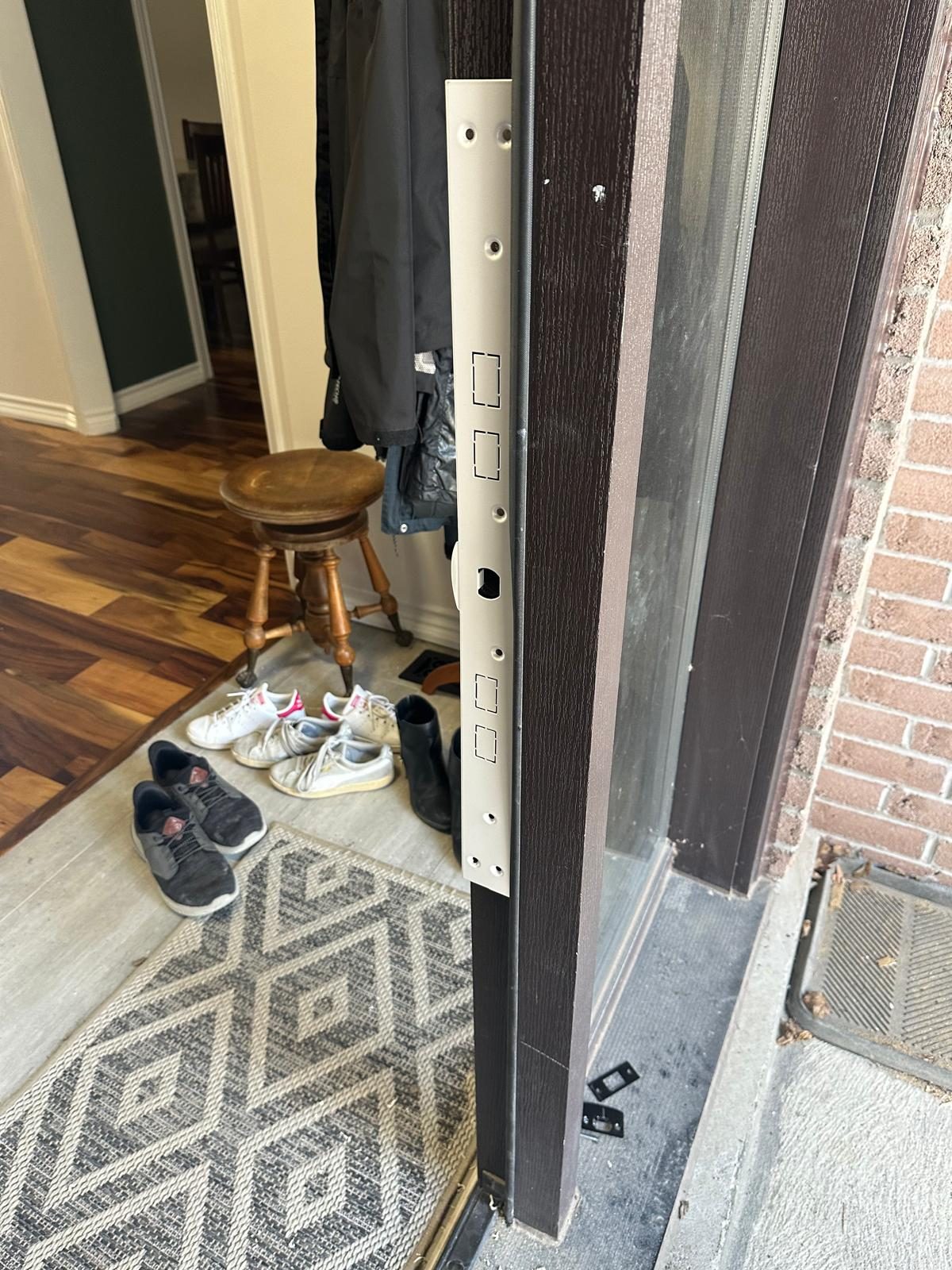
Understand what a multipoint mechanism connects
A multipoint door lock operates more than one locking point through a linked mechanism. The visible handle and key cylinder are only part of that assembly. Depending on the product, a central gearbox transfers movement along a strip to hooks, bolts or other engagement points. A fault at one point can affect the way the whole door feels.
Tell GTA Lockman Mobile Locksmith Services how the operation has changed. The handle may stop lifting, the key may resist turning or the door may secure only when pushed into a particular position. These observations help distinguish a central mechanism problem from load caused by the door's fit. Do not assume the handle itself is the failed part because it is the component you can feel.
Products and operating sequences vary. Identify accessible brand markings and show the complete door edge where safe. A photograph of the outside handle alone may not reveal the locking strip or gearbox format. Compatible parts need to be identified for the actual assembly rather than selected from appearance.
Compare open and closed operation
If the mechanism operates with the door open but becomes stiff when closed, the engagement points and frame alignment deserve attention. Door movement can place several parts under load at once. Replacing a cylinder without correcting that resistance may leave the same complaint.
If operation is restricted even while open, internal wear, a failed connection or the central mechanism may need assessment. That observation is not a complete diagnosis by itself. Several faults can coexist, and damaged fitting can affect either test. Avoid repeatedly forcing the handle to complete a movement that has become abnormal.
Our lock repair service applies the same principle of testing the opening as a system. Multipoint hardware requires additional attention to its linked components and product-specific operation. Instructions for a simple latch or separate deadbolt should not be assumed to apply to the complete strip.
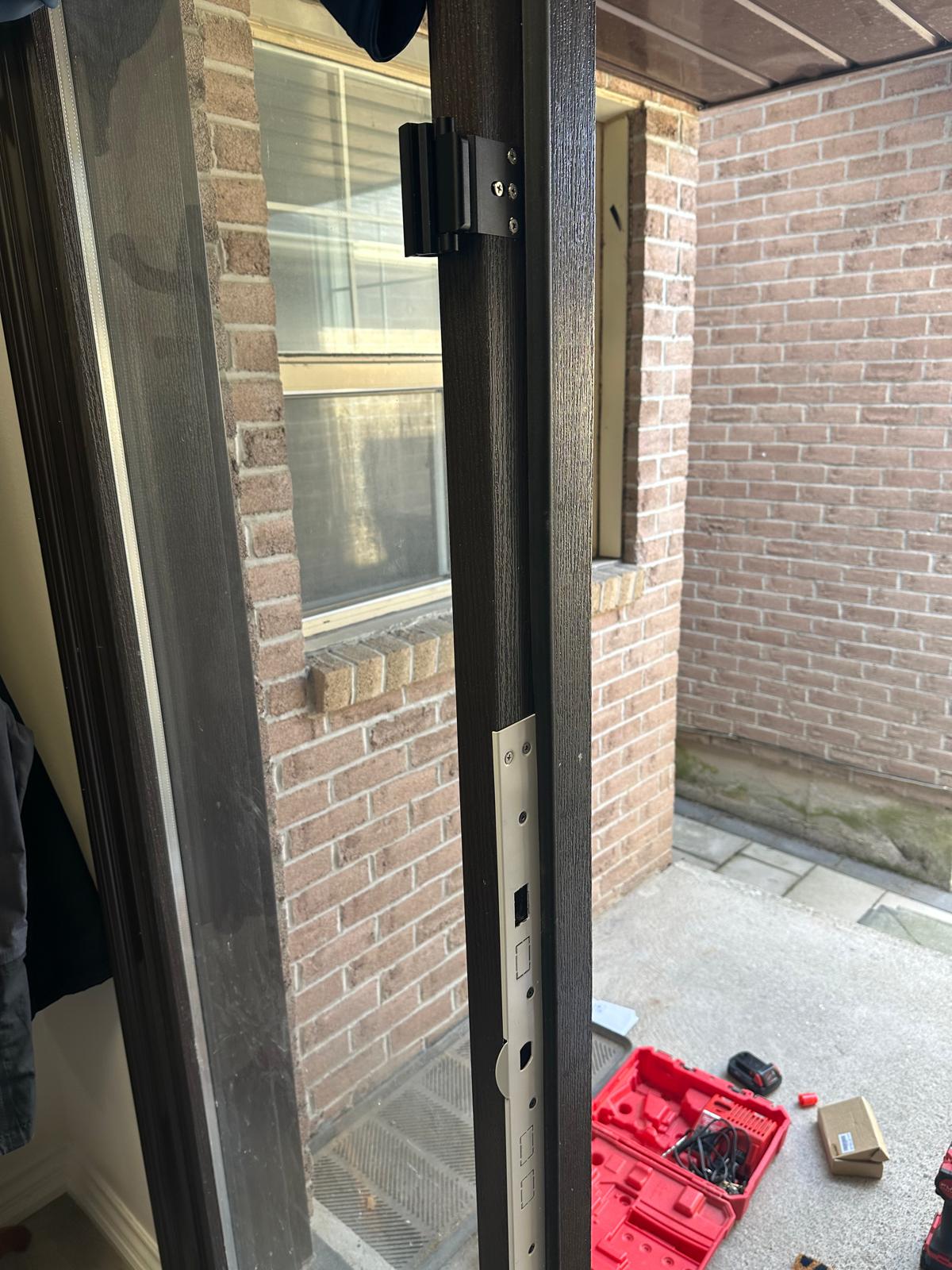
Gearbox, cylinder, strip or handle
The central gearbox can fail while the cylinder remains serviceable. A cylinder can also have a separate keyed fault while the connected mechanism remains sound. The handle spindle or mounting may introduce another source of movement or resistance. The recommendation should name the component identified rather than using gearbox replacement as a label for every multipoint issue.
Ask which parts will remain if a compatible service component is available. A limited repair may preserve more of the existing assembly, while damaged or unsupported hardware may require a broader change. The available option depends on the model, condition and compatible parts, not only on the symptom described over the phone.
Where a replacement lock strip is considered, its dimensions and engagement positions must suit the opening. A visually similar strip is not enough. Product identification and measurements are part of selecting a usable replacement, and any required change to the door needs to be explained before authorization.
Door fit and alignment
A door that has shifted can load hooks or bolts against their receivers. Hinges, frame position, seals and previous adjustments may all be relevant to the assessment. The lock should not be used as a lever to pull an unsuitable fit into place every time it is operated.
Explain whether the problem varies with weather or began after work on the door. That history can help identify conditions to check, but it does not establish the cause without inspection. Avoid bending receivers or removing material simply to make the handle lift farther.
If the opening needs separate door or frame work, record it clearly. A new mechanism fitted into an unresolved alignment problem may continue to experience resistance. A temporary measure and a completed permanent repair should not be described as the same result.
Hinged patio entrances and specialized doors
Multipoint hardware can appear in several door materials and entrance arrangements. The material alone does not identify the mechanism. Show the edge, inside trim, outside trim and any accessible product label. Mention paired doors and identify which leaf normally opens first.
For a conventional sliding patio panel, our patio lock and handle repair page may be the closer service match. A sliding latch and a hinged-door multipoint strip have different requirements even when both serve a rear entrance. Describing the opening accurately helps avoid ordering an unrelated component.
If the entrance has managed-building requirements, obtain them before parts are replaced or preparation is changed. Physical compatibility is necessary but may not be the only requirement. Preserve the intended operation of the door and refer building-specific questions to the responsible professional or manager.
Keys and access changes
A multipoint repair does not automatically change which key operates the cylinder. If missing keys are a concern, request an assessment of that goal separately. A repaired gearbox can restore movement while leaving the previous key arrangement intact.
Conversely, a rekeyed or replacement cylinder does not correct a damaged gearbox or misaligned engagement point. Record these as distinct work items. The technician can then explain whether the cylinder is compatible with the proposed access change and how it interacts with the remaining mechanism.
For a complete entrance upgrade, trim and door preparation have to suit the new hardware, as with any front door lock replacement. Do not assume a conventional handleset can replace multipoint hardware without a broader assessment of the door. The chosen format must remain suitable for the opening.
Availability and realistic repair planning
Specialized hardware may require identification before availability can be confirmed. Provide model markings and photographs when possible, and keep any original product documents. A general promise that every brand or mechanism is stocked would not reflect the variety of these systems.
If parts are unavailable during the initial assessment, ask what the next step involves and what limitations remain. Do not treat an interim adjustment as a completed replacement. The owner needs to know which function has been restored, which condition remains and whether another appointment or trade is required.
The quote should distinguish the identified repair from optional changes in finish, key control or complete hardware format. Additional damage discovered during disassembly should be explained before the scope is extended. This keeps the work tied to the actual condition rather than an assumed universal solution.
Test the complete locking cycle
After work, operate the door according to the exact product's intended sequence. Test the handle, key, interior controls and all relevant engagement points with the door open and closed. The mechanism should not require force that conceals resistance at the frame.
Retain the identified model, replaced parts and service notes. Record any remaining alignment or structural work and who is responsible for it. Follow the manufacturer's maintenance guidance rather than applying a generic treatment to the whole strip. A clear handover gives the owner a usable door and the information needed for later service.
Example: a handle change that does not resolve resistance
A homeowner may replace a worn-looking handle yet find that lifting it remains difficult. The visible handle was not necessarily the source of the load. If the locking points meet the frame incorrectly, the replacement handle still operates against that resistance. If an internal component has failed, firmer trim does not repair its connection.
An assessment should therefore work from the reported movement through the complete assembly. Record the system, compare safe open-door and closed-door operation, and inspect the relevant keeps and door position. The proposed action can then explain whether the handle, mechanism, alignment or a combination needs work. This prevents a succession of unrelated part changes. Afterward, retain the identification and test the intended operating sequence so the household knows how the repaired system should behave and what remaining door condition, if any, needs separate attention.
Questions about multipoint door lock repair
Is a multipoint lock just a longer deadbolt?
It is a coordinated assembly that operates locking points along the door edge, with a central mechanism and model-specific connections. The format, spacing and action vary between products. A visible cylinder or handle is only part of that system. The assessment needs the door-edge hardware and any accessible identification, not just the exterior finish. Treating the problem as a conventional deadbolt replacement can overlook compatibility and alignment. The proposed repair should identify whether the fault concerns the cylinder, handle connection, gearbox, strip or the way the door meets its frame.
Why has lifting the handle become difficult?
Resistance may come from the mechanism itself or from locking points meeting their keeps under pressure. Door movement, hinges and alignment can affect the effort required. Describe whether the handle behaves differently with the door open and whether the problem developed gradually. Do not keep applying extra force to overcome it. The technician should inspect the complete movement and explain which condition is responsible. Replacing a central component without correcting significant alignment trouble can leave the new part exposed to the same resistance that made the original assembly difficult to operate.
Can only the gearbox be replaced?
Some systems allow compatible central-component replacement, while others require a different scope because of construction, damage or parts availability. Exact identification matters. Similar cases can have different dimensions, connections or operating functions. Provide accessible markings and photographs of the door edge without dismantling unfamiliar parts. Ask whether the proposed component is a confirmed match and which surrounding parts will be retained. The completed assembly must be checked through its intended movement on the actual door. A replacement that can be attached physically is not automatically a suitable working match for the whole system.
Can a new cylinder fix a handle that will not lift?
Only if the identified cylinder-related fault is responsible for that behaviour. Handle resistance can instead involve the central mechanism, strip or alignment of several locking points. The cylinder and the handle perform connected but different roles. Tell the technician what each control does and whether the key reaches its usual position. Do not assume that the most visible keyed component is the failed part. The recommendation should connect the inspected cause to the proposed work and include a check of every relevant locking point, rather than ending with a cylinder that turns freely on its own.
What photographs are most useful before the visit?
Provide the whole door, both handle faces and the accessible edge strip, including manufacturer markings if visible. A view of the frame-side keeps can also help. Avoid including personal addresses, keys in detail or occupants. If the door is locked, explain that limitation instead of forcing it open to obtain a photograph. Images can narrow product identification but do not replace measurement and inspection. Tell the locksmith about previous repairs or replacement handles, since a visually similar component fitted earlier may be relevant to the present fault.
What happens when the original parts are discontinued?
The options depend on the identifiable system, compatible alternatives and the condition of the door preparation. An unsuitable substitute should not be forced into the assembly simply because its length looks close. The technician can explain whether a confirmed replacement, a larger compatible change or further supplier investigation is needed. Ask which measurements and functions have been checked and whether any door work would be required. A parts limitation should remain explicit in the record. It is better to understand an unresolved compatibility question than to treat a temporary movement of the handle as a completed repair.
Does the door need adjustment as well as lock repair?
Possibly. Multipoint hardware depends on several points meeting the frame appropriately. If the door has dropped or shifted, pressure can affect more than one part of the strip. Describe scraping, changed gaps or the need to pull or lift the door. The assessment should distinguish a serviceable mechanism under external load from an internal failure, while allowing that both can occur together. The completed work should be tested with the door normally closed. Any separate hinge, frame or door condition outside the scope needs a clear follow-up rather than being hidden by extra operating force.
How should a repaired multipoint door be handed over?
Ask for the intended operating sequence for the identified model to be demonstrated. Check handle movement, key operation, engagement and inside release with the door open and normally closed where safe. Confirm that the assembly does not depend on unusual lifting or pressure. Keep the system identification and replaced-part information because future compatibility can be difficult to establish from appearance alone. Record any remaining door work or supply issue. The useful result is a documented, working assembly, not merely one control that moves while another locking point remains untested.
Reviews from GTA Lockman Mobile Locksmith Services customers
GTA Lockman Mobile Locksmith Services is a mobile locksmith working on homes, businesses and vehicles across Toronto and the GTA, with more than 14 years in the trade. Every review is written by a customer on Google, where you can read them in full.
Areas served: Toronto, North York, Scarborough, Etobicoke, Vaughan, Richmond Hill, Markham, Stouffville, Newmarket, Mississauga, Brampton, Oakville, Milton, Halton Hills, Pickering, Ajax, Whitby, Oshawa, Uxbridge.
Plan your locksmith visit
Describe the door, hardware and service address. Contact GTA Lockman Mobile Locksmith Services to confirm the scope and scheduling for your location.
Friday: 8:30 AM–4:00 PM
Sunday: 9:30 AM–9:00 PM
Saturday: closed