Locksmith services are always 10% off for seniors.
Open Mon–Thu 8:30 AM–9 PM, Fri 8:30 AM–4 PM, Sun 9:30 AM–9 PM
Locksmith services are always 10% off for seniors.
Open Mon–Thu 8:30 AM–9 PM, Fri 8:30 AM–4 PM, Sun 9:30 AM–9 PM
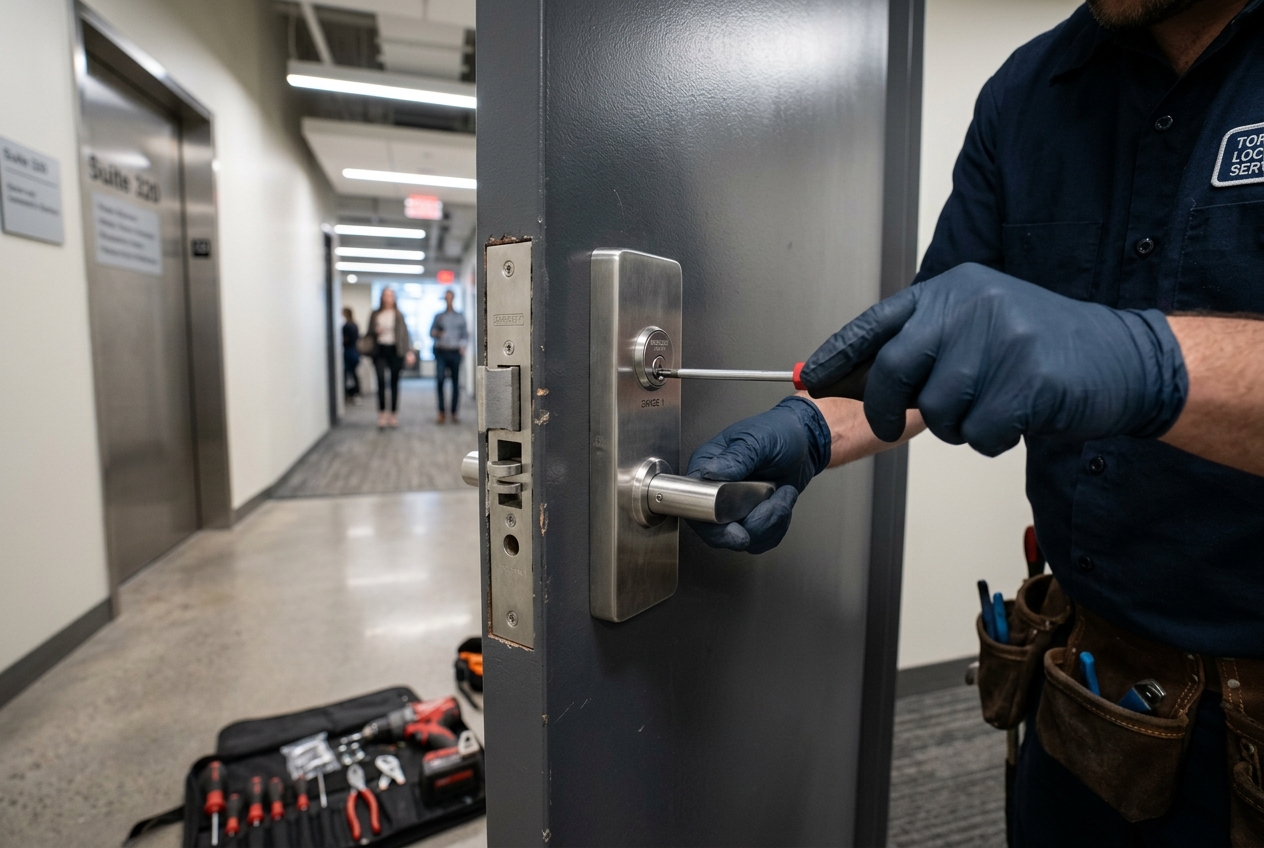
GTA Lockman Mobile Locksmith Services · Toronto & GTA
How commercial lock and door work gets scoped, authorized and scheduled around a business that has to keep trading.
Related services
Lock and door service for offices, shops and managed properties. Plan access around the way your business operates.
Learn moreReplace the previous tenant's key arrangement with one your business controls, following the lease and building rules.
Learn moreReview what the departing employee could open, then rekey the affected cylinders and issue new keys with a record.
Learn moreArrange authorized access to offices and business premises, then address the key or hardware problem behind the lockout.
Learn moreMake the back door close, latch and lock every time while keeping it a safe exit for staff and customers.
Learn moreSecure the premises at closing while keeping exit routes working, and fix the closer, alignment or lock fault behind it.
Learn more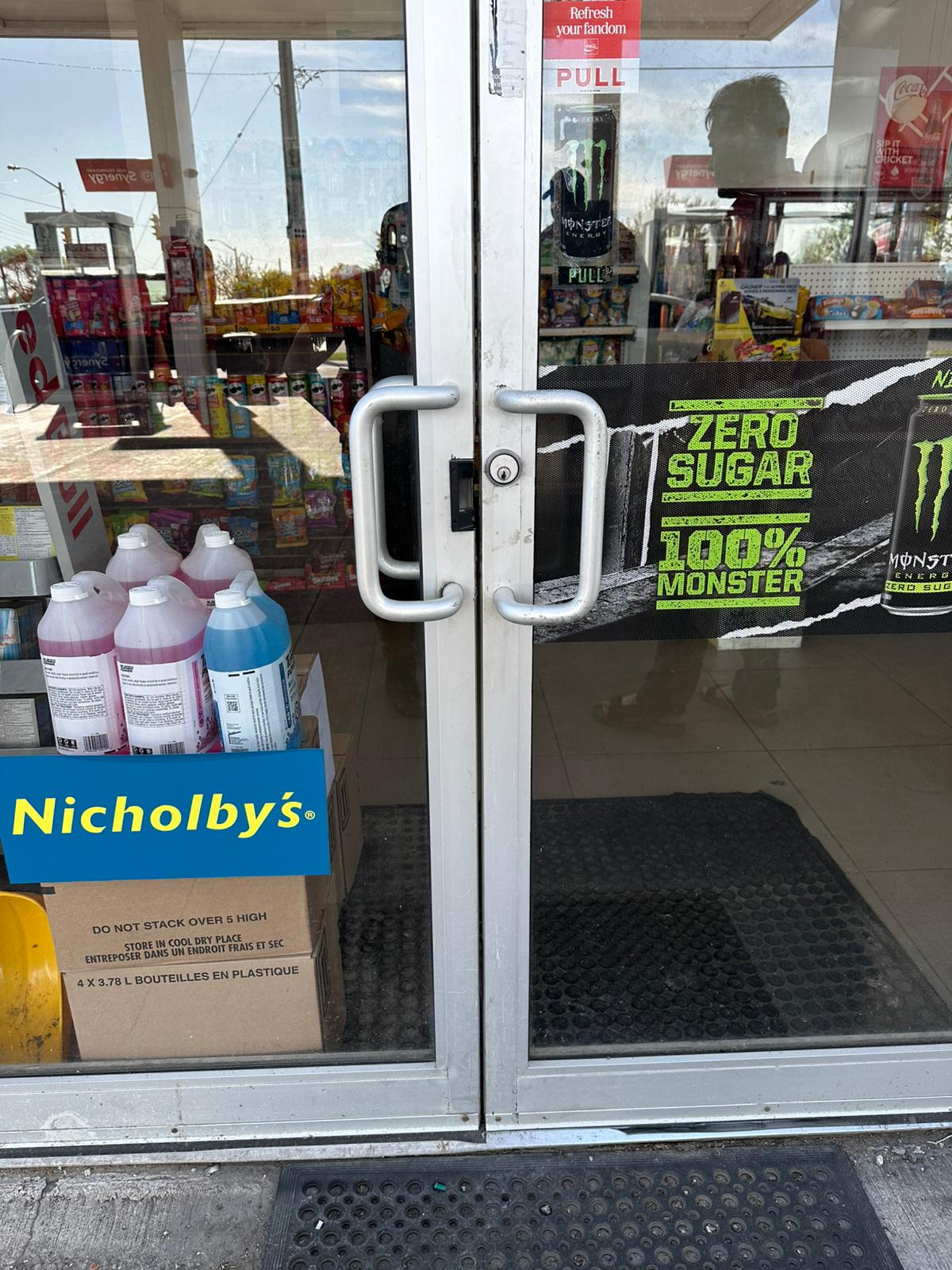
A lock is a lock whether it is on a house or a warehouse. What changes on commercial premises is everything around it: who is allowed to authorize the work, when it can happen without stopping trade, how many people hold keys, what the doors have to do for fire and exit, and who signs off afterwards.
Those constraints decide how a job runs far more than the hardware does. Commercial work goes well when it is scoped, authorized and scheduled properly, so a visit produces a finished door rather than a list of questions.
For the range of work itself, see commercial locksmith services. Organizing that work well is a separate skill from the work itself.
Most commercial jobs that go wrong go wrong at the scoping stage, because the person describing the problem and the person who will stand in front of the door are not the same person.
The details that change what happens: what type of door it is (timber, steel, aluminium storefront, glass), what is currently fitted, whether the door is on a fire-rated assembly, whether it is a main entrance or a back door, whether it carries a closer, and whether anything is connected to it electrically.
Photographs answer most of this reliable than a description. A shot of the whole door, one of the lock area, one of the door edge and one of the frame usually tells us what the job is and what needs to be on the van.
Where the same problem affects several doors, say how many. A single cylinder and eight cylinders are different jobs even though the description is identical.
Authority on commercial premises follows the business, not whoever happens to be holding the keys.
An owner, director or manager with authority to bind the business can instruct work. A staff member usually cannot, and a departing employee definitely cannot. Where the premises is leased, base-building doors and common areas are often the landlord's, while the unit's own hardware is the tenant's, and the lease decides which is which.
For managed properties, the management company instructs on the owner's behalf, and a work order or an email from a named contact covers it. When the question of authority is less clear, the same checks apply as for proving you are entitled to enter.
Sorting this out before a visit avoids the situation where a technician is on site, the work is understood, and nobody present can actually approve it.
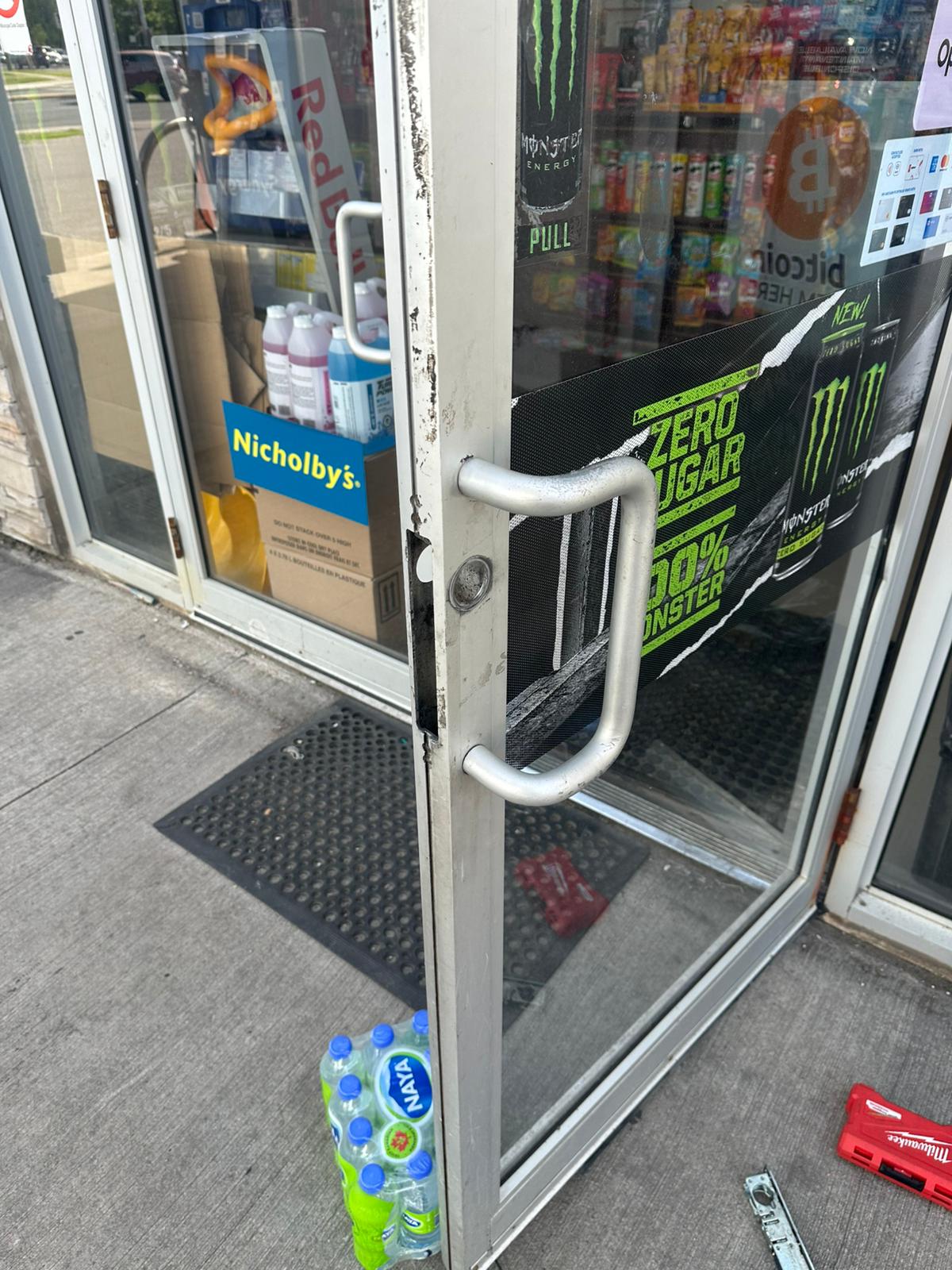
The scheduling question on commercial premises is rarely "when are you free". It is "when can this door be out of service".
Some work is short enough to do while the business trades: a cylinder change, a closer adjustment, a strike alignment. Other work takes a door out of use for a period: replacing a mortise lock in an aluminium stile, fitting an exit device, repairing a frame.
For a shop or restaurant that means deciding whether the work happens before opening, after closing, or on a quieter day. For an office it often means outside core hours. Tell us which doors cannot be disturbed during business and we will plan the order of work around that rather than discovering it on arrival.
Where a door must stay usable throughout, say so. It changes the method, and occasionally it changes the parts.
The hardware question on commercial premises is usually a key-control question underneath.
Businesses accumulate keys the way homes do, only reliable: staff who left, a contractor who needed access once, a key cut for a shift supervisor, a spare in a drawer nobody can account for. After a few years, nobody knows how many keys open the back door.
The options are ordinary. Rekey to retire everything in circulation; see rekeying after an employee leaves. Structure access so one key opens what a role needs and no more. Move to credentials that can be cancelled rather than collected, where the door and budget suit it.
Whichever route, keep a written record of who holds what. That record is what makes the next staff change a ten-minute decision rather than an audit.
On commercial doors, more of the assembly is doing work than on a house.
A closer controls how the door lands and whether it latches. A strike or electric strike decides whether the latch holds. An exit device governs how people get out; see panic bars and exit devices. Hinges or a pivot carry a heavier leaf than any residential door. A threshold and weather seals affect alignment through the year.
When one of those is out of adjustment, the symptom usually shows up somewhere else. A door that will not lock at closing time is often a closer or alignment problem rather than a lock problem, the usual story behind a commercial door that will not lock at closing.
Assessing the assembly rather than the part is what stops a business replacing the same lock twice.
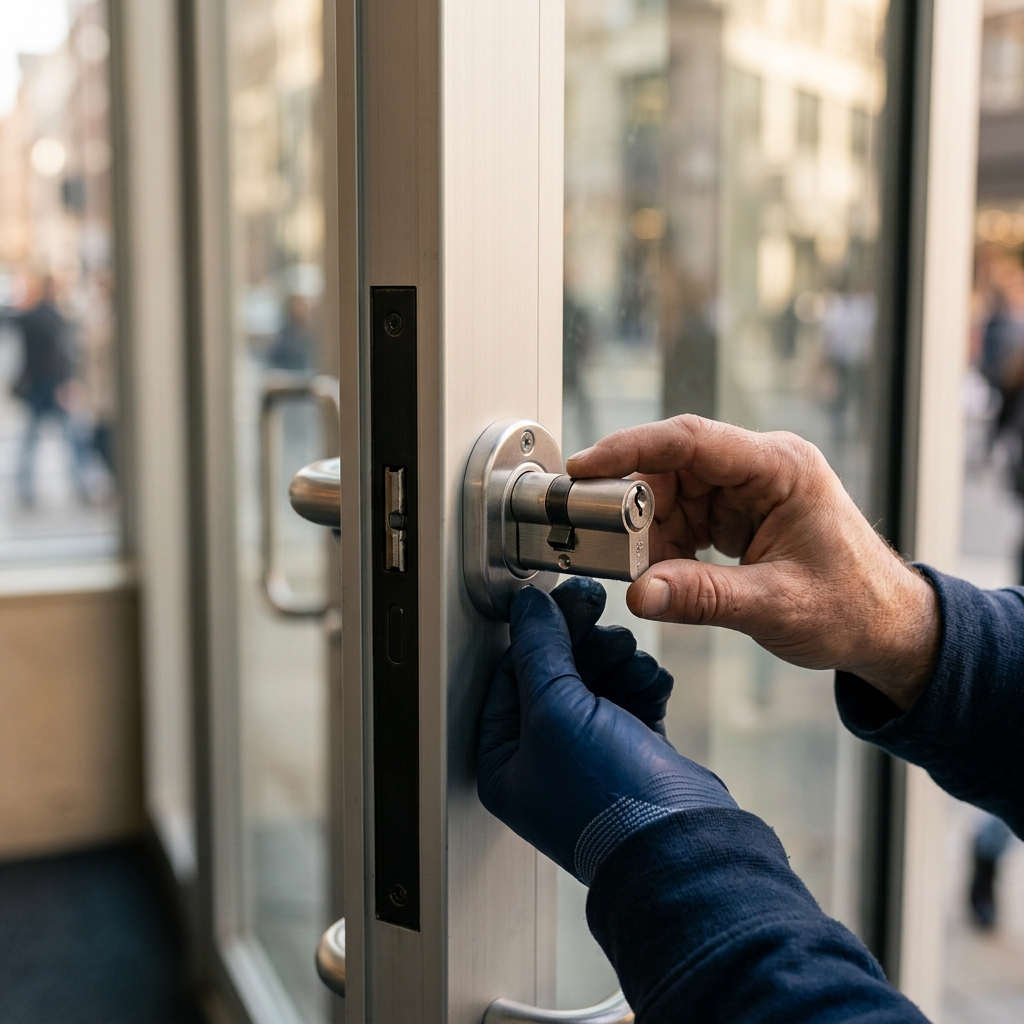
Some commercial doors are part of a fire-rated assembly or sit on a designated exit route, and those carry requirements that override preference.
People must be able to leave without a key, a code or special knowledge. Rated doors must not be modified in ways that affect the rating, which includes drilling for additional hardware. The fire authority having jurisdiction has the final say on what is acceptable, not the locksmith and not the tenant.
Where a request conflicts with that, we will say so and suggest what can be done instead. The relevant detail is on fire door hardware for businesses.
For businesses with more than one location, the useful thing is consistency: the same hardware where possible, the same key arrangement, and one record of what is fitted where.
That makes it possible to hold a small stock of matching parts, to move staff between sites without issuing more keys, and to repair a door without first working out what is on it. It also makes quoting predictable, because the same job is the same job at every location.
Management companies and multi-site operators usually want a named contact and a standing authorization arrangement; see locksmith for management companies for the service side of that.
Commercial work produces paperwork that gets used later, by someone who was not there.
An invoice that says "lock repair" answers nothing in six months. One that names the door, the hardware fitted, the work done and the date answers a maintenance question, an insurance question and a landlord question at once.
Ask for that level of detail, particularly for rekeying, hardware replacement and anything on a fire-rated door. If you keep a maintenance file for the premises, the door records belong in it alongside the alarm and sprinkler paperwork.
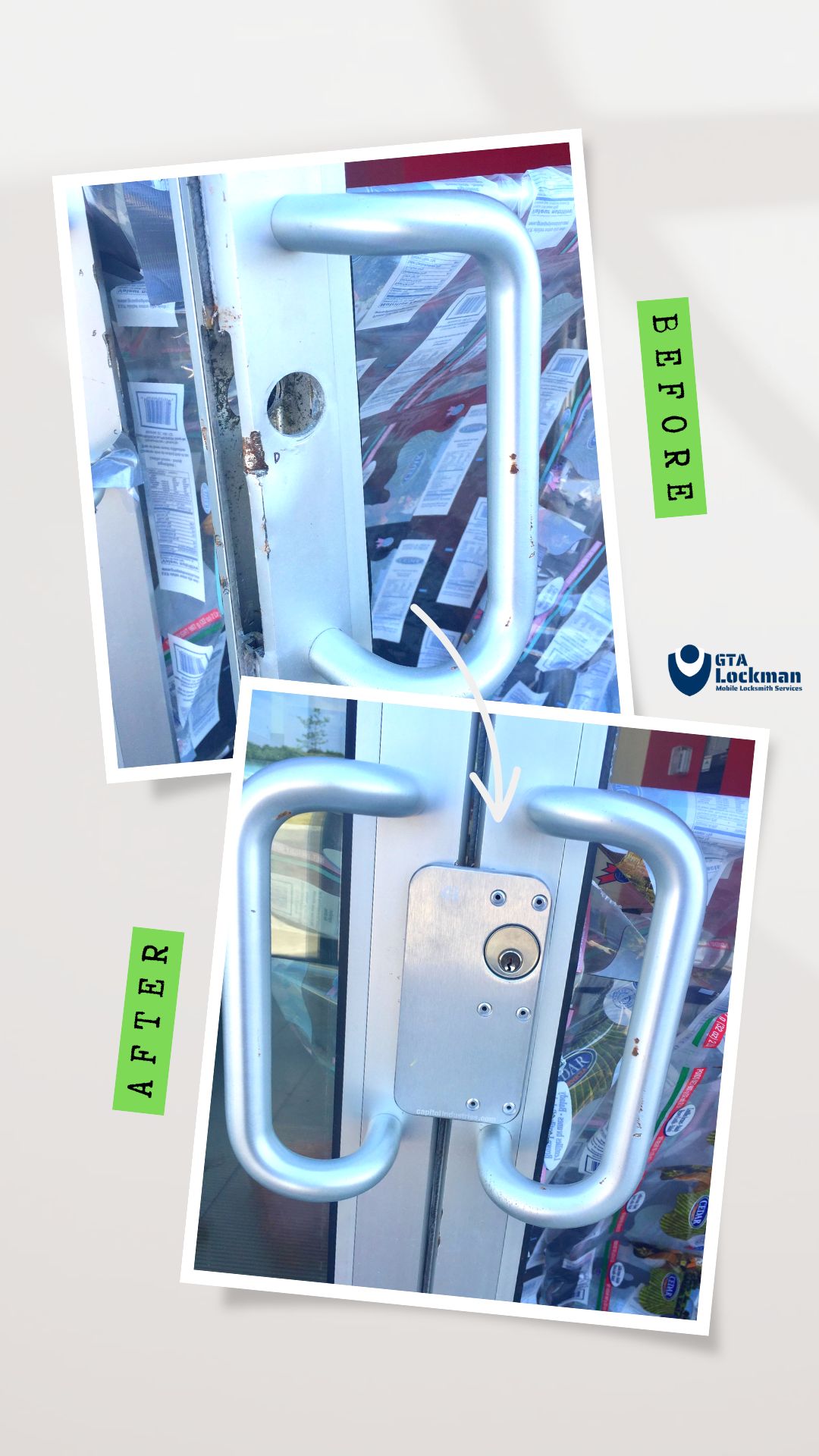
Most commercial door problems announce themselves before they stop a business trading. A closer that no longer latches the door. A key that needs technique. A device that sticks. An alignment that shifts every summer.
A scheduled check of the doors once a year catches those while they are adjustments rather than failures, and it lets the work happen at a time that suits the business; see annual door and lock maintenance check.
Reactive work is sometimes unavoidable, and when a business cannot secure its premises it comes first. But the proportion of reactive to planned work is something a business can change.
The address and what the premises is. Which door, and what it does now. Photographs if you can. How many doors are affected. Who can authorize the work. When the door can be out of service. Whether anything is connected to an alarm or access system, and who maintains that.
Those seven answers turn a general enquiry into a scheduled job with the right parts on board.
Tell us what the business is, which doors are involved and what has to keep working while the job runs. If it is leased premises, say whether the door belongs to you or the landlord.
We will assess the whole opening, say plainly what belongs to another trade, and leave you with a record of what was done; see also office and business lockout service and rear door security for shops and restaurants.
Keep reading
Which door and what it does now, the door type (timber, steel, aluminium storefront, glass), what hardware is fitted, whether it is on a fire-rated assembly, whether it carries a closer, and whether anything electrical is connected to it. Photographs of the whole door, the lock area, the door edge and the frame answer most of that reliable than a description.
Which door and what it does now, the door type (timber, steel, aluminium storefront, glass), what hardware is fitted, whether it is on a fire-rated assembly, whether it carries a closer, and whether anything electrical is connected to it. Photographs of the whole door, the lock area, the door edge and the frame answer most of that reliable than a description.
Someone with authority to bind the business: an owner, a director or a manager. A staff member generally cannot, and a departing employee cannot. On leased premises, the lease usually decides whether a door belongs to you or the landlord, and base-building doors and common areas are often the landlord's responsibility.
Some of it. A cylinder change, a closer adjustment or a strike alignment is usually short enough to do during trading. Replacing a mortise lock in an aluminium stile, fitting an exit device or repairing a frame takes the door out of use for a period. Tell us which doors cannot be disturbed and the order of work is planned around that.
Rekeying retires everything in circulation while keeping the existing hardware, which is the usual answer. Beyond that, access can be structured so a key opens what a role needs and no more, or moved to credentials that can be cancelled rather than collected. Whichever route, keep a written record of who holds what.
Often not. On commercial doors the closer, the strike, the hinges and the alignment all affect whether the latch engages, and a fault in any of them shows up as a lock that will not secure. Assessing the whole assembly rather than the lock alone is what stops the same part being replaced twice.
Not in a way that stops people leaving without a key, a code or special knowledge, and not in a way that modifies a rated assembly. The fire authority having jurisdiction decides what is acceptable there. If the aim is stopping unauthorized use of that door, there are approved routes, and we will tell you which apply to your door.
Usually yes, and it is worth doing. Consistent hardware and a single key arrangement mean a small stock of matching parts covers every site, staff can move between locations without more keys being issued, and quoting becomes predictable because the same job is the same everywhere.
Enough to be useful to someone who was not there: the door, the hardware fitted, the work done and the date. "Lock repair" answers nothing later. Detailed records matter most for rekeying, hardware replacement and anything on a fire-rated door, and they belong in the premises file with the alarm and sprinkler paperwork.
GTA Lockman Mobile Locksmith Services is a mobile locksmith working on homes, businesses and vehicles across Toronto and the GTA, with more than 14 years in the trade. Every review is written by a customer on Google, where you can read them in full.
Areas served: Toronto, North York, Scarborough, Etobicoke, Vaughan, Richmond Hill, Markham, Stouffville, Newmarket, Mississauga, Brampton, Oakville, Milton, Halton Hills, Pickering, Ajax, Whitby, Oshawa, Uxbridge.
Describe the door, hardware and service address. Contact GTA Lockman Mobile Locksmith Services to confirm the scope and scheduling for your location.