Locksmith services are always 10% off for seniors.
Open Mon–Thu 8:30 AM–9 PM, Fri 8:30 AM–4 PM, Sun 9:30 AM–9 PM
Locksmith services are always 10% off for seniors.
Open Mon–Thu 8:30 AM–9 PM, Fri 8:30 AM–4 PM, Sun 9:30 AM–9 PM
GTA Lockman Mobile Locksmith Services · Toronto & GTA
Keys for old cabinets, desks and chests, and repairs that respect the piece.
Related services
What to do when the part you need is no longer made, and how to judge a repair against a retrofit.
Learn moreSeparate the working part of the home from the living part, for clients, stock, records and deliveries.
Learn moreDecide how many keys a household needs, where the spare belongs and when a key should be replaced.
Learn moreRepairs, rekeying and replacement hardware for homes, condos and apartments, with attention to the whole door.
Learn moreFind the reason a key sticks, a bolt binds or a latch fails before deciding what needs replacement.
Learn moreUnderstand what a privacy lock does, how to release one from outside, and when a room needs a keyed lock.
Learn more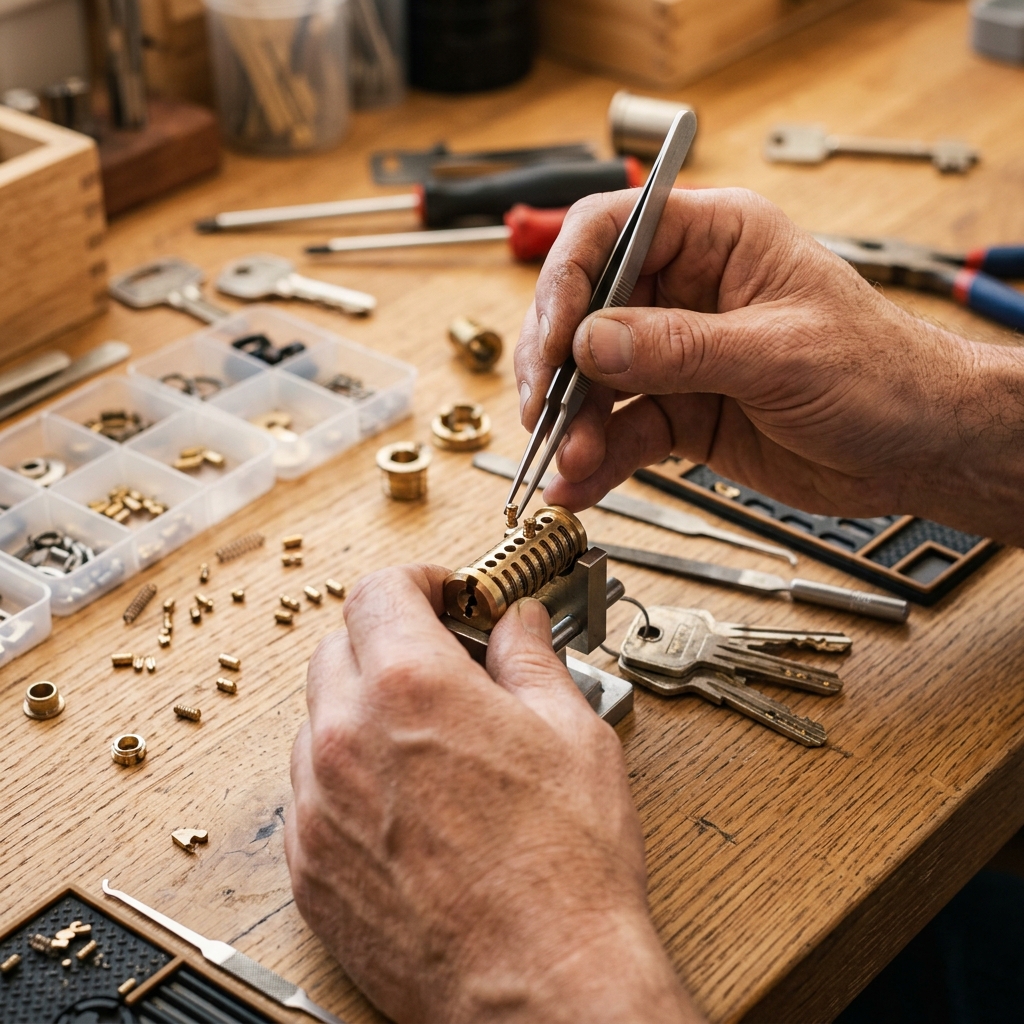
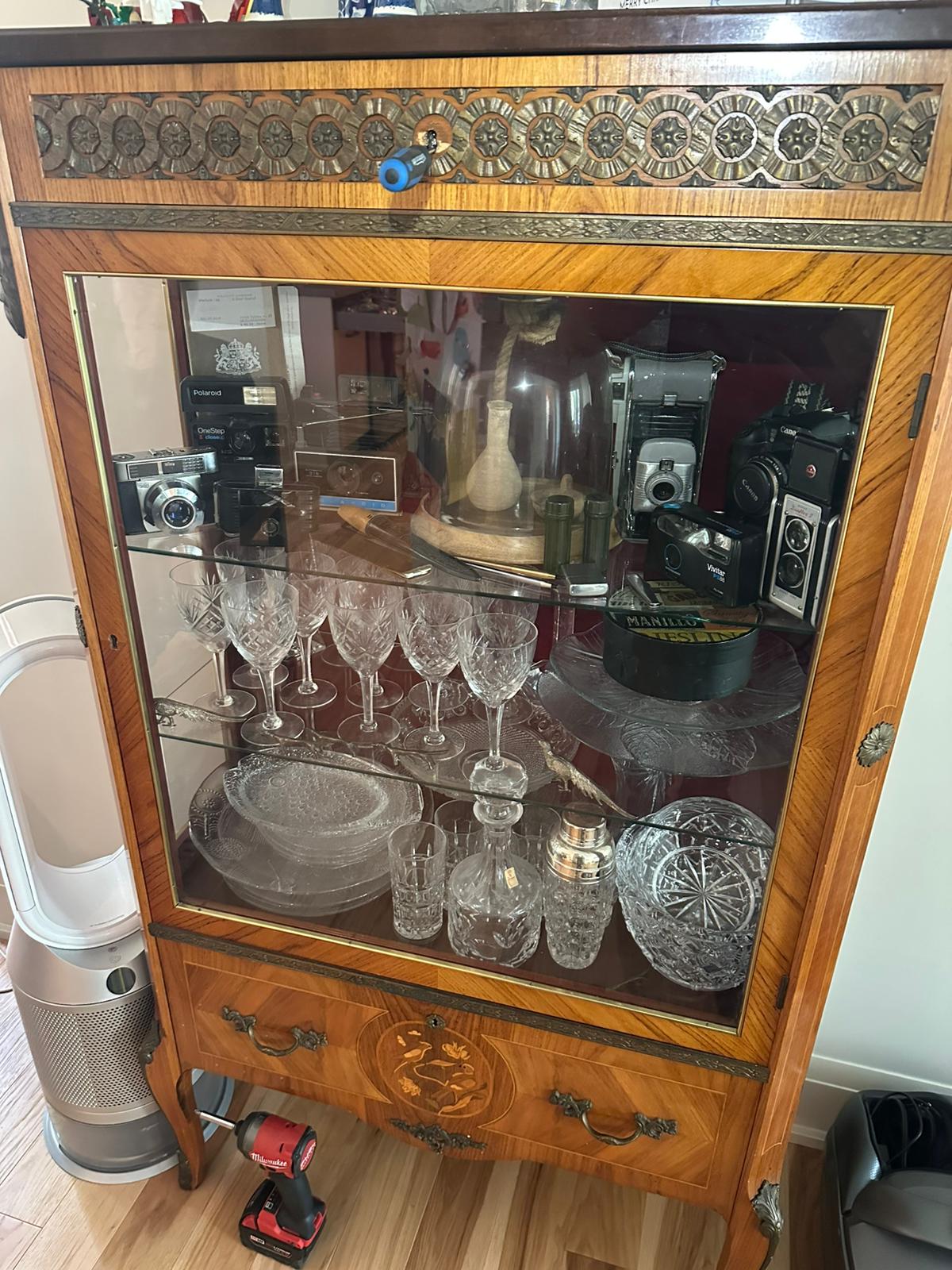
Antique and vintage furniture often has locks: a china cabinet with a glazed door, a writing desk with a fall front, a dresser with a locking top drawer, a blanket chest, a tea caddy, a curio cabinet. Many of these pieces arrive in a family with no key, or with a key that no longer turns, and the lock is either stuck shut or stuck open.
These locks are small and usually simple, but they are also part of the piece. Getting a lost key made or a jammed lock working without damaging the wood or the finish takes a different approach from working on a front door.
Cut cupboard locks. Set into a mortise cut in the edge or face of a door or drawer, with a bolt that shoots sideways or upwards into a keeper. Common on cabinets and drawers.
Box locks and chest locks. Fitted inside the lid of a chest or box, with a hasp on the lid that drops into the lock body.
Desk and bureau locks. Often a lever lock on a fall front or roll top, sometimes with a mechanism that locks several drawers at once.
Display cabinet locks. Small cam locks or bolt locks on glazed doors, often paired with a push catch.
Most older furniture locks are warded or lever locks, operated by a simple barrel or bit key. Later pieces, especially mid-century furniture, may have small pin tumbler cylinders.
The most common request is a key for a piece that arrived without one. For warded and lever furniture locks, a key can usually be made by examining the lock, sometimes without removing it. For small pin cylinders, a key can often be decoded or cut to the lock.
Old barrel keys are often available as blanks in common sizes, which are then filed to suit the wards or levers of the particular lock. The finished key may not look exactly like the original, but it works the lock without strain.
Where several pieces in a house share a style, they may share a key too. Many old furniture locks were made to a small number of patterns, so one key sometimes opens several pieces.
A locked drawer or cabinet with no key is frustrating, particularly when it may contain something important. Forcing it is the worst option: prying a drawer front or breaking a cabinet door damages the piece far more than the lock is worth.
Most furniture locks can be opened without damage by working the lock itself, or by reaching the bolt from another direction, such as from an adjacent drawer or from behind. Once open, a key can be made so the lock works again.
Often the problem is that the lock turns but does not catch, or the bolt no longer lines up with its keeper. Wood moves over decades, drawers sag and doors drop, so a bolt that used to meet its keeper now misses it.
Adjusting or moving the keeper, easing the drawer runners or refitting the door hinges usually brings the bolt back into line without touching the lock.
Springs in old lever locks break, levers wear and screws strip out of soft old wood. Small parts can often be made or replaced. Where the lock is beyond repair, a period-appropriate replacement lock of the same size and type can be fitted, keeping the original escutcheon so the outside of the piece looks unchanged. The same repair-before-replace thinking applies to obsolete door hardware.
Antique furniture has value as an object, not only as storage. A few principles apply:
For pieces of significant value, it may also be worth speaking to a furniture conservator, especially where the wood around the lock is damaged.
Mid-century and modern furniture, filing cabinets and built-in cabinetry use small cam locks and pin cylinders that are easier to rekey or replace. Home offices often have a filing cabinet or desk holding documents, and those locks can be keyed to a single key or replaced if lost. For offices and businesses, the options for office cabinets are part of our wider service, and a home office has its own set of considerations under home offices and businesses run from home.
Some families use a locking cabinet or drawer for medication, firearms-related items, documents or valuables. A decorative antique lock provides little real security, since most can be opened easily. For anything that must stay secure, a purpose-made locking cabinet or small safe is a better choice, with the antique lock kept for its original role.
Many of the same principles apply to other small antique locks: tea caddies, jewellery boxes, writing slopes, sewing boxes and document boxes. Their locks are usually tiny warded or lever locks, and a key can generally be made by examining the lock. Clock and music box keys are a different thing, since they wind a mechanism rather than operating a lock, and they are sized by a numbered gauge rather than cut.
Older houses often have built-in cabinetry with its own locks: a china cabinet built into a dining room wall, a linen closet with a small cupboard lock, a built-in desk. These are part of the house rather than furniture, and their keys are often long gone. The same approach applies: make a key where possible, repair the lock rather than replace it, and keep the original hardware.
Display cabinets and curio cabinets have glazed doors, often with a small lock on one door and a bolt on the other, much like a small pair of double doors. When the lock stops catching, the problem is often the bolt on the fixed door rather than the lock itself. Adjusting the bolt, or the keeper it engages, usually brings the doors back together. Because the glass is thin and old, working on these doors needs care, and any adjustment is made slowly.
Many furniture lock calls come after a move. Drawers locked for transport jam, keys taped to the back fall off in the truck, and doors that shifted in transit no longer line up with their keepers. Leaving pieces unlocked for a move, with keys labelled and packed separately, avoids most of this. If a piece arrives locked with no key, wait before forcing anything.
For most furniture locks, making a key is modest in cost compared with the value of the piece, and far less than repairing a forced drawer front or a broken cabinet door. On pieces of real value, a working original lock and key also adds to the piece's appeal. Where a locksmith and a furniture restorer are both needed, doing the lock work first, before refinishing, avoids marking new finishes.
Small furniture keys are easy to lose. Keep them in one place, labelled with the piece they fit, rather than in the locks. For a piece in daily use, a spare key cut at the same time as the first saves another visit if one goes missing.
In shared houses, student rentals and rooming houses, occupants sometimes use a lockable dresser drawer or cabinet for valuables and documents. Old furniture locks give privacy but little real security, since many share keys. Where a lockable drawer is relied on, replacing its lock with a small modern cam lock keyed individually, or adding a lockable box inside the drawer, gives each person their own key.
Old furniture keys, especially small barrel keys, can snap if the lock is stiff and the key is forced. The broken tip usually stays in the lock. Extracting it gently and freeing the mechanism, then making a new key, is usually straightforward, provided nobody has tried to dig the fragment out with a knife or pin first.
Tell us what the piece is, where the lock is, whether a key exists, and what the lock is doing. Photographs of the keyhole, the escutcheon and, if possible, the lock from inside help us identify the type.
We can make keys for most furniture locks, open locked drawers and cabinets without damage, adjust keepers and bolts, repair small mechanisms and fit sympathetic replacements where needed. Work on doors elsewhere in the house is part of our residential locksmith services, and keys for the rest of the house are cut through spare keys and duplication.
Keep reading
Usually. Most antique furniture locks are warded or lever locks, and a key can be made by examining the lock, often without removing it. The new key may not look like the original, but it works the lock.
Usually. Most antique furniture locks are warded or lever locks, and a key can be made by examining the lock, often without removing it. The new key may not look like the original, but it works the lock.
No. Prying a drawer front or cabinet door damages the piece far more than the lock is worth. Most furniture locks can be opened without damage, and a key made afterwards.
Usually the bolt no longer lines up with its keeper because the wood has moved or the drawer has sagged. Adjusting the keeper or easing the runners normally fixes it.
Often. Springs and small parts can be replaced or made. Where the lock is beyond repair, a period-appropriate replacement can be fitted behind the original escutcheon.
Sometimes. Many old furniture locks were made to a small number of patterns, so a key may open more than one piece in the same style.
A very small amount of dry lubricant or graphite. Oils attract dust and gum up the mechanism over time.
No. Most decorative furniture locks provide little real security. A purpose-made locking cabinet or small safe is the better choice for anything that must stay secure.
Many modern cam and cylinder cabinet locks can be rekeyed or replaced so one key opens several cabinets.
GTA Lockman Mobile Locksmith Services is a mobile locksmith working on homes, businesses and vehicles across Toronto and the GTA, in the trade since 2010. Every review is written by a customer on Google, where you can read them in full.
Areas served: Toronto, North York, Scarborough, Etobicoke, Vaughan, Richmond Hill, Markham, Stouffville, Newmarket, Mississauga, Brampton, Oakville, Milton, Halton Hills, Pickering, Ajax, Whitby, Oshawa, Uxbridge.
Describe the door, hardware and service address. Contact GTA Lockman Mobile Locksmith Services to confirm the scope and scheduling for your location.