Locksmith services are always 10% off for seniors.
Open Mon–Thu 8:30 AM–9 PM, Fri 8:30 AM–4 PM, Sun 9:30 AM–9 PM
Locksmith services are always 10% off for seniors.
Open Mon–Thu 8:30 AM–9 PM, Fri 8:30 AM–4 PM, Sun 9:30 AM–9 PM
GTA Lockman Mobile Locksmith Services · Toronto & GTA
How cam locks are measured, keyed and replaced on cabinets, mailboxes, lockers and panels.
Related services
Assess the mailbox type, ownership and failed key or cylinder before arranging authorized opening or replacement.
Learn moreKeys for old cabinets, desks and chests, and repairs that respect the piece.
Learn moreBlank references, cut codes and registration numbers: what they reveal, and how to keep them private.
Learn moreDry lubricants, how little to use, and when a stiff lock needs more than a spray.
Learn moreStore, label and log keys so the set still makes sense after three staff changes.
Learn moreLock and door service for offices, shops and managed properties. Plan access around the way your business operates.
Learn more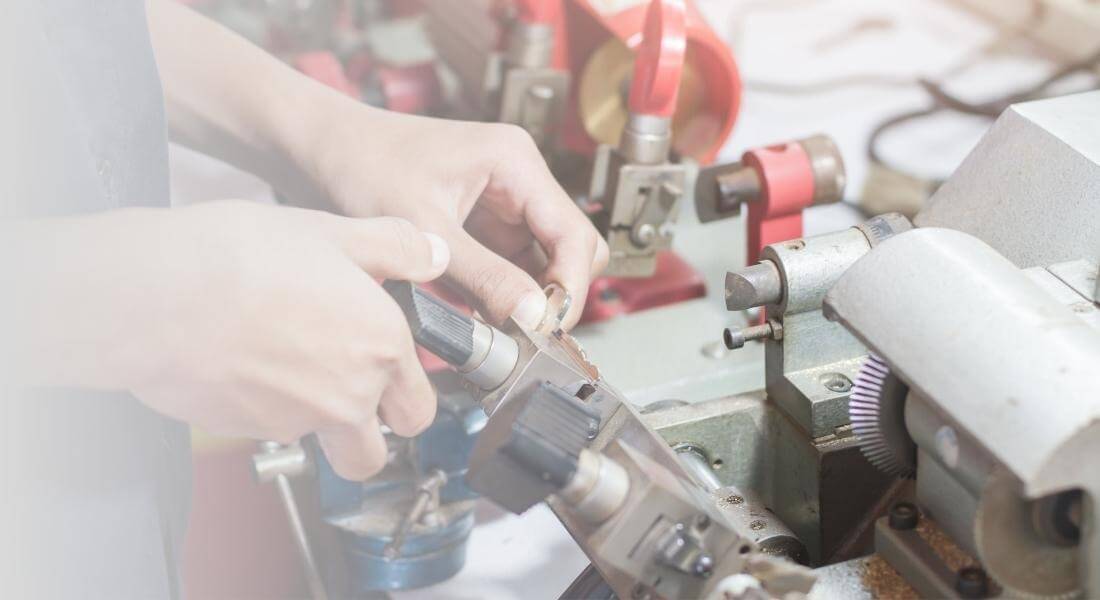
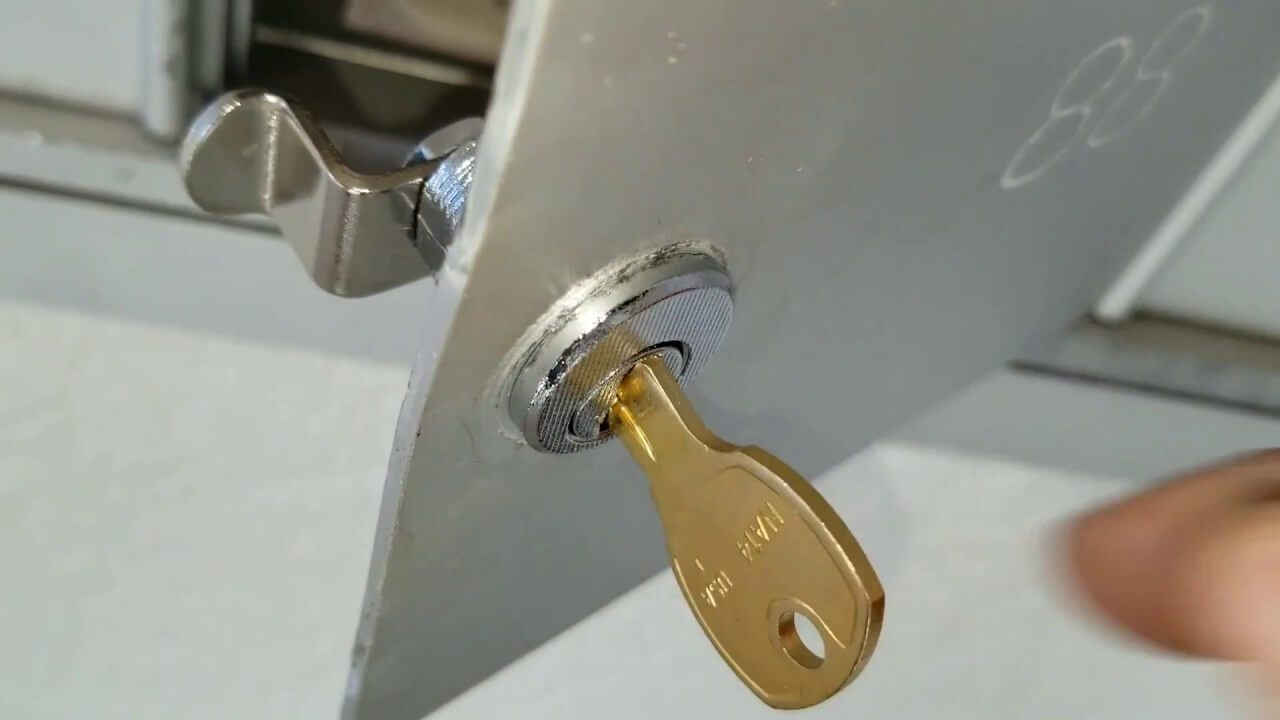
Cam locks are the small, round-faced locks found on filing cabinets, desk drawers, mailboxes, lockers, display cases, electrical panels, vending machines, tool boxes, RV compartments and countless cupboards. Turn the key and a flat metal arm on the back, the cam, swings across to block the door or drawer from opening. Turn it back and the cam swings clear.
They are simple, inexpensive and everywhere, which is exactly why so many people end up with one that has lost its key, seized up or been broken. Most cam lock problems are easy to solve once you know how they are put together.
A cam lock has three main parts:
The body. A threaded or shaped cylinder that passes through a hole in the door, drawer front or panel. It is held in place by a nut on the back, or by a clip, or sometimes by a retaining plate.
The plug. The part that turns when the key is inserted. Inside it are wafers, discs or pins that line up only with the right key.
The cam. A flat bar, sometimes straight, sometimes bent or hooked, fixed to the back of the plug with a screw or nut. When the plug turns, the cam turns with it, swinging behind a frame edge or into a slot to hold the door shut.
Most cam locks turn either 90 or 180 degrees, and the direction can usually be set by how the cam and stop washer are fitted. A cam that is fitted the wrong way round, or with the wrong rotation, either will not lock or will not unlock.
To replace a cam lock with one that fits, measure:
Body length. The length of the threaded body from the underside of the face to the end. It must suit the thickness of the door or panel, so the cam sits at the right depth behind it.
Diameter and shape of the hole. Many cam locks have a body with two flats or a key-way shape that matches a D-shaped or double-D hole, which stops the lock turning in the door.
Cam length, offset and shape. The cam has to reach the frame or keeper. A cam that is too short does not engage; one that is too long jams. Bent or offset cams are used where the frame sits at a different depth from the door.
Rotation. 90 or 180 degrees, and clockwise or anticlockwise to lock.
Face style. Flat, raised, or with a dust shutter over the keyway.
Photographs of the front of the lock, the back with the cam visible, and the hole it sits in, with a tape measure in view, answer most of these questions.
Many cam locks are made on a limited number of key codes, and the code is often stamped on the face of the lock or on the original key. With the code, a replacement key can usually be cut without removing the lock, as with other locks where key codes and key numbers are recorded.
Where there is no code, the options are to decode the lock, to remove it and fit a new one, or to replace just the plug. For office furniture, filing cabinets and lockers, replacing the lock with one keyed to a known key is often the simplest answer.
In offices, gyms, schools and apartment buildings, cam locks are often keyed alike, so one key opens a whole bank of cabinets or lockers, or master keyed, so each locker has its own key while a manager's key opens all of them. Mailbox banks in apartment buildings often use this arrangement, with a master key held by the building or by Canada Post for community mailboxes.
When setting up keyed-alike or master-keyed cam locks, keep a record of which key opens which lock. That record is what lets a replacement be cut without changing every lock in the row.
Mailbox locks in apartment buildings and on residential wall boxes are usually cam locks. When a tenant moves out, the mailbox lock is often changed along with the suite lock. Where the mailbox belongs to a Canada Post community mailbox, Canada Post looks after the lock; in an apartment building, the landlord or property manager usually does. The steps for changing a mailbox lock in Toronto are part of mailbox lock change.

Office filing cabinets often have a single cam lock that operates a locking bar running through all the drawers. If the cabinet will not lock, the problem may be the bar, not the lock: a drawer not fully closed stops the bar engaging. Close every drawer firmly before turning the key.
Older furniture uses different locks, usually warded or lever locks rather than cam locks, and those are handled differently, as with antique furniture and cabinet locks.
Electrical cabinets, telecom enclosures, generator housings and RV or truck compartments use cam locks too, often weather-sealed versions with a rubber seal and a dust cover. These need the right weather rating for outdoor use. On electrical and equipment cabinets, the lock is often a standard key, such as a common panel key, so the cabinet can be opened by authorised technicians; changing it to a unique key should be agreed with whoever services the equipment.
The key turns but nothing locks. The cam has come loose from the plug, the screw or nut on the back has fallen off, or the cam is fitted at the wrong angle. Tightening or refitting the cam usually fixes it.
The lock spins in the door. The retaining nut has loosened, or the hole has been worn round. Tightening the nut, or fitting a lock with the right anti-rotation shape, stops it.
The key is stiff or will not go in. Dirt, a worn key or worn wafers. A dry lubricant often helps; a worn lock is usually replaced, since cam locks are inexpensive. A dry product is the right choice for lock lubrication on small cylinders.
The lock was broken to get in. Drilled or forced cam locks are replaced. Check the door or drawer front for damage around the hole before fitting the new lock.
The cam does not reach. The body is too short for a thick door, or the cam is the wrong length or offset. A lock with the right body length or cam fixes it.
Standard cam locks keep honest people honest. They stop casual opening of a cabinet or drawer, but most can be defeated fairly easily. For anything genuinely valuable or confidential, high-security cam locks with restricted keys, or a proper safe or locking cabinet, offer much more protection. The same distinction between privacy and real security applies across many small locks.
Lockers in gyms, schools, workplaces and apartment storage rooms often use cam locks, sometimes with a hasp option so users can add their own padlock instead. Where lockers are rented or assigned, keyed-different cam locks with a master key let management open any locker when someone loses a key or leaves. Keep spare keys on a labelled board in a locked cabinet, and record every key issued, the same discipline used in key cabinets and managing many keys.
Some locker systems use coin-operated or code-operated cam locks, where the user sets their own code. These avoid lost keys but need a management override for forgotten codes.
Many cam locks are simple to replace if you have the right one: remove the nut and cam from the back, slide the old lock out, fit the new one with the same body length, refit the cam at the right angle and tighten the nut. Test the lock with the door open before closing it, so you do not lock a cabinet with the cam pointing the wrong way. Where the lock is part of a filing cabinet locking bar system, take care to engage the bar correctly.
Glass display cases often use small cam locks or plunger locks on sliding or hinged glass doors. On retail fixtures, keys tend to multiply and get lost, and keying fixtures in groups limits the damage when one goes missing. Plunger locks for sliding glass are a different design from cam locks, though they are often supplied in the same key series.
When you move into a house or apartment, the mailbox key handed over may have been copied many times by previous occupants. Changing the mailbox cam lock, where you are responsible for it, is inexpensive and means only you can open the box. In buildings, ask the property manager to change it at turnover.
Tell us what the lock is on, whether you have a key or a code, and what it is doing. Photographs of the front, the back with the cam visible, and the hole help us bring the right replacement.
We can cut keys from codes, replace cam locks with matching body length and cam, key a bank of locks alike or to a master key, and fit high-security cam locks where needed. Office and building work is part of our commercial locksmith services, and household locks are part of our residential locksmith services.
Keep reading
A small lock with a flat metal arm, the cam, on the back. Turning the key swings the cam behind a frame or into a slot to hold a door or drawer shut. They are used on cabinets, mailboxes, lockers, panels and drawers.
A small lock with a flat metal arm, the cam, on the back. Turning the key swings the cam behind a frame or into a slot to hold a door or drawer shut. They are used on cabinets, mailboxes, lockers, panels and drawers.
Measure the body length from the underside of the face, the hole size and shape, the cam length and offset, and whether it turns 90 or 180 degrees. Photographs with a tape measure in view help.
Often. Many cam locks have a code stamped on the face or the original key. With that code, a replacement key can usually be cut without removing the lock.
The cam may have come loose from the plug or be fitted at the wrong angle. On filing cabinets, a drawer left slightly open can stop the locking bar engaging.
The retaining nut has loosened or the hole has worn round. Tightening the nut or fitting a lock with the right anti-rotation shape stops it.
Yes. Cam locks can be keyed alike so one key opens a whole bank, or master keyed so each has its own key and a manager's key opens all.
In an apartment building, usually the landlord or property manager. For Canada Post community mailboxes, Canada Post looks after the lock.
Standard cam locks prevent casual access but are not high security. For valuable or confidential contents, use high-security cam locks with restricted keys, or a proper safe or locking cabinet.
GTA Lockman Mobile Locksmith Services is a mobile locksmith working on homes, businesses and vehicles across Toronto and the GTA, in the trade since 2010. Every review is written by a customer on Google, where you can read them in full.
Areas served: Toronto, North York, Scarborough, Etobicoke, Vaughan, Richmond Hill, Markham, Stouffville, Newmarket, Mississauga, Brampton, Oakville, Milton, Halton Hills, Pickering, Ajax, Whitby, Oshawa, Uxbridge.
Describe the door, hardware and service address. Contact GTA Lockman Mobile Locksmith Services to confirm the scope and scheduling for your location.