
GTA Lockman Mobile Locksmith Services · Toronto & GTA
Ratchet, plunger and clamp-on locks for glass cases, and how to group keys across a store.
Related services
How cam locks are measured, keyed and replaced on cabinets, mailboxes, lockers and panels.
Learn moreSeparate stock, cash and staff areas so that a key to one is not a key to everything.
Learn moreBlank references, cut codes and registration numbers: what they reveal, and how to keep them private.
Learn moreKeys for old cabinets, desks and chests, and repairs that respect the piece.
Learn moreStore, label and log keys so the set still makes sense after three staff changes.
Learn moreLock and door service for offices, shops and managed properties. Plan access around the way your business operates.
Learn more
Display cases and showcases keep goods visible while keeping hands off them: jewellery counters, phone and electronics cases, pharmacy shelves, trophy cabinets, museum cases, collectibles cabinets at home, and glass towers in retail stores. The glass is the obvious part. The lock is small, easy to overlook, and often the weakest link.
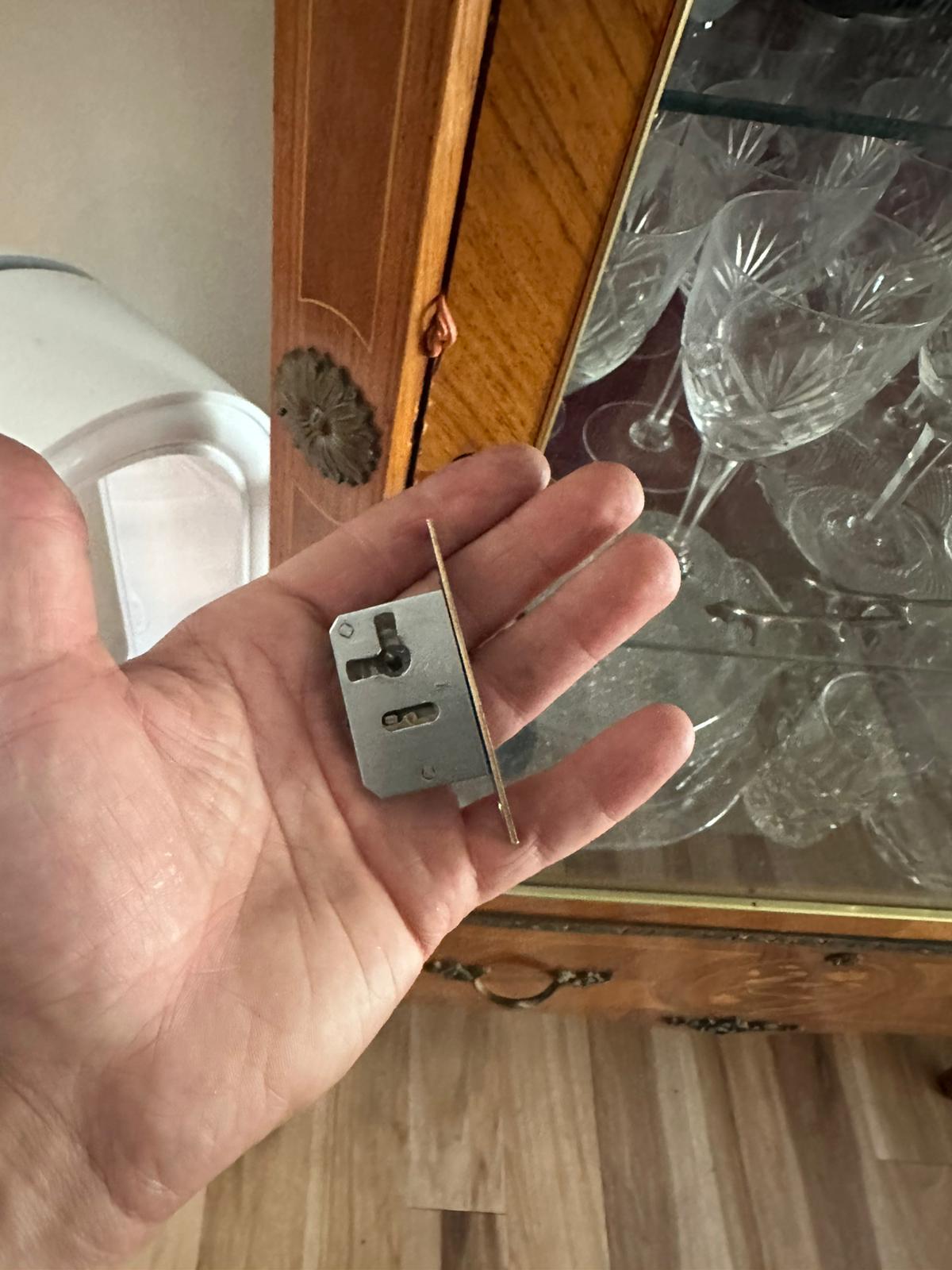
Showcase locks are designed for glass doors that slide or swing without a frame around them, so they work differently from the cam locks on wooden cabinets. Knowing the type makes replacing a lost key or a broken lock much simpler.
Ratchet locks for sliding glass doors. The most common type on retail counters. The lock body clamps onto the edge of the front glass panel, and a toothed bar slides along to press against the rear panel, so the two panels cannot slide past each other. Pressing the bar in locks it; turning the key releases the ratchet.
Plunger locks. A lock fitted to one sliding panel with a plunger that pushes into a hole or against the other panel. Pressing the plunger locks it; the key releases it.
Hinged glass door locks. For swinging glass doors, a lock clamps or bolts through the glass and engages a keeper on the cabinet frame or a second door.
Cam locks in framed cases. Showcases with aluminium or wood frames often use small cam locks fitted through the frame rather than the glass, as with cam locks.
Electronic display locks. Many retailers now use electronic locks operated by a fob or keypad, which avoids keys being shared and can record each opening.
Glass cannot be drilled after it is tempered, so locks that pass through glass must be fitted to pre-drilled holes made before tempering, or must clamp onto the edge without drilling. Most replacement showcase locks are clamp-on types for that reason. Measure:
A lock that is the wrong size for the glass will either not grip or will crack the glass when tightened.
Retail counters often have dozens of showcase locks, frequently keyed alike so staff carry a single key. That is convenient, but one lost key then exposes every case. Keying locks in groups, so each key opens only the cases one staff member or one department is responsible for, limits the damage. The same thinking applies to stockrooms and cash offices, as with retail stockroom and cash office locks.
Many showcase locks carry a key code stamped on the face or the key, and replacement keys can be cut from the code without removing the lock, as with key codes and key numbers.
Jewellery, watches, phones and other high-value goods attract theft, and standard showcase locks are simple. Retailers holding high-value stock often:
Insurers sometimes set specific requirements for jewellery and high-value displays, so checking the policy before changing locks is worthwhile.
At home, glass-fronted cabinets hold collections, china, trophies and sometimes medication or valuables. Their locks are often small cam or bolt locks on a hinged glass door, sometimes with a second bolt on the fixed door, much like small double doors. When the lock stops catching, the bolt on the fixed door is often the culprit. Antique pieces deserve the gentler repair-first approach used for antique furniture and cabinet locks.
Museum and gallery cases need locks that resist tampering and do not damage the objects or the glass, often with restricted keys and careful key control. Many institutions use specialist case hardware from the case manufacturer, and replacement parts should match the existing system.
The ratchet will not release. The ratchet teeth or the release mechanism are worn or jammed. Releasing it gently with the key while easing the panels apart usually frees it; a worn lock is replaced.
The lock slides on the glass. The clamp has loosened, or the lock is the wrong size for the glass. Tightening it carefully, or fitting a correctly sized lock, solves it.
Panels slide even when locked. The bar or plunger is not reaching the other panel, often because the panels have moved in their track. Adjusting the track or fitting a longer bar fixes it.
The key is lost. Cut a new key from the code if there is one, or replace the lock with one on a known key.
Pharmacies and convenience stores increasingly keep high-theft items behind locked display doors: some medications, razors, cosmetics, vaping products and electronics. These cases are opened many times a day, so the locks wear out sooner, and keys are passed between staff constantly. Locks rated for frequent use, keyed in groups by department, and replaced as soon as they become loose or stiff, keep the system workable. Electronic locks with a fob or code let a manager see who opened which case.
Freestanding glass towers and wall-mounted cases often have hinged doors with a small lock near the top or bottom. On tall cases, the lock is sometimes placed low, where it is easy to overlook, and the door can be flexed at the unlocked end. A second lock, or a lock positioned nearer the middle of the door, makes the case harder to force.
Schools, clubs and sports organisations keep trophies in display cabinets that are often opened only once or twice a year. The keys are easily lost between uses. Keeping the keys in a labelled key cabinet, with a note of who holds copies, avoids having to force the lock at the annual presentation. The approach suits any rarely used lock, as with key cabinets and managing many keys.
When the glass in a display case is replaced, the lock often has to come off and go back on. Clamp-on locks may need new pads, and locks fitted through pre-drilled holes need glass drilled to the same pattern before tempering. Coordinating the glazier and the lock work avoids ending up with a new pane that the old lock no longer fits.
Insurers covering jewellery and electronics retailers sometimes set expectations for display locks, key control and overnight storage. Keeping a record of the locks on each case, who holds keys, and when locks were changed helps answer an insurer's questions and supports a claim after a theft.
In a busy store, a missing showcase key is often found in a pocket at the end of a shift, but not always. When a key genuinely cannot be found, the cases it opens should be rekeyed or their locks replaced, and the key list updated. Where many cases share one key, that can be a large job, which is the main argument for keying cases in groups.
Refrigerated display cases in convenience stores and pharmacies also carry locks, often on sliding or hinged glass doors with seals. These locks work in cold, damp conditions and need to seal without damaging the gasket. Replacement parts are usually specific to the case manufacturer, so identifying the make first saves time.
When a key is lost and the case must be opened, the aim is to open it without breaking the glass or damaging the stock. Most showcase locks can be opened without force by working the lock itself, after which a key can be cut or the lock replaced.
Retail staff change often, and showcase keys tend to leave with them. Keeping keys on a ring that stays in the store, signed out at the start of each shift and back at the end, avoids keys disappearing with departing staff. When a key cannot be accounted for, rekey the cases it opens.
At home and in offices, display cabinets often hold trophies, collectibles or awards rather than stock. Their locks are usually simple, and keys are often misplaced between uses. Keeping the key in one labelled place, and a spare with other household keys, saves forcing a case later.
A short list of each display case, its lock type, the key that opens it and who holds copies makes lost keys and staff changes much easier to handle. Many retailers keep it with their other key records so the information is in one place.
Stores that bring out extra display cases for holiday seasons often fit them with locks from a spare box and lose track of the keys afterwards. Keying seasonal cases to the same group as the permanent ones, and recording them, avoids a drawer full of unlabelled keys in January.
Tell us how many cases are involved, whether they slide or swing, the glass thickness if you know it, and whether you need new keys, new locks or a change to how the keys are grouped. Photographs of a lock and the glass edge help.
We can cut keys for showcase locks, replace ratchet, plunger and clamp-on locks, key counters in groups, and fit high-security display locks where the stock warrants it. Retail work is part of our commercial locksmith services.
Keep reading
Usually a ratchet lock that clamps onto the front panel and presses a toothed bar against the rear panel, or a plunger lock that pushes into the other panel. Both stop the panels sliding past each other.
Usually a ratchet lock that clamps onto the front panel and presses a toothed bar against the rear panel, or a plunger lock that pushes into the other panel. Both stop the panels sliding past each other.
Yes. Most replacement showcase locks clamp onto the glass edge. Tempered glass cannot be drilled after tempering, so clamp-on locks are common.
Many showcase locks have a key code on the face or key, so a replacement can be cut without removing the lock. Otherwise the lock can be replaced with one on a known key.
It is convenient but risky, since one lost key exposes every case. Keying cases in groups by staff member or department limits the damage.
The bar or plunger is not reaching the other panel, often because the panels have moved in their track. Adjusting the track or fitting a longer bar fixes it.
They are basic. For high-value stock, use high-security showcase locks with restricted keys, move valuables to a safe at closing, and check your insurer's requirements.
Measure the glass thickness and the overlap and gap between sliding panels. A lock that is the wrong size will not grip, or may crack the glass.
Yes. Fob- or keypad-operated display locks avoid shared keys and can record each opening.
GTA Lockman Mobile Locksmith Services is a mobile locksmith working on homes, businesses and vehicles across Toronto and the GTA, with more than 14 years in the trade. Every review is written by a customer on Google, where you can read them in full.
Areas served: Toronto, North York, Scarborough, Etobicoke, Vaughan, Richmond Hill, Markham, Stouffville, Newmarket, Mississauga, Brampton, Oakville, Milton, Halton Hills, Pickering, Ajax, Whitby, Oshawa, Uxbridge.
Describe the door, hardware and service address. Contact GTA Lockman Mobile Locksmith Services to confirm the scope and scheduling for your location.