Locksmith services are always 10% off for seniors.
Open Mon–Thu 8:30 AM–9 PM, Fri 8:30 AM–4 PM, Sun 9:30 AM–9 PM
Locksmith services are always 10% off for seniors.
Open Mon–Thu 8:30 AM–9 PM, Fri 8:30 AM–4 PM, Sun 9:30 AM–9 PM
GTA Lockman Mobile Locksmith Services · Toronto & GTA
Blank references, cut codes and registration numbers: what they reveal, and how to keep them private.
Related services
Why a key that worked for years starts to stick, and when the key rather than the lock is the problem.
Learn moreHow a controlled keyway limits copying, what it costs in flexibility, and when an ordinary cylinder is enough.
Learn moreKeep suitable hardware while changing which keys operate your new home’s locks.
Learn moreDecide how many keys a household needs, where the spare belongs and when a key should be replaced.
Learn moreReduce the keys you carry where cylinders and access requirements allow a suitable keyed-alike arrangement.
Learn moreKeys for old cabinets, desks and chests, and repairs that respect the piece.
Learn more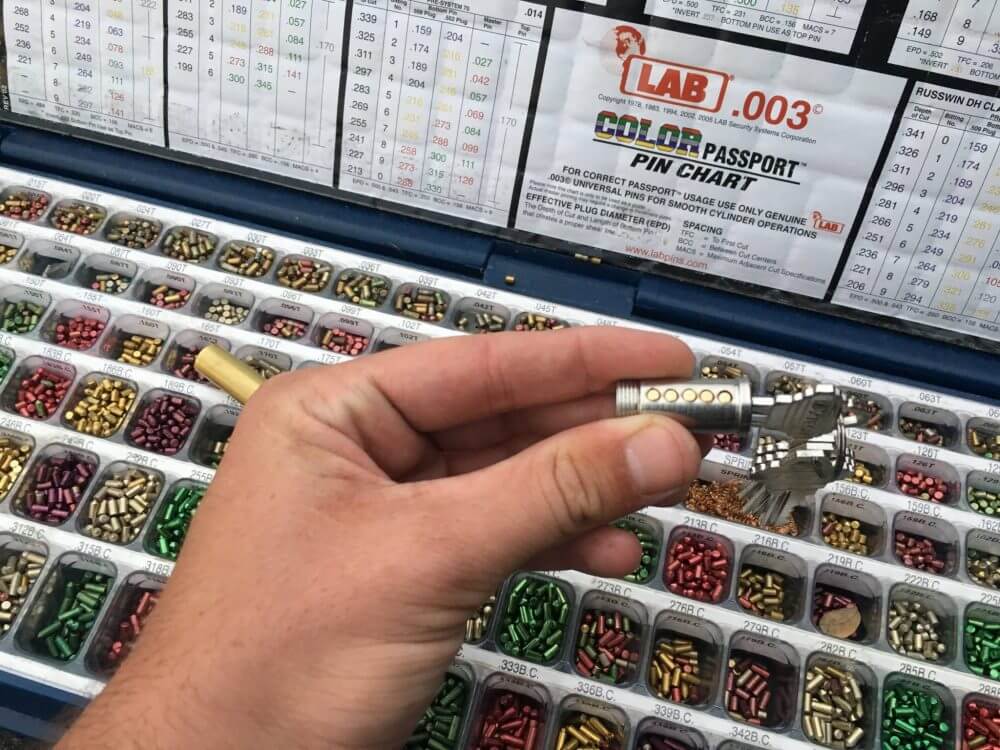
Look closely at a key and you will often find letters and numbers stamped on the head. Some say "Do not duplicate". Some carry a brand name and a short code. Some have a long number that looks like a serial number. Car keys, cabinet keys, mailbox keys and house keys all use them differently.
Those markings can be useful: they may identify the key blank, the lock manufacturer, or the actual cuts of the key. They can also be a risk, because a key code in the wrong hands can be enough to make a working key without ever touching the original.
The blank number. Key blanks are identified by a reference, such as a manufacturer's keyway designation. Common residential keyways have widely known blank references. A key cutter uses the blank reference to choose the right uncut key. On many keys, the blank reference is stamped by the key cutter or blank maker, not by the lock manufacturer.
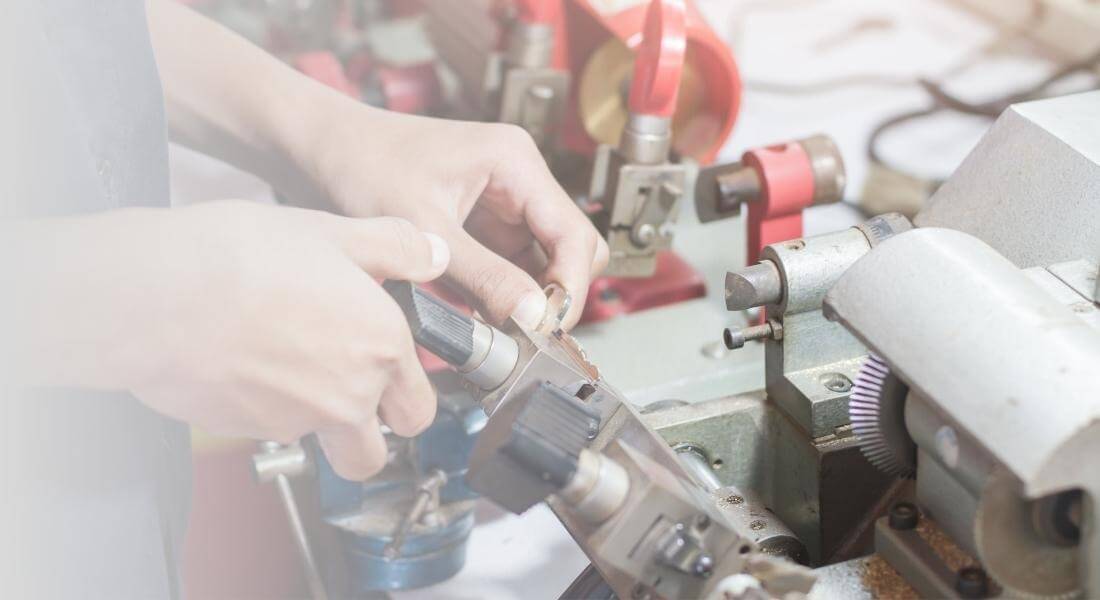
The key code. Many locks are made with a code that describes the depth of each cut. A code can be a direct code, where the numbers are the cut depths themselves, or an indirect or blind code, where the number refers to a table held by the manufacturer or by locksmiths. With the code, a key can be cut on a code machine without the original.
Control or registration numbers. High-security and restricted keys often carry a number that ties the key to a registered owner or system. Copies can only be made through an authorised dealer who checks the registration, which is how restricted key systems keep count of every key.
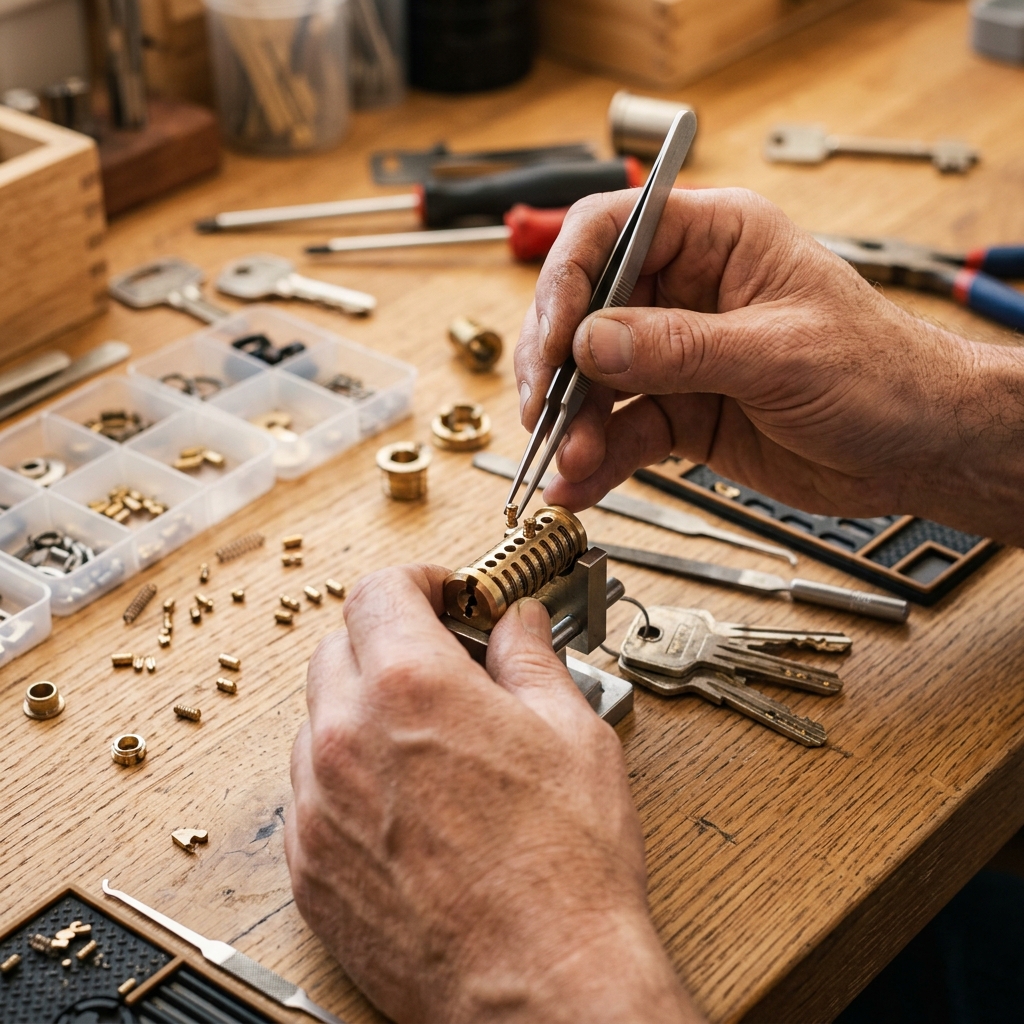
Cutting a fresh key. A key cut from a code is cut to the original factory depths. A key copied from a worn key copies the wear, and each copy of a copy gets worse. Cutting from the code gives a clean key every time, which is why codes help with worn keys and poor key copies.
Replacing lost keys. If every key to a cabinet, mailbox or furniture lock is lost but the code is known, a new key can often be cut without removing or opening the lock.
Matching existing systems. In a master-keyed building, the key code identifies where a key sits in the system, so replacements can be cut correctly.
A clear photograph of a key, or of the code on its head, can be enough for someone to cut a working copy. That is why:
Some owners grind or cover the code on keys that are handed out, while keeping a record of the code themselves.
A "Do not duplicate" stamp on an ordinary key is a request, not a technical barrier. Many key cutters honour it, some do not, and the stamp does nothing to stop someone copying the key with a code or a photograph. Real control over copies comes from a restricted keyway, where blanks are only supplied to authorised dealers and copies require registration. The limits of these stamps are well known in the trade.
Many house keys carry no code at all, especially copies and keys supplied with inexpensive locks. For those locks, a key can be cut by copying an existing working key, or by decoding the lock itself. Where no key exists and the lock cannot be decoded, rekeying the cylinder to a new key is often simpler than making a key to fit the old combination.
Car keys often carry a code on a tag or in the vehicle paperwork, and dealers can sometimes retrieve key codes from the vehicle identification number with proof of ownership. Modern car keys also contain transponders or remote electronics that must be programmed to the vehicle, so the cut is only part of the job.
The keys handed over when you buy or rent a home may carry codes, or may be copies with no markings. Either way, you cannot know who else has a key or the code. Rekeying the exterior locks, and keeping the new key codes to yourself, is the reliable way to start fresh, and rekeying house locks after moving takes a single visit.
For your own home or business, keep a simple record of each lock, its key code if it has one, and how many keys have been cut. Store it separately from the keys. When a key is lost, that record tells you which lock is affected and whether a fresh key can be cut from the code.
Small locks are where key codes are most often useful. Office furniture, filing cabinets, lockers, mailboxes and many cam locks carry a code stamped on the face of the lock, often a short letter-and-number combination. With that code, a replacement key can usually be cut without taking the lock apart. For office furniture in particular, the code is often the simplest route to a new key, and many cabinet ranges use a limited set of codes, which is also why a key from one cabinet sometimes opens another.
In a master-keyed building, each key's code describes both its own cuts and its place in the system. A change key opens one door; a sub-master opens a group; the master opens all. The codes are recorded in a keying schedule held by the building owner and the locksmith. A key stamped with a system code can be replaced correctly only if the schedule is available, which is why building owners should keep the schedule safe and up to date.
When a business or landlord hands out keys, the stamps on them matter. Keys stamped with a direct code can be copied by anyone with a code machine. Many businesses stamp keys with an internal reference instead, such as "Office 3" or a number that means nothing outside the business, and keep the true code in their own records. For restricted systems, the key stamp includes a number that the authorised dealer uses to check the request.
A clear photograph of a key, taken from the side, can be enough to work out the cuts. That applies whether or not a code is stamped on it. Keys laid on a table in a photograph posted online, keys visible in a video, or a key held up to a camera can all reveal the cuts. Keep keys out of photographs, and if a key has been widely shared in an image, consider rekeying the lock.
Landlords, property managers and small businesses benefit most from a proper key record. For each lock, note the key code or reference, the number of keys cut, who holds each key and when it was issued. When a tenant or employee leaves, the record shows which keys must come back and whether any locks need rekeying. Keeping codes and the key list together, but separately from the keys themselves, is the usual practice.
On many cabinet, mailbox and locker locks, the code is stamped on the face of the lock rather than the key. That makes replacing a lost key simple, but it also means anyone standing at the lock can read the code. For lockers and mailboxes where security matters, some owners choose locks with the code hidden on the back of the cylinder, visible only when the lock is removed.
When a lock is rekeyed, its old code no longer applies. The new key has a new combination of cuts, and a new code if the locksmith records one. Keep the new code with your records, and destroy or discard any old key tags and cards so they are not mistaken for current codes later.
Tell us what the lock is, whether you have a working key or only a code, and what you need: extra keys, a fresh key to replace worn copies, or a new key to a lock whose keys are all lost. A photograph of the lock face and any markings helps.
We can cut keys from codes where the lock allows, decode locks without keys, rekey cylinders to new keys and keep your codes private. Extra copies and spares are handled through spare keys and duplication.
Keep reading
They may be the blank reference, which tells a key cutter which uncut key to use; the key code, which describes the cut depths; or a registration number for a restricted key. Some keys carry more than one.
They may be the blank reference, which tells a key cutter which uncut key to use; the key code, which describes the cut depths; or a registration number for a restricted key. Some keys carry more than one.
Often, yes. With the key code, a locksmith can cut a key on a code machine without the original. That is useful for replacing lost keys and worn copies.
It can be. Anyone who sees or photographs the code may be able to have a key cut. Keep codes private, do not post photographs of keys, and consider rekeying if coded keys have been handed out widely.
Not reliably. It is a request, and some cutters ignore it. Restricted key systems, where blanks are controlled and copies require registration, give real control.
A copy reproduces the wear on the key it was copied from. A key cut from the code uses the original factory depths, so it works like a new key.
Look on the original keys, any tag or card supplied with the lock, the lock face on cabinets and mailboxes, or the cylinder itself, which may need removing.
Yes. A key can be copied from a working key, or the lock can be decoded. Where neither is practical, rekeying the cylinder to a new key is usually simpler.
Yes. A record of each lock, its code and how many keys exist, stored separately from the keys, makes replacing lost keys much easier.
GTA Lockman Mobile Locksmith Services is a mobile locksmith working on homes, businesses and vehicles across Toronto and the GTA, in the trade since 2010. Every review is written by a customer on Google, where you can read them in full.
Areas served: Toronto, North York, Scarborough, Etobicoke, Vaughan, Richmond Hill, Markham, Stouffville, Newmarket, Mississauga, Brampton, Oakville, Milton, Halton Hills, Pickering, Ajax, Whitby, Oshawa, Uxbridge.
Describe the door, hardware and service address. Contact GTA Lockman Mobile Locksmith Services to confirm the scope and scheduling for your location.