Locksmith services are always 10% off for seniors.
Open Mon–Thu 8:30 AM–9 PM, Fri 8:30 AM–4 PM, Sun 9:30 AM–9 PM
Locksmith services are always 10% off for seniors.
Open Mon–Thu 8:30 AM–9 PM, Fri 8:30 AM–4 PM, Sun 9:30 AM–9 PM
GTA Lockman Mobile Locksmith Services · Toronto & GTA
Pins, springs and the shear line: why the right key turns, and what rekeying actually changes.
Related services
Rekeying answers who holds a key; replacement answers whether the hardware suits the door. Compare both.
Learn moreReduce the keys you carry where cylinders and access requirements allow a suitable keyed-alike arrangement.
Learn moreWhy a key that worked for years starts to stick, and when the key rather than the lock is the problem.
Learn moreCompare key-control features and compatible hardware upgrades while keeping the surrounding door in the assessment.
Learn moreTrace the broken connection between the cylinder and the bolt or latch, then repair or replace the failed part.
Learn moreThe shape of the key slot decides which keys fit, whether locks can share a key, and who can copy it.
Learn more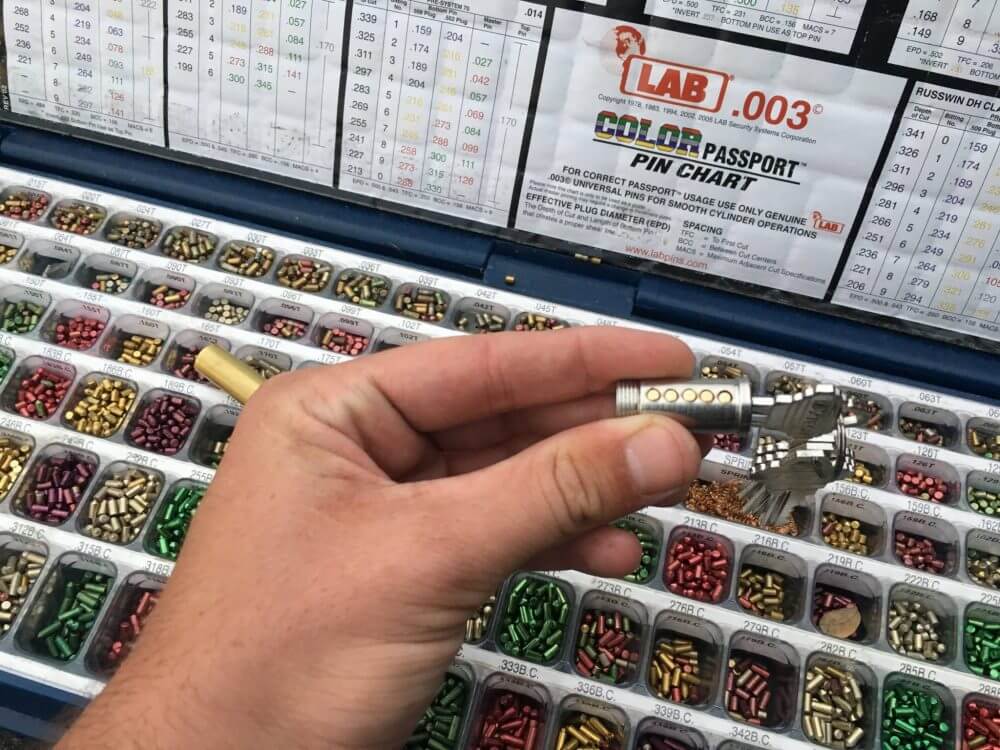
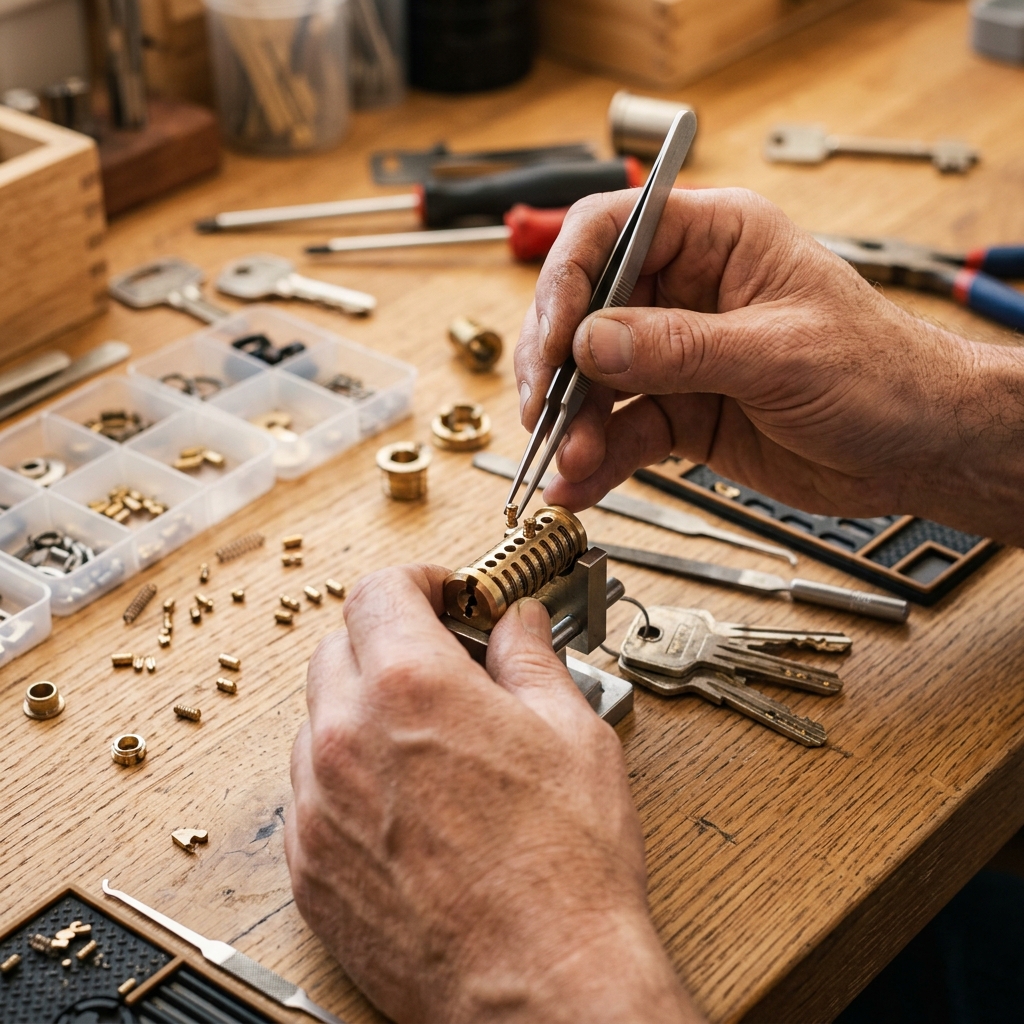
Most door locks in Canadian homes and businesses, from the front door deadbolt to the office entrance, use the same basic mechanism: the pin tumbler. It was refined in the nineteenth century and is still the most common lock design in the world. Understanding how it works explains a great deal: why a worn key sticks, how rekeying changes which key works, why some keys fit but will not turn, and what high-security cylinders do differently.
The housing (or shell). The outer body of the cylinder, fixed in the door.
The plug. A smaller cylinder inside the housing, with the keyway cut into its front. The plug is the part that turns when the right key is inserted. Its back end is connected, through a cam or tailpiece, to the bolt or latch.
The shear line. The tiny gap between the plug and the housing. For the plug to turn, nothing can be crossing this line.
Pin stacks. A row of vertical holes, usually five or six, drilled down through the housing and into the plug. Each hole holds a stack of pins:
With no key in the lock, the springs push each stack down so the driver pins sit across the shear line, partly in the housing and partly in the plug. The plug cannot turn because the driver pins block it.
When a key is pushed in, each cut on the key lifts its key pin to a particular height. The cuts on the correct key are exactly the depth needed to lift every key pin until its top sits precisely at the shear line. At that moment, the key pins are entirely inside the plug, the driver pins are entirely inside the housing, and nothing crosses the gap. The plug turns, and the bolt moves.
A wrong key lifts at least one pin too high or not high enough. Either a key pin crosses the shear line, or a driver pin does, and the plug stays locked.
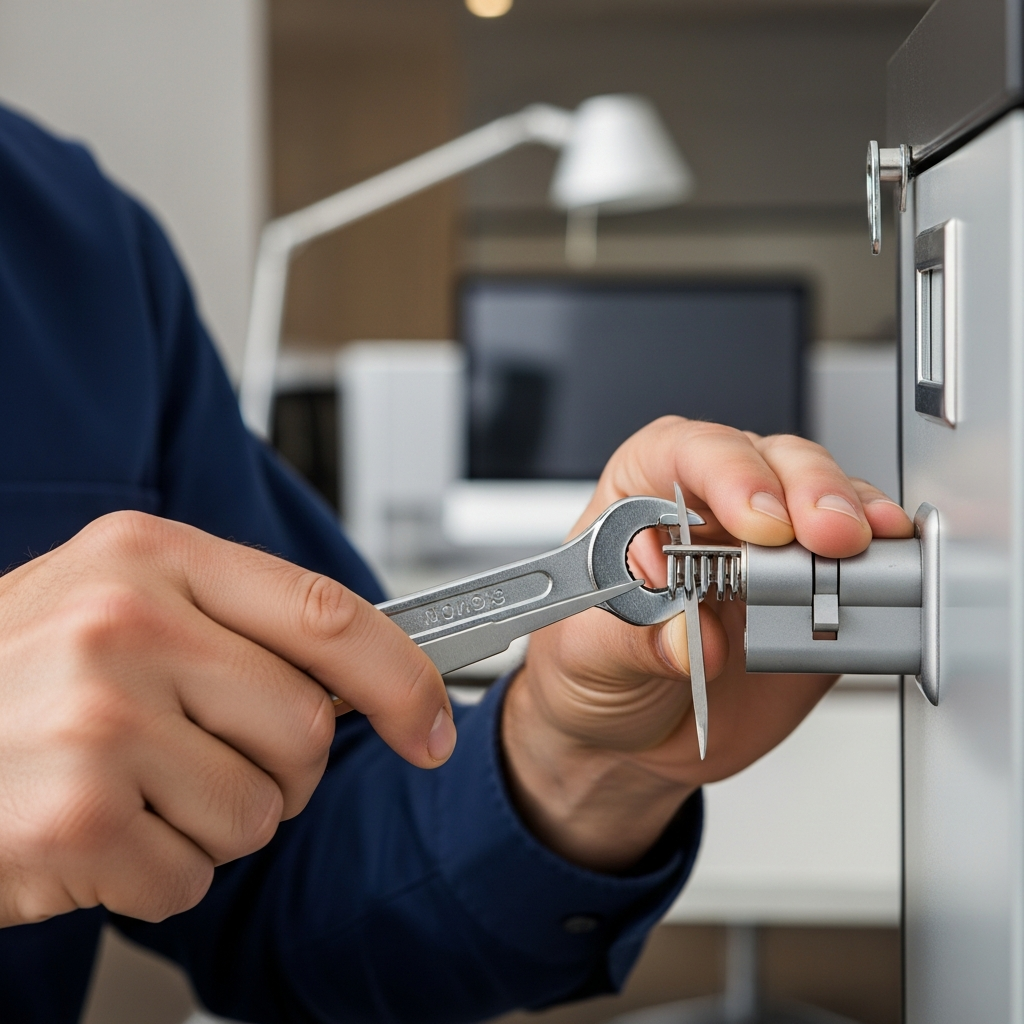
Because the key pins decide which key works, changing them changes the key. Rekeying means removing the plug, taking out the old key pins and fitting new ones of lengths that match a new key. The lock body stays in the door, the bolt stays the same, but old keys no longer line up the pins. This is why rekey or replace is often an easy decision when the lock is mechanically sound.
The same principle allows several locks to share one key: each cylinder is pinned to match the same key, the basis of one key for every door.
In a master-keyed system, extra small pins called master pins or master wafers are added to some stacks. These create a second shear point in those stacks, so two different keys can line up the pins: the change key for that door and the master key. Master keying is powerful for buildings but also reduces security slightly, because more key combinations open each lock. That is why master systems are planned carefully and kept on restricted keyways where possible.
Photos
Photographs from GTA Lockman Mobile Locksmith Services work across Toronto and the GTA. Send a picture of your own door and we can tell you what the visit would involve.
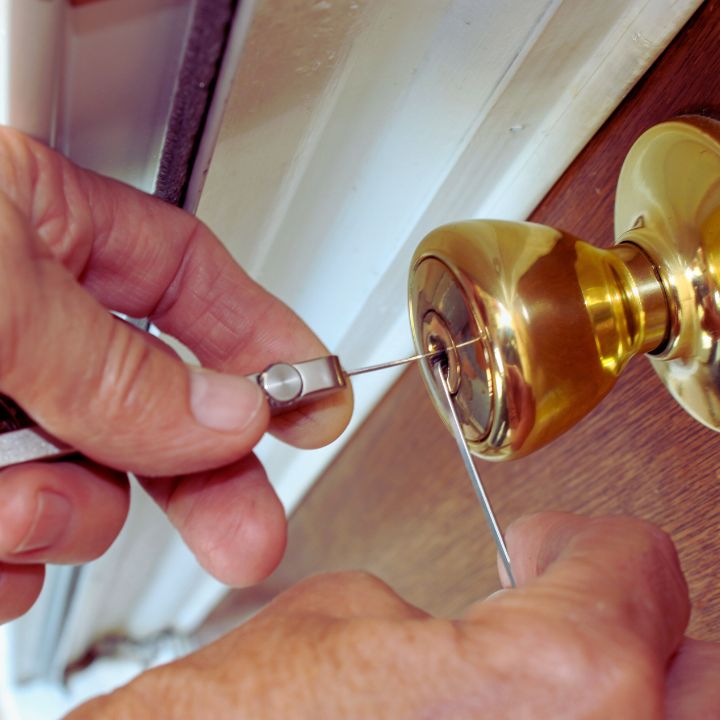


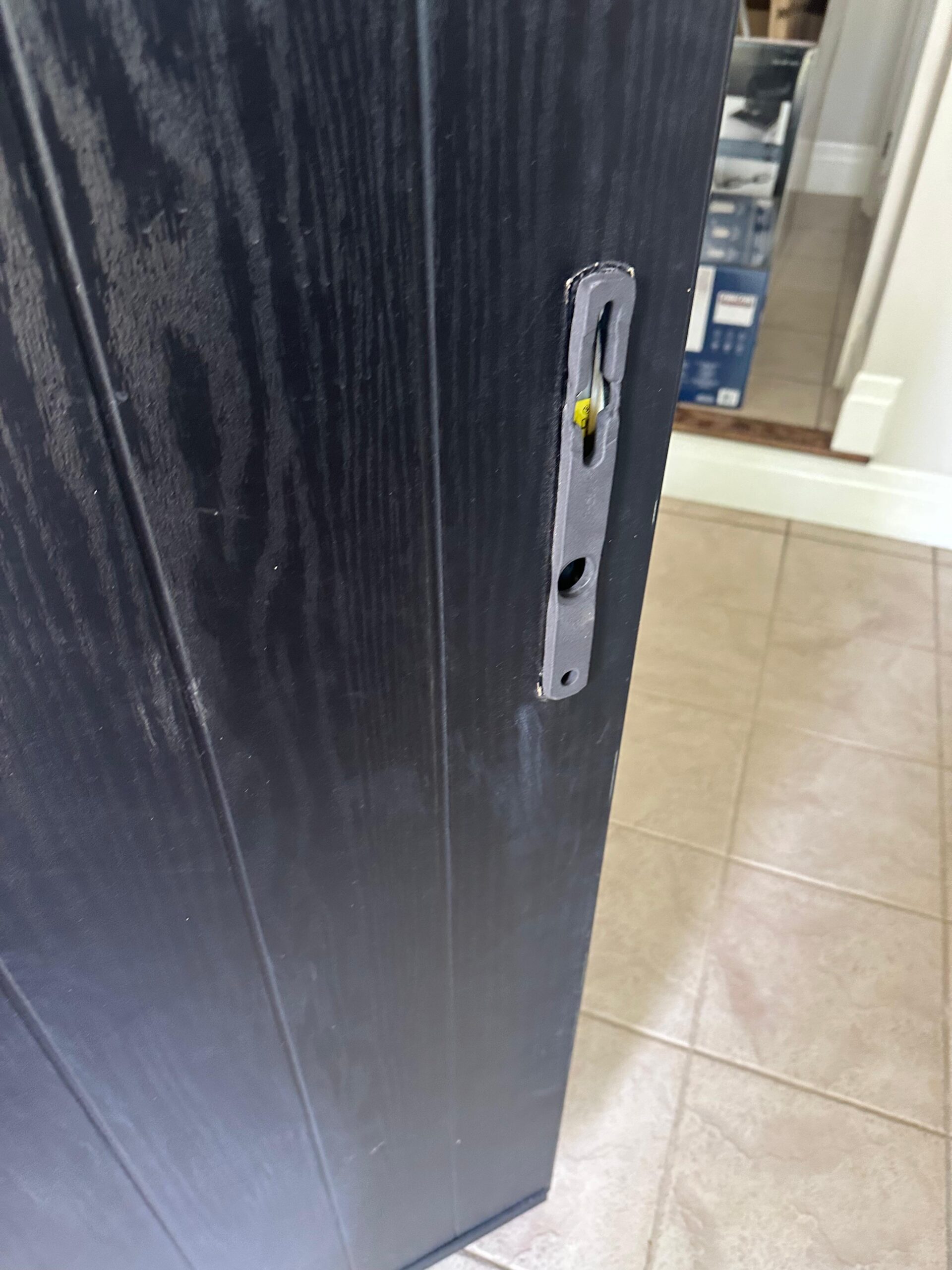
The pins must sit exactly at the shear line, within fractions of a millimetre. A key that has worn down over years lifts each pin a little less than it should. At first, a little wiggling still lines everything up; eventually the key stops working. Copies of copies make this worse, as each copy loses a little more accuracy, the problem behind most worn keys and poor key copies.
Pins wear too. The tips of key pins round off, and the plug's pin holes become slightly oval. A lock with worn pins becomes sloppy, accepting keys it should not and sticking with keys it should accept. Re-pinning with fresh pins restores it.
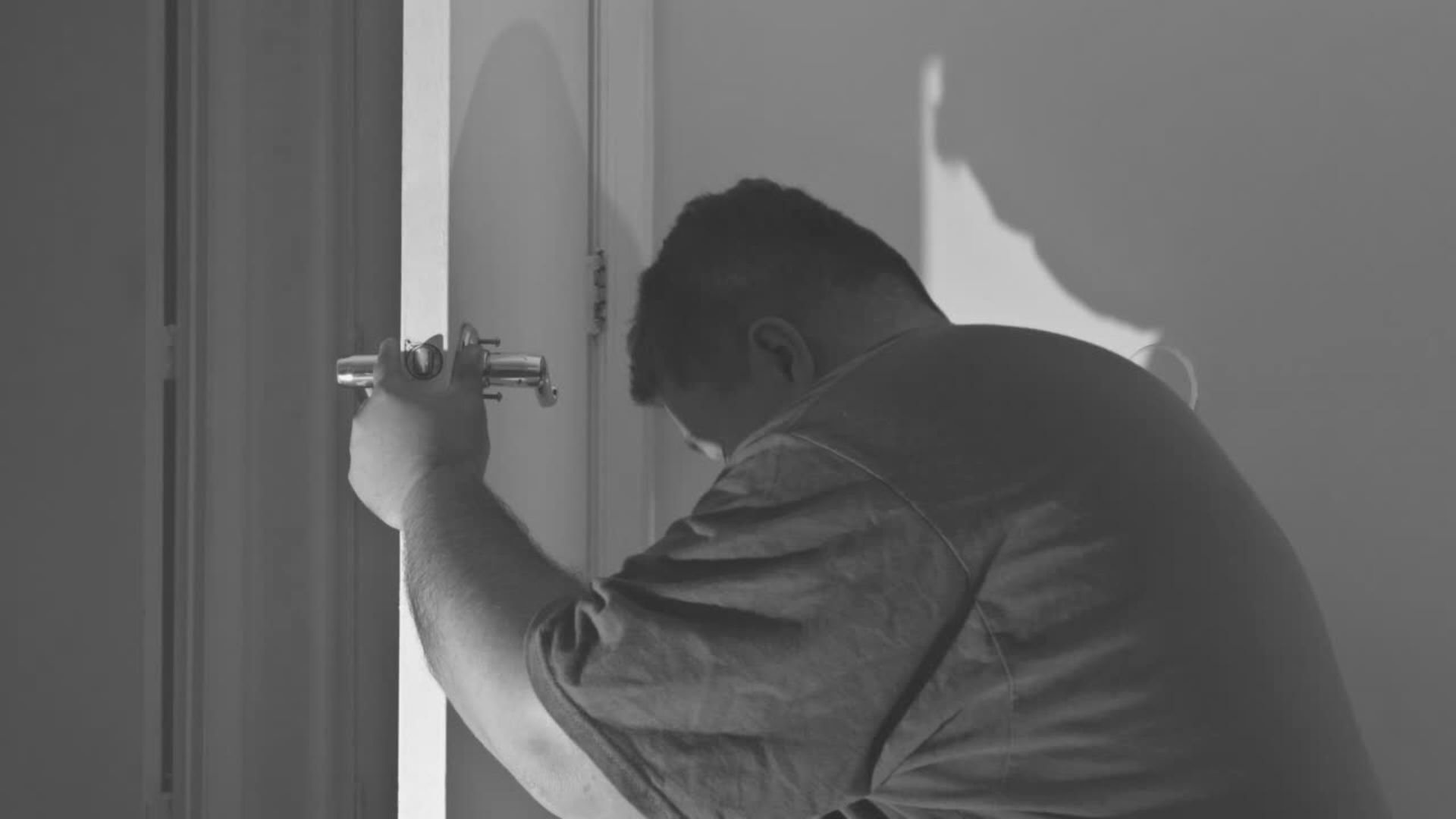
A key on the right keyway slides in but will not turn if its cuts do not lift the pins correctly. That can mean:
The last two are mechanical faults. Binding bolts are common on doors that have moved, as with a deadbolt that is stuck.
Picking. Tension is applied to the plug while each pin is lifted to the shear line one at a time. Manufacturing tolerances mean one pin binds first, and a skilled person can set them in sequence. Most residential locks can be picked by someone with skill and time, which is why physical security relies on more than the cylinder alone.
Bumping. A specially cut key is struck so the pins jump momentarily, and the plug is turned while they are separated. Many modern cylinders include features to resist it.
Snapping and drilling. Force rather than finesse: breaking a protruding cylinder or drilling through the shear line.
High-security cylinders keep the pin tumbler principle but add more barriers: security pins shaped to catch during picking, side bars that require the pins to be rotated as well as lifted, hardened inserts that resist drilling, anti-snap designs, and restricted keyways that control who can copy keys. Some add a second set of pins along the side of the key. The result is far more resistant to picking, bumping and duplication, and these features are what define high-security locks.

Not every lock uses pins. Many cabinet and furniture locks use wafers, flat plates that do the same job more simply. Older doors and furniture use warded or lever locks. Some high-security locks use rotating discs. Electronic locks often still contain a pin tumbler cylinder as the key backup. The pin tumbler remains the standard for house and building doors because it is reliable, inexpensive to make and easy to rekey.
Keep the keyway clean, use a dry lubricant once or twice a year, replace keys that are visibly worn, and keep the door adjusted so the bolt does not bind. Those habits keep the pins moving freely and the lock working for decades.
The parts inside a pin tumbler cylinder are tiny. Key pins come in a range of lengths, often in steps of a fraction of a millimetre, and the difference between one depth and the next is small. Manufacturing tolerances, the slight variations between holes and pins, decide how smoothly a lock works and how easy it is to pick. Better cylinders are made to tighter tolerances, which makes them smoother with the right key and harder to manipulate without it.
Springs matter too. A weak or broken spring can leave a driver pin hanging in the plug, so the lock jams or the key will not go in. Springs fatigue over decades of use, which is one reason very old cylinders become unreliable.
Some cylinders have pins on both sides of the keyway, or along the side of the key as well as the top. Keys for these are cut on both edges or on the flat faces. They add more pin stacks and more possible combinations, and many are harder to copy because the blanks and machines are less common.
The plug does not move the bolt directly. On a deadbolt, a flat tailpiece on the back of the plug passes through the bolt mechanism and turns it. On a mortise cylinder, a cam on the back of the plug operates the lock. If the tailpiece or cam breaks or slips, the key turns freely but nothing happens, the classic case of a key that turns but the door will not unlock.
Rekeying needs the right pin kit, a plug follower to keep the driver pins in place while the plug is removed, and care: if the driver pins and springs escape, the cylinder has to be reloaded from scratch. It is routine work for a locksmith and can be done on site in a few minutes per cylinder. Some locks marketed as user-rekeyable use a different internal mechanism designed for that purpose.
Two locks from different manufacturers can share a key if they use the same keyway profile and the same pin spacing and depth system. Many residential brands follow one of the common standards for exactly this reason, which is why a locksmith can often key a mixed set of locks to a single key. Where the spacing or depths differ, the cylinder has to be swapped, a point also made in keyways explained.
Wafer locks use flat spring-loaded plates instead of pin stacks. They are cheaper and thinner, which suits cabinets, mailboxes and many car doors, but they offer fewer combinations and less resistance than a good pin tumbler cylinder.
Tell us what the lock is doing: a key that sticks, a key that fits but will not turn, or a lock you want rekeyed. Photographs of the key and the lock help.
We rekey and re-pin cylinders, key several locks alike, set up master key systems, and fit high-security cylinders where more resistance is needed. Household locks are part of our residential locksmith services.
Keep reading
The most common door lock mechanism. Spring-loaded stacks of pins block a rotating plug until the right key lifts every pin to exactly the right height, letting the plug turn.
The most common door lock mechanism. Spring-loaded stacks of pins block a rotating plug until the right key lifts every pin to exactly the right height, letting the plug turn.
The tiny gap between the plug and the housing. When every pin is lifted so nothing crosses it, the plug can turn.
The key pins are replaced with pins of different lengths that match a new key. The lock stays in the door, but old keys no longer line up the pins.
The pins must line up precisely. A slightly worn key may still line them up with some wiggling, until wear goes too far and the key stops working.
It may be the wrong key, the lock may have been rekeyed, the key may be worn, or the bolt may be binding. Broken or stuck pins inside the cylinder can also stop it.
Extra small pins create a second alignment point in some pin stacks, so both the door's own key and the master key can turn the plug.
Most standard cylinders can be picked by someone with skill and time. High-security cylinders add security pins, side bars and anti-drill features that make picking and bumping much harder.
No. Many cabinet locks use wafers, older locks use wards or levers, and some high-security locks use rotating discs. Most house and building door cylinders use pins.
GTA Lockman Mobile Locksmith Services is a mobile locksmith working on homes, businesses and vehicles across Toronto and the GTA, in the trade since 2010. Every review is written by a customer on Google, where you can read them in full.
Areas served: Toronto, North York, Scarborough, Etobicoke, Vaughan, Richmond Hill, Markham, Stouffville, Newmarket, Mississauga, Brampton, Oakville, Milton, Halton Hills, Pickering, Ajax, Whitby, Oshawa, Uxbridge.
Describe the door, hardware and service address. Contact GTA Lockman Mobile Locksmith Services to confirm the scope and scheduling for your location.