Locksmith services are always 10% off for seniors.
Open Mon–Thu 8:30 AM–9 PM, Fri 8:30 AM–4 PM, Sun 9:30 AM–9 PM
Locksmith services are always 10% off for seniors.
Open Mon–Thu 8:30 AM–9 PM, Fri 8:30 AM–4 PM, Sun 9:30 AM–9 PM
GTA Lockman Mobile Locksmith Services · Toronto & GTA
Rekeying answers who holds a key; replacement answers whether the hardware suits the door. Compare both.
Related services
Replace worn or unsuitable hardware with a lock that fits the door, its function and your access needs.
Learn moreKeep suitable hardware while changing which keys operate your new home’s locks.
Learn moreReview every door the missing keys operated, then rekey or replace the locks that no longer control access.
Learn moreReduce the keys you carry where cylinders and access requirements allow a suitable keyed-alike arrangement.
Learn moreChoose compatible front-door hardware with the right fit, operation and finish for the existing opening.
Learn moreFind the reason a key sticks, a bolt binds or a latch fails before deciding what needs replacement.
Learn more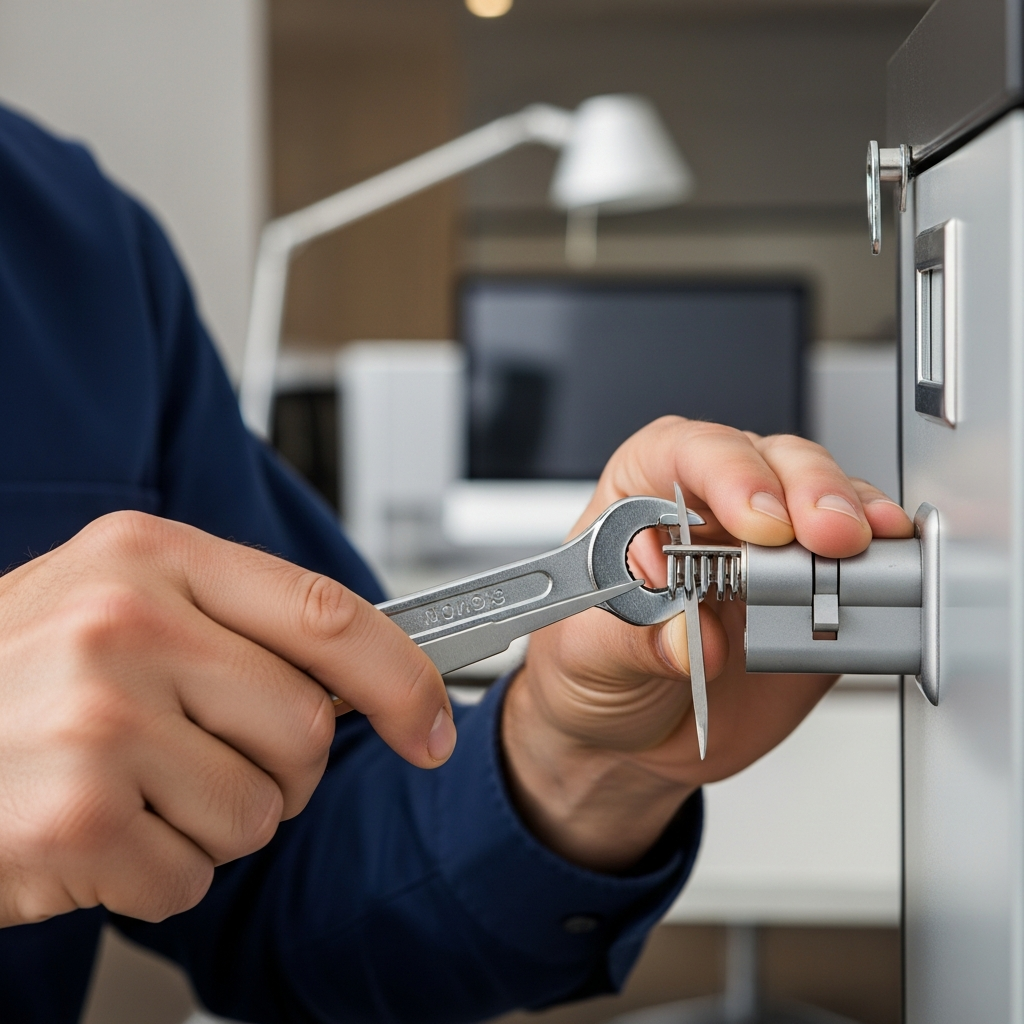
People often ask whether to rekey or replace a lock as if it were one decision. It is really two. Rekeying answers "who can open this door", and replacement answers "is this hardware right for this door".
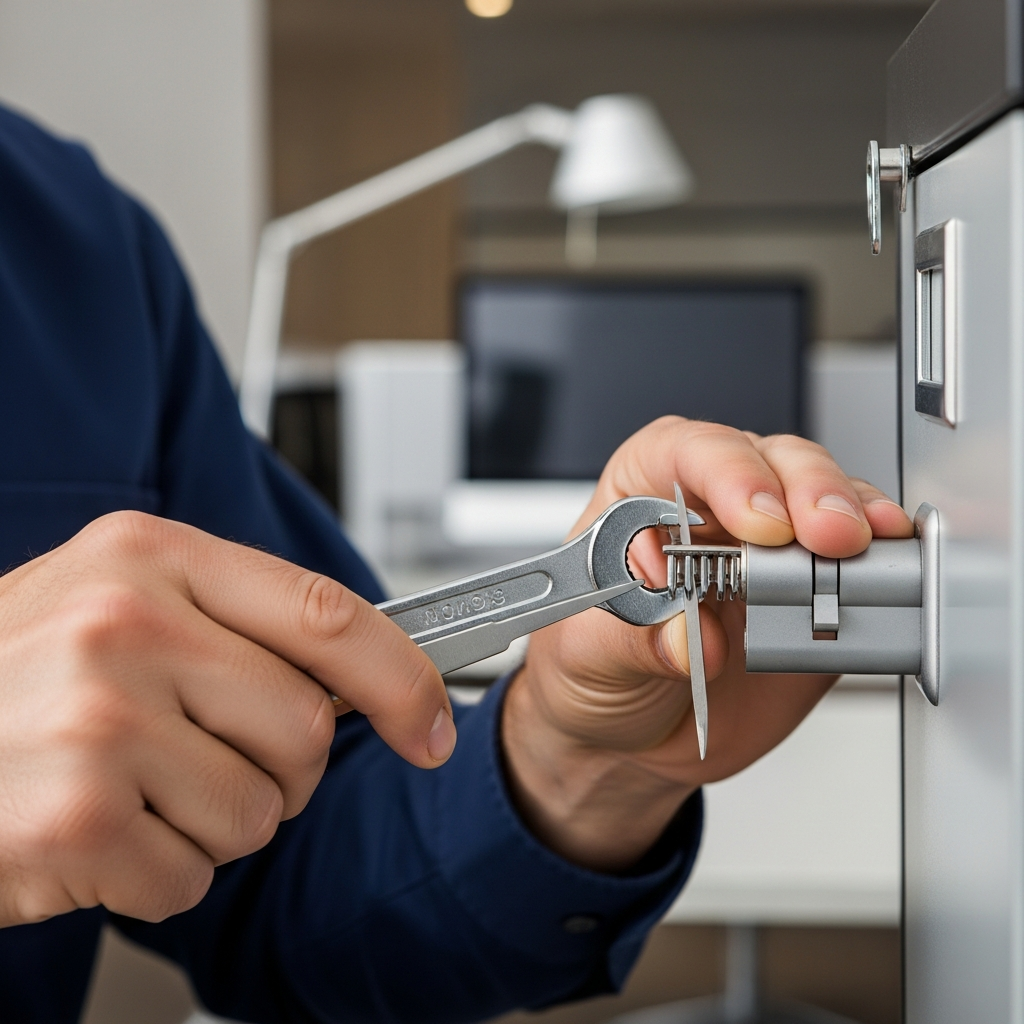
Rekeying changes the pins inside an existing cylinder so a new key works and the old keys do not. The lock body, trim, bolt and door preparation all stay as they are.
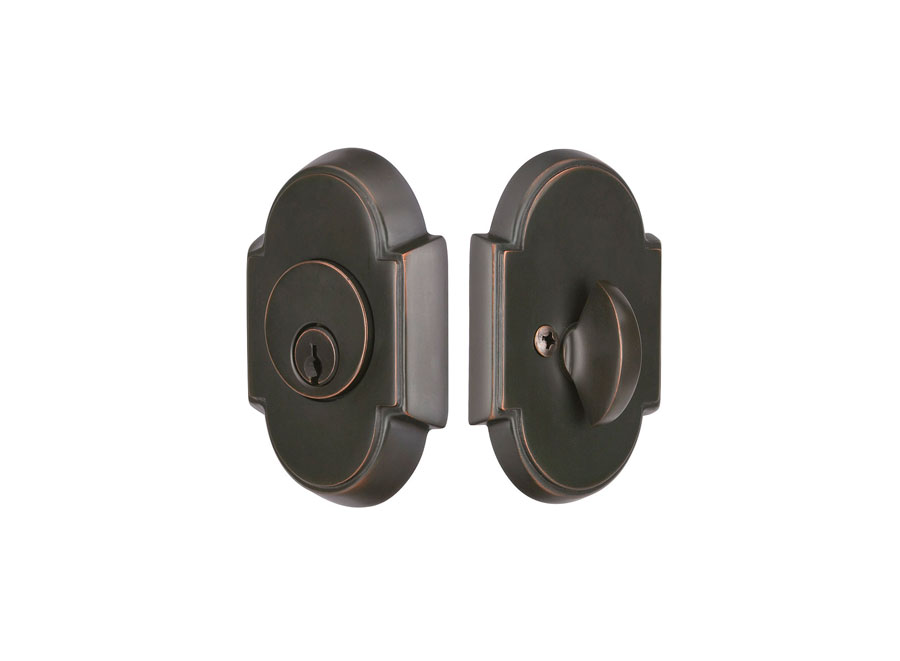
Replacement removes the hardware and fits new hardware. It changes the key as well, but it also changes the condition, the function, the finish and sometimes the security level.
If your only concern is that someone may hold a key, rekeying usually answers it. If the hardware is worn, damaged or wrong for the door, a new key does not fix that.
Rekeying suits locks that work properly and suit the door. Typical situations are moving into a home where previous keys are unaccounted for, a lost or stolen key, a staff or tenant change, a contractor who held a key during a renovation, or simply too many copies in circulation.
It also suits households that want one key for several doors. Compatible cylinders can be rekeyed to a single key, giving one key for every door.
Rekeying is usually quicker and less expensive than replacement, and it keeps hardware that matches the rest of the house.
Replace when the lock is worn out, damaged, unsupported by its manufacturer, or unsuitable for the door or the way the door is used. Signs include a key that needs force, a bolt that no longer throws fully, a cylinder that turns roughly, a loose or drooping handle, or visible damage from a forced entry.
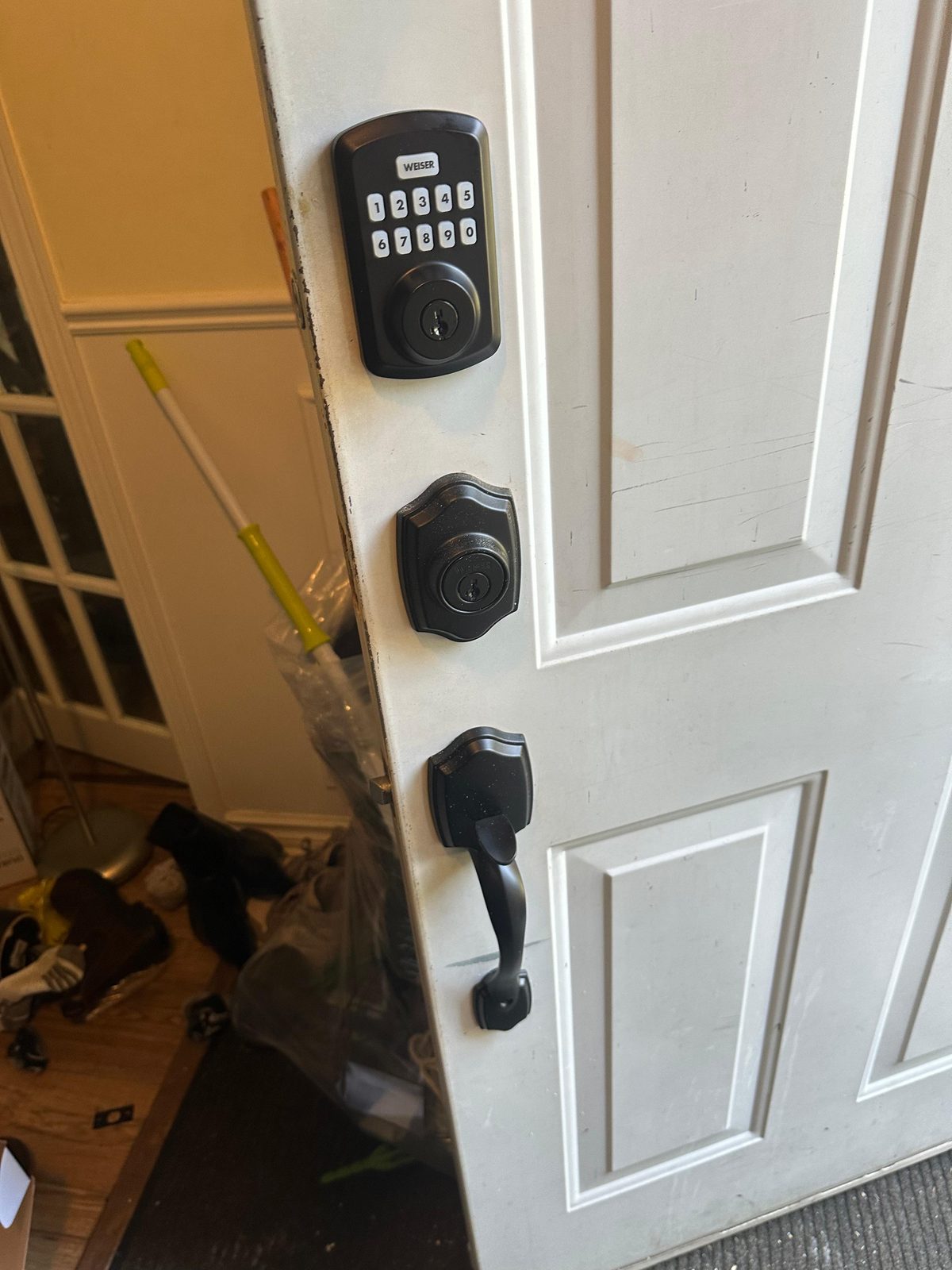
Replacement is also the answer when you want a different function, such as adding a deadbolt where there is only a knob lock, moving to a keypad, or changing to hardware that suits a door that has been replaced. Compatible options are chosen during front door lock replacement.
Where a restricted keyway is wanted so copies can be controlled, that normally means new cylinders. See residential high-security lock upgrades.
Many calls that begin as "I need a new lock" turn out to be alignment. If the key turns easily with the door open but binds when it is closed, the strike, hinges or frame need attention and new hardware will behave the same way. That pattern is behind both a stuck deadbolt and door that will not open and a front door that will not lock.
Equally, if the frame is split or the door is damaged, the strongest lock available will not hold. Frame reinforcement, a regular part of side and back door lock repair, is often better value than a hardware upgrade.
A good technician tests the door before recommending either option.
Rekeying costs less per lock than replacement and takes less time, particularly where several locks share a keyway. It preserves the existing finish, which matters when hardware is matched across a house.
Replacement costs more because hardware is involved, and it may require work to the door if the preparation does not match. It gives you a new mechanism with a fresh service life and lets you change function or finish.
For a mixed set of doors, a combination is common: rekey the locks that are sound, replace the one that is worn, and set everything to one key.
Photos
Photographs from GTA Lockman Mobile Locksmith Services work across Toronto and the GTA. Send a picture of your own door and we can tell you what the visit would involve.
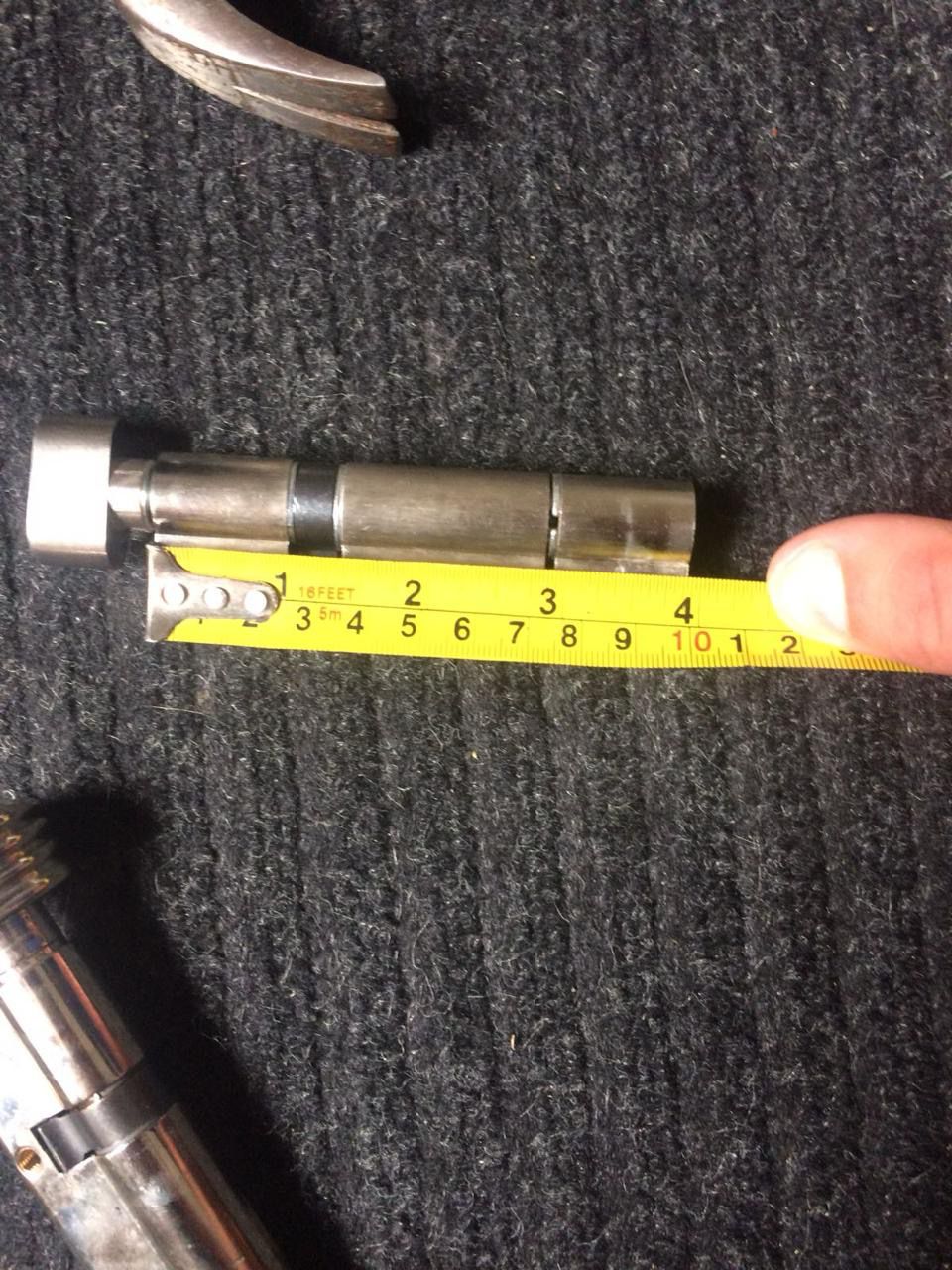
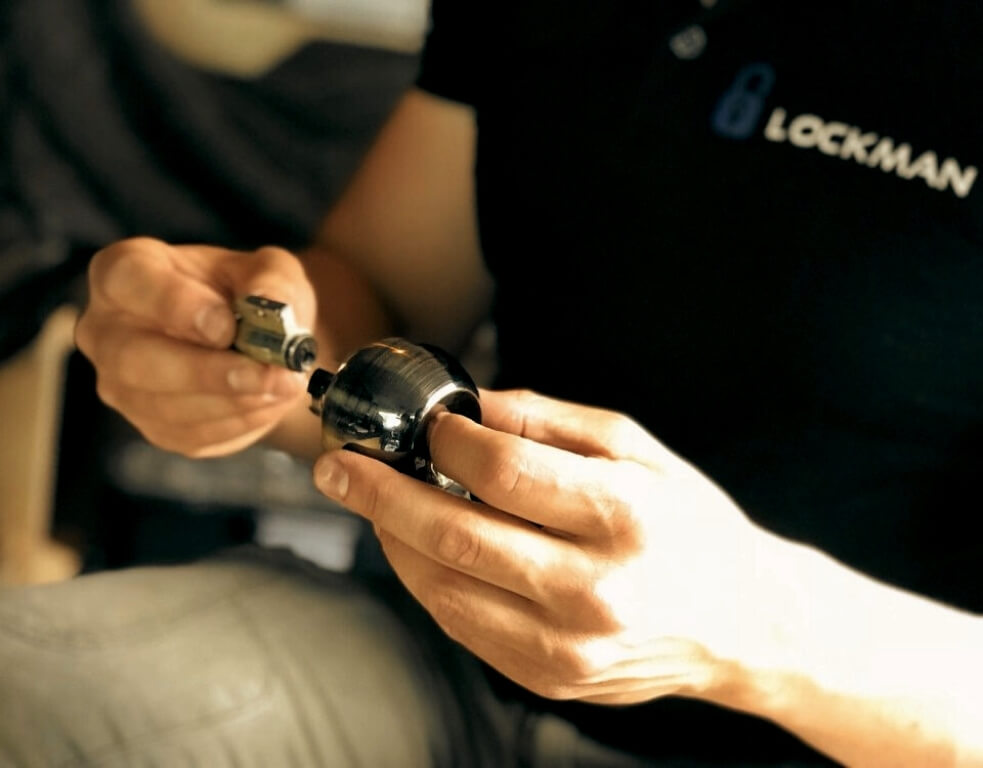
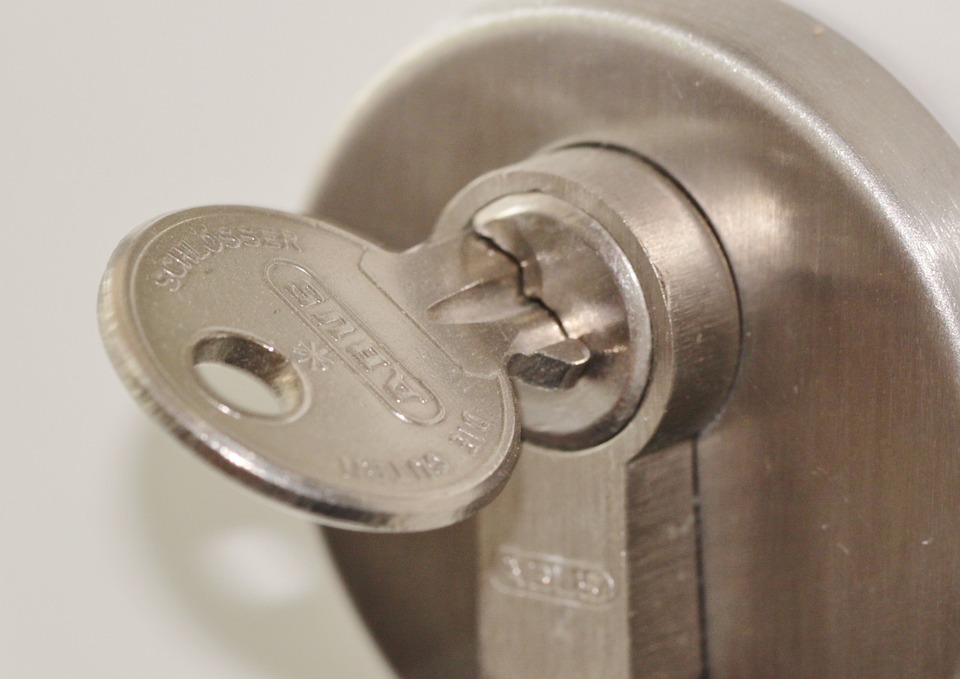
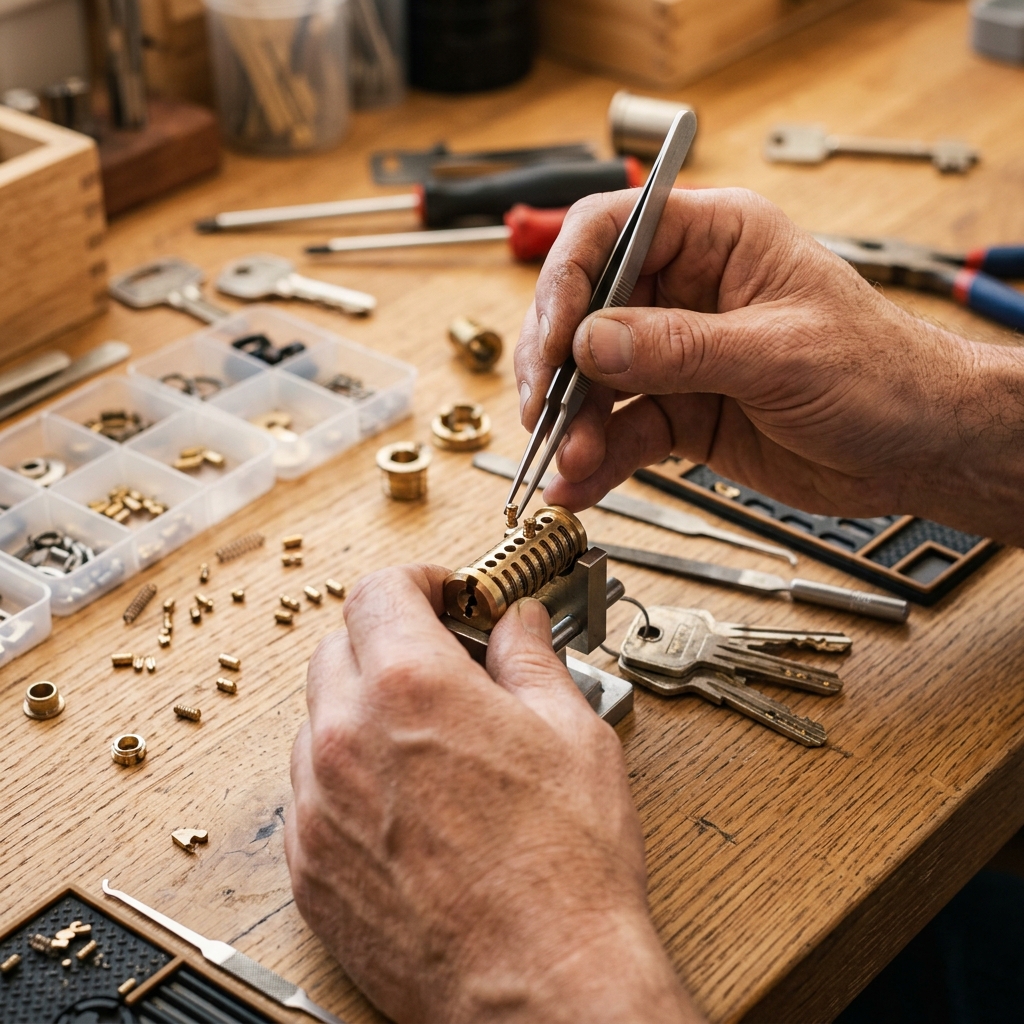
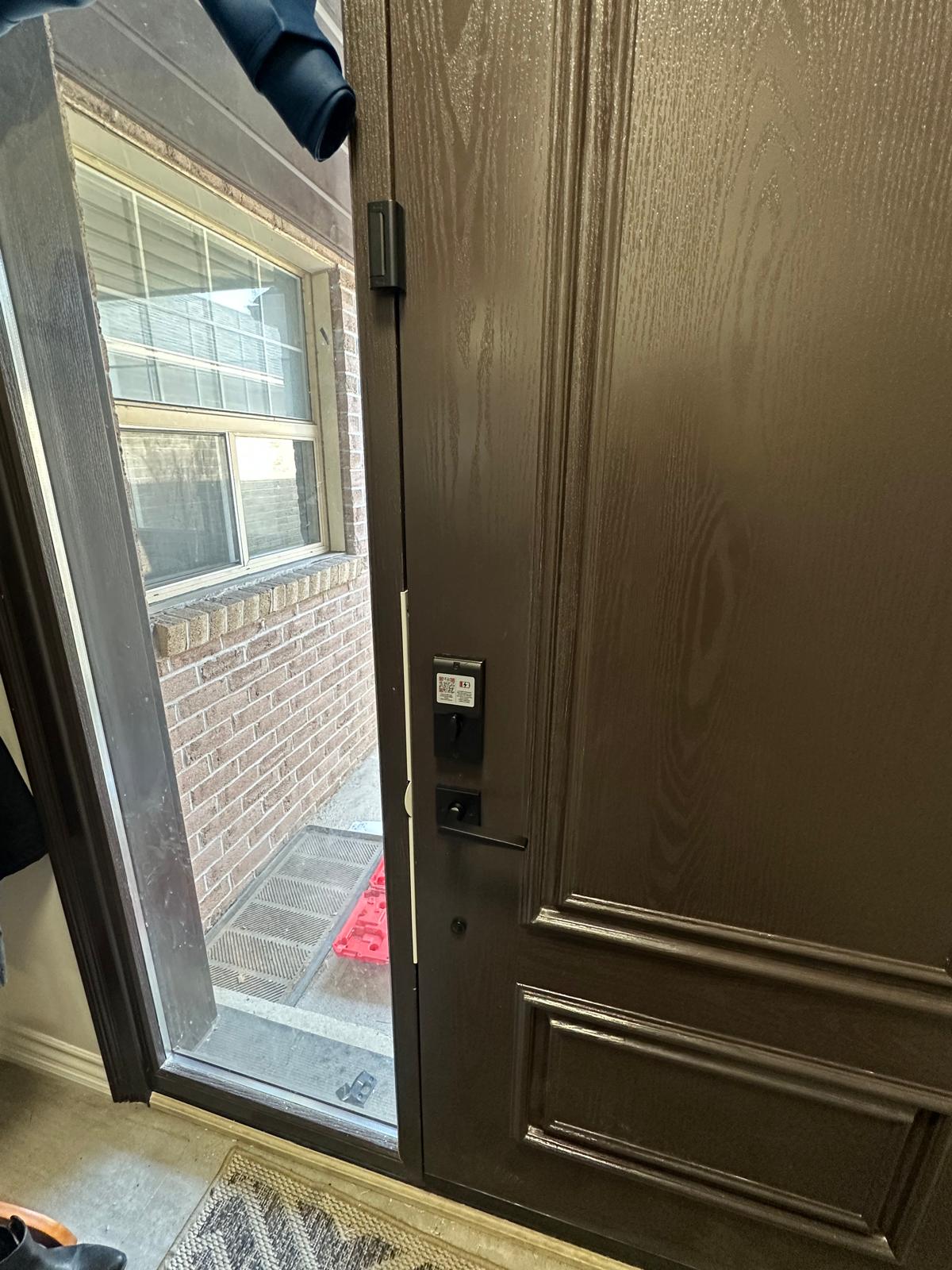
A lock that has been forced, drilled or damaged should be replaced rather than rekeyed. A cylinder that cannot be serviced, or for which parts are unavailable, has to be replaced. Restricted keyways require new cylinders. A building master-key system may dictate which cylinders can be used at all, which matters in condominiums and commercial units.
Conversely, if a landlord, employer or condominium requires the hardware to stay within a system, rekeying within that system may be the only permitted option.
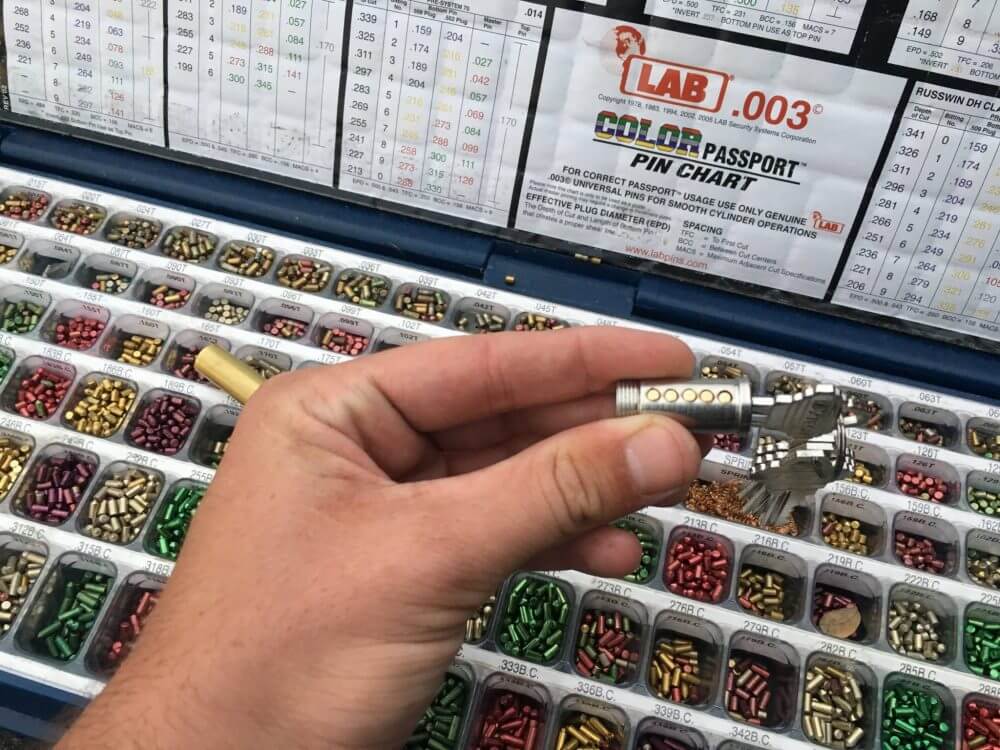
Keypad and smart locks have both sides of this question. The mechanical override cylinder can usually be rekeyed like any other. The user codes and app accounts are separate, and changing them is the electronic equivalent of a rekey.
After a change of household, staff or tenants, do both: rekey or replace the override cylinder if keys are unaccounted for, and remove codes and accounts that should no longer work. On the electronic side, codes are managed on the keypad lock itself, and faults are handled through smart lock troubleshooting.
On site, we test each lock with the door open and closed, check the bolt's travel and the strike, look at the cylinder's condition and the key's wear, and ask what prompted the call. Then we explain what rekeying would achieve, what replacement would achieve, and what neither would fix.
Where a repair or an adjustment solves the problem, we say so. The aim is that you pay for the thing that actually addresses the situation.
Across a typical house, the answer is rarely all one or the other. A front door with sound hardware and an uncertain key history is a rekey. A side door with a worn knob set that has never had a deadbolt is a replacement and an upgrade. A garage entry that binds every summer is an alignment repair. A patio door that has dropped on its rollers is a different job again.
Because of that, we price the doors individually rather than quoting one figure for the house, and we explain what each option addresses. If you want everything on one key afterwards, say so at the start, because it affects which cylinders are chosen and whether any need replacing to join the arrangement.
If you are moving, the most practical timing is the day you take possession, before furniture and children arrive. For a lost key, sooner is better, and for staff changes, the departure day. Have the doors accessible, tell us how many locks are involved, and mention any door that is already difficult to lock so the visit allows time for it.
Keep the invoice, note which doors were rekeyed or replaced, and record how many keys were cut and who received them. That record is what makes the next decision, whenever it comes, much quicker to make.
One more consideration is how the decision fits the rest of the house. Replacing a single lock with a different brand can leave you carrying an extra key, while rekeying the same lock keeps everything on one key. If you know you will eventually want one key for every door, tell us at the start; we can plan which cylinders to rekey now and which to replace with compatible hardware, so you end up with a single arrangement rather than a drawer of keys accumulated one visit at a time. It is a small planning step that avoids the most common outcome: a house where three doors share a key, two do not, and nobody remembers which key belongs to the side entrance.
When you call, say how many doors are involved, whether the locks currently work, whether any key is missing and whether you want one key for several doors. Photographs of the hardware help. Full replacement is handled as a lock change, and a sound lock with a worn part is usually a case for lock repair.
Keep reading
Rekeying changes the pins inside the existing cylinder so a new key operates it and old keys do not. The lock body, trim and door preparation stay as they are. Replacement removes the hardware and fits new hardware, which changes the key as well as the condition, function, finish and security level. Rekeying answers who can open the door; replacement answers whether the hardware itself is right for the door.
Rekeying changes the pins inside the existing cylinder so a new key operates it and old keys do not. The lock body, trim and door preparation stay as they are. Replacement removes the hardware and fits new hardware, which changes the key as well as the condition, function, finish and security level. Rekeying answers who can open the door; replacement answers whether the hardware itself is right for the door.
Rekeying, in most cases, because no hardware is purchased and the work takes less time, particularly when several locks share a keyway. Replacement costs more and may involve additional work if the door preparation does not match the new hardware. For a mixed set of doors, a combination is common: rekey the sound locks, replace the worn one, and set everything to a single key.
Usually not new hardware, if the existing locks work properly and suit the doors. Rekeying makes any keys held by previous owners, their family, contractors or cleaners stop working while keeping the hardware you have. Replacement becomes worthwhile if a lock is worn or damaged, if a door has only a knob lock and you want a deadbolt, or if you want a different type of lock such as a keypad.
Signs include a key that needs force or wiggling, a cylinder that turns roughly, a bolt that no longer throws fully, a handle that is loose or drooping, and visible damage. If a key has already broken in the lock, or the lock was forced during a break-in, replacement is usually the right call. A technician can test the lock and tell you whether servicing, rekeying or replacement is appropriate.
Only if the stiffness comes from worn pins inside the cylinder, which rekeying replaces. If the key binds when the door is closed but works with the door open, the problem is alignment, and neither rekeying nor a new lock will fix it. The strike, hinges or frame need adjusting. That is why the door should be tested both open and closed before deciding what work to do.
Often, if the cylinders are compatible or can be converted. Rekeying several locks to one key is common and convenient for households carrying keys for front, side and garage doors. Where a door uses a different brand or keyway, a replacement cylinder may be needed to bring it into the arrangement. High-security and restricted keyways have their own rules and may require the original supplier.
Yes. In condominiums, suite cylinders often have to stay within the building's master-key system, and management may need to approve or arrange the work. In leased commercial units, the lease may require the landlord's consent or a key deposit. In rentals, tenancy rules govern lock changes. In those cases, rekeying within the existing system is often the permitted route, and we work within it.
It has both parts. The mechanical override cylinder can usually be rekeyed like any other lock, and that matters if physical keys are unaccounted for. The user codes and app accounts are separate and need their own review. After a household, staff or tenant change, do both: address the mechanical key, then remove codes and accounts that should no longer work.
GTA Lockman Mobile Locksmith Services is a mobile locksmith working on homes, businesses and vehicles across Toronto and the GTA, with more than 14 years in the trade. Every review is written by a customer on Google, where you can read them in full.
Areas served: Toronto, North York, Scarborough, Etobicoke, Vaughan, Richmond Hill, Markham, Stouffville, Newmarket, Mississauga, Brampton, Oakville, Milton, Halton Hills, Pickering, Ajax, Whitby, Oshawa, Uxbridge.
Describe the door, hardware and service address. Contact GTA Lockman Mobile Locksmith Services to confirm the scope and scheduling for your location.