Locksmith services are always 10% off for seniors.
Open Mon–Thu 8:30 AM–9 PM, Fri 8:30 AM–4 PM, Sun 9:30 AM–9 PM
Locksmith services are always 10% off for seniors.
Open Mon–Thu 8:30 AM–9 PM, Fri 8:30 AM–4 PM, Sun 9:30 AM–9 PM
GTA Lockman Mobile Locksmith Services · Toronto & GTA
When hardware you already own can move to another door, and when the fit makes that a false economy.
Related services
Rekeying answers who holds a key; replacement answers whether the hardware suits the door. Compare both.
Learn moreChoose compatible front-door hardware with the right fit, operation and finish for the existing opening.
Learn moreNew floors, paint, thresholds and weatherstripping move doors. Find the cause and restore reliable locking.
Learn moreWhat Grade 1, 2 and 3 measure, what they leave out, and why the strike and frame often matter more.
Learn moreFind why the handle moves, droops or fails to retract the latch, then address the responsible component.
Learn moreReplace worn or unsuitable hardware with a lock that fits the door, its function and your access needs.
Learn more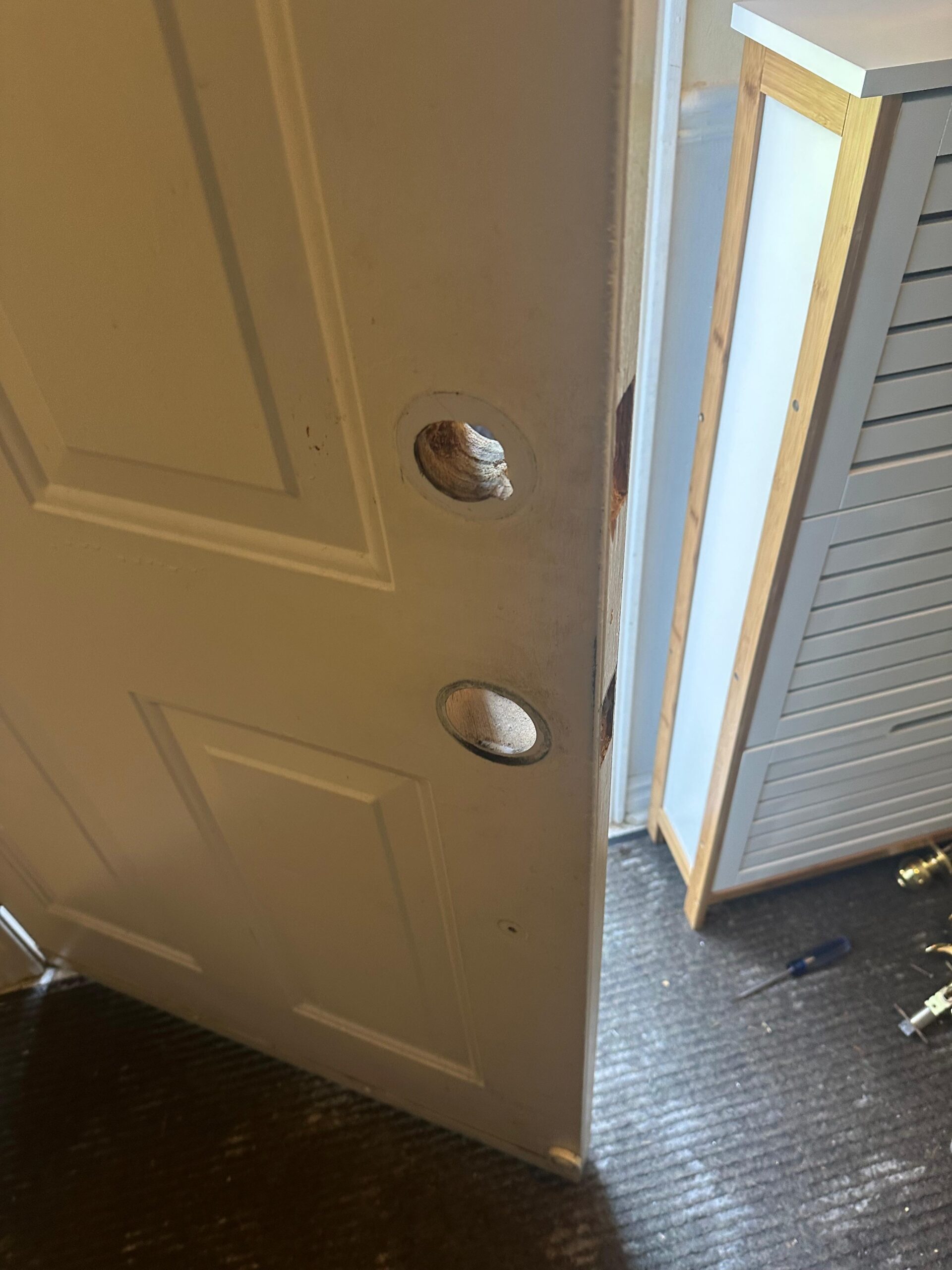
There is a box in a lot of basements: the handleset from the old front door, a deadbolt taken off during a renovation, a lever that came off the door to the garage, a smart lock replaced when the phone stopped supporting it.
Some of that is genuinely reusable. Some of it will not fit the door you have in mind, and fitting it anyway creates problems that outlast whatever was saved. The trick is telling those two cases apart before anything is drilled, cut or ordered.
Almost every "will this fit" question comes down to four numbers.
Door thickness. Residential doors are commonly around 1 3/4 inches, but older doors, interior doors and some slabs are thinner or thicker. Most hardware has a range it can adjust to, and outside that range the spindle and screws will not reach.
Backset. The distance from the edge of the door to the centre of the bore, usually 2 3/8 or 2 3/4 inches. Many latches are adjustable between the two; many are not.
Bore diameter. The big hole through the face, typically 2 1/8 inches for standard hardware, with a smaller edge bore for the latch.
Edge preparation. Whether the door edge is prepared for a drive-in latch or a faceplate, and what shape that faceplate is.
If all four match, a reuse is usually straightforward. If one is out, the honest answer is often to buy hardware that fits rather than to modify the door.
Beyond measurements, a few things rule out hardware that otherwise looks fine.
Function. A privacy set is not an entry set. An interior passage latch has no lock in it. A storeroom function behaves differently from an entry function, which matters on a commercial door.
Handing. Many levers and mortise locks are handed, and while some can be reversed, some cannot.
Condition. A cylinder with a worn keyway, a handle with a distorted spindle, a lock with a cracked casting. Fitting a tired lock to a new door is how a new door acquires an old problem; see worn keys and poor key copies.
Exterior exposure. A lock that spent its life on an interior door may not have the finish or the corrosion resistance for a door that faces weather.
The most common request is moving a deadbolt or handleset from a door being replaced to another door in the home.
If the two doors are the same thickness and preparation, that usually works. The parts to watch are the strike, which has to be reset into the new frame and aligned properly, and the screws, which should reach the framing rather than just the jamb.
The other question is keying. Moving a lock moves its key, so after the move you may have a door that a different key opens. Where that is not what you want, the cylinder can usually be rekeyed to match the rest; see one key for compatible house locks.
Sometimes the reuse question runs the other way: you are removing hardware and left with a bore in the door.
A hole plug or a wrap-around plate can cover it, though on a visible entrance door neither is invisible. On a fire-rated door it is more than cosmetic, because an unapproved modification can affect the rating of the assembly.
Deciding this before the old hardware comes off gives you more options than deciding it afterwards.
Photos
Photographs from GTA Lockman Mobile Locksmith Services work across Toronto and the GTA. Send a picture of your own door and we can tell you what the visit would involve.
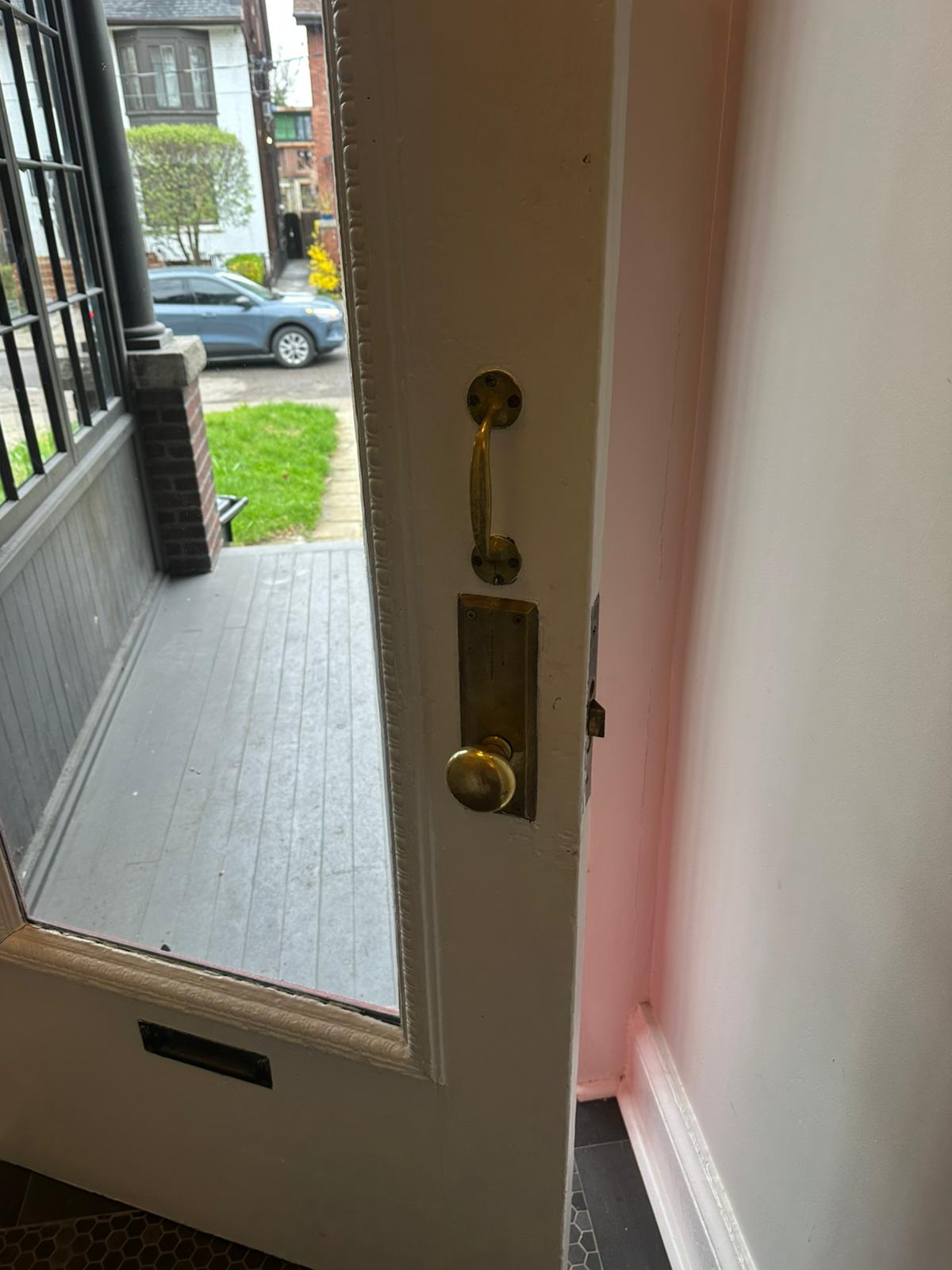
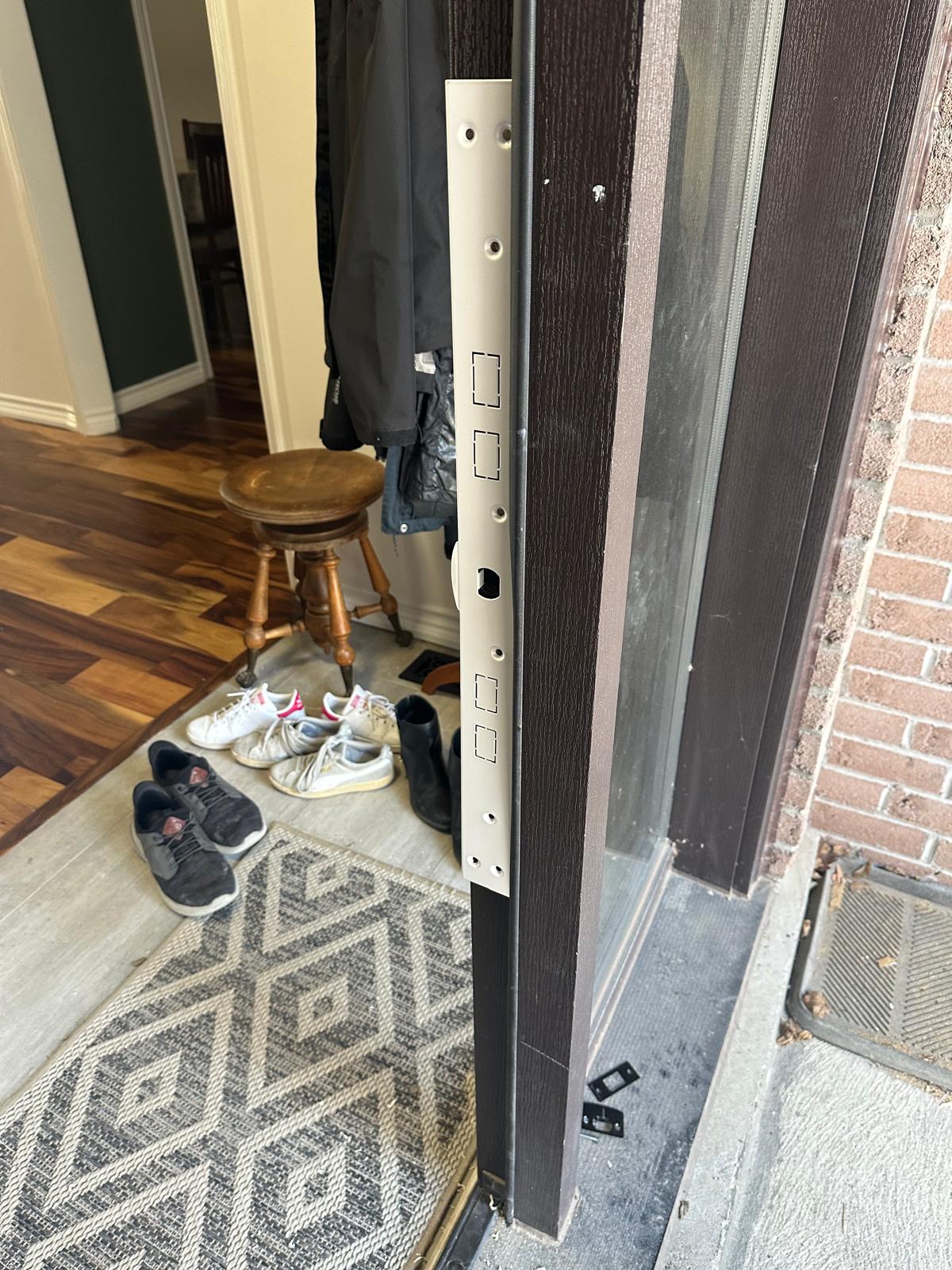
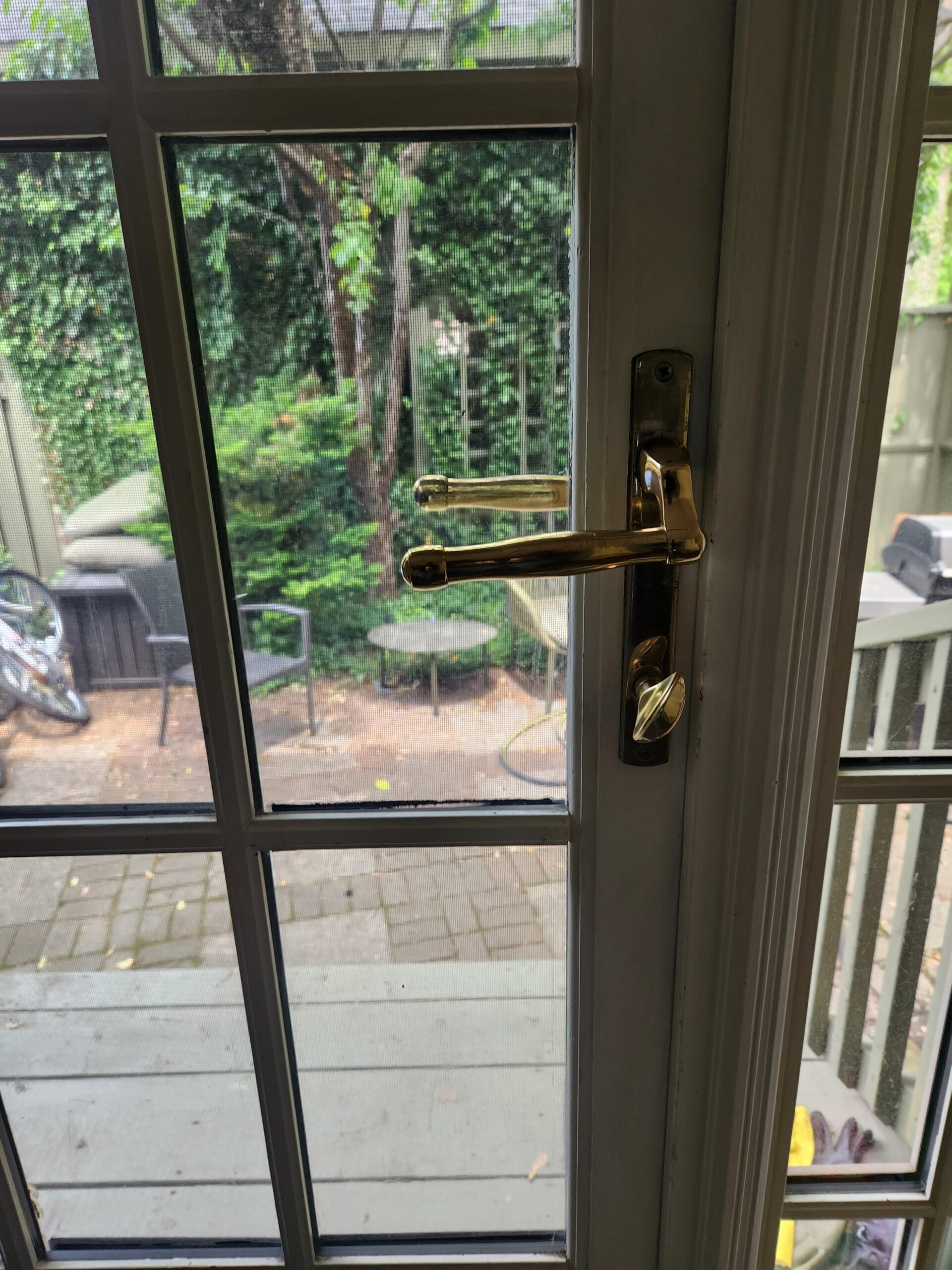
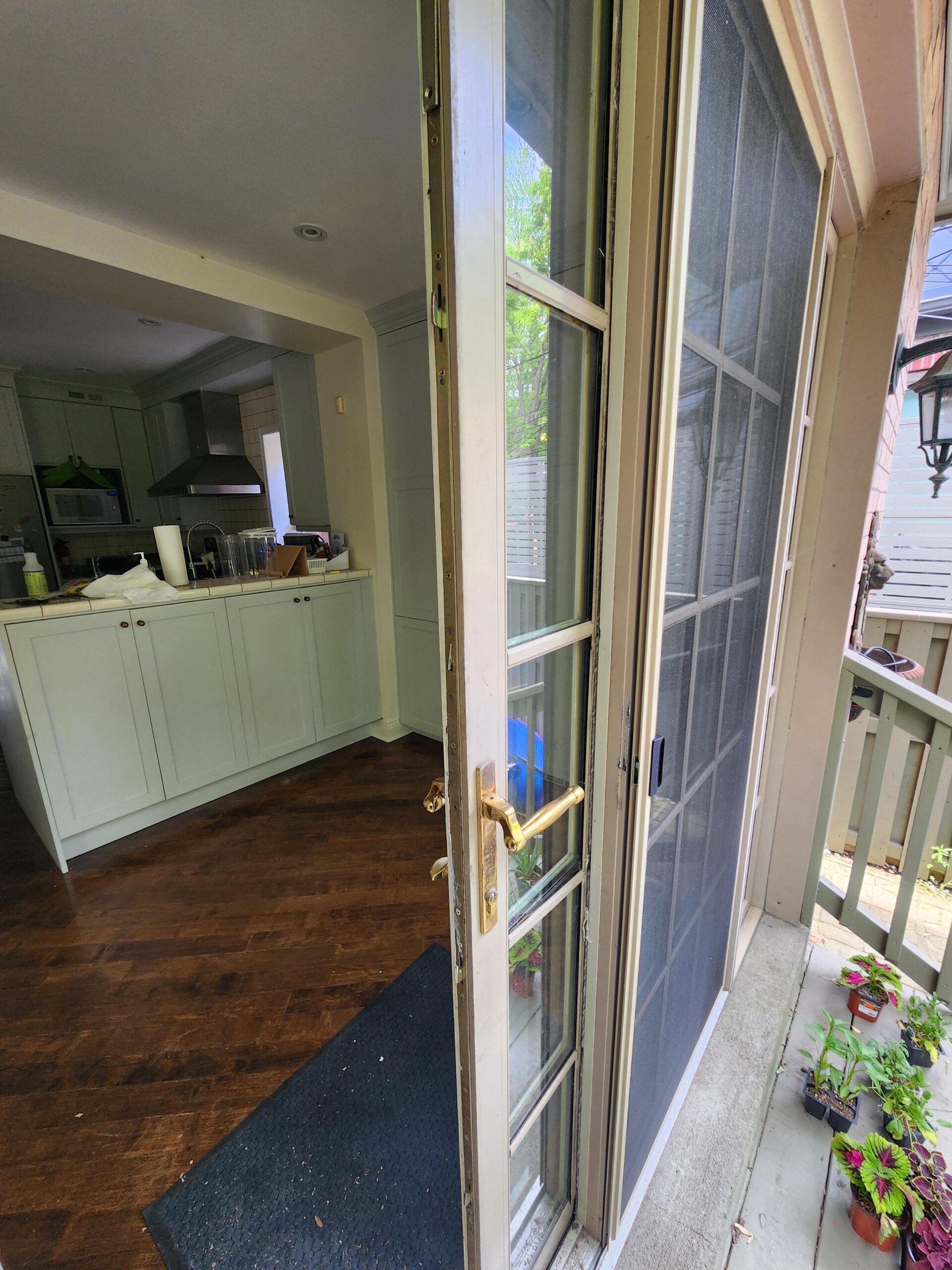
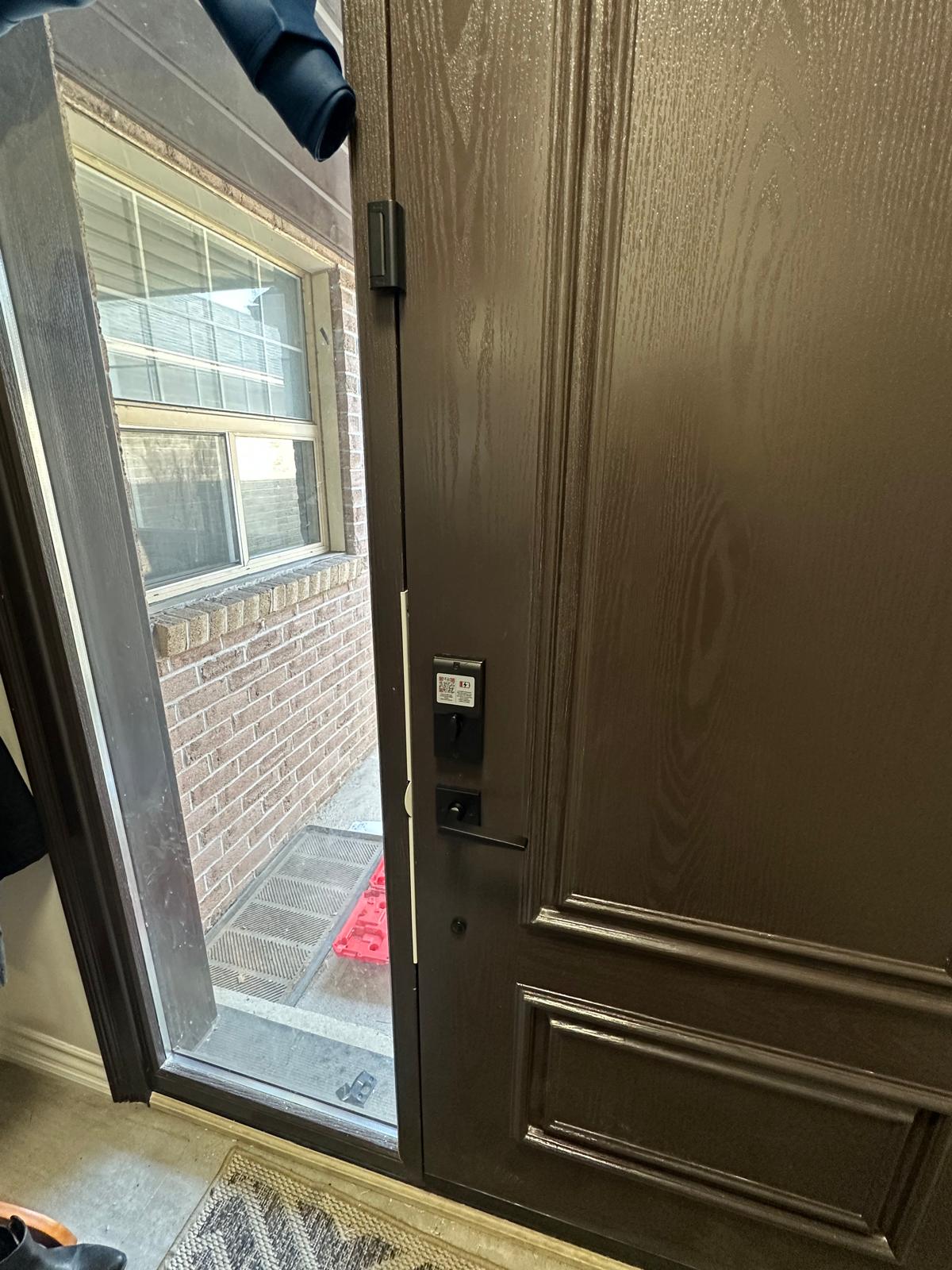
Hardware bought from a retailer is built to the common residential standard, which is why it usually fits a standard door and why it sometimes does not fit anything else.
Where it typically goes wrong: a door thicker than the adjustment range, a multipoint or patio door that needs its own hardware, an older door with a non-standard bore, or a door that has already been modified by a previous owner.
If you have bought something and are not sure, hold onto the packaging and the receipt until the fit is confirmed. The measurements above take five minutes to check; see also front door lock replacement.
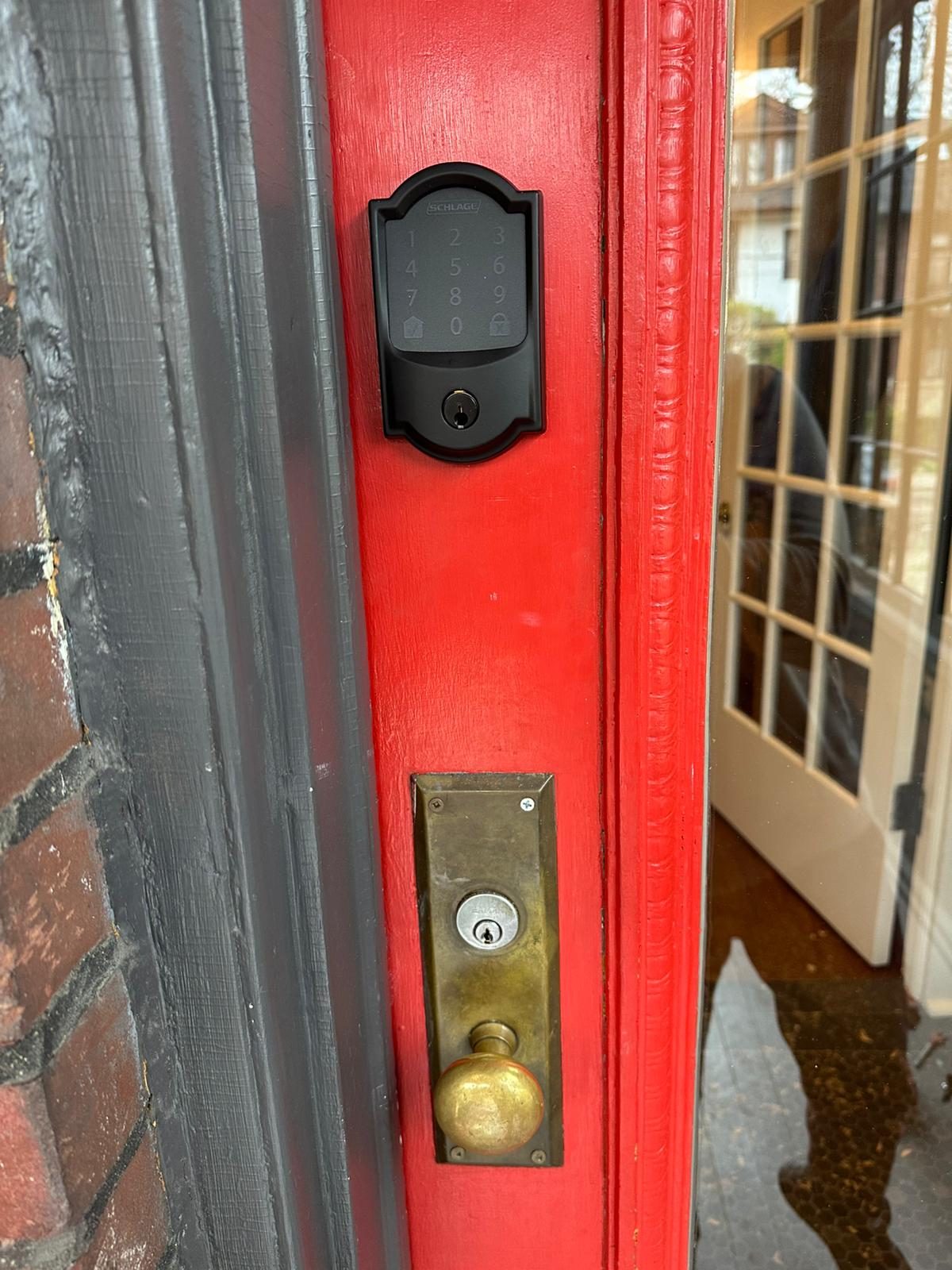
Electronic hardware adds two more questions. Whether the model is still supported, since a lock whose app or service has been discontinued may keep working locally and lose everything else. And whether the mounting suits the new door, because many retrofit models depend on the existing deadbolt being a specific type.
A reused smart lock should also be reset properly: old user codes, old accounts and old pairings removed before it goes back into service. That is the same discipline as any other change of access; see smart lock repair and troubleshooting.
Hardware is often not the expensive part of the job. If reusing a lock means an extra visit, a modified door, a mismatched strike or a cylinder that needs replacing anyway, the saving disappears.
The clearest cases for buying new: a door being replaced entirely, a grade of hardware below what the opening deserves, an entrance door where finish consistency matters, or a lock that was already giving trouble. Hardware grades matter most for doors in heavy daily use, as lock grades explained makes clear.
It is worth doing when the hardware is sound and matched: good-quality locks coming off a door that is being changed for cosmetic reasons, a full set of interior levers being redistributed, a deadbolt moving from a door being replaced to a shed or garage door where it will do years more work; see shed, garage and outbuilding padlocks.
It also makes sense when finish matching matters. An identical lever from the same range is often a better outcome than a near-match bought new.
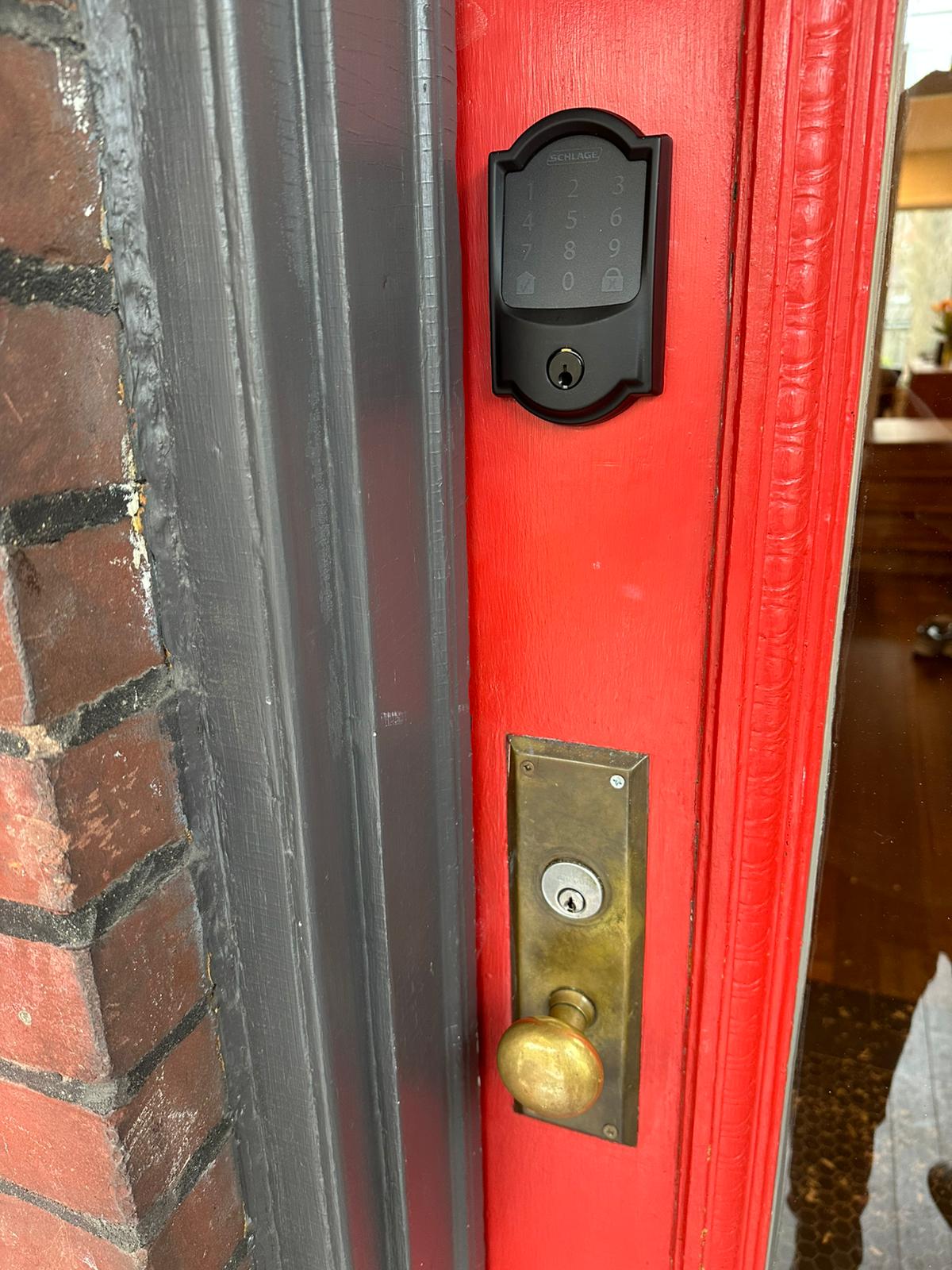
If you want to check a fit before calling anyone, four measurements answer most of it and none needs a specialist tool.
Thickness: measure the door edge, usually about 1 3/4 inches on an exterior residential door and often 1 3/8 on an interior one.
Backset: from the door edge to the centre of the large hole in the face, normally 2 3/8 or 2 3/4 inches.
Bore: the diameter of that large hole, commonly 2 1/8 inches, plus the smaller hole through the edge for the latch.
Faceplate: the shape and size of the plate on the door edge, and whether there is a plate at all or a round drive-in latch.
Write those down with a photograph of the door edge and the existing preparation. That set of information answers the fit question over a message in a minute, without anyone measuring twice or arriving with the wrong part.
One last point on finishes. A lock described as satin nickel from one manufacturer is frequently not the same colour as satin nickel from another, and the difference is obvious once both are on the same door. If matching matters to you, compare the actual parts in daylight rather than trusting the name on the box, and keep one of the old pieces to hold against a candidate.
Finally, keep the parts you remove until the new arrangement has been in use for a week or two. Screws get lost, a spindle turns out to be the wrong length, or the replacement proves to be a poor fit on a door that moves with the season. An old lock in a labelled bag costs nothing to keep and occasionally saves a second trip.
Tell us what hardware you have, what door you want it on, and the thickness and backset if you can measure them. Photographs of the lock, the door edge and the existing preparation usually answer most of it.
We will say plainly whether the reuse works, what it needs, and where buying a part is the better route; see lock changes in Toronto and the GTA.
Keep reading
It comes down to four measurements: door thickness, backset, bore diameter and the edge preparation. If all four match, a move is usually straightforward. If one is out, fitting it anyway means modifying the door, which tends to cost more than the hardware saved. Photographs of the lock and the door edge answer most of it before anyone drills.
It comes down to four measurements: door thickness, backset, bore diameter and the edge preparation. If all four match, a move is usually straightforward. If one is out, fitting it anyway means modifying the door, which tends to cost more than the hardware saved. Photographs of the lock and the door edge answer most of it before anyone drills.
The distance from the edge of the door to the centre of the large hole in the face, normally 2 3/8 or 2 3/4 inches. Measure from the door edge to the middle of the bore. Many latches adjust between the two sizes and many do not, so it is worth checking rather than assuming.
Yes. Moving a lock moves its key with it, and the cylinder can normally be rekeyed so the door matches the rest of the house. That is a small job and it is usually worth doing at the same time as the move rather than living with an extra key.
Often not. Interior hardware may be a passage or privacy function with no lock in it, and it may not have the finish or corrosion resistance for a door that faces weather. Function and exposure matter as much as fit; a lever that works perfectly on a bedroom door can be entirely wrong for a back entrance.
A hole plug or a wrap-around plate covers it, though on a visible entrance door neither disappears completely. On a fire-rated door it is not only cosmetic, because unapproved modifications can affect the rating of the whole assembly. Deciding this before the old hardware comes off leaves you with more options.
Sometimes. Check that the model is still supported, since a discontinued app can leave a lock working locally with nothing else, and check that the mounting suits the new door, as many retrofit models depend on a specific deadbolt. Reset it properly before it goes back into service: old codes, old accounts and old pairings removed.
Not always. Hardware is often not the expensive part, and a reuse that needs an extra visit, a modified door or a replacement cylinder erases the saving. Reuse is clearly worthwhile for sound, matched hardware coming off a door being changed for cosmetic reasons, or when matching an existing finish matters more than the cost.
Retail hardware is built to the common residential standard, so it fits a standard door and sometimes nothing else. The usual causes are a door thicker than the adjustment range, a patio or multipoint door needing its own hardware, or an older door with a non-standard bore. Keep the packaging and receipt until the fit is confirmed.
GTA Lockman Mobile Locksmith Services is a mobile locksmith working on homes, businesses and vehicles across Toronto and the GTA, with more than 14 years in the trade. Every review is written by a customer on Google, where you can read them in full.
Areas served: Toronto, North York, Scarborough, Etobicoke, Vaughan, Richmond Hill, Markham, Stouffville, Newmarket, Mississauga, Brampton, Oakville, Milton, Halton Hills, Pickering, Ajax, Whitby, Oshawa, Uxbridge.
Describe the door, hardware and service address. Contact GTA Lockman Mobile Locksmith Services to confirm the scope and scheduling for your location.