Locksmith services are always 10% off for seniors.
Open Mon–Thu 8:30 AM–9 PM, Fri 8:30 AM–4 PM, Sun 9:30 AM–9 PM
Locksmith services are always 10% off for seniors.
Open Mon–Thu 8:30 AM–9 PM, Fri 8:30 AM–4 PM, Sun 9:30 AM–9 PM
GTA Lockman Mobile Locksmith Services · Toronto & GTA
Give trades the access they need for the work, and take it back cleanly when the job finishes.
Related services
New floors, paint, thresholds and weatherstripping move doors. Find the cause and restore reliable locking.
Learn moreDecide who can enter your home, use codes or keys that can be withdrawn, and keep a record you can check.
Learn moreCheck the construction key arrangement, the strikes and the door fit before deciding what to change.
Learn moreKeep suitable hardware while changing which keys operate your new home’s locks.
Learn moreWhen hardware you already own can move to another door, and when the fit makes that a false economy.
Learn moreRepairs, rekeying and replacement hardware for homes, condos and apartments, with attention to the whole door.
Learn more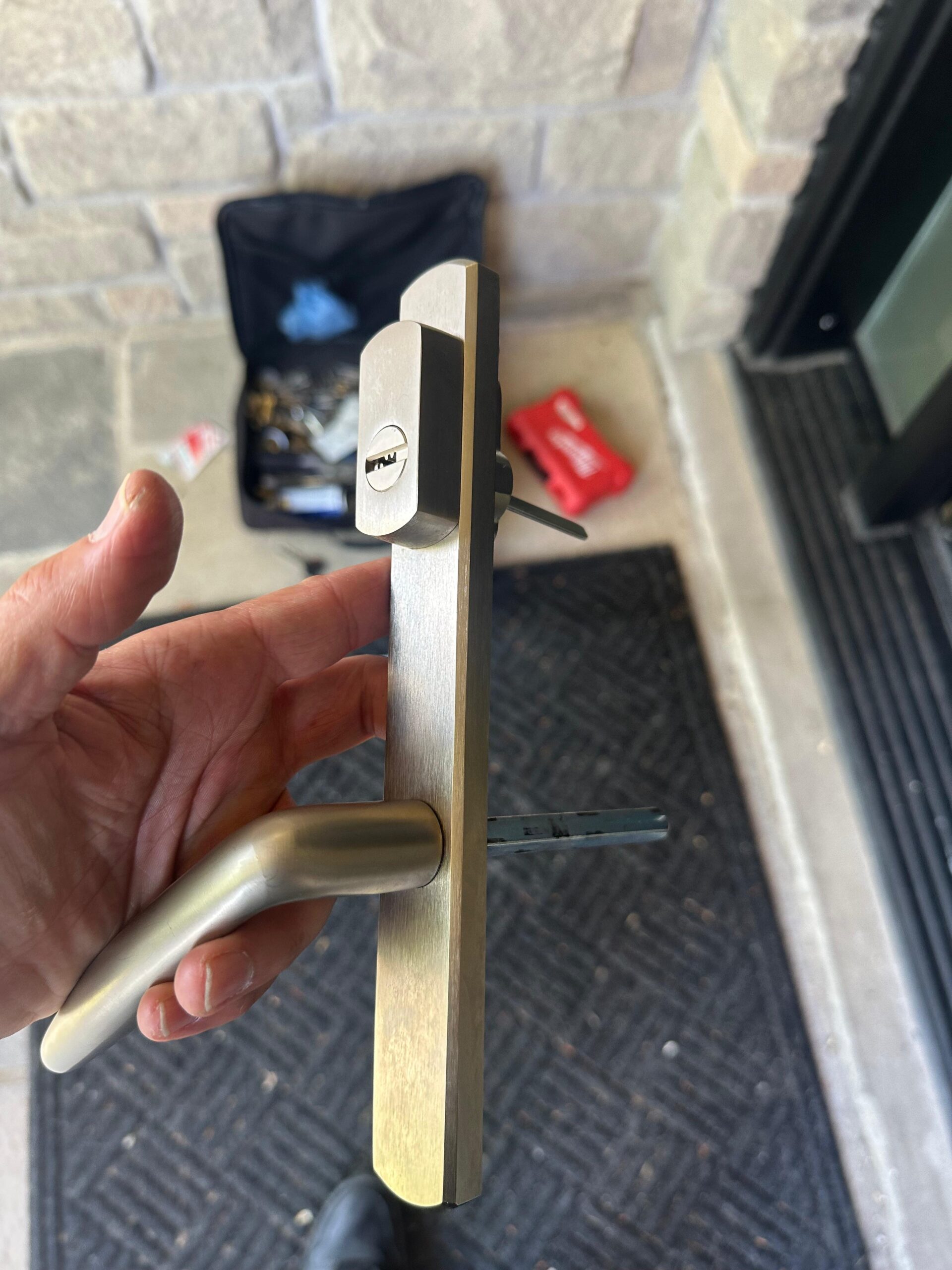
A renovation turns a private home into a workplace that several unrelated people come and go from. Framers, electricians, a plumber, a tiler, deliveries, an inspector, the designer, and often a general contractor coordinating all of them.
Most of the planning goes into what the space will look like. The part that gets decided on the first morning, usually badly, is how everyone gets in. That decision tends to stay in place for the length of the job and quietly outlive it.
The answer is to arrange that access deliberately, giving trades what they need while the work runs and taking it back cleanly when it finishes.
Start by separating the people who need independent access from the people who arrive while someone is already there.
A general contractor running a months-long job usually needs their own access. A tiler coming for three days does not, if the contractor is on site anyway. Deliveries need a place to leave things, not a key. Inspectors are normally accompanied.
The more keys that exist, the less any of them means. Keeping the count small is not suspicion of the trades; it is how you keep track of a situation that changes weekly.
A key safe with a code is the common arrangement, and it works well when it is mounted properly and the code is treated as temporary. It gives access without your house key entering circulation, and the code can be changed the day the job ends; see key safes for home care visits.
A keypad lock lets you issue a code and remove it later, and on many models different people can hold different codes. That makes the end of the job a matter of deleting codes rather than collecting metal; see keypad lock installation for homes.
A dedicated construction cylinder is the tidiest option on a larger job: the door runs on one key while the work is on, and a single turn of the owner's key retires it at handover. Not every lock supports it, but where the hardware does, it removes the whole collection problem.
Or you attend. On a short job in an occupied home, that is often simplest.
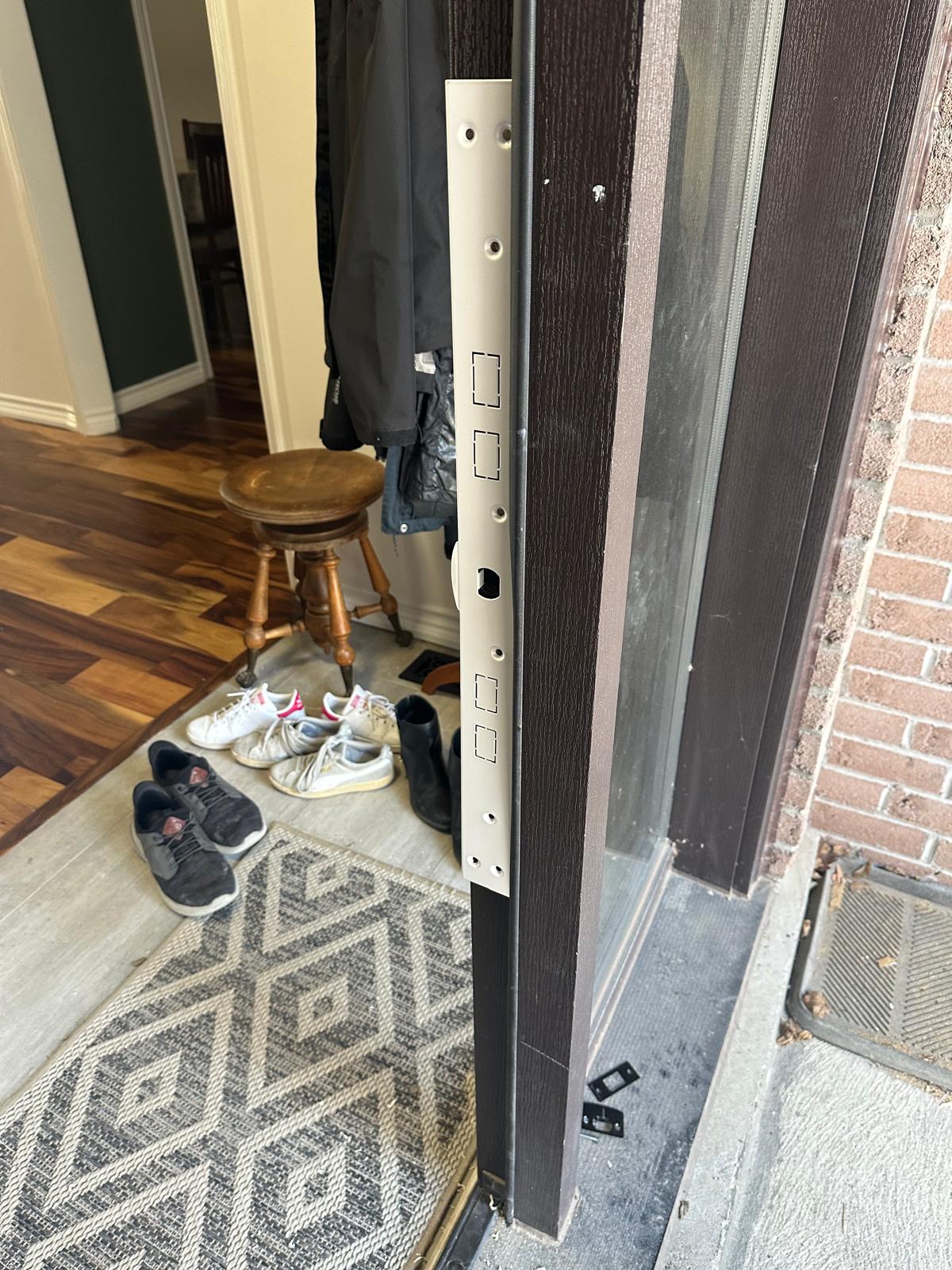
If the work is confined to part of the house, use a door that suits it. A side or back entrance often serves a kitchen or basement renovation better than the front door, and keeps traffic away from the parts of the home still being lived in; see side and back door lock repair.
Decide early whether interior doors need to be lockable for the duration. A home office, a bedroom with valuables, or a room holding everything that was cleared out of the work zone may justify a temporary privacy or keyed function; see interior privacy locks for bathrooms and bedrooms.
Renovation traffic is hard on hardware in ways ordinary use is not. Doors get propped open for hours, held with wedges, knocked with materials, and left open in weather they were never meant to sit in.
Closers get disconnected and not reconnected. Strike plates take impacts from sheet goods. Cylinders fill with drywall dust, which is abrasive and gets into the pins. Hinges loosen under repeated heavy swings.
Expect some of this and plan for it rather than discovering it at the end. If a door is going to be used as a materials route, it is often worth taking the good hardware off and refitting it at the end.
Drywall dust, concrete dust and sanding debris do real damage to lock cylinders. The dust is fine enough to get past the keyway, and hard enough to wear pins and springs once it is in there.
A lock that has been through a renovation without protection often becomes stiff months later, and the cause is never obvious by then. Taping over cylinders during the dusty phases, or fitting temporary hardware, is a small step that avoids it. Afterwards, stiff keys and misaligned strikes are the usual lock problems after a renovation.
Renovations change doors even when nobody plans to. New flooring raises the threshold, so a door that swung freely now catches. A reframed opening moves the strike. A new slab is a different thickness, so existing hardware no longer fits. Settling after structural work shifts alignment.
That is why a door that worked perfectly in March can bind in June. It is also why the end of a renovation is a natural moment to have the doors checked as doors, not just as surfaces to be painted; see door latch and strike plate repair.
Plenty of renovation hardware can be reused, and plenty cannot. Thickness, backset, bore size and finish all have to match the new door, and a lock that fits the old slab may not fit the new one at all.
Work this out before the old doors are gone, because that is when the measurements still exist. Some hardware transfers to a new door and some does not, which is the whole question with reusing and moving existing door hardware.
The handover is where access should be closed off, and it is routinely forgotten because everyone is focused on deficiencies and final payments.
Collect every key that was issued, and know how many that is because you wrote it down at the start. Delete every code. Change the key safe code. If a construction key was used, turn the owner's key to retire it. If keys went into general circulation over several months and you cannot account for all of them, rekey the exterior cylinders; see rekey or replace: how to decide and rekey house locks after moving.
That is not a comment on any trade. Keys get copied for convenience, lent to a sub, left in a van and forgotten. Over a long job it is simply what happens.
An empty property under renovation is a different risk from an occupied home, and insurers often have conditions about it: how the site is secured, how long it can stand empty, what hardware the doors carry. Worth reading before the job rather than after an incident; see home insurance and lock requirements.
On a job of any length, the access arrangement drifts. A code gets shared with a sub so they can start early. A key is lent for a day and not returned. A second key is cut because two people needed to be there at once. None of this is unusual and none of it is announced.
A single sheet on the fridge or a note on your phone is enough to stay ahead of it: who was given what, on which date, and whether it has come back. Add a line whenever something changes. At handover that sheet is the checklist, and the difference between closing the job off in ten minutes and guessing.
It also helps if something goes missing during the work. Knowing who had access on a particular week is far more useful than reconstructing it from memory months later, whether the question comes from you, an insurer or the contractor themselves.
A renovation is noisy, dusty and full of unfamiliar vehicles, and for several weeks your neighbours cannot tell a tradesperson from anyone else walking up your drive.
Telling the people on either side what is happening, roughly how long it runs and who to expect costs one conversation and buys you a street that notices something out of place. On a job where the house stands empty during the day, that is worth more than most hardware.
It also makes the end of the job easier, because a neighbour who knew the work was finishing is a neighbour who queries someone arriving afterwards.
Tell us the scope, how long it runs, which doors the trades will use, and whether the home stays occupied. We will suggest an access arrangement that suits the length of the job, and come back at the end to close it off and check what the work did to the doors.
For a new build rather than a renovation, the equivalent conversation concerns locks in a newly built home.
Keep reading
It works, but it is the option that is hardest to close off later. A key safe with a temporary code, a keypad code you can delete, or a construction cylinder that retires at handover all give the same access without your house key entering circulation. On a short job in an occupied home, attending yourself is often simpler than any of them.
It works, but it is the option that is hardest to close off later. A key safe with a temporary code, a keypad code you can delete, or a construction cylinder that retires at handover all give the same access without your house key entering circulation. On a short job in an occupied home, attending yourself is often simpler than any of them.
Some lock systems support a temporary construction key: the door runs on that key during the work, and one turn of the owner's key permanently retires it. It removes the problem of collecting keys at the end. Not all hardware supports it, so it depends on what is fitted or what is being installed as part of the job.
As few as need independent access. A general contractor running the job usually does. A trade coming for three days while the contractor is on site usually does not. Deliveries need somewhere to leave things rather than a key. Keeping the count small is how you stay on top of a situation that changes week to week.
If you can account for every key and code that was issued, deleting codes and collecting keys is enough. If keys circulated for months and you cannot say where all of them are, rekey the exterior cylinders. Keys get copied for convenience, lent to a sub and left in vans over a long job; that is ordinary, and rekeying is the clean end to it.
Renovations change doors even when nobody intends to. New flooring raises the threshold, a reframed opening moves the strike, a new slab is a different thickness, and structural work shifts alignment as things settle. A door that worked in March can bind in June for any of those reasons, and all of them are adjustable.
Usually dust. Drywall, concrete and sanding debris are fine enough to get past the keyway and hard enough to wear pins and springs. The stiffness often appears months later, by which time the cause is not obvious. Cylinders can be cleaned and serviced, and on a future job taping them over during the dusty phases prevents it.
Sometimes. Thickness, backset, bore size and finish all have to match, and a lock that suited the old slab may not fit the new one. Check before the old doors are removed, while the measurements still exist. Reusing hardware that nearly fits creates door problems that outlast the renovation.
Worth considering for a home office, a bedroom with valuables, or the room where everything cleared out of the work zone has been stacked. A temporary privacy or keyed function on one or two interior doors is inexpensive and can be reversed at the end.
GTA Lockman Mobile Locksmith Services is a mobile locksmith working on homes, businesses and vehicles across Toronto and the GTA, with more than 14 years in the trade. Every review is written by a customer on Google, where you can read them in full.
Areas served: Toronto, North York, Scarborough, Etobicoke, Vaughan, Richmond Hill, Markham, Stouffville, Newmarket, Mississauga, Brampton, Oakville, Milton, Halton Hills, Pickering, Ajax, Whitby, Oshawa, Uxbridge.
Describe the door, hardware and service address. Contact GTA Lockman Mobile Locksmith Services to confirm the scope and scheduling for your location.