Locksmith services are always 10% off for seniors.
Open Mon–Thu 8:30 AM–9 PM, Fri 8:30 AM–4 PM, Sun 9:30 AM–9 PM
Locksmith services are always 10% off for seniors.
Open Mon–Thu 8:30 AM–9 PM, Fri 8:30 AM–4 PM, Sun 9:30 AM–9 PM
GTA Lockman Mobile Locksmith Services · Toronto & GTA
Padlocks, container shrouds, construction keying and a clean handover of every key at the end of the build.
Related services
Match the padlock to the hasp, door and hinges, and keep shed, gate and garage keys under control.
Learn moreCheck the construction key arrangement, the strikes and the door fit before deciding what to change.
Learn moreGive trades the access they need for the work, and take it back cleanly when the job finishes.
Learn moreHow commercial lock and door work gets scoped, authorized and scheduled around a business that has to keep trading.
Learn moreRepairs, rekeying and replacement hardware for homes, condos and apartments, with attention to the whole door.
Learn moreLock and door service for offices, shops and managed properties. Plan access around the way your business operates.
Learn more
A construction site has a key problem that most buildings never face. Dozens of people need to get in over months: trades, subcontractors, inspectors, delivery drivers, site supervisors and the future owner. Materials and tools worth a great deal sit behind doors that may be temporary, unfinished or not yet fitted with their final hardware. And at the end of the job, every key handed out during construction needs to stop working the day the building is handed over.
Getting that right from the start saves a great deal of trouble at the end.
The perimeter. Fencing and gates, usually secured with padlocks and chains.
Site storage. Shipping containers, job boxes, trailers and site offices holding tools, equipment and materials.
The building itself. Temporary doors on openings, or the final doors once they are hung, often secured before the permanent hardware is fitted.
Individual rooms. Mechanical and electrical rooms, finished suites in a multi-unit building, and rooms holding expensive fixtures waiting to be installed.
Each needs a different kind of lock, and all of them need a clear plan for who holds which keys.
Site gates are usually secured with a chain and padlock. The padlock is often the weakest part: a light padlock with an exposed shackle can be cut with bolt cutters in seconds.
A padlock with a shrouded or closed shackle, a hardened body and a chain of matching strength is much harder to defeat. Keying site padlocks alike, so one key opens every gate and container, simplifies life for the site team. When a key goes missing, the padlocks are replaced or rekeyed together.
The same padlock choices apply to sheds and outbuildings at home, where shed and outbuilding padlocks with shrouded shackles resist cutting in the same way.
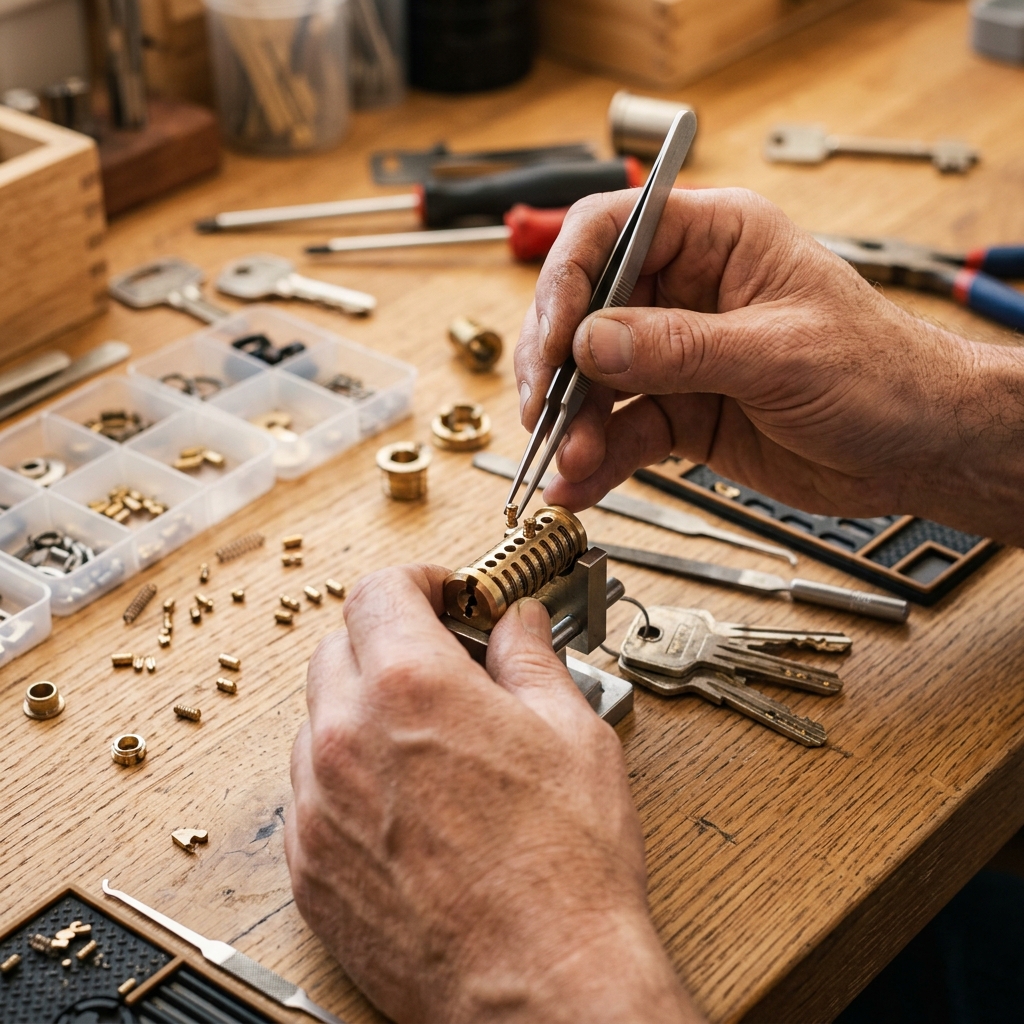
Shipping containers used for site storage are secured by their door handles and, usually, a padlock. The container's own handles are easy to attack. A container lock box, a welded steel shroud that covers the padlock and leaves no room for bolt cutters, makes a large difference.
Site trailers and offices have ordinary doors that deserve a deadbolt and a reinforced strike. Job boxes have their own padlock hasps and benefit from shrouded padlocks too.
On larger projects and new homes, builders often use construction-keyed cylinders. These let the site team use a construction key during the build. When the owner first uses their own key, the construction key stops working, without anyone taking the locks apart.
Where construction keying is not used, the locks on a new building are simply operated with whatever keys came in the box, and those keys have often been copied and handed around by the time the owner moves in. That is why rekeying at handover matters, and why it features on the checklist for locks in a newly built home.
Doors are often hung well before the final hardware arrives. Temporary locks, sometimes inexpensive cylinders or construction cores, keep the building secure in the meantime. When the permanent hardware goes on, the temporary cylinders come out.
Where the permanent hardware is fitted early, protecting it from paint, plaster and damage matters. Covering finished hardware, or leaving the final trim off until the painting is done, avoids handing the owner a scratched handleset.
The simplest key control on a site is a written list: who has which key, when it was issued and when it came back. Keys should be signed out to named people, not left in a truck or under a rock for whoever arrives first.
When subcontractors finish their part of the job, their keys should be collected. When a key cannot be accounted for, rekey or replace the affected locks rather than hoping it does not matter.
For renovation work in an occupied home, where contractors need access for a few weeks rather than months, a lockbox or temporary code usually handles contractor access during a renovation.
On commercial and multi-unit residential projects, the final building is often master-keyed: each suite or room has its own key, with master keys for management. The keying schedule should be settled before the final cylinders are ordered, since changing it later is costly.
The general contractor, the owner and the locksmith should agree the schedule together. Keys for the permanent system are then handed to the owner at completion, with a record of how many were cut and who received them.
At handover, the owner should receive:
Where any of that is missing, the owner should rekey the exterior locks before moving in.
Tools and materials are the main targets on construction sites. Beyond locks, good lighting, cameras covering the gate and storage areas, and keeping the most valuable items in the most secure container all help. Locks do most when tampering is likely to be seen.
On larger sites, openings in the building are often closed with temporary doors in the site hoarding or in unfinished walls. These are usually plywood or steel doors on light frames, and their locks are only as good as the frame. A hasp and padlock on a plywood door fixed with short screws can be pulled off easily.
Bolting hasps through the door with carriage bolts, using a steel door and frame for the main site entrance, and fitting a proper deadbolt where the door will be used for months all make the building much harder to enter. Temporary doors should still let workers out in a fire, so an exit that opens from inside without a key is needed wherever people are working.
Some sites use keypad padlocks or keypad deadbolts on the site office and containers, so trades can be given a code rather than a key. Codes can be changed when a subcontractor leaves, and some electronic locks keep a record of who opened them. On large projects, temporary access control with cards or fobs is sometimes installed on the main gate and the building entrance, and removed when the permanent system takes over.
After handover, contractors often return for warranty work and deficiency repairs. Rather than keeping construction keys in circulation for this, the owner should let them in, provide a temporary code, or issue a key signed out and returned for each visit. That keeps the owner in control of the building from the day it is theirs.
On a custom home or a major residential renovation, the future owner often visits the site during construction and may be given a key. That is sensible, but it is one more key in circulation. The same list of keys applies: record who has one, and rekey at handover so the owner starts with a clean set.
Where the owner has chosen specific hardware, such as a particular handleset or smart lock, it is usually fitted at the end of the build. Fitting it early exposes it to dust, paint and damage, and some electronic locks do not tolerate construction dust well. A temporary deadbolt during construction, swapped for the chosen hardware at the end, protects both the house and the owner's choice.
Builders' risk insurance policies often set conditions for site security, such as locked storage for tools and materials, secure fencing and locked buildings outside working hours. Knowing those conditions before the job starts, and keeping a record of the locks and keys in use, helps if there is ever a claim.
The key list kept during construction is useful long after handover. Passing it to the owner, along with the keying schedule and the number of keys cut for each lock, gives them a starting point for managing the building. Owners of commercial buildings in particular benefit from knowing exactly how many master and change keys exist from the first day.
Smaller jobs, such as a kitchen renovation or a basement finish, rarely need containers or construction keying, but tools left overnight in an open garage or an unlocked side door still disappear. A keypad on the door the trades use, a lockable job box and a rekey at the end are usually enough.
Tell us the size of the site, the gates, containers and buildings involved, and how many people need keys. For new buildings, tell us whether a keying schedule has been agreed and when handover is planned.
We can supply and key padlocks alike, fit container lock boxes and trailer deadbolts, install temporary or construction-keyed cylinders, set up a master-key schedule for the finished building, and rekey at handover. Larger commercial projects follow the usual steps for working with a commercial locksmith, and residential builds are part of our residential locksmith services.
Keep reading
A padlock with a shrouded or closed shackle and a hardened body, used with a chain of matching strength. Light padlocks with exposed shackles can be cut in seconds.
A padlock with a shrouded or closed shackle and a hardened body, used with a chain of matching strength. Light padlocks with exposed shackles can be cut in seconds.
Fit a container lock box, a steel shroud welded over the padlock area, and use a shrouded padlock inside it. The shroud leaves no room for bolt cutters.
Cylinders that work with a construction key during the build. When the owner first uses their own key, the construction key stops working, without the locks being taken apart.
Yes, unless construction keying was used and the owner has confirmed the construction keys no longer work. Keys are often copied and handed around during a build.
Keep a written list of who holds which key, sign keys out to named people, and collect them when each trade finishes. Rekey any lock whose key cannot be accounted for.
Yes. Padlocks can be keyed alike so one key opens every gate and container. If that key goes missing, the padlocks are rekeyed or replaced together.
Before the final cylinders are ordered. Changing the schedule afterwards means recutting or replacing cylinders.
All keys to the permanent cylinders with a count, confirmation that construction keys no longer work, a keying schedule for master-keyed buildings, and any access codes with instructions to change them.
GTA Lockman Mobile Locksmith Services is a mobile locksmith working on homes, businesses and vehicles across Toronto and the GTA, in the trade since 2010. Every review is written by a customer on Google, where you can read them in full.
Areas served: Toronto, North York, Scarborough, Etobicoke, Vaughan, Richmond Hill, Markham, Stouffville, Newmarket, Mississauga, Brampton, Oakville, Milton, Halton Hills, Pickering, Ajax, Whitby, Oshawa, Uxbridge.
Describe the door, hardware and service address. Contact GTA Lockman Mobile Locksmith Services to confirm the scope and scheduling for your location.