Locksmith services are always 10% off for seniors.
Open Mon–Thu 8:30 AM–9 PM, Fri 8:30 AM–4 PM, Sun 9:30 AM–9 PM
Locksmith services are always 10% off for seniors.
Open Mon–Thu 8:30 AM–9 PM, Fri 8:30 AM–4 PM, Sun 9:30 AM–9 PM
GTA Lockman Mobile Locksmith Services · Toronto & GTA
What insurers usually ask about locks, what the answers mean, and how to make the doors match the form.
Related services
Secure a forced door, repair damaged locks and frames, and document the work for your police report and insurer.
Learn moreWhat Grade 1, 2 and 3 measure, what they leave out, and why the strike and frame often matter more.
Learn moreRestore reliable locking on the doors people use most, and strengthen the frames that are easiest to force.
Learn moreCheck every door before you travel, arrange access you can withdraw, and prepare locks for winter.
Learn moreDecide how many keys a household needs, where the spare belongs and when a key should be replaced.
Learn moreRepairs, rekeying and replacement hardware for homes, condos and apartments, with attention to the whole door.
Learn more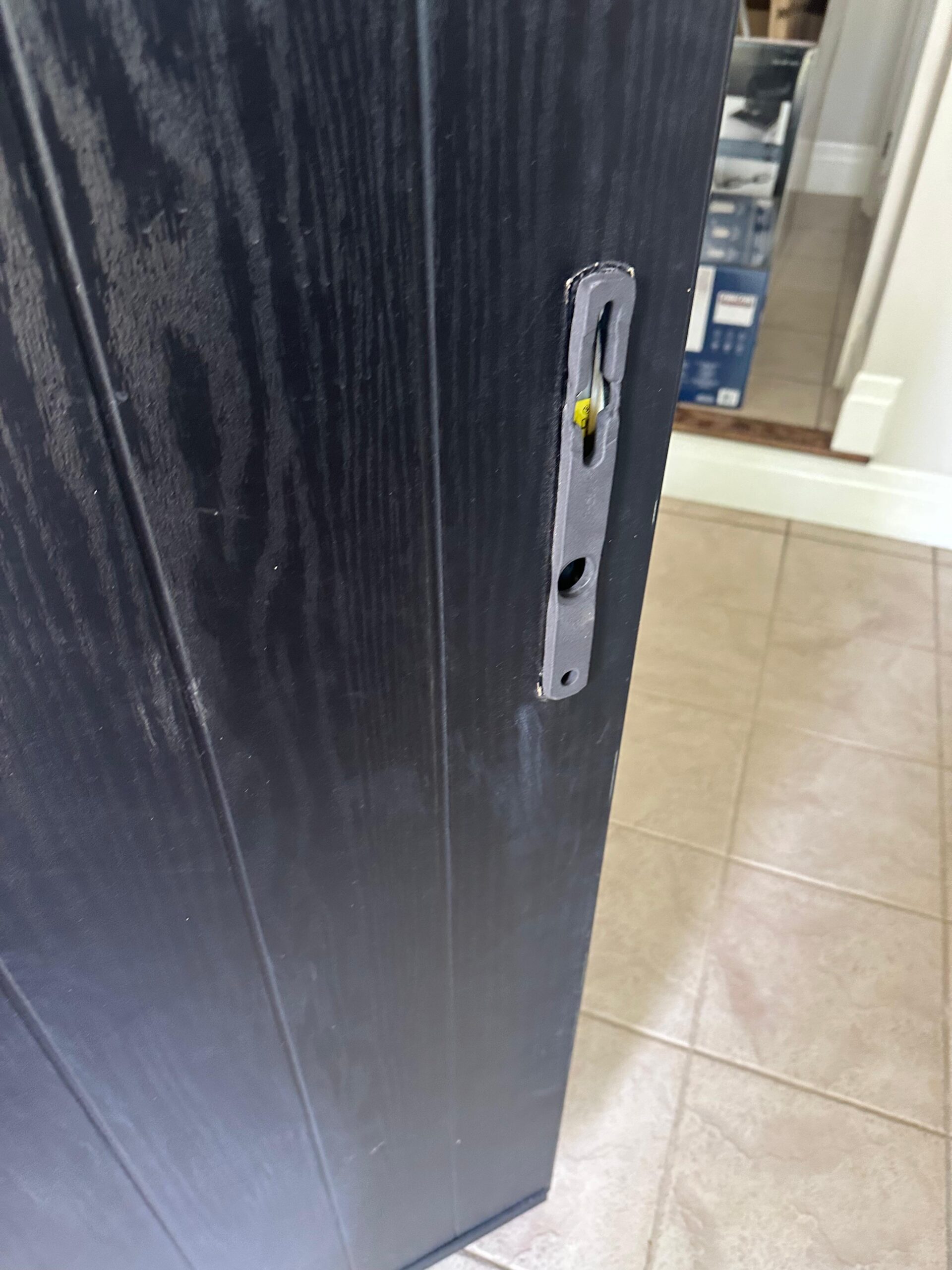
Home insurance applications and renewal questionnaires often include questions about door locks. Common ones are whether exterior doors have deadbolts, what type of lock is fitted, whether the property has an alarm or monitoring, and whether the home is occupied or sits empty for long periods.
Insurers are not all the same, and the answers they expect differ between companies, policy types and properties. The questions they ask tend to cluster around deadbolts, strikes, who holds keys and whether the house sits empty. Your insurer or broker is the authority on what your policy requires; we fit and repair the hardware.
The practical point is simple: answer the questions accurately, and make sure the doors actually do what you say they do.
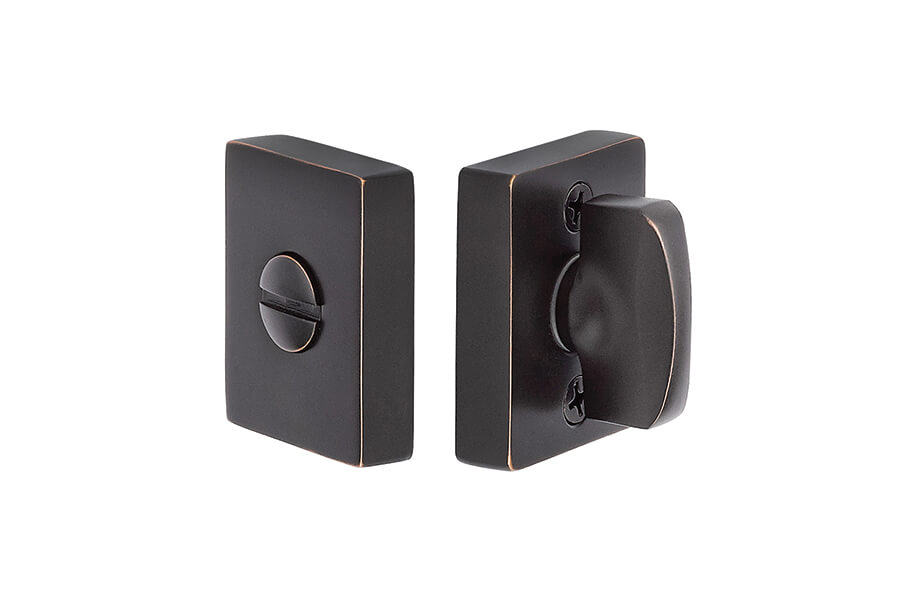
The most common question is whether exterior doors have deadbolts. A deadbolt is a separate bolt operated by a key or thumbturn that does not retract when the handle is turned, as distinct from the spring latch in a knob or lever set.
Some insurers ask about bolt length or the type of strike. A deadbolt that throws roughly 25 mm into a solid strike, fixed with long screws into the wall framing, is the usual expectation. If you are not sure what you have, look at the bolt when it is extended with the door open.
Hardware grades mean less than most forms suggest, as lock grades explained shows, and strike and frame reinforcement through side and back door lock repair matters more than the grade on most homes.
A question that matters more than any of this: does every exterior door lock properly today? A deadbolt that only throws when the door is pulled, a latch that misses the strike, or a side door that has never locked since the new flooring went in are all common, and all of them undermine the answer you gave on the form.
Test each door with the door closed. A front door that will not lock or a stuck deadbolt and door that will not open usually comes down to alignment rather than the lock.
Policies commonly treat an unoccupied home differently. There is often a period after which a property is considered vacant or unoccupied, and conditions can apply: regular checks by a named person, heat maintained, water shut off, and sometimes specific security requirements.
This affects estates, homes on the market, snowbirds and cottages. Each situation has its own checks, whether leaving home for winter or vacation, securing cottage and rural property locks or dealing with locks after a death in the family. Ask your insurer what applies and get it in writing before you travel or before a property sits empty.
After a break-in, insurers usually want the police report number, photographs and an itemized invoice for repairs. Where there is no sign of forced entry, questions often follow about who had keys.
That is a good reason to keep a record of key holders and to rekey when keys are unaccounted for. Both sides of that matter: repairing properly through lock repair after a break-in, and knowing spare keys: how many and where to keep them.
Ask your technician to describe on the invoice what was damaged, what was repaired or replaced, and what remains outstanding. A clear invoice separates break-in damage from pre-existing wear.
Landlord policies may have their own conditions about locks between tenancies, key control and unoccupied periods. Rekeying at turnover is common practice regardless of whether a policy demands it; see lock repair after a tenant moves out.
Tenants' own contents insurance may also ask about the doors of the unit, even though the landlord controls the hardware. If a door does not lock, report it in writing, which also creates a record if a claim follows.
Commercial policies tend to ask more: lock types on each entrance, whether the premises have an alarm and whether it is monitored, safe specifications where cash is held, and who holds keys. Some ask specifically about rear and service doors, which is where most forced entry happens.
Commercial insurers most often raise two things: the back door, where rear door security for shops and restaurants makes the biggest difference, and key control, which comes up when rekeying after an employee leaves.
We can fit deadbolts and reinforced strikes, repair doors so they lock reliably, rekey or replace cylinders, and give you an itemized invoice describing exactly what was done at each opening. That invoice is usually what an insurer or broker wants to see.
We do not certify homes, inspect to an insurer's standard or interpret policy wording. If your insurer specifies a particular standard or rating, send us the requirement and we will tell you what hardware meets it or whether it needs a specialist.
Walk the house and check: does every exterior door have a deadbolt, does it throw fully with the door closed, are the strikes fixed into framing, do the windows lock, and is there anything you would rather fix before describing it on an application.
Answer accurately. A form that overstates what is fitted creates a problem exactly when you least want one, and most of the gaps it would cover are inexpensive to fix.
Insurance questions tend to arrive at renewal, after a claim or when a property changes use, and they are easier to answer from a file than from memory. Keep invoices that describe which doors were worked on, photographs of the hardware, and any correspondence where your insurer set a requirement.
That file also helps at a claim. An invoice showing a deadbolt fitted and a strike reinforced two years ago is a clearer answer than a recollection, and it separates work done before an incident from repairs made after it.
One more practical point: tell your insurer or broker when you make a meaningful change, such as adding deadbolts to doors that had none, reinforcing strikes or fitting a monitored alarm. Some will note it on the file, and it gives you a documented history of the property's security rather than a set of improvements nobody outside the household knows about. The same applies in reverse. If a door has been damaged and is awaiting repair, or a property is about to sit empty for longer than usual, an early conversation is far better than an argument at claim time about what was in place and when. If you are shopping for a policy rather than renewing one, ask each insurer the same questions about locks and unoccupied periods, because the answers differ more than people expect and they are easier to compare before you commit than afterwards. Ask in particular how each one treats a property that is empty while it is on the market, since that situation catches out more households than any other and the wording varies considerably between companies.
Keep the conversation factual: describe what is fitted, what has changed and what you are planning, and ask what the policy requires rather than what might be nice to have. Insurers deal with these questions every day, and a short call usually settles what would otherwise be weeks of guessing, particularly around unoccupied periods, which are where most disagreements at claim time seem to start.
When you call, tell us what your insurer has asked for, how many doors are involved and whether the property will be unoccupied. Deadbolts, strikes and rekeying for the whole house are part of our residential locksmith services, and a written note of the work suits an insurer's file.
Keep reading
Many ask about them, and the expectations differ between companies and policies. A deadbolt is a separate bolt operated by a key or thumbturn that does not retract when the handle turns, unlike the spring latch in a knob set. Some insurers also ask about bolt length or the strike. Your insurer or broker is the authority on what your policy requires; ask them directly, and get the answer in writing if it affects what you need to install.
Many ask about them, and the expectations differ between companies and policies. A deadbolt is a separate bolt operated by a key or thumbturn that does not retract when the handle turns, unlike the spring latch in a knob set. Some insurers also ask about bolt length or the strike. Your insurer or broker is the authority on what your policy requires; ask them directly, and get the answer in writing if it affects what you need to install.
That is entirely up to the insurer, and many rate on other factors. Do not install hardware expecting a discount unless your insurer has confirmed one. The better reason to improve a door is that it works: a deadbolt that throws fully into a strike fixed with long screws into the framing resists force far better than one screwed into thin trim, whatever the policy says.
That is the gap worth closing before anything else. A deadbolt that only throws when the door is pulled, or a side door that has not locked since new flooring was installed, undermines whatever you stated on your application. Most of these are alignment problems, corrected by adjusting the strike or hinges rather than replacing hardware. Test every exterior door with the door closed and fix what fails.
Usually yes. Policies commonly treat unoccupied homes differently once a property is empty beyond a set period, and conditions can apply, such as regular checks by a named person, heat being maintained or water shut off. This affects snowbirds, estates and homes on the market. Ask your insurer what applies before the property sits empty, and get the requirements in writing so the work is done once.
Typically the police report number, photographs of the damage and an itemized invoice for the repairs. Ask the technician to describe on the invoice what was damaged, what was repaired or replaced and what remains outstanding, since that separates break-in damage from pre-existing wear. Keep damaged parts until the claim is settled unless the insurer says otherwise.
Because where there is no sign of forced entry, the question becomes who could have opened the door. That is why keeping a record of key holders matters, and why rekeying is sensible whenever keys are unaccounted for: after a move, a tenancy, a renovation or a lost set. Rekeying keeps your existing hardware and changes which key works, so it is a straightforward step to be able to describe.
No. We fit, repair and rekey hardware, and we provide an itemized invoice describing exactly what was done at each opening, which is usually what a broker or insurer wants to see. We do not inspect homes to an insurer's standard or interpret policy wording. If your insurer specifies a particular standard or rating, send us the requirement and we will tell you what meets it.
Usually. Commercial questionnaires often cover the lock type on each entrance, whether an alarm is monitored, safe specifications where cash is held, and who holds keys. Rear and service doors get particular attention, because that is where most forced entry happens. Rear doors and key control after staff leave are the two areas commercial insurers raise most often, so both are worth checking before the renewal.
GTA Lockman Mobile Locksmith Services is a mobile locksmith working on homes, businesses and vehicles across Toronto and the GTA, with more than 14 years in the trade. Every review is written by a customer on Google, where you can read them in full.
Areas served: Toronto, North York, Scarborough, Etobicoke, Vaughan, Richmond Hill, Markham, Stouffville, Newmarket, Mississauga, Brampton, Oakville, Milton, Halton Hills, Pickering, Ajax, Whitby, Oshawa, Uxbridge.
Describe the door, hardware and service address. Contact GTA Lockman Mobile Locksmith Services to confirm the scope and scheduling for your location.