Locksmith services are always 10% off for seniors.
Open Mon–Thu 8:30 AM–9 PM, Fri 8:30 AM–4 PM, Sun 9:30 AM–9 PM
Locksmith services are always 10% off for seniors.
Open Mon–Thu 8:30 AM–9 PM, Fri 8:30 AM–4 PM, Sun 9:30 AM–9 PM
GTA Lockman Mobile Locksmith Services · Toronto & GTA
Find out whether the strike, the door or the lock is stopping the bolt, and correct the cause rather than the symptom.
Related services
Choose compatible front-door hardware with the right fit, operation and finish for the existing opening.
Learn moreDiagnose resistance, incomplete bolt travel and failed connections without assuming every deadbolt needs replacing.
Learn moreInvestigate why the door will not catch or release cleanly, including latch wear and frame alignment.
Learn moreRelease a deadbolt that will not retract, then correct the alignment or lock fault that caused it to bind.
Learn moreAssess the lock strip, gearbox and door alignment as one system before choosing compatible repair parts.
Learn moreWork through mechanical fit, power and supported controls when an electronic lock becomes unreliable.
Learn more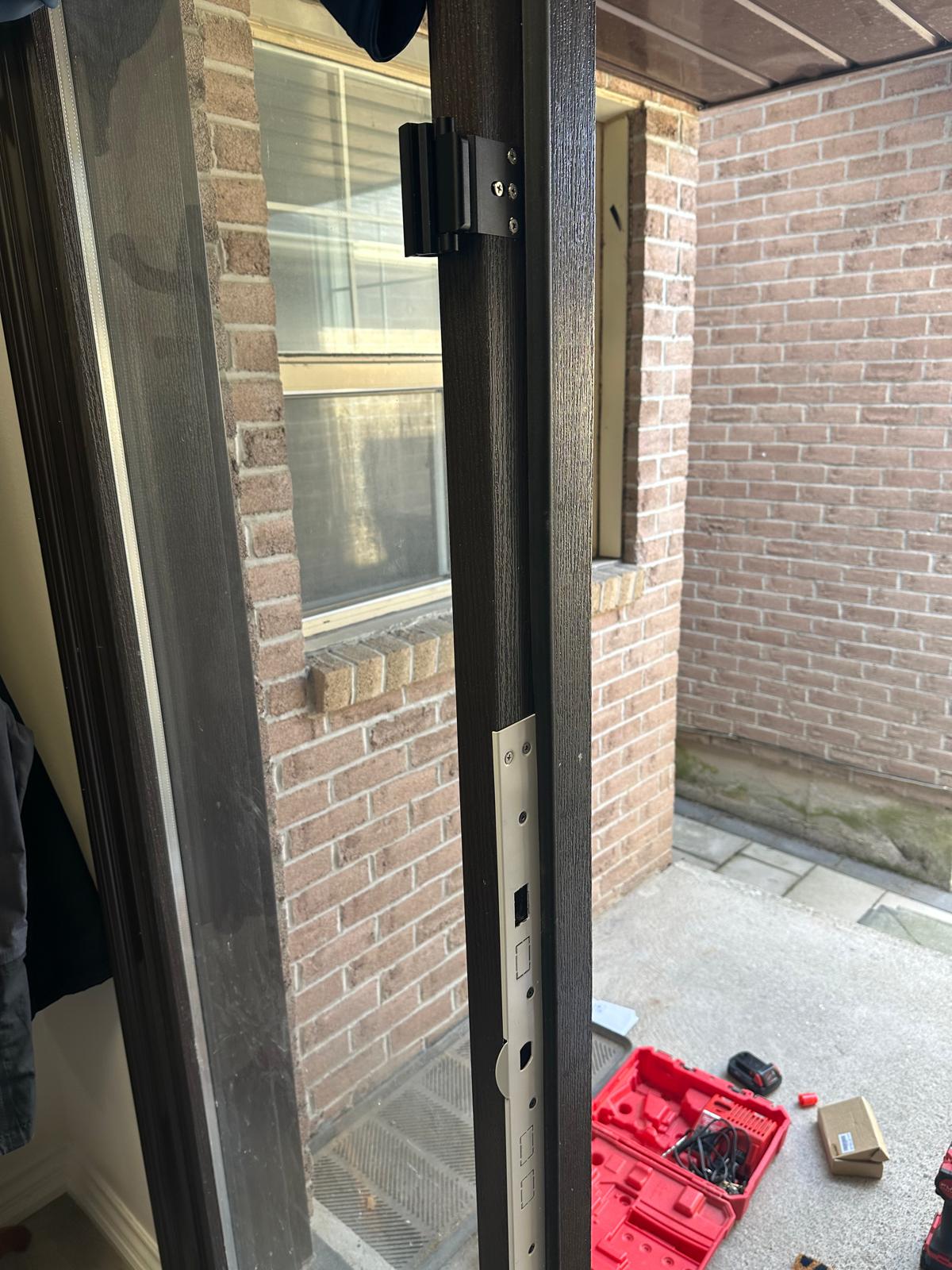
When the front door will not lock, the household is left with a choice between staying home or leaving the house unsecured. The cause is usually one of a few things: the bolt cannot reach the strike opening, the latch does not catch, the lock mechanism has failed, or the key no longer turns far enough to throw the bolt.
Each cause has a different repair, so the first job is to find out which one applies. Most can be identified by testing the lock with the door open and then with it closed.
If the door cannot be secured and you need to leave, a temporary measure such as staying with a neighbour's help, using a secondary lock on another door or arranging for someone to remain at the house may be more sensible than improvising a fix on the door itself.
With the door open, turn the key or thumbturn and watch the deadbolt. Does the bolt extend fully and retract smoothly? If it does, the lock is probably working, and the problem appears only when the door is closed. That points to the strike, frame or hinges.
If the bolt will not extend fully even with the door open, the lock itself has a fault. The cylinder, tailpiece or bolt mechanism may be worn or broken. Worn or broken parts of that kind are put right through deadbolt repair.
Try the same test with the knob or lever latch. A latch that retracts but does not spring back, or does not reach the strike, needs attention of its own, covered under door latch and strike plate repair.
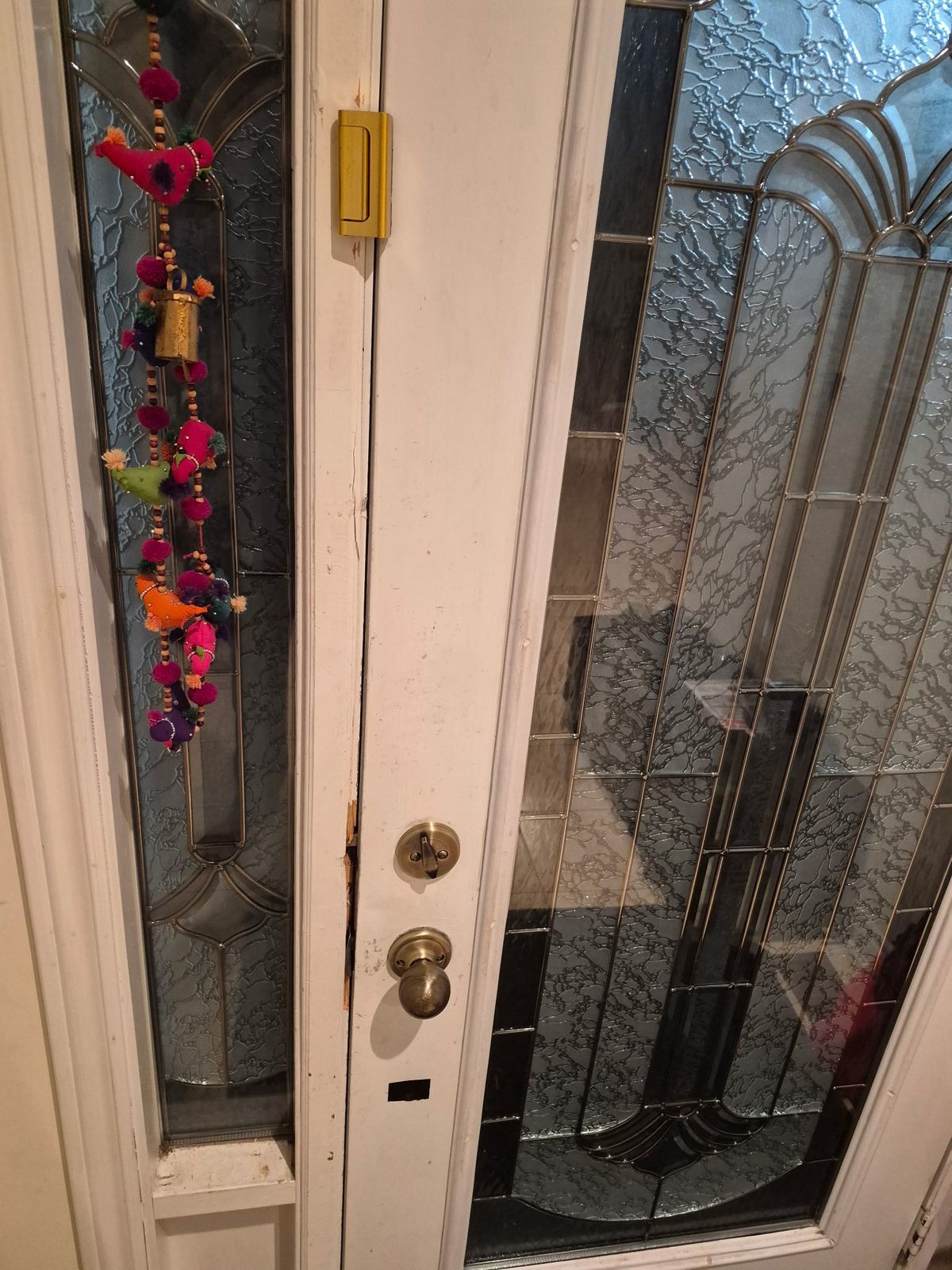
Doors move. Hinges loosen, frames settle, and wood swells and shrinks with the seasons. When the door drops or shifts, the bolt meets the edge of the strike instead of the opening, and the lock can no longer throw it. The key may turn partway and stop, or the bolt may extend only when the door is pushed or lifted.
Tightening or replacing hinge screws, adjusting the strike plate, or enlarging the bolt hole in the frame usually corrects this without replacing the lock. New weatherstripping can also push the door away from the frame so the latch no longer reaches the strike. If the problem began after other work on the door, mention it.
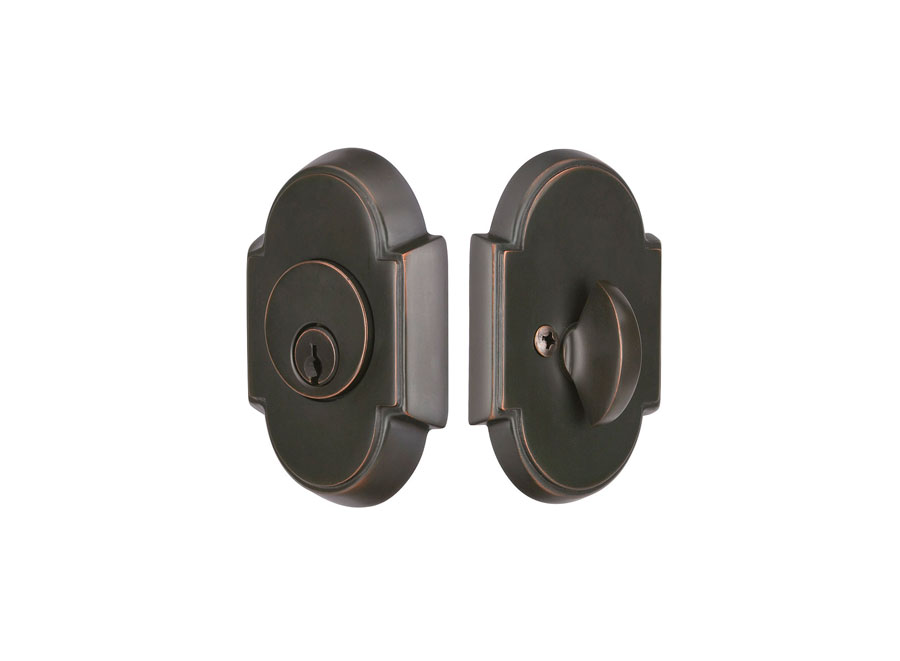
If alignment is fine, look at the lock. A worn cylinder may no longer turn fully. A broken tailpiece may let the key turn without moving the bolt, the symptom covered on the key turns but door will not unlock page. A bolt with a failed internal spring may not stay extended.
Worn keys are another cause. A key cut from a worn copy may operate the lock partly but not enough to throw the bolt. A new key cut to specification can help, but if the cylinder is also worn, servicing or replacing it is the longer-term answer.
Many newer front doors use multipoint locks, where lifting the handle engages several bolts along the door edge before the key is turned. If the handle will not lift fully, or the key will not turn after lifting, the door alignment or the gearbox may be at fault. Gearbox and alignment faults like these are the core of multipoint lock repair.
A smart lock that fails to throw the bolt may be reacting to a physical obstruction, low batteries or a calibration issue. In smart lock repair, mechanical fit and electronic function are checked separately so the real cause is found.
Photos
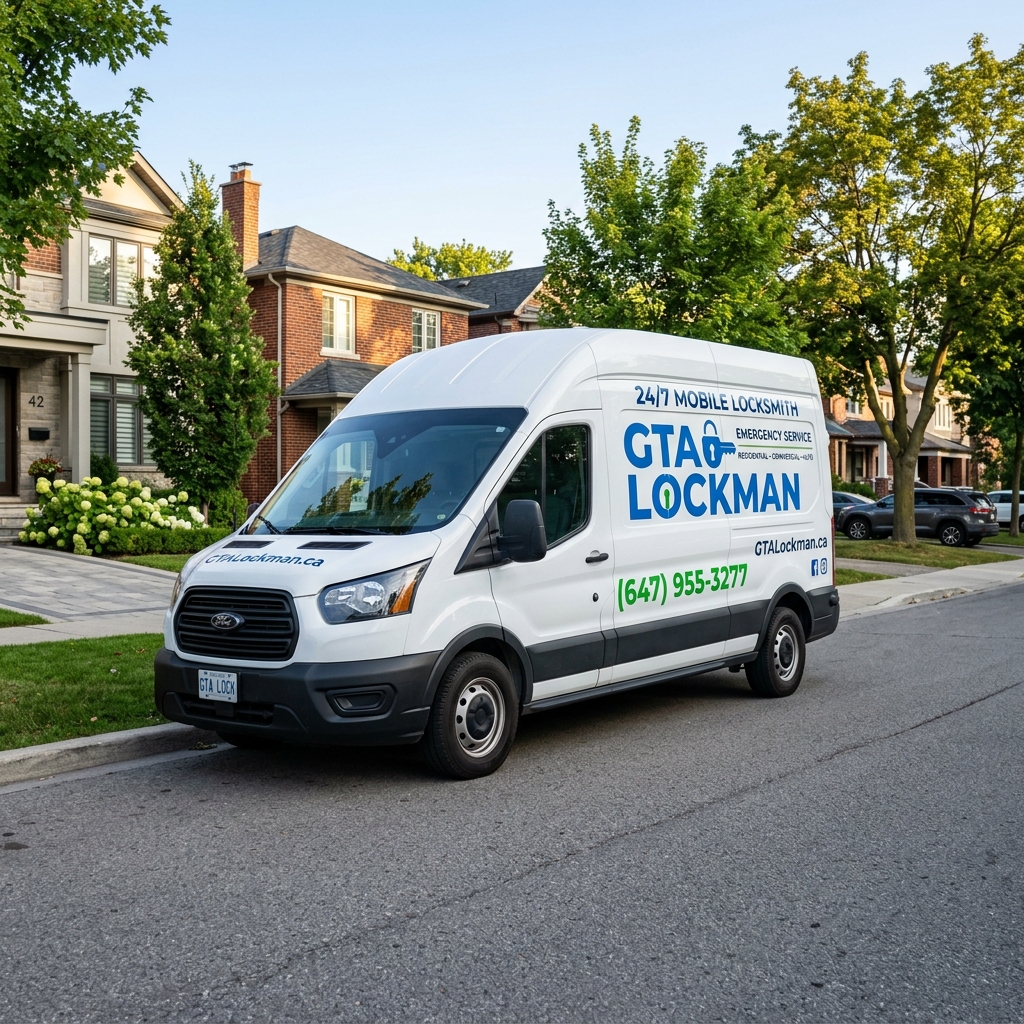
Photographs from GTA Lockman Mobile Locksmith Services work across Toronto and the GTA. Send a picture of your own door and we can tell you what the visit would involve.
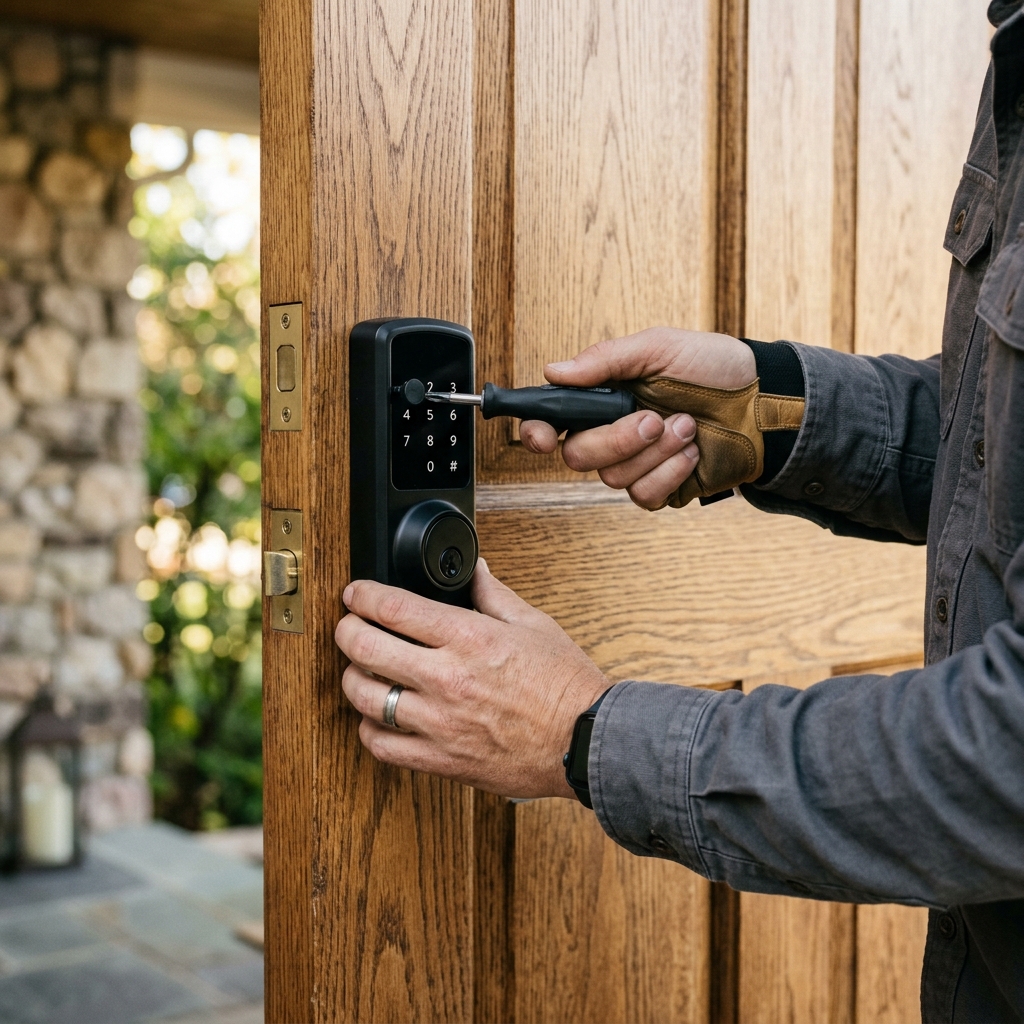
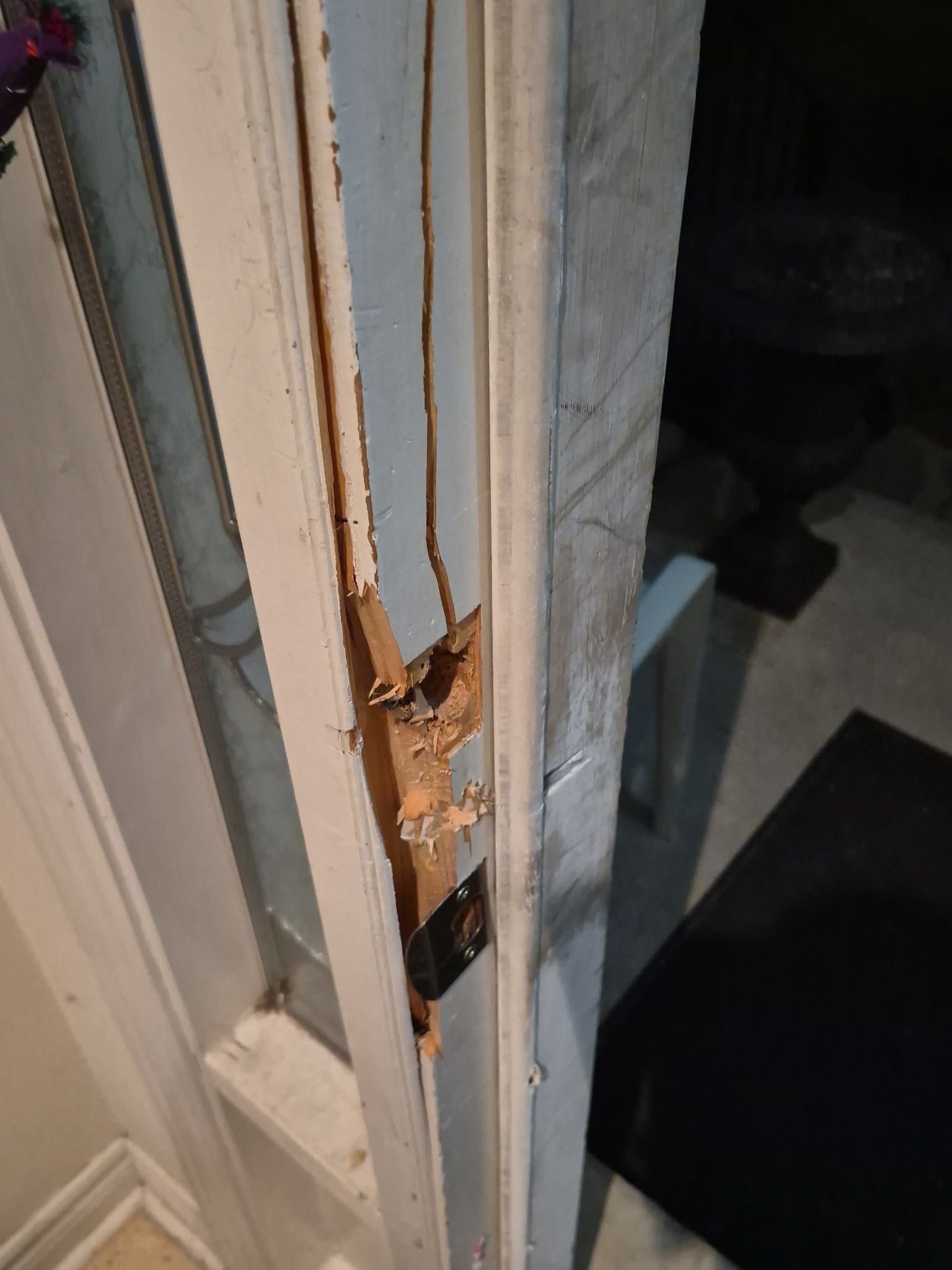
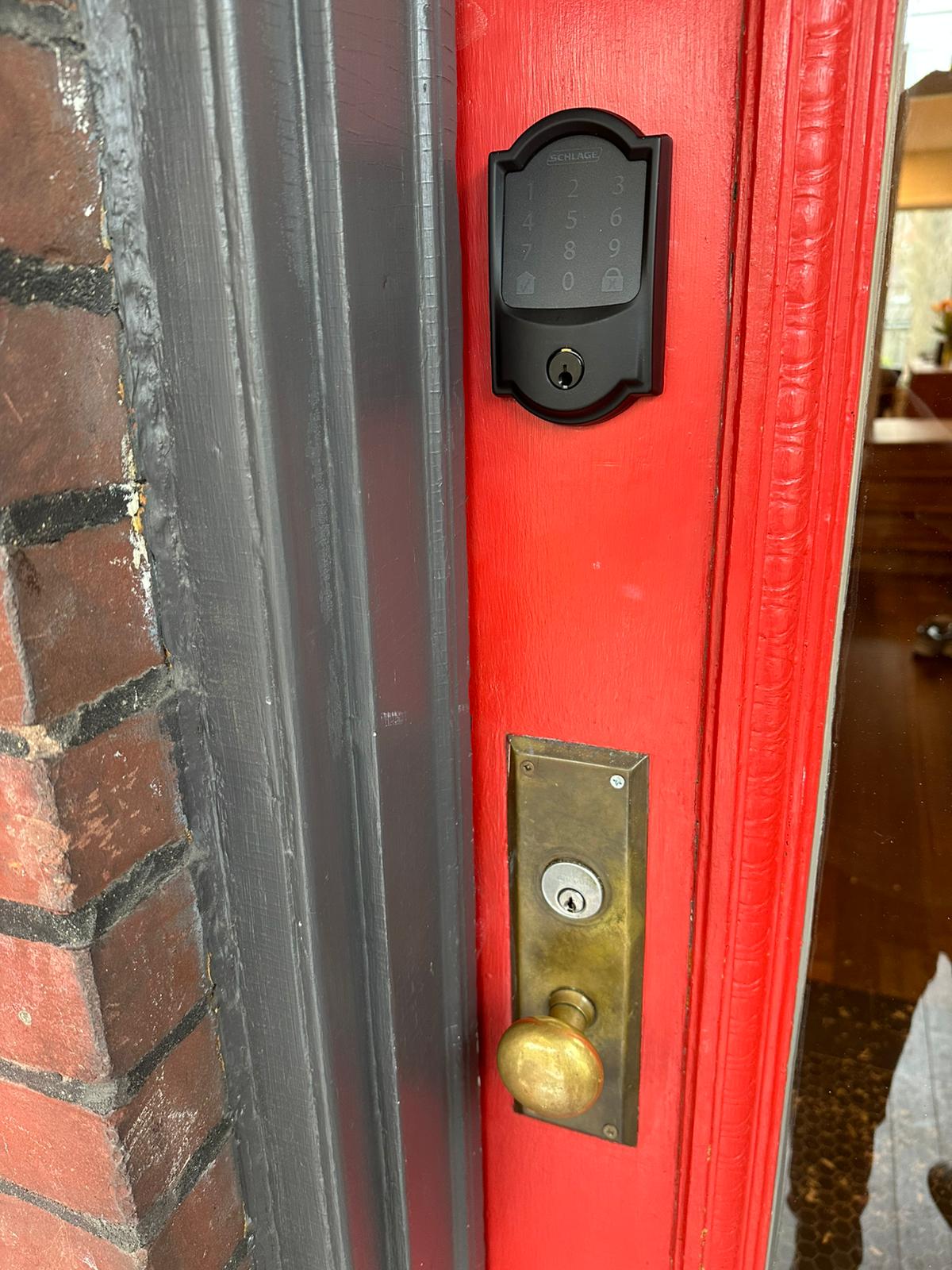
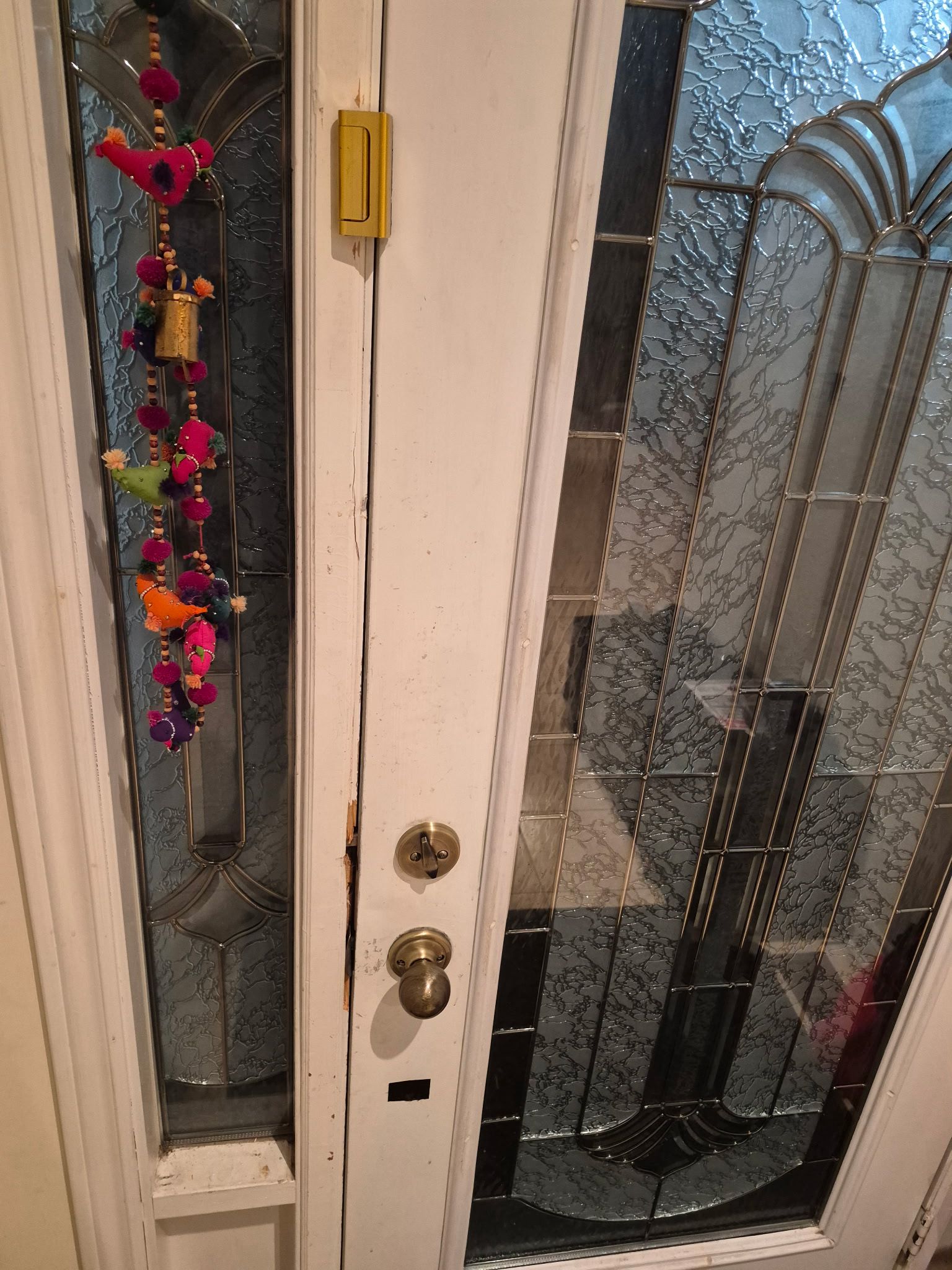
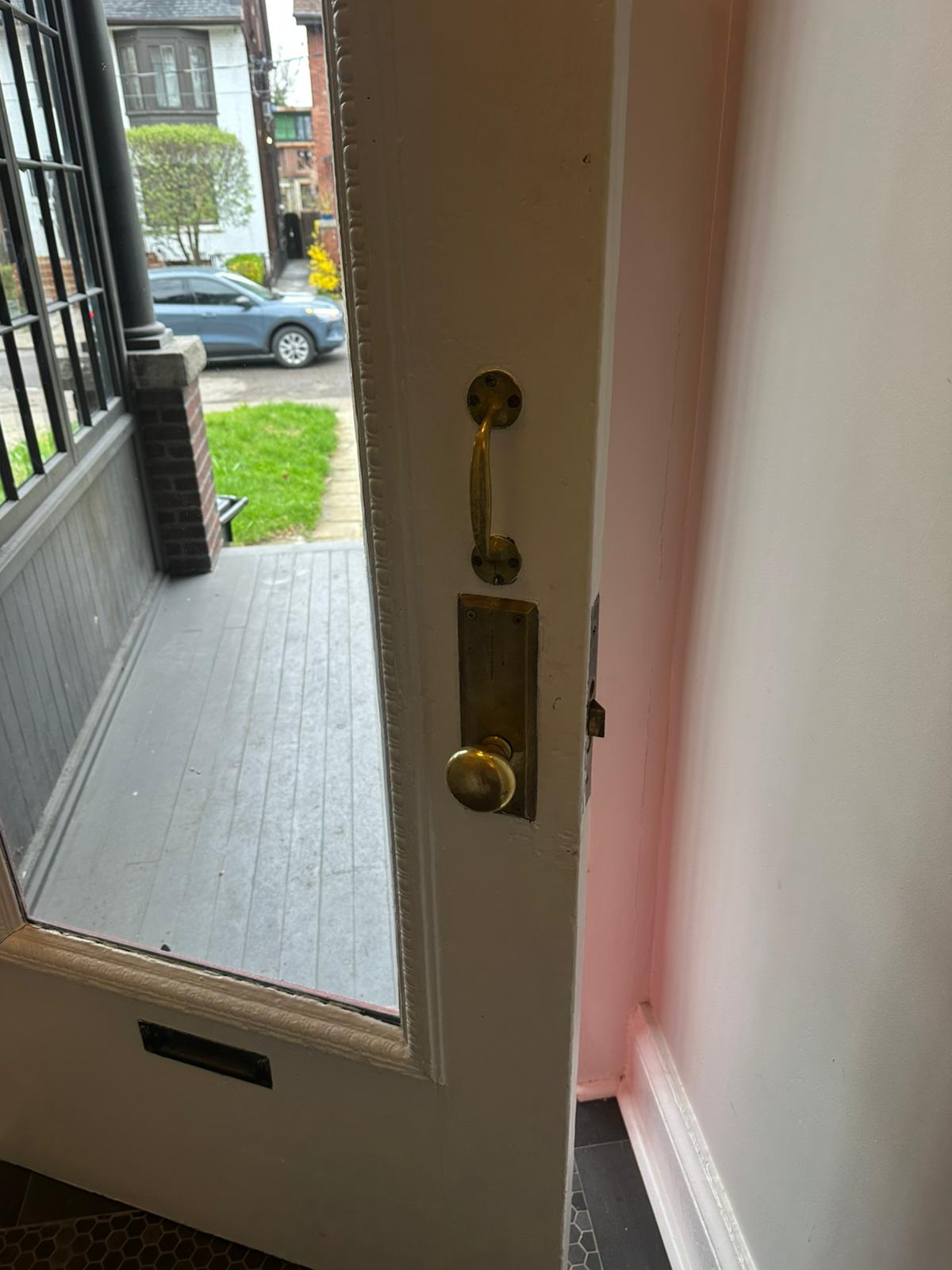
A front door that will not lock can often be repaired by correcting alignment or replacing a worn part. Replacement makes sense when the lock is damaged, worn beyond service, unsupported or unsuitable for the door. If you want to change the function, finish or security level at the same time, front door lock replacement lets you choose hardware that suits the door.
The technician should explain the cause and recommend the repair that addresses it, with a price, before any hardware is replaced.
Tenants should report a front door that will not lock to their landlord, who is usually responsible for the repair. If you need the door secured before the landlord can act, keep the invoice and tell them what was done. In condominiums, suite doors may be subject to building rules, and some changes need management approval.
A front door that will not lock gets attention, but the same problems affect side and rear doors, and they are sometimes left unaddressed for longer because they are used less often. Check every exterior door when one fails. A side door that has dropped on its hinges or a rear deadbolt that no longer reaches its strike leaves the house just as exposed.
Sliding patio doors use different hardware. The latch hooks into a keeper on the frame, and if the door has dropped on its rollers or the keeper has moved, the latch misses. Adjusting the rollers or repositioning the keeper often restores locking. Sliding doors that will not lock are a regular part of patio door lock repair.
A storm door closes against the outside of the main door frame. If its closer is strong or its latch is misadjusted, it can hold the main door slightly open, or press on it, and prevent the main door's latch from catching. If the main door will not lock only when the storm door is closed, adjust the storm door before working on the main lock.
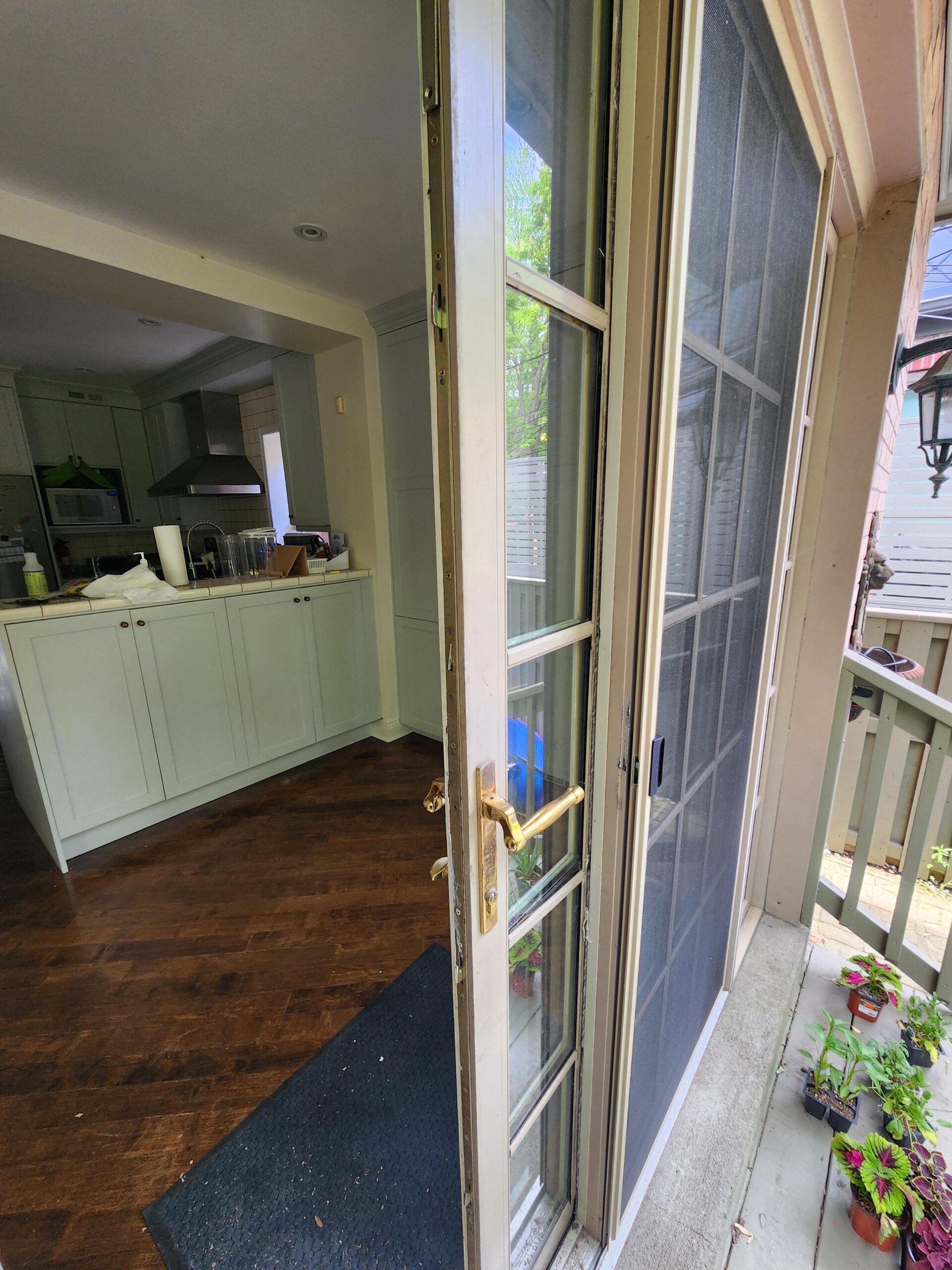
Many front doors in the GTA lock easily in some months and not in others. Wood and even some composite doors respond to humidity and temperature, and frames can shift slightly with the ground. If your door fails to lock only in summer or only in winter, mention it. The technician can choose an adjustment that allows for seasonal movement while keeping the bolt fully engaged in the frame.
If the door still locks, but only with effort, arrange a repair before it fails completely. A lock that needs the door pushed, pulled or lifted is under strain every time it is used. Tailpieces, cams and keys eventually give way under that load, often at a moment when the household is on the way out or needs to secure the house for the night. An adjustment made while the lock still works is usually simpler than dealing with a door that cannot be locked at all.
After the repair, test the lock with the door closed from outside and inside. The bolt should extend fully into the strike without pushing, pulling or lifting the door, and the latch should catch on its own. Our posted hours are listed with our contact details, and related faults on house locks are handled through lock repair.
Keep reading
With the door open, nothing obstructs the bolt. With the door closed, the bolt must pass into the strike opening in the frame. If the door has dropped on its hinges, the frame has shifted, or the wood has swollen, the bolt meets the edge of the strike instead. The key may stop partway or need extra force. Adjusting the strike, tightening the hinges or enlarging the bolt hole usually solves it without a new lock. Avoid forcing the key, which can break it inside the cylinder.
With the door open, nothing obstructs the bolt. With the door closed, the bolt must pass into the strike opening in the frame. If the door has dropped on its hinges, the frame has shifted, or the wood has swollen, the bolt meets the edge of the strike instead. The key may stop partway or need extra force. Adjusting the strike, tightening the hinges or enlarging the bolt hole usually solves it without a new lock. Avoid forcing the key, which can break it inside the cylinder.
Not for most deadbolts and knob locks. It means the bolt or latch is not lined up with the strike and the door must be moved to bring them together. Over time, that extra pressure wears the bolt, strike and cylinder and can break a tailpiece or key. For multipoint locks, lifting the handle is part of normal operation, but it should not need unusual force. If it does, the door alignment or gearbox needs attention. Correcting the fit protects the lock and makes it reliable.
Yes. A key that has worn down, or a copy cut from a worn key, may lift the pins only partly. The cylinder may turn a little but not far enough to throw the bolt. Try another key if you have one, ideally an original. If the other key works, have new keys cut to the correct specification rather than copying the worn one. If no key works properly, the cylinder may also be worn and may need servicing or replacement.
That depends on why it fails. If the lock works perfectly with the door open, the fault is in the door or frame and replacing the lock will not fix it. If the lock itself has a broken or worn part, a compatible repair part may restore it. Replacement makes sense when the lock is damaged, unsupported, worn beyond service or unsuitable for the door, or when you want a different function or finish. The technician should explain the cause before recommending new hardware.
Thicker weatherstripping pushes the door away from the frame when it closes. The latch may no longer reach the strike, or the deadbolt may bind against it. Often the strike can be adjusted or repositioned to suit the new seal, and in some cases the weatherstripping needs trimming. Mention the recent change when you describe the problem. It points the technician straight to the likely cause and avoids time spent on the lock itself.
On a multipoint door, the handle is usually lifted to engage the hooks or bolts along the edge before the key is turned. If the handle will not lift fully, the door may be out of alignment with the frame keepers. If it lifts but the key will not turn, the gearbox or cylinder may be at fault. Do not force the handle. A multipoint lock is assessed by checking the gearbox, the strip and each keeper, and compatible parts are often specific to the door manufacturer.
In most rental arrangements, the landlord is responsible for keeping the front door lock in working order. Report the problem in writing and keep a record. If the door cannot be secured and the landlord cannot act, check your lease and applicable tenancy rules before arranging work yourself. Keep the invoice and inform the landlord of the repair. Do not change the lock in a way that prevents the landlord from having a key where the lease requires it.
That is a judgment only you can make, but it is sensible to avoid leaving the home unsecured for long. Consider using another door that locks properly, asking someone to stay, or arranging a repair before leaving. Avoid improvised fixes such as screwing the door shut or wedging furniture against it, which can block an exit in a fire. Describe the problem when you call so we can explain what scheduling is available for your location.
GTA Lockman Mobile Locksmith Services is a mobile locksmith working on homes, businesses and vehicles across Toronto and the GTA, with more than 14 years in the trade. Every review is written by a customer on Google, where you can read them in full.
Areas served: Toronto, North York, Scarborough, Etobicoke, Vaughan, Richmond Hill, Markham, Stouffville, Newmarket, Mississauga, Brampton, Oakville, Milton, Halton Hills, Pickering, Ajax, Whitby, Oshawa, Uxbridge.
Describe the door, hardware and service address. Contact GTA Lockman Mobile Locksmith Services to confirm the scope and scheduling for your location.