Locksmith services are always 10% off for seniors.
Open Mon–Thu 8:30 AM–9 PM, Fri 8:30 AM–4 PM, Sun 9:30 AM–9 PM
Locksmith services are always 10% off for seniors.
Open Mon–Thu 8:30 AM–9 PM, Fri 8:30 AM–4 PM, Sun 9:30 AM–9 PM
GTA Lockman Mobile Locksmith Services · Toronto & GTA
Repair handles, closers and latches on storm doors, and stop them interfering with the main entrance lock.
Related services
Find out whether the strike, the door or the lock is stopping the bolt, and correct the cause rather than the symptom.
Learn moreRestore reliable locking on the doors people use most, and strengthen the frames that are easiest to force.
Learn moreRestore reliable latching by checking the handle, lock, keeper and sliding panel together.
Learn moreFree a frozen lock without damaging it, and find out whether ice, alignment or batteries caused the problem.
Learn moreSecure a forced door, repair damaged locks and frames, and document the work for your police report and insurer.
Learn moreFind the reason a key sticks, a bolt binds or a latch fails before deciding what needs replacement.
Learn more
A storm or screen door sits in front of the main entrance door. It keeps weather off the main door, lets air through in summer and adds a barrier that has to be opened before anyone reaches the entrance. What it does not do is secure the house. Its frame is light, its glass or screen panel is easy to defeat, and its latch is not built to resist force.
Treat the two doors separately. The main door carries the deadbolt and the security; the storm door needs hardware that closes reliably, latches without a struggle and stands up to wind, sun and winter.
Most calls about storm and screen doors are not about break-ins. They are about doors that will not latch, handles that have broken, closers that slam or have blown out, and locks that no longer turn.
Storm doors take a beating. They are lightweight, exposed on both sides and often left to slam in the wind. Over a few seasons the handle set loosens, the latch stops lining up with the keeper, and the closer loses its cushioning.
Aluminium frames flex and can bow slightly in the heat, which moves the latch out of line. Screws pull out of the thin frame material. On doors with interchangeable glass and screen panels, repeated swapping loosens the frame corners.
Wind is the most common cause of sudden damage. A gust catching an open storm door can bend the closer arm, tear the bracket out of the frame or break the door at the hinge rail. A wind chain or a closer with a hold-open feature reduces that risk.
If your storm door does not latch, start with the closer. A closer that no longer pulls the door the last few centimetres leaves the latch resting against the keeper instead of engaging. A closer with a broken hold-open washer lets the door swing freely in the wind.
Closers have adjustment screws that change the closing speed and the final latching force. Many doors have two closers, top and bottom, and both need to pull evenly. Where the closer bracket has torn out of the frame, the fixing needs repair before a new closer will hold.
Check the keeper as well: most storm-door keepers can be moved a few millimetres in or out so the latch engages without the door being pushed.
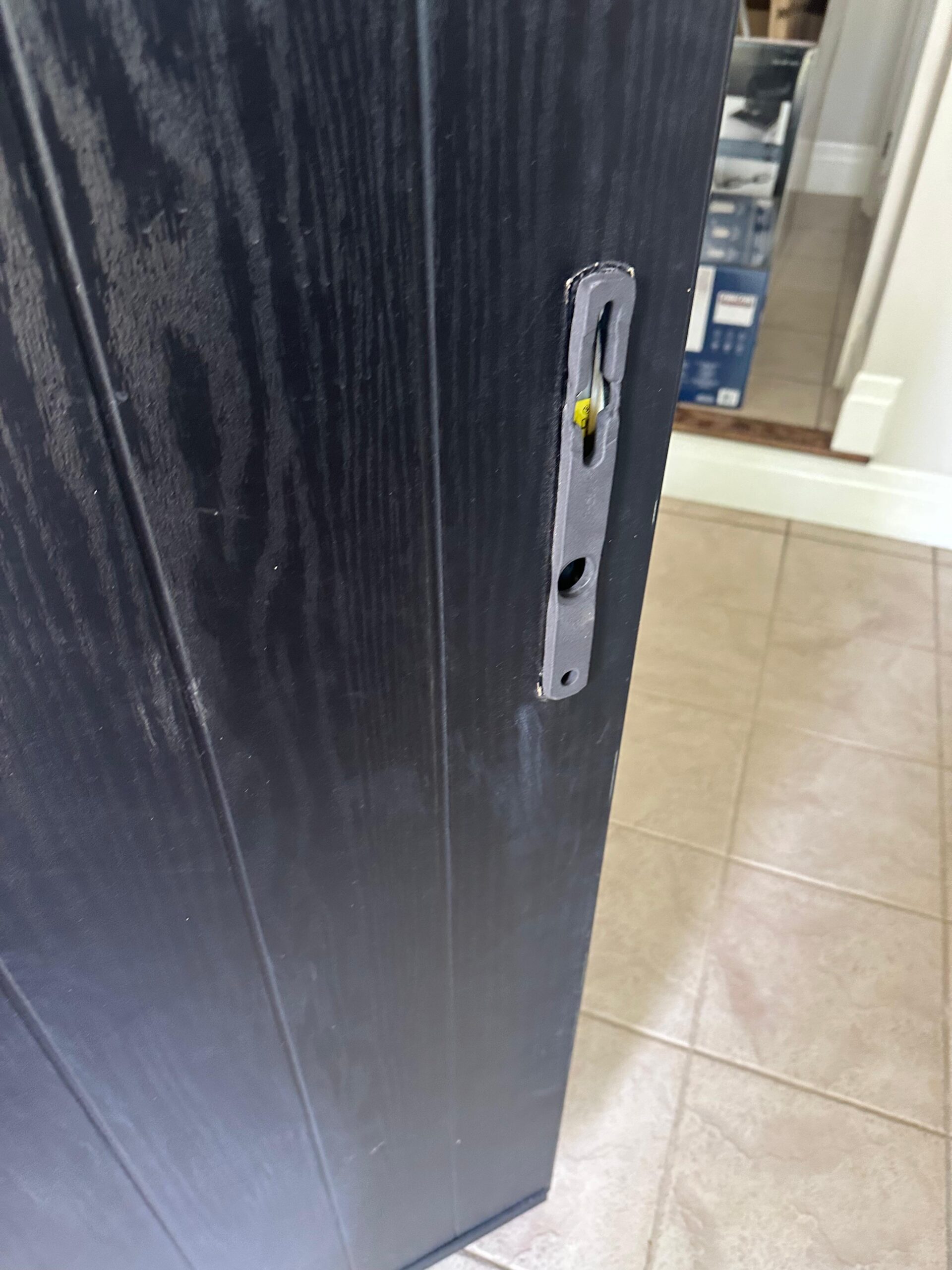
A storm door can stop the main door working properly. If the storm door closes hard against the main door frame, or its closer holds it under pressure, the main door may not latch. If the main door only fails to lock when the storm door is shut, adjust the storm door first.
Condensation between the two doors is another common issue in winter. Moisture can work into the main door's lock and freeze, one of the common causes of frozen or stiff locks in winter. If your main door has stopped locking altogether, see front door will not lock.
Most storm door handle sets include a simple keyed lock or a latch with a thumb-turn. These are light-duty and are better understood as a way to keep the door shut rather than as security hardware.
If you want the storm door key to match your house key, that is often possible where the cylinder is compatible, though many storm-door cylinders are proprietary. Matching keys is convenient, but remember the storm door lock will still be the weakest lock on the entrance.
Replacement handle sets are usually specific to the door manufacturer, the bore spacing and the frame thickness. Bringing the model details, or photographs of the existing handle and the door edge, saves fitting a set that will not line up.
Sliding screen doors on patios have their own latches and rollers. A screen that will not latch is usually a roller or alignment problem rather than a lock fault. The sliding door itself is the part that secures the opening, and its latch and handle are put right through patio door lock and handle repair.
Pet doors fitted into screen or storm doors create a gap in the barrier and can weaken the frame. If you have one, make sure the main door remains the secure layer.
A storm door adds a small delay and makes a house look less casually accessible, but it should not be relied on. The real work is at the main door: a deadbolt that throws fully into a reinforced strike, solid hinges and a frame that will not split. Frame reinforcement is a regular part of side and back door lock repair, and stronger cylinders are among the residential high-security lock upgrades worth considering.
If someone has damaged a storm door in an attempt to reach the main door, treat it as an attempted break-in: report it and have both doors inspected. See lock repair after a break-in.
We can adjust or replace closers, repair or reinforce closer brackets, align latches and keepers, replace handle sets where compatible parts are available, and correct main door problems caused by the storm door. Where a storm door frame is bent or corroded beyond repair, replacement of the door is a job for a door supplier, and we will say so rather than fitting hardware to a frame that will not hold it.
If the door itself has reached the end of its life, the hardware is only part of the decision. Look at how the door is used: a full-view glass door suits an entrance that needs light, while a mid-view or high-view door with a screen panel suits an entrance that is opened for ventilation. Consider whether panels need to be swapped seasonally, because doors with retractable screens avoid storing glass panels in a garage each spring.
Measure the opening before ordering. Storm doors are sold in standard sizes with adjustable frames, but an out-of-square opening or an unusual brick mould can complicate the fit. Whoever installs it should also fit the closer brackets into solid material rather than the trim alone, since bracket failure is the most common reason a storm door ends up damaged in the wind.
Storm doors take the worst of the winter. Ice can build up along the bottom sweep and stop the door closing fully, which leaves the latch resting against the keeper. Clear snow from the threshold rather than forcing the door, and check the sweep each autumn. If the door has a hold-open washer on the closer, test it before the windy months, because a door that swings free in a gust is how most closer brackets are torn out.
When you call, describe the storm door, the handle and closer, and what happens when the door closes. Photographs of the handle, the latch area and the closer bracket help identify parts. Related work on entrance doors is handled through lock repair.
Keep reading
Not meaningfully. A storm door is built for weather and ventilation, with a light frame, a thin glass or screen panel and a light-duty latch. It adds a small delay and keeps the main door cleaner and drier, but it will not resist force. Put the security effort into the main door: a deadbolt that throws fully into a reinforced strike, sound hinges and a frame that will not split. Treat the storm door lock as a way to keep the door closed.
Not meaningfully. A storm door is built for weather and ventilation, with a light frame, a thin glass or screen panel and a light-duty latch. It adds a small delay and keeps the main door cleaner and drier, but it will not resist force. Put the security effort into the main door: a deadbolt that throws fully into a reinforced strike, sound hinges and a frame that will not split. Treat the storm door lock as a way to keep the door closed.
Start with the closer. If it no longer pulls the door through the last part of its travel, the latch rests against the keeper instead of engaging. Check whether the closer bracket is still firmly fixed, since screws often pull out of the light frame. Then look at the keeper, which can usually be moved slightly so the latch lines up. If the door has two closers, both need to pull evenly. Wind damage to the arm is also common.
Often yes. Closer arms, brackets and the closers themselves are replaceable, and the fixing point can usually be repaired or reinforced if the screws tore out. If the door frame itself is bent at the hinge rail, repair is less reliable and replacing the door may be the better option. Fitting a wind chain, or a closer with a hold-open feature, reduces the chance of it happening again on an exposed entrance.
Sometimes. It depends on whether the storm door's cylinder is compatible with your house lock's keyway. Many storm-door handle sets use proprietary cylinders that cannot be rekeyed to a house key, in which case a separate key is needed. Where they are compatible, rekeying to match is straightforward. Remember that the storm door lock is light-duty regardless, so matching keys is about convenience rather than security.
A storm door closing hard against the main door frame, or a closer holding it under pressure, can stop the main door latching or push it slightly out of position. If the main door locks fine with the storm door open, adjust the storm door first: its closer speed, latching force and the keeper position. Weatherstripping added at the same time can also change the fit. Correcting the cause avoids modifying a main door lock that is working properly.
Usually, if compatible parts are available. Storm-door handle sets are often specific to the manufacturer, with particular bore spacing and frame thickness, so the replacement has to match. Photographs of both sides of the handle, the latch area and the door edge help identify the set. If the exact set is unavailable, there are adjustable replacements that fit many doors. We will tell you before ordering if the fit will require modifying the door.
It can be. In winter, warm indoor air meeting the cold storm door can produce condensation between the two doors. Water can work into the main door's lock and freeze, or run down and sit at the threshold. Ensure the storm door's vents, where fitted, are used as the manufacturer suggests, and keep the threshold clear. If the main door lock freezes regularly, dry lubricant before winter and attention to the water source usually help.
It is possible, but it creates a gap in the barrier and can weaken a light frame. Make sure the main door remains the secure layer and that the pet door cannot be used to reach an inside thumbturn on the main door. If the main door has glass nearby, review that too. Some households prefer a pet door fitted to a wall or a dedicated panel instead, which avoids weakening the door frame.
GTA Lockman Mobile Locksmith Services is a mobile locksmith working on homes, businesses and vehicles across Toronto and the GTA, with more than 14 years in the trade. Every review is written by a customer on Google, where you can read them in full.
Areas served: Toronto, North York, Scarborough, Etobicoke, Vaughan, Richmond Hill, Markham, Stouffville, Newmarket, Mississauga, Brampton, Oakville, Milton, Halton Hills, Pickering, Ajax, Whitby, Oshawa, Uxbridge.
Describe the door, hardware and service address. Contact GTA Lockman Mobile Locksmith Services to confirm the scope and scheduling for your location.