Locksmith services are always 10% off for seniors.
Open Mon–Thu 8:30 AM–9 PM, Fri 8:30 AM–4 PM, Sun 9:30 AM–9 PM
Locksmith services are always 10% off for seniors.
Open Mon–Thu 8:30 AM–9 PM, Fri 8:30 AM–4 PM, Sun 9:30 AM–9 PM
GTA Lockman Mobile Locksmith Services · Toronto & GTA
Understand what a privacy lock does, how to release one from outside, and when a room needs a keyed lock.
Related services
Choose levers, deadbolts and keys that an older person can operate reliably while keeping the home secure.
Learn moreFind why the handle moves, droops or fails to retract the latch, then address the responsible component.
Learn moreInvestigate why the door will not catch or release cleanly, including latch wear and frame alignment.
Learn moreAssess household lock problems in the context of the door, building requirements and the people using it.
Learn moreRepairs, rekeying and replacement hardware for homes, condos and apartments, with attention to the whole door.
Learn moreFind the reason a key sticks, a bolt binds or a latch fails before deciding what needs replacement.
Learn more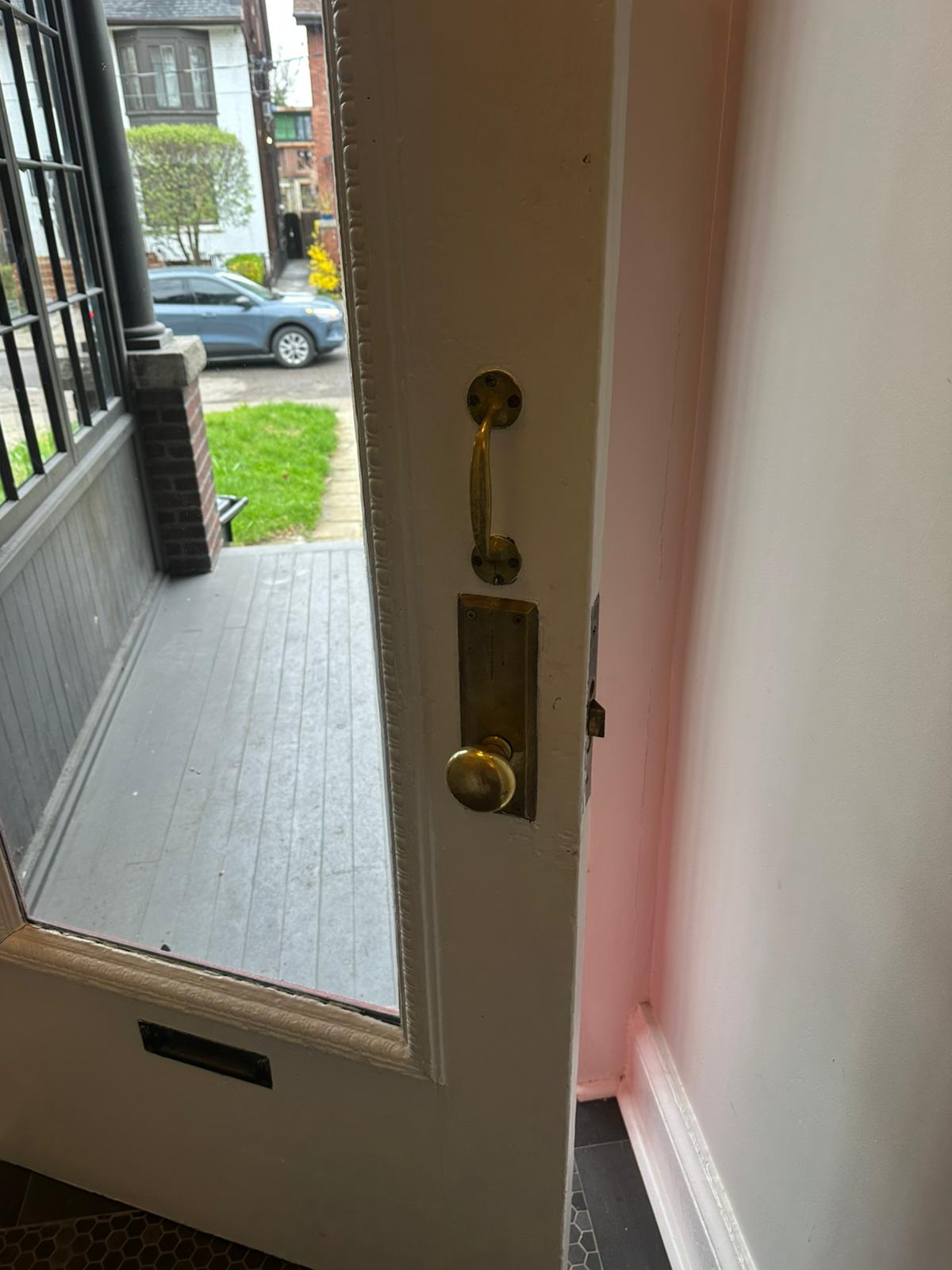
The small lock on a bathroom or bedroom door does a different job from the lock on your front door. A privacy lock gives people inside a room a moment of privacy and signals that the room is occupied. It is not designed to resist force, and it can normally be released from outside with a simple tool, which matters when a child locks themselves in or someone falls inside.
That design is deliberate. A lock that could not be opened from outside would leave a household unable to reach someone who needed help. Understanding the difference helps when choosing hardware: if you want a room to be genuinely secured, a privacy set is the wrong product and a keyed lock is the right one, subject to the safety considerations below.
Privacy knobs and levers have a small button, turn or push-button on the inside and a slot, hole or release opening on the outside. They are the standard fitting for bathrooms and bedrooms in most GTA homes.
Passage sets have no lock at all and are used on hallways, closets and rooms that never need privacy. Dummy sets are fixed handles used on inactive doors.
Pocket and sliding door hardware uses flush pulls with a small privacy catch, which behaves like a privacy set but in a much smaller body. Barn-door hardware often has hook-style or latch-style locks with limited release options, which is worth checking before fitting one on a bathroom.
Bathroom indicator bolts, common in commercial washrooms, show vacant or occupied and release with a coin or tool from outside.
Most failures fall into a few patterns. The inside button or turn no longer holds, so the door will not stay locked. The latch does not retract when the handle turns, usually because the spindle, spring or retractor has worn. The outside release no longer works, leaving no way in if the door is locked. Or the latch misses the strike because the door has moved.
Children are a frequent reason for a call: a toddler turns the button and then cannot or will not turn it back. Knowing that your release works, and keeping the release tool nearby, prevents a small problem from becoming a difficult one.
If the handle itself is loose or drooping, a worn spindle or return spring is the usual cause, put right through loose door handle and lock repair. If the latch will not catch, the strike usually needs realigning as part of door latch and strike plate repair.
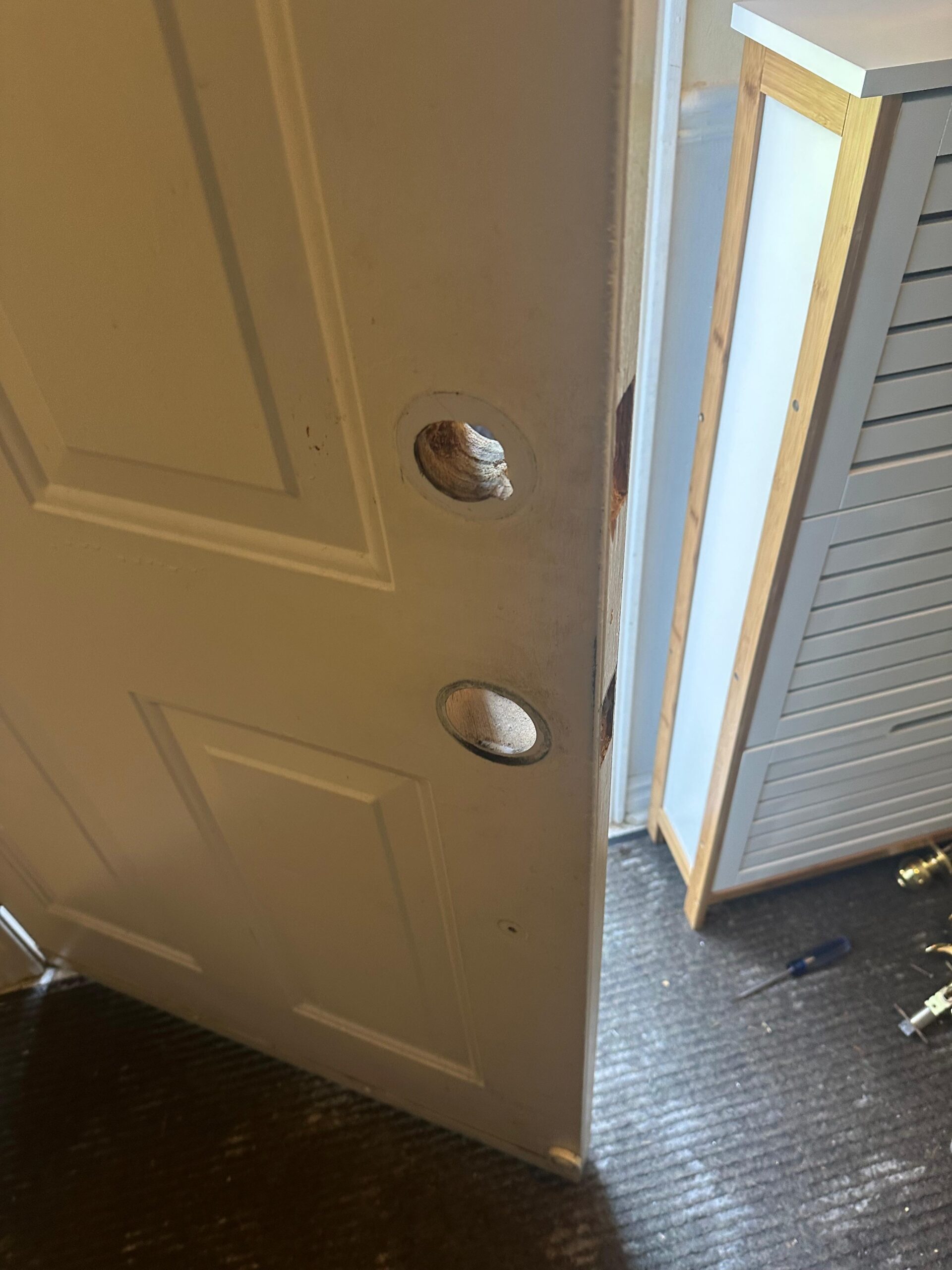
Most privacy sets release with a flat screwdriver, a coin, a paperclip or the small pin supplied with the lock. The type depends on the outside trim: a slot, a small round hole, or a small keyed cylinder.
Test the release on every privacy door in the house when you move in, and keep a suitable tool nearby. A small screwdriver or pin on top of the door frame or in a hall drawer is enough. Households with young children, older relatives or anyone with a medical condition should treat this as basic preparation. Levers and larger turn knobs help here too, the same adjustments made for easier-to-use door hardware for seniors.
Home offices, storage rooms, medicine cupboards and rooms holding records or equipment sometimes need more than privacy. A keyed lever or knob, or a deadbolt on a solid door, provides that. Consider who needs access, whether children could be shut inside, and how the room would be reached if the keyholder is away.
Never fit a keyed lock that prevents someone inside from getting out. On rooms people occupy, the inside must open freely without a key at any time. The same principle limits where double-cylinder deadbolts can be fitted.
Interior doors are often hollow-core with light frames. They accept standard privacy sets, but they do not hold heavier hardware well, and screws can strip out over time. If a lock keeps loosening, the fix may be new screws into sound material, a repair plate or a solid door rather than a stronger lock.
Check the door's bore size and backset before buying replacement hardware. Most interior doors use a standard bore, but older homes in the GTA can have non-standard preparations, and mortise privacy sets are still found in century homes.
In rental units and shared houses, bedroom door locks raise practical and legal questions. A tenant may want a lock on their room; a landlord may have obligations about access and about not restricting exits. Check the lease and applicable tenancy rules, and agree changes in writing before fitting anything. Similar questions come up with basement apartment entrance locks in rented suites.
In condominiums, interior doors are usually the owner's responsibility, while suite entry doors are subject to building rules. Adding a lock to an interior door rarely affects the building, but changes that affect a fire-rated door do.
A privacy set that has worn out is usually replaced rather than repaired, because the parts are inexpensive and rarely sold separately. Where a door has an older mortise privacy lock with decorative trim, repair or a compatible replacement cylinder may preserve the look of the door. We can match finishes across a floor so hardware looks consistent.
Before replacing, check whether the problem is the lock or the door: a latch that misses the strike is an alignment problem and a new handle set will not fix it.
Walk through the house and decide what each door actually needs. Bathrooms and bedrooms usually need privacy with an outside release. Hallways, linen cupboards and most closets need no lock at all, and a passage set keeps the door closed without a lock to fail. A home office or a room holding tools, medicines or records may justify a keyed lever, provided anyone inside can still leave freely.
Writing this down before buying hardware avoids the common outcome where a household buys a matched set and then finds two doors have the wrong function. It also helps when ordering, because privacy, passage and keyed versions of the same design are usually available in the same finish.
Century homes across Toronto often have mortise locks on interior doors, with a long faceplate on the door edge and a small thumb-turn. Many still work well, and the parts inside can sometimes be serviced rather than replaced. Where the original hardware is worth keeping, a compatible replacement cylinder or a repaired mechanism keeps the look of the door intact. Replacing a mortise lock with a modern bored set means drilling the door, so it is worth asking whether the original can be saved first.
When you call, describe the door, the current hardware, what fails and whether anyone is currently locked in. If a child or an older adult is behind the locked door and needs help, call 911 first. For routine work, photographs of both sides of the handle and the door edge help. If the check turns up a worn latch or a loose rose on another door, that is ordinary lock repair.
Keep reading
Most privacy locks release from outside with a simple tool. Look at the centre of the outside knob or lever: a narrow slot takes a flat screwdriver or coin, a small round hole takes the pin supplied with the lock or a straightened paperclip, and some sets use a small keyed cylinder. Turn or push gently until the latch releases. If someone inside needs medical help, call 911 first. If the release does not work, the lock has failed and needs to be opened another way.
Most privacy locks release from outside with a simple tool. Look at the centre of the outside knob or lever: a narrow slot takes a flat screwdriver or coin, a small round hole takes the pin supplied with the lock or a straightened paperclip, and some sets use a small keyed cylinder. Turn or push gently until the latch releases. If someone inside needs medical help, call 911 first. If the release does not work, the lock has failed and needs to be opened another way.
No. A privacy set is designed to signal that a room is occupied and to be released from outside if someone needs help, so it offers very little resistance to force. If a room genuinely needs to be secured, such as a home office or a storage room, a keyed lever or a deadbolt on a solid door is the right product. Make sure anyone inside can still get out without a key, and consider whether children could be shut in.
Usually the inside button, turn or the latch mechanism has worn out. Privacy sets are light-duty and have a limited lifespan, especially on doors used many times a day. Sometimes the problem is alignment instead: if the latch no longer sits properly in the strike, the lock cannot hold. Try the lock with the door open. If it holds then but not when closed, the strike or door needs adjusting rather than the lock being replaced.
That depends on your lease and the residential tenancy rules that apply. Landlords have obligations about access and about not restricting exits, and tenants usually need permission before altering a door. Agree the change in writing with the landlord first, including who holds any key. We can suggest hardware that suits the door and preserves a safe exit. We do not fit locks that would leave an occupant unable to leave a room from inside.
Some households replace the privacy set with a passage set, which has no lock at all, on bathrooms and bedrooms used by small children. Another option is to keep the release tool in a fixed place everyone knows, or fit hardware with a simple outside release. Some families also fit a door-top latch out of a child's reach on rooms they want kept closed, though these should never be used on a room where someone could be trapped.
Interior doors are usually hollow-core, so the screws hold in a thin layer of material. Repeated use works them loose, and once the holes are worn, retightening does not last. The fix may be longer screws into sound material, a repair plate, or a replacement door if the area around the bore is damaged. A handle that droops or a latch that does not retract can also be the spindle or retractor wearing out inside the lock body.
Usually yes. Privacy, passage and keyed sets are sold in matching designs and finishes, so a floor can be made consistent even if the functions differ from door to door. Check the bore size and backset of your existing doors first. Older GTA homes sometimes have non-standard preparations or mortise locks, which need either a compatible replacement or a visible filler plate. We can measure and recommend what fits without modifying the doors unnecessarily.
Interior doors inside a suite are normally the owner's responsibility, so changing a bathroom or bedroom privacy set rarely involves the corporation. The suite entry door is different: it is often fire-rated and subject to building rules about hardware and keying, so changes there should be checked with management first. If you rent the suite, your lease also applies. When in doubt, ask management before work begins rather than afterwards.
GTA Lockman Mobile Locksmith Services is a mobile locksmith working on homes, businesses and vehicles across Toronto and the GTA, with more than 14 years in the trade. Every review is written by a customer on Google, where you can read them in full.
Areas served: Toronto, North York, Scarborough, Etobicoke, Vaughan, Richmond Hill, Markham, Stouffville, Newmarket, Mississauga, Brampton, Oakville, Milton, Halton Hills, Pickering, Ajax, Whitby, Oshawa, Uxbridge.
Describe the door, hardware and service address. Contact GTA Lockman Mobile Locksmith Services to confirm the scope and scheduling for your location.