Locksmith services are always 10% off for seniors.
Open Mon–Thu 8:30 AM–9 PM, Fri 8:30 AM–4 PM, Sun 9:30 AM–9 PM
Locksmith services are always 10% off for seniors.
Open Mon–Thu 8:30 AM–9 PM, Fri 8:30 AM–4 PM, Sun 9:30 AM–9 PM
GTA Lockman Mobile Locksmith Services · Toronto & GTA
Keep young children in, out, and never locked in, without making any door hard for adults to open.
Related services
What a chain, bar or secondary lock adds, what it does not add, and where it must not stop an exit.
Learn moreUnderstand what a double-cylinder deadbolt does, the fire-safety concern, and alternatives for doors with glass.
Learn moreUnderstand what a privacy lock does, how to release one from outside, and when a room needs a keyed lock.
Learn moreDecide whether the situation needs 911, then use the outside release or have the lock opened without damage.
Learn morePlan keyless entry around door compatibility, code management and a practical backup entry method.
Learn moreRepairs, rekeying and replacement hardware for homes, condos and apartments, with attention to the whole door.
Learn more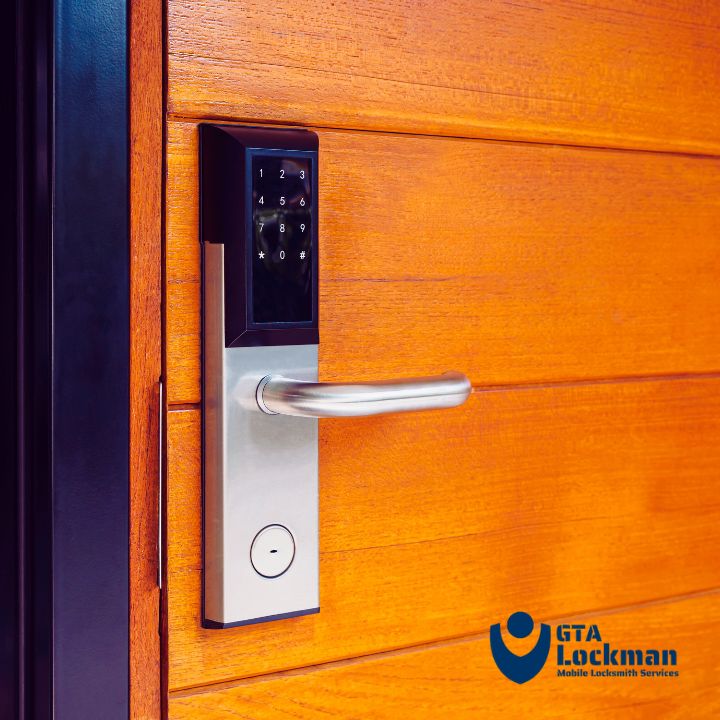
Toddlers and young children learn doors sooner than most parents expect. First they push, then they pull, then they reach the handle, then they work out the lock. Somewhere in that progression most families have a moment of alarm: a child locked in a bathroom, a toddler who has opened the front door and wandered onto the porch, a four-year-old who has worked out the patio door.
Childproofing doors is about controlling which doors a child can open and which they can lock, without making the house unsafe for everyone else to leave. The two aims pull in different directions, so the choices need thought.
Doors a child should not be able to open. The front door, the back and patio doors, the garage entry, the basement stairs, and any room holding cleaning products, medication or tools.
Doors a child should not be able to lock. Bathrooms and bedrooms, where a child can turn a privacy button and then panic, or fall asleep, on the other side.
Each needs a different answer, and neither should stop an adult getting out in a fire or reaching a child in a hurry.
The front and back doors are the ones that matter most, because a child who gets outside can reach a road or a pool.
Lock height. A deadbolt or thumbturn mounted at the standard height is within reach of a determined four-year-old with a chair. A secondary lock mounted high on the door, out of a child's reach, adds a barrier. Top-mounted latches and surface bolts are simple and inexpensive. Whatever is fitted must still be easy for adults to release in the dark without a key, since a door everyone struggles to open is a hazard in a fire. The same principle runs through the choices for door chains and secondary locks.
Lever handles. Levers are easier for small children to operate than knobs. On an exterior door with a lever, the deadbolt matters more, because the lever alone will not stop a child who can reach it.
Door alarms and chimes. A simple chime that sounds when an exterior door opens tells you a child has gone out, even if the lock was left undone.
Patio doors. Sliding patio doors are often the easiest door for a child to open, because the catch is low and light. A secondary bar or a high-mounted lock on the sliding panel helps. Swinging patio doors need the same high-mounted approach as other exterior doors, and a high secondary bolt fits alongside the existing patio door lock and handle.
For rooms a young child should not enter, such as a laundry room with detergent, a workshop, or a room with medication, the options include:
Doors to basement stairs deserve particular attention, since a fall down a flight of stairs is a common serious injury in young children.
Most interior privacy sets, on bathrooms and bedrooms, have a release on the outside: a small hole or slot that lets you unlock the door with a pin, a narrow screwdriver or a supplied tool. Every adult in the house should know where those releases are and what opens them, and the tool should be kept somewhere everyone can find it, such as on top of the door frame.
If a privacy lock has no outside release, it should be replaced with one that does. Some families with young children remove the locking function from bathroom doors altogether for a few years.
When a child is locked inside a room, staying calm and talking through the door while the release is found usually settles things.
It is tempting to fit a double-cylinder deadbolt, which needs a key on both sides, so a child cannot open the front door. It does stop the child. It also stops every adult and older child from getting out professionally in a fire unless the key is always in the lock, which then defeats the purpose.
A high-mounted secondary lock that releases without a key is usually a safer answer than a keyed inside lock. The wider trade-offs are the same as those for double-cylinder deadbolts.
A keypad or smart lock on the front door means nobody needs to leave a key where a child might find it, and older children can be given a code when they are ready. Younger children can still usually open the inside of a keypad lock by turning the thumbturn, so a keypad does not replace a high secondary lock for toddlers. Older children can be given their own code on keypad locks when they are ready.
Childproofing is temporary. As children grow, the locks that kept them in become a nuisance, and the next stage is often giving them their own way in. Keep a note of what was fitted where, so the high bolts and knob covers can be removed and the holes dealt with when they are no longer needed.
Households with both pets and young children have to think about who can open which door. Many dogs learn to open lever handles, and some cats manage too. A dog that lets itself out through a lever-handled back door can also let a toddler follow. On doors to the outside, a deadbolt kept locked, or a high secondary lock, deals with both.
Pet doors raise their own issue: a flap large enough for a big dog is often large enough for a small child to crawl through. Locking the pet door when the child is in the room, or choosing a pet door placed where a child cannot reach it, avoids that.
Children stay in other homes too. Grandparents' houses, holiday rentals and friends' homes are rarely childproofed, and the same checks apply: which doors lead outside or to stairs, which rooms hold medication or chemicals, and whether the bathroom lock can be opened from outside. A few removable devices, such as knob covers and portable door locks, can make a temporary stay safer.
A home that also runs a home child care business, overseen by a child care agency, has further requirements, and the agency will set out what is needed for exits, gates and locks. Requirements for centre-based childcare are stricter again and are handled separately from ordinary household childproofing.
Backyards with a pool, pond or hot tub carry the most serious risk for young children. Doors and gates that open onto these areas should close and latch on their own, with the latch mounted high enough that a small child cannot reach it. Municipal pool enclosure bylaws set specific rules for gates and fences around pools, so check with your municipality. From the house side, a patio or back door that opens directly towards a pool deserves a high secondary lock or an alarm that sounds when it opens.
In condominiums and apartments, balcony doors are another concern. A sliding balcony door is easy for a small child to open, and a secondary lock or bar that an adult can remove easily is worth fitting. Balcony furniture a child could climb should be kept away from the railing.
Even with good planning, children occasionally lock themselves into a room or lock a parent out. Keep the privacy lock release tool where every adult can find it, keep a spare house key with a trusted neighbour or in a key safe, and make sure older children know how to unlock the front door from inside. If a child is locked in a room and cannot or will not open the door, and there is any risk to their safety, call 911 rather than waiting for a locksmith.
Anyone looking after the children needs to know the door arrangements: where the high secondary locks are, how to open a locked bathroom, and how to get everyone out in a fire. A short note on the fridge, with the location of the release tool and a spare key, takes a minute to write and saves real worry.
Tell us the age of the children, which doors worry you, and what is currently fitted. Photographs of each door and its hardware help us suggest what to fit.
We can fit high-mounted secondary locks that release without a key, replace privacy sets that lack an outside release, adjust doors so they latch reliably, and fit keypad locks where they suit. Other work around the house comes under our residential locksmith services.
Keep reading
Fit a secondary lock high on the door, out of the child's reach, that an adult can release without a key. A chime that sounds when the door opens adds a warning if the lock is left undone.
Fit a secondary lock high on the door, out of the child's reach, that an adult can release without a key. A chime that sounds when the door opens adds a warning if the lock is left undone.
Usually not. It stops children, but it also stops everyone else leaving professionally in a fire unless the key stays in the lock. A high secondary lock that releases without a key is generally safer.
Most privacy locks have a release on the outside: a small hole or slot opened with a pin, a narrow screwdriver or a supplied tool. Keep that tool somewhere every adult can find it, such as on top of the door frame.
Replace it with a privacy set that has one. Some families with young children remove the locking function from bathroom doors for a few years.
Levers are easier for small children to operate than knobs. On exterior doors, rely on the deadbolt and a high secondary lock rather than the handle.
Add a secondary bar in the track or a high-mounted lock on the sliding panel, since the standard catch is low and easy for children to reach.
Not on its own. A child can usually turn the thumbturn on the inside. A keypad helps by removing the need for hidden keys, but toddlers still need a high secondary lock.
Remove the high bolts and knob covers, deal with the screw holes, and consider giving older children their own code or key when they are ready.
GTA Lockman Mobile Locksmith Services is a mobile locksmith working on homes, businesses and vehicles across Toronto and the GTA, in the trade since 2010. Every review is written by a customer on Google, where you can read them in full.
Areas served: Toronto, North York, Scarborough, Etobicoke, Vaughan, Richmond Hill, Markham, Stouffville, Newmarket, Mississauga, Brampton, Oakville, Milton, Halton Hills, Pickering, Ajax, Whitby, Oshawa, Uxbridge.
Describe the door, hardware and service address. Contact GTA Lockman Mobile Locksmith Services to confirm the scope and scheduling for your location.