Locksmith services are always 10% off for seniors.
Open Mon–Thu 8:30 AM–9 PM, Fri 8:30 AM–4 PM, Sun 9:30 AM–9 PM
Locksmith services are always 10% off for seniors.
Open Mon–Thu 8:30 AM–9 PM, Fri 8:30 AM–4 PM, Sun 9:30 AM–9 PM
GTA Lockman Mobile Locksmith Services · Toronto & GTA
Privacy latches, bathroom locks with an outside release, and hanging a barn door so the lock actually engages.
Related services
Understand what a privacy lock does, how to release one from outside, and when a room needs a keyed lock.
Learn moreDecide whether the situation needs 911, then use the outside release or have the lock opened without damage.
Learn moreRestore reliable latching by checking the handle, lock, keeper and sliding panel together.
Learn moreHow flush bolts, the astragal and the active leaf work together, and what to fix when a pair of doors will not lock.
Learn moreWork out the hand of any door before ordering levers, closers, mortise locks or multipoint parts.
Learn moreRepairs, rekeying and replacement hardware for homes, condos and apartments, with attention to the whole door.
Learn more
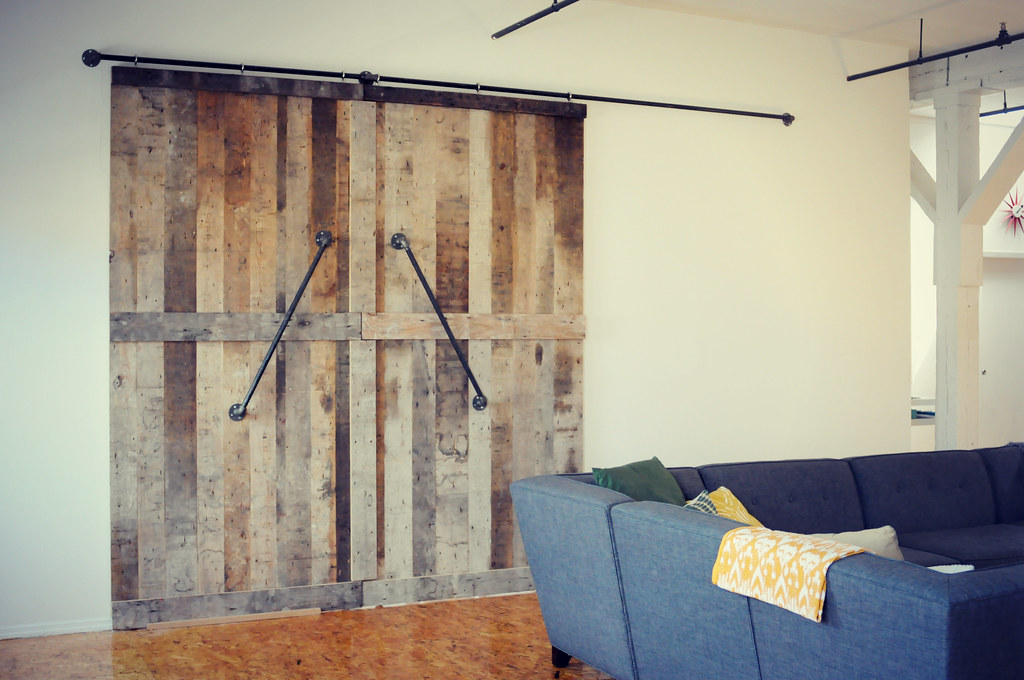
Barn doors and other surface-mounted sliding doors have become common in GTA homes over the last decade. They hang from a rail above the opening and slide across the wall, saving the floor space a swinging door would need. They suit bathrooms in small condos, pantries, laundry areas, home offices and bedrooms opening onto a living area.
What they do not have, out of the box, is a lock. A barn door hangs in front of the opening rather than inside a frame, so there is no jamb for a latch to catch, and the door usually stands slightly off the wall with a gap on every side. Adding privacy or a lock to a barn door means using hardware designed for sliding doors, and accepting that it will never seal like a swinging door.
A barn door lock provides privacy, not security. It stops someone sliding the door open while a room is in use, and it stops children or pets wandering into a pantry or laundry room. It will not keep out someone determined to get in, because the door hangs on exposed rollers and can often be lifted or pushed away from the wall.
For a bathroom, that is usually enough, provided the lock can be released from outside if someone falls or is taken ill. For an office holding confidential files, a barn door is a poor choice, and a swinging door with a proper lock is better.
Hook and eye latches. A hook on the door engages an eye or catch on the wall or the door frame trim. Simple, inexpensive and effective for privacy. Available in finishes to match the rail.
Sliding bolt latches. A small bolt on the door slides into a keeper fixed to the wall or trim. Works like a surface bolt on a swinging door.
Teardrop or gravity latches. A pivoting latch on the door drops into a keeper on the wall when the door closes, and is lifted to release. Some can be lifted from both sides.
Barn door privacy locks with thumbturns. Purpose-made locks with a thumbturn on the inside and a release on the outside, similar to a privacy set on a swinging door. These give the same function as a bathroom lock.
Keyed barn door locks. Less common, but available for doors where some control is wanted, such as a storage area or a home office door that is rarely used.
Because the door slides across the opening, the lock must engage something fixed at the closed position. The options are:
The door's position when closed must be consistent for the lock to work. A floor guide that keeps the bottom of the door close to the wall, and a stop on the rail that halts the door in the same place every time, make the lock engage reliably.
Any lock on a bathroom door, sliding or swinging, should be releasable from outside. A child locks themselves in, or an adult falls, and the door needs to open. Purpose-made barn door privacy locks often include a release on the outside. For hook or bolt latches, the release is usually simply sliding the door slightly or lifting the hook through the gap, but check that this is possible with the door closed. The same thinking applies to swinging doors fitted with interior privacy locks, and to what to do if someone is locked inside a room.
Barn doors overlap the opening but do not seal it. There is a gap at the top, bottom and sides, and sound and light pass through. For bathrooms and bedrooms, this is often the bigger complaint than the lock. A wider door that overlaps the opening by a few inches on each side, a door stop or bumper that holds the door close to the wall, and a brush strip or seal on the wall side reduce the gap considerably.
Pocket doors slide into a cavity in the wall and use a different kind of lock: a mortise privacy lock set into the edge of the door, operated by a small thumbturn or turn piece, and often a flush pull. They are more like a swinging door in how the lock engages. Bypass doors on closets slide past each other on a track and rarely need locks at all.
Sliding patio doors are exterior doors and need real security: a sliding door lock with a hook bolt, an anti-lift device and often a secondary bar. None of the barn door latches described here is suitable for an exterior door. Security for exterior sliders is its own subject, handled through patio door lock and handle work.
Double barn doors, two doors meeting in the middle of a wide opening, can be locked to each other with a latch or bolt between the two leaves, plus a floor keeper on one door. The arrangement is similar in principle to how French doors and double door locks work, with one door held fixed and the other locking to it.
A barn door that is hung carefully, with the right guide and stops, locks reliably. One that swings out from the wall or stops in a different place each time will never latch well, whatever lock is fitted.
Before fitting the rail, decide which way the door should slide, taking into account light switches, furniture and the direction people approach from. Some locks work on either side; others are made for the door sliding left or right. It is the sliding equivalent of choosing between left-hand and right-hand doors.
Condo suites often use barn doors to save space in small bathrooms, dens and walk-in closets. The walls in condos are frequently steel stud and drywall rather than wood framing, so the rail and any wall-mounted keeper must be fixed into studs or a header board with suitable anchors. A keeper screwed only into drywall will pull out the first time the door is tugged while latched. Condo boards rarely regulate interior doors, but it is worth checking before cutting into a demising wall.
Barn doors are heavy and slide easily, and small children can trap fingers at the closing edge or behind the door as it slides along the wall. Soft-close dampers on the rail slow the door at each end, and a latch mounted high on the door keeps toddlers out of a laundry room or pantry. For bathrooms used by children, choose a latch the child can open from inside and an adult can release from outside.
Rollers and rails collect dust, and a barn door that has become noisy or jerky will stop in a different place each time, which throws the lock out of line. Wipe the rail, check the roller bolts are tight, and check the floor guide has not worked loose. A few minutes a year keeps the door running smoothly and the latch engaging where it should.
Barn door rails, handles and locks are usually sold in matching finishes: matte black, brushed nickel, bronze and brass. Choosing the latch in the same finish as the rail and pulls makes it look like part of the door rather than an afterthought. If the room's other doors have levers in a particular finish, matching the barn door hardware to them keeps the house consistent, the same idea behind matching door hardware across the house.
Sometimes a barn door is not the right answer, usually for a bathroom where privacy and sound matter, or a bedroom that needs a real lock. Replacing it with a swinging door means adding a frame and hinges and choosing a proper privacy or keyed lock. Where the wall space the barn door used is still needed, a pocket door is the other option.
Tell us where the door is, whether it slides left or right, what the wall and trim are like on the closing side, and what kind of lock you want: privacy, bathroom with outside release, or keyed. Photographs of the door closed, showing the gap at the closing edge, help.
We can fit privacy latches, bathroom locks with outside release, keyed locks and floor guides, and adjust the door so the lock engages reliably. Locks on the swinging doors elsewhere in the house are part of our residential locksmith services.
Keep reading
Yes. Hook and eye latches, sliding bolts, gravity latches and purpose-made barn door privacy locks all work. They provide privacy rather than real security, because the door hangs in front of the opening on exposed rollers.
Yes. Hook and eye latches, sliding bolts, gravity latches and purpose-made barn door privacy locks all work. They provide privacy rather than real security, because the door hangs in front of the opening on exposed rollers.
It can be, with a privacy lock that can be released from outside and a door wide enough to overlap the opening well. Barn doors do not seal, so sound and light pass through the gaps.
Purpose-made barn door privacy locks usually have an outside release. With hook or bolt latches, the door can often be moved slightly or the hook lifted through the gap. Check this works before relying on it for a bathroom.
The door is probably stopping in a different place each time or swinging away from the wall. A floor guide and stops at each end of the rail keep it consistent.
Keyed barn door locks exist, but they are less common. For a room that needs real security, such as an office with confidential files, a swinging door with a proper lock is the better choice.
No. Exterior sliding doors need proper sliding door locks, anti-lift devices and often a secondary bar. Barn door latches are for interior privacy only.
With a mortise privacy lock set into the edge of the door and operated by a small thumbturn, usually combined with a flush pull. It engages the frame much like a swinging door's latch.
Choose a door wider than the opening, fit a bumper or guide that holds it close to the wall, and add a brush strip or seal on the wall side.
GTA Lockman Mobile Locksmith Services is a mobile locksmith working on homes, businesses and vehicles across Toronto and the GTA, in the trade since 2010. Every review is written by a customer on Google, where you can read them in full.
Areas served: Toronto, North York, Scarborough, Etobicoke, Vaughan, Richmond Hill, Markham, Stouffville, Newmarket, Mississauga, Brampton, Oakville, Milton, Halton Hills, Pickering, Ajax, Whitby, Oshawa, Uxbridge.
Describe the door, hardware and service address. Contact GTA Lockman Mobile Locksmith Services to confirm the scope and scheduling for your location.