Locksmith services are always 10% off for seniors.
Open Mon–Thu 8:30 AM–9 PM, Fri 8:30 AM–4 PM, Sun 9:30 AM–9 PM
Locksmith services are always 10% off for seniors.
Open Mon–Thu 8:30 AM–9 PM, Fri 8:30 AM–4 PM, Sun 9:30 AM–9 PM
GTA Lockman Mobile Locksmith Services · Toronto & GTA
How flush bolts, the astragal and the active leaf work together, and what to fix when a pair of doors will not lock.
Related services
Restore reliable latching by checking the handle, lock, keeper and sliding panel together.
Learn moreAssess the lock strip, gearbox and door alignment as one system before choosing compatible repair parts.
Learn moreInvestigate why the door will not catch or release cleanly, including latch wear and frame alignment.
Learn moreUnderstand what a double-cylinder deadbolt does, the fire-safety concern, and alternatives for doors with glass.
Learn moreWhy a door that worked in March binds in July, and which adjustments actually hold.
Learn moreRepairs, rekeying and replacement hardware for homes, condos and apartments, with attention to the whole door.
Learn more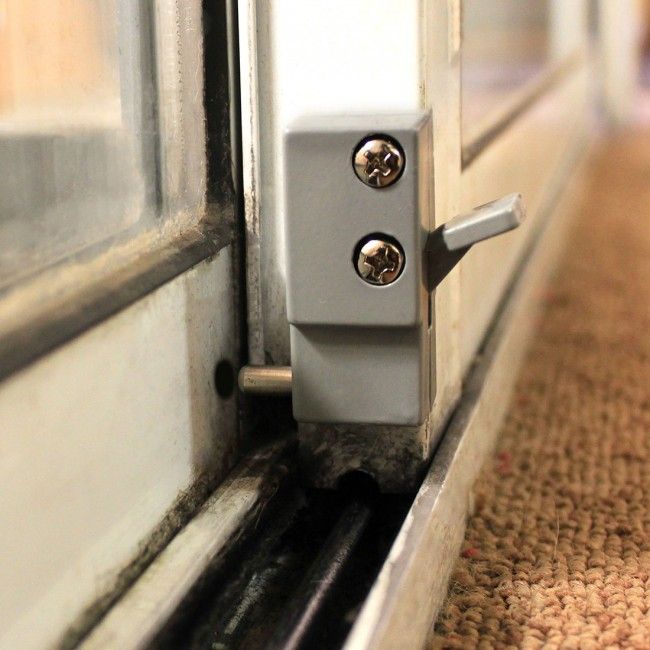
French doors and other double doors look like one wide door, but they lock in a completely different way from a single entrance door. There is no fixed frame on the side where the two leaves meet. One leaf, usually called the inactive or fixed leaf, is held in place with bolts at the top and bottom. The other leaf, the active one, carries the handle and the lock, and it latches and bolts into the edge of the fixed leaf rather than into a solid frame.
That arrangement is why double doors often feel less secure than a single door, and why they develop their own set of problems: an active leaf that locks but still rattles, a fixed leaf that can be pushed open when the flush bolts are not engaged, and a gap between the leaves that lets the latch be reached.
Three parts do the work on most residential French doors.
Flush bolts or surface bolts on the fixed leaf. These are small sliding bolts set into the edge of the fixed leaf, one shooting up into the head of the frame and one shooting down into the sill or floor. When both are engaged, the fixed leaf behaves like a frame for the active leaf. When one is left open, or the keeper hole is blocked with dirt, the whole pair can be pushed in.
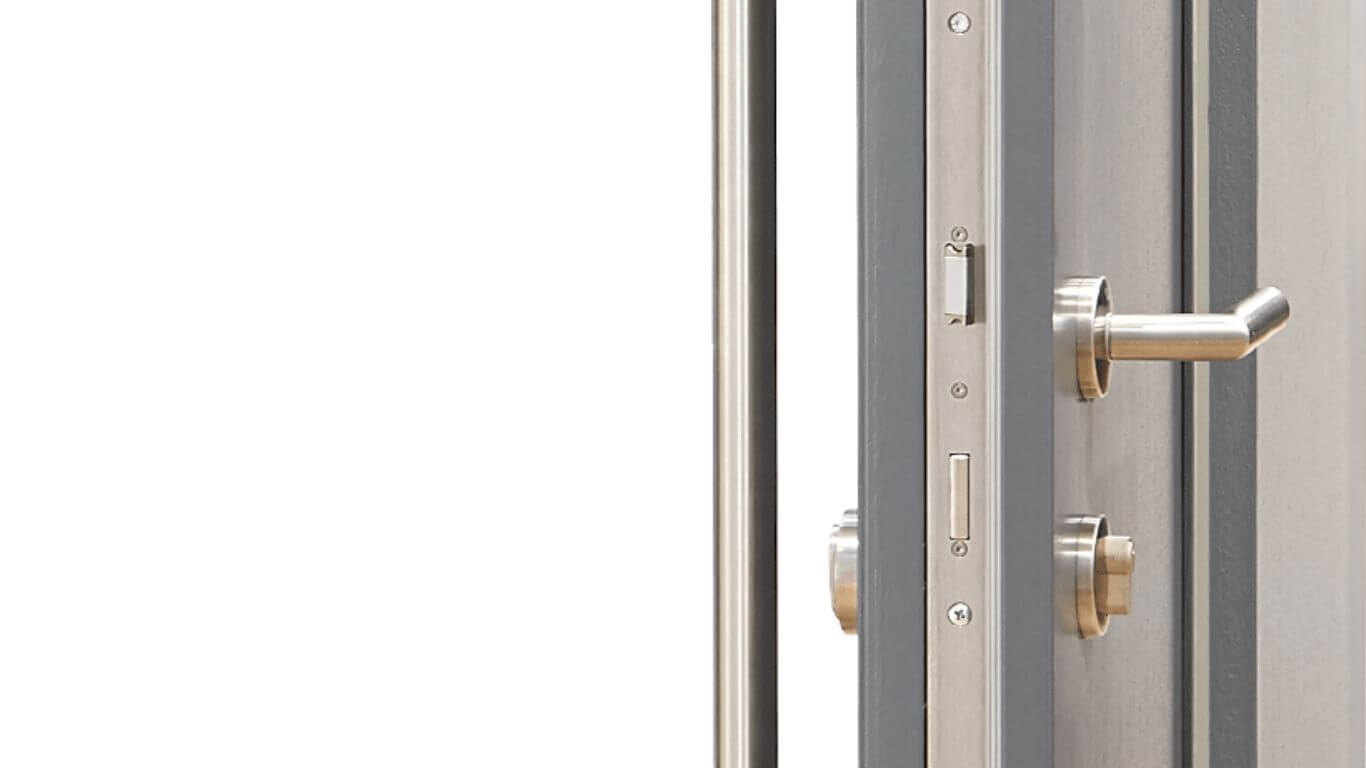
The lock on the active leaf. This may be a deadbolt and a latch set, a narrow mortise lock, or a multipoint lock with bolts along the edge. It locks into a strike fitted on the fixed leaf's edge, not into the wall.
The astragal. This is the strip that covers the gap where the two leaves meet. On exterior doors it keeps weather out and also covers the latch and bolt so they cannot be reached with a thin tool from outside.
A weak point in any one of these three parts weakens the whole opening.
The bolt will not line up with the fixed leaf. Double doors are heavy and hang from hinges on opposite sides, so each leaf can sag independently. When one drops, the bolt on the active leaf misses its strike and the lock has to be forced. Adjusting the hinges and strike usually brings them back together, the same approach used for door latch and strike plate repair.
The flush bolts are stiff or seized. Paint, dirt in the floor keeper and bent bolt rods all stop the bolts engaging. People then leave the fixed leaf unbolted because it is too hard to operate, which leaves the pair much weaker than it looks.
The doors rattle when locked. Rattle usually means the active leaf has room to move against the strike, or the fixed leaf is not fully bolted. A strike adjustment or new weather-stripping often solves it.
The handle droops or the latch will not return. French doors often use narrow-backset locks with small springs, and these wear. New springs or a replacement latch are the usual loose door handle and lock repair.
The key turns but nothing locks. On multipoint French doors, a worn gearbox can stop the bolts moving even though the key turns. Parts depend on the maker, which is why identifying the gearbox comes first in multipoint lock repair.
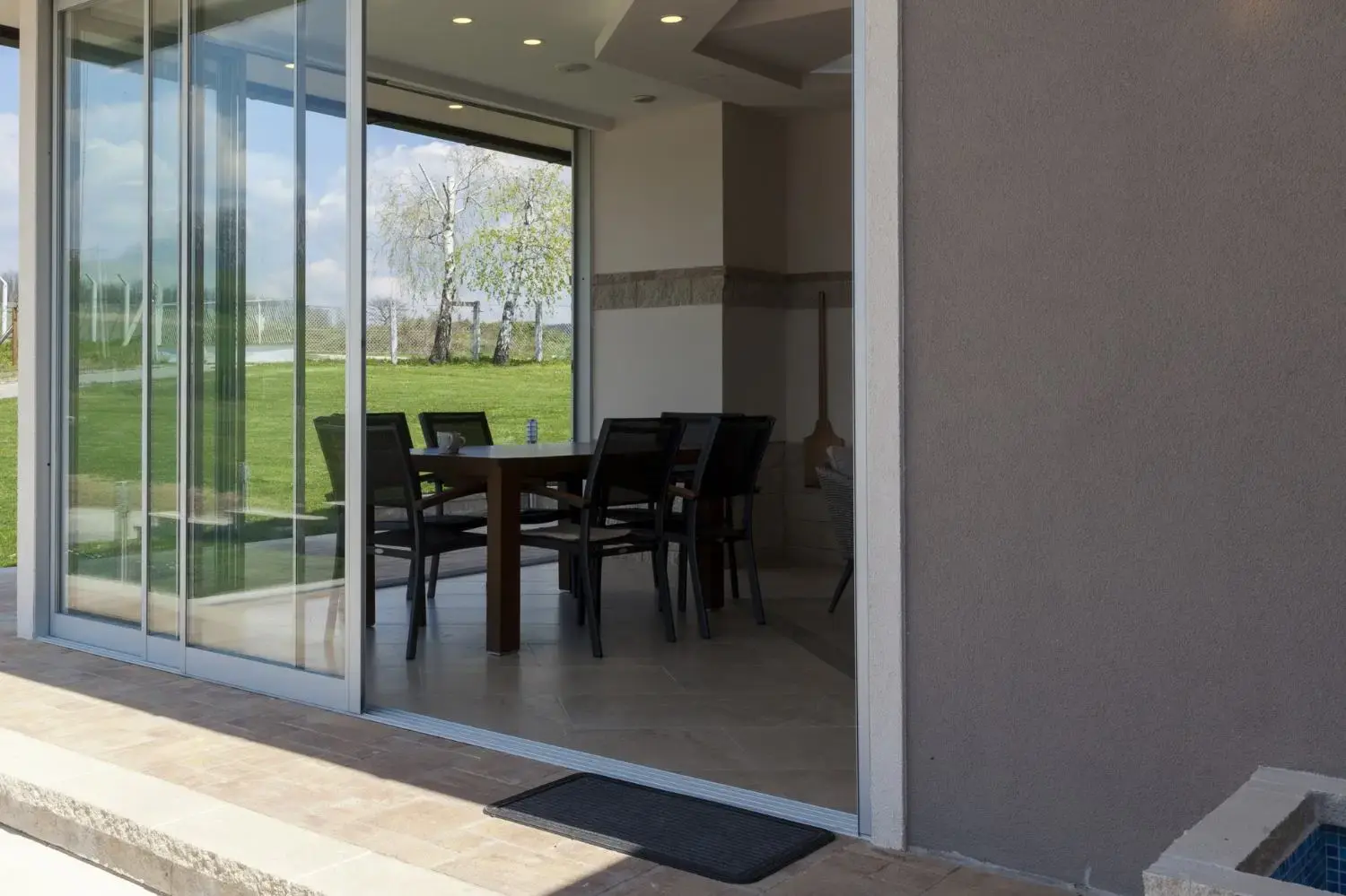
Exterior French doors open onto a deck, a garden or a balcony, often at the back of the house where nobody sees them. They deserve the same attention as the front door.
Look for a lock that throws a proper bolt, not just a spring latch. Many older French doors have only a latch and a thumb-operated catch, which is easy to slip. A deadbolt or a multipoint lock gives far more resistance.
Check both flush bolts from the inside every time the door is locked, and make sure the floor and head keepers are clear. A fixed leaf held only at the top can be flexed at the bottom.
Fit an astragal that covers the meeting edge fully. If the gap between the leaves is wide enough to see daylight around the latch, it is wide enough to reach it.
Glass is the other consideration. Most French doors are largely glazed, so a thumbturn inside can be reached by breaking a pane. Laminated glass, a key-operated inside lock where it is safe to have one, or simply keeping the key away from the door are the usual answers. The trade-offs of a key-operated inside lock are the same as for double-cylinder deadbolts: it resists a reach-through but slows everyone leaving in a fire.
Sliding patio doors work differently again, with a hook bolt rather than a swinging leaf, and the rollers, hook bolt and keeper are adjusted together in patio door lock and handle work.
Inside the house, French doors usually separate a living room, a dining room or a home office. Security is rarely the concern; what matters is that the doors close cleanly, stay shut, and do not rattle.
Ball catches or roller catches at the top of each leaf hold interior double doors closed without a lock. Where privacy is wanted, a privacy set on the active leaf with a flush bolt on the fixed leaf is the usual combination. If the room is used as an office and holds client files, a keyed lock may make sense, but it still needs the fixed leaf bolted for the lock to mean anything.
The right lock depends on how the door is built and how it is used.
Narrow stiles. Many French doors have stiles only a few inches wide because most of the door is glass. A standard tubular deadbolt needs a certain backset and may not fit without cutting into the glass area. Narrow-backset mortise locks and multipoint locks are designed for this.
Existing preparation. Changing lock types usually means new holes or a different mortise pocket. Where the door has already been cut for one system, staying with a compatible replacement avoids weakening the stile.
Keying. If the house already has one key for most doors, the French door cylinder can usually be keyed to match.
Use. A door opened several times a day in summer needs hardware that stands up to it, and the cycle testing behind lock grades shows which hardware will.
Double doors move with the seasons, and many of the problems that appear in July or January are alignment rather than lock faults. Sticking in humid weather, for example, is often the swelling that makes doors stick in summer, not a lock fault.
The usual sequence is: check the hinge screws on both leaves and tighten or lengthen any that have loosened; bolt the fixed leaf fully and check it does not move; close the active leaf and see where the bolt meets the strike; then adjust the strike or hinges until the bolt throws without the door being pushed.
Planing either leaf is a last resort, because it opens a gap between the leaves that cannot easily be closed again.
A few habits make double doors last:
Doors that are adjusted before they start to bind tend to need far less work than doors that have been forced closed for a season.
Flush bolts fail in a few predictable ways. The floor keeper fills with grit, leaves or ice, so the bottom bolt has nowhere to go. Paint builds up on the bolt or the edge of the leaf until the slide sticks. The rod inside a long flush bolt bends when someone kicks it down hard. Or the keeper in the head of the frame has moved as the house settled, so the top bolt meets wood instead of a hole.
Cleaning the keeper and lightly lubricating the slide fixes most of these. A bent rod or a misaligned keeper needs the bolt or keeper replaced or refitted. Automatic flush bolts, which engage when the active leaf closes, are available for doors where people forget to operate the manual ones.
Exterior double doors face the weather on a wide opening with a joint down the middle, so draughts and water are common complaints. Worn weather-stripping along the astragal, a missing door sweep on either leaf, or a sill that has lost its seal all let in air and water, and water running down the meeting edge can reach the lock and the bottom flush bolt. Replacing the weather-stripping and sweeps keeps the lock drier and the doors quieter.
Tell us whether the doors are interior or exterior, what material they are, whether the fixed leaf has flush bolts, and what the lock is doing. Photographs of both leaves, the meeting edge, the lock on the active leaf and the top and bottom bolts help identify the hardware.
We will adjust the leaves, bolts and strike, repair or replace the lock, and explain what to watch for as the seasons change. Other door work around the house comes under our residential locksmith services.
Keep reading
Usually because the fixed leaf is not bolted properly. The active leaf locks into the edge of the fixed leaf, so if the top or bottom flush bolt is not engaged, or the floor keeper is blocked, both leaves can move together. Engaging both bolts fully and clearing the keepers normally fixes it.
Usually because the fixed leaf is not bolted properly. The active leaf locks into the edge of the fixed leaf, so if the top or bottom flush bolt is not engaged, or the floor keeper is blocked, both leaves can move together. Engaging both bolts fully and clearing the keepers normally fixes it.
Small sliding bolts set into the edge of the fixed leaf. One shoots up into the frame head and one down into the floor or sill. They hold the fixed leaf still so the active leaf has something solid to lock against.
Often yes, but it depends on the stile width. Many French doors have narrow stiles because most of the door is glass, so a standard deadbolt may not fit. Narrow-backset mortise locks and multipoint locks are made for these doors.
The active leaf has room to move against its strike, or the fixed leaf is not held firmly. Adjusting the strike, tightening the hinges and replacing worn weather-stripping usually stops the rattle.
It can be reached by breaking the glass nearby. Options include laminated glass, keeping the door locked with a key-operated inside lock where everyone can still get out safely, or keeping the key away from the door. Each has trade-offs for leaving in a fire.
The leaves have moved out of line, usually because one has dropped on its hinges. Tightening or lengthening hinge screws and adjusting the strike on the fixed leaf normally brings the bolt back into line.
Usually. Most cylinders can be rekeyed to an existing key, provided the lock uses a compatible keyway. If it does not, the cylinder can sometimes be replaced with one that does.
Not usually. Ball or roller catches hold them closed. Where privacy matters, a privacy set on the active leaf and a flush bolt on the fixed leaf is enough for most rooms.
GTA Lockman Mobile Locksmith Services is a mobile locksmith working on homes, businesses and vehicles across Toronto and the GTA, in the trade since 2010. Every review is written by a customer on Google, where you can read them in full.
Areas served: Toronto, North York, Scarborough, Etobicoke, Vaughan, Richmond Hill, Markham, Stouffville, Newmarket, Mississauga, Brampton, Oakville, Milton, Halton Hills, Pickering, Ajax, Whitby, Oshawa, Uxbridge.
Describe the door, hardware and service address. Contact GTA Lockman Mobile Locksmith Services to confirm the scope and scheduling for your location.