Locksmith services are always 10% off for seniors.
Open Mon–Thu 8:30 AM–9 PM, Fri 8:30 AM–4 PM, Sun 9:30 AM–9 PM
Locksmith services are always 10% off for seniors.
Open Mon–Thu 8:30 AM–9 PM, Fri 8:30 AM–4 PM, Sun 9:30 AM–9 PM
GTA Lockman Mobile Locksmith Services · Toronto & GTA
Thickness, backset, bore and faceplate: the few measurements that decide whether a new lock fits.
Related services
When hardware you already own can move to another door, and when the fit makes that a false economy.
Learn moreWork out the hand of any door before ordering levers, closers, mortise locks or multipoint parts.
Learn moreAssess the lock strip, gearbox and door alignment as one system before choosing compatible repair parts.
Learn moreCover, plug or reinforce the holes old hardware leaves behind, so the door stays strong at the lock.
Learn moreChoose compatible front-door hardware with the right fit, operation and finish for the existing opening.
Learn moreReplace worn or unsuitable hardware with a lock that fits the door, its function and your access needs.
Learn more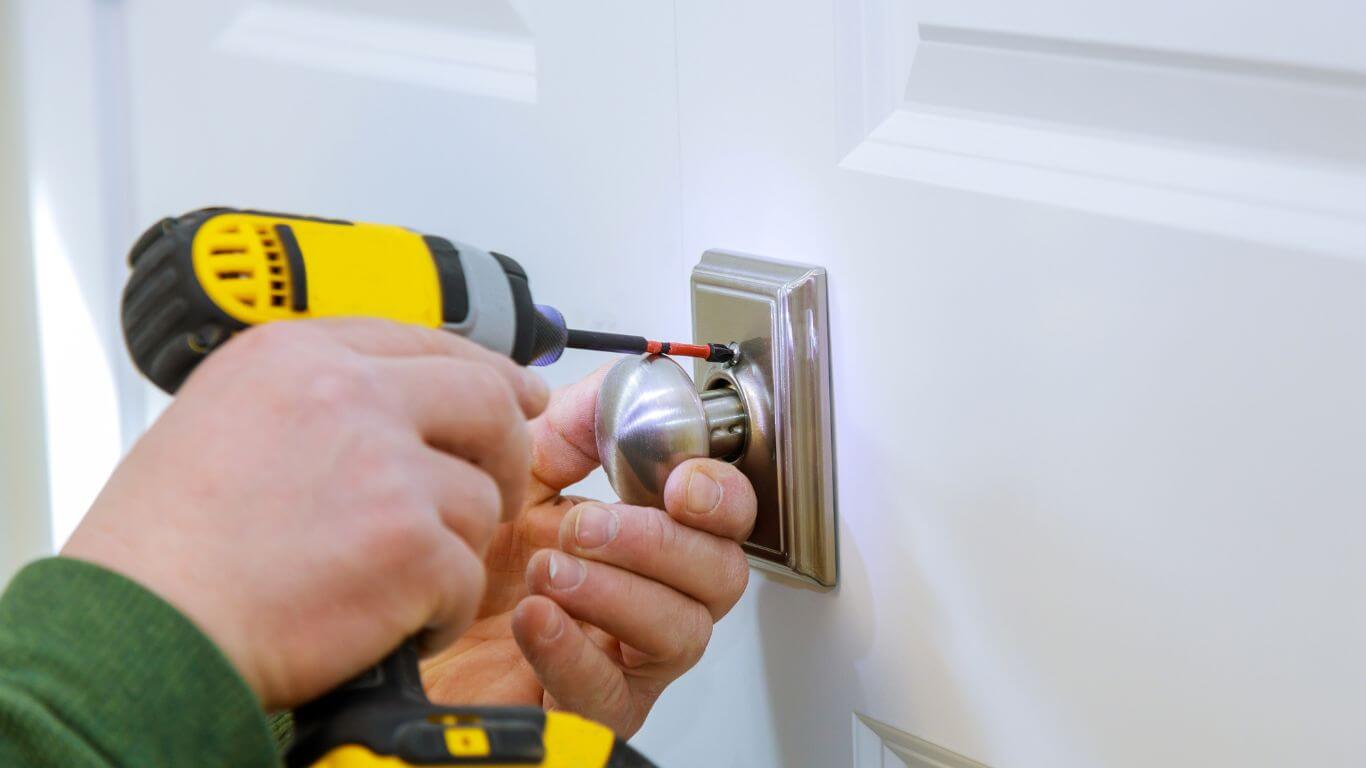
A new lock that does not fit the door is one of the most common and avoidable problems in home hardware. The box says it fits "standard doors", but the door is thicker than standard, the hole is in a slightly different place, or the old lock was a mortise lock and the new one is tubular. The result is a return trip to the store, or new holes drilled over old ones.
A few measurements, taken before anything is bought, decide whether a lock will drop straight into the existing preparation. They take a tape measure and five minutes.
Door thickness. Measure the thickness of the door at the edge. Most residential exterior doors are about 1 3/4 inches (44 mm), and many interior doors about 1 3/8 inches (35 mm). Thicker doors, common on some custom and commercial doors, may need a thick-door kit or a different lock.
Backset. The distance from the edge of the door to the centre of the main bore hole, the large hole through the face of the door. The two common residential backsets are 2 3/8 inches (60 mm) and 2 3/4 inches (70 mm). Many latches are adjustable between the two, but not all, and deadbolts must match.
Bore hole diameter. The size of the large hole through the door face. The common size is 2 1/8 inches (54 mm). Older doors sometimes have smaller bores, and some smart locks need a specific size.
Edge bore. The smaller hole drilled into the edge of the door for the latch or bolt, usually 1 inch (25 mm).
Faceplate shape and size. The plate on the edge of the door may be square-cornered, round-cornered, or a drive-in collar with no plate at all. New hardware should match the existing mortise in the edge, or the edge will need recutting.
Distance between bores. Where the door has a deadbolt above a knob or lever, measure centre to centre between the two bores. Handlesets with a single long escutcheon need this to match.
Strike position. On the frame, note the position and shape of the existing strike plates.
Older doors and many commercial doors use mortise locks, a box-shaped lock set into a pocket cut into the edge of the door. For these, measure:
A mortise pocket cannot take a tubular lock without a conversion kit or a filler block. Replacing like for like is usually the neatest choice, and sound mortise locks can sometimes be kept by reusing and moving existing door hardware.
Before ordering levers, handlesets, mortise locks or multipoint hardware, check which way the door swings and which side the hinges are on. Many of these parts are handed, and ordering the wrong hand is a common mistake. Standing on the outside and noting the hinge side and swing identifies left-hand and right-hand doors.
Electronic deadbolts often have a larger outside housing than a standard deadbolt, and some need a particular door thickness, backset or bore. Many also need room on the inside for a battery pack. Check:
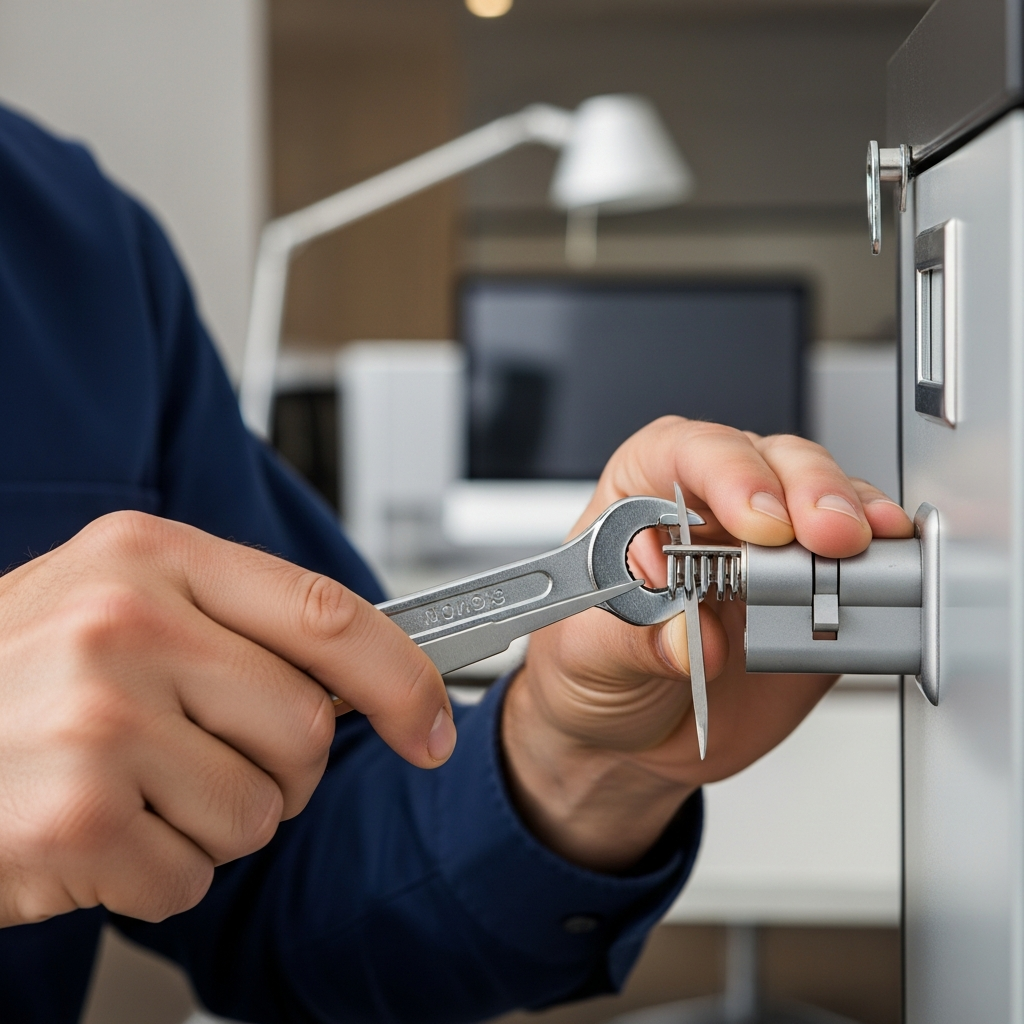
Multipoint locks and euro profile cylinders have their own dimensions. For a multipoint door, measure the length of the strip, the backset, the distance between the handle spindle and the cylinder (the centres), and the position of each bolt or hook. For a euro cylinder, measure from the centre of the fixing screw hole to each end. Parts must match exactly, which is why identifying the system comes first in multipoint lock repair.
Measurements are more useful with photographs. Take:
Some doors will not accept a standard lock without work: an unusually thick or thin door, a narrow stile on a glass door, a door already cut for several previous locks, or a steel door with an internal reinforcement in the wrong place. The options are then a lock designed for that door, a conversion or reinforcing plate, or preparing the door properly for a standard lock. Holes left over from previous hardware are dealt with as part of covering old lock holes.
When a new door is ordered, it usually comes pre-bored for a standard backset and bore, or unbored so the hardware can be chosen first. Choosing the hardware before the door arrives, and telling the door supplier the backset and bore size, avoids drilling a new door twice. When the old door stays and only the hardware changes, trim sized to cover the old preparation keeps front door lock replacement tidy.
Most residential hardware in Canada is described in inches, but many European locks, multipoint systems and euro cylinders use millimetres. A 60 mm backset and a 2 3/8 inch backset are effectively the same, but a 55 mm European backset is not, and will not suit a North American door. When comparing hardware from different sources, convert everything to one unit before deciding.
A storm door in front of the main door affects what can be fitted to the main door. A large handleset or a smart lock with a bulky outside housing may hit the storm door's handle or glass when both doors are closed. Measure the gap between the main door and the storm door at the lock height, and compare it with the depth of the new hardware before ordering.
Commercial doors use a wider range of preparations: mortise locks with larger faceplates, cylindrical locks with different bore sizes, narrow-stile aluminium locks, and exit devices that need specific mounting positions. Commercial hardware is often specified by the door and frame supplier using standard preparation templates. When replacing commercial hardware, the existing preparation and the hardware schedule for the building, if one exists, are the starting points.
If the lock is already bought, compare its packaging or instructions with your measurements before drilling anything. Many latches have an adjustable backset, many deadbolts come with alternative faceplates, and many kits include adaptors for different bore sizes. If it still does not fit, returning it is usually easier than modifying the door, especially on a good exterior door.
Once you have measured, write the measurements on a card and keep it with your house papers or on your phone: door thickness, backset, bore size, faceplate type and hand for each exterior door. The next time a lock needs replacing, or you want to add a smart lock, the numbers are already there.
Some doors already have an electric strike in the frame, a card reader or a keypad wired into an access system. Changing the lock on such a door means checking that the new lock suits the electric strike or the access system, and that the latch lines up with the strike keeper. On these doors, measuring the strike position and noting the wiring is as important as the backset and bore.
In rental units and condominiums, the door itself may belong to the landlord or the corporation, and there may be rules about the hardware. Before measuring for a new lock, check whether you are allowed to change it, and whether the building requires a particular cylinder to fit a master key system. Measurements are only the first step; permission comes before drilling.
The frame matters as much as the door. Measure the strike plate's height and width, the distance from the stop to the centre of the strike hole, and the depth of the hole behind it. A deadbolt needs a hole deep enough for its full throw, usually about an inch. If the old strike hole is shallow, the new bolt will not extend fully, and the lock will not be as secure as it should be. Note whether the strike is screwed only into the jamb or into the framing behind it.
Tell us the door, what is fitted now, and what you want to fit. Photographs and the measurements above let us confirm whether the new hardware will fit, suggest alternatives where it will not, and bring the right parts on the first visit.
We can supply and fit locks sized to the existing preparation, re-prepare doors where needed, and fill or cover old holes. Lock replacements are carried out as a lock change, and other household work is part of our residential locksmith services.
Keep reading
The distance from the edge of the door to the centre of the main bore hole. The two common residential backsets are 2 3/8 inches (60 mm) and 2 3/4 inches (70 mm).
The distance from the edge of the door to the centre of the main bore hole. The two common residential backsets are 2 3/8 inches (60 mm) and 2 3/4 inches (70 mm).
Most residential exterior doors are about 1 3/4 inches (44 mm) thick. Interior doors are often about 1 3/8 inches (35 mm). Thicker doors may need a thick-door kit.
Usually 2 1/8 inches (54 mm) through the face of the door, with a 1 inch (25 mm) edge bore for the latch or bolt.
Not directly. A mortise pocket needs a replacement mortise lock of the same size, or a conversion kit or filler block so a tubular lock can be fitted.
Many do, but check the door thickness range, backset, bore size and clearance around the lock, including any storm door handle or glass.
The door edge with a tape measure showing the backset, the bores with the old hardware removed, the strike on the frame, the door partly open from outside, and any markings on the old lock.
Yes. Square-cornered, round-cornered and drive-in latches need different edge preparations. Matching the existing shape avoids recutting the door edge.
It helps. Telling the door supplier the backset and bore size you need avoids drilling a new door twice.
GTA Lockman Mobile Locksmith Services is a mobile locksmith working on homes, businesses and vehicles across Toronto and the GTA, in the trade since 2010. Every review is written by a customer on Google, where you can read them in full.
Areas served: Toronto, North York, Scarborough, Etobicoke, Vaughan, Richmond Hill, Markham, Stouffville, Newmarket, Mississauga, Brampton, Oakville, Milton, Halton Hills, Pickering, Ajax, Whitby, Oshawa, Uxbridge.
Describe the door, hardware and service address. Contact GTA Lockman Mobile Locksmith Services to confirm the scope and scheduling for your location.