Locksmith services are always 10% off for seniors.
Open Mon–Thu 8:30 AM–9 PM, Fri 8:30 AM–4 PM, Sun 9:30 AM–9 PM
Locksmith services are always 10% off for seniors.
Open Mon–Thu 8:30 AM–9 PM, Fri 8:30 AM–4 PM, Sun 9:30 AM–9 PM

GTA Lockman Mobile Locksmith Services · Toronto & GTA
Standard heights, secondary lock placement and what to measure before moving or replacing hardware.
Related services
What a chain, bar or secondary lock adds, what it does not add, and where it must not stop an exit.
Learn moreGlass within reach of the thumbturn, and the choices in glass, thumbturns and secondary locks that deal with it.
Learn moreKeep young children in, out, and never locked in, without making any door hard for adults to open.
Learn moreChoose levers, deadbolts and keys that an older person can operate reliably while keeping the home secure.
Learn moreHardware that lets people through the door without a firm grip, and what an operator changes.
Learn moreThickness, backset, bore and faceplate: the few measurements that decide whether a new lock fits.
Learn more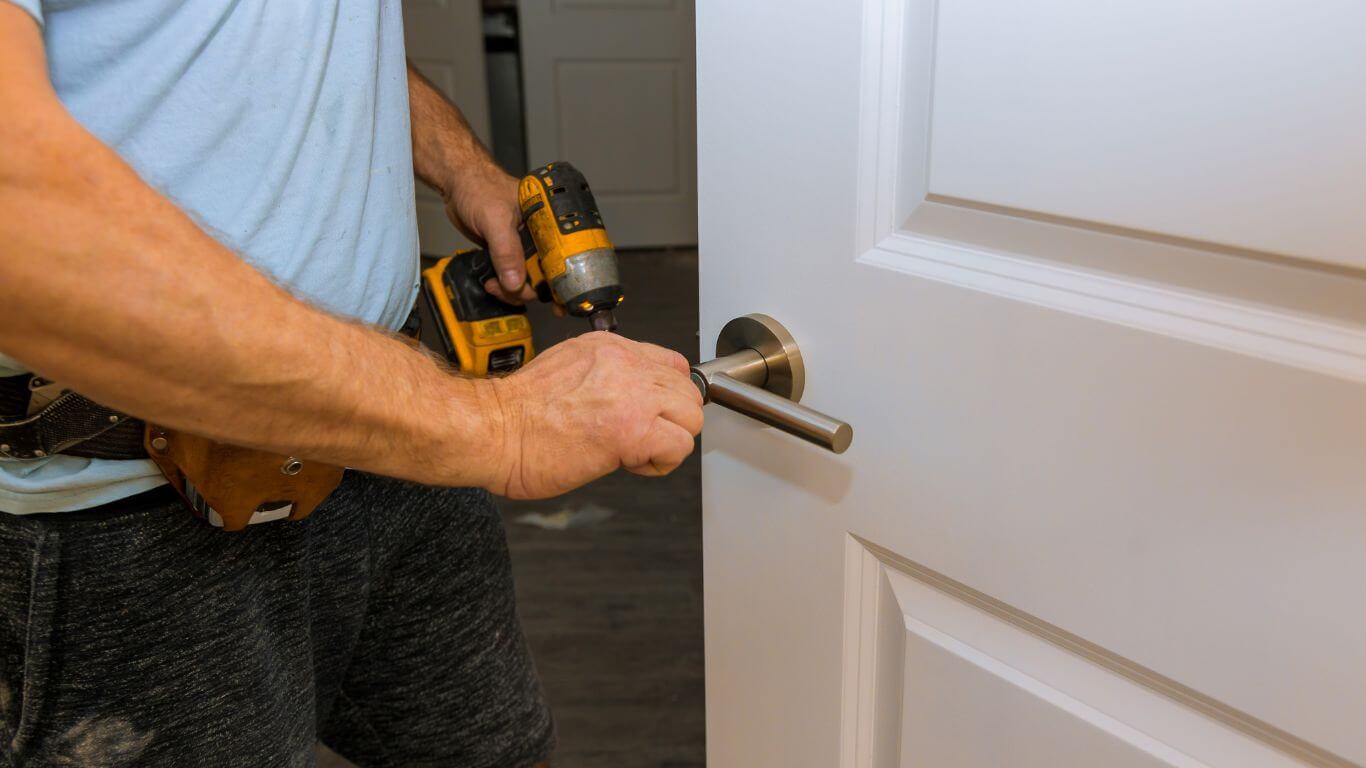
Most people never think about how high a lock is on the door until it is wrong: a deadbolt so high a child cannot reach it, a lever so low it catches on furniture, a new lock that will not line up with the old strike. Lock height and placement affect how easy a door is to use, how secure it is, and whether new hardware fits.
In North American homes, door hardware is usually placed at standard heights measured from the finished floor to the centre of the hardware:
Pre-hung and pre-bored doors are usually prepared at these heights, and most strike plates on standard frames match them. Accessibility guidelines for public buildings generally place operable hardware within a reachable range, roughly between about 34 and 48 inches above the floor; the specific requirement depends on the building code that applies.
Reach. Most adults can operate hardware at these heights without stretching or stooping, and so can many children and people using wheelchairs.
Leverage. A deadbolt a short distance above the latch spreads the locking force across the door edge.
Compatibility. Doors, frames and hardware are made to suit these heights, so replacements fit.
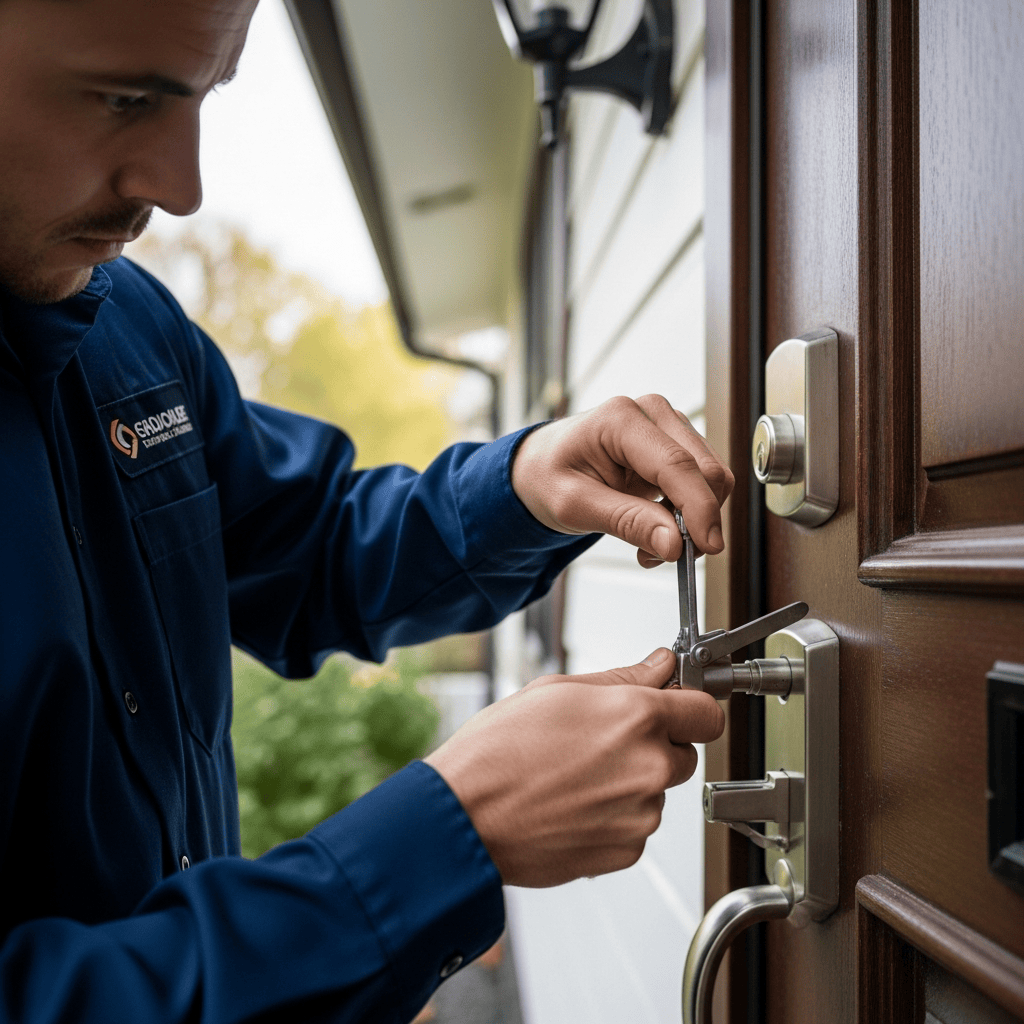
Some people ask whether a deadbolt should be higher, or whether a second lock should be added near the top or bottom of the door. A few points:
Spacing. A deadbolt well separated from the latch spreads resistance along the edge. Two locks placed close together concentrate stress in one area of the frame.
Second locks. A secondary lock placed high or low, well away from the main lock, spreads resistance further. It must still be releasable from inside without a key, as with door chains and secondary locks.
Glass. On doors with glass panels or sidelights, placing a lock further from the glass makes reach-through harder, which matters most with sidelights and glass beside the lock.
The frame matters more. Whatever the height, the strike must be fixed into solid framing with long screws.
Children. A high secondary lock keeps toddlers from opening an exterior door while letting adults release it easily. Placement for this purpose is part of childproofing doors and locks.
Older adults and wheelchair users. Hardware at standard height, with levers rather than knobs, suits most users. Locks placed very high or low, or needing a strong grip, are harder to use, as with door hardware for seniors.
Accessible entrances. Businesses with accessible entrances need hardware within the reachable range and operable without tight grasping, as with accessible entrance hardware.
Replacing a lock often reveals that the old one was not at standard height, or the new one is a different size. Problems include:
Measuring the distance between the centres of the existing deadbolt and latch bores, and their heights from the floor, before ordering avoids most of this. The other measurements that decide fit are part of measuring a door for a new lock.
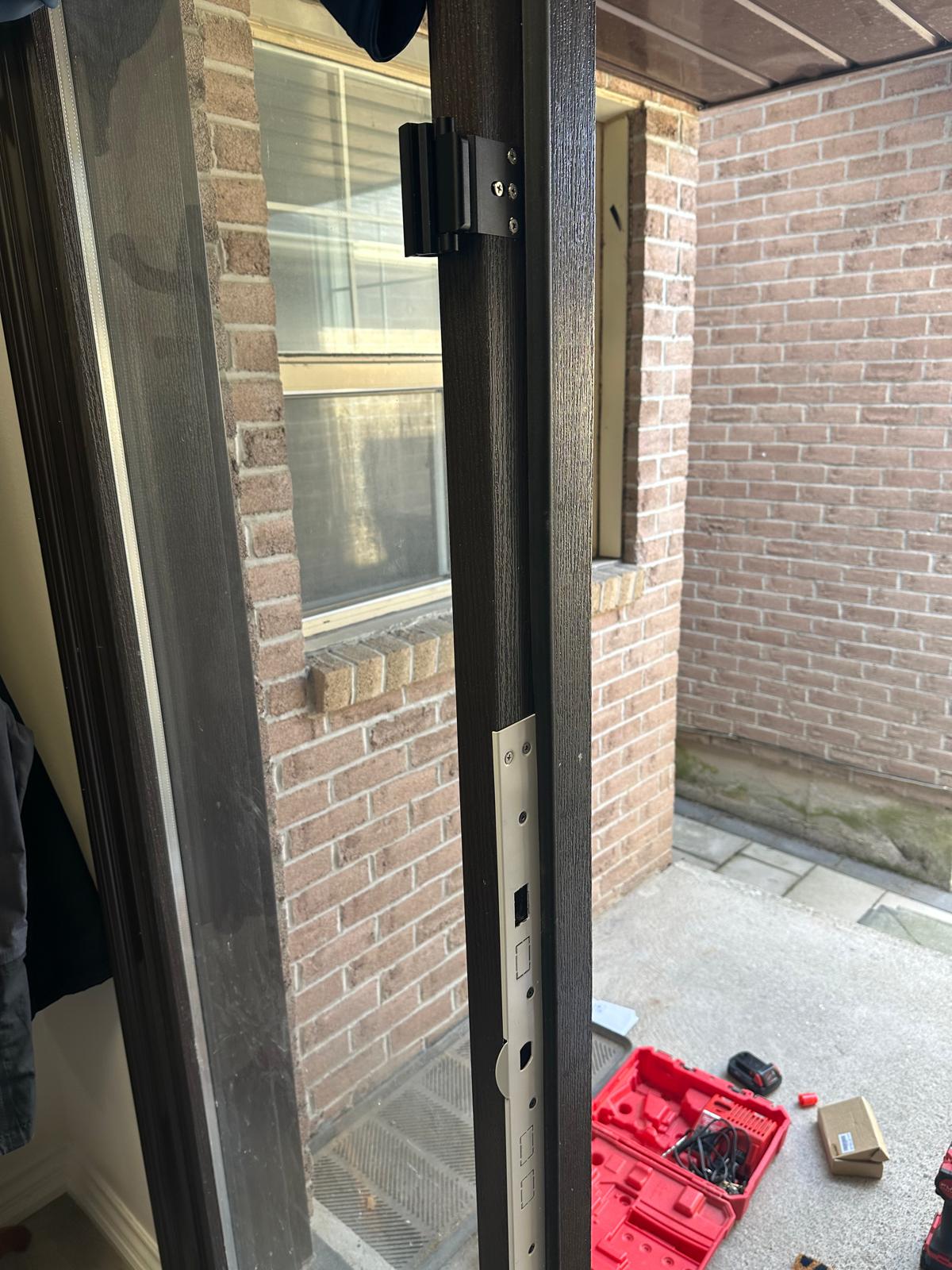
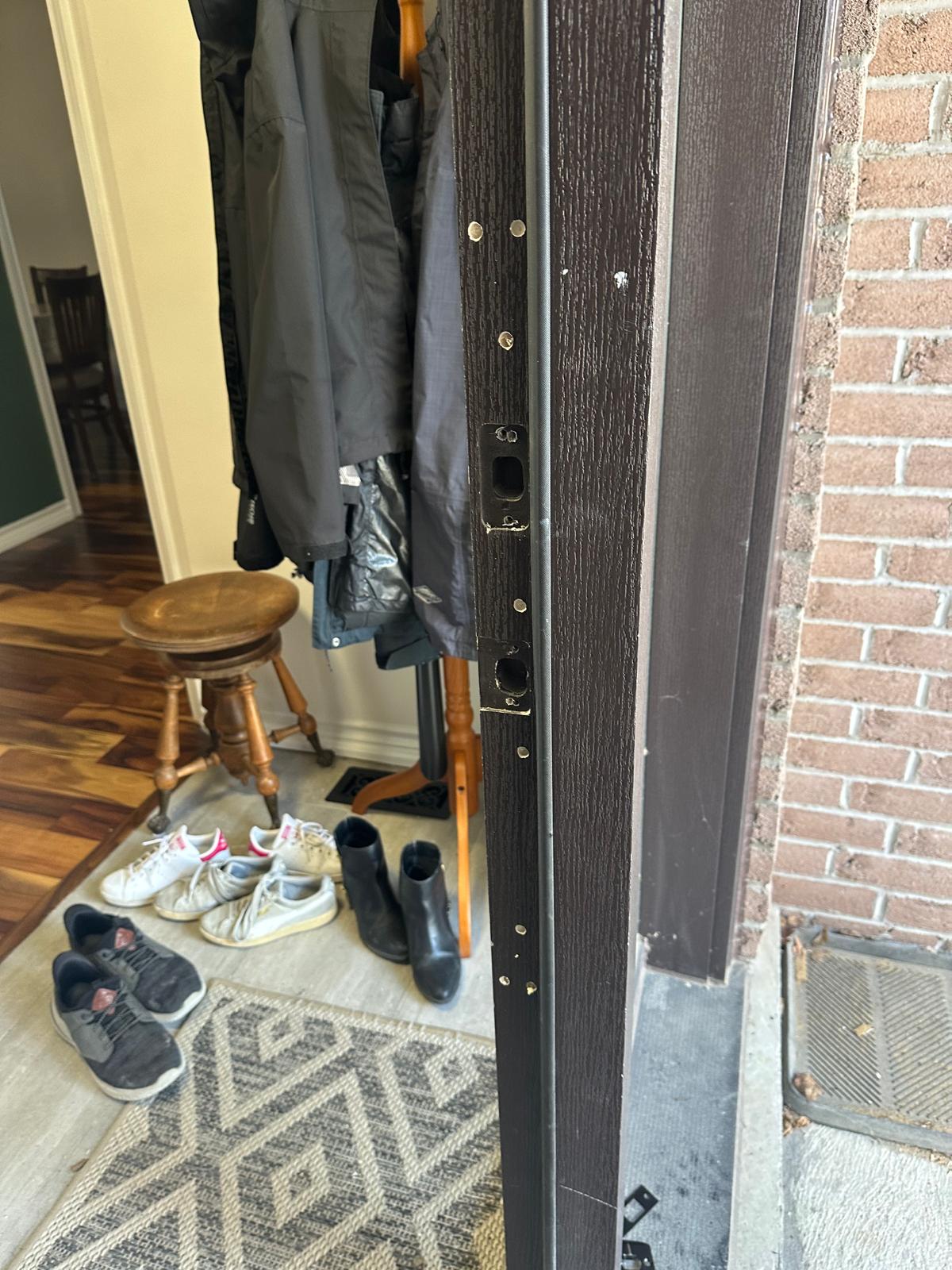
Moving a lock to a new height means new bores in the door, a new strike position in the frame, and filling or covering the old holes. On a solid door it is straightforward; on a hollow-core or insulated steel door, the new position must have solid material behind it. Holes from the old position are dealt with in the same way as other old lock holes.
Commercial doors usually follow the hardware manufacturer's templates and the building's hardware schedule, with lock, closer and exit device heights set by standard preparations. Exit devices are mounted at a height set by the device and applicable codes, generally in the range of about 34 to 48 inches. Changing heights on commercial doors usually means re-preparing the door and frame, so it is planned carefully.
On storm doors, the handle and lock must line up with the main door's hardware so the two do not clash, and the storm door handle should not hit the main door's deadbolt. On garage side doors and other secondary doors, standard heights apply, but older doors may have been fitted inconsistently, which shows up when replacing hardware.
On doors with a mail slot, the slot is often near the lock, and tools passed through the slot can sometimes reach the thumbturn or lever. When placing or moving a lock, keeping it clear of the slot, or fitting a cage or baffle behind the slot, removes the risk. The options are the same as for mail slot and letterbox security.
Glass doors with narrow aluminium stiles, common on storefronts and many condo entrances, have very little room for a lock. The lock position is fixed by the stile and the manufacturer's preparation. Moving it is rarely practical; replacing the lock with the same type in the same position is the usual approach.
On double doors, the active leaf carries the lock at standard height, and the inactive leaf carries flush bolts at the top and bottom. The flush bolts' positions matter as much as the lock's, because they hold the fixed leaf still. A bottom flush bolt that cannot reach the floor keeper, or a top one blocked by trim, weakens the whole pair.
Smart and keypad deadbolts are usually fitted in the existing deadbolt position. Their outside housing is larger than a standard deadbolt's, so check that it clears any trim, glass or storm door, and that the inside unit does not hit the wall or a nearby light switch when the door opens. A housing that is too close to the frame can also stop the door from closing fully.
A door is easiest to use when the lock and handle sit where most people naturally reach, the lock turns with little force, and the door closes and latches on its own. Small adjustments to the strike, the closer or the hinges often make more difference to daily use than the height of the hardware itself.
When hardware is fitted or moved, note the heights from the floor and the distance between the latch and deadbolt centres. That record makes ordering replacement hardware much simpler and avoids drilling new holes the next time a lock is changed.
The door between an attached garage and the house often has a closer or spring hinges, a deadbolt and a latch. Steps on the garage side mean the hardware may sit at a different height relative to the garage floor than to the house floor. Placing the hardware so it is comfortable from both sides, and making sure the closer does not interfere with the deadbolt, makes the door easier to use every day, as with garage-to-house door locks.
Basement walkout doors and basement apartment entrances are often set lower than the main floor, with stairs on one or both sides. Hardware at standard height on the door is still correct, but clearance for a hand on the stair side matters. A lever or thumbturn too close to a wall or railing is awkward to use.
As children grow, their reach changes. A secondary lock fitted high for a toddler may need moving or removing when the child is older and needs to be able to leave on their own. Reviewing the placement every few years keeps it suited to the household.
On doors with a sidelight on the lock side, the lock is close to the glass. Moving the deadbolt further from the sidelight is rarely possible on a pre-hung unit, so options such as laminated glass or a lockable thumbturn are usually more practical than moving the lock.
Doors with an overhead closer have the closer arm near the top, and a secondary lock placed high must not clash with the arm. Checking clearances before drilling avoids a lock that the closer arm hits every time the door swings.
For businesses, a periodic check that door hardware is within the required reach range, operates without tight grasping and opens with acceptable force helps keep entrances accessible. It is easy for hardware to be replaced over the years with something less accessible without anyone noticing.
Pre-hung replacement doors usually come bored at standard heights. If the existing frame's strike is at a different height, the new door will not line up without frame work. Checking the old strike height before ordering a pre-hung or pre-bored door avoids surprises on installation day.
Custom doors, tall entrance doors and doors in older homes sometimes have hardware at non-standard heights. When replacing hardware on these doors, matching the existing positions avoids new holes, even if the heights differ slightly from modern standards.
Tell us which door, what you want to change, and the current heights of the latch and deadbolt from the floor. Photographs of the door with a tape measure in view help.
We can fit locks at the right height for the people using the door, add high or low secondary locks, move locks and fill old holes, and match new hardware to existing strike positions. Household work is part of our residential locksmith services.
Keep reading
In most North American homes, the latch or lever sits about 36 inches above the finished floor, measured to the centre of the hardware.
In most North American homes, the latch or lever sits about 36 inches above the finished floor, measured to the centre of the hardware.
Usually about 5 to 6 inches above the latch, around 42 inches from the floor.
Height matters less than the frame and strike. A deadbolt well separated from the latch spreads resistance, but a reinforced strike makes the bigger difference.
Yes. A high secondary lock is common for keeping toddlers in. It must release from inside without a key.
Hardware spacing varies. Measure the distance between the deadbolt and latch centres, and their heights, before ordering new hardware.
Yes, with new bores in the door, a new strike position in the frame, and the old holes filled or covered.
Hardware within a reachable range, generally between about 34 and 48 inches, with levers rather than knobs. Building codes set specific requirements for public buildings.
Yes. The storm door's handle must not clash with the main door's hardware, so their positions need to line up.
GTA Lockman Mobile Locksmith Services is a mobile locksmith working on homes, businesses and vehicles across Toronto and the GTA, in the trade since 2010. Every review is written by a customer on Google, where you can read them in full.
Areas served: Toronto, North York, Scarborough, Etobicoke, Vaughan, Richmond Hill, Markham, Stouffville, Newmarket, Mississauga, Brampton, Oakville, Milton, Halton Hills, Pickering, Ajax, Whitby, Oshawa, Uxbridge.
Describe the door, hardware and service address. Contact GTA Lockman Mobile Locksmith Services to confirm the scope and scheduling for your location.