Locksmith services are always 10% off for seniors.
Open Mon–Thu 8:30 AM–9 PM, Fri 8:30 AM–4 PM, Sun 9:30 AM–9 PM
Locksmith services are always 10% off for seniors.
Open Mon–Thu 8:30 AM–9 PM, Fri 8:30 AM–4 PM, Sun 9:30 AM–9 PM
GTA Lockman Mobile Locksmith Services · Toronto & GTA
Glass within reach of the thumbturn, and the choices in glass, thumbturns and secondary locks that deal with it.
Related services
Understand what a double-cylinder deadbolt does, the fire-safety concern, and alternatives for doors with glass.
Learn moreKeep keys out of reach, decide what the slot sits near, and stop the opening undoing the door.
Learn moreChoose compatible front-door hardware with the right fit, operation and finish for the existing opening.
Learn moreHow flush bolts, the astragal and the active leaf work together, and what to fix when a pair of doors will not lock.
Learn moreRepairs, rekeying and replacement hardware for homes, condos and apartments, with attention to the whole door.
Learn moreFind out whether the strike, the door or the lock is stopping the bolt, and correct the cause rather than the symptom.
Learn more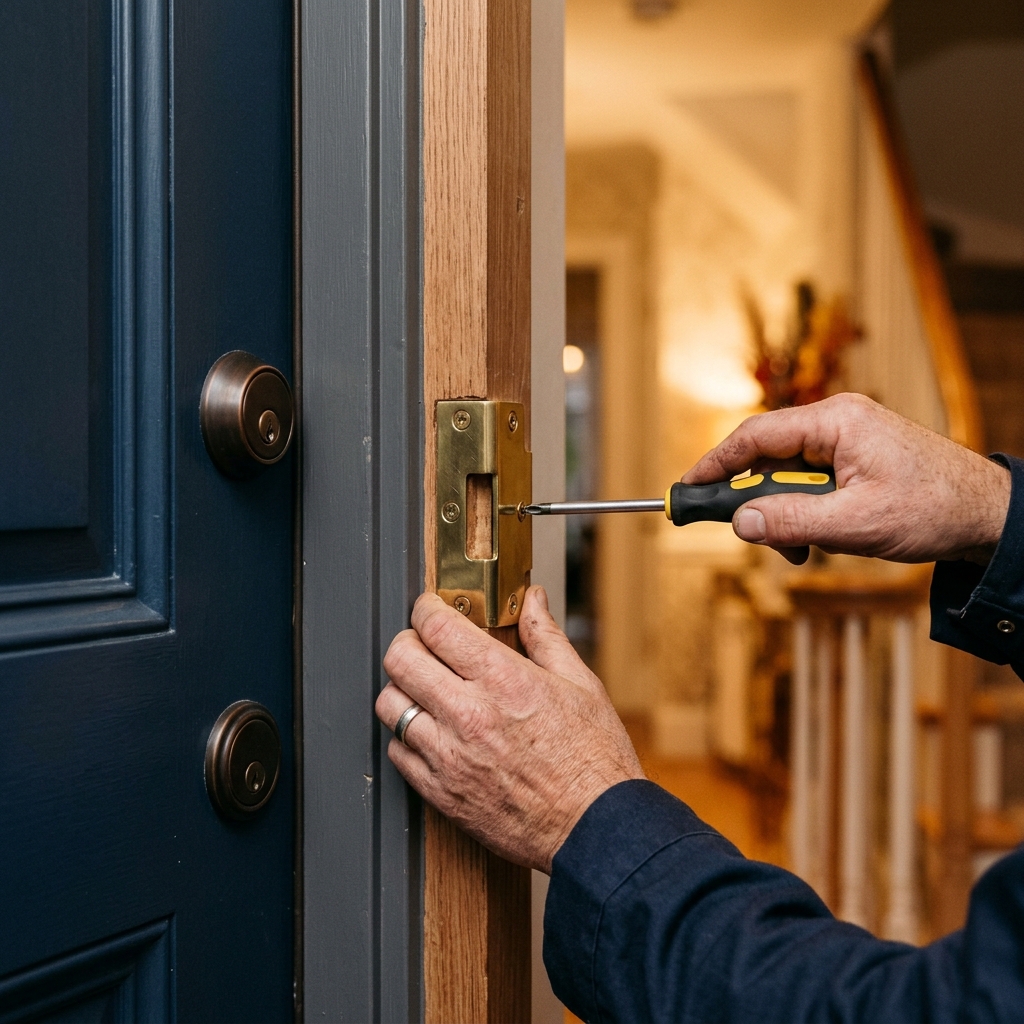
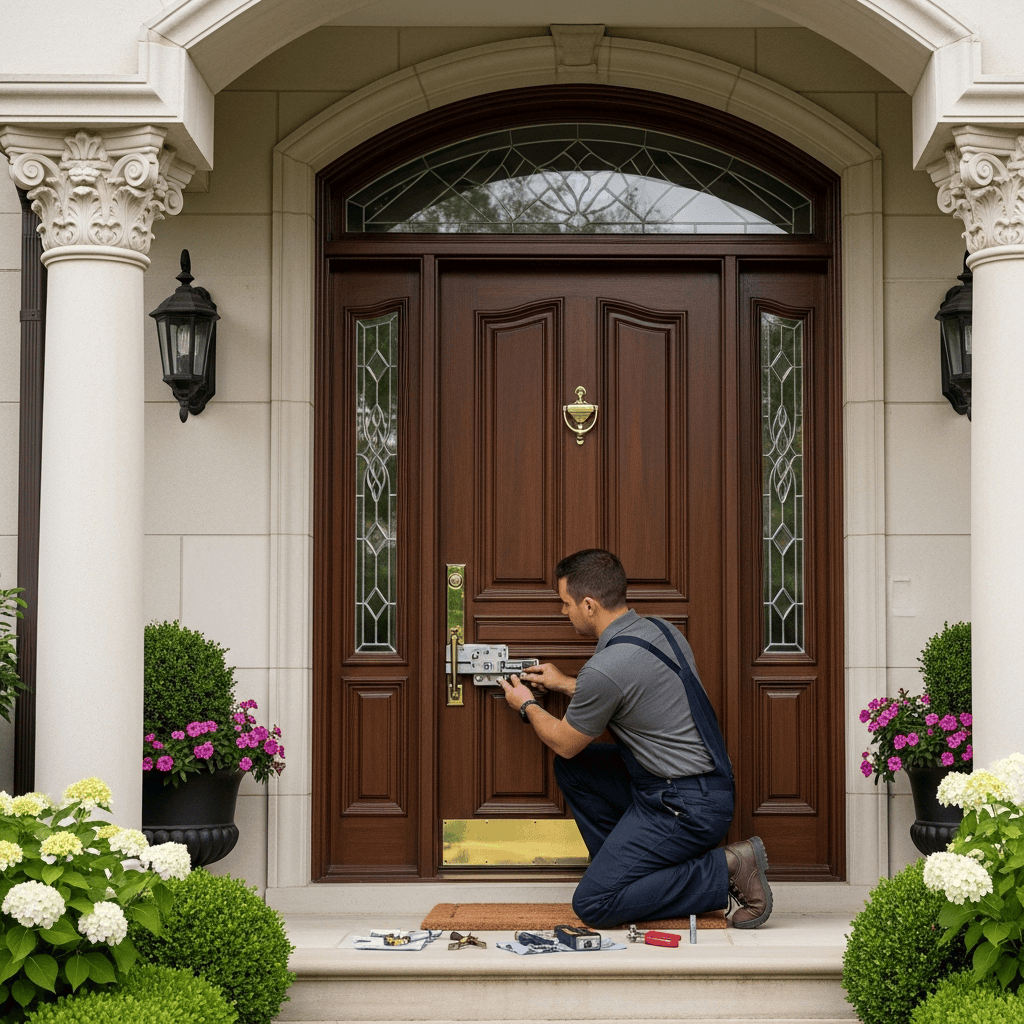
Many front doors in the GTA have sidelights: tall, narrow glass panels on one or both sides of the door. They let light into the hallway and make the entrance look generous. They also put a pane of glass within arm's reach of the lock.
That matters because most deadbolts have a thumbturn on the inside. If someone can break the sidelight and reach through, they can turn the thumbturn and open the door without touching the lock from outside. The same applies to doors with a glass panel in the door itself, and to transom windows above a door where the lock can be reached from above.
The door does not need to be forced. The glass is broken, an arm goes through, and the thumbturn or the inside lever is operated. On many doors the distance from the edge of the sidelight to the thumbturn is well within a normal reach.
Whether a door is exposed depends on:
Ordinary annealed glass breaks easily and leaves a large opening.
Tempered glass, common in newer doors and sidelights, is much stronger but shatters completely into small pieces when it does break, leaving a clear opening.
Laminated glass has a plastic layer between two sheets. When it breaks, the pieces stay stuck to the layer and the pane holds together. Getting an arm through laminated glass takes much longer and makes more noise, which is why it is the usual choice where security matters.
Decorative leaded glass is often set in a separate panel, and the lead strips holding the pieces are soft. The glass behind it may be ordinary or tempered.
Many sidelights are sealed units with an outer and inner pane. Replacing one or both panes with laminated glass is a job for a glazier; the locksmith side of the problem is the lock and what can be reached.
Leave the thumbturn and upgrade the glass. Laminated glass or a security film on the sidelight makes reaching through much harder while keeping the convenience and safety of a thumbturn.
Security film. A clear film applied to the inside of the glass holds broken pieces together, rather like laminated glass. It is less effective than laminated glass but far less costly, and good film, properly fitted to the frame, adds real resistance.
A key-operated inside cylinder. A double-cylinder deadbolt needs a key on both sides, so reaching through achieves nothing. The drawback is serious: everyone inside needs the key to get out in a fire, and a key left in the lock defeats the purpose. Weigh that trade-off carefully before fitting double-cylinder deadbolts, and check local fire rules.
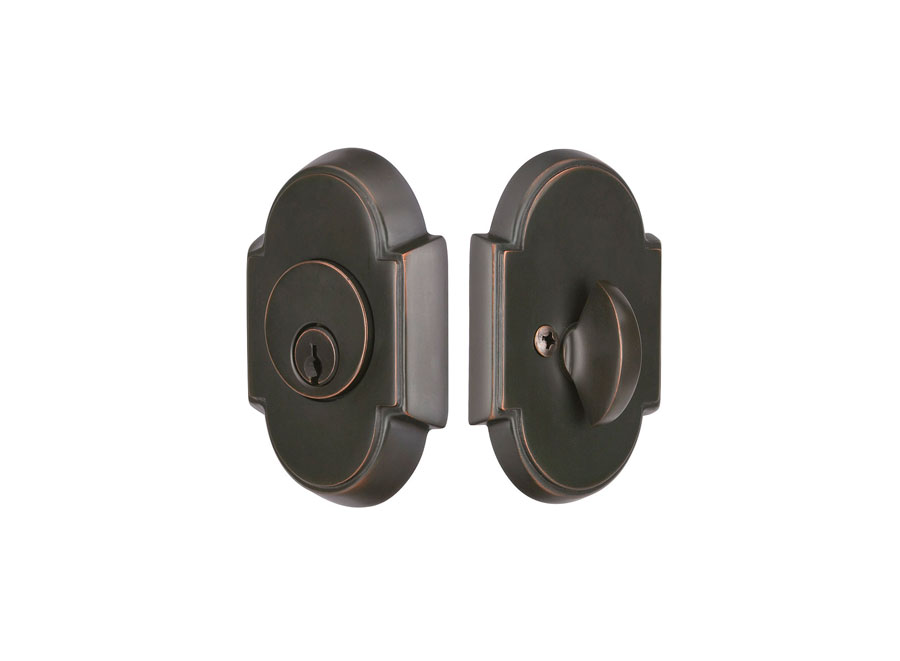
A thumbturn that can be locked or removed. Some deadbolts have a thumbturn that can be locked when the house is empty and left free when people are home. Others have a removable thumbturn. These keep an easy exit when the house is occupied while protecting it when everyone is out.
A secondary lock placed out of reach. A second lock fitted well away from the sidelight, such as low on the door on the hinge side, or high up, is harder to reach through the glass. It must still release easily from inside without a key.
A reach-through does not always need the deadbolt. If the deadbolt is not locked, the inside lever or knob opens the latch. Locking the deadbolt every time the door is closed, even for a short trip, matters much more on a door with sidelights.
Doors with a large glass panel, such as many French doors and some craftsman-style entrance doors, have the glass right next to the lock. The same options apply: laminated glass or film, a lockable thumbturn, or a key-operated inside cylinder with the same fire-safety caution. Double doors also depend on the bolts in the fixed leaf, a point that matters with all French door and double door locks.
A transom window above the door, or a mail slot close to the lock, can also give access to the inside of the lock. Tools passed through a mail slot can sometimes operate a lever or thumbturn. A cage or deep baffle on the inside prevents that, and is the usual fix in mail slot and letterbox security.
Sidelights are usually part of the door frame assembly, and the frame around a sidelight can be lighter than a standard jamb. A deadbolt strike set into a thin frame member beside a sidelight may be weaker than it looks. Checking that the strike is fixed with long screws into solid material, and that the frame between the door and the sidelight is sound, is as important as dealing with the glass.
If the front door is being replaced, the sidelights are part of the choice. Options include sidelights further from the lock, a single sidelight on the hinge side rather than the lock side, laminated glass from the factory, and a lock that suits the new door. The considerations for the hardware on a replacement door are part of front door lock replacement.
Many older front doors have a glass panel in the upper half of the door itself, and many newer doors have a narrow vertical glass strip. On these doors, the glass may be within reach of the deadbolt even without a sidelight. The same measurement applies: stand inside and measure from the nearest edge of the glass to the thumbturn. If it is within an arm's reach, the same options for glass and locks apply.
Where the glass in the door is decorative leaded glass, the lead strips are soft and the individual pieces are small, which can make a small opening easier to create. A clear laminated panel fitted on the inside of a decorative panel protects it without hiding the pattern.
A storm door fitted over the main door adds a layer, but it rarely covers the sidelights, and many storm doors are glazed themselves. A storm door with its own lock slows entry slightly and keeps the main door out of view, but it does not replace dealing with the sidelight glass and the thumbturn.
Every change to the thumbturn affects how easily people can leave in a fire. Before choosing a key-operated inside lock or a lockable thumbturn, think about who lives in the house: young children, older family members, anyone who might not find a key in the dark. A house where the thumbturn stays free while people are home, and the glass is laminated or filmed, often strikes a sensible balance between the two.
Many households keep a key on a hook beside the front door, or leave the key in the inside cylinder of a double-cylinder deadbolt. On a door with sidelights, a key within reach of the glass undoes most of the protection. Keep keys out of sight and out of reach of any glass, ideally in another room, and take the key out of a key-operated inside cylinder when nobody is home.
A front entrance that is well lit and visible from the street gives someone far less time to work on the glass. A doorbell camera or a camera covering the entrance adds a record. Neither replaces the lock and the glass, but together they make reach-through entry less attractive.
Sidelights are not only on front doors. Side entrances, back doors and doors onto decks sometimes have glass panels beside them too, and these doors are often less visible from the street, which gives someone more time. The same checks apply: measure the distance from the glass to the thumbturn, check the glass type, and make sure the strike is fixed into solid framing. Rear and side doors with glass beside the lock often benefit most from laminated glass or security film.
Tell us what the door looks like, which side the sidelight is on, what glass you think it has, and what deadbolt is fitted. Photographs of the door from inside and outside, showing the glass and the lock, help us suggest options.
We can fit lockable or removable thumbturns, secondary locks out of reach of the glass, reinforced strikes into solid framing and mail slot guards, and advise where laminated glass or film from a glazier would add the most. Other work on the front door comes under our residential locksmith services.
Keep reading
If the glass is within reach of the thumbturn or inside lever, yes. They break the glass, reach through and turn the thumbturn. The risk depends on the distance, the type of glass and the type of lock.
If the glass is within reach of the thumbturn or inside lever, yes. They break the glass, reach through and turn the thumbturn. The risk depends on the distance, the type of glass and the type of lock.
Laminated glass or a good security film makes reaching through much harder while keeping an easy exit. A lockable or removable thumbturn is another option that protects the door when the house is empty.
It stops a reach-through, but everyone inside then needs a key to leave in a fire. Many households prefer laminated glass, film or a lockable thumbturn instead.
Tempered and laminated glass often carry a small mark in one corner. If there is no mark, the door supplier or a glazier can usually identify it.
Good film, properly fitted to the frame, holds broken glass together and slows entry considerably. It is less effective than laminated glass but costs much less.
If the deadbolt is not locked, the inside lever opens the latch on its own, so reaching through the glass to the lever is enough. Locking the deadbolt every time protects against that.
Sometimes. The frame member between the door and a sidelight can be lighter than a standard jamb. A strike fixed with long screws into solid material makes a significant difference.
Yes. Tools passed through a slot can sometimes reach the lever or thumbturn. An inside cage or a deep baffle prevents that.
GTA Lockman Mobile Locksmith Services is a mobile locksmith working on homes, businesses and vehicles across Toronto and the GTA, in the trade since 2010. Every review is written by a customer on Google, where you can read them in full.
Areas served: Toronto, North York, Scarborough, Etobicoke, Vaughan, Richmond Hill, Markham, Stouffville, Newmarket, Mississauga, Brampton, Oakville, Milton, Halton Hills, Pickering, Ajax, Whitby, Oshawa, Uxbridge.
Describe the door, hardware and service address. Contact GTA Lockman Mobile Locksmith Services to confirm the scope and scheduling for your location.