Locksmith services are always 10% off for seniors.
Open Mon–Thu 8:30 AM–9 PM, Fri 8:30 AM–4 PM, Sun 9:30 AM–9 PM
Locksmith services are always 10% off for seniors.
Open Mon–Thu 8:30 AM–9 PM, Fri 8:30 AM–4 PM, Sun 9:30 AM–9 PM
GTA Lockman Mobile Locksmith Services · Toronto & GTA
Hardware that lets people through the door without a firm grip, and what an operator changes.
Related services
Choose levers, deadbolts and keys that an older person can operate reliably while keeping the home secure.
Learn moreKeep fire doors latching and exits releasing, with hardware suited to the assembly and no added bolts.
Learn moreWhat each type of exit device does, how the outside trim and dogging change its behaviour, and what has to stay true on every exit.
Learn moreSupport records, medication and staff access requirements with hardware, while every exit still releases freely.
Learn moreHow commercial lock and door work gets scoped, authorized and scheduled around a business that has to keep trading.
Learn moreLock and door service for offices, shops and managed properties. Plan access around the way your business operates.
Learn more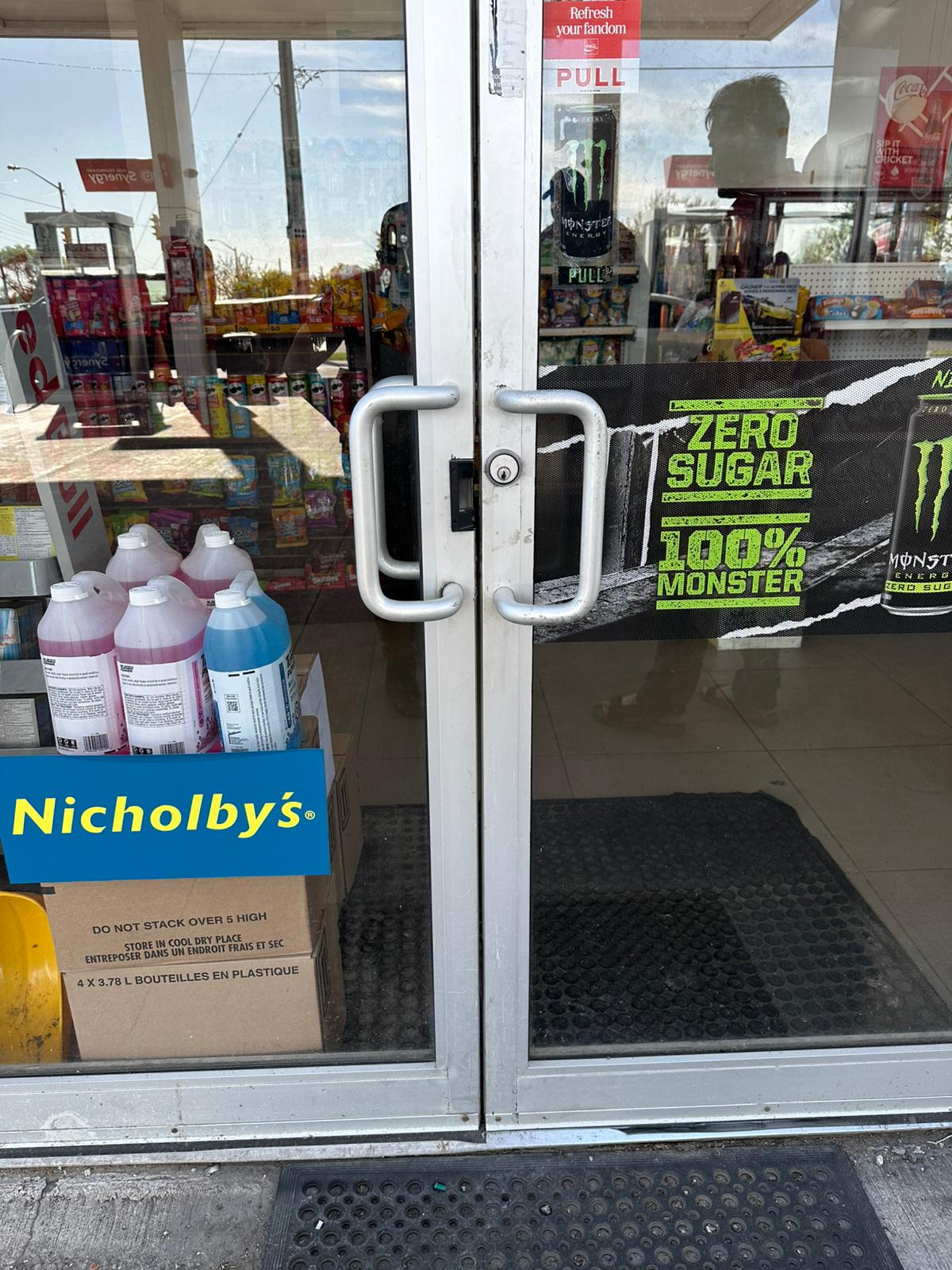
An entrance that is easy to use for most people can be a real barrier for others: someone using a wheelchair or walker, a parent pushing a stroller, a person with arthritis who cannot grip a round knob, an older customer who cannot pull a heavy door against a stiff closer. For a business, that barrier turns people away at the door.
Much of what makes an entrance accessible comes down to hardware: the handle, the closer, the lock, the threshold and, where it makes sense, a powered opener. Small changes often make a large difference.
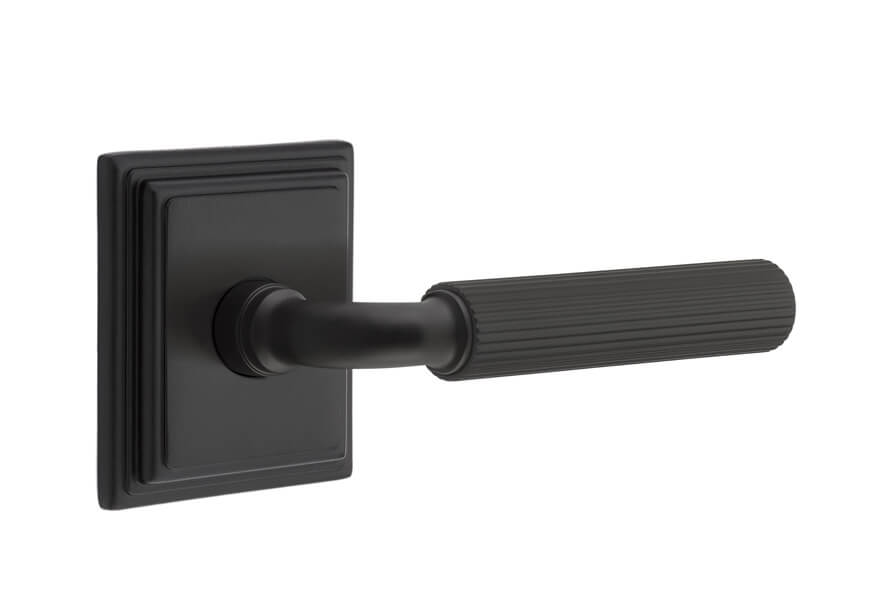
Round knobs need a firm grip and a twist, which is difficult for many people. Lever handles can be operated with a closed fist, an elbow or a forearm, and are the usual choice on accessible entrances.
On storefront and commercial doors, pull handles and push plates suit doors that swing one way. The handle should be mounted at a height that people using a wheelchair can reach comfortably, and it should not need pinching or twisting to use.
Replacing knobs with levers is one of the simplest improvements, and at home the same change is often the first step in easier-to-use door hardware for seniors.
A door closer set too strong is one of the most common barriers. It makes the door hard to open and can close it on someone before they are through.
Closers can be adjusted to reduce opening force while still closing and latching the door reliably. On exterior doors, wind and air pressure have to be allowed for, so the adjustment is a balance. A closer with a delayed-action feature holds the door open a little longer before it starts to close, which helps people who move slowly.
Where a door must close and latch for fire reasons, the adjustment has to respect that too. Fire doors have their own requirements, and fire door hardware for businesses looks at those in more detail.
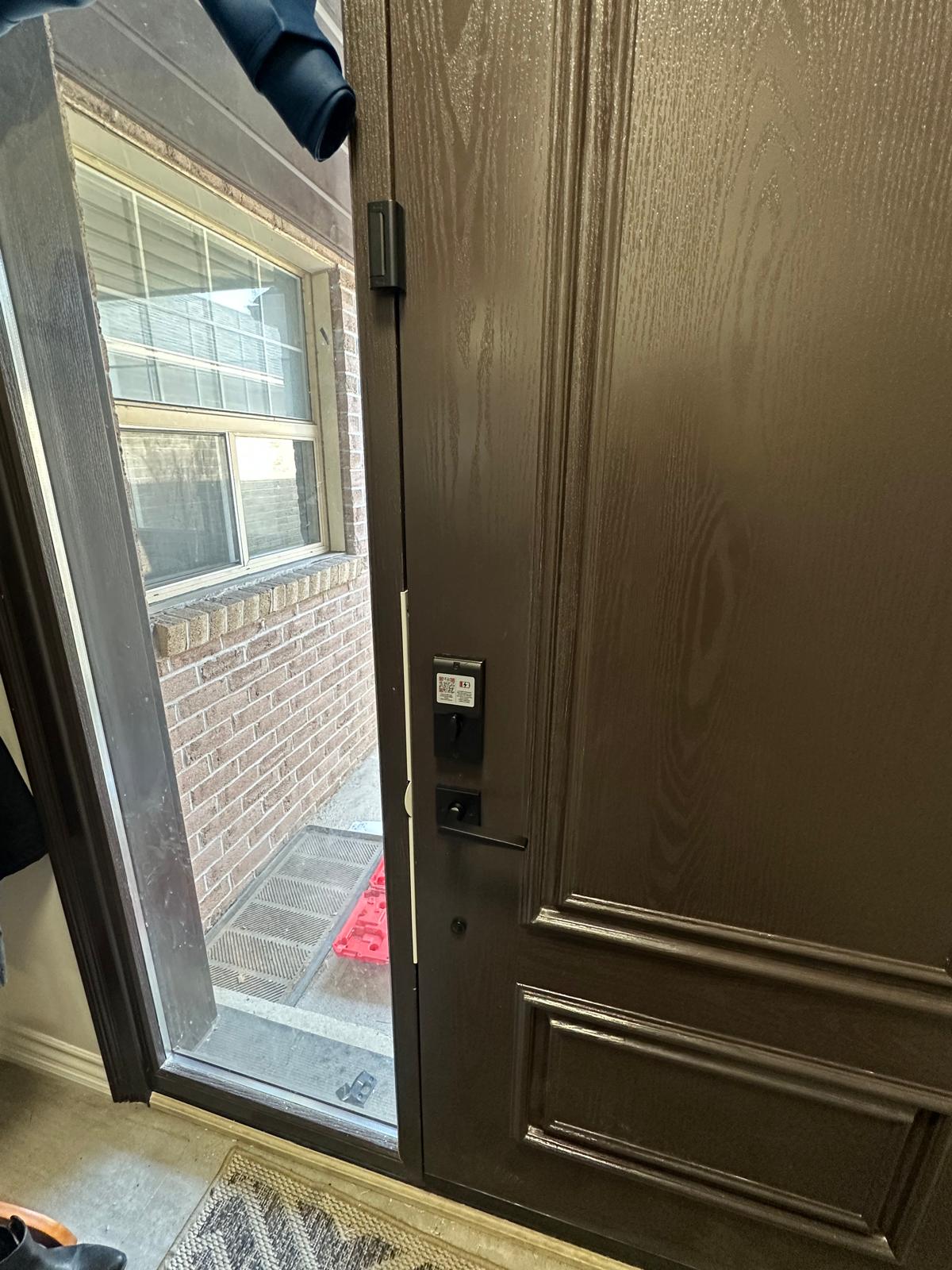
Locks on accessible doors should be operable without tight grasping or twisting. Thumbturns with a lever-shaped turn piece are easier than small round ones. Keys that need a hard turn because the lock is binding are a barrier in themselves, and fixing the alignment helps everyone.
On exit doors, panic bars and push bars are easier to operate than levers for many people, and they open with a single push. The types and how they suit different doors are set out plainly in panic bars and exit devices.
A raised threshold can stop a wheelchair or trip a person with limited mobility. Low-profile thresholds, bevelled edges and ramps where needed all help. Thresholds also affect how the door closes and seals, so changes need to consider the door and weather-stripping together.
Photos
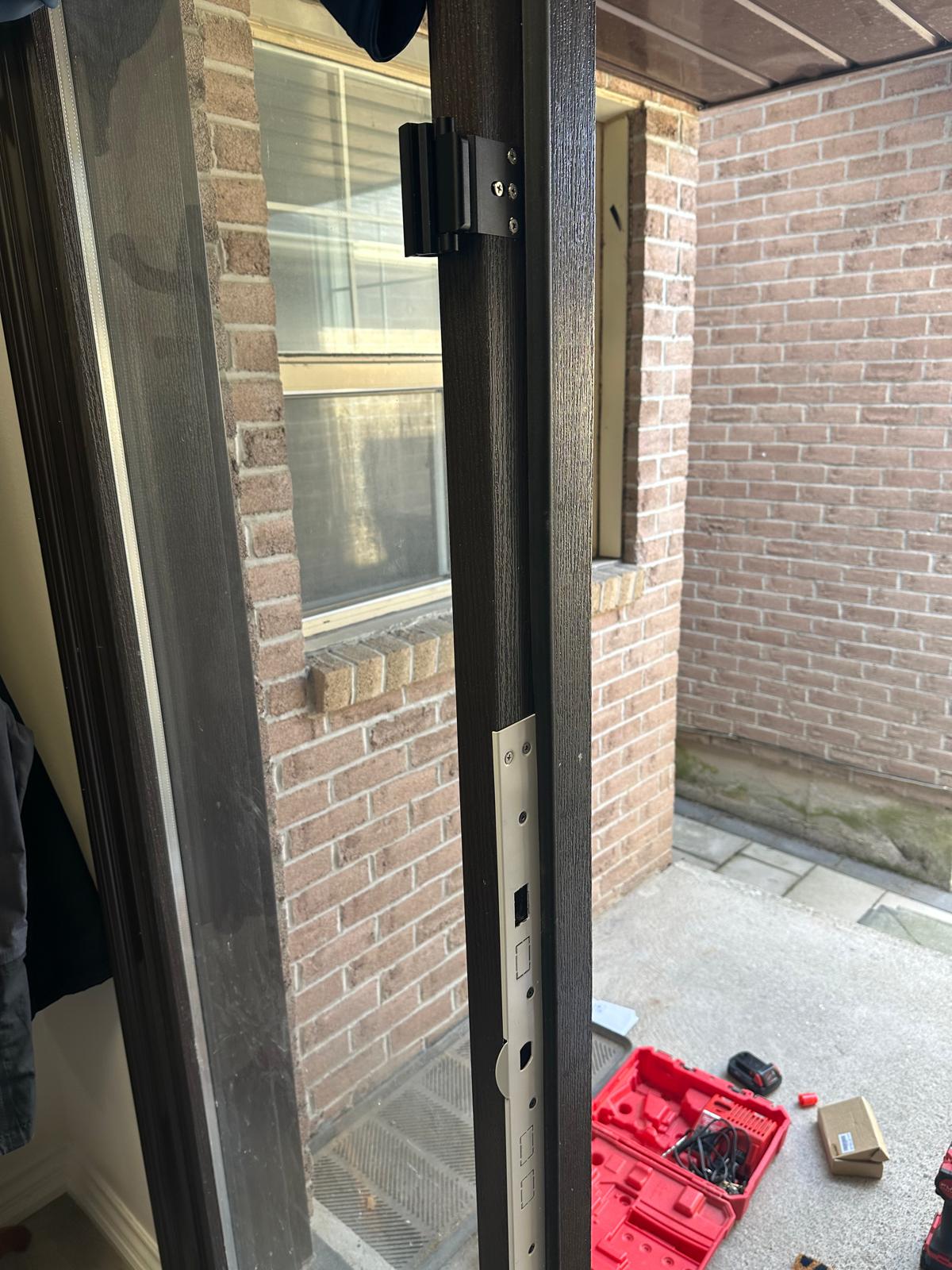
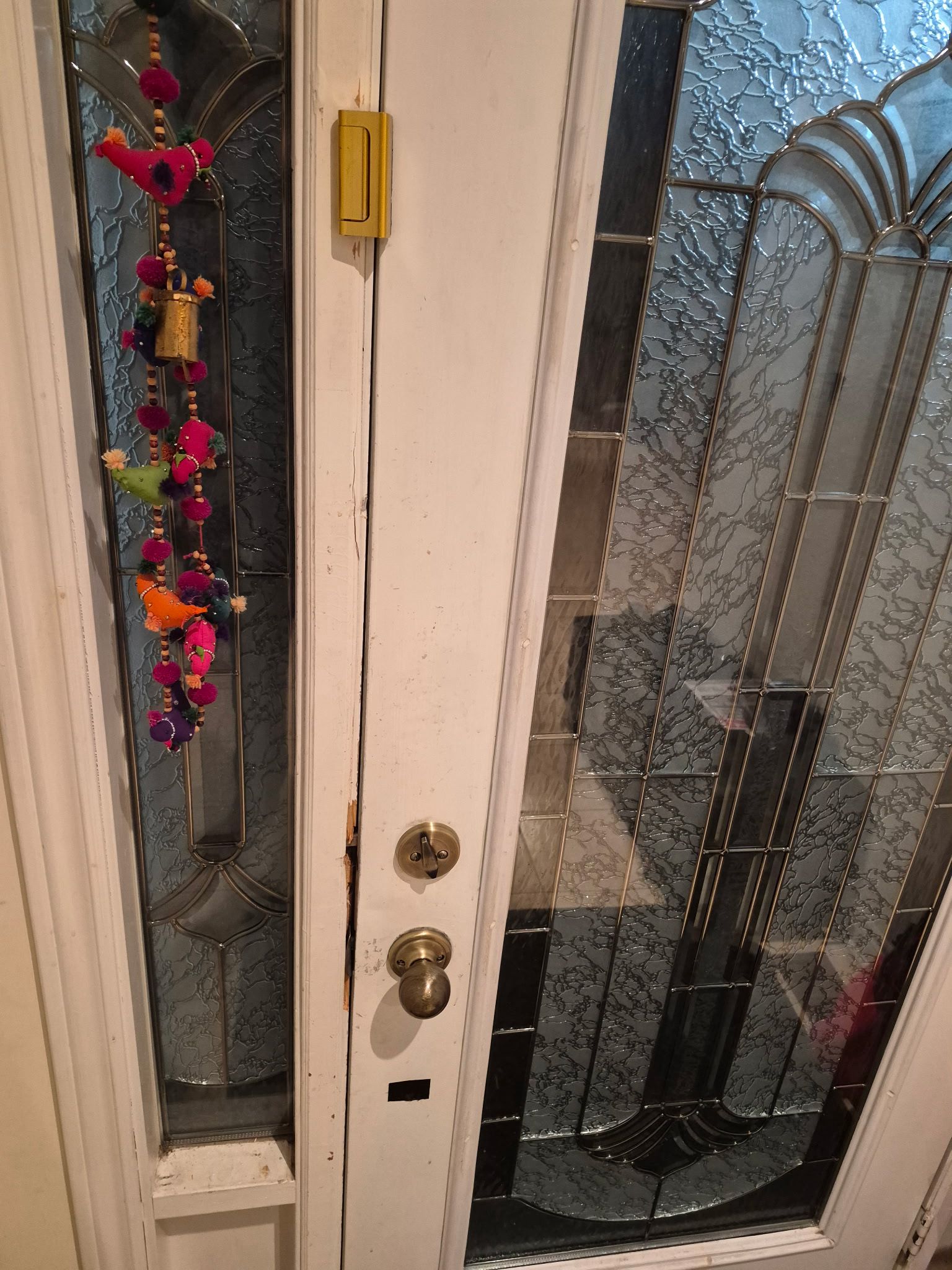
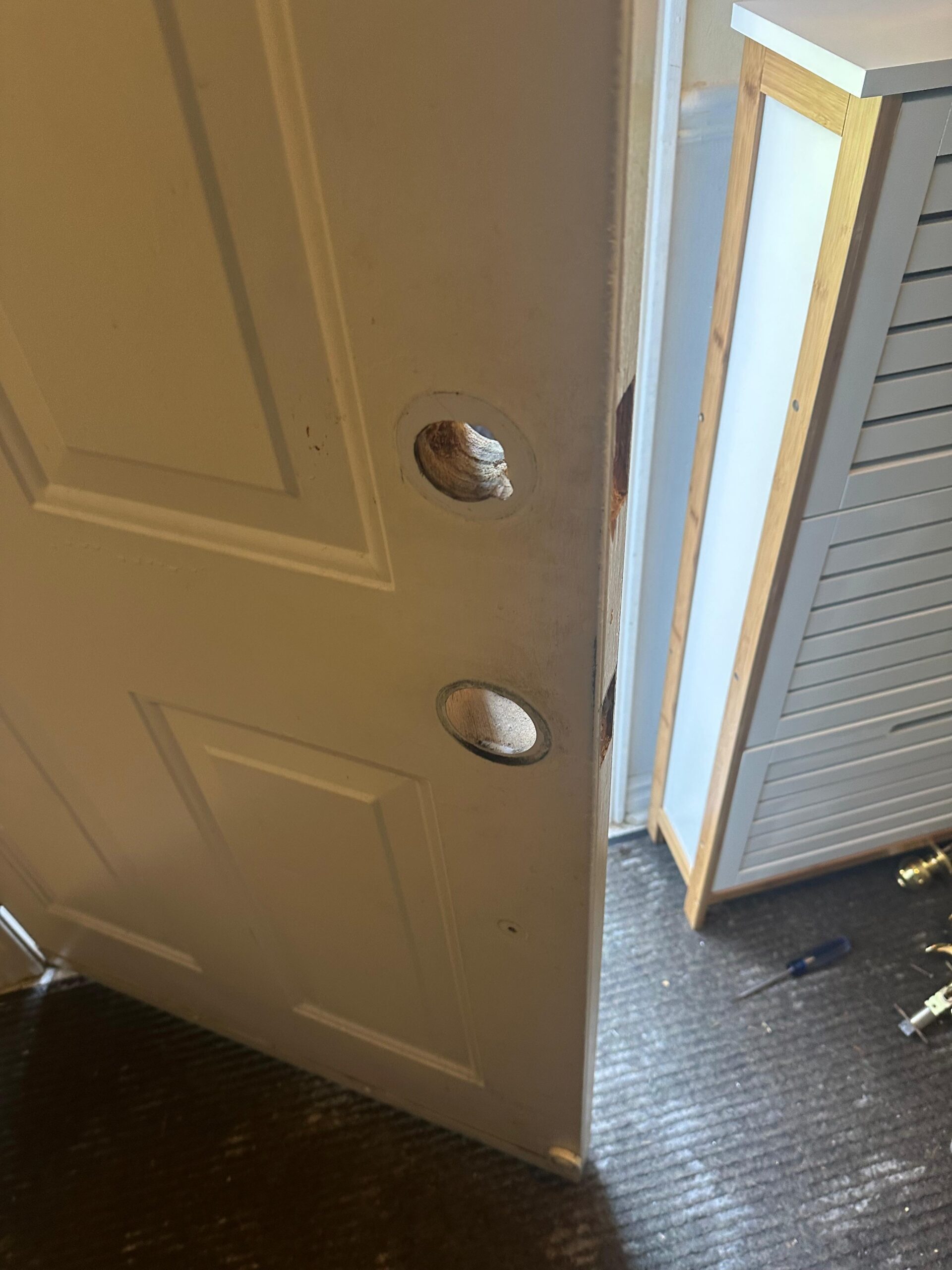
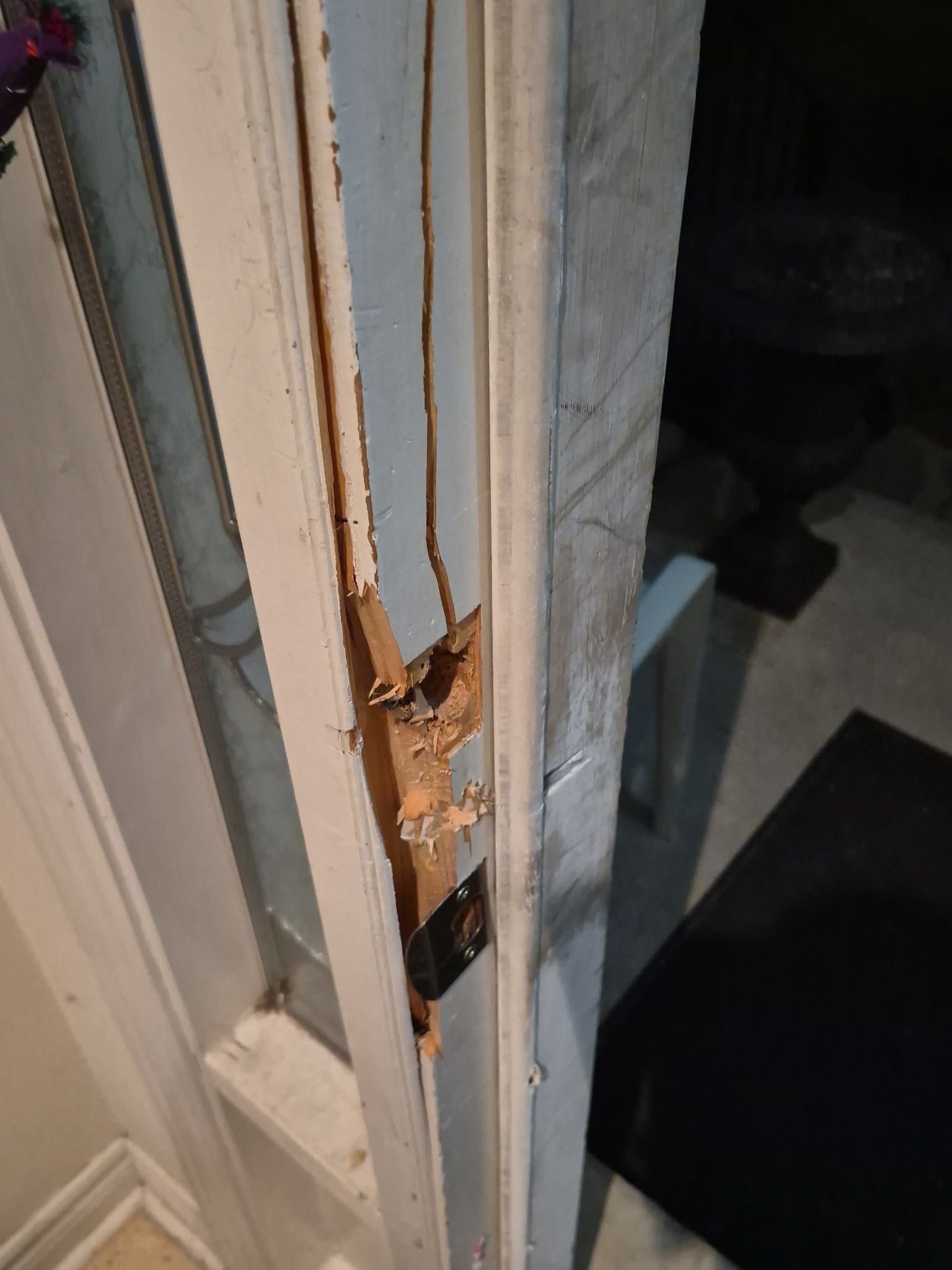
Photographs from GTA Lockman Mobile Locksmith Services work across Toronto and the GTA. Send a picture of your own door and we can tell you what the visit would involve.
A powered operator opens the door with a push button, a wave sensor or a card reader, and closes it again after a set time. For businesses with heavy entrance doors or high foot traffic, it is often the most complete answer.
Operators need power, careful setup so the door opens and closes at a safe speed, and regular maintenance. Where the door is also locked, the operator has to work together with the lock or electric strike, so that it does not try to open a door that is still locked. Push buttons should be mounted where people can reach them and not blocked by displays or planters.
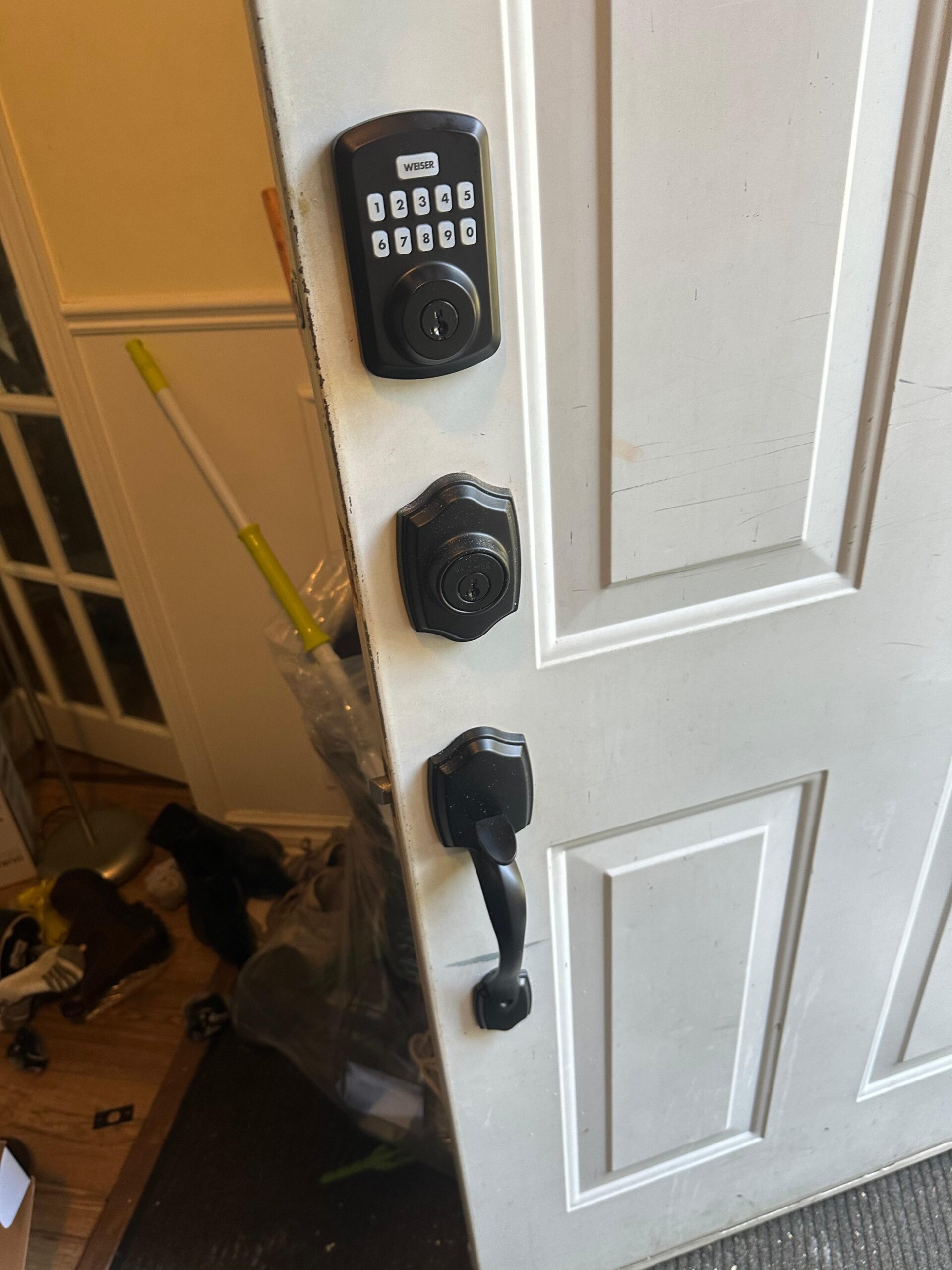
Businesses that serve the public, and especially clinics and offices with frequent visitors, benefit most from accessible entrances. The door, the reception area and any internal doors people need to use should all be checked, not only the front door. Access considerations inside clinics come up alongside security, which is where clinics and dental offices fits in.
Accessibility requirements for businesses in Ontario come from building codes and accessibility legislation, and they differ depending on the type of building and when it was built or renovated. We are not the authority on what your building must meet. Where you have a specific requirement from an inspection, a landlord or a consultant, tell us, and we will fit hardware to meet it.
Most businesses do not need to change everything at once. A sensible order is:
Accessibility changes are planned around opening hours in the same way as any other work with a commercial locksmith, and they sit alongside the rest of our commercial locksmith services.
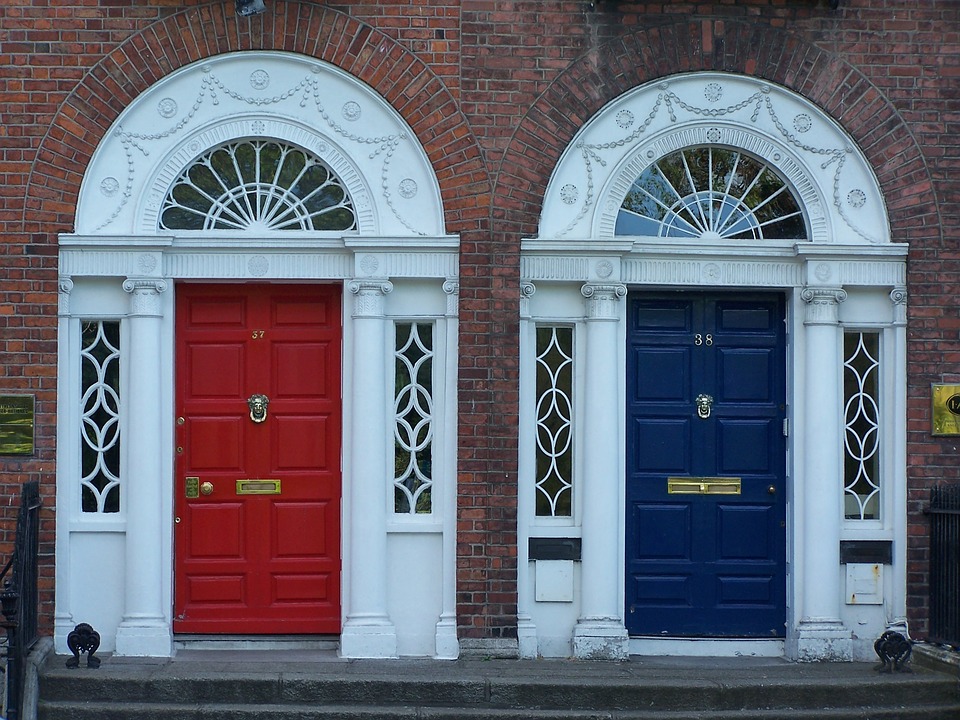
Accessible washrooms need particular attention. The door must be easy to open, the lock inside must be easy to operate with limited grip, and the lock must be releasable from outside so staff can help someone who has fallen or been taken ill.
Indicator bolts that show whether the room is occupied, operated by a large lever rather than a small turn, suit most accessible washrooms. The door should swing so it does not trap a person who has fallen against it, and the closer, if fitted, should not make the door hard to open from a wheelchair.
Checking washroom doors is often overlooked because they are internal, but for many visitors they are the door that matters most.
Older commercial buildings often have heavy entrance doors, high thresholds, narrow openings and closers that were never designed with accessibility in mind. Not everything can be changed without a larger renovation, but a surprising amount can be improved with hardware.
Adjusting or replacing the closer, fitting levers or pull handles, lowering or bevelling the threshold and adding a powered operator to the main entrance can transform how usable a building is without structural work. Where the door width itself is the barrier, that is a larger job involving the frame and possibly the wall.
Accessible hardware only helps if it keeps working. A closer that drifts back to a heavy setting, a powered operator that stops responding to its button or a lever that works loose all turn an accessible door back into a barrier.
Build door checks into the regular maintenance routine: test the closer force, press every operator button, check that levers are tight and that thresholds are not lifting. Staff should know who to call when a powered door stops working, and a simple sign directing people to an alternative entrance helps while it is being fixed.
An accessible entrance only helps if people can find it. Where the accessible entrance is not the main door, clear signs at the main entrance pointing to it, and signs at the accessible door itself, save people from reaching a barrier and turning back.
Push buttons for powered operators should be clearly marked, mounted at a reachable height and not blocked by displays, planters or snow in winter. Keeping the approach clear matters as much as the door itself.
Staff are often the first to notice when an accessible door stops working: a customer struggling with the door, a powered operator that has stopped responding, a threshold that has lifted. Make sure staff know to report these problems and who to call.
Staff should also know how to help without taking over, such as holding a door open when asked, and how to open a washroom door from outside if someone needs assistance.
Many businesses have separate doors for the public and for staff, and it is easy to focus only on the public entrance. Staff with disabilities or temporary injuries use staff doors too, and a rear or side door with a heavy closer, a round knob or a high threshold can be just as much of a barrier.
Checking every door that staff and visitors use, not just the front entrance, gives a fuller picture of how accessible the building actually is.
Accessibility work does not have to happen all at once. Adjusting closers and replacing knobs with levers are inexpensive and can be done in a single visit. Thresholds and powered operators cost more and may be planned into a later renovation or a tenant improvement.
Starting with the changes that cost least and help most, and planning the larger ones, is a practical way to make steady progress without waiting for a full renovation.
The most useful information about an entrance often comes from the people who use it. Customers, visitors and staff with mobility needs can say exactly where the difficulty lies: the door that is too heavy, the button that is out of reach, the threshold that catches a wheel. Asking them directly usually points to the change that will make the biggest difference.
Tell us which doors people use, whether they are exterior or interior, what hardware is fitted now, and whether a specific requirement has been raised by an inspector, landlord or customer.
We will check closer force, handles, locks and thresholds, suggest the changes that make the most difference first, and fit them around your opening hours.
Keep reading
Often it is adjusting the closer so the door is easier to open, or replacing round knobs with levers. Both are inexpensive and make an immediate difference for people who struggle with grip or strength.
Often it is adjusting the closer so the door is easier to open, or replacing round knobs with levers. Both are inexpensive and make an immediate difference for people who struggle with grip or strength.
Usually yes. Closers can be adjusted to lower opening force while still closing and latching the door. On exterior doors, wind and air pressure have to be allowed for, and on fire doors the closer must still close and latch reliably.
A closer that holds the door open for a few seconds before it starts to close. It helps people who move slowly, use mobility aids or push strollers get through before the door swings back.
For accessibility, yes. Levers can be operated with a closed fist or an elbow, without gripping and twisting. They are the usual choice on accessible entrances.
Not always. Businesses with heavy entrance doors, high foot traffic or many visitors with mobility needs benefit most. Operators need power, careful setup and regular maintenance, and they must work together with any lock on the door.
That depends on the building type, its age and when it was last renovated. Building codes and accessibility legislation set the requirements, and your building official or an accessibility consultant can confirm them. Once you know, we can fit hardware to meet them.
Often, yes. Low-profile or bevelled thresholds can replace a raised one, though the change affects how the door closes and seals, so the door and weather-stripping need to be considered together.
Yes. Washrooms, meeting rooms and any door visitors need to use should be checked for handle type, closer force and threshold, not only the front entrance.
GTA Lockman Mobile Locksmith Services is a mobile locksmith working on homes, businesses and vehicles across Toronto and the GTA, in the trade since 2010. Every review is written by a customer on Google, where you can read them in full.
Areas served: Toronto, North York, Scarborough, Etobicoke, Vaughan, Richmond Hill, Markham, Stouffville, Newmarket, Mississauga, Brampton, Oakville, Milton, Halton Hills, Pickering, Ajax, Whitby, Oshawa, Uxbridge.
Describe the door, hardware and service address. Contact GTA Lockman Mobile Locksmith Services to confirm the scope and scheduling for your location.