Locksmith services are always 10% off for seniors.
Open Mon–Thu 8:30 AM–9 PM, Fri 8:30 AM–4 PM, Sun 9:30 AM–9 PM
Locksmith services are always 10% off for seniors.
Open Mon–Thu 8:30 AM–9 PM, Fri 8:30 AM–4 PM, Sun 9:30 AM–9 PM
GTA Lockman Mobile Locksmith Services · Toronto & GTA
Support records, medication and staff access requirements with hardware, while every exit still releases freely.
Related services
Replace the previous tenant's key arrangement with one your business controls, following the lease and building rules.
Learn moreKeep fire doors latching and exits releasing, with hardware suited to the assembly and no added bolts.
Learn moreReview what the departing employee could open, then rekey the affected cylinders and issue new keys with a record.
Learn moreMake the back door close, latch and lock every time while keeping it a safe exit for staff and customers.
Learn moreA yearly check of doors, locks, keys and closers that catches small faults before they become failures.
Learn moreLock and door service for offices, shops and managed properties. Plan access around the way your business operates.
Learn more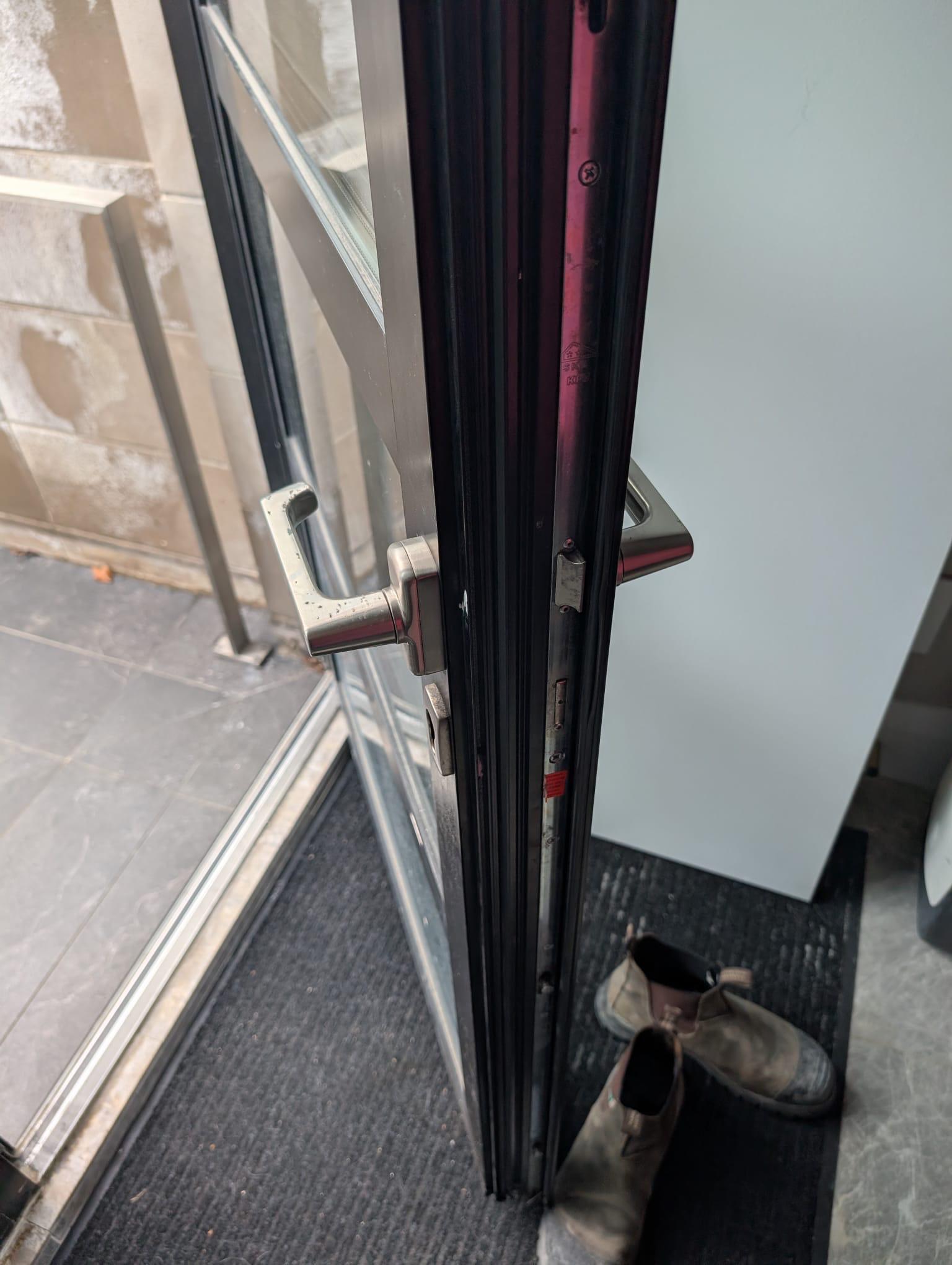
A medical, dental, physiotherapy or veterinary practice has the same doors as any small business, but what sits behind them changes the requirements. Patient records, prescription pads, controlled substances, sample medications, expensive equipment and, in some practices, cash.
Professional colleges, privacy legislation and, for controlled substances, federal requirements all shape how those items must be stored and who may reach them. Those obligations belong to the practice and its regulators. A locksmith's job is to fit hardware that supports what the practice must do, and to be clear about which questions are not ours to answer.
On the doors and hardware side, the entrance, the internal rooms, key control among staff and routine maintenance all need attention.
Most practices run an unlocked entrance during clinic hours and a locked one outside them. The hardware has to lock reliably at the end of the day, including after a long day of constant use, and release freely from inside whenever anyone is present.
Storefront clinics face the same issues as retail units: a closer that no longer pulls the door shut, a latch that misses, a deadlock that will not throw. Those are the usual causes of a commercial door that will not lock at closing.
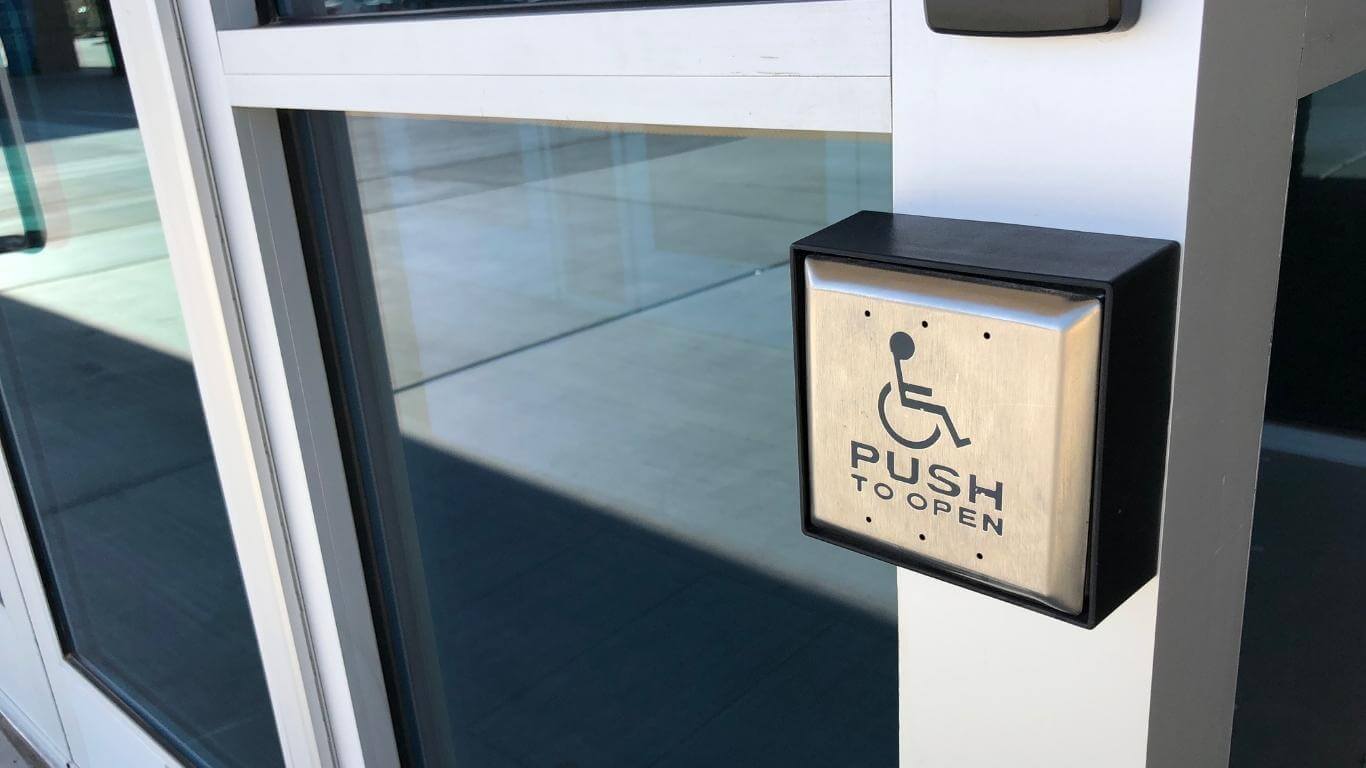
Accessible entrances with push-button operators need the operator working and the door still latching when closed.
Records rooms, server rooms and offices holding patient information usually need to be locked when unattended, with access limited to specific staff. A master-key system does that: reception staff open what they need, clinicians open clinical areas, the practice owner opens everything.
Privacy obligations around patient records are set by legislation and your college, not by us. Ask your privacy officer or professional body what is required, then tell us what the doors need to do. When a practice takes new premises, access is set up from the start with a lock change when moving into a new office.
Where a practice holds controlled substances, federal requirements govern their storage and record keeping, and they are specific. Those requirements take precedence over any general advice, and a locksmith does not interpret them.
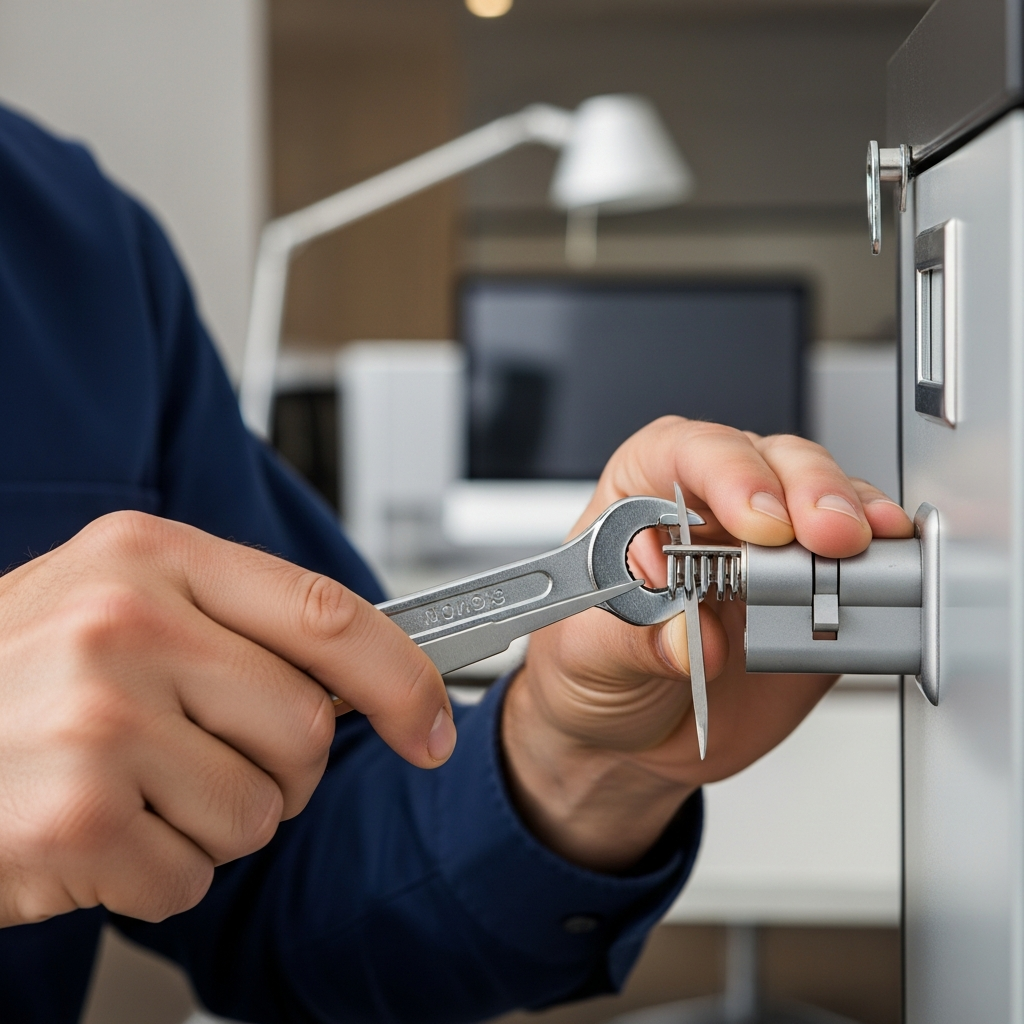
In practical terms, practices commonly use a dedicated secure cabinet or safe, in a room that is itself locked, with access limited to named individuals and records kept of who has the key or combination. We can fit the room's lock, advise on suitable cabinet hardware and rekey when staff change. Check the specification with your regulator before purchasing anything.
The safe key should not live in the room the safe protects.
Practices have locums, students, part-time hygienists, cleaners and contractors, which makes key control harder than in a typical office. A key register recording who holds which key, issued and returned, is the baseline.
When someone leaves, collect keys and remove codes the same week; see rekeying after an employee leaves. Where copies have circulated, a restricted keyway limits unauthorized duplication; see lock grades explained.
Cleaners often need access outside clinic hours. Give them the doors they need, not the records room, and use a code you can withdraw rather than a key that circulates.
Everything above sits under one constraint: while anyone is in the building, doors on exit routes must release with a single motion, without a key or special knowledge. That applies to a clinic locked during evening appointments just as much as to a shop.
Do not add deadbolts or chains to exit doors to protect a records area. Secure the internal rooms instead. Hardware that satisfies both requirements is the same kind used for fire door hardware for businesses.
Staff working late or opening early are a practical concern in many practices, particularly where the entrance is on a quiet street or the parking is at the rear. A door that latches reliably, good lighting, and a rear door with a latch guard all help; see rear door security for shops and restaurants.
Where staff leave alone after dark, a routine matters as much as hardware: who locks up, in what order, and how they confirm the building is secure.
Practices are targeted for medications, equipment and, occasionally, records. If a break-in occurs, contact the police first, photograph the damage, and notify your regulator and privacy officer if records or controlled substances may have been reached, since notification obligations may apply.
Then secure the opening. Photographs and an itemized invoice from lock repair after a break-in are what the insurer will want. Ask how entry was made so the repair addresses that weakness.
Clinic doors are used constantly: an entrance door opening every few minutes, operatory doors, washroom doors and a rear door for deliveries and waste. Cylinders wear, closers drift and latches fail.
A scheduled check once or twice a year catches those before they cause a door that cannot be locked at closing; see annual door and lock maintenance check.
We fit and repair door hardware, rekey and design master-key systems, fit keypads and secure room locks, service closers and exit devices, and provide itemized invoices for your records.
We do not interpret privacy legislation, college requirements or controlled-substance regulations, and we do not certify that a practice is compliant. Tell us what your regulator requires and we will tell you what hardware meets it, or where it needs a specialist supplier.
Door work in a clinic has to fit around appointments. Most jobs are short, but a door being worked on is a door out of use, and an entrance being rekeyed is an entrance that needs managing for an hour.
Tell us your quiet periods and whether there are days the practice is closed. Rekeying, cylinder changes and closer adjustments are easily scheduled into those windows. For anything affecting the entrance or an exit route, we plan the sequence so the practice is never left without a usable way in and out.
It is also worth reviewing access whenever the practice changes shape: a new associate joins, a room changes use, records move to a different room, or the practice takes adjoining space. Each of those changes who should be able to open what, and access arrangements tend to lag behind by months unless someone raises them. A short review at the same time as the change is much easier than reconstructing later who was given which key and when, particularly if a regulator or an insurer asks. Keep the key register, the hardware invoices and any correspondence about requirements in the same file as your other practice records. It is a small amount of paperwork, and it answers most of what an inspection, an insurer or a college query will ask about physical access Set a reminder to review it annually alongside your other practice checks, so the record stays current rather than becoming a snapshot of how the practice was organised several years ago. The review takes a few minutes once the file exists, and it means a new associate, a change of premises or a college query starts from an accurate picture rather than a set of assumptions.
When you call, describe the premises, which rooms need controlled access, how many staff hold keys and whether a regulator has specified anything in particular. Other business door work is handled through our commercial locksmith services.
Keep reading
Something that locks reliably when the room is unattended and limits access to named staff, usually a keyed lever or mortise lock within a master-key system. The specific requirement comes from privacy legislation and your professional college rather than from us: ask your privacy officer or regulator what is required, then tell us what the door needs to do. We fit the hardware and can arrange the keying so only the right people hold a key.
Something that locks reliably when the room is unattended and limits access to named staff, usually a keyed lever or mortise lock within a master-key system. The specific requirement comes from privacy legislation and your professional college rather than from us: ask your privacy officer or regulator what is required, then tell us what the door needs to do. We fit the hardware and can arrange the keying so only the right people hold a key.
We can fit the lock on the room and advise on cabinet hardware, but the storage and record-keeping requirements are federal and specific, and they take precedence over general advice. Check the specification with your regulator before buying a cabinet or safe. Practices commonly use a secure cabinet inside a locked room with access limited to named individuals. Keep the key or combination away from the room it protects.
Use a master-key system so each role opens only what it needs, and keep a register showing who holds which key, when it was issued and when it was returned. Collect keys when someone leaves and remove any codes the same week. Where copies may have been made over the years, a restricted keyway brings duplication back under the practice's control. Cleaners should have the doors they need, not the records room.
Not one that requires a key to get out while people are inside. Exit doors must release with a single motion without a key or special knowledge whenever the building is occupied, including during evening clinics. Control who comes in instead: a locked entrance with a buzzer, a camera or window, and a routine for admitting patients. Secure the internal rooms rather than the exit.
Usually the closer, the strike or a worn cylinder rather than the lock body. An entrance used every few minutes wears reliable than any other door in the practice. If the closer no longer pulls the door fully shut, the latch rests against the strike instead of engaging, and staff may leave believing it is locked. Test it by letting it close from fully open without touching it.
Contact the police first and photograph the damage before repairs. Notify your regulator and privacy officer, since notification obligations may apply where records or controlled substances were involved. Then have the opening secured and the hardware repaired or replaced, and ask the technician how entry was made so the repair addresses that weakness rather than restoring what failed.
Once or twice a year for most practices, and towards the higher end where the entrance is in constant use. A check covers closers, latches, cylinders, hinges, alignment and any exit devices, and it catches the faults that lead to a door that cannot be locked at closing. Keep the invoices, since they also serve as a record of what was done to each opening.
No. We fit, repair and rekey hardware and provide itemized invoices describing what was done at each door. We do not interpret privacy legislation, college requirements or controlled-substance regulations, and we cannot certify compliance. Tell us what your regulator requires and we will tell you what hardware meets it, or refer you to a specialist supplier where it goes beyond locksmith scope.
GTA Lockman Mobile Locksmith Services is a mobile locksmith working on homes, businesses and vehicles across Toronto and the GTA, with more than 14 years in the trade. Every review is written by a customer on Google, where you can read them in full.
Areas served: Toronto, North York, Scarborough, Etobicoke, Vaughan, Richmond Hill, Markham, Stouffville, Newmarket, Mississauga, Brampton, Oakville, Milton, Halton Hills, Pickering, Ajax, Whitby, Oshawa, Uxbridge.
Describe the door, hardware and service address. Contact GTA Lockman Mobile Locksmith Services to confirm the scope and scheduling for your location.