Locksmith services are always 10% off for seniors.
Open Mon–Thu 8:30 AM–9 PM, Fri 8:30 AM–4 PM, Sun 9:30 AM–9 PM
Locksmith services are always 10% off for seniors.
Open Mon–Thu 8:30 AM–9 PM, Fri 8:30 AM–4 PM, Sun 9:30 AM–9 PM
GTA Lockman Mobile Locksmith Services · Toronto & GTA
Secure the premises at closing while keeping exit routes working, and fix the closer, alignment or lock fault behind it.
Related services
Authorized entry to shops, restaurants, clinics and offices, with attention to storefront hardware and key control.
Learn moreLock and door service for offices, shops and managed properties. Plan access around the way your business operates.
Learn moreArrange authorized access to offices and business premises, then address the key or hardware problem behind the lockout.
Learn moreSecure a forced door, repair damaged locks and frames, and document the work for your police report and insurer.
Learn moreRemove a snapped key without damaging the cylinder, then find out why the key failed so the next one does not.
Learn moreReplace worn or unsuitable hardware with a lock that fits the door, its function and your access needs.
Learn more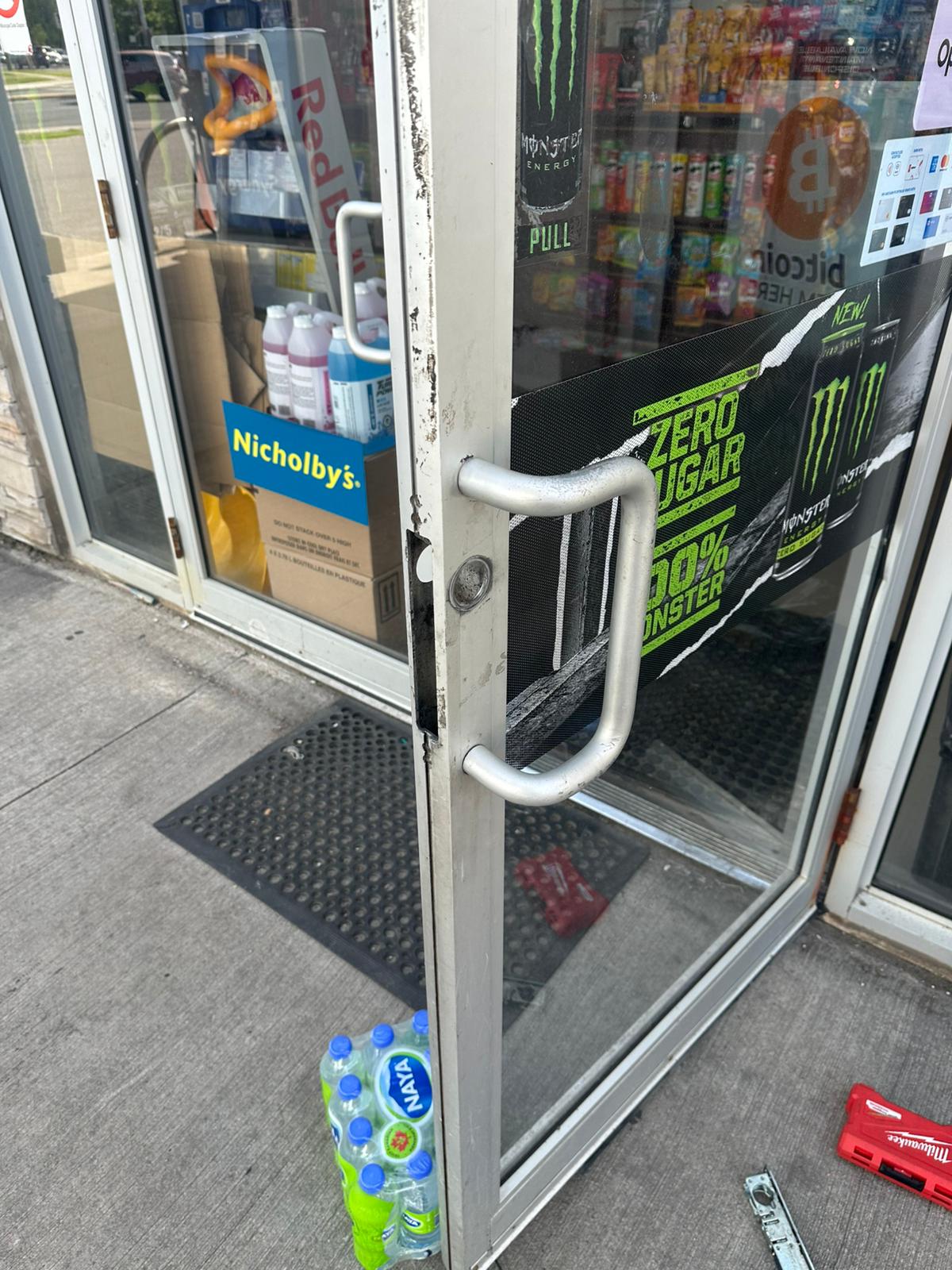
Commercial doors are opened and closed far more often than house doors, and many problems develop gradually during the day without anyone noticing. At closing time, when the last person tries to lock up, the door finally refuses. The bolt will not throw, the key will not turn, the latch does not catch, or the door will not close fully against the frame.
The first question is whether the premises can be secured tonight. The longer-term question is why the hardware failed, because the same fault will return at the next closing if only the symptom is addressed.
Before calling, note which door is affected, what hardware it uses, and exactly what happens when you try to lock it. A photograph of the lock, the door edge and the frame helps identify the hardware.
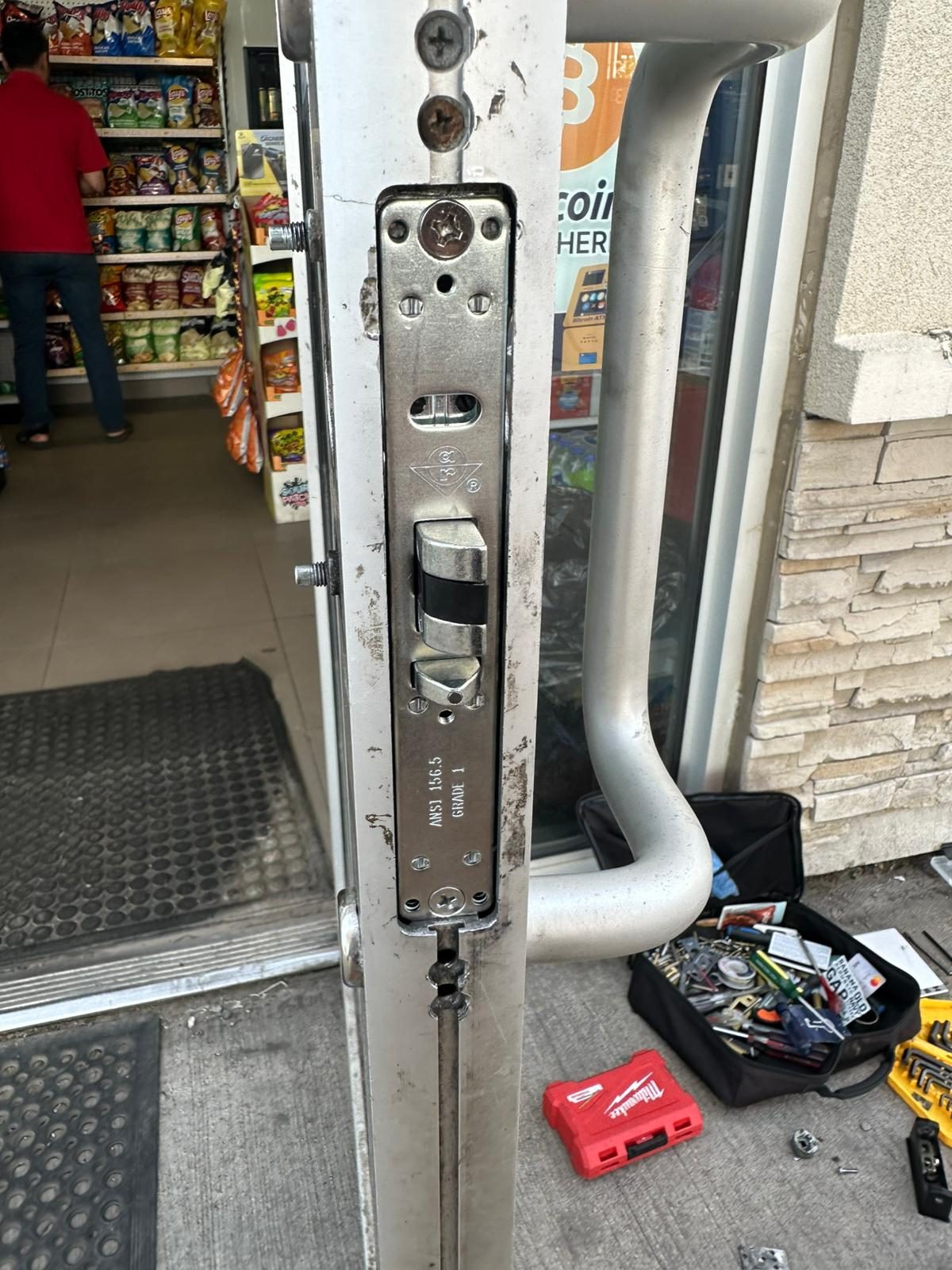
Storefront doors in the GTA commonly use aluminium frames with narrow-stile deadlocks or mortise cylinders, often combined with a door closer and sometimes an exit device. Rear service doors are frequently hollow-metal with a mortise lock or cylindrical lever lock. Glass doors may use floor or top locks, or a pivot arrangement.
Each type fails differently. A narrow-stile deadlock can be defeated by a door that sags on its pivots. A mortise lock may fail internally. An exit device may not latch because its rods or latch bolts are out of adjustment. Knowing the hardware helps the technician arrive prepared.
A door closer that has lost its adjustment, or begun to leak oil, may no longer pull the door fully closed. The latch may not catch, or the deadbolt may meet the frame instead of the strike. Heavy use, wind and temperature change affect closer performance, especially on exterior doors.
Sagging pivots and worn hinges also move the door out of line with the frame. On aluminium storefronts, the bolt must meet a narrow strike opening, so a small shift can prevent locking. Adjusting the closer, pivots or hinges, or the strike position, often restores the door without replacing the lock. Closers, pivots, exit devices and cylinders all fall within our commercial locksmith services.
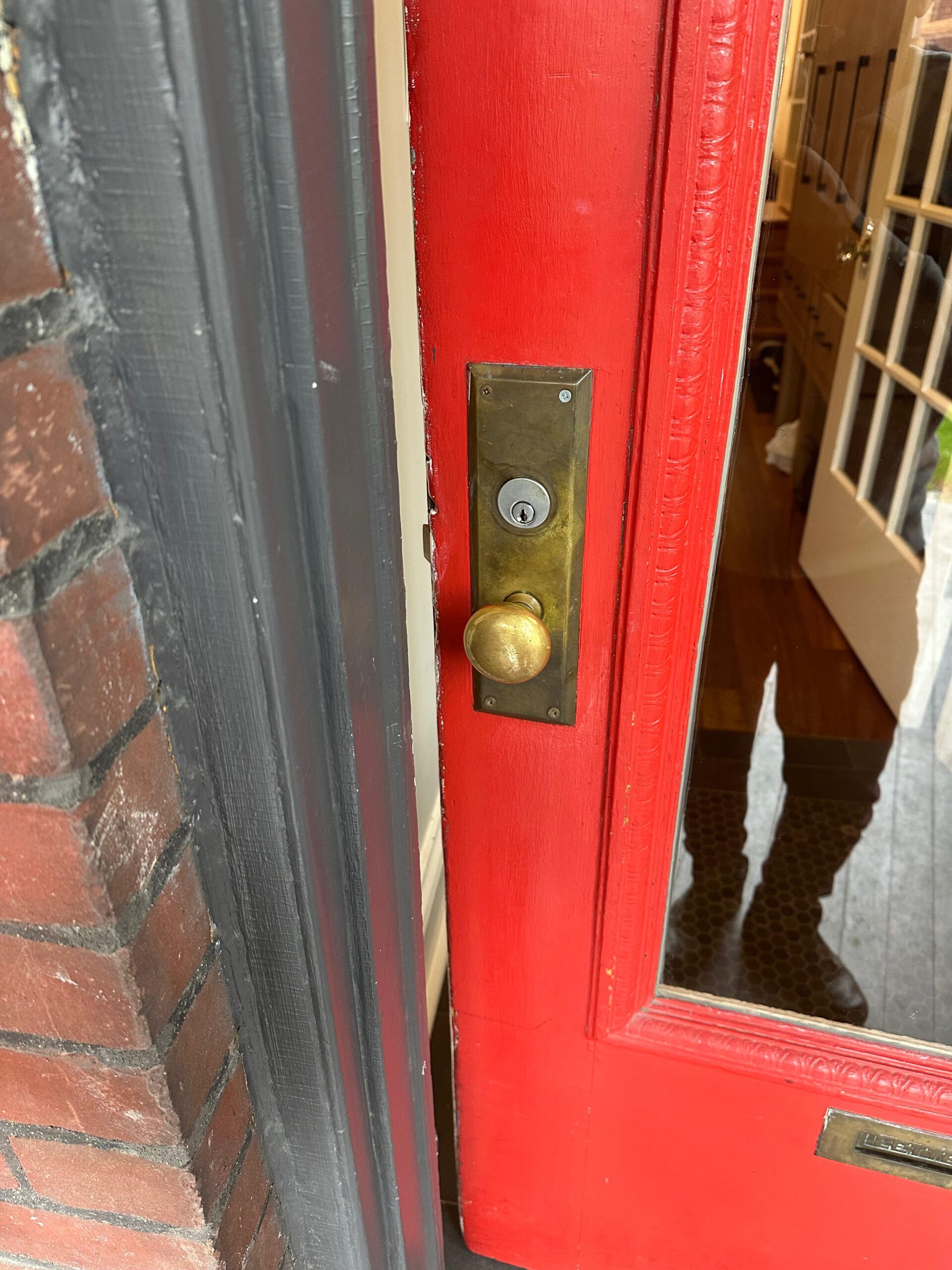
If the door closes properly but the lock will not operate, the fault may be inside the lock. A worn cylinder, a loose mortise cylinder that has rotated out of position, a broken cam, or a failed lock body can all prevent locking. Master-keyed cylinders wear reliable because they contain more pins and more keys are in use.
Where a compatible replacement part is available, the lock can often be repaired. Restricted or master-keyed cylinders may need to come from the system's supplier. If the lock body has failed or is unsupported, replacement with compatible hardware may be required.
Doors on exit routes must allow people to leave the building. Exit devices, panic bars and their latches must not be disabled, chained or blocked to make a door lock. If an exit device will not latch, the repair must preserve its function. Mention any exit hardware on the door when you call, so the technician can plan for compatible parts and adjustment.
A temporary measure that secures the door must still allow safe exit. Do not chain panic hardware or install a padlock on an exit door.
Photos
Photographs from GTA Lockman Mobile Locksmith Services work across Toronto and the GTA. Send a picture of your own door and we can tell you what the visit would involve.
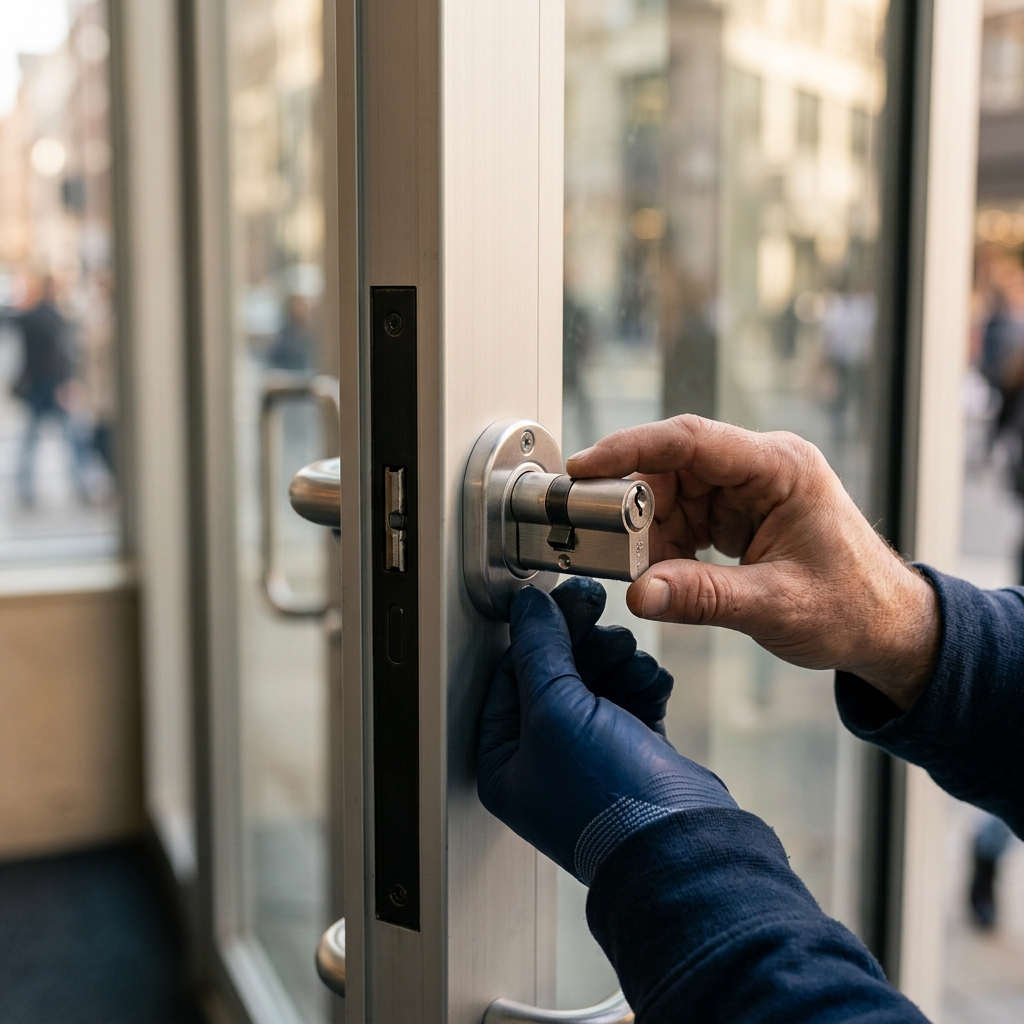
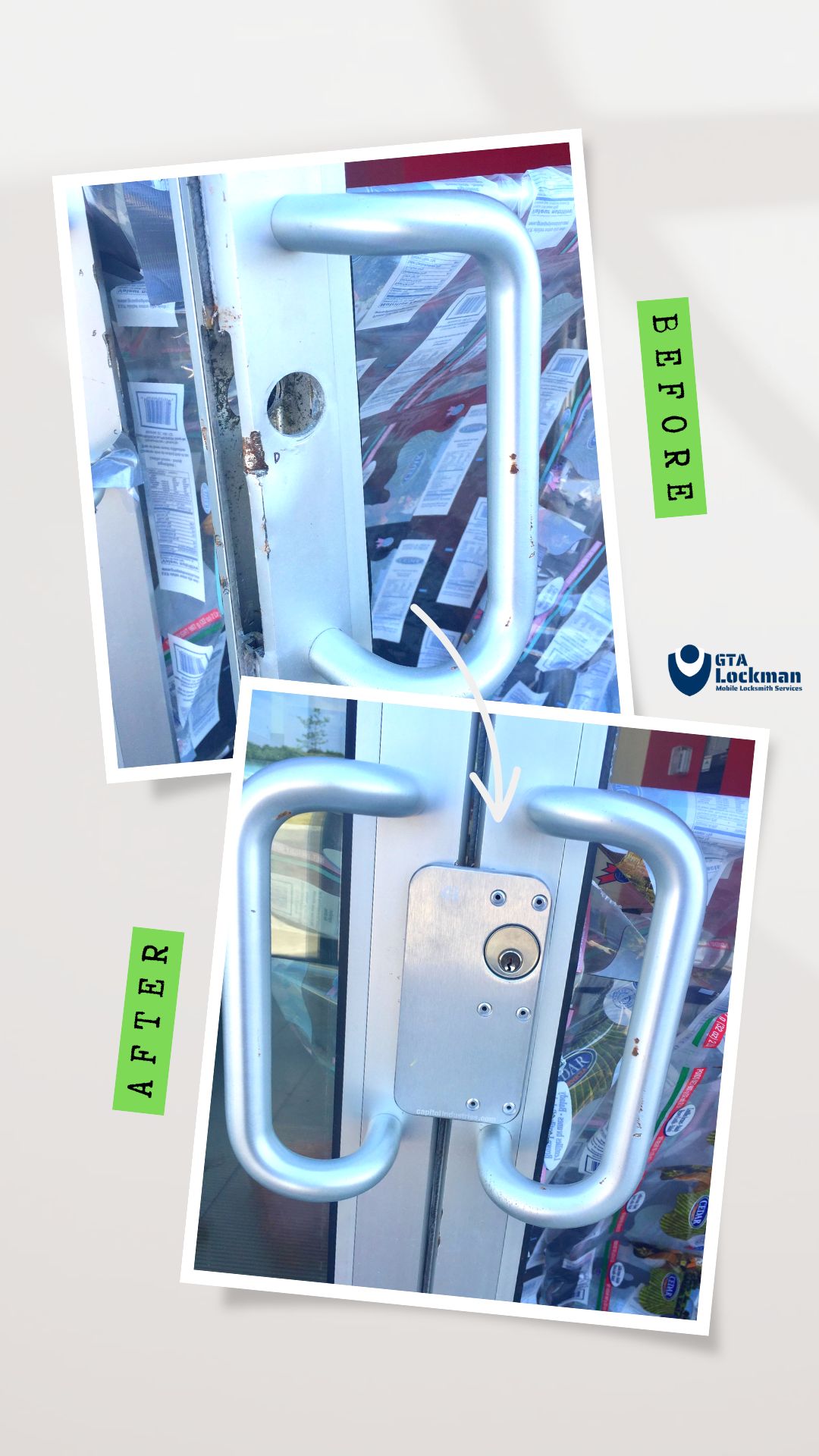
If the door cannot be repaired during the visit, the technician may be able to secure it with an interim measure that preserves safe exit, or fit compatible temporary hardware until parts arrive. Ask what the measure provides and record it as temporary on the invoice.
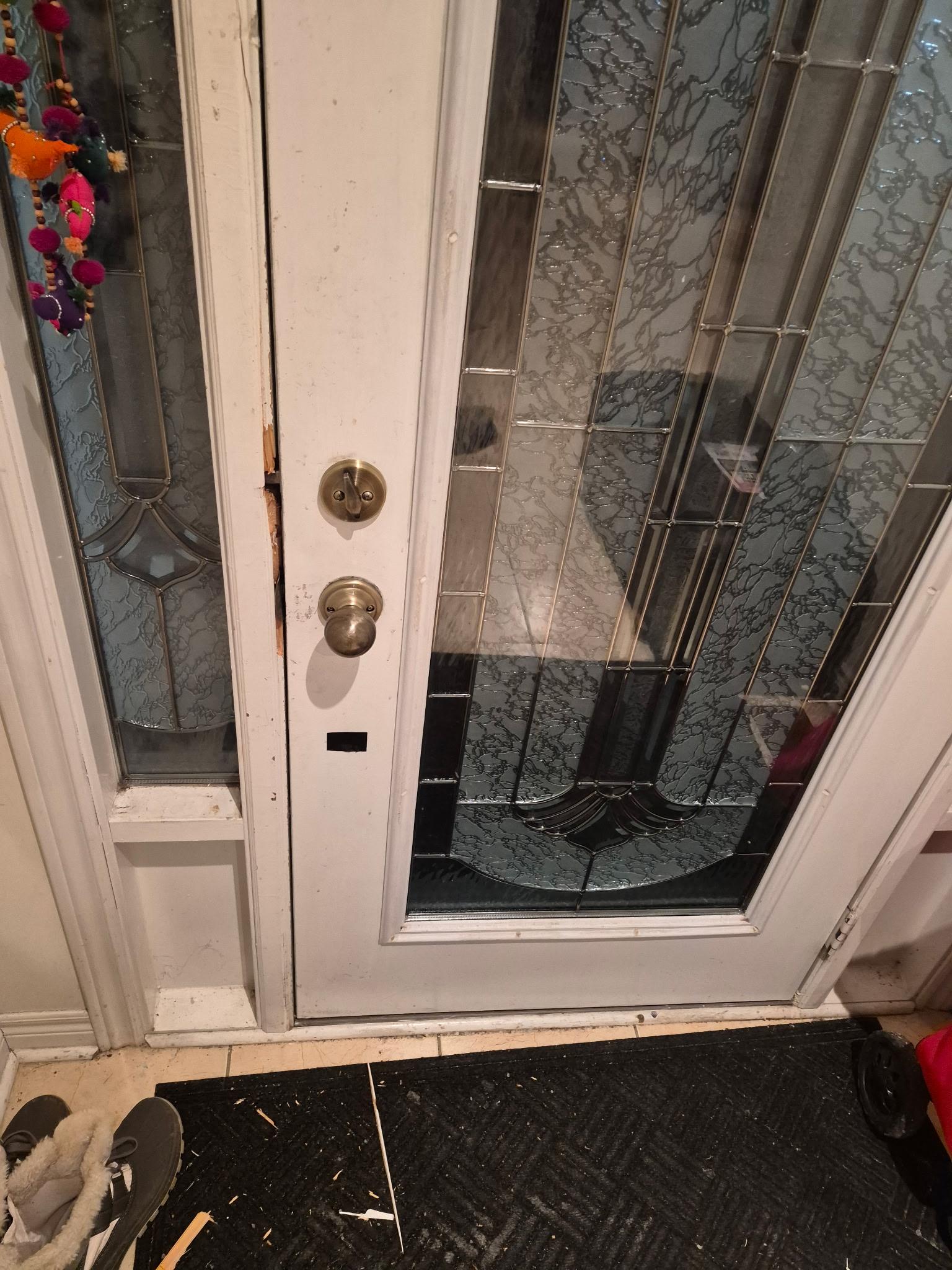
If a key has broken in the lock, see broken key extraction. If the problem followed a break-in, contact the police first, then see lock repair after a break-in.
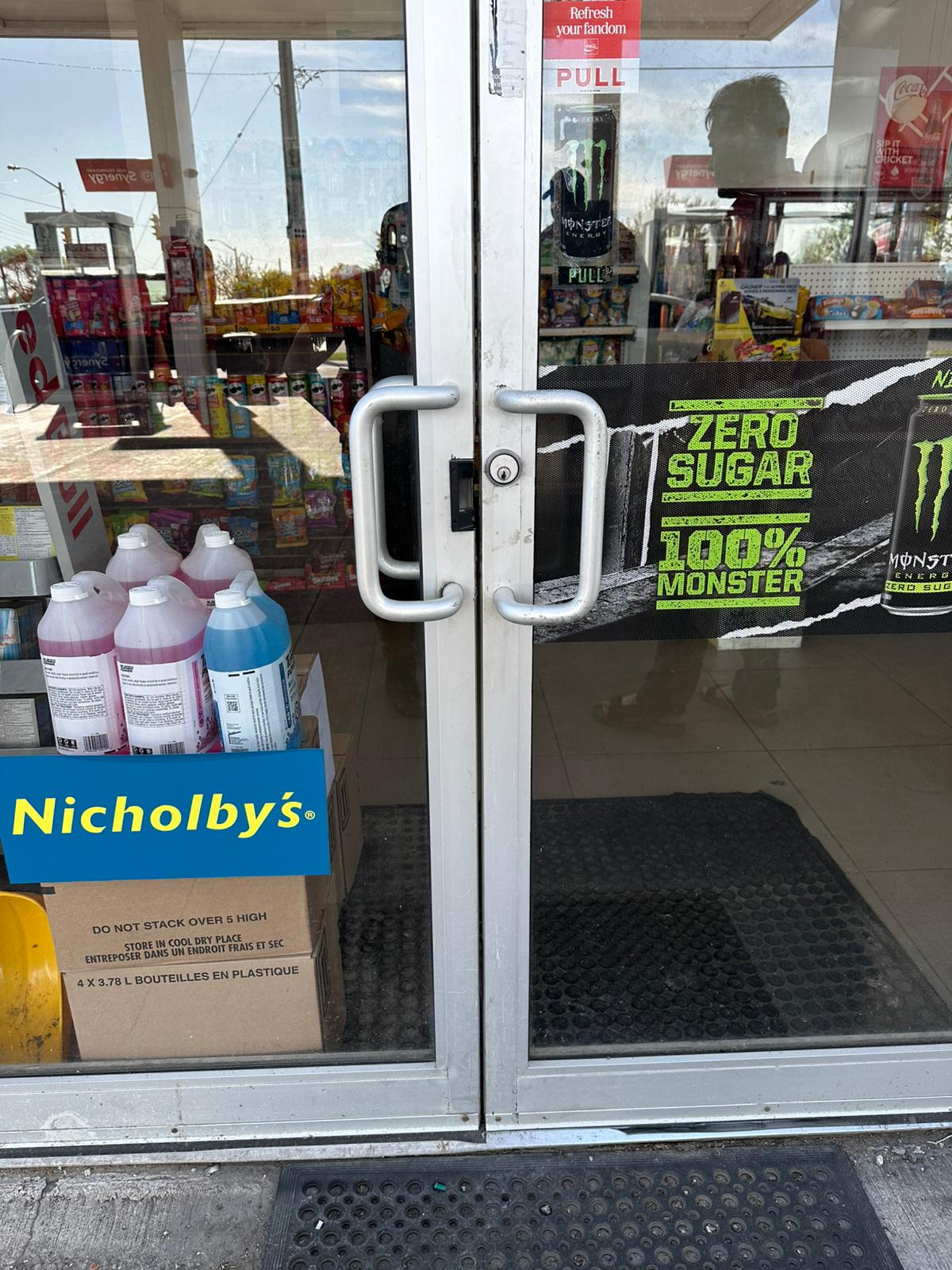
A door that will not lock sometimes turns out to have a key problem: an employee using a worn copy, or the wrong key for a recently changed cylinder. Keep a record of which keys operate which doors and who holds them. For businesses that have recently changed staff or lost keys, the access problem usually leads either to office and business lockouts or to a planned lock change.
Rear doors on commercial premises often see heavy use from deliveries, waste removal and staff, and they are more likely to be propped open or slammed. Hollow-metal doors can bend near the lock after repeated impacts, and closers on rear doors are frequently disconnected to make deliveries easier. The result is a door that no longer closes against its frame properly at the end of the day.
Check the closer arm, the hinges and the strike on the rear door as part of any closing problem. A bent door or frame may need straightening or replacement by a door specialist; the locksmith can advise where the lock work ends and door repair begins. Consider a hold-open arrangement designed for the purpose rather than wedges, which strain hinges and closers over time.
Glass entrance doors often use floor locks, top locks or pivot-mounted hardware. The bolt must meet a small strike in the floor or header, and even small movement of the door, the pivot or the floor closer can prevent it from engaging. Dirt and debris in the floor strike can also block the bolt.
Clean the floor strike first; sand, salt and grit collect there in winter. If the bolt still does not engage, the door may need adjustment at the pivot or closer. Glass-door hardware is often specific to its manufacturer, so a photograph and any brand markings help the technician prepare.
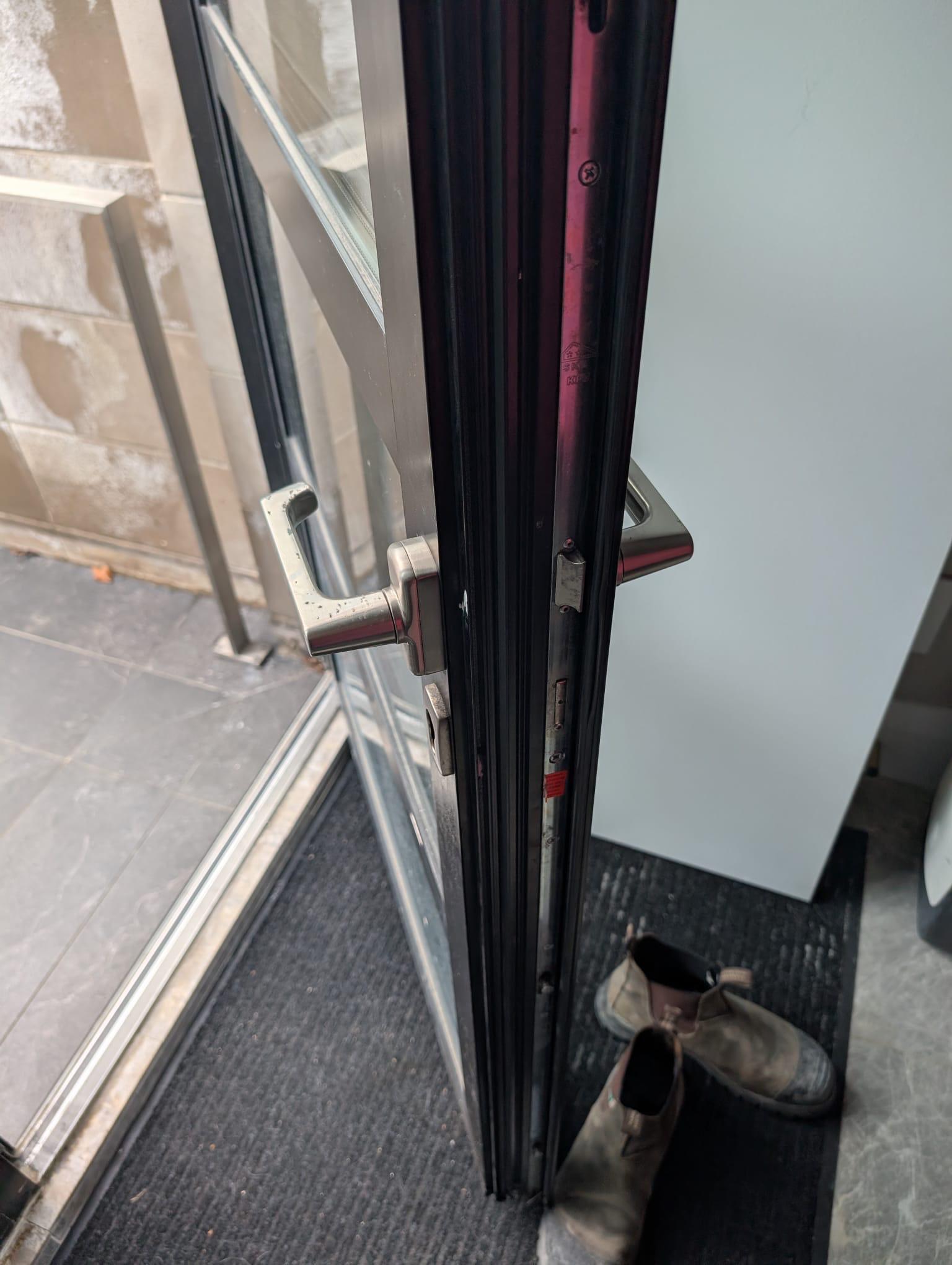
Businesses that have repeated closing problems may benefit from scheduled inspections of their doors and hardware. Adjusting closers, tightening hinges and pivots, and servicing cylinders before they fail reduces the chance of a door that cannot be locked at the end of the day. Keep a record of each door's hardware, the last service and any recurring issue. That record makes future repairs reliable to plan and helps identify doors that need replacement hardware rather than further adjustment.
Staff who lock up at the end of the day are often the first to notice a door that is becoming harder to secure. Encourage them to report a stiff key, a door that needs an extra push, or a latch that sometimes fails to catch, rather than working around it. Many closing failures are preceded by weeks of small warning signs, and an adjustment made during business hours is less disruptive than a door that will not lock when everyone is ready to leave.
After the repair, test the door as it will be used at closing. Close it with the closer alone and confirm that the latch catches and the lock operates without pushing or lifting. Check that exit hardware releases from inside. Closing-time calls are handled within our posted hours; the estimate we give depends on where the premises are and what is already booked. Describe the door and the problem when you call so we can explain what the visit involves.
Keep reading
Temperature, wind and a day of heavy use all affect a commercial door. Metal and aluminium frames expand and contract, closers behave differently as they warm or cool, and repeated slamming can loosen hinges, pivots and strikes during the day. By closing, the door may no longer sit where the lock expects it. A door that locks inconsistently usually has an alignment or closer problem rather than a failing lock. Note the times and conditions when it fails, because that pattern helps the technician find the cause.
Temperature, wind and a day of heavy use all affect a commercial door. Metal and aluminium frames expand and contract, closers behave differently as they warm or cool, and repeated slamming can loosen hinges, pivots and strikes during the day. By closing, the door may no longer sit where the lock expects it. A door that locks inconsistently usually has an alignment or closer problem rather than a failing lock. Note the times and conditions when it fails, because that pattern helps the technician find the cause.
Not if it is an exit door. Doors on exit routes must allow people inside to leave, and chaining or padlocking panic hardware creates a serious life-safety risk and may breach fire code. If the premises cannot be secured and staff remain inside, the door must still open from inside. The technician can often provide an interim measure that secures the door while preserving safe exit, or fit temporary hardware until parts arrive. Ask what the measure provides before relying on it.
It is related. If the closer does not close the door fully, the latch may not catch and the deadbolt may meet the frame instead of the strike. Closers lose adjustment over time, and one that leaks oil usually needs replacement. Adjusting or replacing the closer often solves a locking problem without any lock work. The technician should check the closer, hinges or pivots, and strike before replacing the lock, so the repair addresses the actual cause.
Heavy force on the key is a warning sign. It often means the bolt is binding against the strike because the door has moved, or that the cylinder is worn. Continued force can snap the key inside the lock or break the cylinder cam, leaving the store unable to lock at all. Arrange an inspection while the lock still works. Correcting alignment or servicing the cylinder is usually simpler and less disruptive than dealing with a failure at closing time.
Master-keyed cylinders contain more pins and are operated by more keys, so they can wear reliable than single-key cylinders in heavy use. Worn keys in circulation add to the wear. Replacement cylinders or parts may need to come from the system's supplier to stay within the keying arrangement, especially where restricted keyways are used. Keep a record of the system and supplier so repairs can be arranged without disrupting the rest of the key plan.
Many exit device problems can be corrected by adjusting the latch bolts, vertical rods or strike, or by replacing worn parts. The repair must keep the device working as an exit, so it should never be disabled to make the door lock. Some devices are specific to their manufacturer and need compatible parts. Tell us the brand and type of device when you call, with a photograph if possible, so the technician can plan for the likely parts.
That depends on the commercial lease. Some leases make the landlord responsible for doors and hardware, while others place that responsibility on the tenant. Building management may also control keying and hardware standards across the property. Check the lease and contact the landlord or property manager, particularly if the building uses a master-key system. Keep the invoice and inform them of any work done to secure the door.
Ask staff to note the door, the time, what they tried and what happened: whether the key turned, whether the bolt moved, whether the door closed fully and whether the latch caught. Photographs of the lock and door edge help. Avoid sharing photographs of keys or key cuts. A simple log over several days can reveal patterns, such as failures in cold weather or after deliveries, which point to the underlying cause.
GTA Lockman Mobile Locksmith Services is a mobile locksmith working on homes, businesses and vehicles across Toronto and the GTA, with more than 14 years in the trade. Every review is written by a customer on Google, where you can read them in full.
Areas served: Toronto, North York, Scarborough, Etobicoke, Vaughan, Richmond Hill, Markham, Stouffville, Newmarket, Mississauga, Brampton, Oakville, Milton, Halton Hills, Pickering, Ajax, Whitby, Oshawa, Uxbridge.
Describe the door, hardware and service address. Contact GTA Lockman Mobile Locksmith Services to confirm the scope and scheduling for your location.