Locksmith services are always 10% off for seniors.
Open Mon–Thu 8:30 AM–9 PM, Fri 8:30 AM–4 PM, Sun 9:30 AM–9 PM
Locksmith services are always 10% off for seniors.
Open Mon–Thu 8:30 AM–9 PM, Fri 8:30 AM–4 PM, Sun 9:30 AM–9 PM
GTA Lockman Mobile Locksmith Services · Toronto & GTA
Keep the personnel door latching, control keys across shifts and protect the openings around a loading area.
Related services
Make the back door close, latch and lock every time while keeping it a safe exit for staff and customers.
Learn moreSecure the premises at closing while keeping exit routes working, and fix the closer, alignment or lock fault behind it.
Learn moreReview what the departing employee could open, then rekey the affected cylinders and issue new keys with a record.
Learn moreMatch the padlock to the hasp, door and hinges, and keep shed, gate and garage keys under control.
Learn moreSecure a forced door, repair damaged locks and frames, and document the work for your police report and insurer.
Learn moreLock and door service for offices, shops and managed properties. Plan access around the way your business operates.
Learn more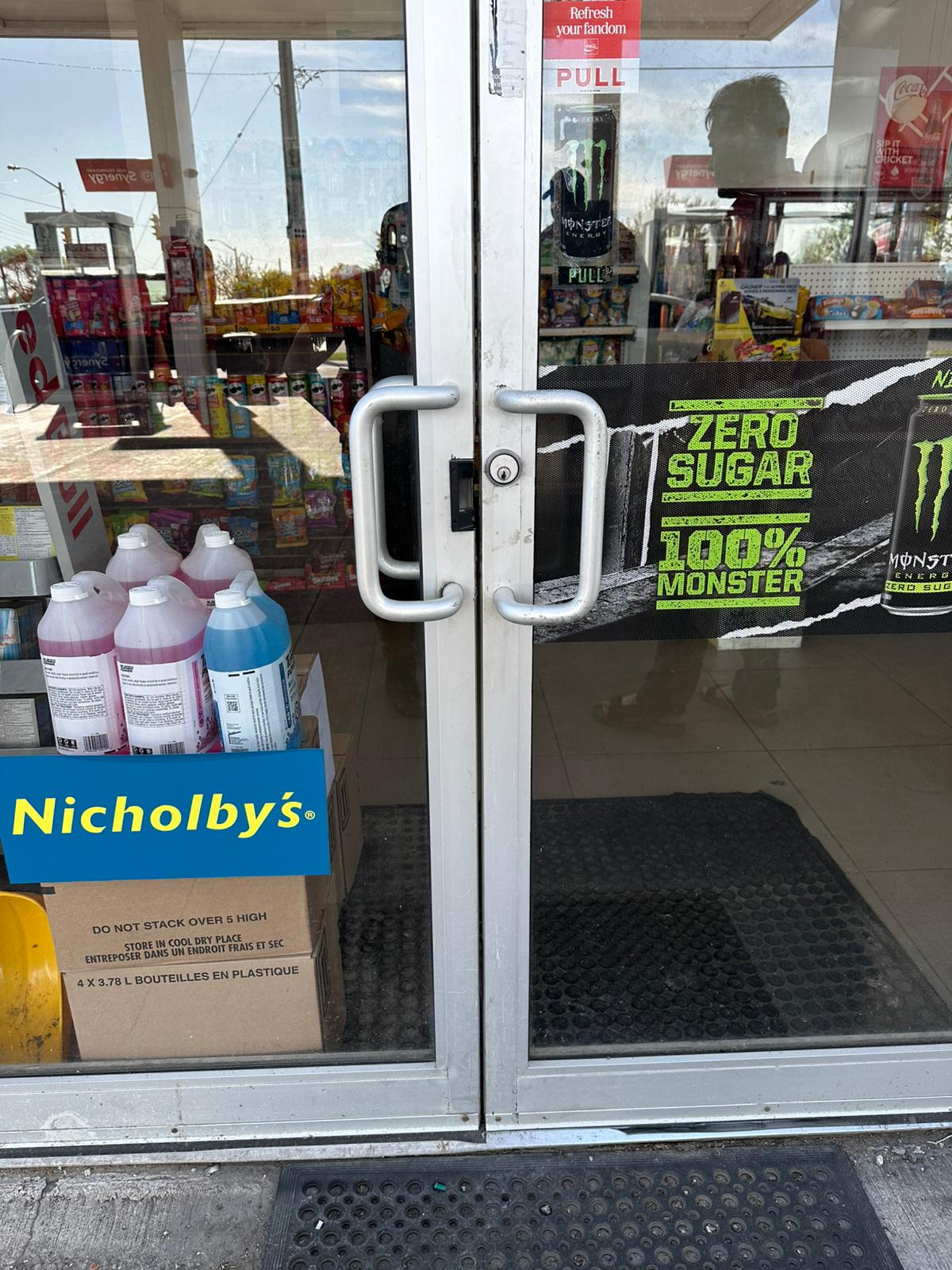
A warehouse door is not a shop door used a few dozen times a day. It is a steel door in a steel frame, opened by people carrying boxes, pushed by pallet trucks, held by wind across a loading yard and slammed hundreds of times a week. Hardware that would last years on an office suite fails in months.
Loading areas add their own problems: overhead doors and dock levellers, a staff door beside them that gets propped every delivery, keys carried by drivers and casual staff, and a yard that is quiet at night and out of sight from any street.
The doors around a loading area fail in predictable ways, and keeping access under control is harder in a building where a lot of people come and go.
Almost every loading area has a standard-size door next to the overhead doors. It is the one that matters most, because it is the one that gets used, propped and forced.
It should close and latch on its own every time. A closer that has lost adjustment, hinges worn by constant slamming, or a door bent near the lock leave a gap where the latch never engages, and staff assume it is locked when it is not. Those faults are the usual reason for a commercial door that will not lock at closing, and the same door in a retail setting is the focus of rear door security for shops and restaurants.
Hardware should suit the traffic: a mortise lock or a heavy-duty cylindrical lock rather than a light lever set, and an exit device where the door is on an exit route.
Overhead sectional doors, roller shutters and dock equipment are usually maintained by a door company rather than a locksmith. What we do work on is the locking hardware associated with them: slide bolts, cane bolts, padlock hasps, chain locks and any cylinder fitted to the door or its operator.
A few practical points. A padlock left in a shutter track will be destroyed the first time someone runs the motor. Hasps fixed with exposed bolts can be removed with a spanner. Chain hoists should be secured so the chain cannot simply be pulled from outside.
Where a door is the only way out of an area, its locking arrangement must not trap anyone inside; see fire door hardware for businesses.
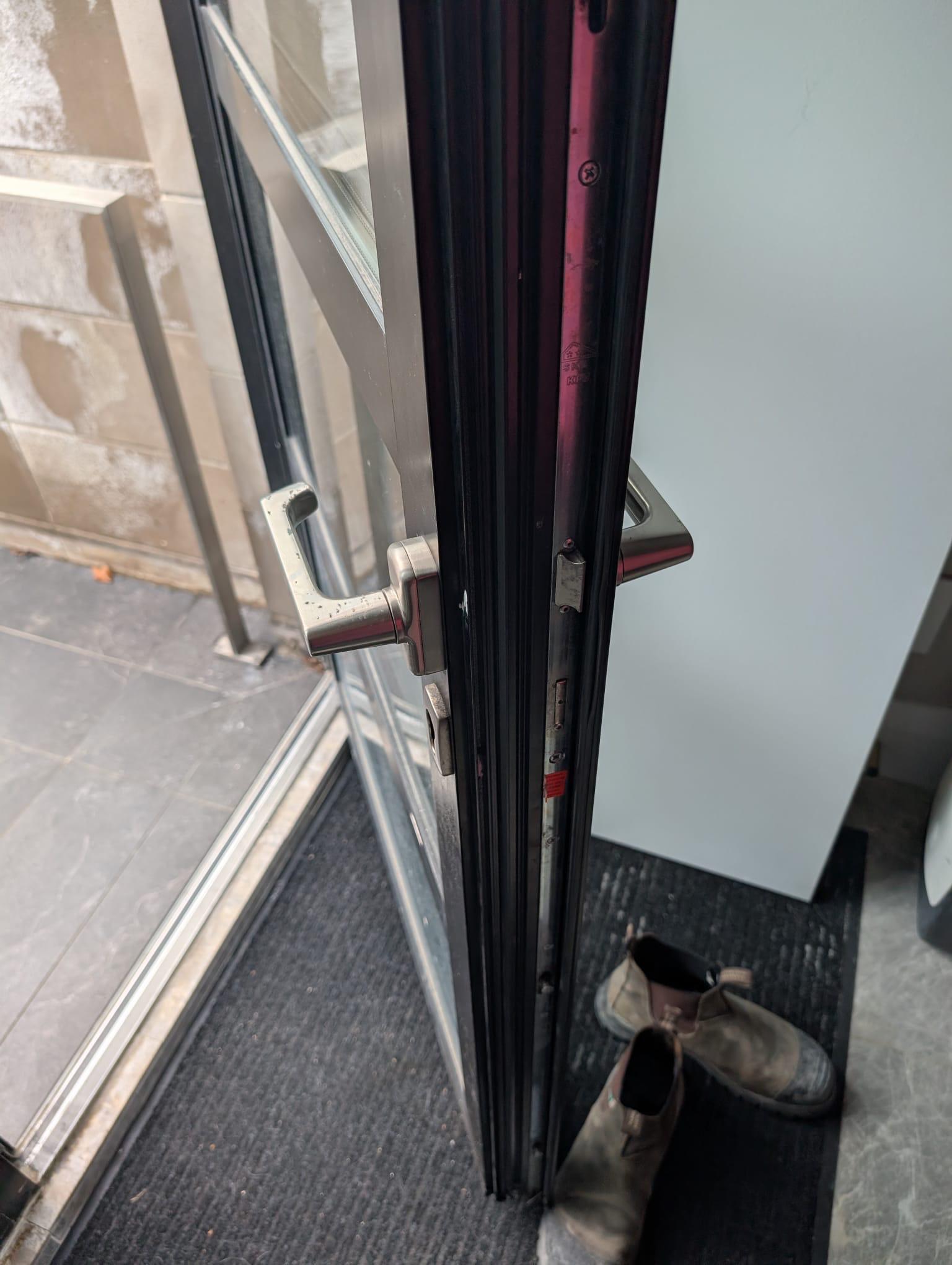
On outward-opening steel doors, the latch sits in the gap between door and frame and can be reached with a pry bar. A latch guard, a steel plate fixed over that gap, is a standard and inexpensive improvement.
Exposed hinge pins on an outward-opening door allow the door to be lifted off; security studs or non-removable pins prevent that. Steel frames that have been bent by trolleys or vehicles need repair before any lock will hold properly.
Frame and strike reinforcement, familiar from side and back door lock repair, applies here at a larger scale.
Warehouses have high staff turnover, agency workers, night shifts and drivers who need access at odd hours. Keys circulate widely, and key control tends to be the weak point rather than the hardware.
A master-key system lets each role open only what it needs: a driver's key for the personnel door, a supervisor's key for the office and stock areas, a manager's key for everything. A key register records who holds each key and when it was issued and returned. When someone goes, the register shows exactly what to recover, and rekeying after an employee leaves handles anything that is missing.
Where keys have been copied freely, a restricted keyway brings copying back under the business's control; see lock grades explained.
Loading doors get propped for the same reasons as restaurant back doors: airflow, repeated trips and hands full of boxes. Wedges and disconnected closers strain the hardware and leave the building open for long periods.
Hold-open devices designed for the purpose, or a closer with a hold-open arm, let a door stay open safely and close properly when released. On a fire door, the hold-open must release on the fire alarm.
If a door is propped every day, treat that as information: the workflow needs a door that stays open at certain times, and the honest fix is hardware that supports it.
Inside the building, cages for high-value stock, tool rooms, server rooms and offices each need their own arrangement. Padlocks and hasps are common on cages, and the hasp and its fixings matter more than the padlock, just as with shed, garage and outbuilding padlocks.
Internal doors on exit routes still have to let people out, even where the area is secured against theft from inside the building.
If a loading door or personnel door has been forced, contact the police first and photograph the damage before repairs. Then secure the opening: repair or replace the damaged hardware, reinforce the strike and frame, and check whether keys were taken.
After forced entry, photographs and an itemized invoice are what the insurer will want from lock repair after a break-in. Ask the technician how the entry was made, so the repair addresses that weakness rather than just restoring what was there.
Doors in constant use benefit from a scheduled check rather than repairs after failures. Closers, latches, exit devices, cylinders, hinges and latch guards all wear, and the cost of adjusting them is small compared with a door that cannot be locked at the end of a shift.
Busy loading doors benefit from an annual door and lock maintenance check at the very least. For a busy site, twice a year usually suits better than annually.
The doors are only part of a loading area. A yard that is dark after the last shift, a gate that is chained rather than locked, and pallets stacked against a fence all make the building easier to approach unseen. None of that is lock work, but it changes how well the locks perform.
Keep the area around personnel doors clear and lit, make sure gates lock rather than merely close, and store pallets and equipment away from fences and walls where they could be used to climb. Gate hasps and padlocks are often the weakest link in a yard, and they need the same attention as shed, garage and outbuilding padlocks.
It also helps to walk the site once with fresh eyes, ideally at the end of a shift when the yard is quiet and the lighting is what it will be overnight. Doors that look fine at ten in the morning tell a different story at seven in the evening, when the last person out is carrying keys, the dock is empty and the nearest occupied building is across the yard. Note which doors are hard to see, which are awkward to lock, and which ones staff avoid using because the hardware is stiff. Those three lists usually point to the work that matters.
When you call, describe the doors, the hardware fitted, which are on exit routes and how the loading area is used. Photographs of both faces of each door and the frame help. Other business door work is handled through our commercial locksmith services.
Keep reading
We work on the locking hardware: slide bolts, cane bolts, hasps, chain locks and any cylinder fitted to the door or its operator. The door itself, its springs, motor and dock equipment are usually a door company's work. Tell us what you need locked and we will explain which parts we handle. Never leave a padlock in a shutter track where the motor could be run, since it will destroy both the lock and the door.
We work on the locking hardware: slide bolts, cane bolts, hasps, chain locks and any cylinder fitted to the door or its operator. The door itself, its springs, motor and dock equipment are usually a door company's work. Tell us what you need locked and we will explain which parts we handle. Never leave a padlock in a shutter track where the motor could be run, since it will destroy both the lock and the door.
Usually the closer, the hinges or the frame rather than the lock. Constant slamming wears hinges, closers lose adjustment, and steel frames get knocked out of line by trolleys and pallet trucks. The result is a door that closes but does not latch, so staff assume it is locked when it is not. Test it by letting it close from fully open without touching it, and have the closer, hinges and strike checked.
It is a steel plate fixed over the gap between an outward-opening door and its frame, covering the latch so it cannot be reached with a pry bar. On steel personnel doors at loading areas it is a standard, inexpensive improvement. It does not change how staff use the door. Pair it with security studs or non-removable hinge pins, since exposed hinges on an outward-opening door are the other common weakness.
A master-key system lets each role open only what it needs: a driver's key for the personnel door, a supervisor's for stock and office areas, a manager's for everything. Keep a register showing who holds each key and when it was issued and returned. Collect keys when people leave, and rekey the affected cylinders when a key cannot be accounted for. Where copies have circulated freely, a restricted keyway brings copying back under your control.
Fit hardware that supports how the door is actually used. A hold-open device designed for the purpose, or a closer with a hold-open arm, lets the door stay open when needed and close properly when released. On a fire door, the hold-open must release when the alarm sounds. Wedges and disconnected closer arms strain the hardware and leave the building open, so treat daily propping as a sign the workflow needs a proper solution.
No, not while anyone is in the building. Exit doors must release with a single motion, without a key or tool, and padlocks, chains and slide bolts defeat that. If the concern is people entering from the yard, the answer is exit hardware with outside key control, a latch guard, a reinforced frame and good lighting. That secures the door from outside while keeping it usable as an exit.
Padlocks and hasps are normal on storage cages, and the hasp and its fixings matter more than the padlock itself: bolts through the frame rather than exposed screws, and a hasp that covers its own fixings when closed. For tool rooms, server rooms and offices, keyed locks within the master-key system usually suit better. Internal doors on exit routes still have to let people out.
For a busy site, twice a year usually works better than annually. A check covers closers, latches, exit devices, cylinders, hinges, latch guards and alignment. Doors used hundreds of times a day wear far reliable than office doors, and most failures give warning: a stiff key, a door needing a push, a latch that sometimes misses. Catching those is much less disruptive than a door that cannot be locked at the end of a shift.
GTA Lockman Mobile Locksmith Services is a mobile locksmith working on homes, businesses and vehicles across Toronto and the GTA, with more than 14 years in the trade. Every review is written by a customer on Google, where you can read them in full.
Areas served: Toronto, North York, Scarborough, Etobicoke, Vaughan, Richmond Hill, Markham, Stouffville, Newmarket, Mississauga, Brampton, Oakville, Milton, Halton Hills, Pickering, Ajax, Whitby, Oshawa, Uxbridge.
Describe the door, hardware and service address. Contact GTA Lockman Mobile Locksmith Services to confirm the scope and scheduling for your location.