Locksmith services are always 10% off for seniors.
Open Mon–Thu 8:30 AM–9 PM, Fri 8:30 AM–4 PM, Sun 9:30 AM–9 PM
Locksmith services are always 10% off for seniors.
Open Mon–Thu 8:30 AM–9 PM, Fri 8:30 AM–4 PM, Sun 9:30 AM–9 PM
GTA Lockman Mobile Locksmith Services · Toronto & GTA
Cover, plug or reinforce the holes old hardware leaves behind, so the door stays strong at the lock.
Related services
Secure a forced door, repair damaged locks and frames, and document the work for your police report and insurer.
Learn moreWhen hardware you already own can move to another door, and when the fit makes that a false economy.
Learn moreChoose compatible front-door hardware with the right fit, operation and finish for the existing opening.
Learn moreWhat a chain, bar or secondary lock adds, what it does not add, and where it must not stop an exit.
Learn moreReplace worn or unsuitable hardware with a lock that fits the door, its function and your access needs.
Learn moreRepairs, rekeying and replacement hardware for homes, condos and apartments, with attention to the whole door.
Learn more
Changing a lock is rarely a clean swap. The new deadbolt has a different backset, the new handleset has a smaller escutcheon, the old mortise lock left a pocket the new tubular latch does not fill, or the previous owner drilled a second deadbolt hole and later removed the lock. What is left is a door with holes in the wrong places.
Those holes are more than a cosmetic problem. A door weakened by extra bores and pockets is easier to split around the lock, and an exposed hole in an exterior door lets in draughts, water and sometimes a hand or tool. Dealing with them properly is part of changing the hardware.
Changing from knob to lever or from one handleset to another. Rose and escutcheon sizes vary, so the new trim may not cover what the old one did.
Changing from a mortise lock to a tubular lock. Older doors often have a deep mortise pocket cut into the edge for a box lock. A tubular latch needs only a small bore, leaving most of the pocket empty.
Moving the deadbolt. A deadbolt moved higher or lower on the door leaves the original bore behind.
Removing a lock altogether. Surface bolts, chains, a second deadbolt added after a break-in, or a keypad that has been taken off all leave holes.
Previous repairs. Doors that have had several locks over the decades can carry three or four generations of holes, some filled and some not.
A door resists forced entry mainly through the material around the lock and the strength of the frame. Every extra hole near the lock edge removes some of that material. A stile cut for a mortise lock, then bored for a tubular lock, then bored again for a deadbolt in a slightly different place can be left with very little solid wood between the holes.
When that door is kicked, it tends to split along the line of the holes rather than holding at the strike. That is why patching should restore strength, not just fill the space, and why a heavily cut door is sometimes better reinforced or replaced than filled once more.
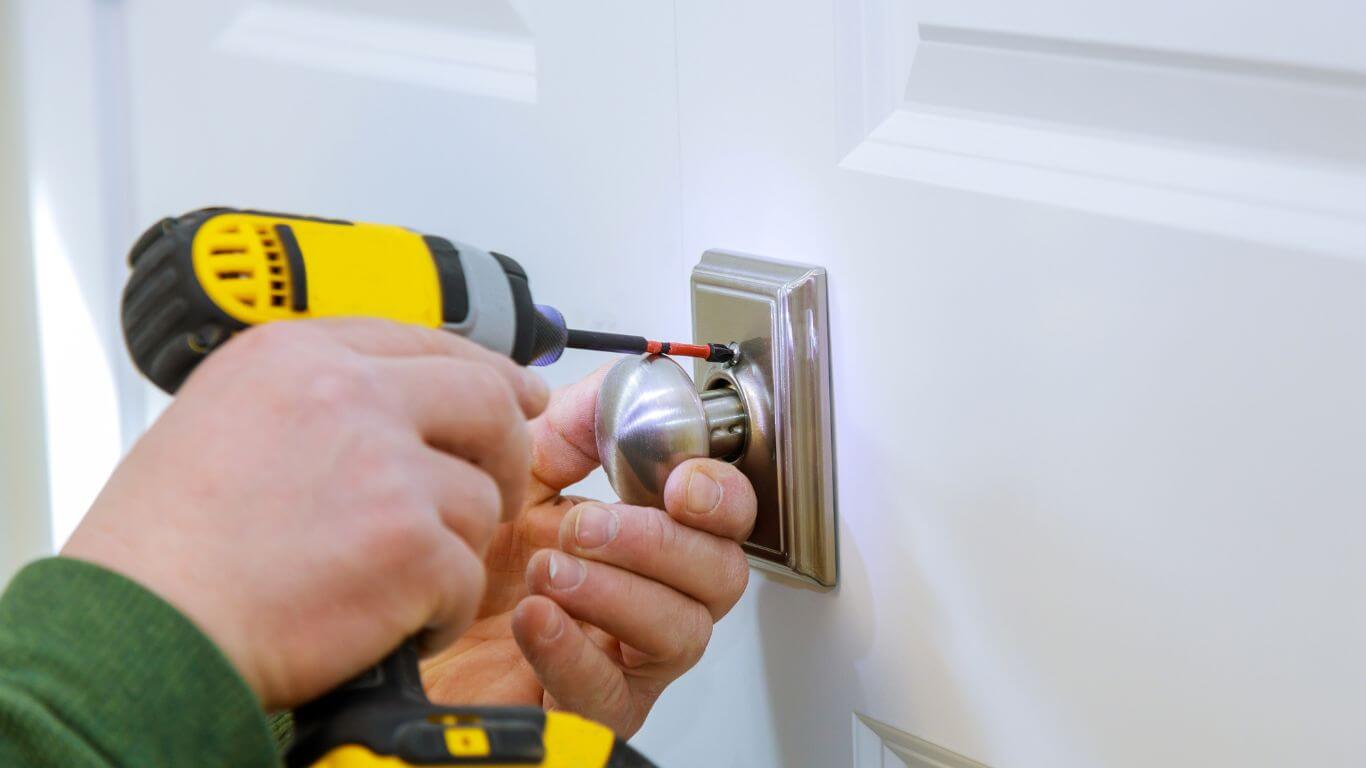
The neatest answer is often hardware designed to cover what is there.
Oversized roses and escutcheons. Larger trim can cover the outline of old hardware and small holes around the new lock.
Handlesets with long plates. A handleset with a tall escutcheon covers a wide area on the face of the door, including an old deadbolt hole in the right position.
Retrofit and conversion plates. Plates made to cover old mortise openings on the face of the door, or to adapt a mortise pocket to take a tubular lock, are available for many common sizes.
Wrap-around door reinforcers. Metal plates that wrap the door edge around the lock cover old damage on the edge and strengthen it at the same time. The same idea is used after forced entry, and a wrap-around plate is often part of lock repair after a break-in.
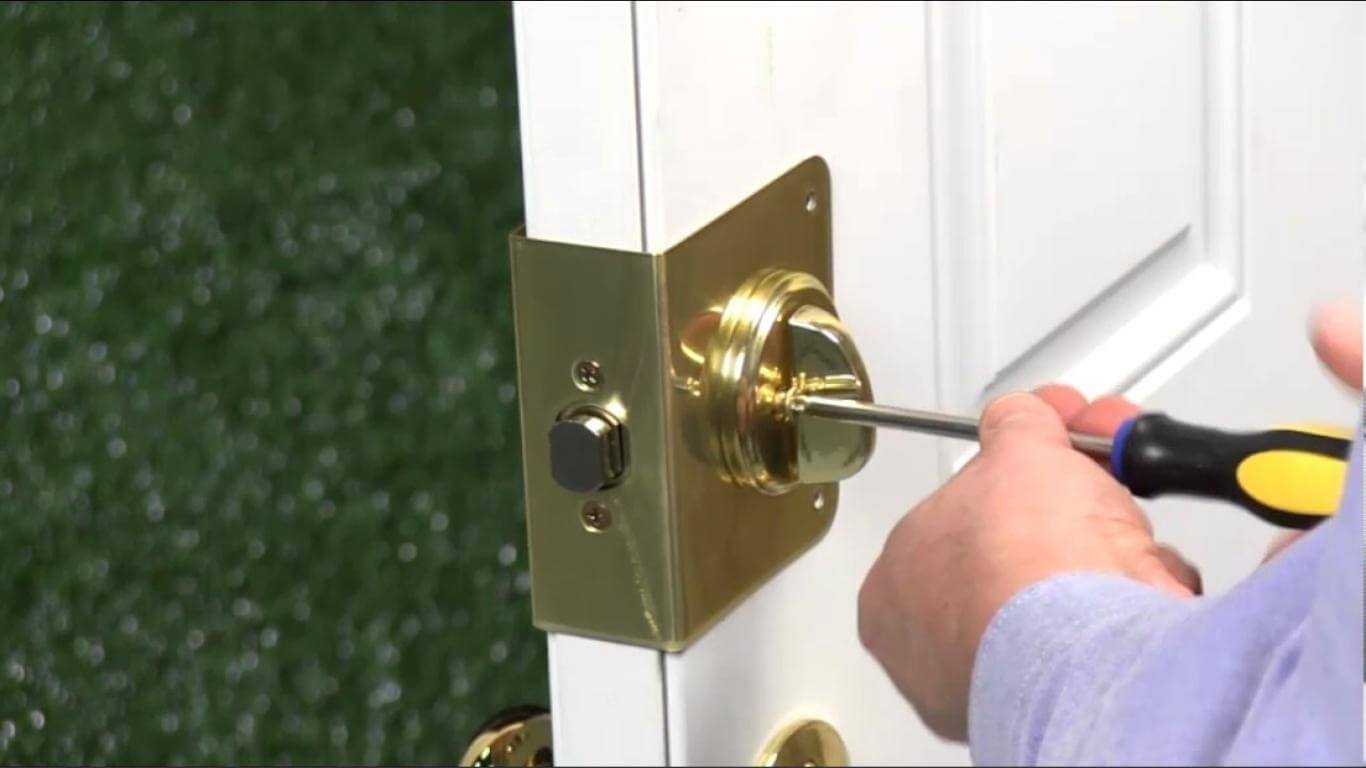
Where hardware cannot cover a hole, it needs to be filled in a way that restores the door rather than simply hiding the gap.
Wood doors. The strongest repair for a bore hole is a glued hardwood plug or dowel of the right diameter, cut flush and finished. A mortise pocket can be filled with a glued block shaped to fit. Filler alone suits small screw holes but has little strength in a larger opening.
Steel doors. Steel doors are usually a thin skin over a foam or wood core. Holes can be covered with a steel plate or filled with a metal-bonding filler for small openings. Larger holes near the lock edge are usually covered with a plate that also reinforces.
Fibreglass doors. Fibreglass skins can be patched with fibreglass repair material or covered with plates. Because the skin is thin, the core behind it matters, and a hole in the lock area may need a block fitted inside before it is sealed.
On any exterior door, the patch has to be sealed against water, especially on the top and edges.
Photos
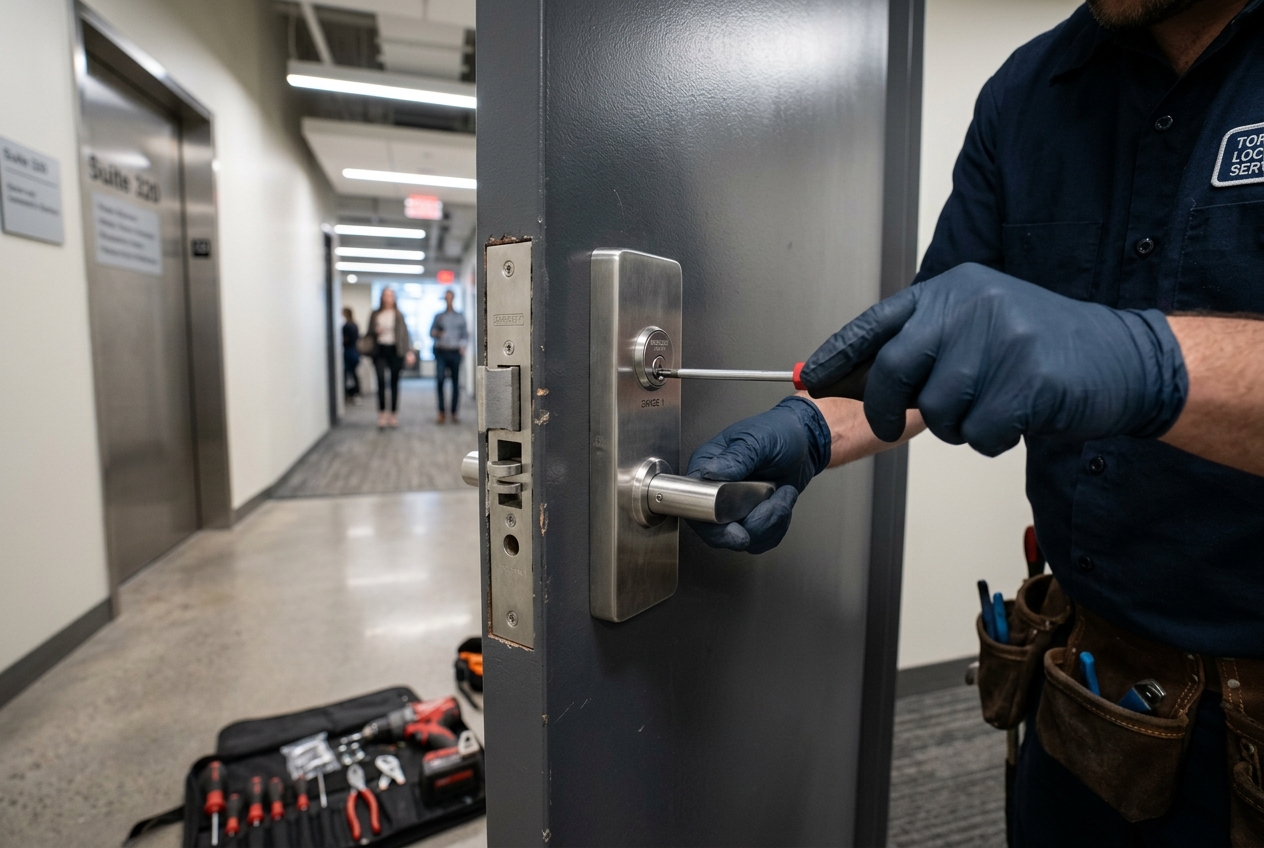
Photographs from GTA Lockman Mobile Locksmith Services work across Toronto and the GTA. Send a picture of your own door and we can tell you what the visit would involve.
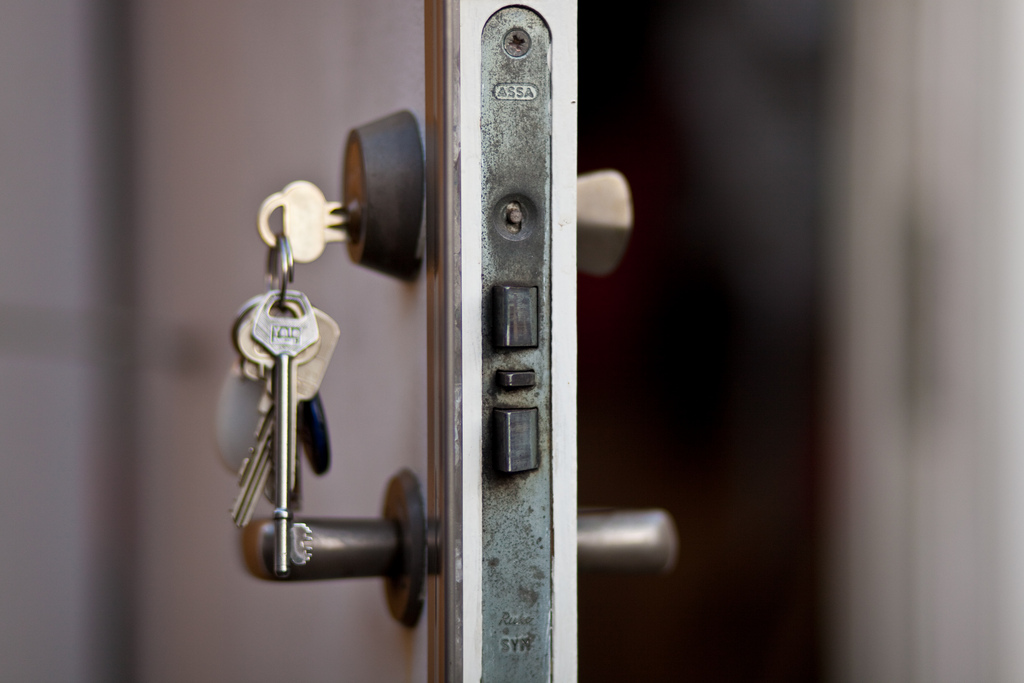
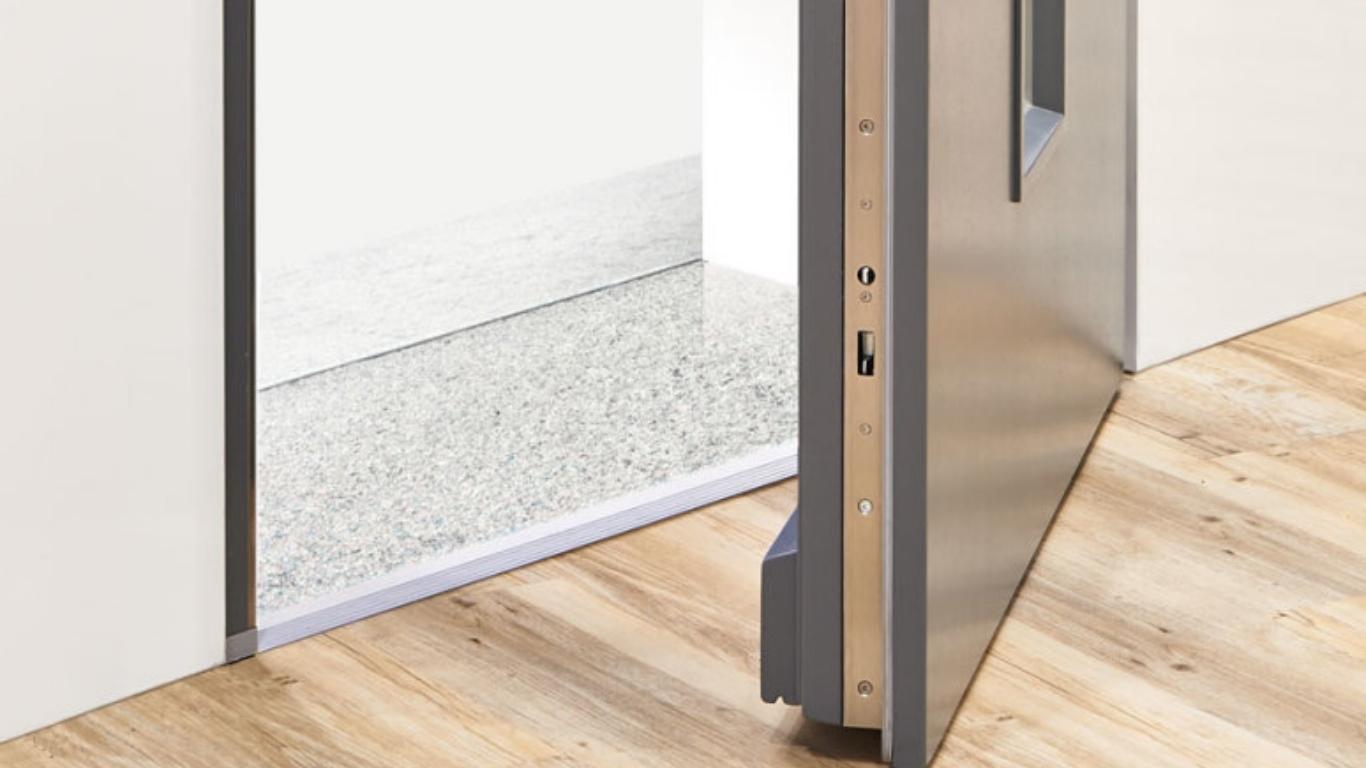
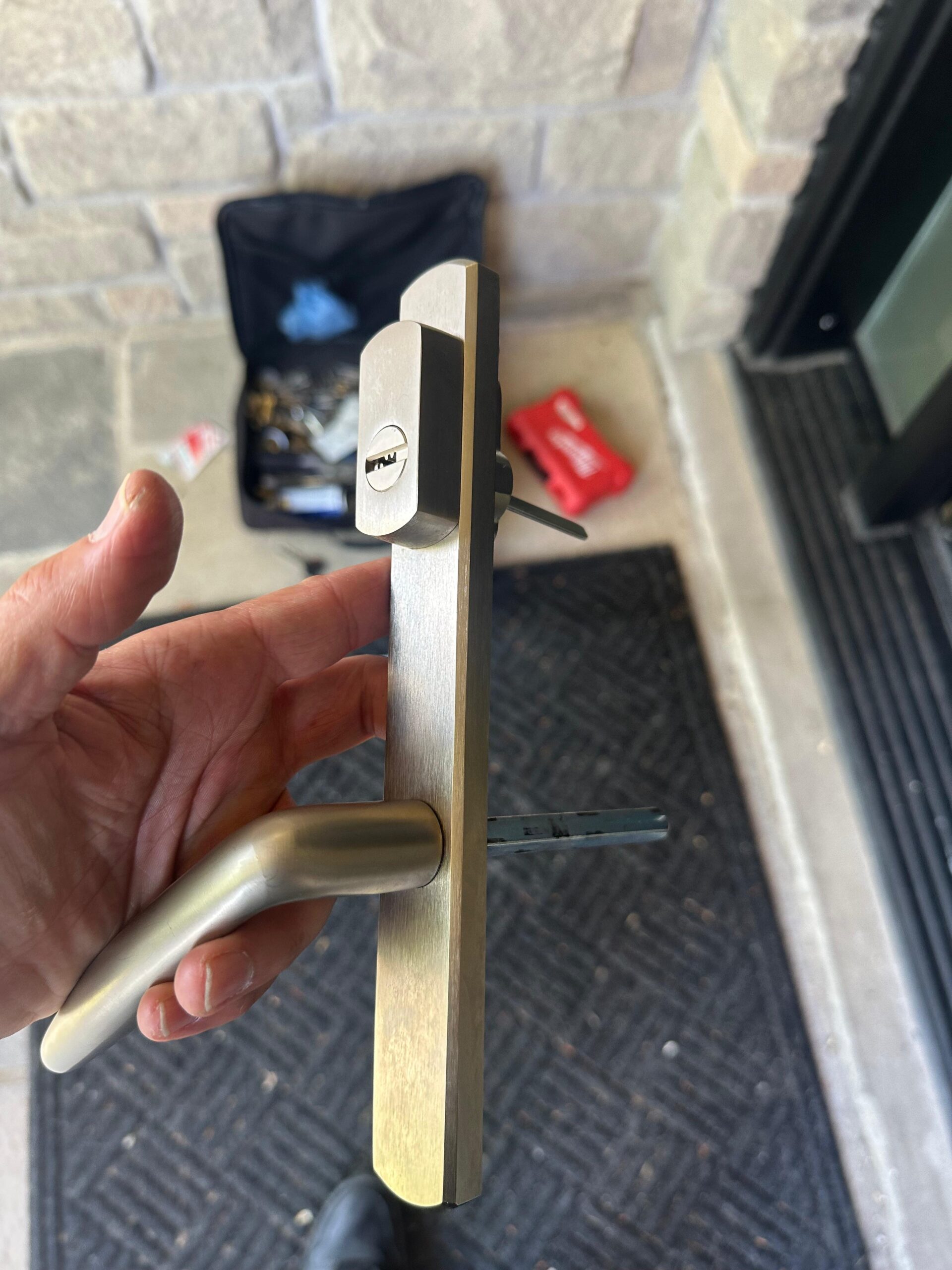
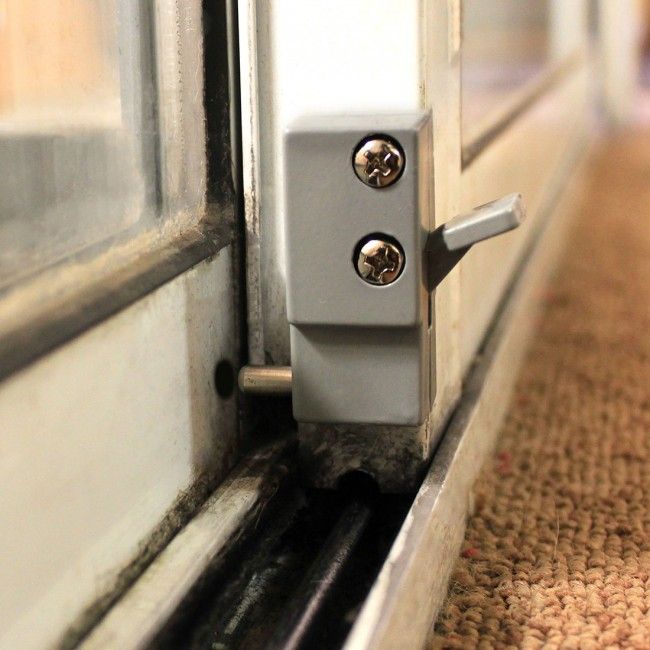
A well-filled hole is only invisible if the finish matches. Painted doors are the easiest: fill, sand, prime and paint the whole face or panel rather than a single patch. Stained or natural-wood doors are harder, because the grain and colour of the plug rarely match exactly; covering the area with hardware is often the neater choice there.
Factory-finished steel and fibreglass doors may need the whole face repainted for a patch to disappear.
Sometimes the honest answer is that the door has been cut too many times. Signs include:
In those cases, a reinforcing plate may keep the door serviceable for a while, but replacing the slab or the door is often the more sensible long-term step. Discussing the options before the new hardware is ordered avoids fitting a good lock to a door that cannot hold it.
The easiest hole to fix is the one that is never made. Before choosing new hardware:
Sound hardware can sometimes go back on the same door, which is the idea behind reusing and moving existing door hardware, and a new lock chosen to fit the old bores keeps front door lock replacement tidy.
Interior doors are usually hollow-core, and holes in them are harder to fill because there is little material behind the skin. For a hollow-core door, covering the hole with larger trim or fitting a solid block inside the door before patching gives a better result than filler alone. A hollow-core door with several large holes is often cheaper to replace than to repair.
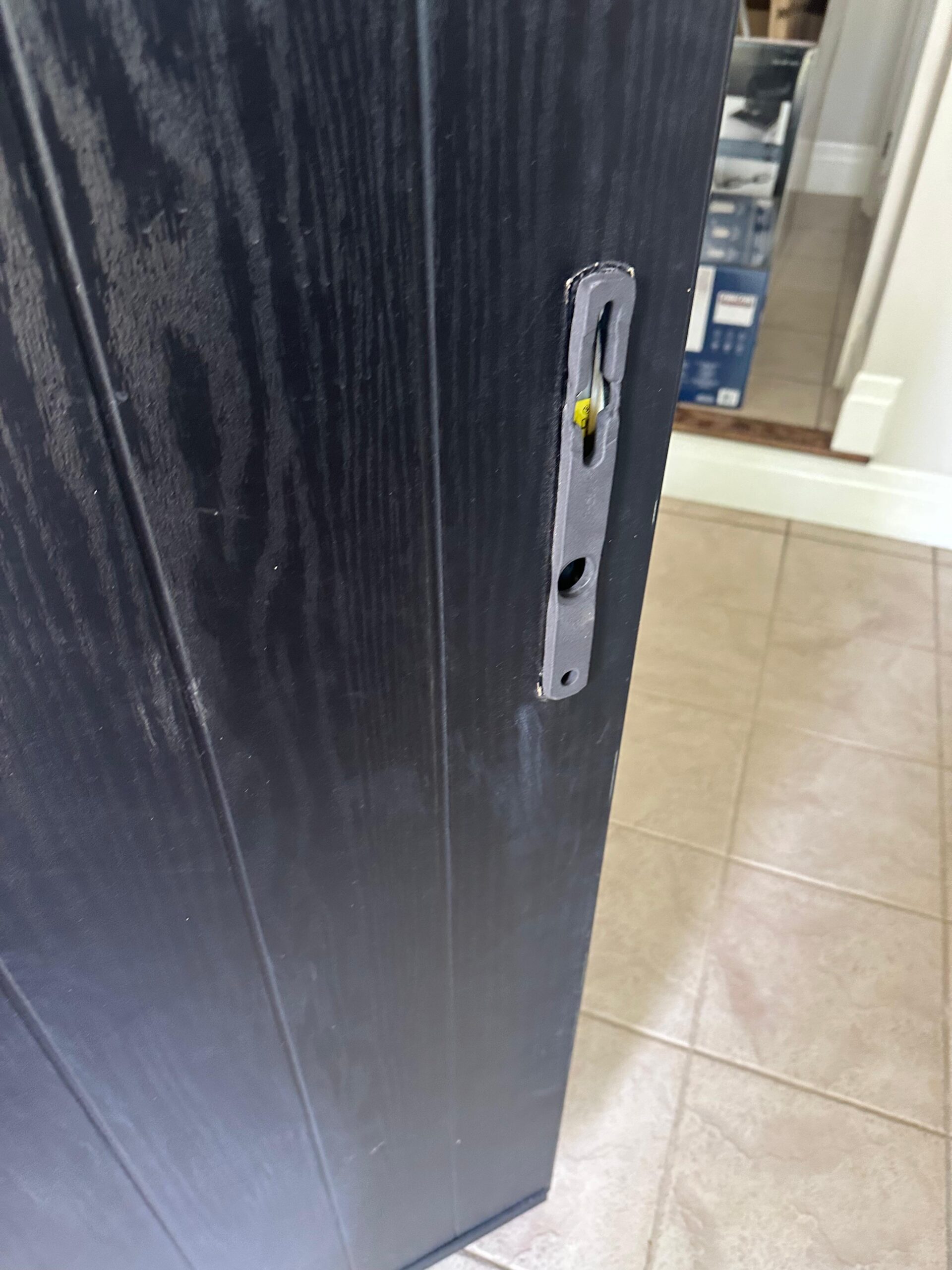
Chains, bars, surface bolts and extra deadbolts are often added in a hurry after a scare and removed later. Their screw holes are small but numerous, and the holes in the frame matter as much as those in the door. Screw holes in the frame near the strike weaken the wood that holds the strike, so they should be filled with glued wood plugs rather than left open or packed with filler. If a secondary lock is being replaced rather than removed, choose a device from door chains and secondary locks that fits the existing screw positions where possible.
The frame side of the door collects holes too. Every strike plate that has been fitted and moved leaves screw holes and sometimes a widened mortise in the jamb. A deadbolt moved up or down leaves an old bolt hole in the frame, and several generations of strikes can leave the jamb weak exactly where the bolt needs to hold.
On the frame, a glued hardwood block let into the jamb gives the new strike solid material. A long reinforced strike plate that spans the old damage and fixes into the framing behind the jamb adds strength at the same time. That matters because a door is only as strong at the lock as the frame the bolt goes into.
A typical case: a 1950s house with a front door originally fitted with a mortise lock, later converted to a tubular knob and deadbolt, with the deadbolt since moved lower. The door now has the old mortise pocket partly filled, two deadbolt bores and several screw holes on the face.
A sensible repair is to fill the old mortise pocket with a glued block, plug the unused deadbolt bore with a hardwood dowel, fit a new handleset whose escutcheon covers the remaining face holes, and fit a wrap-around plate at the deadbolt. The frame gets a new long strike fixed into the framing. The door looks tidy, and it is stronger at the lock than it has been in years.
Electronic deadbolts are often fitted to doors that previously had a different lock, and their outside housings rarely match the old footprint. Some come with adaptor plates for common older preparations. Where the old holes do not suit the new lock, a reinforcing plate that also covers the old bore can keep the door tidy while giving the new deadbolt solid support.
Tell us what hardware is coming off, what is going on, and what the door is made of. Photographs of both faces and the edge of the door, showing any existing holes, help us plan covers, plugs or reinforcement before the new lock goes in.
We will fit the new hardware, cover or fill the old preparation, and reinforce the lock area where the door needs it. Wider changes to the locks are handled as a lock change.
Keep reading
Yes. Every hole near the lock edge removes material that resists forced entry. A door cut for several generations of locks can split along the line of the holes when kicked, rather than holding at the strike.
Yes. Every hole near the lock edge removes material that resists forced entry. A door cut for several generations of locks can split along the line of the holes when kicked, rather than holding at the strike.
A glued hardwood plug or dowel of the right diameter, cut flush and finished. Filler alone is fine for small screw holes but adds little strength in a larger opening.
Often. Larger roses, handlesets with tall escutcheons and retrofit plates are made to cover old preparations. On stained wood doors, covering is usually neater than filling, because a plug rarely matches the grain.
Small holes can be filled with a metal-bonding filler. Larger openings near the lock are usually covered with a steel plate, which also reinforces the lock area.
Yes, with a conversion kit or a glued filler block that lets a tubular lock sit in the old pocket. Alternatively, a current mortise lock with the same dimensions can often go straight into the existing pocket.
When there is little solid material left between old holes, when splits run from the lock towards the edge, or when the door flexes at the lock when pushed. A reinforcing plate may help for a while, but replacement is often the sounder choice.
Yes. Screw holes around the strike weaken the wood that holds it. They should be filled with glued wood plugs so new strike screws have solid material to bite into.
Often. Measuring the backset, bore size and edge preparation before ordering, and choosing hardware that fits the existing preparation, avoids most new drilling.
GTA Lockman Mobile Locksmith Services is a mobile locksmith working on homes, businesses and vehicles across Toronto and the GTA, in the trade since 2010. Every review is written by a customer on Google, where you can read them in full.
Areas served: Toronto, North York, Scarborough, Etobicoke, Vaughan, Richmond Hill, Markham, Stouffville, Newmarket, Mississauga, Brampton, Oakville, Milton, Halton Hills, Pickering, Ajax, Whitby, Oshawa, Uxbridge.
Describe the door, hardware and service address. Contact GTA Lockman Mobile Locksmith Services to confirm the scope and scheduling for your location.