Locksmith services are always 10% off for seniors.
Open Mon–Thu 8:30 AM–9 PM, Fri 8:30 AM–4 PM, Sun 9:30 AM–9 PM
Locksmith services are always 10% off for seniors.
Open Mon–Thu 8:30 AM–9 PM, Fri 8:30 AM–4 PM, Sun 9:30 AM–9 PM
GTA Lockman Mobile Locksmith Services · Toronto & GTA
Why a key that worked for years starts to stick, and when the key rather than the lock is the problem.
Related services
Find out whether the key, the keyway or the cylinder is the problem before forcing a key that will not enter.
Learn moreTrace the broken connection between the cylinder and the bolt or latch, then repair or replace the failed part.
Learn moreDecide how many keys a household needs, where the spare belongs and when a key should be replaced.
Learn moreRemove a snapped key without damaging the cylinder, then find out why the key failed so the next one does not.
Learn moreRekeying answers who holds a key; replacement answers whether the hardware suits the door. Compare both.
Learn moreFind the reason a key sticks, a bolt binds or a latch fails before deciding what needs replacement.
Learn more
Keys look permanent. They are not. A house key is a thin piece of soft metal that gets pushed into a cylinder, twisted against spring pressure and pulled out again, several times a day, for years.
Every one of those cycles takes a little metal off the cuts. The change is invisible week to week and obvious over a decade, and it is why a key that has worked since you moved in starts needing a wiggle, then a particular angle, then two hands.
When a key starts to stick, the cause is usually one of three things: a worn key, a worn lock or a bad copy. Each calls for a different fix, and the wrong diagnosis means replacing hardware that was never the problem.
The cuts on a key are a set of depths. The cylinder reads those depths and lifts each pin to exactly the right height. When the cuts wear down, the pins sit fractionally low, and at some point one of them no longer clears the shear line.
The symptoms follow a recognizable order. The key works but feels less crisp. It needs to be held at a slight angle, or pulled back a fraction, or pushed in firmly. It works in one lock and not another that it used to open. Eventually it works only for the person who has unconsciously learned the trick.
That last stage is a warning worth taking seriously, because the next step is usually the key snapping, often at the worst moment; see broken key extraction from door locks.
A cylinder wears too. Springs weaken, pins shorten, the plug develops play, debris builds up inside.
The tell is that a brand new key, cut from the original code rather than copied, behaves the same way as the old one. If a fresh accurate key is still stiff, the lock is the worn part.
Another sign is inconsistency: the lock works smoothly one day and not the next, or works differently in cold weather. Temperature and moisture affect a worn cylinder much more than a sound one; see frozen or stiff door locks in winter.
Every duplicate is cut by tracing the key in front of it, which means every copy inherits the errors of its parent and adds a little of its own. A copy of a copy of a copy has drifted from the original shape in ways that are hard to see and easy to feel.
This is the single most common reason a newly cut key does not work properly. The blank was fine and the machine was fine; the key it was traced from was already worn.
The fix is to cut from the code or from the original key rather than from whatever is on your ring. If you no longer have an original, a key can often be decoded from the lock itself, producing a key to the shape the cylinder actually wants rather than the shape your current key has drifted to.
A blank has to match the keyway profile, the thickness and the material. Aftermarket blanks vary in quality, and a soft blank wears reliable, which starts the whole cycle again sooner.
Some systems will not duplicate at all without authorization, which is deliberate: a restricted profile is there to control how many keys exist. If your key is marked as not for duplication, the route is through the system holder rather than a machine that happens to have the blank.
This is also where a key that looks identical can behave differently. Two blanks with the same silhouette can differ in the small ways that matter to a tight cylinder.
Photos
Photographs from GTA Lockman Mobile Locksmith Services work across Toronto and the GTA. Send a picture of your own door and we can tell you what the visit would involve.
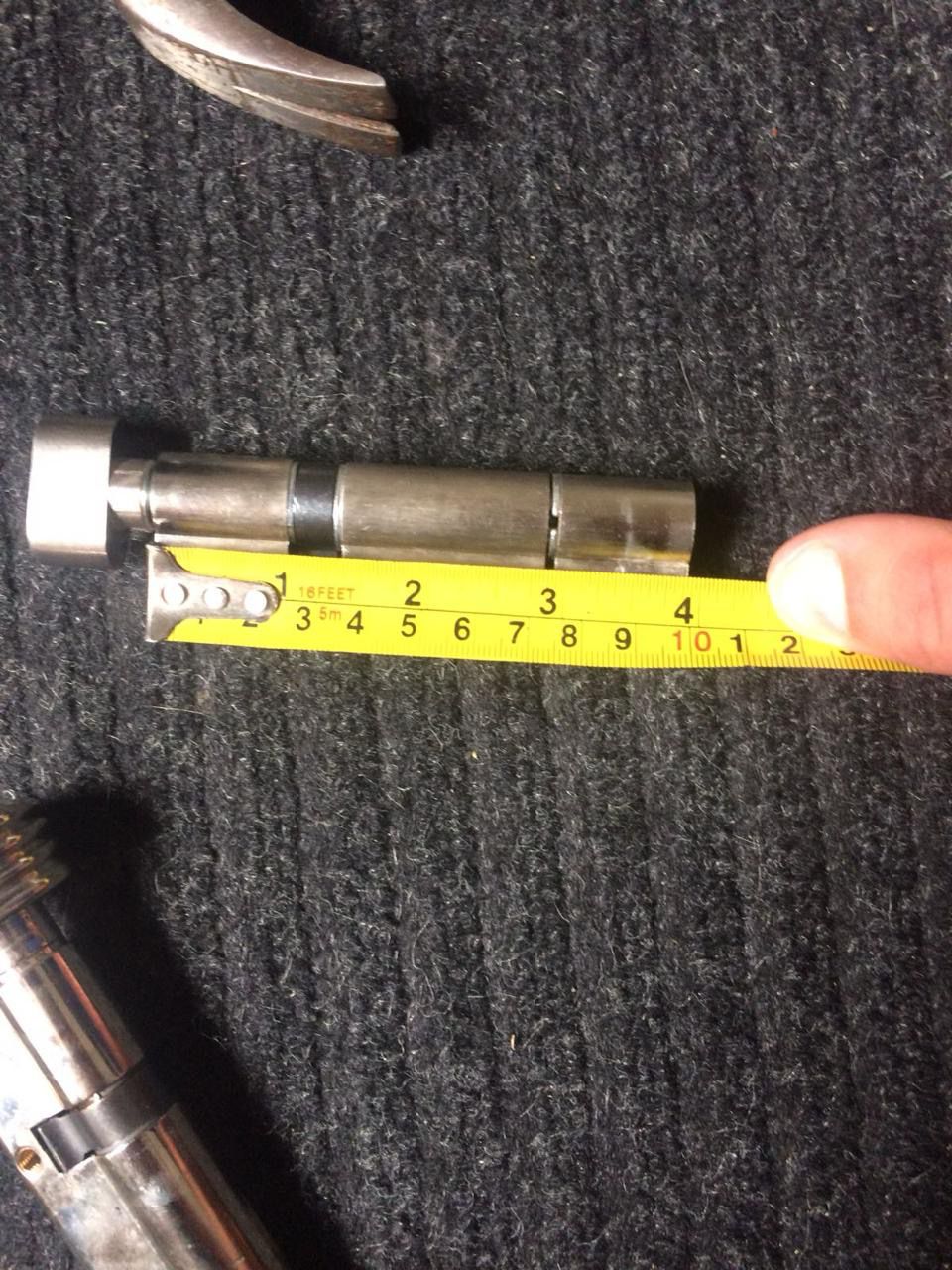
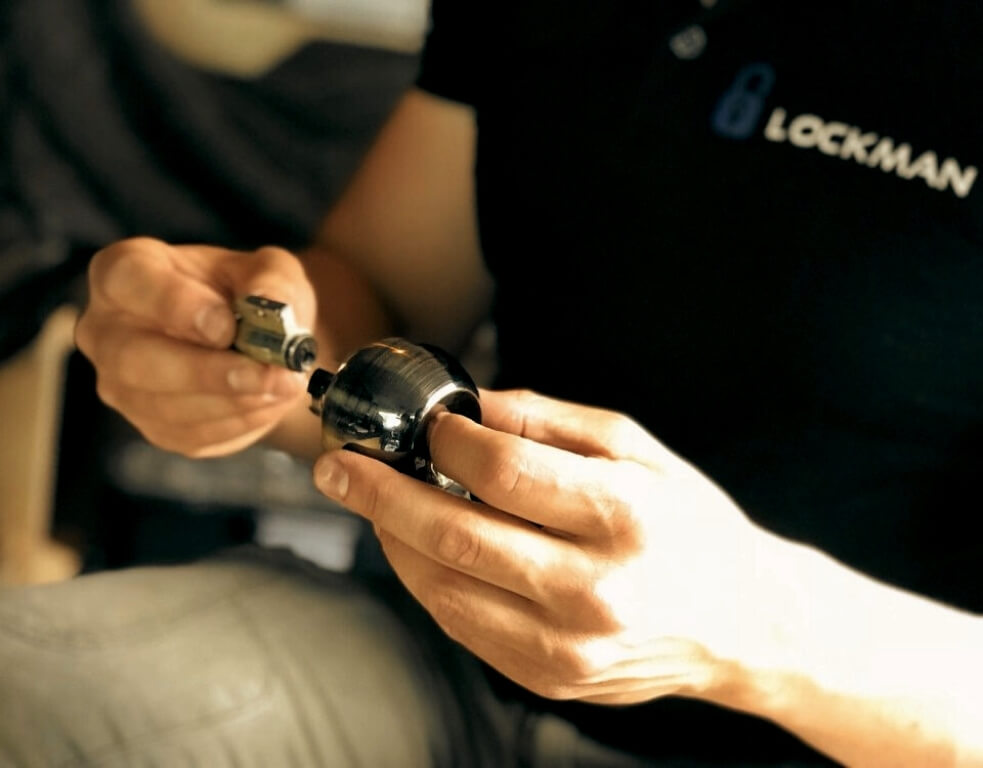
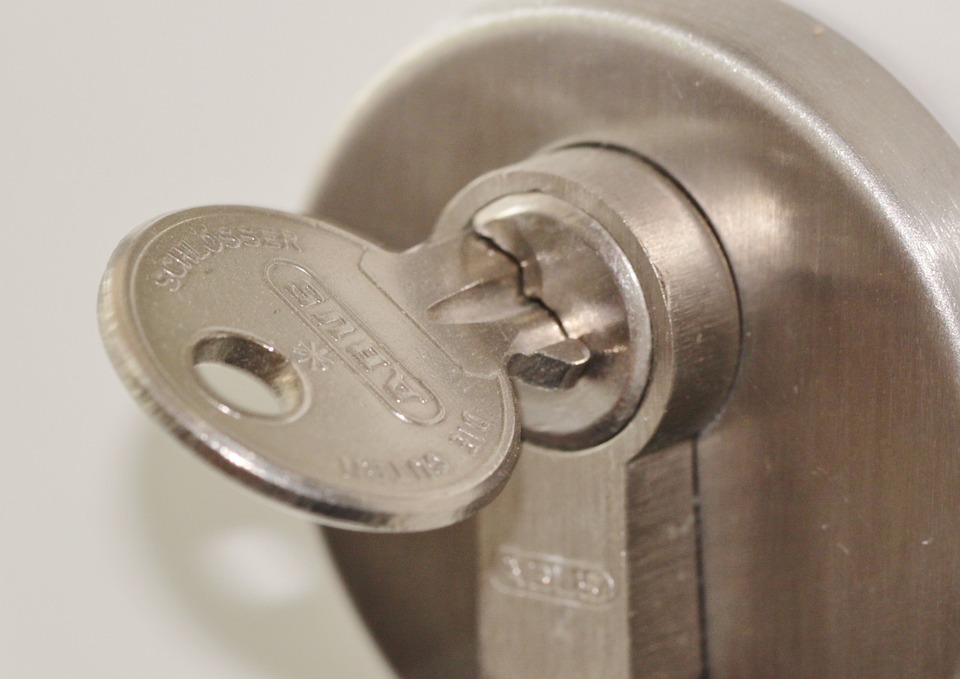
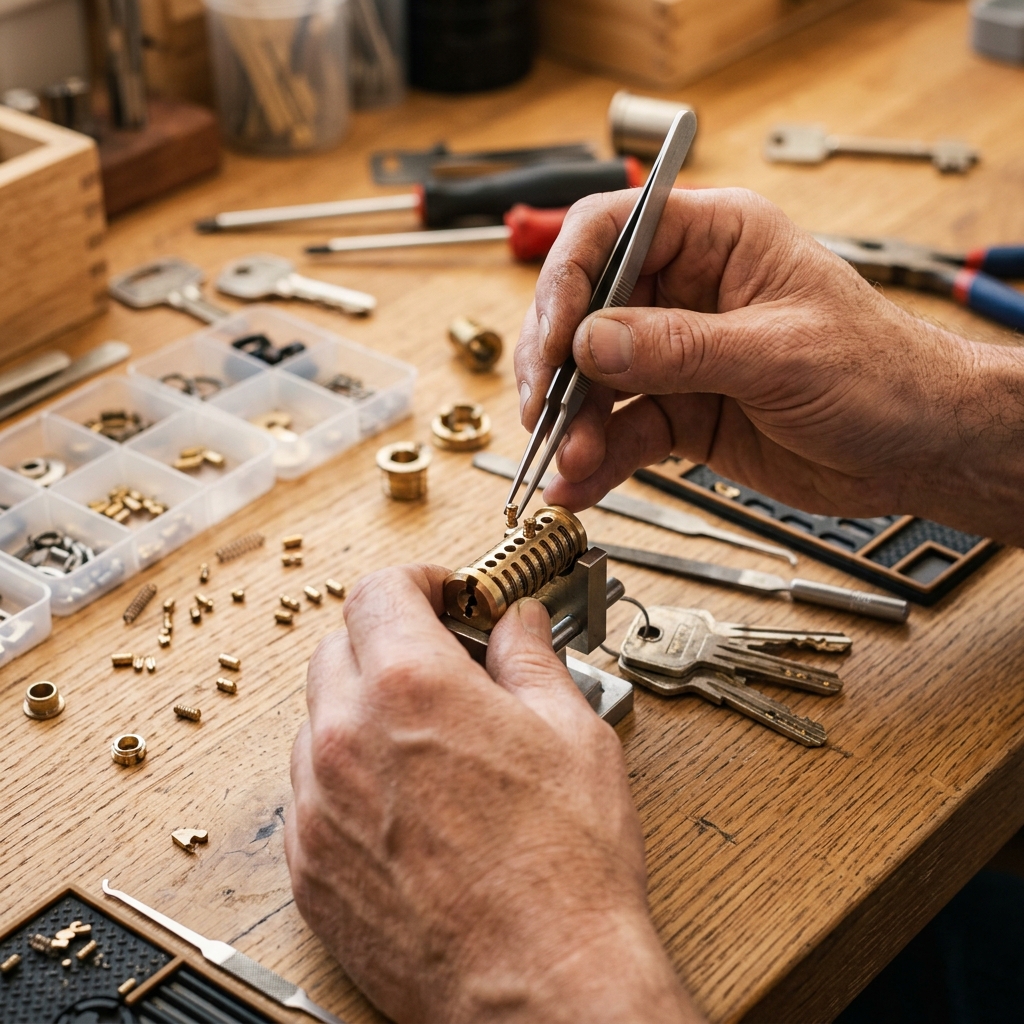
Before replacing keys or cylinders, rule out the door, because door problems imitate key problems closely.
If the key turns but the bolt will not extend, or you have to lift or lean on the door before it will lock, the lock is fighting misalignment rather than a bad key. If the key only sticks when the door is closed and works perfectly when it is open, that is alignment, not wear; see key turns but the door will not unlock and key will not go into the lock.
Doing the alignment work first often makes the key feel new again.
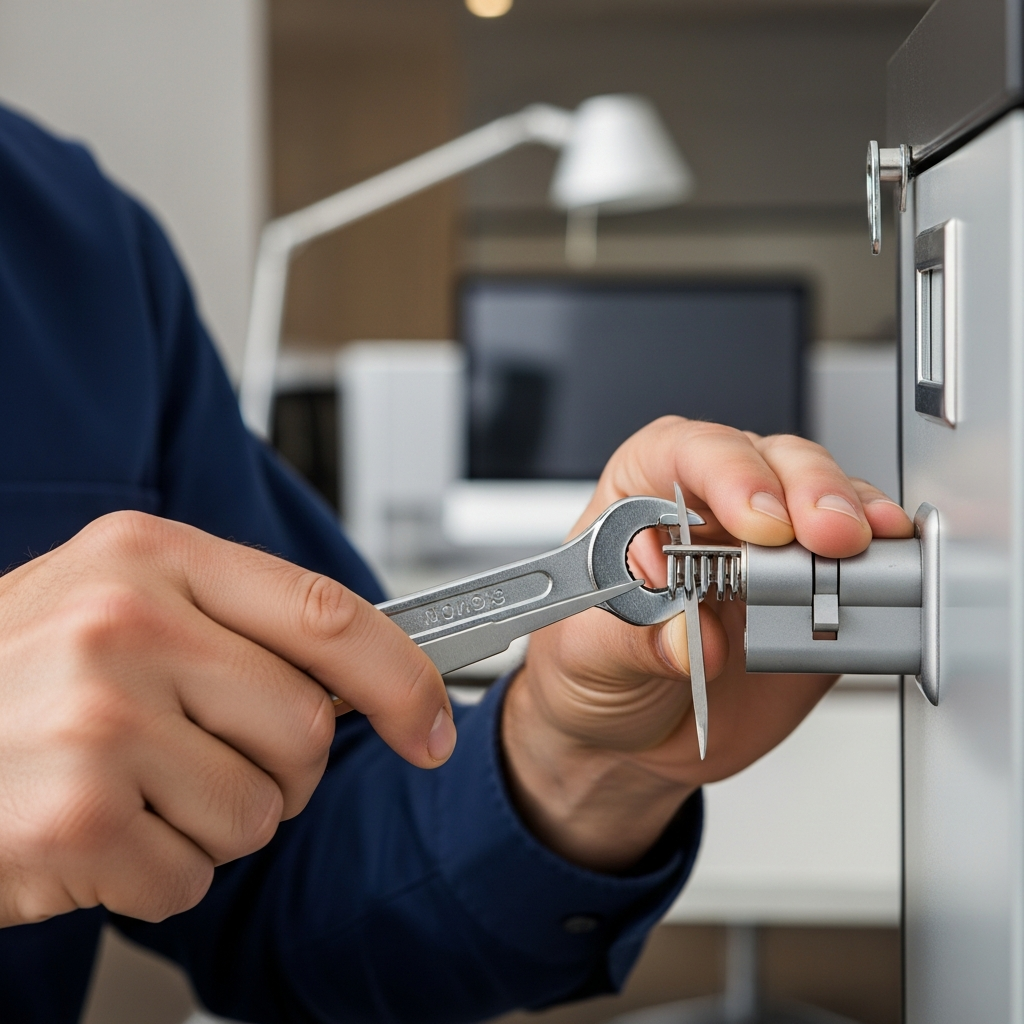
If a fresh key cut from the code works smoothly, replace the keys and keep the lock. Cut enough for the household at the same time so everyone is carrying the same accurate shape rather than a mixture.
If a fresh key is still stiff, service or replace the cylinder. On most doors that is a cylinder change rather than a whole lock, keeping the handles and the rest of the hardware.
If the cylinder is being changed anyway, it is a natural moment to decide whether the same key should operate other doors, and whether the number of keys in circulation is still right; see rekey or replace: how to decide and spare keys: how many and where to keep them.
Keys live hard. They share a ring with a car fob and a bottle opener, sit in pockets with coins, get used to open packages and lever things.
A key that is visibly bent should be retired, not straightened; bending work-hardens the metal and is how keys snap. A key with a cracked head is finished. Keys kept on a ring with heavy objects wear the cylinder as well as themselves, because the weight hangs off the plug every time the door is unlocked, which matters most on ignition-style and lightweight cylinders.
The least disruptive moment to deal with a worn key is while it still works. Once it has stopped, the same job happens with the added problem of being outside the door; see after a lockout: preventing the next one.
If any key in your household needs a technique, treat that as the professional. Have a proper key cut from the code, test it in every lock it should open, and retire the tired ones.
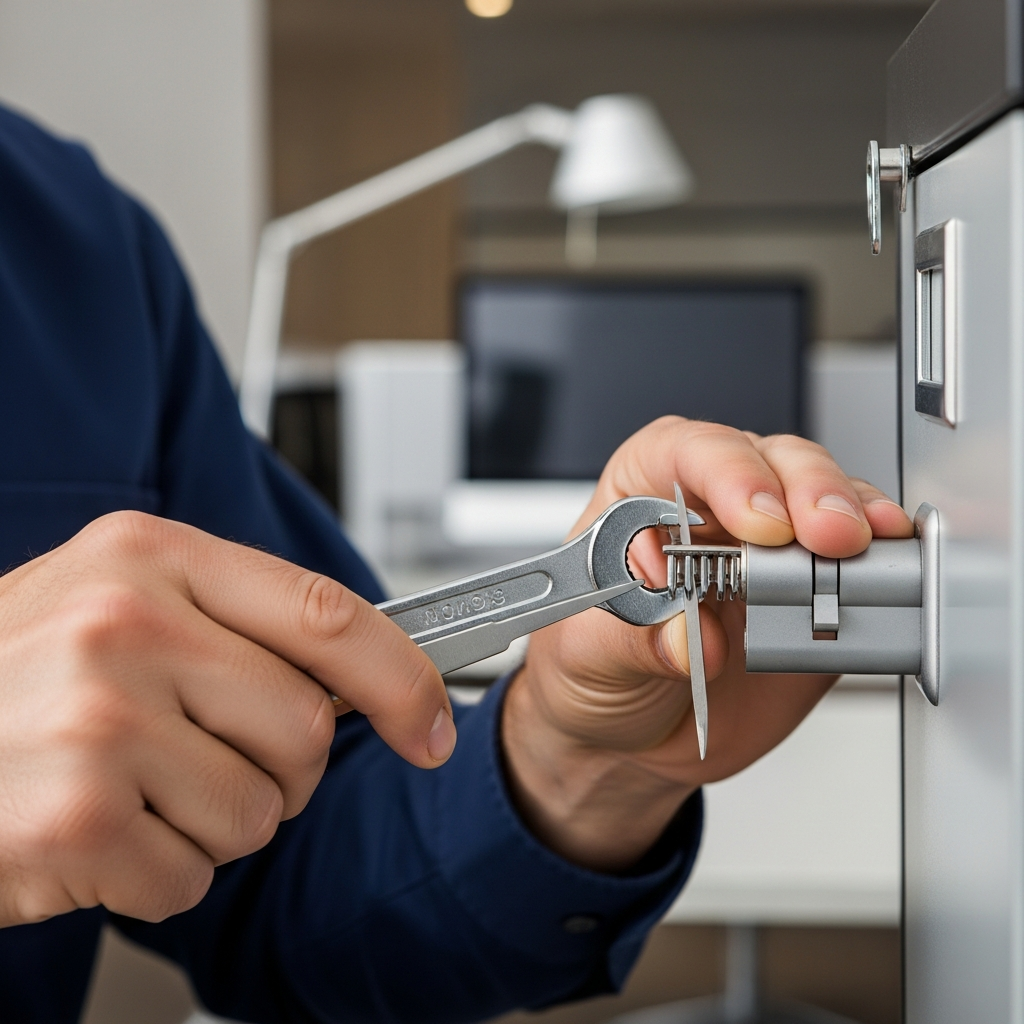
A worn key and a cold morning are a bad combination. Metal contracts slightly, lubricant thickens, and moisture that has found its way into a cylinder freezes in the small clearances a worn key depends on.
That is why a key many people describe as fine all summer becomes a two-handed job in January. The wear was already there; the cold removed the margin that was hiding it.
The practical reading is that a key which struggles in winter is showing you a problem you will have all year, and that a lock which only misbehaves below freezing may simply be holding moisture. Neither is solved by force, and forcing a cold cylinder is one of the more common ways a key snaps.
If a household key is already needing technique, deal with it before the first hard frost rather than during it.
A worn key and a cold morning are a poor combination. Metal contracts slightly, lubricant thickens, and moisture in the cylinder freezes in the small clearances a worn key depends on.
That is why a key many people describe as fine all summer becomes a two-handed job in January. The wear was already there; the cold removed the margin that was hiding it.
The practical reading is that a key which struggles in winter is showing you a problem you have all year, and that a lock misbehaving only below freezing may simply be holding moisture. Neither is solved by force, and forcing a cold cylinder is a common way to snap a key.
If a household key already needs technique, deal with it before the first hard frost rather than during it.
Tell us how the key behaves, whether it is the same in every lock, whether the door needs lifting, and whether any of your keys are copies of copies. Bring the key that works most smoothly and the one that gives the most trouble, because comparing them is often the quickest diagnosis.
For a lock that is stiff for other reasons, see lock repair in Toronto and the GTA.
Keep reading
Cut a fresh key from the code rather than copying your current one, and try it. If the new key works smoothly, the old key had worn and the lock is fine. If the new key is still stiff, the cylinder is the worn part. That one test separates the two cases and takes far less time than guessing.
Cut a fresh key from the code rather than copying your current one, and try it. If the new key works smoothly, the old key had worn and the lock is fine. If the new key is still stiff, the cylinder is the worn part. That one test separates the two cases and takes far less time than guessing.
Because it was traced from a key that had already worn. Every duplicate inherits the errors of the key in front of it and adds a little of its own, so a copy of a copy has drifted from the original shape. Cutting from the code, or decoding the lock itself, produces a key to the shape the cylinder actually wants.
Usually yes. A key can often be decoded from the cylinder, which produces an accurate key even when every key you hold is worn. That is frequently the better option anyway, because it resets the household to the correct shape instead of copying the drift.
Not as an ordinary duplicate. Markings like that usually indicate a restricted or controlled system where the number of keys is deliberately limited, and additional keys come through the system holder with authorization. That control is the point of the system; if it could be copied at any machine it would not be doing anything.
That is a classic sign of key wear. The two cylinders have slightly different tolerances, so the worn key still clears one and no longer clears the other. It is a warning stage: the next step is usually the key failing in both, or snapping.
No, that is alignment. If the key works perfectly with the door open and fights you when it is closed, the bolt is being loaded by a door or frame that has moved. Cutting new keys will not help. Adjusting the door, the strike or the hinges usually makes the key feel new again.
No, retire it. Bending work-hardens the metal, and a key that has been bent and straightened is on its way to snapping inside a cylinder. The same applies to a key with a crack in the head. Replacing a key costs a fraction of extracting one.
Enough that everyone in the household carries the same accurate key rather than a mixture of old and new, and one spare held somewhere reachable. It is also a sensible moment to count how many keys exist in total and whether that number still reflects who should have access.
GTA Lockman Mobile Locksmith Services is a mobile locksmith working on homes, businesses and vehicles across Toronto and the GTA, with more than 14 years in the trade. Every review is written by a customer on Google, where you can read them in full.
Areas served: Toronto, North York, Scarborough, Etobicoke, Vaughan, Richmond Hill, Markham, Stouffville, Newmarket, Mississauga, Brampton, Oakville, Milton, Halton Hills, Pickering, Ajax, Whitby, Oshawa, Uxbridge.
Describe the door, hardware and service address. Contact GTA Lockman Mobile Locksmith Services to confirm the scope and scheduling for your location.