Locksmith services are always 10% off for seniors.
Open Mon–Thu 8:30 AM–9 PM, Fri 8:30 AM–4 PM, Sun 9:30 AM–9 PM
Locksmith services are always 10% off for seniors.
Open Mon–Thu 8:30 AM–9 PM, Fri 8:30 AM–4 PM, Sun 9:30 AM–9 PM
GTA Lockman Mobile Locksmith Services · Toronto & GTA
Work out what actually caused the lockout, then change the one or two things that make it likely to repeat.
Related services
Authorized entry to your home, followed by a look at why the lockout happened and whether the lock needs attention.
Learn moreDecide how many keys a household needs, where the spare belongs and when a key should be replaced.
Learn moreSet up a key safe that carers can use daily without the code becoming a permanent way into the home.
Learn moreFind out whether the key, the keyway or the cylinder is the problem before forcing a key that will not enter.
Learn moreDecide who can enter your home, use codes or keys that can be withdrawn, and keep a record you can check.
Learn moreRepairs, rekeying and replacement hardware for homes, condos and apartments, with attention to the whole door.
Learn more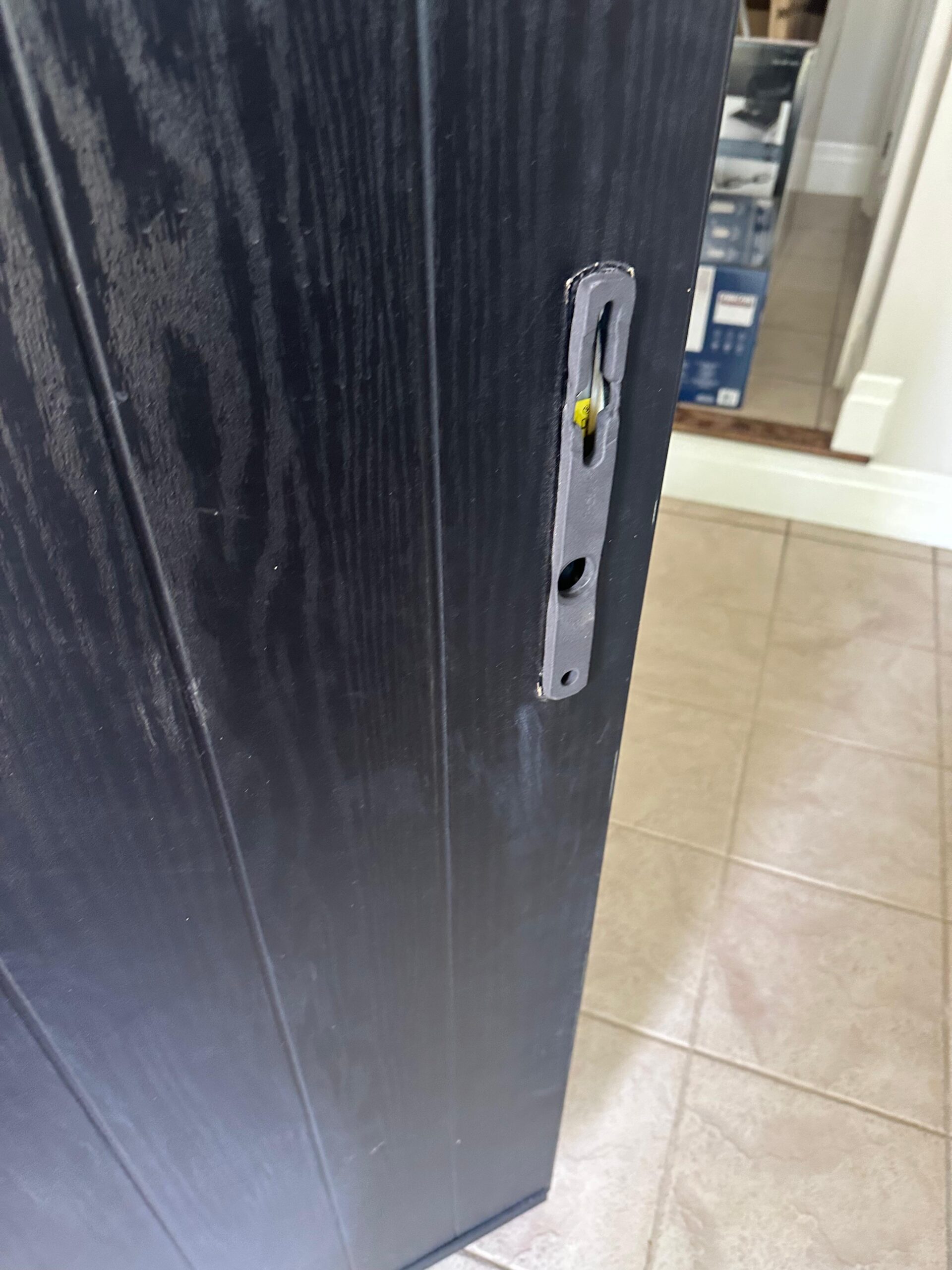
Once you are back inside, the temptation is to treat the whole thing as bad luck and forget it. That is usually a mistake, because most lockouts are not luck. They come from one of a small number of causes, and each has a fix that takes an afternoon at most.
That afternoon is well spent working out what actually happened, and changing the one or two things that make it likely to happen again.
There are four common patterns, and they need different responses.
The door locked behind you while the keys were inside. This is a hardware and habit problem, and it is the easiest to design out.
You had keys but could not use them. The key would not turn, the cylinder was seized, the key broke. That is a maintenance problem, and the lock was almost certainly warning you beforehand; see key will not go into the lock.
You lost the keys. That is a key-control problem, and it may mean more than getting back inside; see lock changes after lost keys.
The lock or door failed outright. A latch that no longer retracts, a multipoint that jammed, a smart lock that stopped responding. That is a repair, and it will repeat until the cause is addressed.
Deciding which one you had takes a minute and determines everything that follows.
Self-locking doors cause more lockouts than any other single thing. A door that locks whenever it closes will eventually close while your keys are on the kitchen counter.
The options are ordinary. Change the function so the door does not lock unless you lock it. Fit a keypad or smart deadbolt so a code gets you in when a key does not; see keypad lock installation for homes. Arrange a spare with someone nearby. Or fit a key safe, mounted and sited properly, so there is a physical spare that does not live under a mat; see key safes for home care visits.
Which of these suits depends on the household. A family with children coming home from school has different needs from a single occupant who travels.
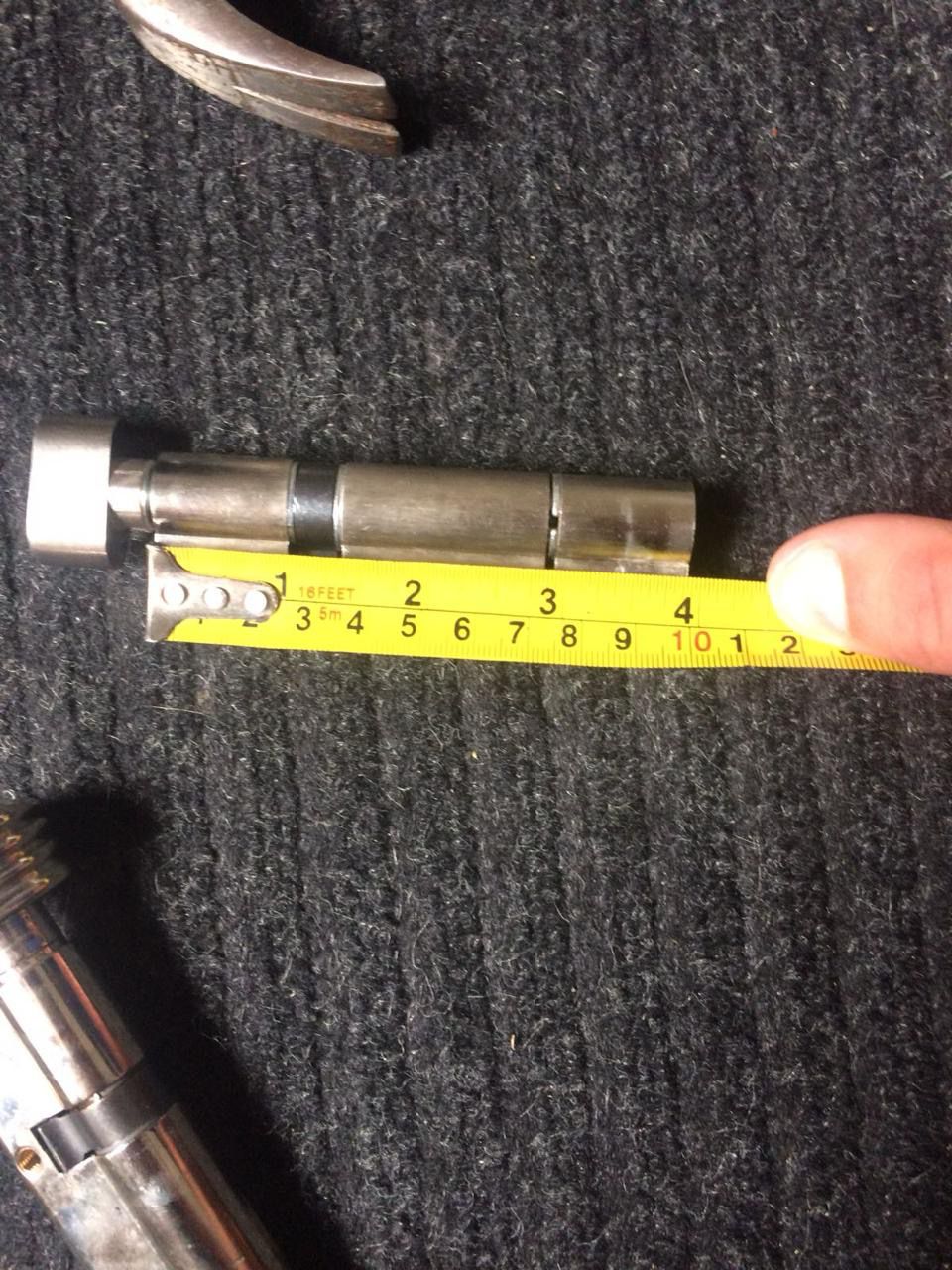
A key that had been getting stiff, needed jiggling, or only worked at one angle was telling you something. Ignoring that is how a routine morning turns into standing outside.
Stiffness usually comes from wear in the key, wear in the cylinder, debris, or a door that has dropped so the bolt is under load. Each of those is repairable, and all of them are cheaper to deal with before the key snaps; see worn keys and poor key copies and broken key extraction.
If a key broke this time, replacing that one key is not the whole job. A key that snapped was already fatigued, and its twins in other pockets are the same age.
Most households have spares. Fewer have spares that are actually reachable during a lockout, which is the only moment they matter.
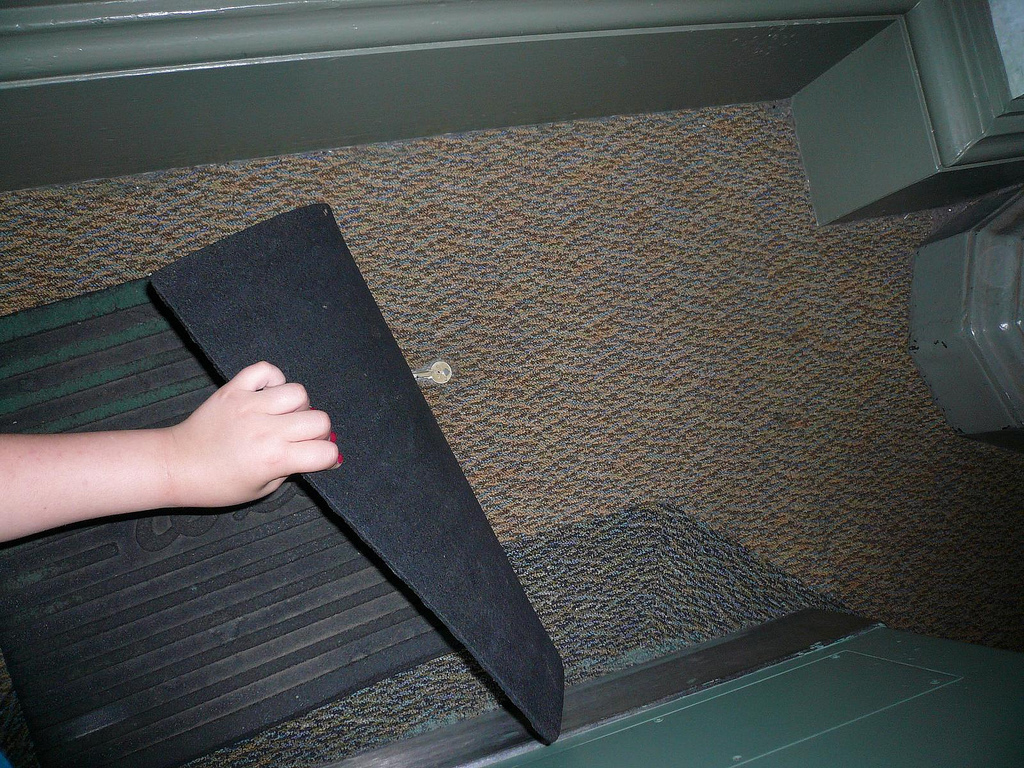
A spare in a kitchen drawer inside the locked house is decoration. A spare with a neighbour, a relative nearby, or in a mounted key safe is a plan. A spare hidden outside under a stone is a well-known hiding place that anyone who has ever locked themselves out already knows about.
Decide how many spares exist, who holds each one, and how you would reach one at nine on a Sunday evening. Write it down somewhere that is not inside the house. The arithmetic is simple once you have decided spare keys: how many and where to keep them.
A keypad removes the physical key from the equation, which solves the classic lockout neatly. It introduces two new questions: whether the batteries are maintained, and whether everyone who needs the code has it.
A phone-based lock adds a third: what happens when the phone is dead, lost or inside. Every electronic lock should have a backup that works when the electronics do not, and you should know what yours is before you need it; see smart lock repair and troubleshooting.
None of that is an argument against them. It is an argument for choosing the backup deliberately rather than discovering it does not exist.
Lockouts cluster around changes in routine. A child who has just started letting themselves in. A parent whose memory has changed. A new roommate. A house guest staying for a month. A cleaner or dog walker with a key arrangement nobody has reviewed in two years; see keys for cleaners, nannies and dog walkers.
When the household changes, walk through the access arrangements once. Who has a key, who has a code, what happens if one of them is not reachable.
A door that has dropped, swollen or shifted puts load on the bolt every time it is thrown. That load is what wears cylinders, bends keys and eventually leaves you outside.
Look for a latch that only catches when you lift the door, a bolt you have to push against, a gap that has changed shape, or a strike plate with bright metal marks where the bolt has been rubbing. Those are all fixable, and fixing them removes a whole category of future lockouts.
Test every key you own in every lock it belongs to, including the ones you never use. Replace any key that sticks. Confirm where each spare is and that you could reach it. Check the batteries in anything electronic. Make sure one person outside the household could let you in if everything went wrong at once.
That is an hour of work, and it is the difference between a lockout being an inconvenience and a lockout being an evening.
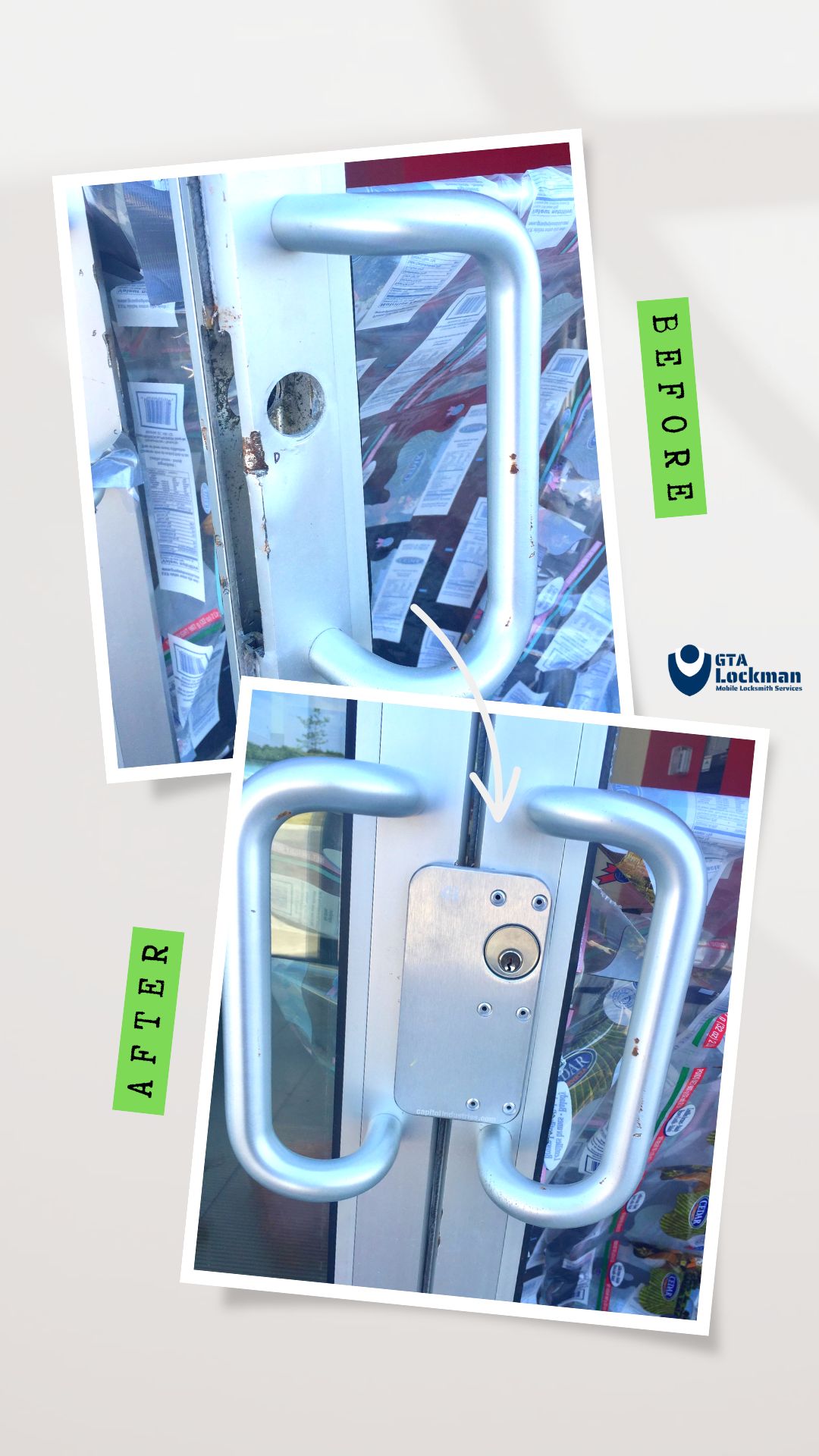
If the lock was stiff, if a key broke, if the door needs lifting or shoving, or if the same problem has now happened twice, the door needs attention rather than another key.
Tell us what happened during the lockout itself, because that detail usually identifies the cause reliable than an inspection does. A key that turned halfway points somewhere different from a key that would not enter at all; see door lock repair for houses and condos and residential locksmith services.
The call-out is the visible cost. The rest is usually larger and less obvious: an afternoon of work lost, a child waiting somewhere, a meal abandoned, a pet inside, an appointment missed.
That imbalance is the argument for spending an hour on prevention. Almost every one of these measures costs less than one repeat lockout, and several cost nothing at all beyond deciding to do them.
There is also a security angle worth naming. People who are locked out improvise, and improvised entry is rarely good for the door. A forced window, a removed screen, a lock levered with whatever was in the car, a spare left permanently under a planter afterwards because it was needed once. Each of those leaves the home weaker than it was before, and the weakness usually stays. If entry was forced this time, have the affected opening looked at rather than assuming it went back together properly; see lock repair after a break-in.
Say which of the four patterns matched your lockout, what the door is doing now, and whether anything was damaged getting back in. If a key snapped, keep both pieces.
We will look at the cause rather than only the symptom, and tell you which of the changes above are worth making on your particular door.
Keep reading
Often yes. Depending on the hardware, the function can be changed so the door only locks when you lock it, or the lock can be replaced with one that behaves that way. On some multipoint and commercial doors the self-locking behaviour is part of the lock design and the answer is a keypad, a key safe or a spare arrangement instead. Describing the door and hardware tells us which applies.
Often yes. Depending on the hardware, the function can be changed so the door only locks when you lock it, or the lock can be replaced with one that behaves that way. On some multipoint and commercial doors the self-locking behaviour is part of the lock design and the answer is a keypad, a key safe or a spare arrangement instead. Describing the door and hardware tells us which applies.
With a person rather than under an object: a neighbour, a relative nearby, or a mounted key safe with a code you control. Hiding places outside the door are known to everyone who has ever been locked out, including people who are not you. The test for any spare is whether you could actually reach it on a Sunday evening.
It removes the physical key from the problem, which helps. It adds battery maintenance and code management. Every electronic lock should have a backup that works when the electronics do not, whether that is a key cylinder, a spare with someone else or a key safe. Choose the backup deliberately rather than finding out later that there is not one.
It is usually the whole explanation. Stiffness comes from wear in the key, wear in the cylinder, debris, or a door that has dropped so the bolt is under load. All of those are repairable and all of them get worse. A key that needs jiggling is a lock asking for attention before it strands someone.
Replace that key, and look at the others of the same age. A key that snapped was already fatigued from wear, and its twins have had the same years of use. It is also worth checking why it was under enough load to break, because that is usually the cylinder or the door rather than the key.
Once a year covers most homes, and after any change in the household: a new occupant, a child starting to let themselves in, a key arrangement with a cleaner or dog walker that nobody has reviewed. Test every key in every lock, including the ones you never use, because those are the ones that fail when you need them.
Then it was probably the door or the habit rather than the lock. A door that needs lifting or shoving puts load on the bolt, wears the cylinder and eventually leaves someone outside. A self-locking door will eventually close on your keys. Both are worth addressing even though the lock itself tests fine.
Which of the four patterns matched: the door locked behind you, the key would not work, the keys were lost, or the hardware failed. What the door is doing now. Whether anything was damaged getting back in. If a key broke, keep both pieces, because they show how and where it failed.
GTA Lockman Mobile Locksmith Services is a mobile locksmith working on homes, businesses and vehicles across Toronto and the GTA, with more than 14 years in the trade. Every review is written by a customer on Google, where you can read them in full.
Areas served: Toronto, North York, Scarborough, Etobicoke, Vaughan, Richmond Hill, Markham, Stouffville, Newmarket, Mississauga, Brampton, Oakville, Milton, Halton Hills, Pickering, Ajax, Whitby, Oshawa, Uxbridge.
Describe the door, hardware and service address. Contact GTA Lockman Mobile Locksmith Services to confirm the scope and scheduling for your location.