Locksmith services are always 10% off for seniors.
Open Mon–Thu 8:30 AM–9 PM, Fri 8:30 AM–4 PM, Sun 9:30 AM–9 PM
Locksmith services are always 10% off for seniors.
Open Mon–Thu 8:30 AM–9 PM, Fri 8:30 AM–4 PM, Sun 9:30 AM–9 PM
GTA Lockman Mobile Locksmith Services · Toronto & GTA
Dry lubricants, how little to use, and when a stiff lock needs more than a spray.
Related services
A yearly check of doors, locks, keys and closers that catches small faults before they become failures.
Learn moreFree a frozen lock without damaging it, and find out whether ice, alignment or batteries caused the problem.
Learn moreMatch the padlock to the hasp, door and hinges, and keep shed, gate and garage keys under control.
Learn moreWhy a key will not come out, how to free it without snapping it, and what to fix so it does not happen again.
Learn moreFind the reason a key sticks, a bolt binds or a latch fails before deciding what needs replacement.
Learn moreRepairs, rekeying and replacement hardware for homes, condos and apartments, with attention to the whole door.
Learn more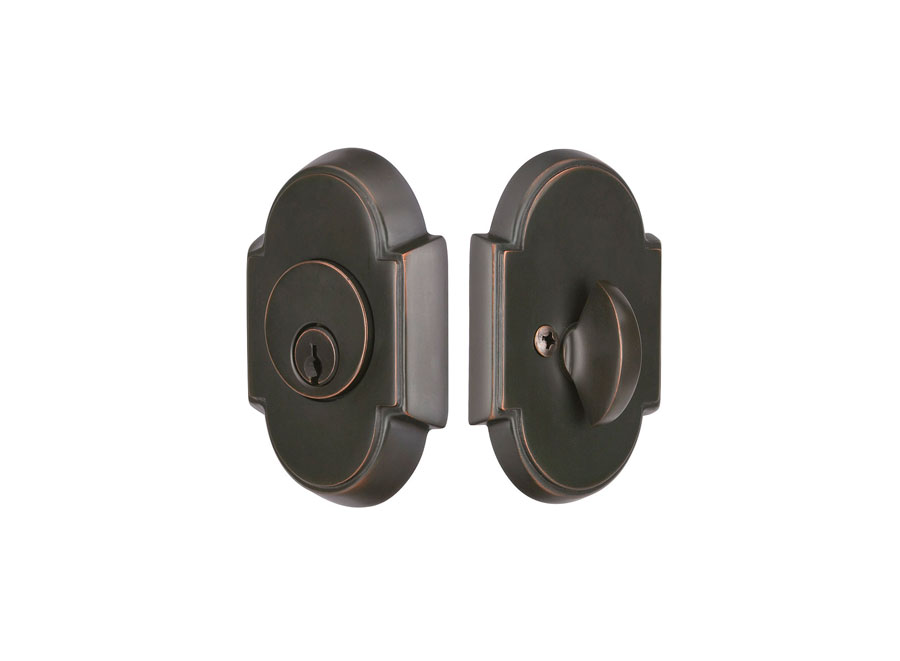
When a lock gets stiff, most people reach for whatever is in the cupboard: a general-purpose spray oil, cooking oil, petroleum jelly, or a squirt of something from the garage. It works, for a while. Then, weeks or months later, the lock is stiffer than before, because the oil has collected dust and grit and turned into a paste inside the cylinder.
Lubricating a lock properly is simple and cheap. It just means choosing the right product, using very little of it, and putting it where it does some good.
A pin tumbler cylinder relies on small pins sliding freely in tight holes, with springs pushing them back down. A deadbolt relies on the bolt sliding smoothly in its housing and the cam turning freely. Over time, moisture, dust, pollen, road salt and metal wear all add friction. The key starts to feel rough, the lock needs a jiggle, and eventually the key will not turn or will not come out.
Exterior locks in the GTA take a particular beating: summer humidity, winter freeze-thaw cycles, road salt carried on hands and keys, and dust from construction and traffic.
Dry graphite. Fine powdered graphite is the traditional lock lubricant. It does not attract dust and works well in cold weather. It can be messy and can stain light-coloured door finishes, so use a puffer bottle and a cloth.
Dry PTFE lubricants. Sprays that go on wet and dry to a thin film of PTFE. They reach the pins easily, leave little residue and do not collect dirt the way oils do. Many locksmiths use them for cylinders.
Lock-specific lubricants. Products made specifically for locks, often a light carrier with dry lubricant particles, sometimes with a de-icing component. They are designed to clean and lubricate the cylinder without gumming.
Light grease, sparingly, for bolts and latches. The sliding bolt and latch, as opposed to the cylinder, can benefit from a small amount of a light grease or a dry lubricant on the bolt surfaces. Keep it out of the keyway.
General-purpose spray oils as the only lubricant. Many people use them, and they do loosen a sticky lock, but they are often more solvent than lubricant and leave an oily film that attracts dirt. If one has been used, follow up with a proper dry lubricant once the lock is working again.
Cooking oils and petroleum jelly. These gum up and go rancid or stiff, especially in the cold.
Heavy grease in the keyway. It traps grit and stops pins dropping cleanly.
Too much of anything. A little goes a long way. Excess product drips, stains the door and collects dust.
For most exterior door locks, once or twice a year is enough, ideally in autumn before the cold and again in spring after the salt and grit of winter. Interior locks rarely need attention. Locks exposed to the weather, such as gate locks, garage side doors and padlocks, may need it more often. Adding lubrication to an annual door and lock maintenance check keeps it from being forgotten.
A lock that freezes is usually wet inside. Lubricating with a dry product in the autumn helps keep water from collecting, and lock de-icers that include a lubricant can free a frozen lock and protect it at the same time. Never pour hot water into a lock; it refreezes deeper inside. Moisture is the root of most frozen door locks in winter, so keeping it out matters more than thawing it.
Electronic deadbolts have a motor driving the bolt. A dry, clean bolt and a well-aligned strike reduce the load on the motor and extend battery life. Do not spray lubricant into the electronic housing or keypad. Lubricate only the key cylinder, if there is one, and the bolt surfaces, following the manufacturer's guidance.
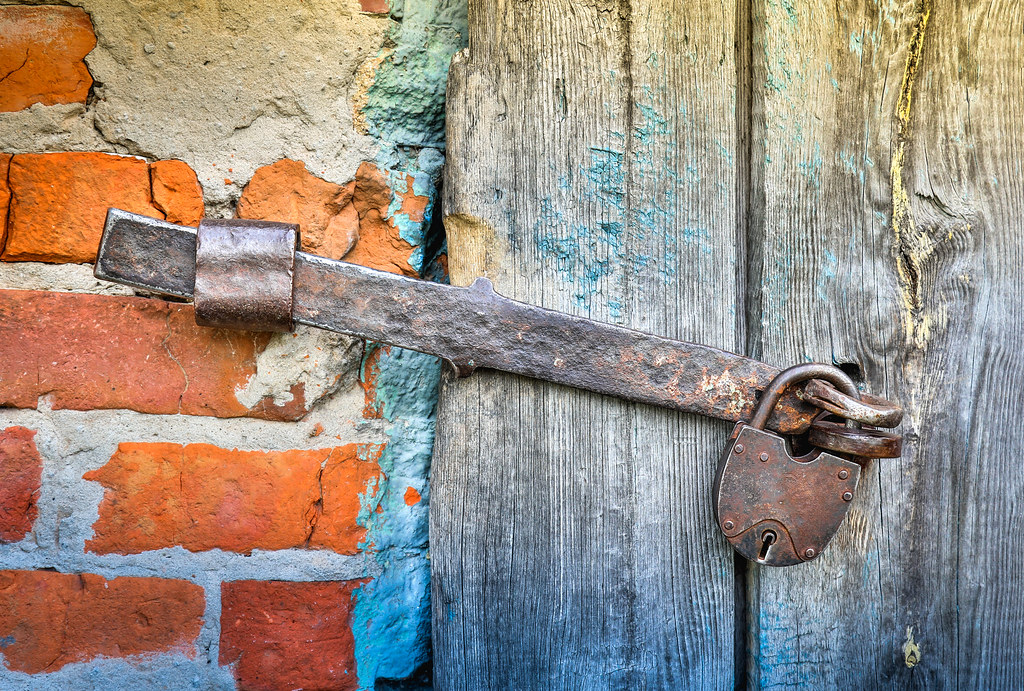
Padlocks and gate locks live outdoors. Lubricate the keyway and the shackle holes, work the shackle several times, and wipe off the excess. For padlocks that sit in the rain, a weather cover or a padlock designed for outdoor use lasts much longer. Hasps need the same care, and shed and outbuilding padlocks last longer with it.
If a lock is still stiff after cleaning and lubricating, the problem is something else:
A key that still sticks after lubrication is worth looking at more closely, as with a key stuck in the lock. Spraying more lubricant into a worn or misaligned lock only hides the problem until it fails.
Locks that are rarely operated, such as a basement door, a side door, a gate or a window lock, stiffen more than locks used every day. Operating them once a month keeps the pins and bolt moving. When lubricating the house in autumn, include these locks, and turn each one fully a few times.
Busy commercial locks, especially on storefronts, rear doors and exit devices, see far more cycles than a house lock and accumulate more grit. Exit devices have their own lubrication points on the latch and the mechanism, and closers should not be lubricated at all except as the manufacturer directs. A regular service visit that covers the locks, exit devices and closers on every door is more effective than ad hoc spraying, and it catches wear before a door fails.
Window sash locks and sliding patio door locks benefit from the same dry lubricant on their moving parts. For sliding doors, the track and rollers also need cleaning: a door that drags puts strain on the lock and makes it harder to engage. Vacuum the track, wipe it clean and apply a small amount of dry lubricant to the rollers if the manufacturer recommends it.
Keys pick up dirt from pockets and bags and carry it into the lock. Wiping keys occasionally helps. Heavy key rings hanging from a key in the lock wear the cylinder and the key over time. Keep the key ring for daily locks light, and do not leave keys hanging in the door.
These point to wear, damage or alignment. A fresh key, a rekey or re-pin, or a strike adjustment usually solves them, and continued use of a failing lock risks a broken key.
A small lock lubricant or a tube of dry graphite, a lock de-icer for winter and a soft cloth are enough for most households. Keep them together with a note of when the locks were last done, so the next autumn service is not forgotten.
Overhead garage door locks, gate latches and mailbox cam locks all live outside and stiffen in the same way. A puff of dry lubricant into each keyway in the autumn, and a few turns of the key, keeps them working through the winter. Mailboxes in apartment buildings belong to the building, so report a stiff mailbox lock to management rather than spraying it.
A lock that needs force to turn is hard for children and older family members. Keeping locks well lubricated and doors well adjusted makes them easier for everyone, and it often removes the need for anyone to struggle with a stiff key in the cold.
When a cylinder is rekeyed or repaired, the locksmith usually cleans and lubricates it before refitting. Ask what was used, so you can top up with the same type of product in future. Mixing an oily spray into a cylinder that was cleaned and treated with a dry lubricant undoes much of that work.
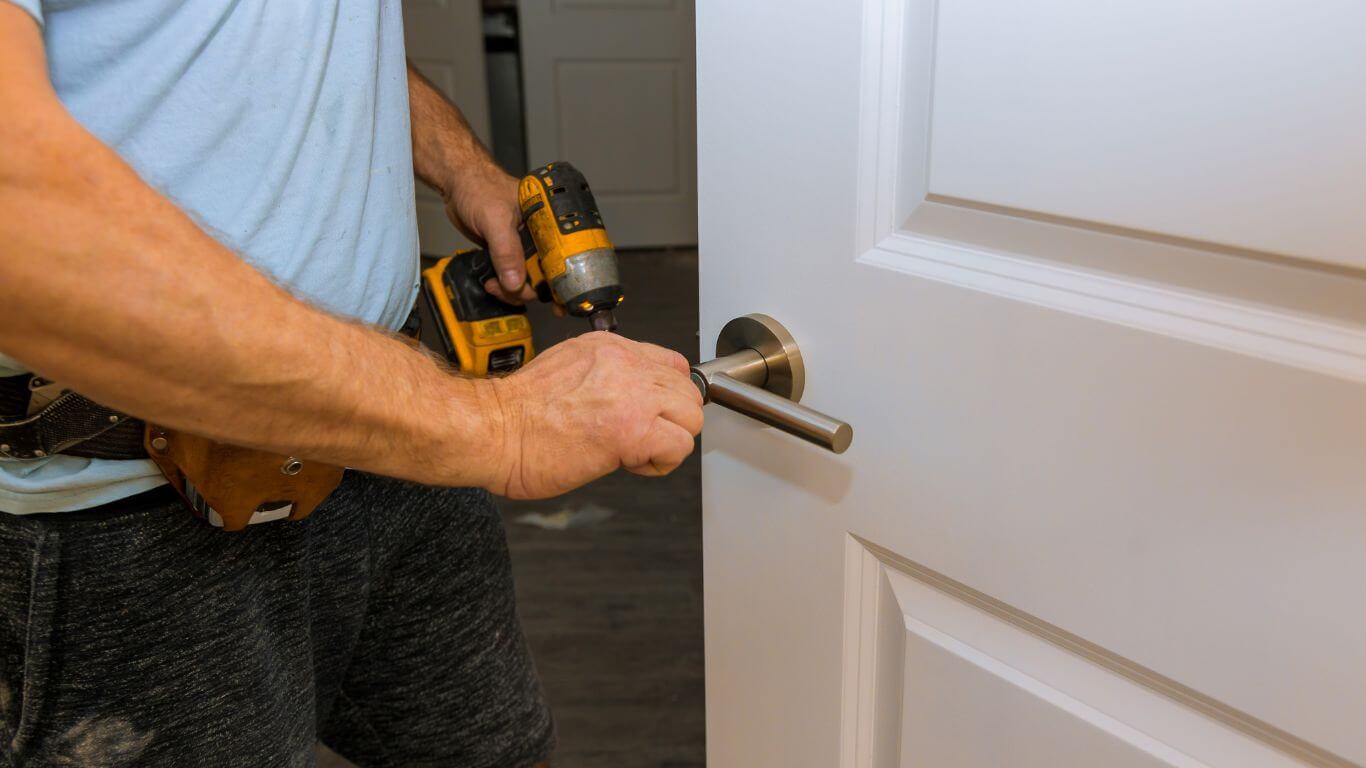
If your locks are stiff, sticky or noisy and you would rather have them looked at, tell us which doors and what the key is doing. We can clean and lubricate cylinders and bolts with lock-appropriate products, adjust doors and strikes, cut fresh keys and replace worn cylinders. That work is part of our lock repair service.
Keep reading
A dry lubricant such as powdered graphite or a dry PTFE spray, or a product made specifically for locks. These lubricate without attracting dust.
A dry lubricant such as powdered graphite or a dry PTFE spray, or a product made specifically for locks. These lubricate without attracting dust.
It may loosen a sticky lock, but it tends to attract dirt and gum up the pins later. If you have used one, follow up with a dry lubricant once the lock works again.
Once or twice a year for most exterior locks, ideally in autumn and spring. Locks exposed to weather, such as padlocks and gate locks, may need it more often.
Very little: one short spray or a small puff of graphite. Then work the key several times. Excess product drips and collects dust.
A lock de-icer with a lubricant can free a frozen lock. Lubricating in autumn helps keep water out. Never pour hot water into a lock.
Not into the electronics or keypad. Lubricate only the key cylinder, if there is one, and the bolt surfaces.
A small amount of light grease or dry lubricant on the bolt and latch surfaces is fine. Keep grease out of the keyway.
The cause is probably mechanical: a binding bolt, a worn key or worn pins. The door may need adjusting, or the key or cylinder replacing.
GTA Lockman Mobile Locksmith Services is a mobile locksmith working on homes, businesses and vehicles across Toronto and the GTA, in the trade since 2010. Every review is written by a customer on Google, where you can read them in full.
Areas served: Toronto, North York, Scarborough, Etobicoke, Vaughan, Richmond Hill, Markham, Stouffville, Newmarket, Mississauga, Brampton, Oakville, Milton, Halton Hills, Pickering, Ajax, Whitby, Oshawa, Uxbridge.
Describe the door, hardware and service address. Contact GTA Lockman Mobile Locksmith Services to confirm the scope and scheduling for your location.