Locksmith services are always 10% off for seniors.
Open Mon–Thu 8:30 AM–9 PM, Fri 8:30 AM–4 PM, Sun 9:30 AM–9 PM
Locksmith services are always 10% off for seniors.
Open Mon–Thu 8:30 AM–9 PM, Fri 8:30 AM–4 PM, Sun 9:30 AM–9 PM
GTA Lockman Mobile Locksmith Services · Toronto & GTA
What each lock noise usually means, and the simple test that tells a lock fault from a strike fault.
Related services
Dry lubricants, how little to use, and when a stiff lock needs more than a spray.
Learn moreTrace the broken connection between the cylinder and the bolt or latch, then repair or replace the failed part.
Learn moreFind why the handle moves, droops or fails to retract the latch, then address the responsible component.
Learn moreInvestigate why the door will not catch or release cleanly, including latch wear and frame alignment.
Learn moreWork through mechanical fit, power and supported controls when an electronic lock becomes unreliable.
Learn moreWhy a door that worked in March binds in July, and which adjustments actually hold.
Learn more
Locks are mostly silent. When one starts clicking, grinding, squeaking or clunking, it is usually telling you something: a part is dry, worn, loose or out of line. Most noises are early warnings rather than crises, and catching them early often means a small adjustment instead of a failed lock later.
A gritty, grinding feel as the key turns usually means dirt or old, gummy lubricant inside the cylinder, or worn pins. Exterior locks collect dust, salt and grit, and household oils make it worse by turning into a paste.
What to do: clean the cylinder with a lock cleaner or compressed air and lubricate with a dry lubricant. If the grinding continues, the pins or the key are worn. A fresh key cut from the original or the code, or a rekey with new pins, usually solves it. The products to use are part of lock lubrication.
A single click as the bolt throws or the latch retracts is normal.
Repeated clicking while turning the key can mean a worn cam or tailpiece slipping, a pin catching on a worn key, or, in a smart lock, the motor slipping or straining.
Clicking from the handle often means a worn spring or a loose spindle inside the latch.
What to do: if the key turns but the bolt does not move fully, the cam or tailpiece may be failing, the same problem behind a key that turns but the door will not unlock. Address it before it fails completely.
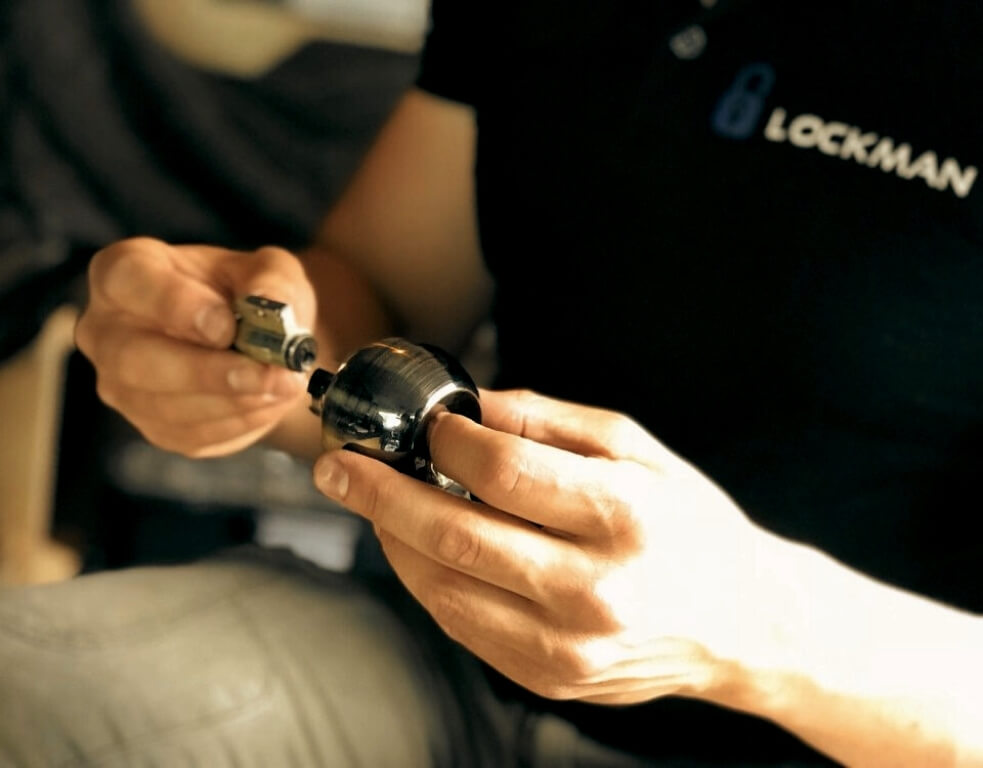
Squeaks usually come from the latch bolt rubbing on the strike, a dry hinge, or a dry spring in the handle. A latch that squeaks as the door closes is often rubbing on the strike lip.
What to do: lubricate the latch bolt and hinges lightly, and check whether the latch is rubbing because the door has moved. A small strike adjustment often stops it.
A deadbolt that clunks or needs a push to go the last bit usually means the bolt is hitting the edge of the strike hole, or the strike hole is too shallow. The door has moved, or the strike was fitted slightly off.
What to do: check the strike for bright scuff marks showing where the bolt is hitting. Adjusting the strike, enlarging the bolt hole, or tightening loose hinges usually fixes it, the standard work of door latch and strike plate repair.
A door that rattles in the wind or when someone walks past usually has too much gap between the latch and the strike, or worn weather-stripping.
What to do: adjust the strike tab so the latch holds the door firmly against its stop, or fit new weather-stripping. Some strikes have an adjustable tab for this.
Smart and keypad deadbolts make a motor sound when they lock and unlock. Changes to that sound are worth noticing:
What to do: check the door alignment first, since most smart lock motor strain comes from the strike. Then check the batteries. Persistent problems are dealt with through smart lock repair and troubleshooting.
Closers on commercial doors and some residential doors can hiss, squeak or slam. A closer that slams or makes a banging sound needs its speed and latch valves adjusted; one that leaks oil needs replacing. Lubricating a closer body does not help. Closers are adjusted, not oiled.
Locks often become noisier in winter. Moisture inside the cylinder can partly freeze, the bolt can stiffen, and metal parts contract. A stiff, crunchy feel in cold weather usually improves with a lock de-icer and a dry lubricant before the next cold snap, as with frozen door locks in winter.
Stop using the lock and get it looked at if:
Forcing a lock in these situations can break the key or the mechanism, leaving the door unable to lock or unlock.
Describing what this test showed saves time when the lock is looked at.
Many noises blamed on the lock actually come from the latch: the spring latch that holds the door closed. A latch that scrapes on the strike lip, squeaks as it retracts, or snaps shut loudly is usually dry, worn or misaligned. Lubricating the latch bolt lightly and adjusting the strike lip so the latch rides in smoothly cures most latch noises.
Loose or noisy handles click and rattle as they are turned. The cause is usually loose mounting screws, a worn spindle, or a weak return spring. Tightening the screws often helps; a handle that keeps loosening may need new screws, a new spring cassette or a replacement handle, the same work as for a loose door handle.
Commercial doors with panic bars make characteristic noises: a clunk as the bar is pushed, and a click as the latch catches. Changes to those noises often mean the latch is not fully engaging or the bar is binding. On a fire exit, a device that does not latch properly is a safety issue and should be checked professionally, as with other panic bars and exit devices.
Sliding patio doors grind when the rollers are worn or the track is dirty, and the lock may struggle to engage as a result. Cleaning the track and replacing worn rollers usually quietens the door and lets the lock catch cleanly. Garage side doors, which sit between outdoor air and an unheated space, often become noisy with the seasons as they move.
A short video or audio recording of the noise, taken with the door open and again with it closed, is very helpful. It shows whether the sound comes from the cylinder, the bolt, the latch or the handle, and it often saves an extra visit.
Sometimes the absence of the usual sound is the clue. A deadbolt that no longer makes its normal click when fully thrown may not be extending fully. A smart lock that no longer makes its usual motor sound may have failed. Paying attention to the normal sounds of a lock makes changes easier to notice.
Some lock noises appear only in humid summers or cold winters, as the door swells or shrinks and the bolt rubs differently against the strike. A noise that appears every July and disappears every October is a seasonal alignment issue. The usual fix is a small strike adjustment that gives the bolt a little more clearance, as with doors that stick in summer.
A brand new lock that clicks or grinds was probably fitted with the strike slightly off, or the door preparation was not quite right for it. Checking the bolt with the door open and closed, and adjusting the strike, usually solves it. A new lock should operate smoothly; noise from day one is a fitting issue, not normal wear.
Some older locks have simply always made noise, because of their design or decades of wear. If an old lock is noisy but working reliably, it may be fine to leave. If it is getting worse, or the key is wearing, it is time to repair or replace it before it fails.
Commercial doors are opened hundreds of times a day, so small noises turn into wear within weeks. A latch that starts clicking or a closer that starts banging on a busy storefront or office door should be dealt with early, before the hardware fails during business hours.
Describing the noise, when it happens and whether it changes with the door open or closed, together with a short recording, usually lets the cause be identified before the visit, so the right parts can be brought along.
A yearly clean and dry lubrication, a check of the hinges and strike, and replacing worn keys keep most locks quiet for years. Most noises start small, so dealing with them as soon as they appear is the simplest approach.
Tell us which lock is making noise, what kind of noise, and whether it changes with the door open or closed. A short video or audio clip can help.
We can clean and lubricate cylinders, adjust strikes and hinges, replace worn cams, springs and cylinders, and fix smart lock alignment. That work is ordinary lock repair.
Keep reading
Usually dirt or old, gummy lubricant inside the cylinder, or worn pins. Cleaning and a dry lubricant often fix it; a worn key or cylinder may need replacing.
Usually dirt or old, gummy lubricant inside the cylinder, or worn pins. Cleaning and a dry lubricant often fix it; a worn key or cylinder may need replacing.
A single click as the bolt or latch moves is normal. Repeated clicking while turning the key can mean a slipping cam or tailpiece, which should be checked before it fails.
The bolt is probably hitting the edge of the strike hole because the door has moved. Adjusting the strike or tightening the hinges usually fixes it.
Most often the bolt is binding in the strike. Fix the door alignment first, then check the batteries. Strain drains batteries and wears the motor.
Adjust the strike so the latch holds the door firmly against its stop, or replace worn weather-stripping.
No. Closers are adjusted with their valves, not lubricated. A closer that leaks oil needs replacing.
Moisture and cold stiffen the mechanism. A lock de-icer and a dry lubricant before cold weather help.
If the key must be forced, the bolt only partly extends, the key bends, or the noise is getting worse. Forcing it can break the key or mechanism.
GTA Lockman Mobile Locksmith Services is a mobile locksmith working on homes, businesses and vehicles across Toronto and the GTA, in the trade since 2010. Every review is written by a customer on Google, where you can read them in full.
Areas served: Toronto, North York, Scarborough, Etobicoke, Vaughan, Richmond Hill, Markham, Stouffville, Newmarket, Mississauga, Brampton, Oakville, Milton, Halton Hills, Pickering, Ajax, Whitby, Oshawa, Uxbridge.
Describe the door, hardware and service address. Contact GTA Lockman Mobile Locksmith Services to confirm the scope and scheduling for your location.