
GTA Lockman Mobile Locksmith Services · Toronto & GTA
What the bank does when a box key is lost, what executors need, and how to keep box keys safe.
Related services
Who can authorize lock work on an estate property, and what to do with keys, key safes and an empty home.
Learn moreKeys for old cabinets, desks and chests, and repairs that respect the piece.
Learn moreDecide how many keys a household needs, where the spare belongs and when a key should be replaced.
Learn moreSet up a key safe that carers can use daily without the code becoming a permanent way into the home.
Learn moreRepairs, rekeying and replacement hardware for homes, condos and apartments, with attention to the whole door.
Learn moreReview every door the missing keys operated, then rekey or replace the locks that no longer control access.
Learn more
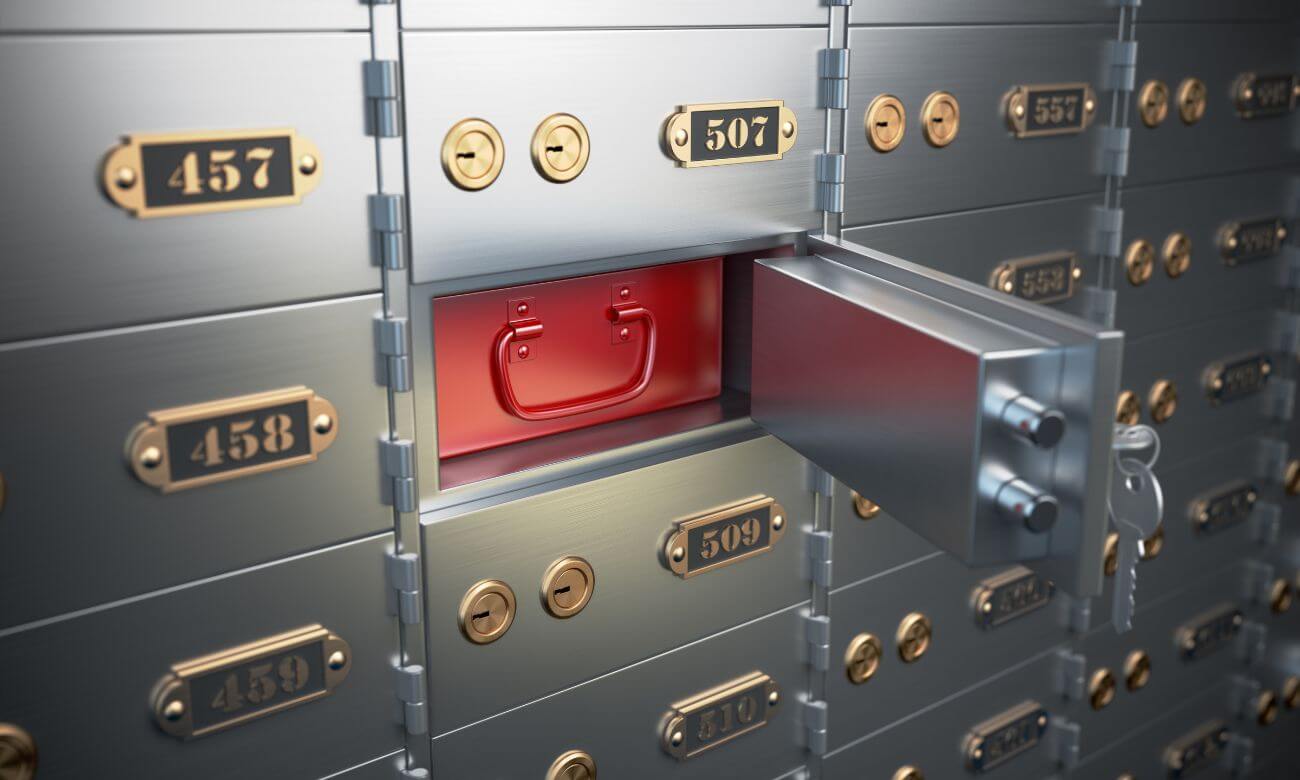
Safe deposit box keys are small, often flat, and easy to lose in a drawer. They are used rarely, sometimes once a year or less, so it can be a long time before anyone notices one is missing. Then the box is needed: to retrieve documents, to settle an estate, or to close the box, and the key cannot be found.
What happens next is set by the bank, not by a locksmith, and it helps to know the process before walking into the branch.
Most safe deposit boxes use a dual-control lock. The box cannot be opened with the customer's key alone. A bank employee uses a guard key, sometimes called the bank's key, to unlock one part of the lock, and the customer's key unlocks the other. Both are needed.
The customer's key is usually unique to that box. The bank does not normally keep a copy, which is part of what makes the box secure: nobody at the bank can open it alone.
Search thoroughly first. Look in desk drawers, jewellery boxes, envelopes from the bank, key rings rarely used, and among a deceased person's papers. Keys are often kept in a small envelope with the box number written on it.
Contact the bank. Tell the branch holding the box that the key is lost. They will explain their process, which usually involves confirming your identity and your right to access the box.
Expect the lock to be drilled. Because the bank has no copy, the usual solution is to drill the customer's side of the lock and replace it. The bank arranges this with a technician it uses, and the box holder is normally present when the box is opened.
Expect a fee. Most banks charge for drilling and replacing the lock and for new keys. The amount varies by bank, so ask the branch.
Get new keys. After the lock is replaced, the box holder receives new keys. Store them somewhere secure and separate from the box number.
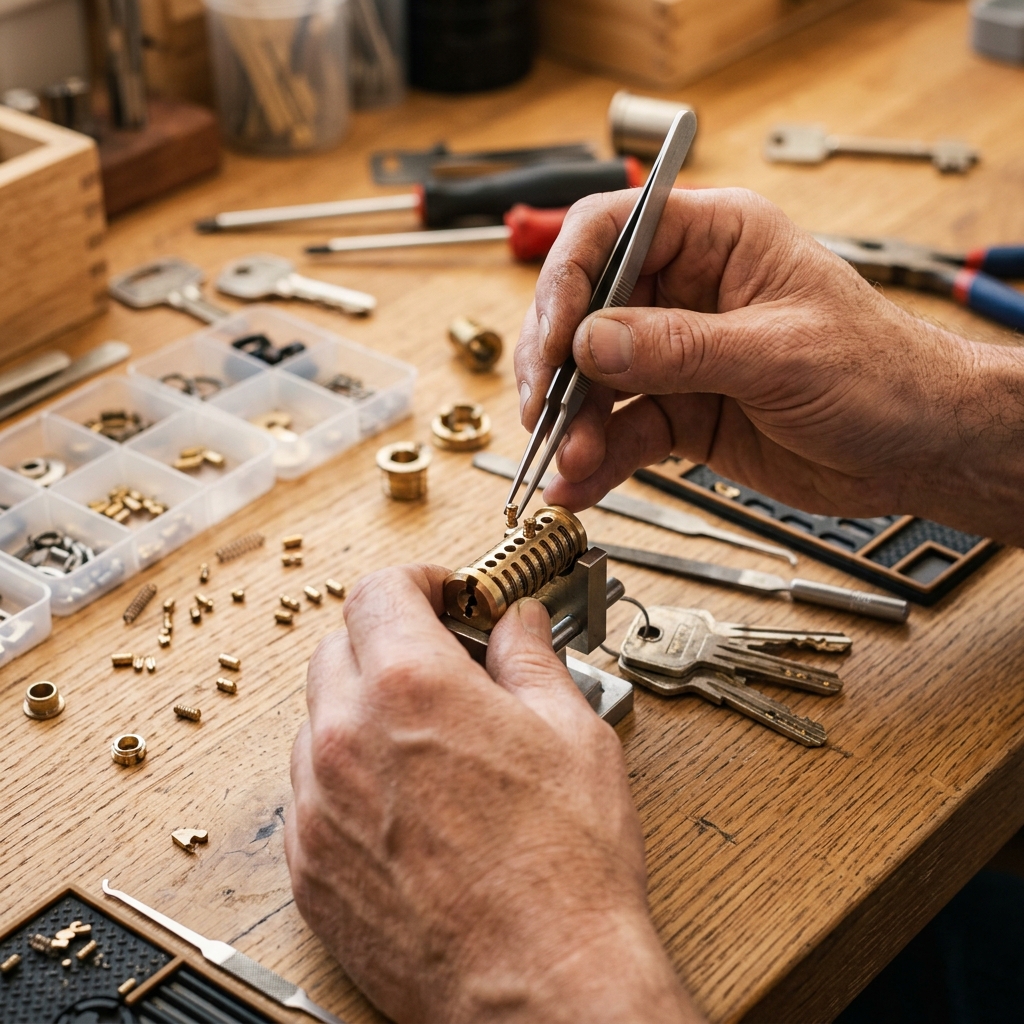
Safe deposit box locks are designed to resist exactly that. Without the bank's cooperation and the guard key, the box cannot be opened, and a key cannot simply be cut to fit. Even with a code, the lock is inside the bank's vault, and all access goes through the bank's procedures. Any work on the lock is done at the bank's request, with the bank present.
If someone offers to make a safe deposit box key from a photograph or a description, be wary. The bank's process exists to protect the box holder.
When the box holder has died, the executor or estate trustee usually needs to access the box to find a will, documents or valuables. Banks have specific procedures for this: they often ask for a death certificate, proof of the executor's appointment, and identification. Some banks allow a limited search for a will before the estate is formally settled.
If the key is among the deceased person's belongings, bring it. If it cannot be found, the drilling process applies. Estate work often involves other locks too, including changing the house locks so the executor knows who can get in, which is part of handling locks after a death in the family.
Where a box is held jointly, either holder can usually access it, but the bank's agreement sets the rules. If one holder has lost their key, the other holder's key may be enough to open the box; the bank then advises whether the lock should be replaced.
Some private vault and safe deposit companies operate outside the banks, and their procedures differ. Home safes, office cash boxes and lockers at clubs and gyms use different locks and processes again. For a home or business safe with a lost key or forgotten combination, the work is ordinary safe service rather than a bank procedure, and our safe opening service handles it.
Safe deposit box keys are one of several rarely used keys that households lose: mailbox keys, locker keys, cabinet keys, window lock keys and spare house keys kept "somewhere safe". A simple list of every key in the household, what it opens and where it is kept, helps enormously when one is needed years later. Cabinet and furniture keys can often be replaced from the lock itself, as with antique furniture and cabinet locks, and house and garage keys can be copied or rekeyed as needed.
Sometimes the opposite happens: a key turns up among someone's belongings, but nobody knows which bank or which box it belongs to. Safe deposit box keys are usually stamped with a box number and sometimes a manufacturer's mark, but rarely the bank's name. Checking bank statements for safe deposit box fees, asking the person's banks directly, and looking for correspondence from a bank about a box rental usually identifies it. An executor can ask each bank where the deceased held accounts whether a box is registered.
When rent on a safe deposit box goes unpaid for a long time and the bank cannot reach the box holder, the bank may eventually open the box under its agreement and the applicable rules for unclaimed property. If you believe a relative held a box that has been dormant, contact the bank; the contents may be held and recorded rather than lost.
Some households decide, after a lost key, to keep documents at home instead. A home safe that is properly anchored, fire-rated for documents and kept locked is a reasonable choice for many papers, though it does not replace a bank box for items that need the highest level of protection. The keys or combination for a home safe need the same care: keep them away from the safe and tell a trusted person where they are.
Banks and estate lawyers often suggest keeping irreplaceable documents in a box, such as property deeds, certificates and valuables. Many also suggest not keeping the only copy of a will or a power of attorney there, because it may be needed at a time when the box is hard to access. Ask your lawyer what suits your situation, and make sure someone knows where the originals are.
Safe deposit boxes are one part of how a household protects valuables. Others include a home safe, a lockable cabinet or drawer, a key safe for caregivers and the locks on the house itself. Each has its own key or code, and each one lost at the wrong moment causes trouble. A written list of every key and code, stored with your important papers, saves a great deal of searching later.
Every bank sets its own rules for safe deposit boxes, and procedures can change. Identification requirements, fees, who may attend the drilling, whether a witness is needed, and how the contents are recorded all vary. Before visiting, call the branch, ask what documents to bring, and ask whether an appointment is needed for the box to be opened. For an estate, ask the bank what it needs from the executor before booking the appointment.
The simplest way to avoid a lost-key problem for your family is to record the details now. Note the bank, the branch address, the box number, where the keys are kept, and who is authorised to access the box. Keep that note with your will or other estate papers and tell your executor where it is. When the time comes, your executor will know exactly where to go and what to bring.
Safe deposit box keys often turn up during a move, in the back of a drawer or inside an old wallet. If you find one and are not sure whether the box is still rented, contact the bank before assuming it is closed. A box may still be active, with fees charged to an account, and its contents waiting.
Many banks issue two keys for each box. Keep them in different places, so a single fire, move or lost bag does not take both. If the box is held jointly, each holder can keep one. When one key is lost and the other is still in hand, tell the bank anyway, since it may recommend replacing the lock.
A safe deposit box is always handled through the bank. Where we can help is with the other locks: home safes, cabinets, the house itself after a loss or during an estate, and extra keys for everyday locks. Tell us which lock and what has happened, and we will explain what we can do. Everyday household lock work is part of our residential locksmith services.
Keep reading
Contact the bank branch holding the box. After confirming your identity and right to access, the bank usually arranges for the lock to be drilled and replaced, with you present, and issues new keys.
Contact the bank branch holding the box. After confirming your identity and right to access, the bank usually arranges for the lock to be drilled and replaced, with you present, and issues new keys.
Usually not. Safe deposit boxes use dual-control locks: the bank's guard key and your key are both needed, and the bank does not normally hold a copy of yours.
Not independently. The lock is inside the bank's vault and cannot be opened without the bank's guard key and procedures. Any work on it is done at the bank's request.
It varies by bank. Most charge for drilling, replacing the lock and issuing new keys. Ask your branch for its current fee.
Banks usually ask for a death certificate, proof of the executor's appointment and identification. If the key cannot be found, the drilling process applies.
Often, if the other holder has their key and the bank's agreement allows it. The bank will advise whether the lock should be replaced.
Somewhere secure at home, not with a note of the bank and box number. Tell your executor or a trusted person where it is.
Tell the bank. They can consider replacing the lock so the missing key no longer works.
GTA Lockman Mobile Locksmith Services is a mobile locksmith working on homes, businesses and vehicles across Toronto and the GTA, with more than 14 years in the trade. Every review is written by a customer on Google, where you can read them in full.
Areas served: Toronto, North York, Scarborough, Etobicoke, Vaughan, Richmond Hill, Markham, Stouffville, Newmarket, Mississauga, Brampton, Oakville, Milton, Halton Hills, Pickering, Ajax, Whitby, Oshawa, Uxbridge.
Describe the door, hardware and service address. Contact GTA Lockman Mobile Locksmith Services to confirm the scope and scheduling for your location.