Locksmith services are always 10% off for seniors.
Open Mon–Thu 8:30 AM–9 PM, Fri 8:30 AM–4 PM, Sun 9:30 AM–9 PM
Locksmith services are always 10% off for seniors.
Open Mon–Thu 8:30 AM–9 PM, Fri 8:30 AM–4 PM, Sun 9:30 AM–9 PM
GTA Lockman Mobile Locksmith Services · Toronto & GTA
Keep a shared entrance latching, releasing and letting people out, whichever release device is fitted.
Related services
Regain entry to a suite while respecting building rules, fire-rated doors and the access arrangements of the property.
Learn moreSet up suite, shared and interior door locks that respect both households, safe exit and the tenancy rules.
Learn moreReport the fob to the building, then decide whether the suite cylinder and other keys need attention.
Learn moreRekeying answers who holds a key; replacement answers whether the hardware suits the door. Compare both.
Learn moreHandle deliveries without weakening the door, and strengthen the openings a parcel thief would try.
Learn moreAssess household lock problems in the context of the door, building requirements and the people using it.
Learn more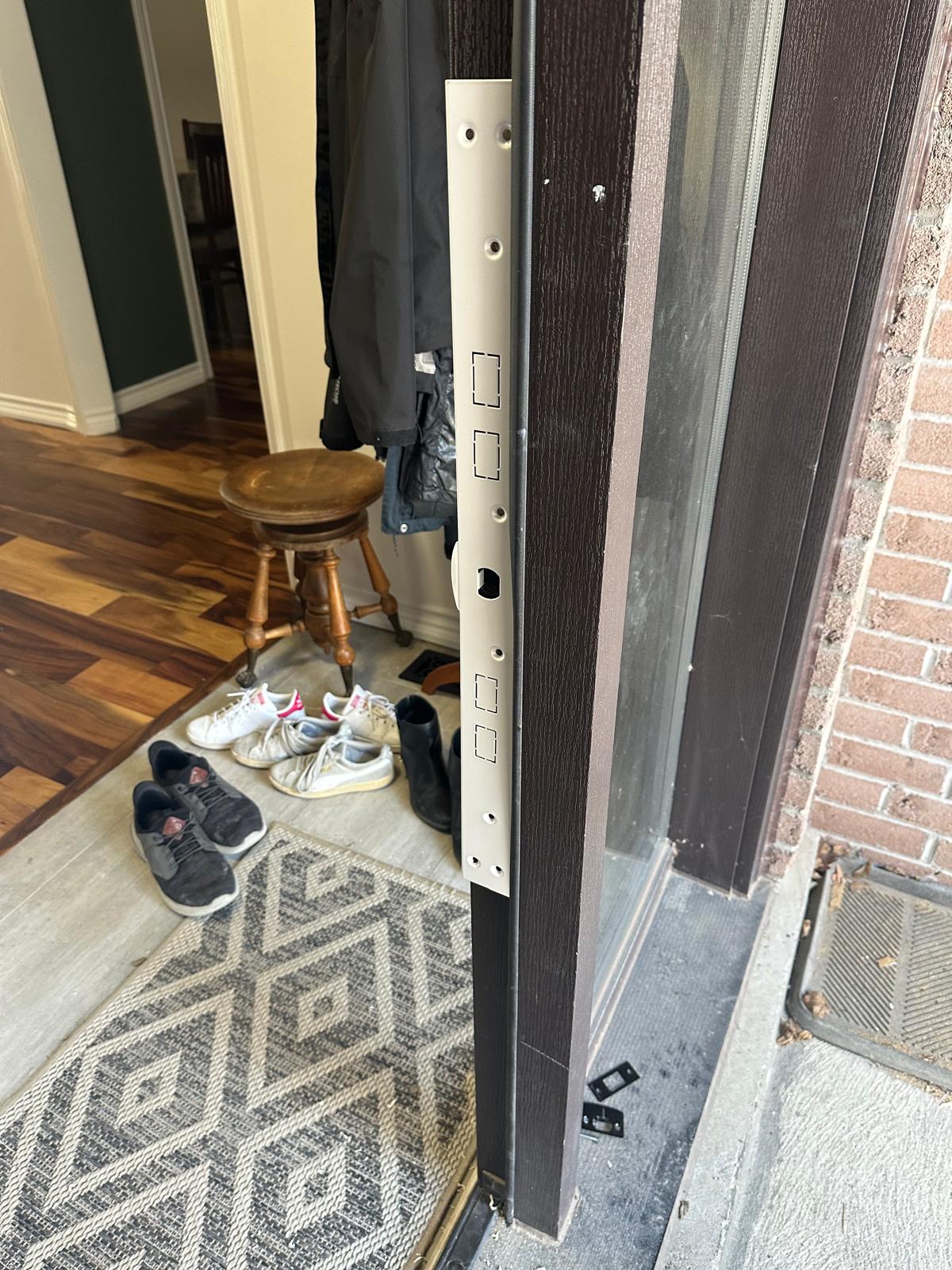
Triplexes, walk-ups, converted houses and small apartment buildings across the GTA share one arrangement: a common entrance that everyone uses, a buzzer or intercom so residents can let visitors in, and suite doors behind it.
That front door does a lot of work. It has to let residents in, let visitors in when a resident chooses, keep everyone else out, close and latch on its own every time, and let people out without a key. When it stops doing any one of those things, the whole building is affected.
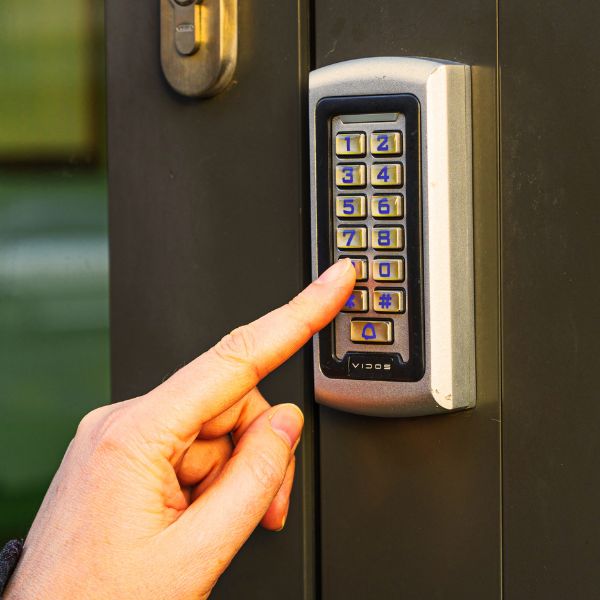
The hardware in that entrance usually means buzzers, intercoms, electric strikes and maglocks, and whatever is fitted, a few things have to remain true.
A resident presses a button or answers a call, which releases the entrance door for a few seconds. The release is usually one of two devices.
An electric strike replaces the strike plate in the frame. When it releases, the latch can pull through, so the door opens while the lock itself stays as it is. The door still latches normally when it closes.
A magnetic lock, or maglock, holds the door shut with an electromagnet and releases when power is cut. It does not latch mechanically, so the door relies entirely on the magnet and its power supply.
Which suits a building depends on the door, the frame, the wiring and, importantly, the exit requirements.
Whatever the system, people inside must be able to leave without a key, a code or special knowledge. With an electric strike, the door's own inside handle usually does that mechanically. With a maglock, the release has to be arranged so exit is always possible, including on power failure and on fire alarm.
That is why maglocks require careful specification: the release devices, the fire alarm interface and the fail-safe behaviour all have to be right. It is specification work, and the fire authority has the final word; see fire door hardware for businesses.
The entrance also has to latch and close on its own. A door propped or held open by a failed closer makes the whole system irrelevant.
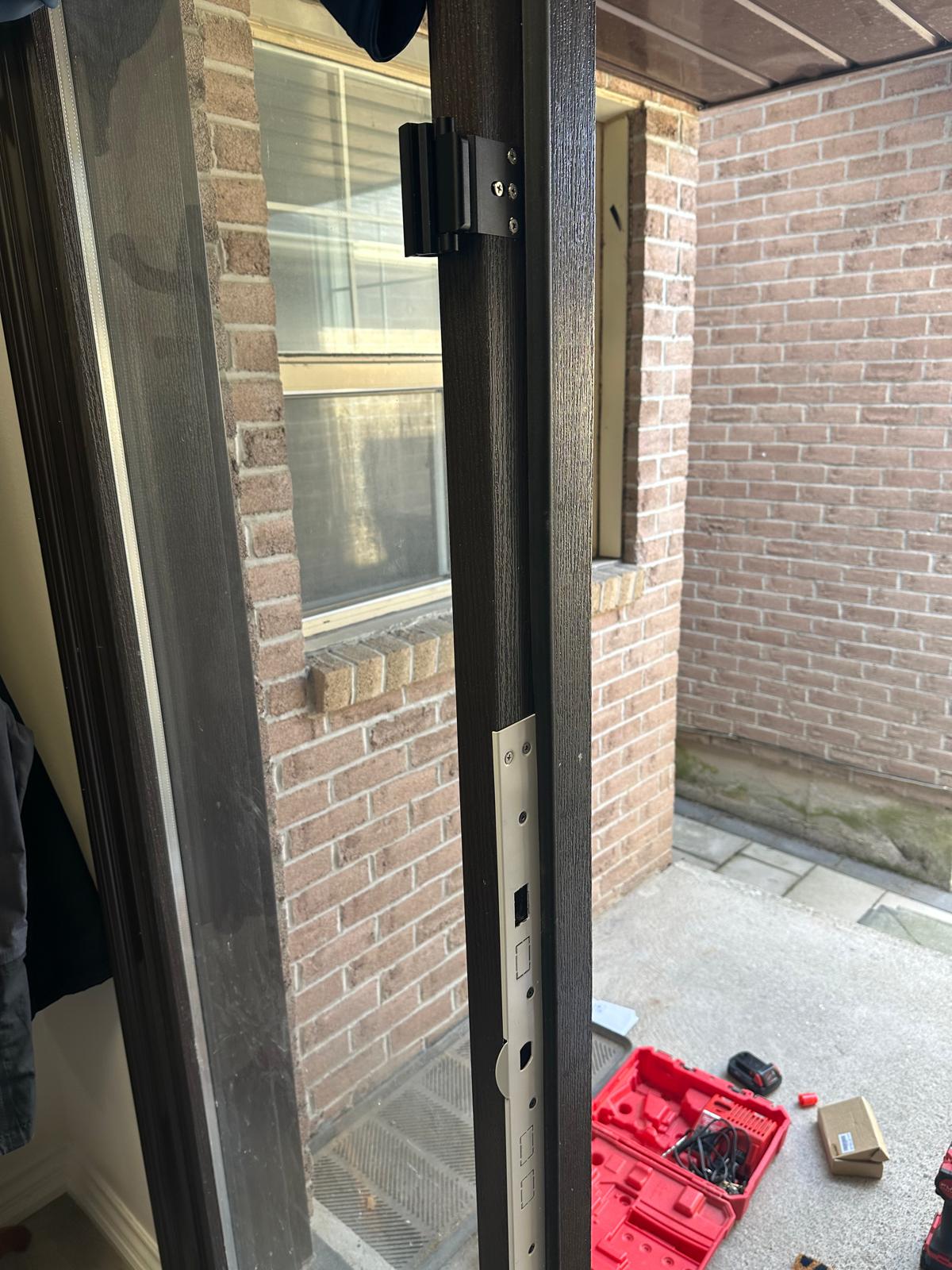
The problems we see repeat across buildings of this size. The closer has been disconnected or adjusted until it no longer latches the door. The electric strike buzzes but the door does not release, or releases but does not relock. The intercom handset in one suite no longer works, so that resident props the door. The entrance latch has worn after years of being pushed open on the buzz.
Each of these is repairable. The important part is noticing them, because in a small building with no on-site staff, nobody owns the front door and faults persist for months.
The lock hardware, strike and door are locksmith work. The intercom handsets, wiring between suites, telephone entry panels and any network connection are usually an intercom or electrical contractor's work, and low-voltage wiring in a building may be subject to its own requirements.
Tell us what the system does now and what it should do. We will say which parts we can handle and where another trade is needed, rather than half-fixing a system and leaving the building with an entrance that works intermittently.
A working front entrance does not replace a sound suite door. Residents should have a deadbolt that throws fully, a door that latches on its own and keys they can account for.
Suite doors in these buildings are often fire-rated, and hardware changes may need the owner's agreement; see apartment and condo lockouts and basement apartment entrance locks for converted houses with separate suites.
Small buildings often still use mechanical keys for the entrance, sometimes the same key for decades. Every former tenant, contractor and cleaner who ever held one may still have it.
Rekeying the entrance at turnover, or moving to a restricted keyway so copies need the owner's authorization, brings that under control; see rekey or replace and lock grades explained. Where fobs are used, they are issued and deactivated by whoever manages the system, and a lost fob is their action, not a locksmith's; see lost condo fob or building key.
Couriers need to get in, and the usual improvisations follow: a wedge under the entrance door, tape over the latch, a code shared among drivers. Each leaves the building open.
Parcel lockers and courier codes are safer alternatives, as with deliveries, parcel theft and door security. In a small building, a parcel arrangement agreed among residents usually does more than any hardware change.
If you own a building of this size, decide who is responsible for the entrance: who reports a fault, who calls a contractor and who holds the spare keys. Without that, the front door is everyone's problem and nobody's job.
A twice-yearly check of the entrance, its closer, the strike and the suite doors is usually enough; see annual door and lock maintenance check.
We fit and repair entrance hardware, electric strikes and the locks they work with, service and adjust closers so doors latch reliably, rekey or replace cylinders at turnover, set up master-key arrangements for owners, and advise on what a maglock installation requires before you commit to one.
We do not certify fire door assemblies or approve life-safety arrangements; where the fire authority must decide, we say so.
Residents of small buildings often assume the entrance is someone else's problem, and in a sense it is. Still, a few habits make a real difference: not holding the door for people you do not recognize, reporting a closer that no longer latches rather than living with it, and not propping the door for deliveries.
If the building has no obvious point of contact, agreeing one among residents is worth more than any individual complaint. A single person who reports faults and follows them up usually gets a door fixed far reliable than five people who each assume someone else has called.
Finally, keep a record of the entrance hardware itself: what is fitted, when it was last serviced, who supplied the intercom and who holds the spare keys or fob programming access. In small buildings this information tends to live in one person's memory, and it disappears when they move out or sell. A single page kept with the building's other documents saves the next owner, or the next set of residents, from starting the whole exercise from nothing. Keep a copy with the building documents and give one to whoever currently looks after the entrance. In buildings with a handful of units, that single page is often the difference between a fault being fixed in a week and a front door that stays unreliable for a year while everyone waits for somebody else to work out If the building changes hands, pass that page on with the keys. New owners of small buildings almost never receive any information about the entrance system, and it is usually the first thing they need.
When you call, describe the building, the entrance door and what the system does now. Tell us whether residents can currently get in and out, since that changes how the visit is planned. Suite doors, the rear exit and mailroom locks in the same building come under our commercial locksmith services.
Keep reading
An electric strike replaces the strike plate in the frame: when it releases, the latch pulls through so the door opens, and the door latches normally when it closes. A maglock holds the door with an electromagnet and releases when power is cut, so there is no mechanical latch. Strikes suit most small-building entrances. Maglocks need careful specification around exit devices, the fire alarm interface and power failure behaviour.
An electric strike replaces the strike plate in the frame: when it releases, the latch pulls through so the door opens, and the door latches normally when it closes. A maglock holds the door with an electromagnet and releases when power is cut, so there is no mechanical latch. Strikes suit most small-building entrances. Maglocks need careful specification around exit devices, the fire alarm interface and power failure behaviour.
Common causes are a failed or misaligned electric strike, a strike that no longer aligns with the latch because the door has dropped, a power supply problem, or a fault in the release button or intercom handset. The lock hardware and alignment are our work; the handsets, wiring and entry panel are usually an intercom contractor's. Describing exactly what happens when someone presses the button helps identify which it is.
Find out why. Usually the closer no longer latches the door, a handset does not work in one suite, or deliveries have no other arrangement. Fixing the cause stops the propping; telling residents not to do it does not. A closer adjusted so the door closes and latches reliably, working handsets, and an agreed parcel arrangement between residents address most cases in a small building.
It can be, but the arrangement has to guarantee exit at all times, including during a power failure and on fire alarm, which means release devices and an alarm interface specified correctly. The fire authority has the final word for your building. We will explain what an installation requires and work to what they confirm, rather than fitting a magnet and leaving the exit arrangement to chance.
That is the question worth settling. In buildings with no on-site staff, faults persist because nobody owns the entrance. Decide who reports problems, who calls a contractor and who holds the spare keys, and tell residents. A twice-yearly check of the entrance door, its closer and strike usually prevents the slow decline that ends with a door that never latches.
Rekey the entrance cylinder, which changes which key works while keeping the hardware, and do it at turnover from then on. If copies have circulated for years, a restricted keyway means future copies need the owner's authorization. Where the building uses fobs instead, those are issued and deactivated by whoever manages the system, and a lost fob is their action rather than a locksmith's.
We handle the lock hardware, electric strikes and the doors they work with. Handsets, wiring between suites, telephone entry panels and network-connected systems are usually an intercom or electrical contractor's work. Tell us what the system does now and what you want it to do, and we will say which parts we can complete and where another trade is needed, rather than leaving an entrance that works intermittently.
No. A shared entrance can be held open, tailgated or propped, so each suite door still needs a deadbolt that throws fully, a door that latches on its own and keys the occupant can account for. In converted houses with separate suites, the arrangement between households needs its own thought, including which doors are shared and who holds keys to them.
GTA Lockman Mobile Locksmith Services is a mobile locksmith working on homes, businesses and vehicles across Toronto and the GTA, with more than 14 years in the trade. Every review is written by a customer on Google, where you can read them in full.
Areas served: Toronto, North York, Scarborough, Etobicoke, Vaughan, Richmond Hill, Markham, Stouffville, Newmarket, Mississauga, Brampton, Oakville, Milton, Halton Hills, Pickering, Ajax, Whitby, Oshawa, Uxbridge.
Describe the door, hardware and service address. Contact GTA Lockman Mobile Locksmith Services to confirm the scope and scheduling for your location.