Locksmith services are always 10% off for seniors.
Open Mon–Thu 8:30 AM–9 PM, Fri 8:30 AM–4 PM, Sun 9:30 AM–9 PM
Locksmith services are always 10% off for seniors.
Open Mon–Thu 8:30 AM–9 PM, Fri 8:30 AM–4 PM, Sun 9:30 AM–9 PM
GTA Lockman Mobile Locksmith Services · Toronto & GTA
Arrange access for firefighters and paramedics without leaving a spare key that anyone can use.
Related services
Keep a shared entrance latching, releasing and letting people out, whichever release device is fitted.
Learn moreSet up a key safe that carers can use daily without the code becoming a permanent way into the home.
Learn moreKeep fire doors latching and exits releasing, with hardware suited to the assembly and no added bolts.
Learn moreReport the fob to the building, then decide whether the suite cylinder and other keys need attention.
Learn moreAudit who holds keys, structure access by role, and keep doors that welcome people able to secure the building.
Learn moreLock and door service for offices, shops and managed properties. Plan access around the way your business operates.
Learn more
Firefighters and paramedics arriving at a building have a problem that has nothing to do with the emergency itself: the front door is locked and nobody is coming to open it.
They will get in regardless. The question is whether that happens in seconds through a key box, or within a reasonable timeframe through a forced door that then has to be replaced and leaves the building open afterwards.
Small buildings and shared entrances need that access arranged deliberately, and the related question of key boxes for residents and carers comes up alongside it.
A key box is a small, fixed, secure container mounted near the entrance holding keys to the building. Emergency responders open it and use the keys inside rather than forcing the door.
There are two broad categories, and they are not interchangeable.
A box controlled by the fire service, where the opening key is held only by that service and nobody at the building has it. These are ordered through the fire department or its approved supplier, and the arrangement is with them.
A general-purpose key safe with a code, which the building controls: the same device used for carers, cleaners or trades. Useful, but it is not an emergency-services box, because the code sits with whoever the building gave it to.
Do not assume a key safe on the wall satisfies a fire access requirement. Ask the authority having jurisdiction what they will accept; requirements vary between municipalities.
Requirements differ, but the buildings where this comes up are recognizable: buildings with fire alarm or sprinkler systems that need access to panels and valves, buildings with no on-site staff after hours, gated properties, and buildings where the entrance is locked outside of business hours.
A small residential building with a buzzer entry and no superintendent is a common case, because after 9pm there may be no reliable way in at all; see buzzer and intercom entry for small buildings.
The way to settle it is to ask the local fire department what applies to your building rather than to work it out from a general description.
Whatever is needed to reach the parts of the building that matter in an emergency: the main entrance, the mechanical and electrical rooms, the sprinkler and alarm panels, roof access, any gate, and where relevant a master key for suites.
The other half of the job is keeping it current. A key box filled at installation and never reviewed is a well-mounted box of obsolete keys. After any lock change, rekeying or hardware replacement, the box has to be updated the same week; see rekey or replace: how to decide.
Put it on the same annual schedule as the other building checks; see annual door and lock maintenance check.
Near the main entrance, visible from the approach, at a height a person can reach while wearing gloves, mounted into solid structure rather than into cladding or trim.
Responders should not have to hunt for it in the dark, so it wants to be where someone arriving at the front of the building sees it. The fire department often has an opinion about placement, and asking first is quicker than moving it afterwards.
The everyday version of the same idea is a key safe for people who visit regularly: a home care worker, a cleaner, a dog walker, a family member.
That is a different device with a different purpose, set up and managed as one of the key safes for home care visits. The important distinctions are that the code is controlled by the household, that it should be changed when the arrangement changes, and that it does not satisfy an emergency-services requirement on its own.
In a small building, both may be appropriate: a fire service box for the building, and individual key safes for particular suites.
Anything added to a shared entrance has to leave the exit path intact. People inside must be able to get out without a key, a code or special knowledge, on any day and particularly on a bad one.
This is the same principle that governs maglocks, electric strikes and every other device on a shared door, and it is the one that gets compromised when a building tries to solve an access problem with additional locks; see fire door hardware for businesses.
A key box adds access without touching the exit path, which is part of why it is the right instrument for this problem.
Most small buildings now run on fobs rather than keys at the entrance, which changes the emergency-access question: a fob is programmed, not cut, and it can be deactivated.
Where a building uses fobs, the emergency arrangement still needs a mechanical route in, because an access system with no power is a locked door. Keep a mechanical override key in the box and make sure it is tested rather than assumed; see lost condo fob or building key.
For a fire service key box, the building owner or manager arranges it with the fire department and its approved supplier. We can rekey and supply the keys that go into it, fit the mechanical hardware it serves, and check that the override actually works.
For a general key safe, we can advise on siting, fit it into solid structure and set it up. Either way the useful first step is telling us what the building is and what the fire department has asked for; see commercial locksmith services.
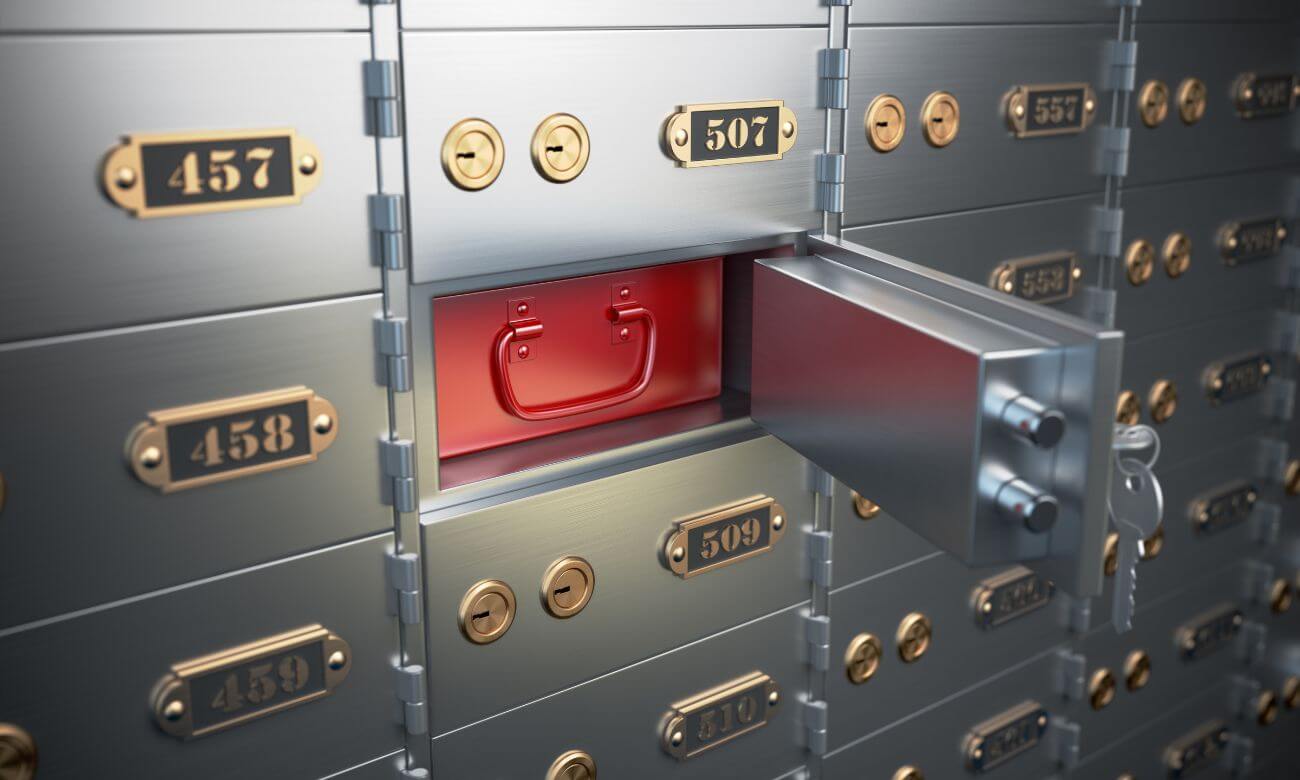
A key box is a small piece of hardware with a long life, and the questions that come up later are usually about ownership rather than installation.
Decide at the outset who owns it, who holds the record of what is inside, and who updates it when a lock changes. In a small building with a rotating volunteer board or a changing property manager, that knowledge disappears efficiently unless it is written down somewhere that survives a handover.
Keep a single sheet with the box location, what each key inside opens, the date it was last checked, and the contact who arranges changes. Attach it to the same file as the alarm and sprinkler records, because those are the documents that get passed on.
Any change to the building's locks makes the box out of date by exactly that much. A rekeyed entrance, a replaced mechanical room cylinder, a new gate lock: each one leaves a key in the box that no longer opens what it is labelled for.
Build the update into the work itself rather than leaving it as a follow-up. When we rekey or replace hardware on a building with a key box, tell us it exists and we will cut the replacement keys as part of the same job, so the box is correct the day the work finishes rather than at some later point nobody schedules.
It is also worth testing the arrangement once rather than assuming it. Open the box, take out each key, and try it in the door it is labelled for. That exercise finds obsolete keys, mislabelled keys and boxes that have seized from weather, and it takes about fifteen minutes for a small building.
Do it on a fixed date each year, alongside whatever else gets checked, and record that date on the sheet.
The short version for a small building with no staff: ask the fire department what they require, put the mechanical keys that actually work in whatever box they approve, write down what is inside, and check it once a year. That covers most of what goes wrong with these arrangements, which is almost never the box itself.
Buildings that hold keys for a key box usually hold many others too, and a locked cabinet with a sign-out register, as used in key cabinets and managing many keys, keeps the spares for the box accounted for.
Tell us the building type, how many units, whether there is a fire alarm or sprinkler system, whether there is staff on site, and what the fire department has specified if anything. Say whether the entrance uses keys, fobs or both.
We will sort out the mechanical side and tell you plainly which parts belong with the fire service or an access-control contractor rather than with us; see also places of worship and community halls.
Keep reading
A small secure container fixed near the entrance holding keys to the building, which emergency responders open to get in rather than forcing the door. The type controlled by the fire service uses an opening key held only by that service, so nobody at the building can open it. It is ordered through the fire department or its approved supplier.
A small secure container fixed near the entrance holding keys to the building, which emergency responders open to get in rather than forcing the door. The type controlled by the fire service uses an opening key held only by that service, so nobody at the building can open it. It is ordered through the fire department or its approved supplier.
Usually not for emergency-services access. A coded key safe is controlled by the building, which is what makes it useful for carers and trades and what makes it unsuitable as a fire service box. Ask the authority having jurisdiction what they will accept, because requirements vary between municipalities.
That is a question for the local fire department rather than a general rule. The buildings where it commonly comes up have fire alarm or sprinkler systems needing access to panels and valves, no staff on site after hours, a gated approach, or an entrance locked outside business hours. Asking directly settles it reliable than reasoning from a description.
Whatever reaches the parts of the building that matter in an emergency: the main entrance, mechanical and electrical rooms, sprinkler and alarm panels, roof access, gates, and where relevant a master for suites. The harder part is keeping it current after any lock change, so update it the same week and check it annually.
Near the main entrance, visible from the approach, at a height reachable while wearing gloves, fixed into solid structure rather than cladding or trim. Responders should not have to search for it in the dark. The fire department often has a view on placement, and asking before installation is quicker than relocating it later.
Yes. A fob is programmed rather than cut, and an access system without power is simply a locked door. The emergency arrangement still needs a mechanical route in, so a mechanical override key should be in the box and should be tested rather than assumed to work.
It should not, and that is one of its advantages. A key box adds a way in without touching the exit path. People inside must always be able to leave without a key, a code or special knowledge, which is the principle that gets compromised when a building tries to fix an access problem by adding locks to a shared door.
For a fire service box, the owner or manager arranges it through the fire department and its approved supplier. We can cut and rekey the keys that go in it, fit and service the mechanical hardware it serves, and confirm the override works. For a general key safe, we can advise on siting and fit it into solid structure.
GTA Lockman Mobile Locksmith Services is a mobile locksmith working on homes, businesses and vehicles across Toronto and the GTA, with more than 14 years in the trade. Every review is written by a customer on Google, where you can read them in full.
Areas served: Toronto, North York, Scarborough, Etobicoke, Vaughan, Richmond Hill, Markham, Stouffville, Newmarket, Mississauga, Brampton, Oakville, Milton, Halton Hills, Pickering, Ajax, Whitby, Oshawa, Uxbridge.
Describe the door, hardware and service address. Contact GTA Lockman Mobile Locksmith Services to confirm the scope and scheduling for your location.