Locksmith services are always 10% off for seniors.
Open Mon–Thu 8:30 AM–9 PM, Fri 8:30 AM–4 PM, Sun 9:30 AM–9 PM
Locksmith services are always 10% off for seniors.
Open Mon–Thu 8:30 AM–9 PM, Fri 8:30 AM–4 PM, Sun 9:30 AM–9 PM

GTA Lockman Mobile Locksmith Services · Toronto & GTA
Give members and staff the access they need outside staffed hours, and take it back cleanly.
Related services
Review what the departing employee could open, then rekey the affected cylinders and issue new keys with a record.
Learn moreKeep a shared entrance latching, releasing and letting people out, whichever release device is fitted.
Learn moreHow commercial lock and door work gets scoped, authorized and scheduled around a business that has to keep trading.
Learn moreStore, label and log keys so the set still makes sense after three staff changes.
Learn moreLock and door service for offices, shops and managed properties. Plan access around the way your business operates.
Learn moreA yearly check of doors, locks, keys and closers that catches small faults before they become failures.
Learn more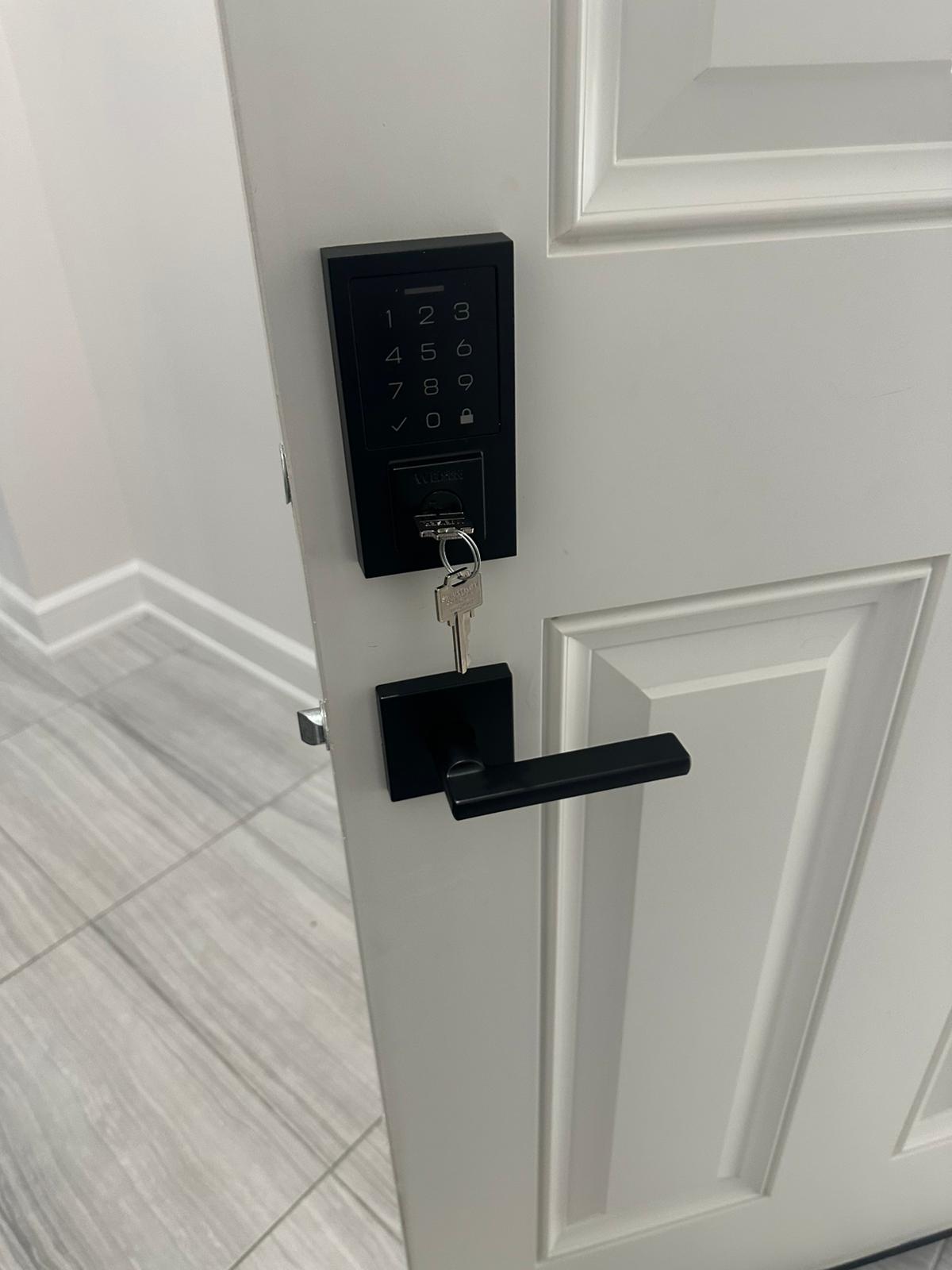
Gyms, fitness studios, yoga and dance studios, salons and similar small businesses share a particular access problem. Instructors and staff arrive at different times, some members may be allowed in outside staffed hours, clients come and go through the day, and the people holding keys change often as instructors and stylists move on.
Handing out keys to everyone who needs access efficiently becomes unmanageable. Nobody knows who still has one, and every departure is a reason to wonder whether the locks should be changed.
Start by listing the groups of people who come through the door:
Each group needs a different level of access. Mixing them all onto one key is where the trouble starts.
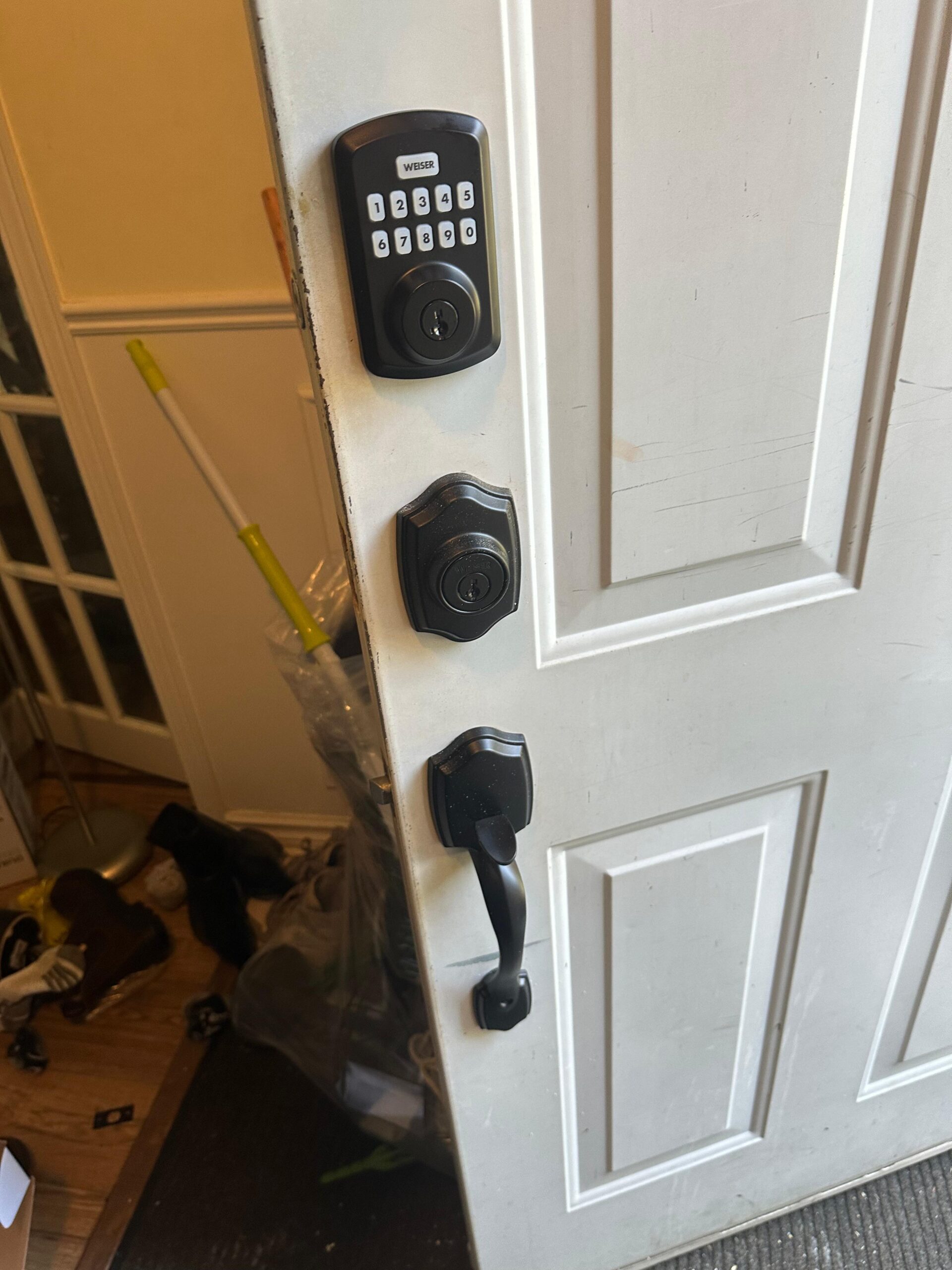
For a small studio with a handful of staff, a keypad lock with individual codes is often the most practical answer. Each person gets their own code, codes can be removed the day someone leaves, and nothing has to be collected. Choose a model rated for commercial use, since a studio door is used far more than a house door, and one with a mechanical override key for backup.
For larger gyms, especially those with members entering outside staffed hours, a fob or card system gives more control. Access can be limited by time of day, individual credentials can be switched off, and the system usually keeps a record of entries. These systems need power, network access in many cases and someone responsible for managing them.
Where members use a building's shared entrance to reach the gym, the building's buzzer or intercom arrangement also comes into play; buzzer and intercom entry for small buildings looks at how those entrances work.
Instructors, trainers and stylists often work on a contract or part-time basis, and they move on regularly. With keys, each departure means collecting a key and wondering whether a copy was made. With codes or fobs, it means switching off one credential.
If the business does use keys, a key register and a process for collecting keys on a person's last day are essential. Where a key cannot be recovered, rekeying after an employee leaves restores control. Keeping spare keys in a lockable cabinet with a register makes the count easy; see key cabinets and managing many keys.
Most studios and salons have internal rooms that need their own control: an office with cash and records, a retail stock area, a supply room for products, and staff lockers. These should not be on the same access as the front door. A manager's key or code for the office, and a separate arrangement for stock, keeps the everyday flow of people away from the areas where money and products are kept.
Changing rooms and washrooms need privacy locks that can be opened from outside in an emergency. The inside must release freely, and staff should know how to open the door from outside if someone is taken ill or a child locks themselves in.
Staff lockers and member lockers can use keyed locks, combination locks or electronic locks. Whatever is chosen, keep a master key or override for lockers where members leave items behind.
When the first person in opens up and the last person out locks up, a clear routine matters. A short checklist covering the front door, the back or fire exit, the office and any stock rooms catches the door that gets missed.
If a door has become hard to lock, the closer no longer latches it or the keypad is sticking, fix it before it becomes a door that someone leaves insecure because it is awkward. An annual door and lock maintenance check catches most of this before it causes trouble.
Studios and gyms often have a rear fire exit. It must open from inside without a key, and it should not be used as a staff shortcut or left propped. If members or staff are using it as an entrance, an alarmed exit device or a separate controlled entrance is the answer, not a lock that stops it opening.
Studio and gym work is scheduled around classes and appointments. We agree the list of doors and the timing with the owner first, as we would for any commercial locksmith job, and front entrances, exit devices and keying for the whole unit come under our commercial locksmith services.
Salons have their own particular mix of things to secure. Retail product on shelves, professional product in the back, a cash drawer at reception, and chemicals such as colour and developer that should not be accessible to clients or children.
A lockable back room or storage cupboard for professional product and chemicals keeps them away from the public. The reception cash drawer should lock, and takings should move to a locked office or safe at the end of the day rather than staying in the drawer overnight.
Stylists who rent chairs often bring their own tools and products. A small lockable cabinet or locker for each chair renter avoids disputes about missing items and gives each person a secure place for their own equipment.
Many studios and small gyms operate in shared buildings: a unit in a plaza, a floor in an older commercial building, or a space shared between several instructors who each rent time.
In a shared building, the landlord usually controls the main entrance and common areas, and the tenant controls the unit's own doors. Check the lease before changing any lock, especially on doors the landlord needs to reach in an emergency.
Where several instructors share one space at different times, each should have their own code or key recorded in a register, so that when one leaves the arrangement, only their access changes.
Codes get shared. A member tells a friend, an instructor gives the door code to a cleaner, a former employee passes it on. With a single shared code, there is no way to know who is using it, and the only fix is changing it for everyone.
Individual codes solve most of this. Where the system allows, give each person their own code and remove it when they leave. Where it does not, change the shared code on a schedule, and whenever someone with the code leaves on bad terms.
Members lose fobs and forget codes, and how the business handles that affects both security and goodwill. A lost fob should be deactivated as soon as it is reported, not just replaced, so the old one stops working. A forgotten code should be reset after confirming who the person is, not read out over the phone to anyone who asks.
Charging a small fee for replacement fobs encourages members to look after them. Keeping a record of each deactivation shows how often fobs go missing and whether the system is being abused.
When the studio or gym closes for a holiday or a quiet week, access arrangements often stay exactly as they are. Members' fobs still work, instructors' codes still open the door, and nobody is around to notice who comes in.
Before a closure, restrict access to the people who genuinely need it, such as the owner and anyone checking the premises, and restore it when the business reopens. Check that the back door and fire exit are secured, and that the alarm is set.
Some studios operate above shops or alongside residential units, sharing an entrance with neighbours. Members arriving for early classes or leaving after late ones pass through a door that residents rely on for their own security.
In that situation, the studio's access arrangement affects everyone in the building. Members should know not to prop the shared entrance or let strangers in behind them, and the studio should agree with the landlord how members get in without being given a building key. A separate studio entrance, where the building allows one, avoids most of these problems.
The same applies to noise and timing: access for early classes should not mean the building entrance is left unlocked from dawn onwards.
Studios run in seasons, with new class schedules, new instructors and new members arriving at predictable times of year. Each change of season is a natural moment to review who holds access. Remove codes and fobs for instructors who have moved on and members whose memberships have lapsed, and check that the register matches the people who are actually coming through the door.
Tell us how many doors are involved, who needs access and at what times, how many staff and instructors hold keys now, and whether members use the premises outside staffed hours.
We will suggest an arrangement that suits how the business actually runs, whether that is keyed locks with a register, keypad locks with individual codes, or a fob system for a larger space, and fit it around your schedule.
Keep reading
Not necessarily. With frequent turnover, individual keypad codes or fobs are often easier to manage than keys, because access can be removed the day someone leaves without collecting anything. Where keys are used, a register and a clear return process are essential.
Not necessarily. With frequent turnover, individual keypad codes or fobs are often easier to manage than keys, because access can be removed the day someone leaves without collecting anything. Where keys are used, a register and a clear return process are essential.
Usually not for long. A studio door is used far more often than a house door, so a lock rated for commercial use will last better. It should also have a mechanical override key in case the electronics fail.
It can be done with a fob or card system that limits access by time of day and records entries. The practical questions are who manages the system, how lost fobs are handled, and what happens if someone is inside when the building is closed.
Check which doors that key opens. If it includes the office or the stock room, rekeying those locks is the prudent step. If the business uses codes instead, remove the person's code that day.
They need privacy locks that release freely from inside and can be opened from outside in an emergency. Staff should know how to open them from outside if someone is taken ill.
Keyed, combination or electronic lockers all work. Whatever is chosen, keep a master key or override so items left behind can be retrieved and faulty lockers opened.
If it is a fire exit, it must always open from inside without a key and should not be propped. If staff genuinely need a second entrance, an alarmed exit device or a properly controlled staff entrance is the safer arrangement.
Yes. Work is normally scheduled around classes and appointments, often early in the morning or after closing.
GTA Lockman Mobile Locksmith Services is a mobile locksmith working on homes, businesses and vehicles across Toronto and the GTA, with more than 14 years in the trade. Every review is written by a customer on Google, where you can read them in full.
Areas served: Toronto, North York, Scarborough, Etobicoke, Vaughan, Richmond Hill, Markham, Stouffville, Newmarket, Mississauga, Brampton, Oakville, Milton, Halton Hills, Pickering, Ajax, Whitby, Oshawa, Uxbridge.
Describe the door, hardware and service address. Contact GTA Lockman Mobile Locksmith Services to confirm the scope and scheduling for your location.