Locksmith services are always 10% off for seniors.
Open Mon–Thu 8:30 AM–9 PM, Fri 8:30 AM–4 PM, Sun 9:30 AM–9 PM
Locksmith services are always 10% off for seniors.
Open Mon–Thu 8:30 AM–9 PM, Fri 8:30 AM–4 PM, Sun 9:30 AM–9 PM
GTA Lockman Mobile Locksmith Services · Toronto & GTA
Practical door and lock decisions for a household of one, without turning the home into a hard place to leave.
Related services
Handle deliveries without weakening the door, and strengthen the openings a parcel thief would try.
Learn moreDecide how many keys a household needs, where the spare belongs and when a key should be replaced.
Learn moreWhat a chain, bar or secondary lock adds, what it does not add, and where it must not stop an exit.
Learn moreChoose levers, deadbolts and keys that an older person can operate reliably while keeping the home secure.
Learn moreAuthorized entry to your home, followed by a look at why the lockout happened and whether the lock needs attention.
Learn moreRepairs, rekeying and replacement hardware for homes, condos and apartments, with attention to the whole door.
Learn more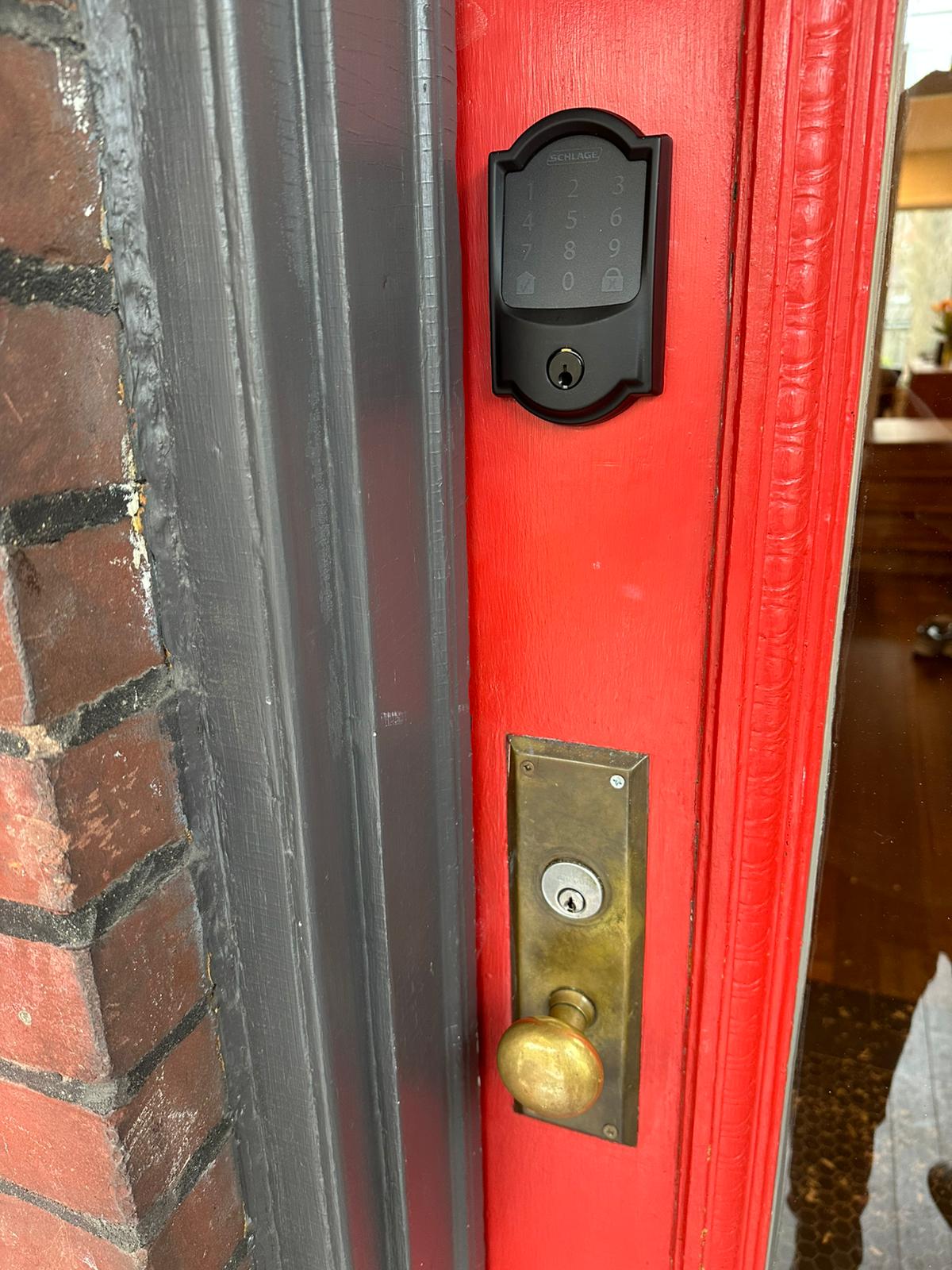
Living alone changes the door question in specific ways. There is nobody to let you in when you are locked out, nobody to answer if you are not there, nobody to notice that the back door has been standing ajar since Thursday, and nobody to check the lock you have been meaning to look at since spring.
None of that calls for turning the home into a fortress. Most of it calls for two or three practical decisions that remove the situations where being alone actually costs you something.
Those decisions matter for anyone living by themselves, whether that is a student in a first apartment, someone recently separated, or an older person in the family home.
The first thing worth having is a way to see the step without opening the door.
A door viewer is inexpensive, needs no power, cannot fail at a bad moment and is fitted at whatever height suits you. A wide-angle version shows more of the step, and a larger eyepiece is easier for anyone whose eyesight has changed.
A camera or video doorbell adds distance and a record, and lets you answer from another room or another city, at the cost of power, a network and an account someone maintains. Either is better than deciding whether to open the door based on a knock.
For parcels, the related question is what happens to things left on the step when you are out; see deliveries, parcel theft and door security.
A sound deadbolt that throws fully into a strike fixed to the framing is worth more than any number of additions. That is true in every home and it is the part most often skipped.
The checks are simple. Does the bolt extend fully without the door being lifted or pushed? Is the strike plate screwed into the stud rather than the trim? Is the frame sound around the lock? Does the key turn smoothly, or has it started needing technique; see worn keys and poor key copies.
Get those right before considering anything else. If the door is in poor condition, that is the job; see door lock repair for houses and condos.
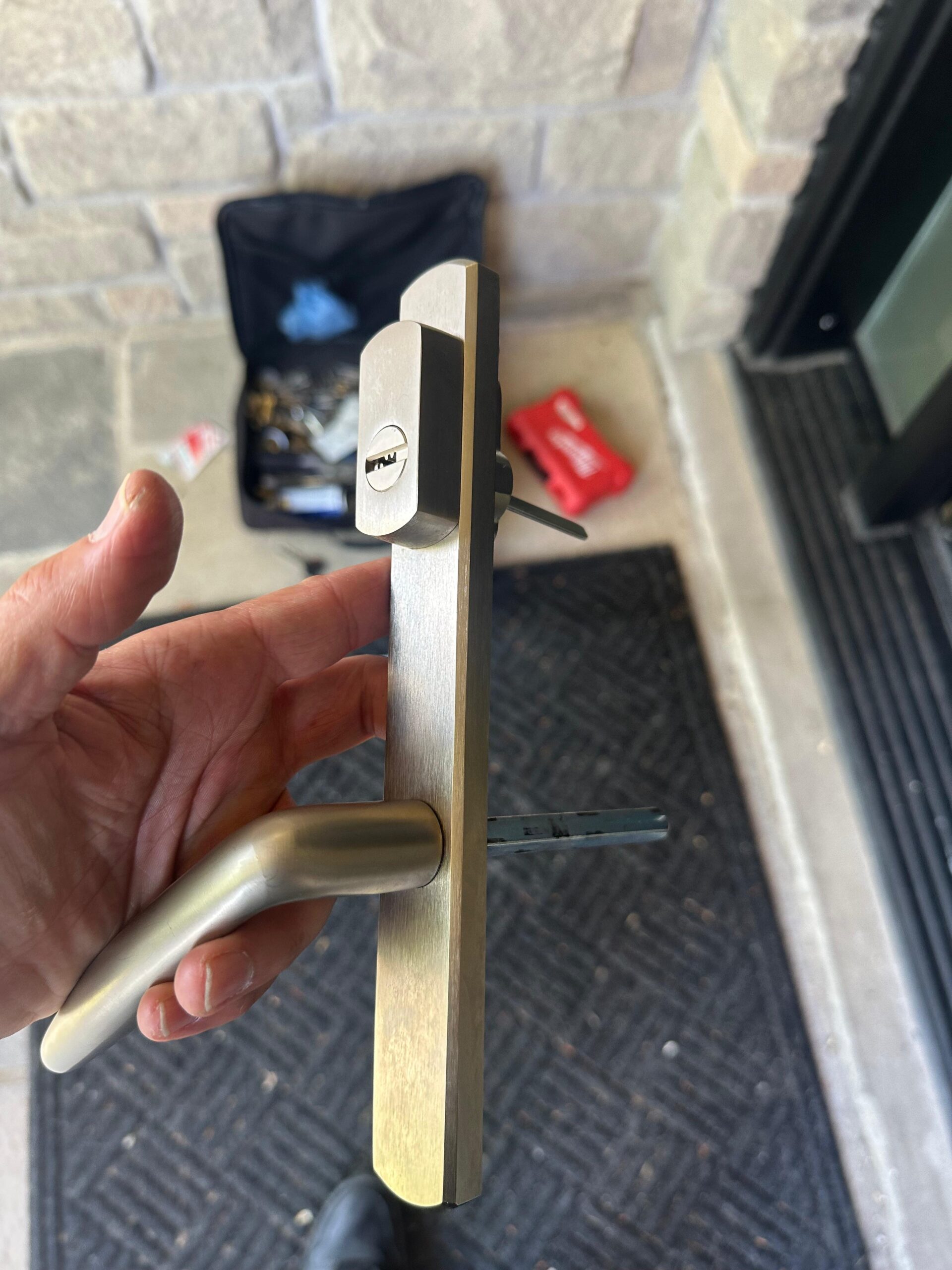
A chain or swing bar lets you open the door a few inches while restrained, which suits a household of one answering an unexpected caller.
Fitted properly, into solid material with long screws, it does that job. It is not a barrier against force, and it should never be something that makes leaving harder; see door chains, bars and secondary locks.
The rule for anyone living alone is the same as for everyone: every device on the inside of the door must be releasable efficiently, in the dark, without a key.
For a single-occupant household, the door locking behind you is the situation with the highest cost, because there is no one inside to open it and no second key in the house that helps.
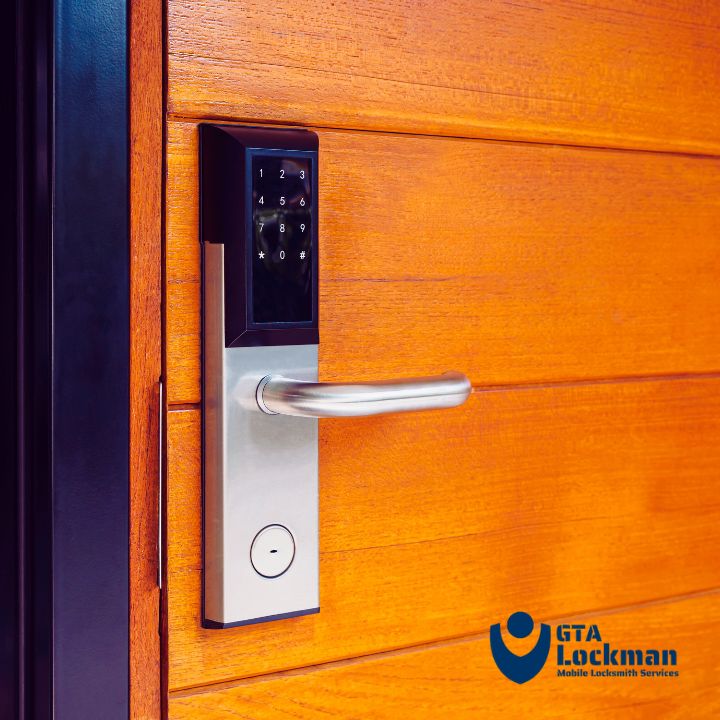
The workable answers are a spare with someone nearby, a key safe mounted properly with a code you control, or a keypad lock with a code and a maintained battery. Which suits depends on who is close by and how you feel about codes; see after a lockout: preventing the next one and key safes for home care visits.
The arrangement to avoid is a key hidden outside under something. Those hiding places are all known, and for a home that is empty most of the day it is a poor trade.
Over years, keys accumulate in other people's hands: an ex-partner, a former roommate, a neighbour who watered plants in 2019, a cleaner who stopped coming, a landlord who changed.
Once you are living alone, that list deserves a review, not out of suspicion but because it was assembled for a household that no longer exists. Decide who should hold a key now. If the honest answer is that you cannot account for all of them, rekeying the exterior cylinders is a modest job that resets it; see rekey or replace: how to decide.
If a relationship ended, that is a separate and more careful conversation; see lock changes after separation.
The part that is not hardware: one person who would notice if something were wrong.
For many people living alone, particularly older people, that is the single most valuable arrangement there is. A neighbour who knows your routine, a relative who calls on a schedule, a friend who has a key and permission to use it if you do not answer.
If that person holds a key, keep it deliberate: one key, a known holder, and a shared understanding of when they would use it. A key safe with a code given to one or two people does the same job without a key sitting in someone's drawer for years.
A household of one tends to use one door. The others get less attention and are still openings.
Check the back door, the side door, the garage-to-house door, the basement entrance and the patio slider at least once a year. The ones you rarely use are exactly where a seized lock or a failed latch goes unnoticed; see side and back door lock repair and annual door and lock maintenance check.
An empty home reads differently from an occupied one, and for a single-occupant household it is empty whenever you are not there.
The measures that help are ordinary: timers rather than a dark house every evening, mail and parcels not accumulating, a neighbour who knows you are away, and doors actually locked rather than latched. For a longer absence, there is a fuller checklist on leaving home for winter or vacation.
Occasionally the question is not general security but a specific person: a former partner, someone who has been calling at the door, a neighbour dispute that has escalated.
That changes the priorities. Rekeying is more pressing than upgrading. Knowing who is at the door matters more than any restraint. A record of what was changed and when becomes useful, because it may be needed later by somebody other than you.
It is also the point at which the situation stops being only a hardware question. Police, a lawyer, or a victim services organization can do things a locksmith cannot, and those steps are worth taking in parallel rather than after trying hardware first.
The work itself is straightforward: change who holds working keys, make the doors sound, and write down what was done. Say plainly when you call that this is the situation, because it moves the job up the list and changes what we suggest.
None of this needs doing at once. If you take one afternoon, spend it on seeing who is at the door and on making sure the deadbolt and its strike are sound. Those two cover most of what living alone actually changes, and every other improvement can follow later, whenever it suits you.
A short note on cost. Most of these improvements are genuinely inexpensive, often costing less than a single lockout call: a door viewer, longer screws in a strike plate, a spare arranged with a neighbour, a key cut properly. The expensive items are the ones you would replace anyway when a door or lock reaches the end of its life. Living alone does not require spending more on doors than anyone else; it mostly requires deciding a few things on purpose rather than by default, and revisiting them when the household changes.
Tell us what kind of home it is, which doors it has, whether you can see who is at the door, and what your arrangement is if you are locked out. Mention anything that has changed recently, including a household that used to be larger.
We will look at the primary locks first, then at whether anything else is worth adding; see residential locksmith services.
Keep reading
Being able to see who is at the door without opening it. A door viewer costs little, needs no power and cannot fail at a bad moment; a camera or video doorbell adds distance and a record but depends on power, a network and an account. After that, make sure the deadbolt throws fully into a strike fixed to the framing rather than the trim.
Being able to see who is at the door without opening it. A door viewer costs little, needs no power and cannot fail at a bad moment; a camera or video doorbell adds distance and a record but depends on power, a network and an account. After that, make sure the deadbolt throws fully into a strike fixed to the framing rather than the trim.
For answering an unexpected caller on a restraint, yes, provided it is fitted with long screws into solid material. It is not a barrier against force. The one condition is that you can release it efficiently, in the dark, without a key, because a home that is hard to leave is a risk that shows up on the worst night rather than an ordinary one.
A spare with a neighbour or relative nearby, a properly mounted key safe with a code you control, or a keypad lock with a maintained battery. For a single-occupant home this is the situation with the highest cost, so it is worth deciding deliberately rather than relying on a key hidden outside, which is a hiding place everyone already knows.
It is worth reviewing, because the list was assembled for a household that no longer exists: an ex-partner, a former roommate, a cleaner who stopped coming. Decide who should hold a key now. If you cannot account for all of them, rekeying the exterior cylinders is a modest job that resets the position without replacing hardware.
For many people living alone it is the single most valuable arrangement there is, because it means someone would notice if something were wrong. Keep it deliberate: one key, a known holder, and a shared understanding of when they would use it. A key safe with a code given to one or two people achieves the same thing without a key sitting in a drawer for years.
They solve the lockout problem well, since a code works when a key is inside. They add battery maintenance and, on app-based models, a dependency on a phone that may be dead or inside. Choose one with a backup that works when the electronics do not, and know what that backup is before you need it.
They are still openings, and the ones you rarely use are where a seized lock or failed latch goes unnoticed for years. Check the back, side, garage-to-house, basement and patio doors once a year: bolt throws fully, latch catches without lifting, key turns smoothly, fixings tight.
Make it read as occupied rather than dark and untouched: timers on a couple of lights, mail and parcels not accumulating, a neighbour who knows you are away, and doors locked rather than just latched. For a longer absence the checklist is more detailed, including water, heat and who holds a key while you are gone.
GTA Lockman Mobile Locksmith Services is a mobile locksmith working on homes, businesses and vehicles across Toronto and the GTA, with more than 14 years in the trade. Every review is written by a customer on Google, where you can read them in full.
Areas served: Toronto, North York, Scarborough, Etobicoke, Vaughan, Richmond Hill, Markham, Stouffville, Newmarket, Mississauga, Brampton, Oakville, Milton, Halton Hills, Pickering, Ajax, Whitby, Oshawa, Uxbridge.
Describe the door, hardware and service address. Contact GTA Lockman Mobile Locksmith Services to confirm the scope and scheduling for your location.