Locksmith services are always 10% off for seniors.
Open Mon–Thu 8:30 AM–9 PM, Fri 8:30 AM–4 PM, Sun 9:30 AM–9 PM
Locksmith services are always 10% off for seniors.
Open Mon–Thu 8:30 AM–9 PM, Fri 8:30 AM–4 PM, Sun 9:30 AM–9 PM
GTA Lockman Mobile Locksmith Services · Toronto & GTA
What to collect at closing, what the corporation controls, and when a suite cylinder may be rekeyed.
Related services
Regain entry to a suite while respecting building rules, fire-rated doors and the access arrangements of the property.
Learn moreAssess household lock problems in the context of the door, building requirements and the people using it.
Learn moreSet up suite, shared and interior door locks that respect both households, safe exit and the tenancy rules.
Learn moreReport the fob to the building, then decide whether the suite cylinder and other keys need attention.
Learn morePlan keyless entry around door compatibility, code management and a practical backup entry method.
Learn moreSeparate a locked-door access problem from battery, alignment and account issues before resetting or replacing the device.
Learn more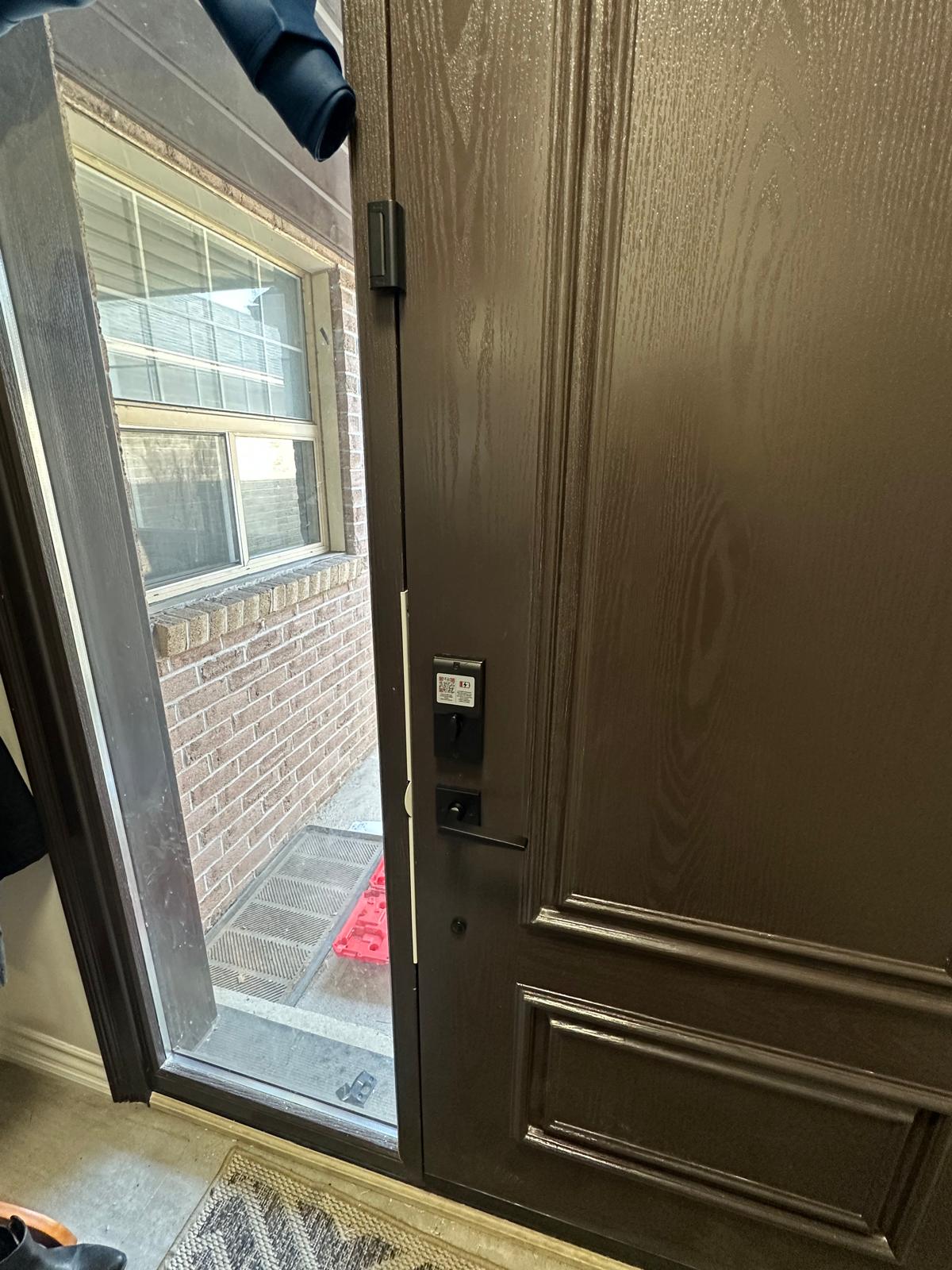
When people buy a house, rekeying the locks is a standard first task. A condominium is different. The suite door is yours, but it usually sits inside a building system: a master-key arrangement for management access, fobs and cards controlled by the corporation, a mailbox key issued by the building or Canada Post, and rules about what may be changed.
That means the checklist for a condo purchase is less about hardware and more about credentials: what you receive at closing, what the building controls, and what you are permitted to change.
Working through it in the first week avoids the common situation where a new owner discovers months later that a previous tenant's fob still works or that the suite lock was changed without approval.
Ask the seller or their lawyer for a full handover list: suite door keys and how many, mailbox key, locker and bicycle room keys, parking fobs or transponders, building entry fobs or cards, garage remotes, and any keypad or smart-lock codes and administrator accounts.
Count what arrives against that list. Missing items are worth raising straight away, because the building usually charges for replacements and may require the registered owner to request them.
If the suite has a smart lock, make sure the seller removes their account and hands over administrator access. A device still linked to a previous owner's app is a real access issue, not a technicality. Transferring or clearing those accounts is often part of smart lock repair and troubleshooting.
Fobs, access cards and parking transponders are programmed by the corporation or its property manager. Only they can deactivate a lost fob or issue a new one, and there is usually a form and a fee. Rekeying your suite lock does nothing about a fob.
Building mailboxes vary: some are managed by the corporation, others by Canada Post. Ask which applies before assuming a locksmith can change the lock.
Common area doors, lockers and bicycle rooms are the corporation's, and work on them needs management's authorization.
Whether you can change the suite cylinder depends on the declaration, rules and management policy. Many buildings require the suite to stay on a master-key system so staff can reach it for maintenance, fire safety or a water leak. Some permit a change provided a key is deposited with management.
Ask management three questions: may the cylinder be rekeyed or replaced, must it remain master-keyed, and does the building need a copy of the key. Get the answer in writing, then arrange the work. Rekeying within the existing system is often the practical option, because it changes your key without removing building access.
The suite door is usually fire-rated, so hardware changes must keep it closing and latching properly. The same constraints apply to entry work during apartment and condo lockouts.
If the building's master-key system is in place and the corporation controls fobs, the risk profile is different from a house. Still, consider who may hold a suite key: the previous owner, their family, a former tenant, a cleaner, a contractor from a renovation.
Where a change is permitted, rekeying is inexpensive and removes the uncertainty. Where it is not permitted, ask management whether the building can arrange a change within its system, and make sure fobs and codes that were handed over are the only active ones.
Photos
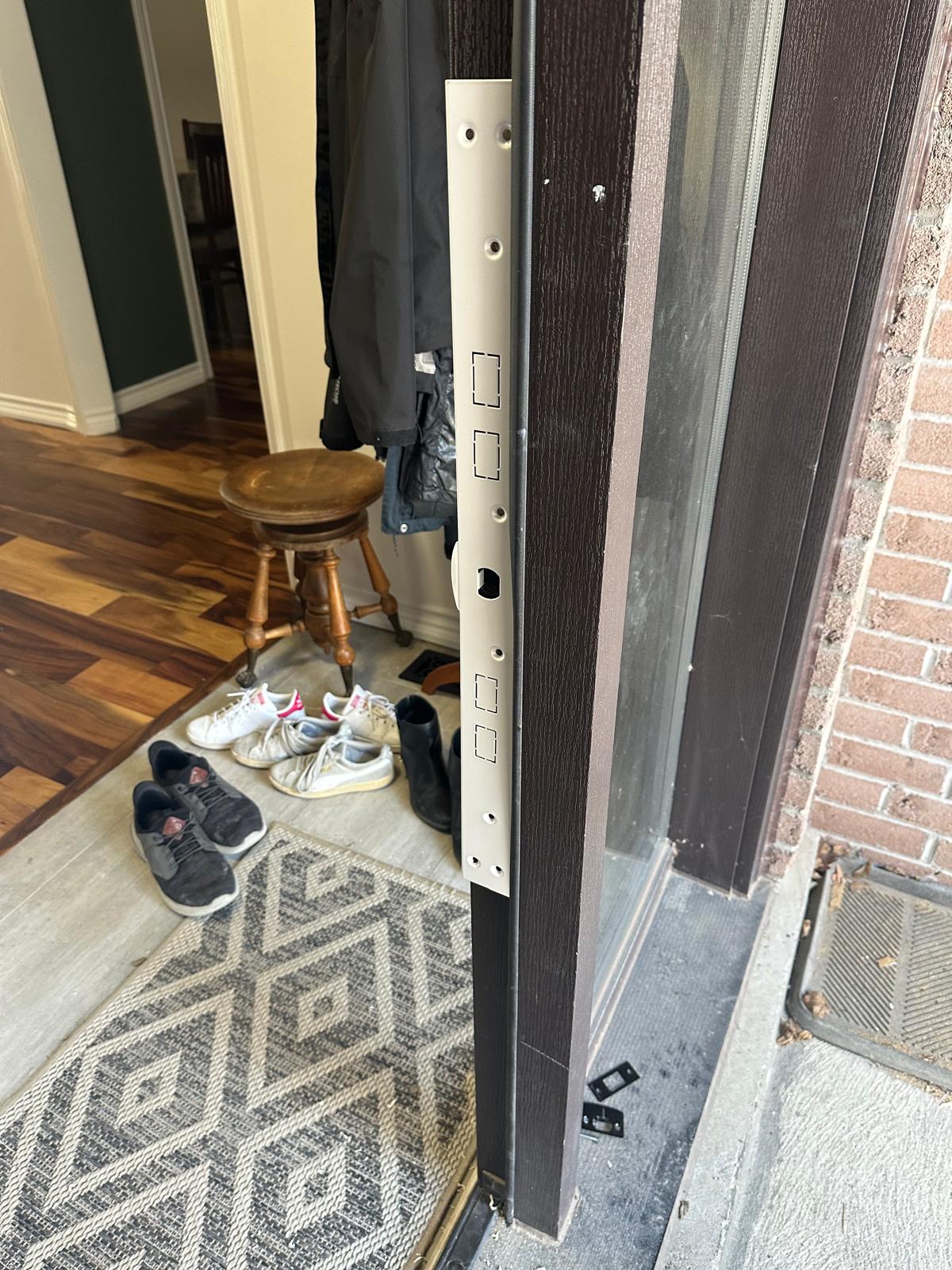
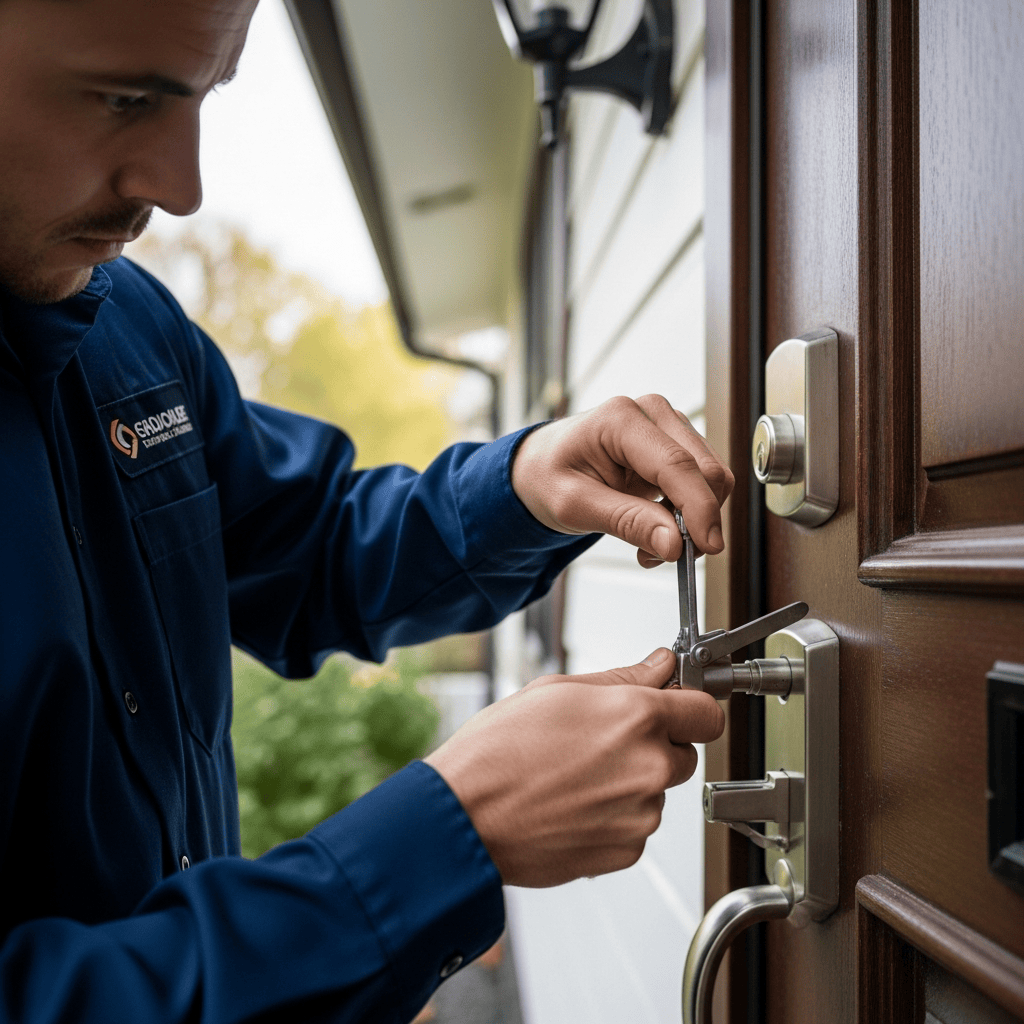
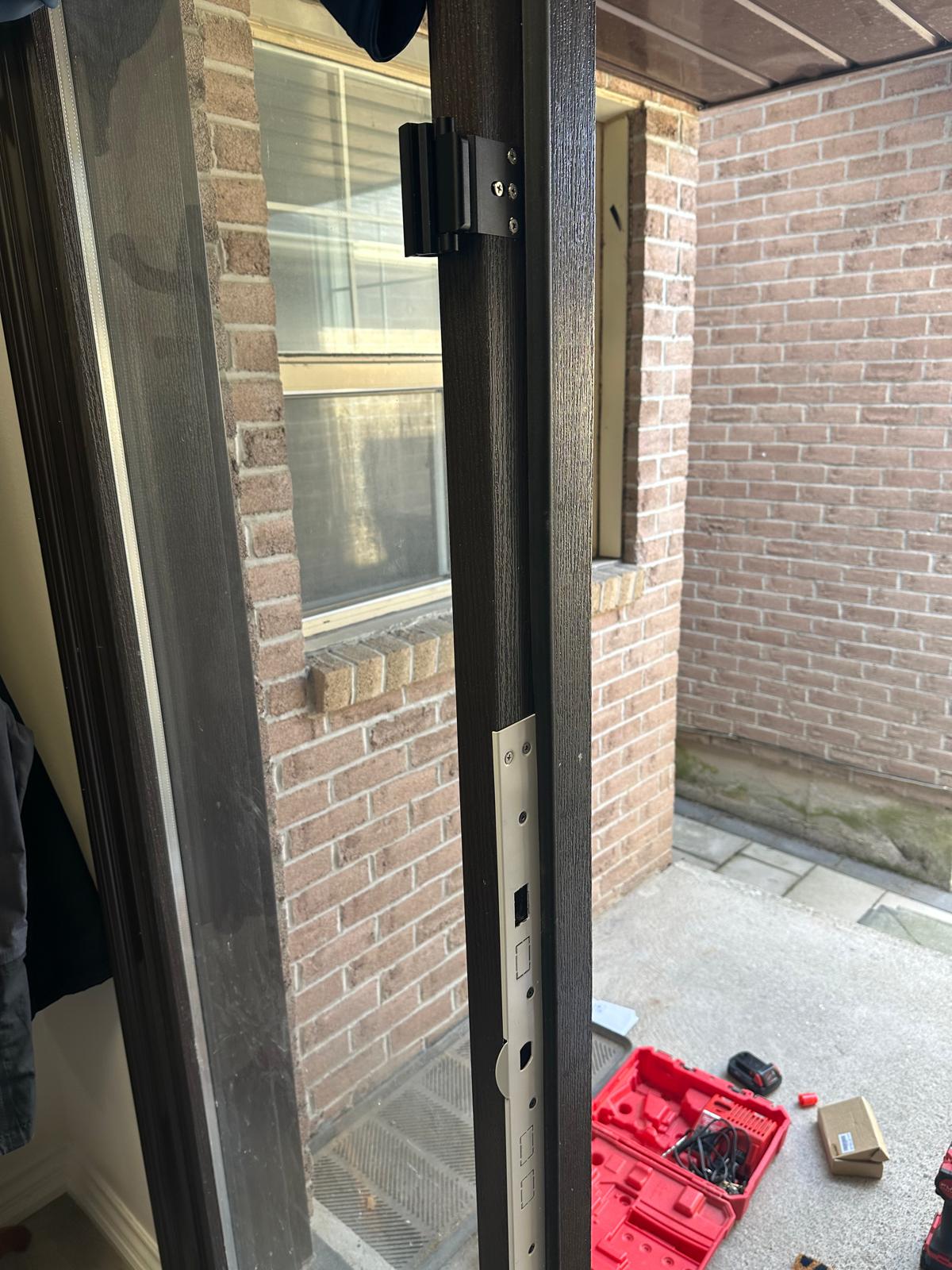
Photographs from GTA Lockman Mobile Locksmith Services work across Toronto and the GTA. Send a picture of your own door and we can tell you what the visit would involve.
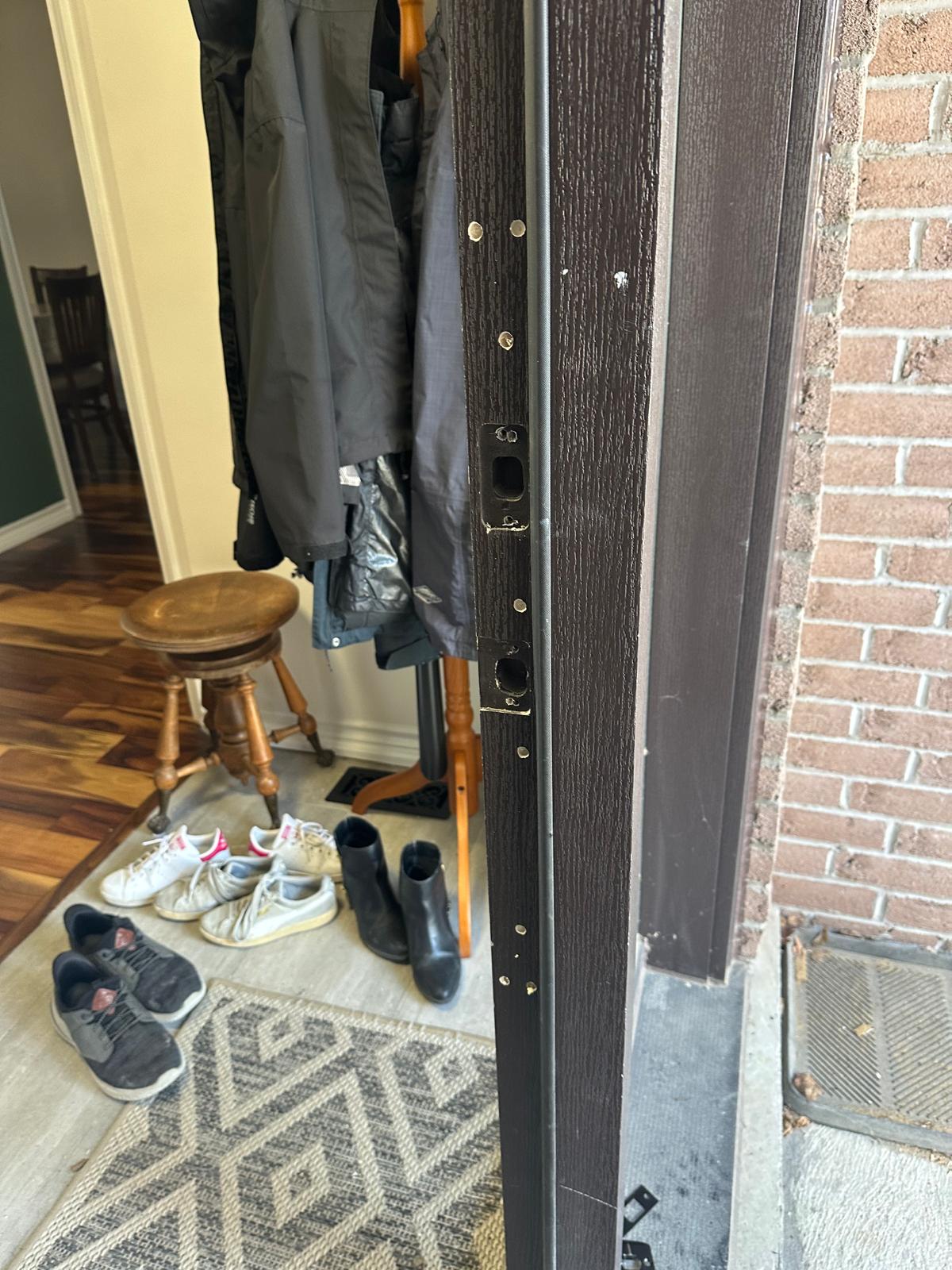
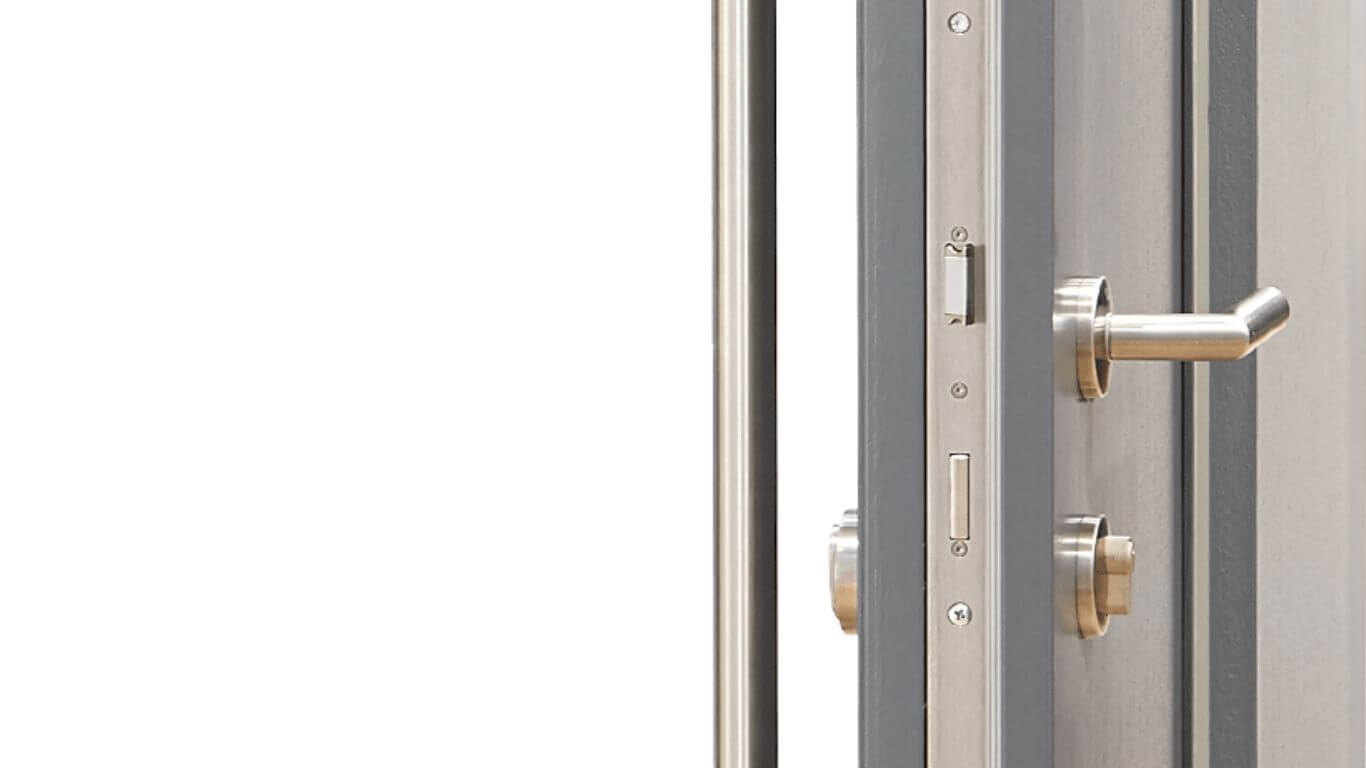
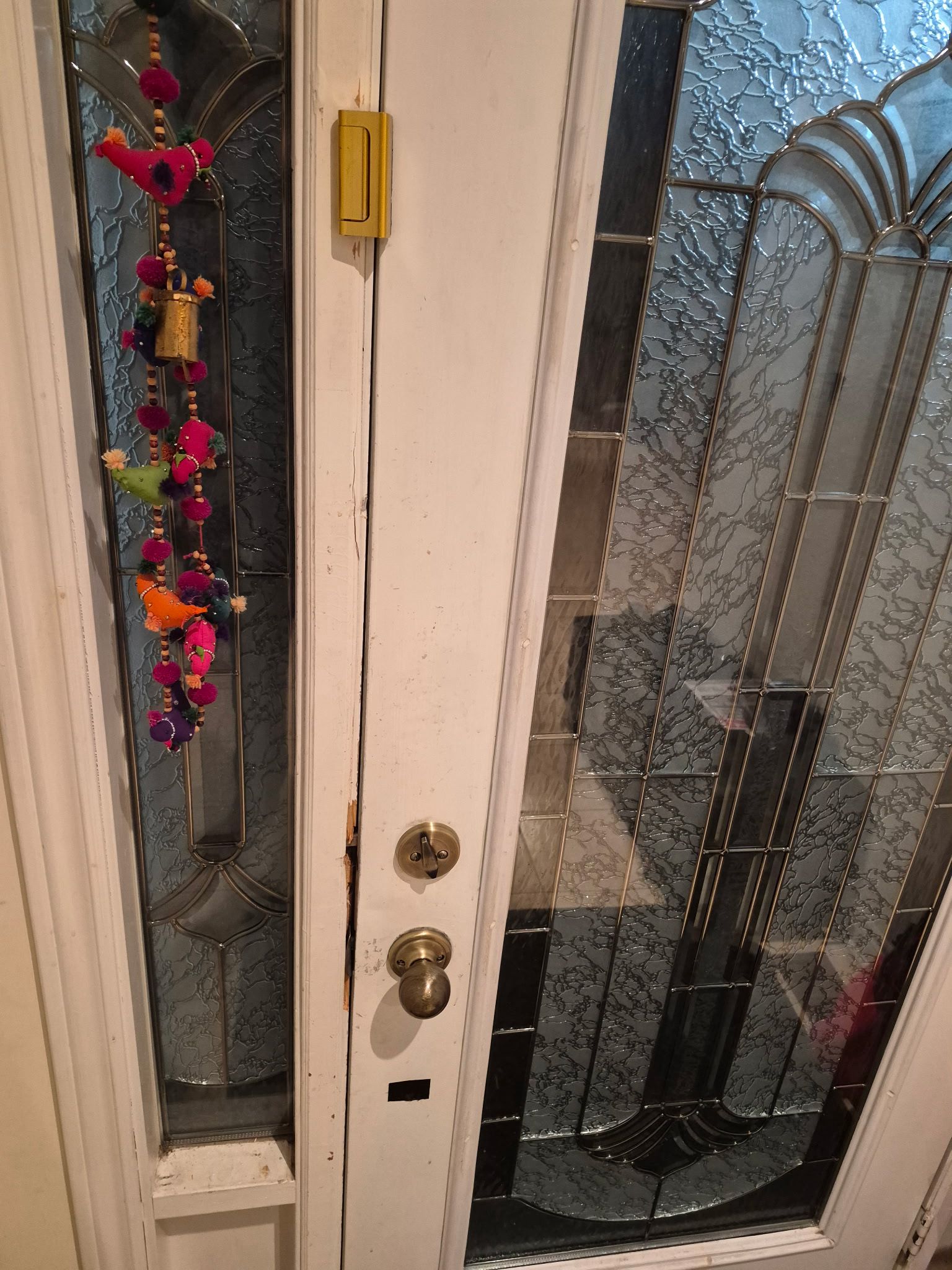
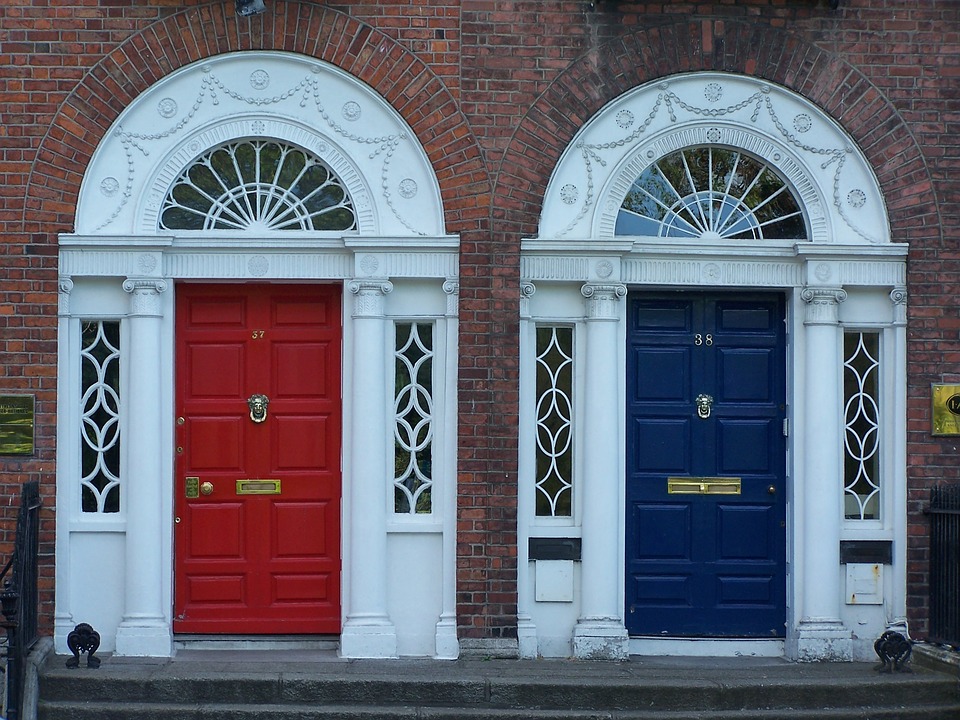
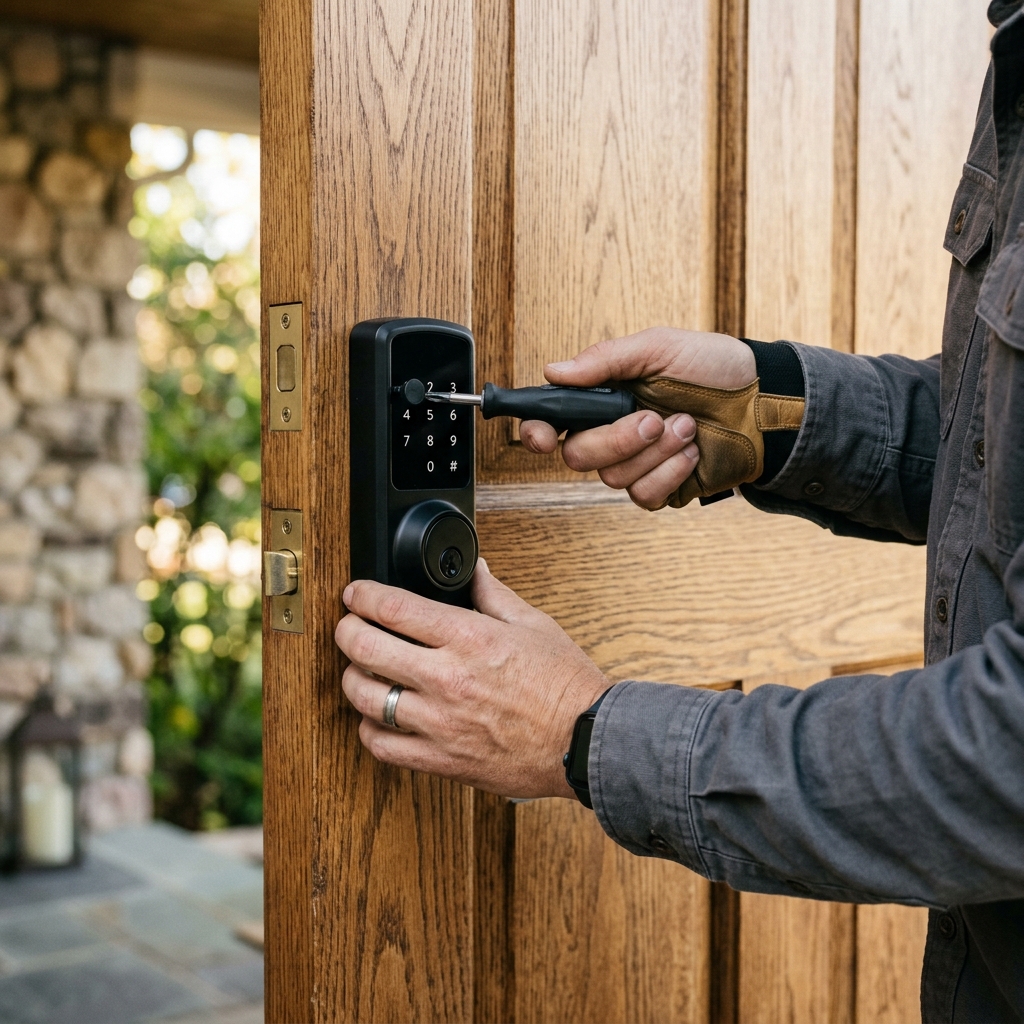
Many condo suites now have keypad or smart locks, sometimes fitted by an investor owner for short-term rental use. Check whether the building permits them at all. Some corporations prohibit them on suite doors, and an unpermitted lock may have to be removed.
If you keep the device, reset it fully: remove all existing user codes, change the administrator code, update the app account and test the mechanical override key. Code management of this kind is part of owning any keypad lock.
Condo renovations usually require management approval and a contractor certificate of insurance. Contractors will need access, often for weeks. Use a code you can cancel, or arrange access through the concierge rather than handing over your only key.
After the work, check that the suite door still closes and latches on its own, particularly if the door, frame or closer was touched. Closing, latching and key operation are the things to test, the same checks made for lock problems after a renovation.
Confirm the handover list is complete. Ask management about fobs, mailbox keys and the suite lock policy. Deactivate anything unaccounted for. Reset any keypad or smart-lock device and its accounts. Test the suite door: does it close and latch on its own, does the key turn smoothly, does the deadbolt throw fully.
Record what you now hold: keys, fobs, codes and who has them. Keep it with your closing documents.
The period before closing is the easiest time to get answers, because the seller and their lawyer are still engaged. Ask how many suite keys and fobs exist, whether any have been reported lost, whether the suite lock has ever been changed, and whether the unit has been rented. A unit that has been tenanted may have had keys held by several people, and an investor owner may have fitted a keypad the corporation never approved.
Ask the property manager for the building's rules on suite hardware, fob issuing and contractor access, and for the current fees. Knowing the process before you need it turns a frustrating week into a series of straightforward errands.
Parking spaces and lockers often have their own credentials and their own locks, and they are easy to overlook in a handover. A parking transponder is programmed by the building. A locker may use your own padlock, a building-issued lock or a key held by management.
Check each one in the first week: open the locker, test the parking access, and confirm the bicycle room credential if you plan to use it. If a locker padlock has no key, the building's process for authorized removal applies, and a locksmith works within that rather than cutting a lock on request.
A final point on timing. Most of this is easiest in the first week, while the seller's lawyer is still reachable, the property manager is expecting your call and the move is fresh in everyone's mind. Leave it six months and a missing fob becomes a bigger errand, an unapproved keypad becomes your problem rather than the seller's, and nobody remembers how many suite keys were handed over. Half an hour of calls and a short checklist at the start is usually enough to close the whole question, and it leaves you with a written record of exactly who can enter your suite and how. Keep that checklist with your closing documents, along with the fob numbers issued to you and the date each one was handed over, so the record stays useful if you sell or rent the unit later.
When you call, tell us the building, whether management has confirmed what is permitted, and what you want to change. If the suite is master-keyed, say so, because the work has to stay within that system. Repairs to suite doors are handled through condo lock repair.
Keep reading
Consider it, but check the building's rules first. The previous owner, their family, a former tenant or a contractor may still hold a key. Many corporations require the suite cylinder to stay within a master-key system so staff can reach the unit for maintenance or a water leak, and some ask for a key to be deposited with management. Rekeying within the existing system usually satisfies both concerns: your key changes, and building access remains.
Consider it, but check the building's rules first. The previous owner, their family, a former tenant or a contractor may still hold a key. Many corporations require the suite cylinder to stay within a master-key system so staff can reach the unit for maintenance or a water leak, and some ask for a key to be deposited with management. Rekeying within the existing system usually satisfies both concerns: your key changes, and building access remains.
The corporation or its property manager. Fobs, access cards and parking transponders are programmed by the building, and only the building can deactivate or issue them. A locksmith cannot do it. There is usually a form and a fee, and the registered owner normally has to make the request. Count the fobs you receive at closing against the handover list, and report anything missing straight away.
Ask for a written list: suite door keys and how many, mailbox key, locker and bicycle room keys, parking fobs or transponders, building entry fobs or cards, garage remotes, and any keypad or smart-lock codes with administrator access. Check what actually arrives against that list. Missing items cost money to replace and can take time, so raising them straight away is better than discovering the gap weeks later.
Reset it properly. Remove every existing user code, change the administrator code, and make sure the previous owner's app account is removed and administrator access is transferred to you. Test the mechanical override key, since it may not have been used in a long time. Also check whether your building permits smart locks on suite doors at all; some corporations do not, and an unpermitted device may have to be removed.
It depends on the building. In some, the corporation manages the mailboxes and issues keys. In others, the boxes are Canada Post community mailboxes with their own process and their own locks. Ask management which applies before assuming a locksmith can change it. If a mailbox key is missing from the handover, the replacement route follows whichever of those two arrangements is in place.
You should not. A suite cylinder taken off the building's master-key system can prevent staff from reaching your unit during a leak, a fire alarm or another situation where time matters, and it may breach the declaration or rules. If you are concerned about who holds keys, ask management whether the building can arrange a change within its system, or whether depositing a key with them would allow a cylinder change.
Usually yes. Suite entry doors in condominium buildings are typically fire-rated assemblies fitted with closers, and they must close and latch on their own. That limits hardware choices and rules out modifications that affect the rating, such as cutting the leaf. Any lock change should keep the door latching properly. Tell us about the door when you call so the work suits it.
Condo renovations normally need management approval and a contractor certificate of insurance, and trades will need access for the duration. Use a keypad code you can cancel afterwards, or arrange access through the concierge, rather than handing over your only key. When the work is finished, check that the suite door still closes and latches on its own, especially if the door, frame or closer was touched.
GTA Lockman Mobile Locksmith Services is a mobile locksmith working on homes, businesses and vehicles across Toronto and the GTA, with more than 14 years in the trade. Every review is written by a customer on Google, where you can read them in full.
Areas served: Toronto, North York, Scarborough, Etobicoke, Vaughan, Richmond Hill, Markham, Stouffville, Newmarket, Mississauga, Brampton, Oakville, Milton, Halton Hills, Pickering, Ajax, Whitby, Oshawa, Uxbridge.
Describe the door, hardware and service address. Contact GTA Lockman Mobile Locksmith Services to confirm the scope and scheduling for your location.