Locksmith services are always 10% off for seniors.
Open Mon–Thu 8:30 AM–9 PM, Fri 8:30 AM–4 PM, Sun 9:30 AM–9 PM
Locksmith services are always 10% off for seniors.
Open Mon–Thu 8:30 AM–9 PM, Fri 8:30 AM–4 PM, Sun 9:30 AM–9 PM
GTA Lockman Mobile Locksmith Services · Toronto & GTA
Narrow-stile deadlocks, hook bolts and euro cylinders on condo, townhouse and terrace doors.
Related services
Restore reliable latching by checking the handle, lock, keeper and sliding panel together.
Learn moreAssess the lock strip, gearbox and door alignment as one system before choosing compatible repair parts.
Learn moreFind why the handle moves, droops or fails to retract the latch, then address the responsible component.
Learn moreFree a frozen lock without damaging it, and find out whether ice, alignment or batteries caused the problem.
Learn moreWhat to collect at closing, what the corporation controls, and when a suite cylinder may be rekeyed.
Learn moreWhat to do when the part you need is no longer made, and how to judge a repair against a retrofit.
Learn more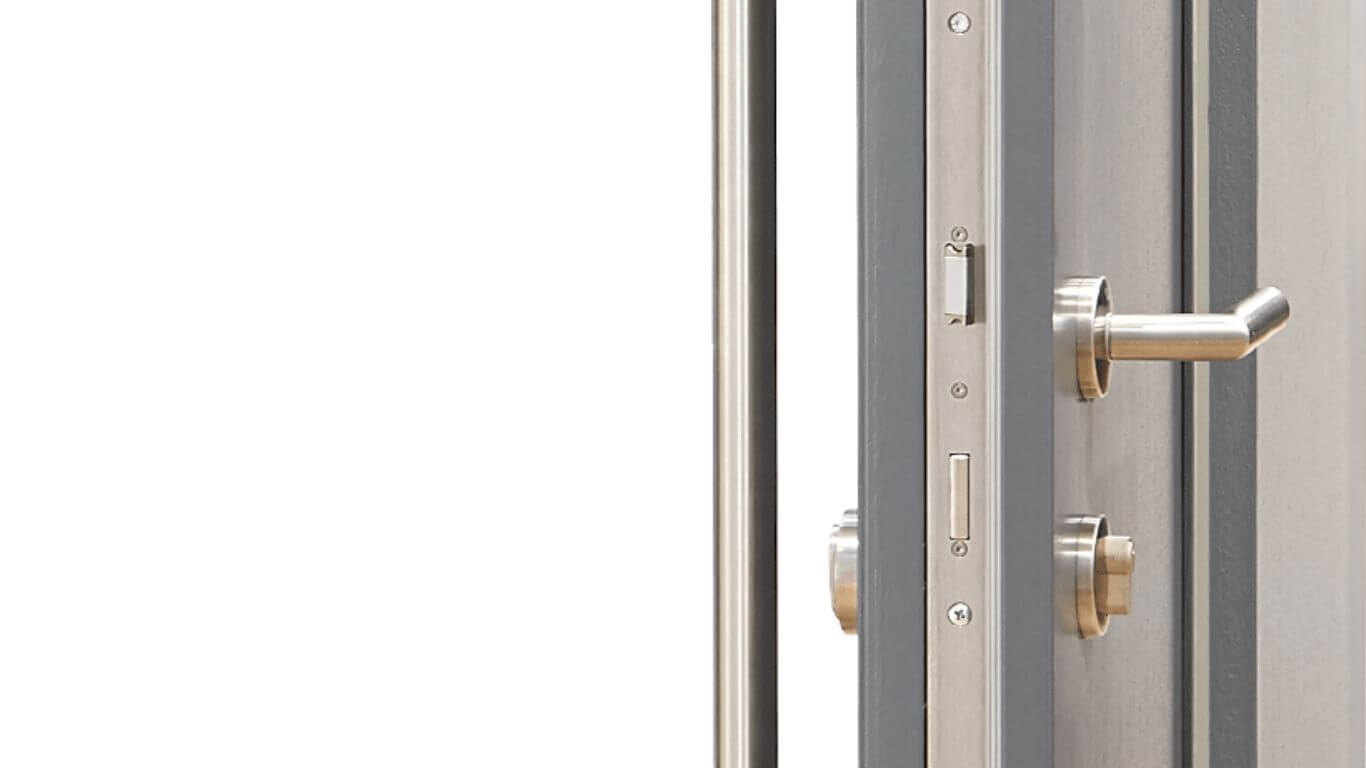
Aluminium-framed glass doors are common in condominium towers, townhouse complexes, newer homes with modern entrances, and on terraces and rooftop decks. They look light and open, with a narrow metal frame around a large pane of glass. The narrow frame is exactly what sets their locks apart from those on a wood or steel entrance door.
A standard residential deadbolt needs a certain amount of solid door around it. An aluminium door stile, the vertical part of the frame beside the glass, is often only a couple of inches wide and hollow. The lock has to fit inside that narrow section, which means it is a different kind of lock altogether.
Narrow-stile deadlocks. A mortise lock designed to fit in a narrow aluminium stile, operated by a cylinder on the outside and a thumbturn or cylinder inside. The bolt is often a swinging hook bolt that pivots out into the frame, which resists being forced apart better than a straight bolt in a thin frame.
Narrow-backset latches. A latch operated by a lever or push-pull handle, sometimes combined with the deadlock.
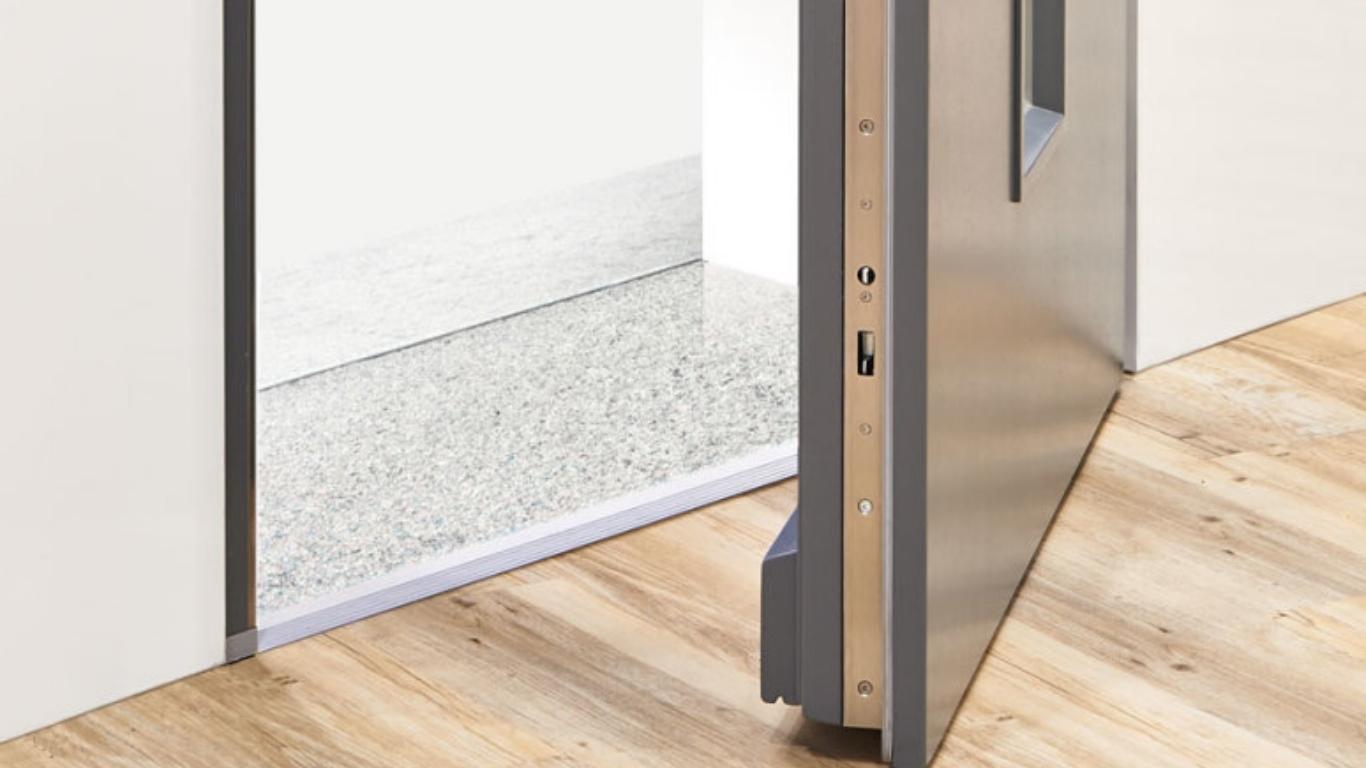
Multipoint locks. Many aluminium terrace and entrance doors, particularly European-style systems, use a multipoint lock that throws bolts or hooks at several points along the edge when the handle is lifted and the key turned.
Euro profile cylinders. Many of these systems use a euro profile cylinder rather than the round cylinders common in North American houses. The cylinder length has to match the door thickness and the lock position.
The key turns but the bolt does not. In narrow-stile deadlocks, the cam on the cylinder or the linkage inside the lock wears or breaks. The fix is often a new cylinder with the correct cam, or a replacement lock body.
The hook bolt will not engage. Aluminium doors move with temperature more than people expect, and the hook bolt can miss its keeper. Adjusting the keeper, or the door hinges or pivots, usually brings it back.
The handle droops or the lever is loose. Springs wear in lever handles on busy doors. Replacement handles and springs are usually available for common systems.
The door does not close on its own. Aluminium entrance doors often have a closer or floor spring. When it weakens, the door stops latching, and the lock is blamed. Adjusting the closer is often the fix, and worn lever springs are replaced as ordinary loose door handle and lock repair.
Multipoint locks stiff to lift. The door has dropped, so the hooks or bolts meet their keepers out of line. Adjusting the door is the first step before the gearbox is replaced, much as with multipoint lock repair.
Glass. Much of the door is glass, and a thumbturn inside can be reached if the glass breaks. Laminated glass helps, as does a cylinder on both sides where it is safe to have one. The same reach-through issue arises with sidelights and glass beside the lock.
Cylinder quality. Euro profile cylinders vary widely. Better cylinders resist snapping, drilling and picking; basic ones do not. On an entrance door, choosing a good cylinder is one of the most useful upgrades.
Frame strength. Aluminium frames are strong for their weight but can be flexed if the fixings into the building are weak. A hook bolt helps here because it resists the door and frame being pried apart.
In condo buildings and townhouse complexes, the corporation or management company often controls the entrance doors and their hardware. Terrace and balcony doors inside a unit may be the owner's responsibility, but common-area doors and the main building entrances usually are not. Check the corporation's rules before changing any lock on an aluminium entrance door, since some buildings require a particular cylinder or keyway to fit the building's master system. Suite keys, fobs and door rules are all worth checking when buying a condo.
Doors onto terraces and rooftop decks are often aluminium-framed with multipoint locks. They face the weather directly, so water, grit and ice affect them more than an entrance door. A yearly clean and dry lubrication of the lock mechanism, and a check of the drainage at the sill, prevent many problems.
Sliding aluminium doors are a separate type with their own hook locks and rollers, and the approach to those is similar to that for patio door locks and handles.

Where the aluminium door uses a euro profile cylinder and the rest of the home uses round cylinders, the two usually cannot share a key directly, because the keyways differ. Some manufacturers offer cylinders in both formats on the same keyway, which allows one key throughout. Asking about this before replacing cylinders avoids ending up with two keys when one would do.
A euro cylinder is measured from the centre of the fixing screw hole to each end, giving two measurements, for example 35/35 or 40/45. The cylinder should sit flush with the handle or escutcheon on each side, or no more than a few millimetres proud. A cylinder that sticks out too far is easier to attack.
The main entrances to condominium and apartment buildings are often aluminium-framed glass doors with narrow-stile locks, electric strikes and access control. These belong to the building and are maintained by the corporation or management, not the individual owners. If the building entrance is not locking, report it to management rather than arranging a repair yourself.
For management, the common issues are the same as for any aluminium entrance: worn cylinders, closers that no longer latch the door, and electric strikes that have drifted out of alignment. A door that does not latch leaves the building open to anyone who follows a resident in.

Aluminium conducts cold well, so aluminium door frames get very cold in winter. Condensation forms on the inside, and in severe cold it can freeze in the lock or around the hook bolt. A lock that freezes should never be forced; warming the cylinder gently or using a de-icer made for locks, and improving the seal of the door, deals with it. Frozen and stiff locks follow much the same pattern as other frozen door locks in winter.
When a narrow-stile lock body wears out, the replacement must match the backset, the faceplate dimensions and the bolt type. Many narrow-stile locks follow standard dimensions, so a current model often fits the existing cutout. Where the original maker's parts are no longer available, a compatible replacement can usually be found, the same approach used for obsolete and discontinued door hardware.
When a euro cylinder is being replaced, it is worth considering an upgraded cylinder. Better euro cylinders have anti-snap features, so that if the outside part is broken off, the lock still holds; they also resist drilling and picking, and many come with key control so copies can only be made with authorisation. On an entrance door, especially one at ground level, this is one of the most useful upgrades available. On a terrace door high in a tower, the priority may simply be a cylinder that works reliably in all weather.
Large sliding and folding aluminium door systems, often called bi-fold or multi-slide doors, are common on newer homes and condos opening onto decks and terraces. Their locks are specific to each system, often with multipoint hooks and shoot bolts at the top and bottom of each panel. When one of these systems stops locking, identifying the manufacturer and the system comes first, because parts are rarely interchangeable.
On aluminium doors with multipoint locks, the handle is lifted to engage the hooks and bolts before the key is turned. If the handle becomes hard to lift, or springs back up, the door has usually moved so the hooks meet their keepers out of line, or a keeper has worked loose. Forcing the handle breaks the gearbox. Adjusting the keepers and the door, then checking the handle moves freely, is the right order.
When a pane in an aluminium door is replaced, the glazing beads and the frame are disturbed, and the door can shift slightly. After glass work, check that the lock still engages cleanly and that the door closes without rubbing. A small keeper adjustment is often all that is needed, but catching it early prevents strain on the lock.
Some condominium corporations set rules for terrace and balcony door hardware, especially where doors form part of the building envelope or face a common area. Check with management before replacing a terrace door lock or cylinder, and keep the invoice, since the corporation may ask what was fitted. Terrace doors high in a tower also face strong winds, so the lock and keepers must hold the door firmly against its seals.
Tell us what the door is used for, whether it is in a condo or house, what the lock is doing, and whether the cylinder is round or euro profile. Photographs of the door edge with the lock faceplate, the cylinder on both sides and the handles help identify the system.
We can replace cylinders and lock bodies, adjust hook bolts, keepers and closers, repair handles and multipoint mechanisms, and key cylinders to match where the systems allow. Residential work is part of our residential locksmith services, and building entrances are handled through our commercial locksmith services.
Keep reading
The aluminium stile beside the glass is usually narrow and hollow, so there is no room for a standard deadbolt. These doors use narrow-stile deadlocks or multipoint locks designed to fit inside the frame.
The aluminium stile beside the glass is usually narrow and hollow, so there is no room for a standard deadbolt. These doors use narrow-stile deadlocks or multipoint locks designed to fit inside the frame.
A bolt that swings out in an arc and hooks into the frame, rather than sliding straight. In a narrow aluminium door, it resists the door and frame being pried apart better than a straight bolt.
Usually the cam on the cylinder or the linkage inside the lock is worn or broken. A new cylinder with the correct cam, or a replacement lock body, normally fixes it.
A cylinder with a distinctive profile, common on European-style aluminium and uPVC doors. It is measured from the centre of its fixing screw to each end, and the length must suit the door.
Sometimes. Euro and round cylinders usually use different keyways, but some manufacturers make both formats on the same keyway so one key works throughout.
Often the closer or floor spring has weakened. Adjusting the closer usually restores latching without any change to the lock.
Check the condo corporation's rules first. Terrace doors inside a unit may be the owner's responsibility, but entrance hardware can be tied to the building's master key system.
Clean and dry-lubricate the mechanism once a year, keep the sill drainage clear, and adjust the door if the bolts start to meet their keepers out of line.
GTA Lockman Mobile Locksmith Services is a mobile locksmith working on homes, businesses and vehicles across Toronto and the GTA, in the trade since 2010. Every review is written by a customer on Google, where you can read them in full.
Areas served: Toronto, North York, Scarborough, Etobicoke, Vaughan, Richmond Hill, Markham, Stouffville, Newmarket, Mississauga, Brampton, Oakville, Milton, Halton Hills, Pickering, Ajax, Whitby, Oshawa, Uxbridge.
Describe the door, hardware and service address. Contact GTA Lockman Mobile Locksmith Services to confirm the scope and scheduling for your location.