Locksmith services are always 10% off for seniors.
Open Mon–Thu 8:30 AM–9 PM, Fri 8:30 AM–4 PM, Sun 9:30 AM–9 PM
Locksmith services are always 10% off for seniors.
Open Mon–Thu 8:30 AM–9 PM, Fri 8:30 AM–4 PM, Sun 9:30 AM–9 PM
GTA Lockman Mobile Locksmith Services · Toronto & GTA
Measuring, anti-snap protection and replacing the cylinder on uPVC, composite and aluminium doors.
Related services
Glass within reach of the thumbturn, and the choices in glass, thumbturns and secondary locks that deal with it.
Learn moreRekeying answers who holds a key; replacement answers whether the hardware suits the door. Compare both.
Learn moreAssess the lock strip, gearbox and door alignment as one system before choosing compatible repair parts.
Learn moreThe shape of the key slot decides which keys fit, whether locks can share a key, and who can copy it.
Learn moreNarrow-stile deadlocks, hook bolts and euro cylinders on condo, townhouse and terrace doors.
Learn moreHow a controlled keyway limits copying, what it costs in flexibility, and when an ordinary cylinder is enough.
Learn more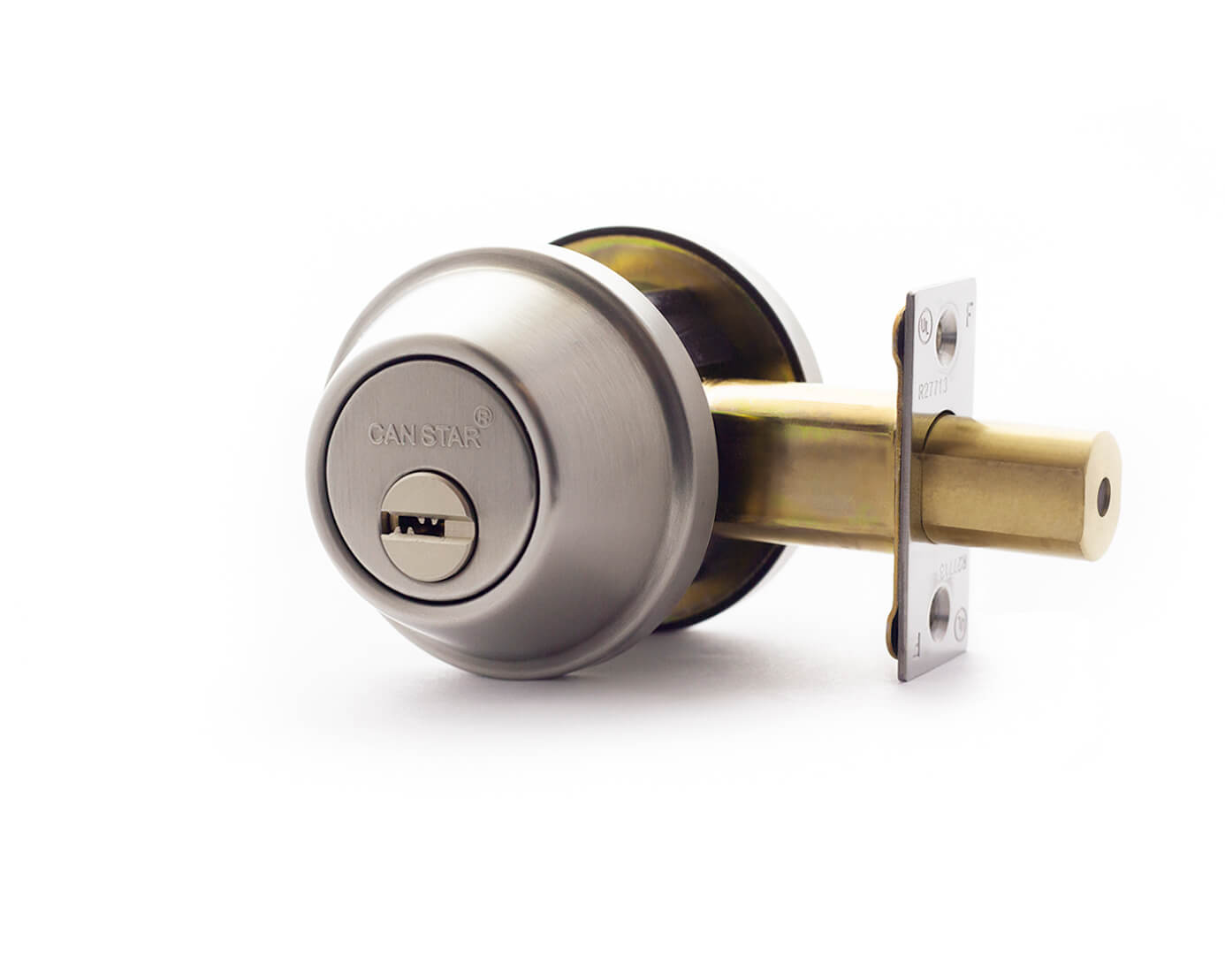
Euro profile cylinders are the lock cylinders used on most uPVC, composite and many aluminium doors, and on a growing number of European-style entrance doors in GTA homes and condos. They have a distinctive keyhole-shaped profile: a round top with a narrower section beneath. The cylinder slides through the lock case inside the door and is held by a single long screw through the edge.
Because the cylinder is a separate part, a euro cylinder can be replaced within a reasonable timeframe without changing the lock, which makes it the usual answer to lost keys, worn locks and security upgrades on these doors.
Double cylinder. Keyed on both sides. Common on uPVC and composite doors. The same fire-safety trade-off applies as with any key-operated inside lock: everyone inside needs the key to get out.
Key and thumbturn cylinder. Keyed outside, with a thumbturn inside. Easier to leave in a hurry and increasingly common on front doors. On glazed doors, the thumbturn can be reached through broken glass, a consideration shared with sidelights and glass beside the lock.
Half cylinder. Keyed on one side only, used on gates, cupboards and some internal doors.
Euro cylinders come in many lengths, and the length must suit the door. They are measured from the centre of the fixing screw hole to each end, giving two figures, for example 35/35, 40/45 or 45/50. The two sides are not always equal.
To measure:
Or, with the cylinder in place, measure from the centre of the fixing screw on the door edge to the outside face of each handle or escutcheon.
The right cylinder sits flush with the handle or escutcheon on each side, or no more than about three millimetres proud. A cylinder that sticks out further is easier to grip and break.
Euro cylinders have a known weakness. The cylinder is narrowest at the fixing screw, and a standard cylinder that protrudes from the door can be snapped at that point with force. Once snapped, the cam can be turned and the door opened.
Anti-snap cylinders have a deliberate sacrificial cut line in front of the fixing point. If the outer section is snapped off, the remaining part still locks the door. Many also include anti-pick, anti-bump and anti-drill features, and some have restricted keyways that control copying.
Fitting an anti-snap cylinder of the right length, so it does not protrude, is one of the most useful security improvements on a euro-cylinder door.
A security handle or escutcheon with a cylinder guard covers the cylinder face and makes it harder to grip. Combined with a correctly sized anti-snap cylinder, it greatly strengthens the outside of the lock.
Photos
Photographs from GTA Lockman Mobile Locksmith Services work across Toronto and the GTA. Send a picture of your own door and we can tell you what the visit would involve.
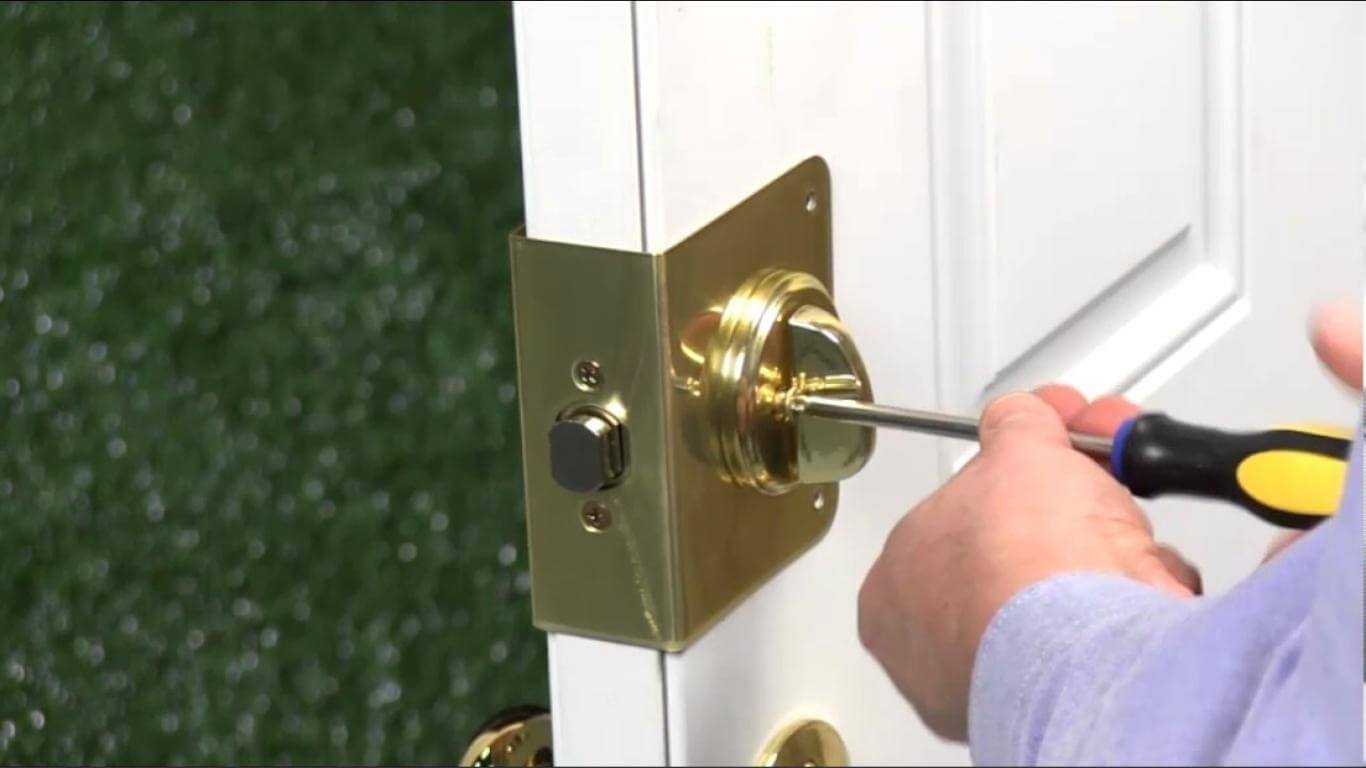
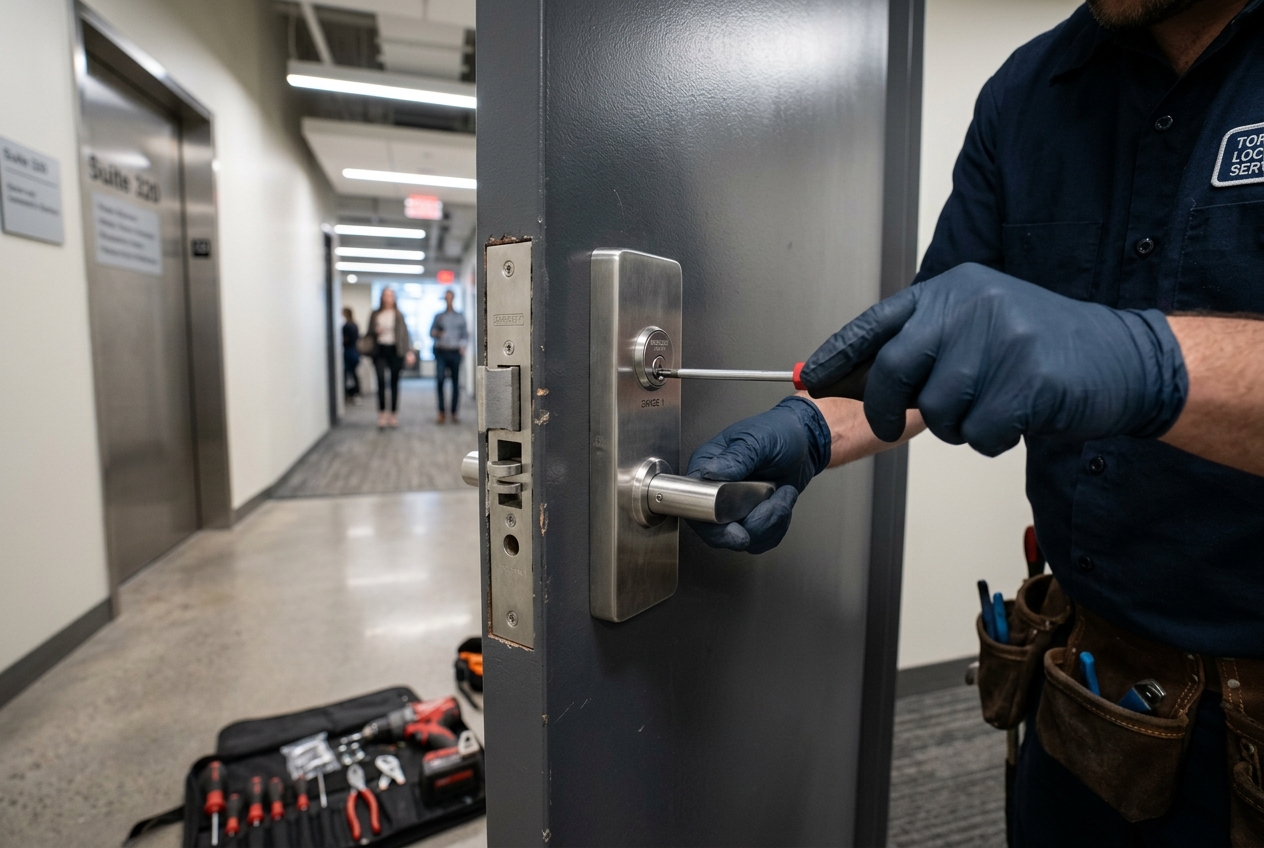
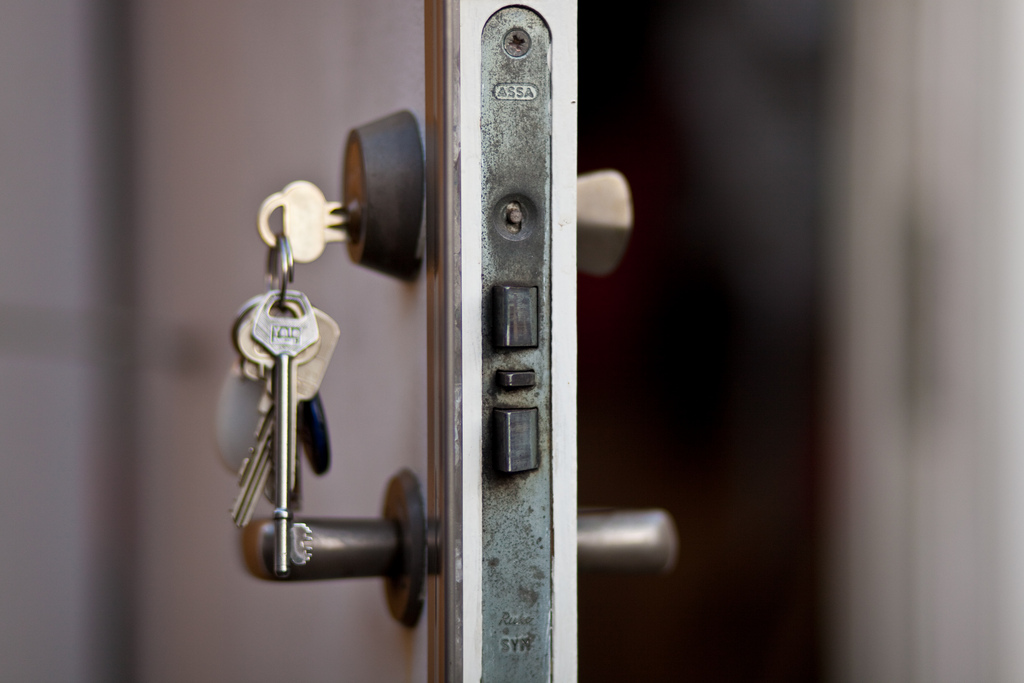
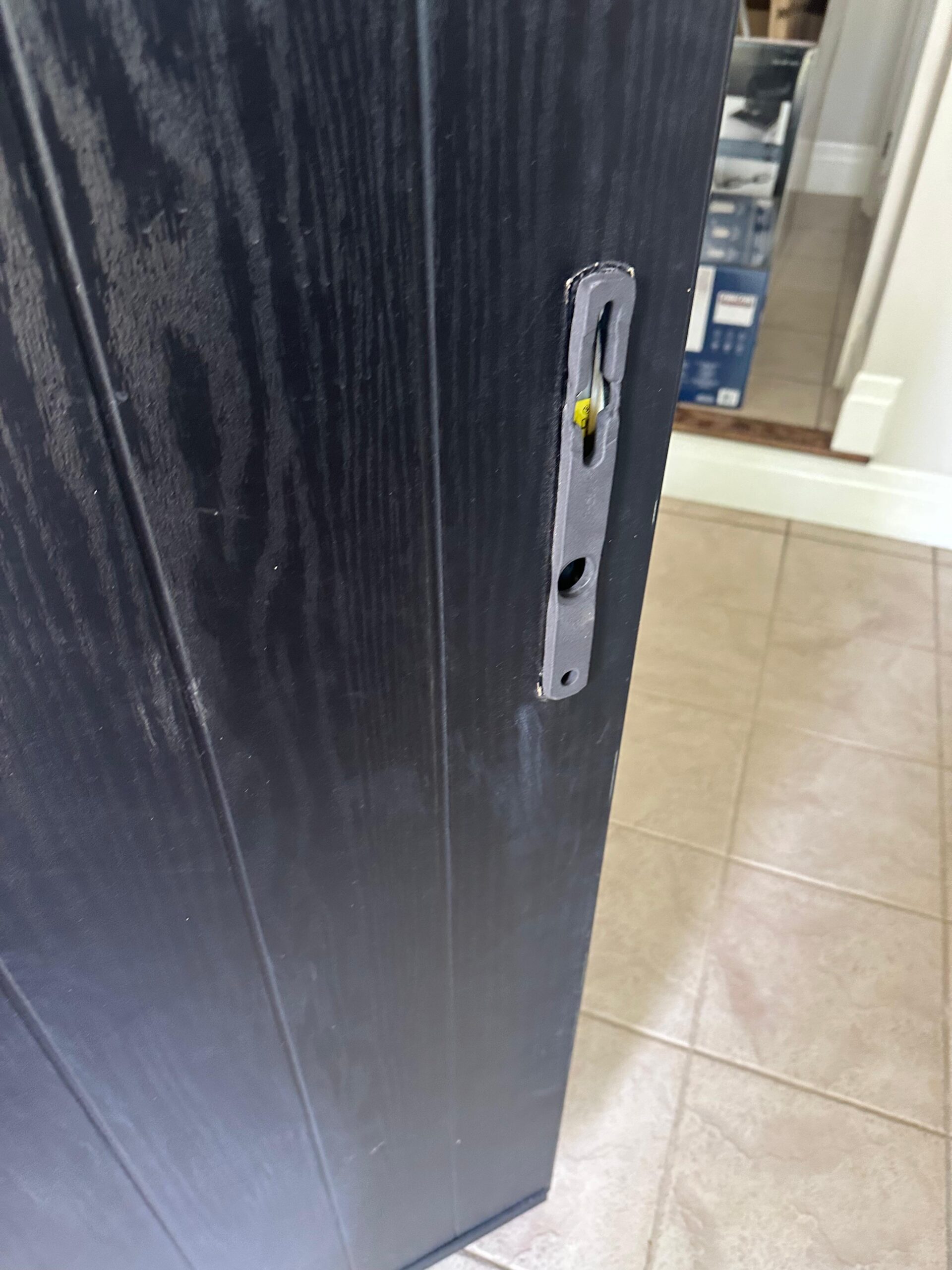
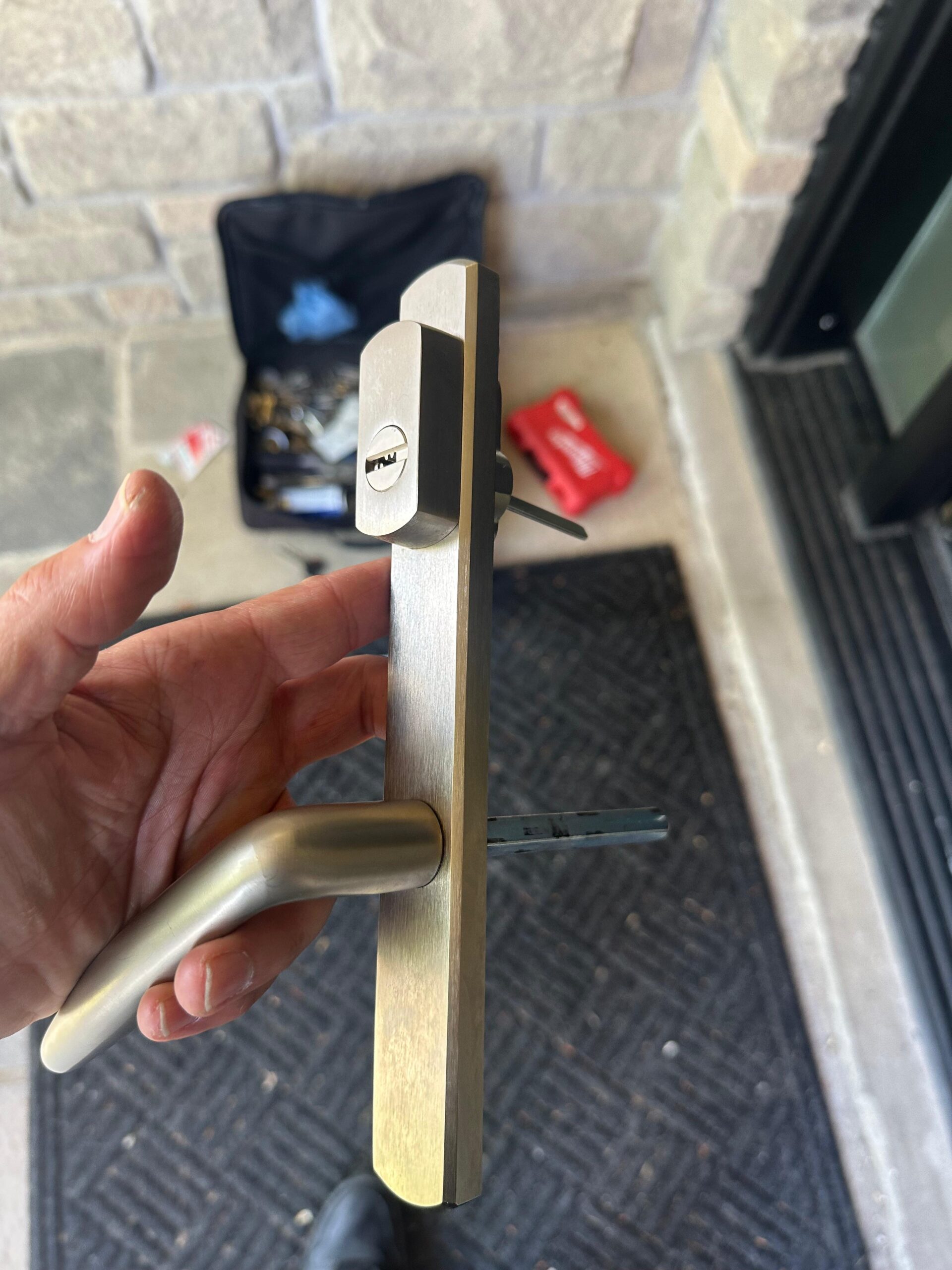
Replacing the cylinder alone is usually far less costly than replacing the whole lock. The broader choice between rekeying and replacing follows the guidance for rekey or replace.
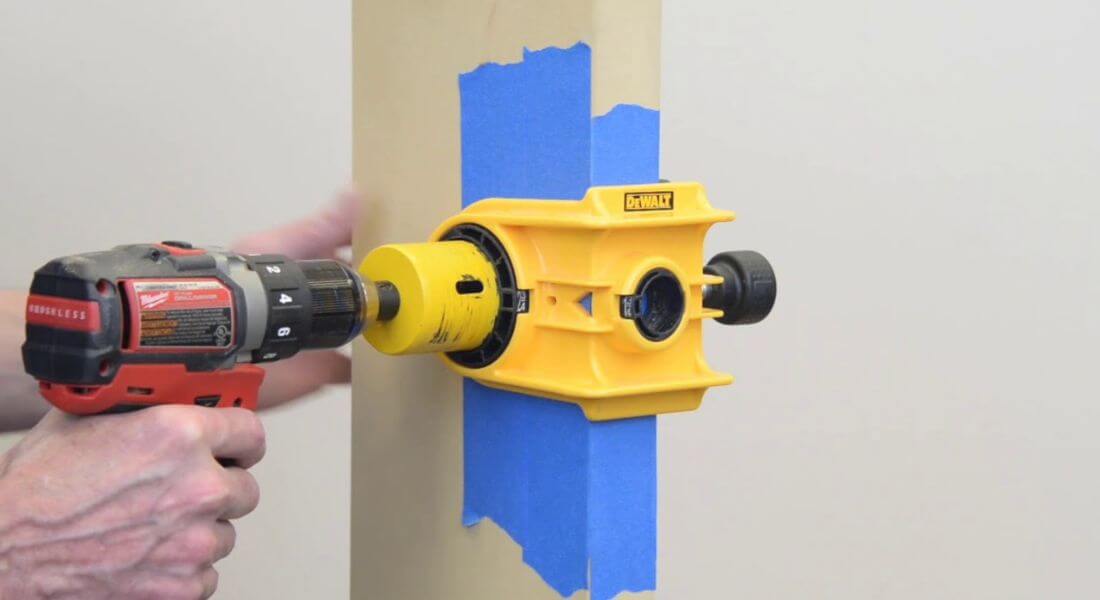
Most uPVC and composite doors have a multipoint lock: the handle is lifted to throw hooks and bolts along the door edge, and the key turns the cylinder to lock them. If the key is stiff to turn, the problem is often the door alignment putting pressure on the multipoint mechanism rather than the cylinder itself. Forcing the key strains the cylinder cam and the gearbox. Adjusting the keepers usually fixes it, as with other multipoint lock repair.
Several euro cylinders can be keyed alike, so the front, back and patio doors share a key. Where the house also has round North American cylinders, they usually use different keyways and cannot share a key, unless a maker offers both formats on the same keyway. Choosing cylinders with that in mind avoids carrying two keys, a point also made in keyways explained.
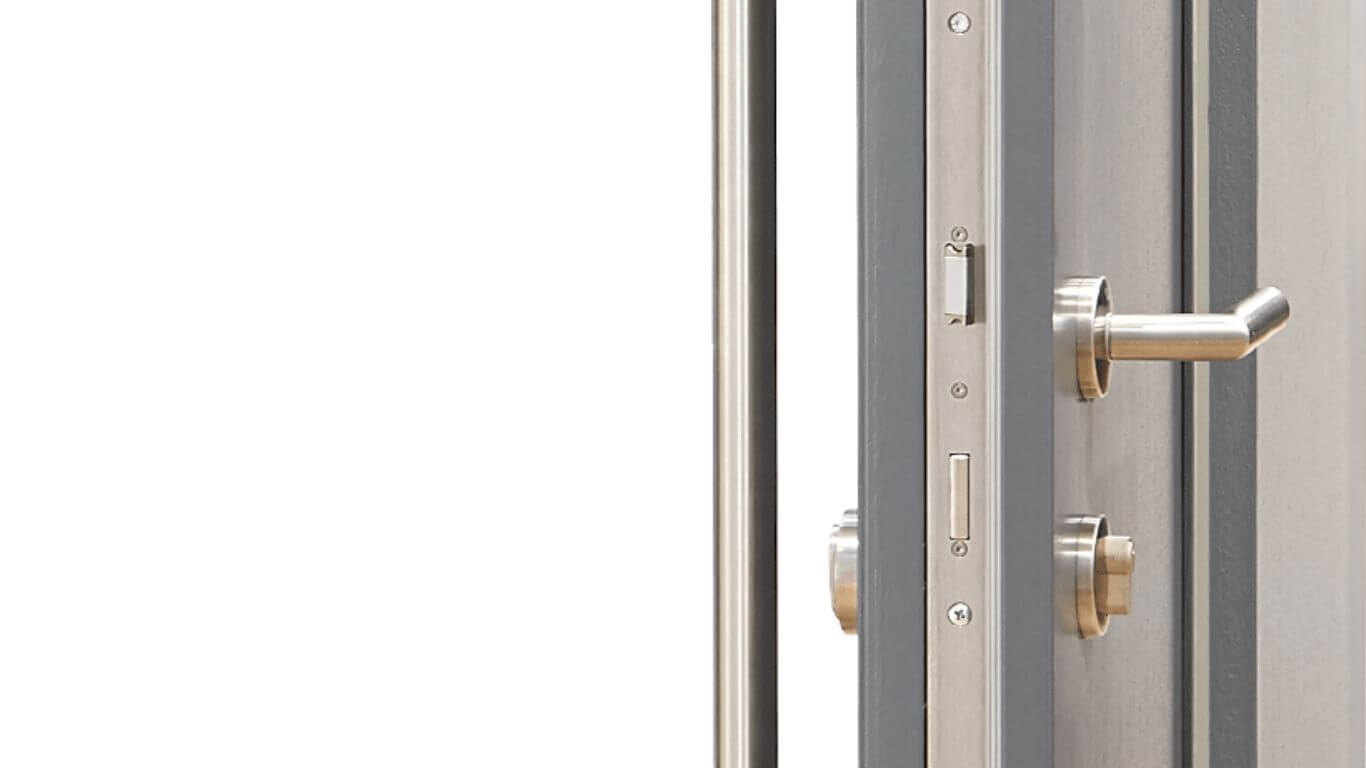
Aluminium entrance and terrace doors in condos and newer homes often use euro cylinders in narrow-stile locks. The same measuring and anti-snap considerations apply, along with the particular hardware of aluminium-framed glass door locks.
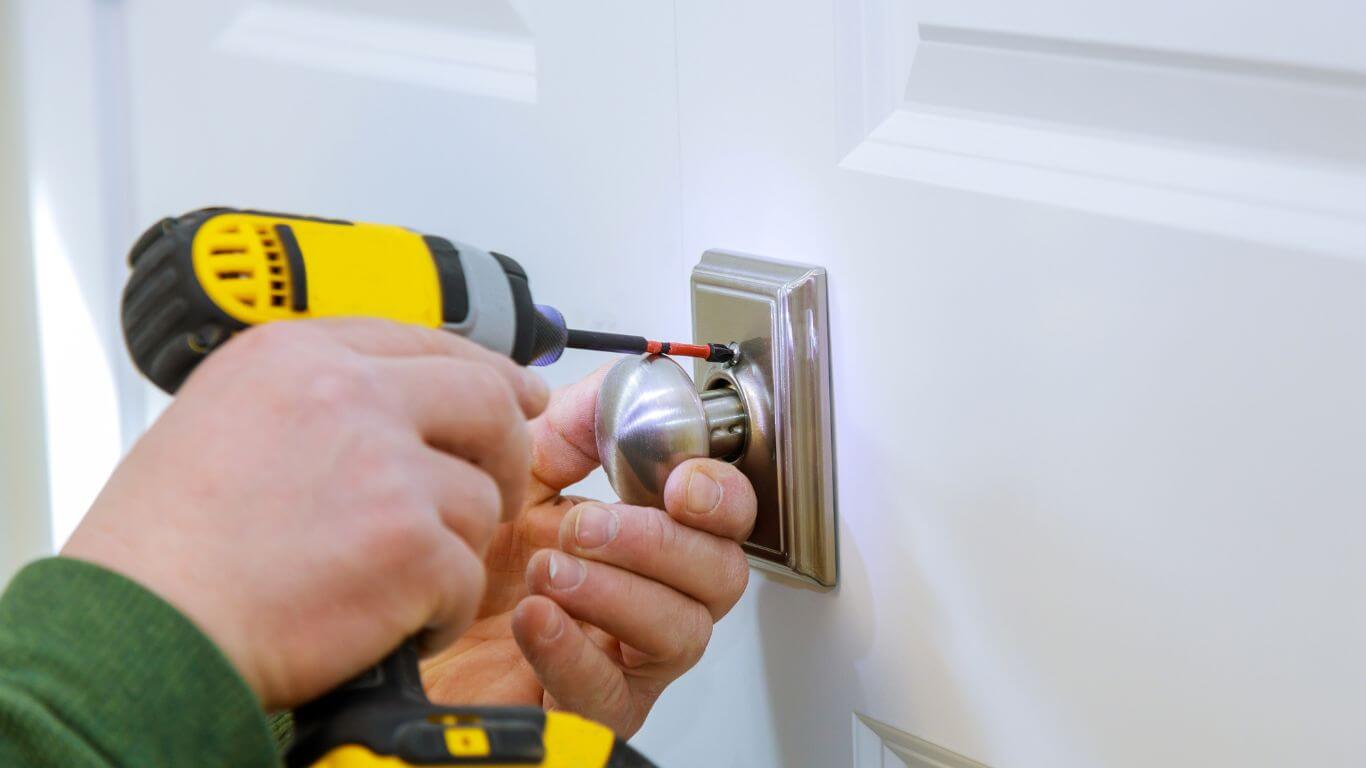
If the cylinder will not slide out, the cam is not lined up. Turn the key a little further in either direction until it does.
On a multipoint door, it is common to blame the cylinder when the real fault is the gearbox inside the door, or the other way round. A simple test helps: with the door open, lift the handle and turn the key. If the hooks and bolts move freely, the mechanism works and the problem is alignment. If the key turns but nothing moves, the cylinder cam may be broken or the gearbox failed. If the key will not turn at all with the door open, the cylinder itself is likely at fault.
Some euro cylinders are fitted with a clutch that allows a key to work from one side even if a key is left in the other side. Without that feature, a key left in the inside of a double cylinder can stop a key working from outside. Anti-snap cylinders with this feature are worth considering where a key is often left in the inside.
uPVC and composite doors fitted across the GTA vary widely in thickness and handle design, so there is no single standard size. Common sizes include 35/35, 35/40, 40/40, 40/45 and 45/45, but measuring is the only reliable way to know. Ordering by guesswork leads to cylinders that protrude or do not reach the cam.
Some euro cylinders come with restricted keys that can only be copied with a security card at an authorised dealer. For homes where several people hold keys, or for landlords, restricted euro cylinders give control over who can make copies. The same principle applies to restricted key systems on other locks.
A new euro cylinder needs little maintenance, but a puff of dry lubricant once or twice a year keeps it smooth, and the door should be checked each season to make sure the multipoint lock engages without force. A cylinder that starts to feel stiff after the door has moved is a sign to adjust the keepers, not to force the key.
Garage side doors and sheds with uPVC or composite doors also use euro cylinders. These doors face the weather and see less use, so their cylinders stiffen. Replacing them with weather-resistant anti-snap cylinders keyed to the front door means one key opens the house and the outbuildings.
Some modern internal doors, such as doors to home offices or storage rooms, use euro cylinders or euro thumbturn-and-release sets on bathrooms. The same measuring rules apply. For bathroom doors, a thumbturn and outside release set gives privacy with a way in from outside.
A stiff or unreliable euro lock is sometimes a worn key rather than a worn cylinder. Having a fresh key cut from the original or from the code often solves it for less than the cost of a new cylinder.
Some uPVC and composite door makers specify particular cylinders, and fitting a different make may affect the door's warranty. If the door is new, check the manufacturer's guidance before replacing the cylinder. For older doors, any quality anti-snap cylinder of the correct size is usually suitable.
Households and landlords with several euro-cylinder doors sometimes keep a spare cylinder keyed to the house. If a key is lost, the spare can be swapped in while the others are rekeyed, which keeps the house secure in the meantime.
Some smart locks are designed for euro-cylinder doors and fit over or replace the inside thumbturn. They depend on a cylinder with the right features, often a cylinder that works with a key left in the inside. Checking compatibility before buying avoids replacing the cylinder twice.
In very cold weather, uPVC doors contract and the multipoint lock may feel tighter. A cylinder that seems stiff in January may be fine in spring. Adjusting the keepers slightly for winter, rather than replacing the cylinder, is often the right response.
Tell us the door type, whether you want a double, key-and-thumbturn or half cylinder, and the measurements if you have them. Photographs of the cylinder face and the door edge help us bring the right size.
We can supply and fit anti-snap euro cylinders in the correct length, key several doors alike, fit security handles and escutcheons, and adjust multipoint locks so the key turns freely. Household work is part of our residential locksmith services.
Keep reading
A lock cylinder with a keyhole-shaped profile, used on most uPVC, composite and many aluminium doors. It slides through the lock case and is held by one screw in the door edge.
A lock cylinder with a keyhole-shaped profile, used on most uPVC, composite and many aluminium doors. It slides through the lock case and is held by one screw in the door edge.
From the centre of the fixing screw hole to each end, giving two figures such as 35/35 or 40/45. The sides are not always equal.
A cylinder with a sacrificial cut line, so if the outer part is snapped off, the rest still locks the door. Many also resist picking, bumping and drilling.
It should sit flush with the handle or escutcheon, or no more than about three millimetres proud. A protruding cylinder is easier to grip and break.
Often. Remove the fixing screw, turn the key slightly to line up the cam, slide the cylinder out and fit the new one the same way. The right length is essential.
Usually the door has dropped, so the multipoint hooks bind on their keepers. Adjusting the keepers often fixes it without replacing the cylinder.
Euro cylinders can be keyed alike with each other. Sharing a key with round North American cylinders usually needs both to use the same keyway.
A thumbturn inside allows a efficient exit without a key. A double cylinder needs a key on both sides, which resists reach-through entry but slows leaving in a fire.
GTA Lockman Mobile Locksmith Services is a mobile locksmith working on homes, businesses and vehicles across Toronto and the GTA, in the trade since 2010. Every review is written by a customer on Google, where you can read them in full.
Areas served: Toronto, North York, Scarborough, Etobicoke, Vaughan, Richmond Hill, Markham, Stouffville, Newmarket, Mississauga, Brampton, Oakville, Milton, Halton Hills, Pickering, Ajax, Whitby, Oshawa, Uxbridge.
Describe the door, hardware and service address. Contact GTA Lockman Mobile Locksmith Services to confirm the scope and scheduling for your location.