Locksmith services are always 10% off for seniors.
Open Mon–Thu 8:30 AM–9 PM, Fri 8:30 AM–4 PM, Sun 9:30 AM–9 PM
Locksmith services are always 10% off for seniors.
Open Mon–Thu 8:30 AM–9 PM, Fri 8:30 AM–4 PM, Sun 9:30 AM–9 PM
GTA Lockman Mobile Locksmith Services · Toronto & GTA
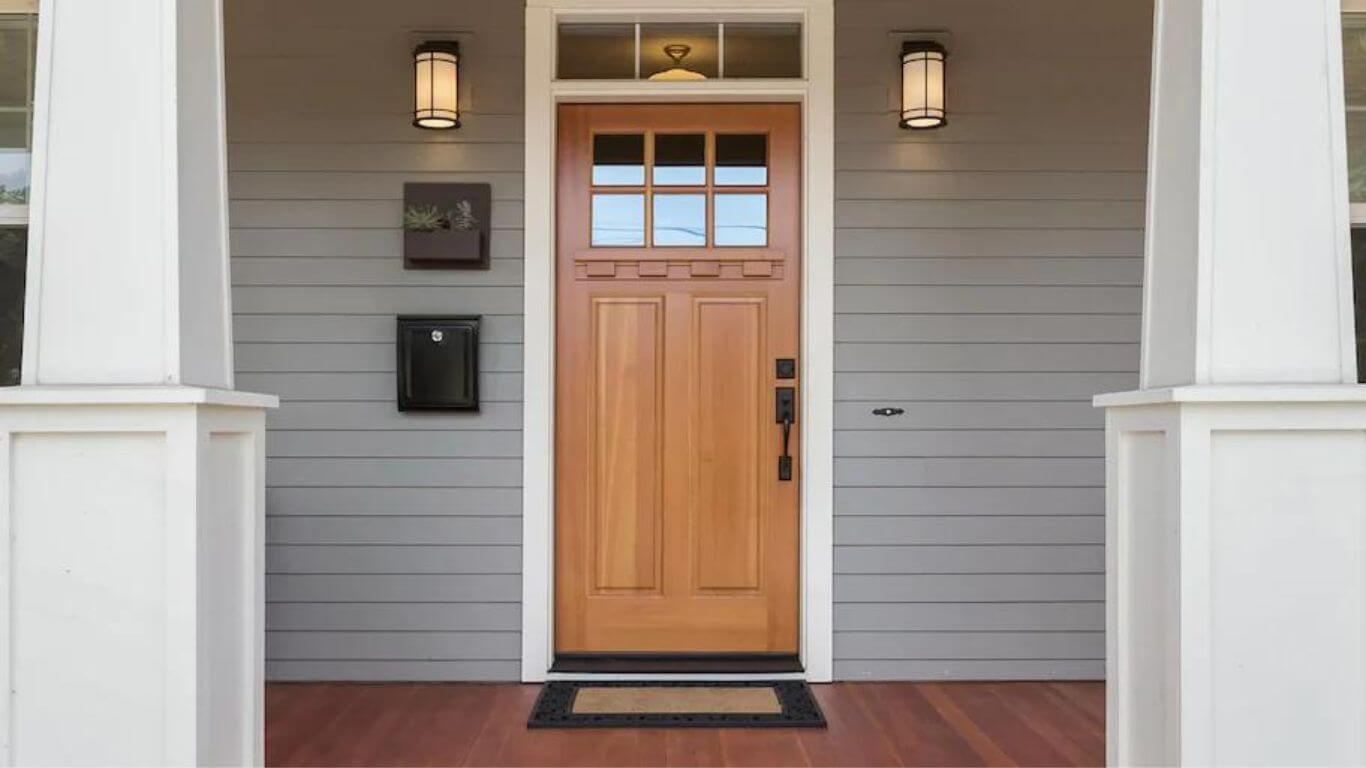
Keep an empty property secure and accessible to the people entitled to enter it, through a quiet period.
Related services
Who can authorize lock work on an estate property, and what to do with keys, key safes and an empty home.
Learn moreCheck every door before you travel, arrange access you can withdraw, and prepare locks for winter.
Learn moreClose up and open a seasonal property properly, and arrange access for family and trades from a distance.
Learn moreSeparate mechanical repairs from key-control changes and document the condition of each affected opening.
Learn moreSecure a forced door, repair damaged locks and frames, and document the work for your police report and insurer.
Learn moreReplace worn or unsuitable hardware with a lock that fits the door, its function and your access needs.
Learn more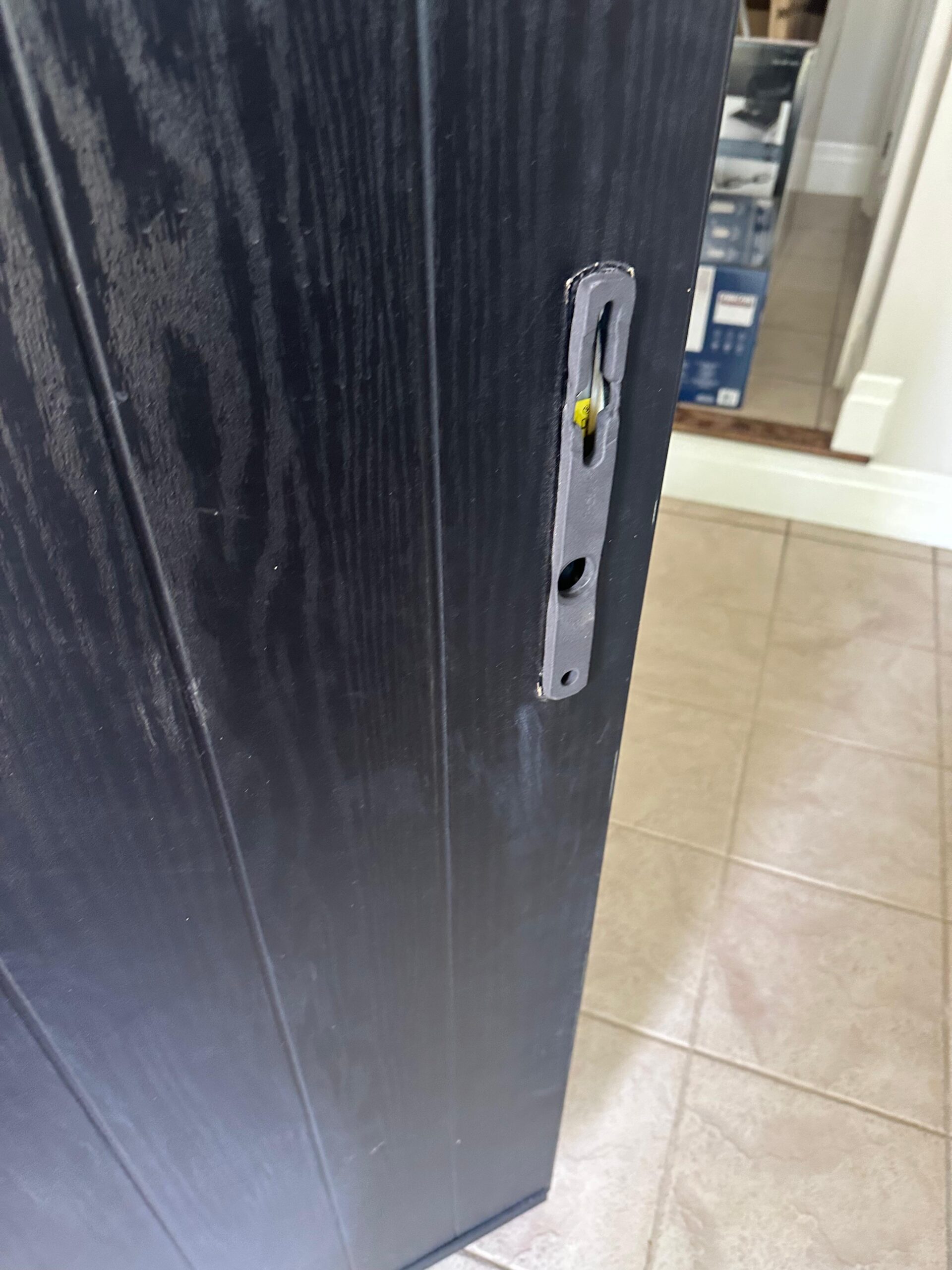
A property with nobody living in it behaves differently from an occupied one. Nobody notices a door standing open. Nobody hears the back window. Mail piles up and announces the vacancy. A burst pipe runs for three weeks instead of three minutes.
At the same time, more people need to get in than usual: an agent, a cleaner, a stager, trades, an inspector, a family member, a buyer's representative.
So the requirement is awkwardly two-sided. The home has to be harder to enter than usual for people with no business there, and easier to enter than usual for a rotating list of people with legitimate reasons.
The right arrangement depends on the situation.
A house listed for sale, occupied until recently, with showings booked. A property being held while an estate is settled; see locks after a death in the family. A unit between tenancies with cleaners and trades in and out; see returning keys at the end of a tenancy. A home whose owner is away for the season, which is a different case again; see leaving home for winter or vacation.
The security requirement is similar across all of them. The access requirement is not.
Before anything else, know who can authorize lock changes, because empty properties are exactly where this gets murky.
For a listed home, usually the owner, with the agent acting on their instruction. For an estate, the estate trustee or executor, evidenced by the appointing document, not a family member holding a key. For a property between tenancies, the landlord or their management company. For a property in a legal process, whoever the process names.
Having that settled before a visit avoids a wasted appointment, and the documents usually needed are the same as for proving you are entitled to enter.
The moment the property empties is the moment to reset it.
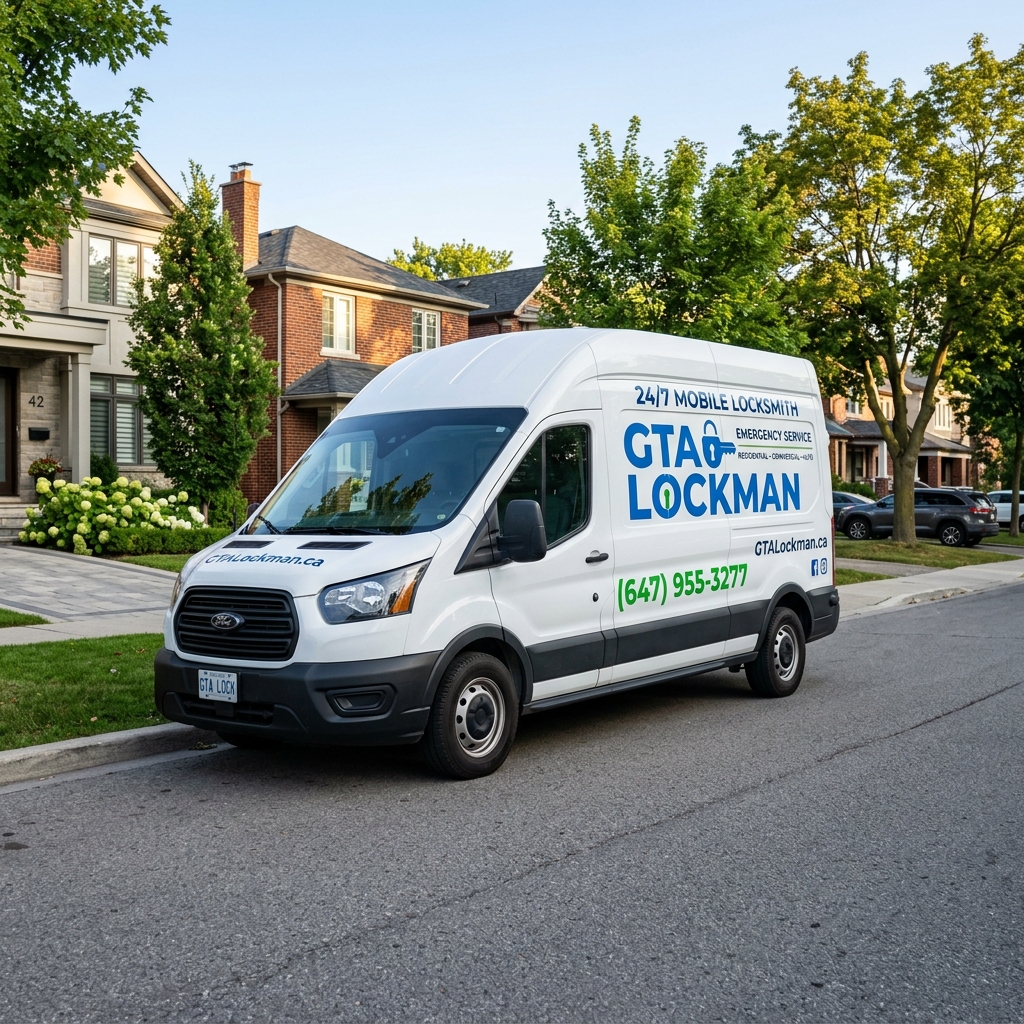
Keys have usually accumulated over years: previous tenants, contractors, family, a cleaner, a neighbour. Nobody has a full list. Rekeying the exterior cylinders at the start of the vacancy draws a line, and it is cheaper than replacing hardware; see rekey or replace: how to decide.
Then decide how access will work during the vacancy, and make it something that can be withdrawn: a lockbox with a code you change, or a keypad whose codes can be deleted, rather than a set of keys handed out and forgotten.
A lockbox is the standard tool for a vacant property and it is routinely used badly.
Mount it on something solid, not on a gate or a light fitting. Put one key in it, not a full set. Change the code between phases of the vacancy, particularly between trades and showings. Take it off the day the property changes hands. And do not use a code that appears on the listing, in an email chain and in three group messages by the second week.
Where several trades need access over a longer period, a keypad lock with individual codes is a better instrument, because you can see the arrangement and remove one person's access without affecting everyone else; see contractor access during a renovation.
Most of the signals are free to remove: mail and flyers accumulating, an unshovelled walk in winter, no lights on any evening, a lawn nobody cuts, a parcel sitting on the step for a week, blinds that never move.
A property that looks attended is a less obvious target than one that visibly has not been entered in a month. The hardware matters, but so does the impression, and for an empty home the impression is the cheaper half.
In an occupied home, faults get noticed because people use the doors. In an empty one, nothing is noticed.
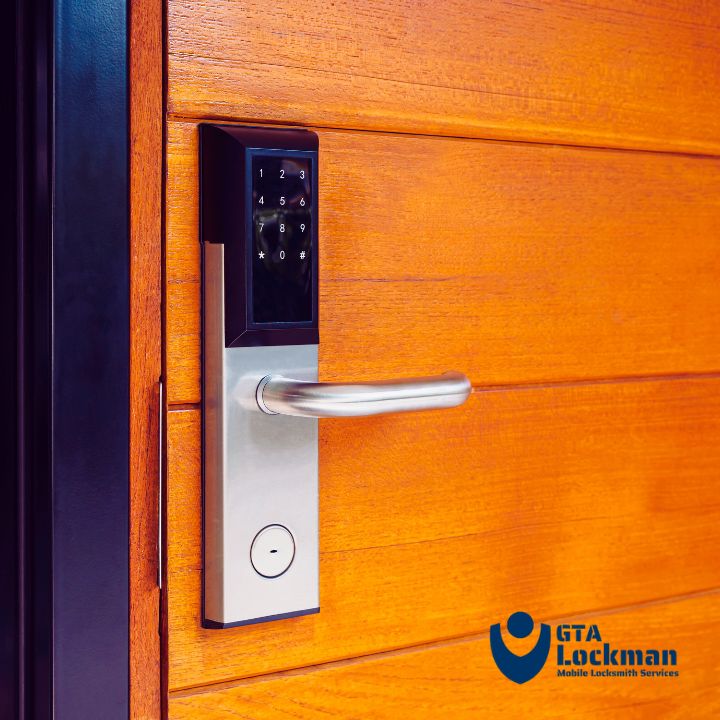
Before the property is left, check every opening rather than the front door: the back and side doors, the garage-to-house door, the basement entrance, the patio slider, the basement windows and the window wells; see basement windows and window wells and shed, garage and outbuilding padlocks if there are outbuildings.
That walk-through takes twenty minutes and is the difference between securing a house and securing its front door.
This is the part that catches people. Many home policies restrict or exclude coverage once a property has been unoccupied or vacant beyond a stated period, often around thirty days, and the definitions of those two words are not the same.
There may also be conditions about inspections, heat, water shut-off and how the property is secured. Vacancy coverage or an endorsement is usually available, but it has to be arranged rather than assumed. Tell your insurer the property is empty and for how long; see home insurance and lock requirements.
At the end of the vacancy, close everything off properly. Remove the lockbox. Delete every code. Collect the keys you issued, against the list you kept at the start.
Then rekey for the new occupant, because everything issued during the vacancy went to people who no longer need it. For a buyer, that is the same first job as any move; see lock changes after moving home and lock changes in Toronto and the GTA.
Most of the expensive damage to empty properties is not caused by anyone entering. It is caused by water.
A pipe that bursts in an occupied home is noticed within a reasonable timeframe. In an empty one it runs until somebody visits, which in a quiet vacancy can be weeks. That single difference is why insurers ask about vacant properties at all, and why their conditions usually mention heat and inspections rather than locks.
The practical steps are ordinary: keep the heat on rather than turning it off, shut off the water where the property will be empty for an extended period and drain what needs draining, and arrange for somebody to attend on a schedule and actually walk through the building rather than looking at it from the driveway.
Whoever inspects should have a short list rather than a general impression: every exterior door locked and latching, windows closed and fastened, no water where there should not be, heat still on, mail collected, nothing accumulating on the step.
Ten minutes on a fixed schedule, with the date recorded. If a claim follows, that record is what demonstrates the property was being attended to, and it is far easier to keep as you go than to reconstruct afterwards.
A last word on the paperwork. Empty properties tend to change hands during periods when several people hold partial information: an agent knows the showings, a family member knows the trades, a lawyer knows the dates. Nobody holds all of it.
Keeping one list of who was given access, when, and whether it was withdrawn takes a few minutes a week and settles most of the questions that arise at the end. It is also the document that makes rekeying at handover a decision rather than a guess, because you can see exactly how much access went out and how little of it came back.
None of this is specific to a sale. The same list applies to an estate property waiting on probate, a unit between tenancies, and a home whose owner is in hospital for an extended stay. The circumstances differ; the empty house behaves the same way in all of them.
Tell us why the property is empty, how long it will be, who needs access during that time, and who is authorizing the work. If it is an estate, say which document exists.
We will reset the cylinders, set up access that can be withdrawn, and check the openings that get missed when nobody is living there.
Keep reading
Rekeying the exterior cylinders at the start of the vacancy is usually the sensible move. Keys accumulate over years among previous tenants, contractors, family and neighbours, and nobody has a full list. Rekeying draws a line, keeps the existing hardware and costs less than replacement.
Rekeying the exterior cylinders at the start of the vacancy is usually the sensible move. Keys accumulate over years among previous tenants, contractors, family and neighbours, and nobody has a full list. Rekeying draws a line, keeps the existing hardware and costs less than replacement.
Mount it on something solid rather than a gate or a light fitting. Put one key in it, not a full set. Change the code between phases, particularly between trades and showings. Remove it the day the property changes hands. And keep the code out of listings, email chains and group messages, which is where most of them end up.
A keypad lock with individual codes is usually better over a longer period, because you can see who has what and remove one person's access without disturbing everyone else. A single shared code that has been passed around for months is effectively a key nobody can collect.
Often not in the same way. Many policies restrict or exclude coverage once a property has been unoccupied or vacant beyond a stated period, commonly around thirty days, and those two words have different meanings in a policy. There may also be conditions about inspections, heat and how the property is secured. Vacancy coverage usually exists but has to be arranged.
The owner, or for an estate the estate trustee or executor, evidenced by the appointing document rather than a family relationship. For a unit between tenancies it is the landlord or their management company. For a listed home, the owner with the agent acting on their instruction. Settling this before the visit avoids a wasted appointment.
Mail and flyers collected, the walk shovelled in winter, timers on a couple of lights, a lawn that gets cut, parcels not left on the step, and blinds that move occasionally. Most of these cost nothing and they matter as much as hardware, because a property that visibly has not been entered in a month is the one that gets looked at.
All of them, not just the front. Back and side doors, the garage-to-house door, the basement entrance, the patio slider, basement windows and window wells, plus any shed or garage. In an occupied home faults get noticed because people use the doors; in an empty one nothing gets noticed for weeks.
Remove the lockbox, delete every code, and collect the keys you issued against the list you kept at the start. Then rekey for the new occupant, because everything issued during the vacancy went to people who no longer need access. That is also the first sensible job for anyone buying the property.
GTA Lockman Mobile Locksmith Services is a mobile locksmith working on homes, businesses and vehicles across Toronto and the GTA, with more than 14 years in the trade. Every review is written by a customer on Google, where you can read them in full.
Areas served: Toronto, North York, Scarborough, Etobicoke, Vaughan, Richmond Hill, Markham, Stouffville, Newmarket, Mississauga, Brampton, Oakville, Milton, Halton Hills, Pickering, Ajax, Whitby, Oshawa, Uxbridge.
Describe the door, hardware and service address. Contact GTA Lockman Mobile Locksmith Services to confirm the scope and scheduling for your location.