
GTA Lockman Mobile Locksmith Services · Toronto & GTA
Investigate why the door will not catch or release cleanly, including latch wear and frame alignment.
Related services
Find the reason a key sticks, a bolt binds or a latch fails before deciding what needs replacement.
Learn moreDiagnose resistance, incomplete bolt travel and failed connections without assuming every deadbolt needs replacing.
Learn moreFind why the handle moves, droops or fails to retract the latch, then address the responsible component.
Learn more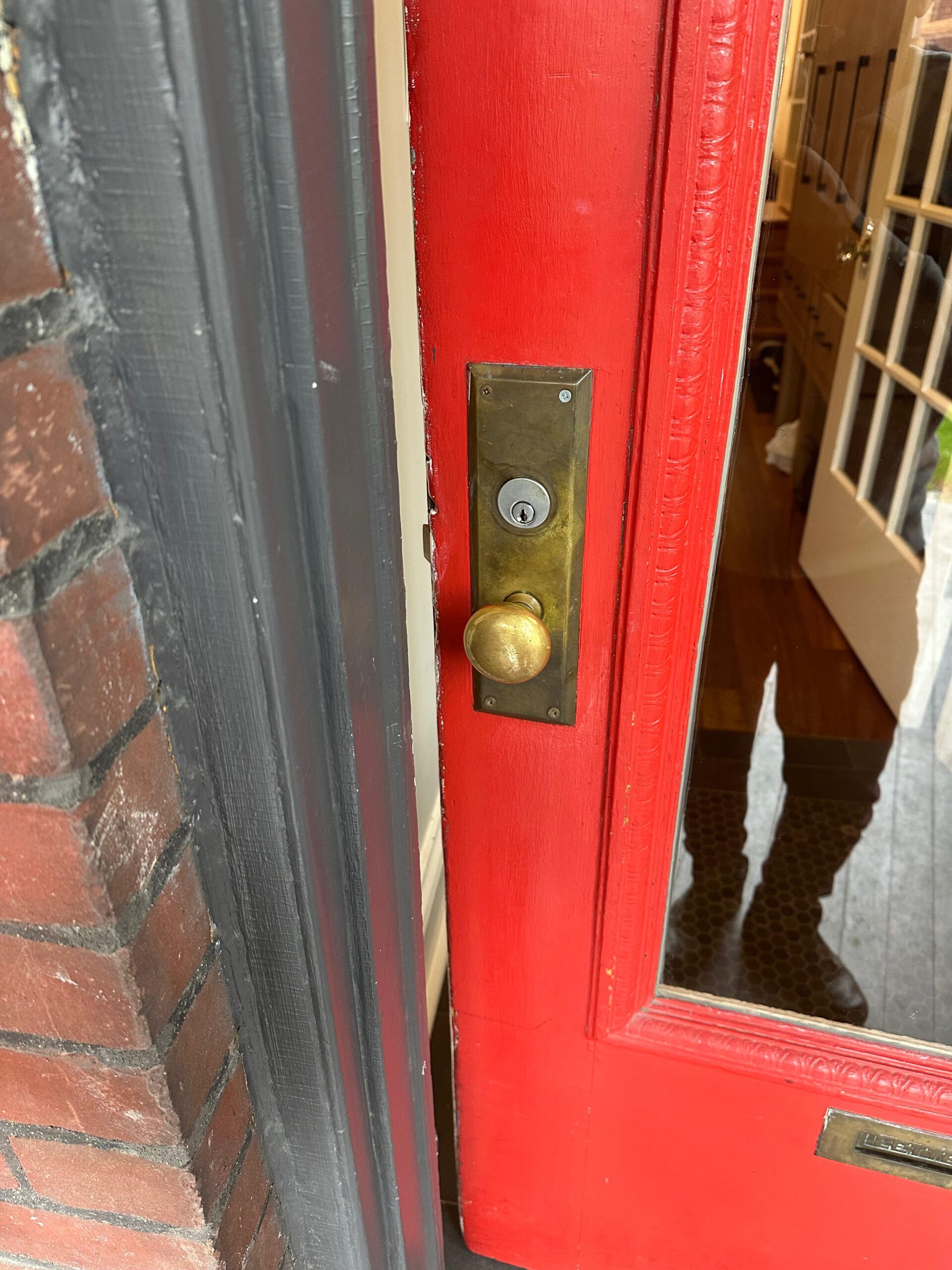
A door that will not catch can have a latch that no longer extends correctly, or a sound latch that misses its frame receiver. Those conditions can look identical when the door swings back open. Begin by describing what happens during normal closing and whether the handle operates the latch fully when the door is open.
The strike plate guides and receives the latch at the frame. A separate deadbolt may have its own receiver and a different travel requirement. Do not assume the latch and deadbolt are experiencing the same fault simply because both are fitted to one entrance.
GTA Lockman Mobile Locksmith Services assesses the operating parts and the door position together. Our lock repair service covers other failures that may accompany the complaint. This page focuses on engagement and release at the latch, strike and surrounding opening.
Note whether the door catches when gently closed, only after being pushed firmly, or only while lifted at the handle. Also note scraping, uneven gaps or a change following weather stripping, painting or hinge work. These observations help the technician identify conditions to inspect without treating the symptom as proof of a particular fault.
Do not keep slamming the door to make it latch. Added force can damage parts and does not explain why engagement is inconsistent. A door that stays shut only under pressure may still have an unresolved alignment or mechanism problem.
If the door cannot be secured, explain that when arranging service. If someone is in danger because an exit cannot be used, contact the appropriate emergency service. The hardware appointment should not delay assistance for an immediate safety situation.
The handle needs to retract the latch, and the latch needs to return through its intended range. Wear, damage, a failed connection or fitting pressure can interrupt that cycle. A lever that moves normally does not prove the latch is moving with it.
Our loose handle repair page covers the connected components that transfer motion. The technician should identify whether the fault belongs to the handle, latch, mounting or another part before recommending a complete lockset change.
If the latch operates smoothly while open but fails against the frame, the engagement path deserves particular attention. If it sticks in either position, the mechanism itself may need closer inspection. Several conditions can coexist, so these observations guide the assessment rather than replace it.
The door's position determines where the latch meets the strike. Hinge movement, worn supports, frame changes or an unsuitable fit can move that relationship. Altering the strike without understanding why the door shifted can leave the original cause uncorrected.
Do not file the opening or bend the plate simply to create a larger target. The intended engagement and the condition of the surrounding material matter. An adjustment should be based on the complete opening and the actual hardware, not only on a scrape mark.
Visible damage to the frame or mounting area may require a separate repair. A new strike plate cannot restore unsound timber or distorted metal on its own. Ask which conditions are included in the proposed work and which require another trade or additional authorization.
A deadbolt that stops partway may be contacting the edge or bottom of its receiver, but a cylinder or internal connection can also contribute to the symptom. Describe whether the inside thumbturn and outside key behave similarly and whether the bolt operates freely with the door open.
The deadbolt repair page explains this comparison in more detail. A motorized deadbolt can also report a jam when its path is obstructed. Repeated operation or a software reset does not move a misaligned strike into position.
The completed test should demonstrate intended bolt travel without forcing the door against the frame. Do not treat a key turn or electronic confirmation as sufficient if the bolt has not engaged correctly. The physical operation remains the basis for assessing the result.
Photos
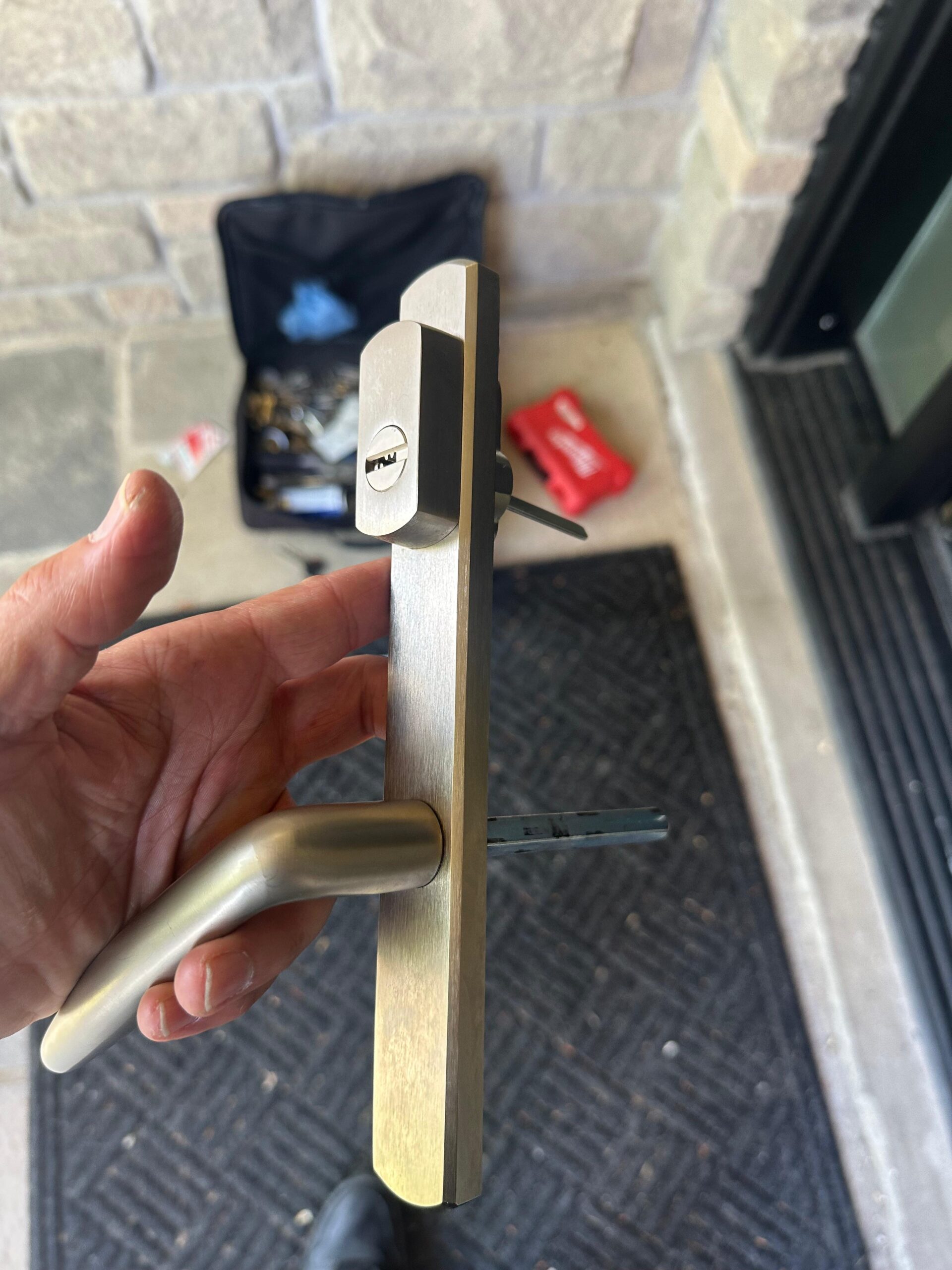
Photographs from GTA Lockman Mobile Locksmith Services work across Toronto and the GTA. Send a picture of your own door and we can tell you what the visit would involve.
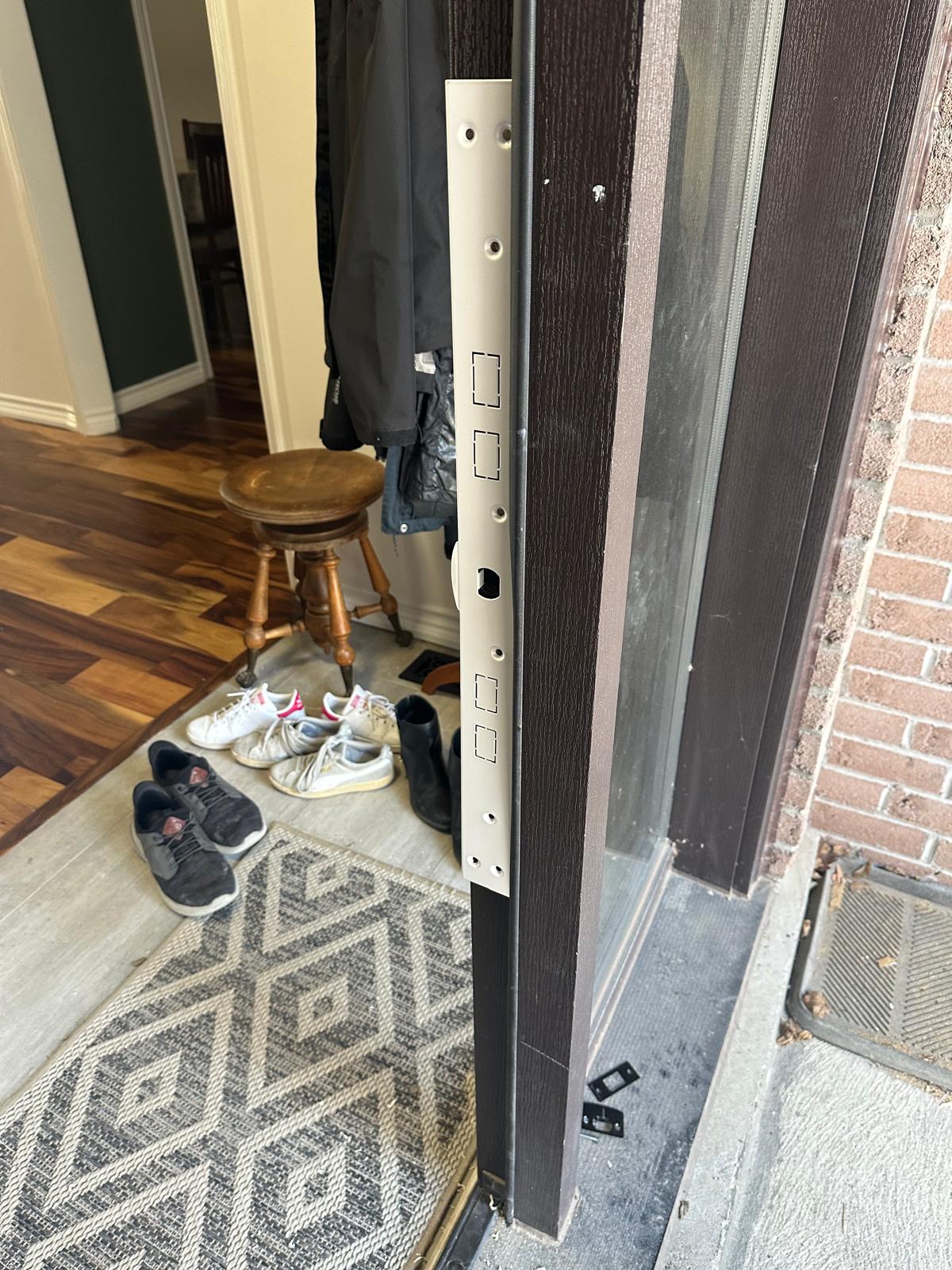
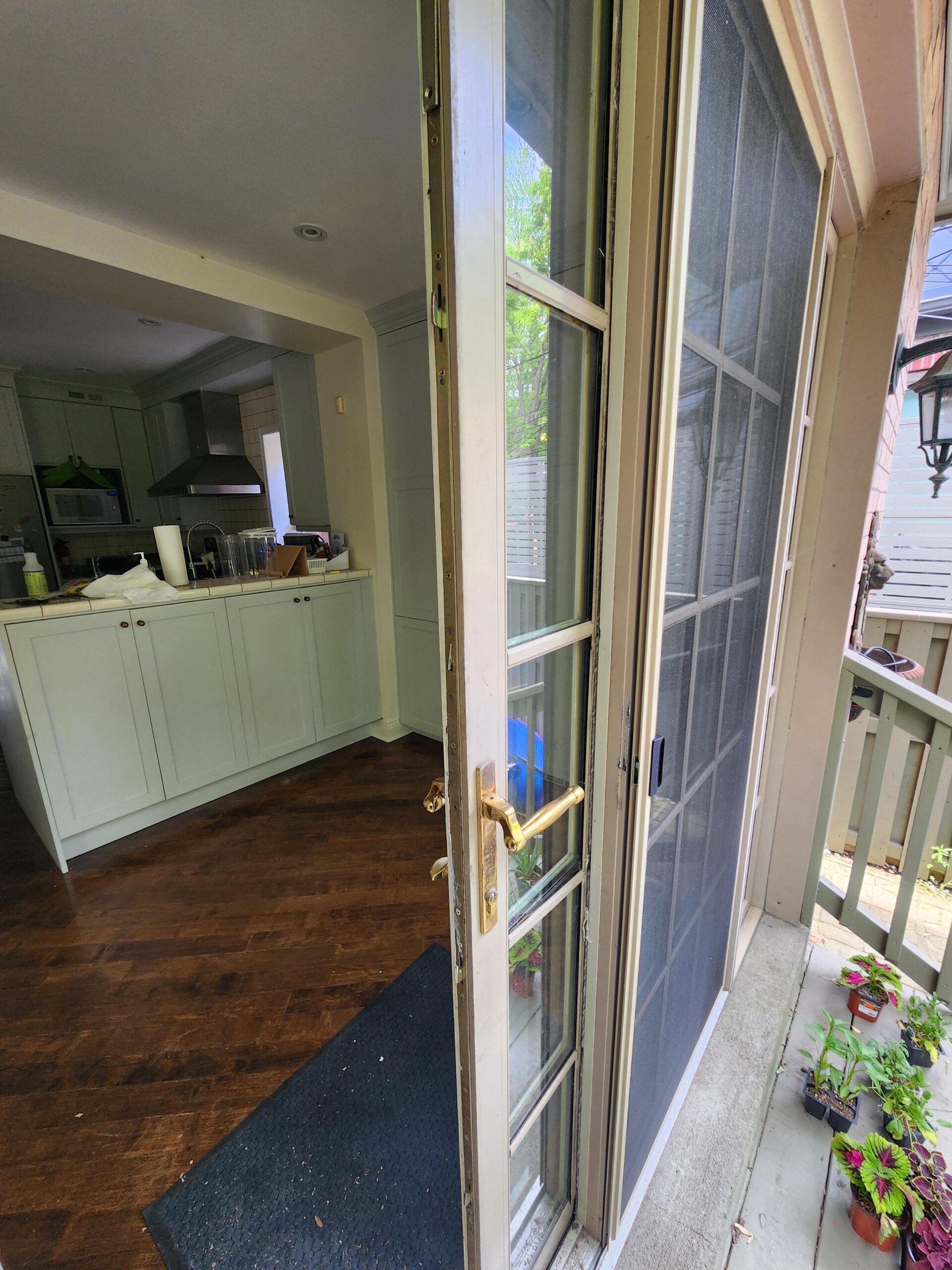
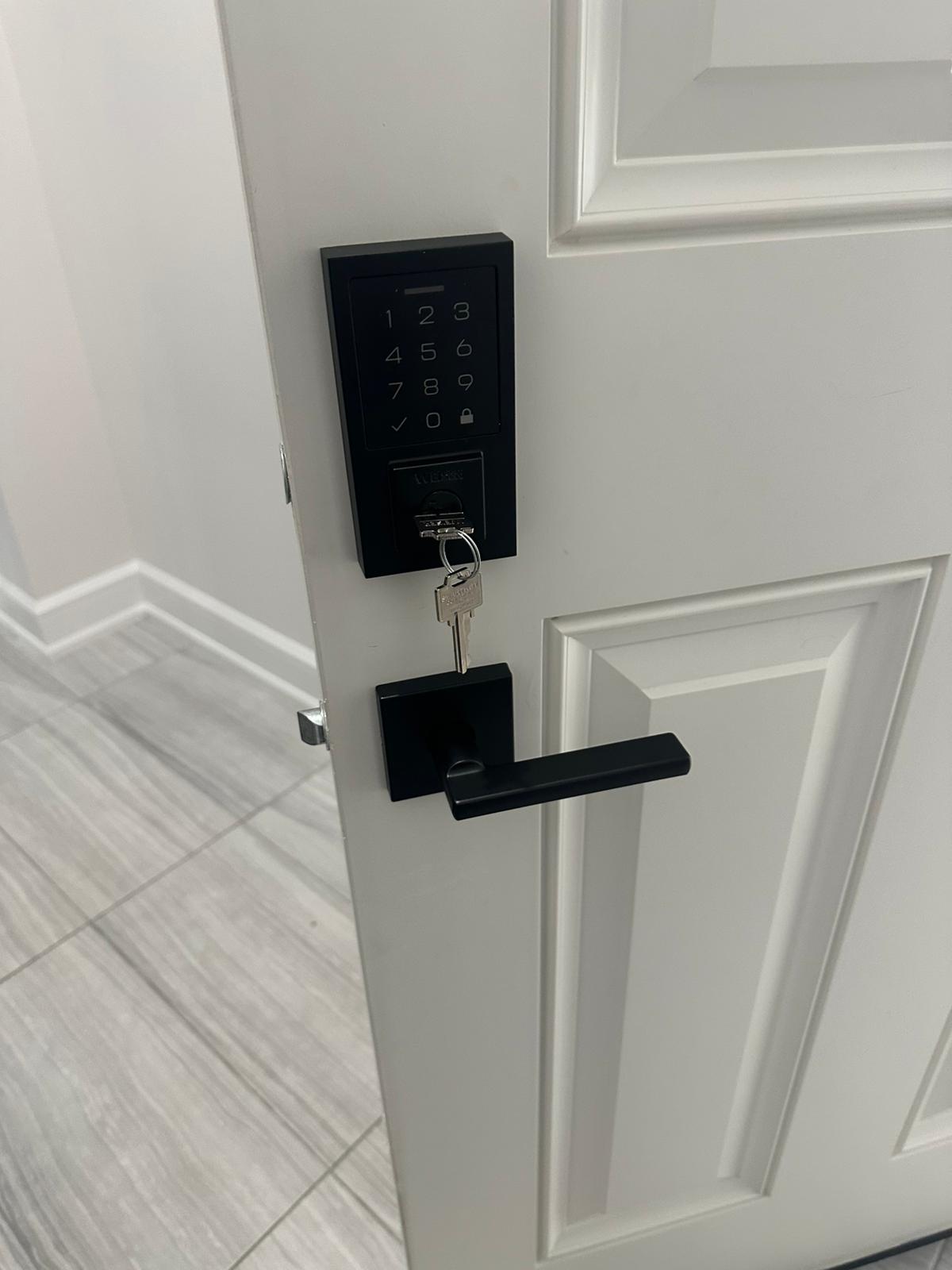
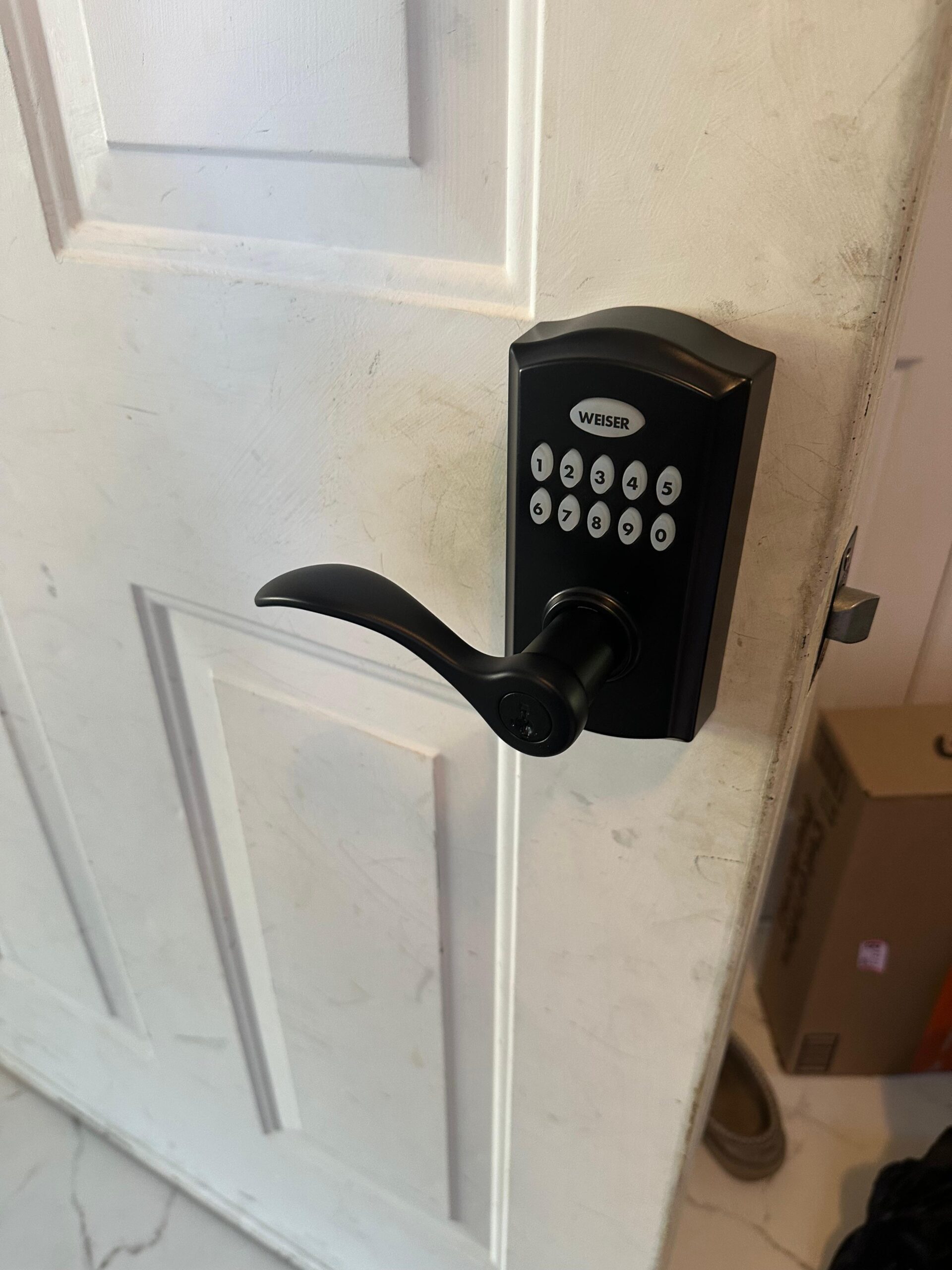
New seals, paint buildup or changes to adjacent hardware can affect the way a door sits. Explain any recent work before a replacement latch is chosen. A problem that began after an alteration may require review of that fitting rather than a diagnosis based only on the lock's age.
Seasonal variation can also be useful history, but it should not become a blanket explanation for every failure. The technician needs to assess the current condition and the mechanism's operation. Routine forcing is not an appropriate maintenance plan for a recurring fit problem.
Where a closer or other operating device affects the door, include it in the description. A door that closes differently under its own mechanism may need a coordinated assessment. The scope should preserve normal latching and the opening's intended use.
Condo, rental and commercial openings may have requirements governing their hardware and modifications. Identify those before changing a latch or receiver. A component that appears to fit is not automatically suitable for a controlled door assembly.
Obtain authorization from the person responsible for the opening. A request to repair latching should not silently become a change to the key arrangement or locking function. Keep those decisions distinct and record any additional approved work.
Where the correct requirement is unclear, consult the building manager or appropriate professional. A locksmith's mechanical assessment should not be represented as a universal compliance certification. The service record should state the actual work performed and its boundaries.
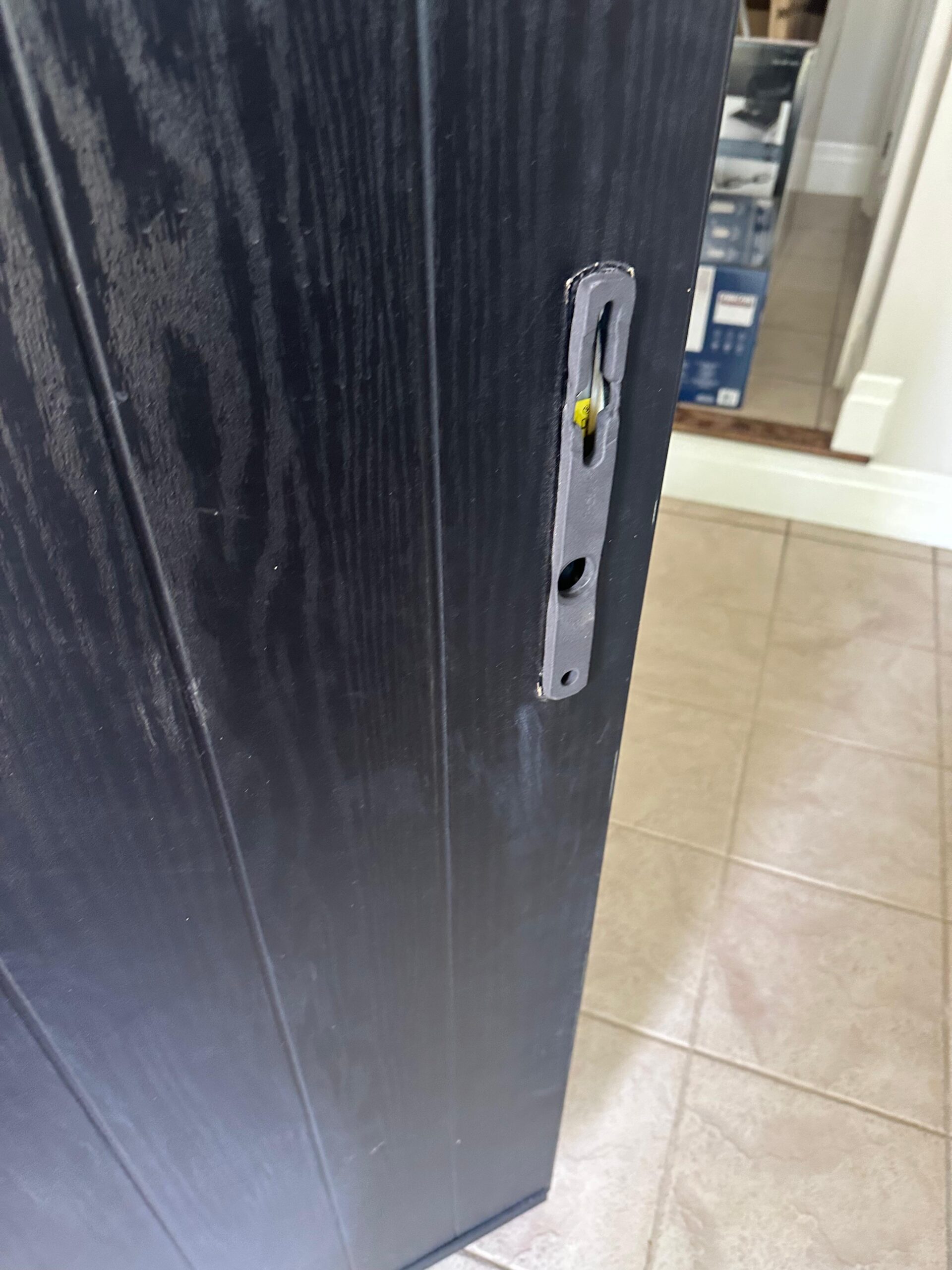
Show the latch on the door edge, the corresponding frame receiver, the handle on both sides and an overall view of the closed opening where safe. Include visible damage and accessible product labels. A close-up of the key cylinder alone may omit the relevant engagement problem.
Describe whether the door needs lifting or pressure, whether the latch remains retracted and whether the failure is constant. Keep private information, key cuts and access codes out of the photographs. The aim is to identify hardware and symptoms, not document the occupants' personal details.
At handover, repeat normal closing and opening from both sides. Confirm that the latch returns, engages and releases as intended without compensating force. Test any separate deadbolt included in the scope. Retain the identified cause, completed adjustments or parts and any outstanding door work with the invoice so a recurring symptom can be assessed against a useful history.
Describe the point at which normal operation fails. The latch may contact the strike but not retract, retract and miss the opening, or enter the opening while the door still moves excessively. Those are different observations. A handle that fails to retract the latch after closing adds another distinction.
Use ordinary movement only and stop if the hardware binds. There is no need to reproduce a fault through repeated slamming or extra force. Tell the technician about recent painting, hinge work or changes to seals, along with any earlier adjustment to the strike. The inspection can then connect the observed sequence to the proposed repair. Afterward, repeat normal closing and release and confirm any remaining issue separately. This gives the household a practical before-and-after comparison without assuming that every failure to latch has the same cause.
Keep reading
The latch may not be reaching or entering its intended opening in the strike, or its own movement may be impaired. Door position, loose hardware and wear can affect the result. Describe whether a gentle normal close works, whether the latch projects when the door is open and whether the problem began after other work. Avoid relying on repeated slamming. The assessment should determine why the latch and frame no longer meet correctly, rather than assuming that a larger strike opening or a replacement handle is automatically the appropriate repair.
The latch may not be reaching or entering its intended opening in the strike, or its own movement may be impaired. Door position, loose hardware and wear can affect the result. Describe whether a gentle normal close works, whether the latch projects when the door is open and whether the problem began after other work. Avoid relying on repeated slamming. The assessment should determine why the latch and frame no longer meet correctly, rather than assuming that a larger strike opening or a replacement handle is automatically the appropriate repair.
Not without understanding the cause and the requirements of the opening. Door movement, hinge wear or incorrect latch operation may be responsible, and removing material can create a new compatibility problem or conceal the underlying fault. Specialized or managed entrances can also have requirements for their components. Tell the technician about previous filing or repositioning so the existing condition is clear. The proposed work should explain how the latch will engage correctly and what supporting door adjustment is needed. An improvised opening is not a substitute for assessing the complete relationship.
Movement can involve the relationship between the latch and strike, the door position, seals or the condition of the hardware. The amount and cause should be assessed before changing components. Describe whether the movement is new and whether the door still releases normally. An adjustment aimed only at reducing rattle can introduce pressure that makes the latch harder to retract. The final check should balance normal closing, intended engagement and easy release. Ask the technician to identify what was adjusted rather than accepting a change that fixes one symptom by creating another.
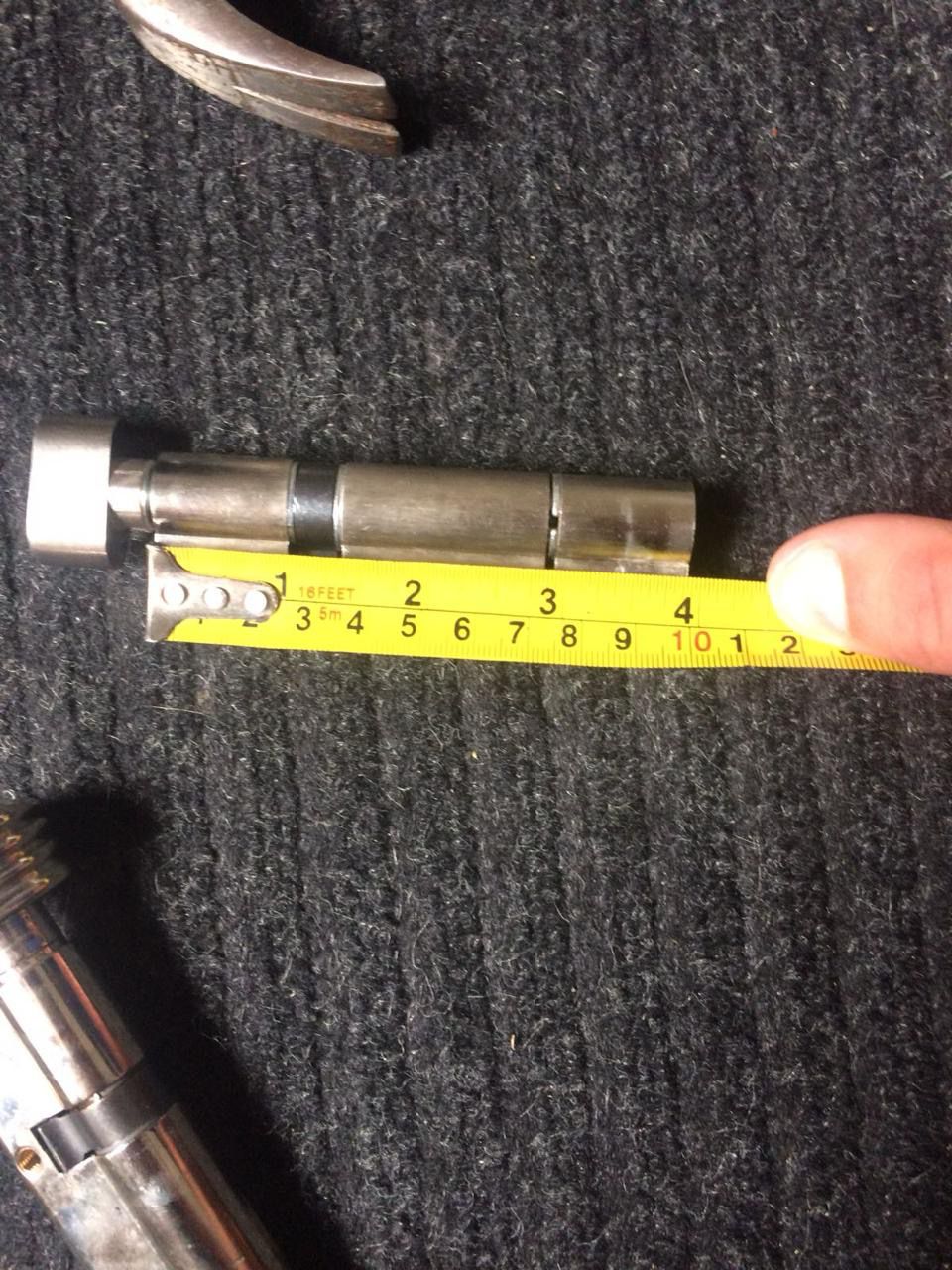
Compatibility depends on the product format, dimensions and connection, not simply the visible faceplate. Backset, body size and the relationship to the handle or lock assembly can differ. Provide photographs of the door edge and both faces, plus accessible model information. If the old latch has already been removed, keep its components for identification. A replacement that fits the edge opening may still fail to connect properly to the handle. The assessment should confirm the complete operating arrangement and test it on the door before treating the component change as finished.
The two components can share a door-alignment issue, but they remain separate mechanisms and engagement points. Repairing one strike does not automatically correct the other. Report both symptoms and explain whether they occur under the same conditions. The technician can inspect the door position and determine whether a shared adjustment or separate component work is appropriate. The handover should test the latch and deadbolt individually as well as the normal entry sequence. A door that catches successfully may still have a bolt that cannot extend through its intended travel.
The surrounding material matters because the strike needs suitable support. A new plate alone may not address splitting, distortion or other damage at the mounting area. Photograph the visible condition and describe any previous repair. The locksmith can explain compatible hardware work and identify when broader frame or door service is required. Ask how the proposed scope relates to the actual damage. If another trade must complete structural or finish work, record that responsibility. A latch entering the opening once does not by itself establish that the damaged mounting area has been restored.
Changed seal pressure can affect where the door rests when closed, but the timing alone is not a complete diagnosis. Mention the work and describe whether extra pressure is now needed to latch or release. The assessment should consider the seal, hinges, strike and mechanism together. Do not force the key or handle to compensate while assuming the new material will settle. A suitable correction should preserve the intended door function and normal operation. If the seal or door installation needs separate attention, that should be identified rather than hidden by an unrelated hardware replacement.
Check that the latch moves through its intended range and responds correctly to the handle or supported control. Then close the door normally and verify engagement and release without a special push, lift or repeated impact. Test from both sides where appropriate. Include the deadbolt separately if it is part of the reported problem. The strike should be secure and suitable for the opening, with remaining frame conditions documented. These checks are more useful than observing the latch move with the door open, because the original failure often concerns how the latch meets the frame.
Describe the door, hardware and service address. Contact GTA Lockman Mobile Locksmith Services to confirm the scope and scheduling for your location.