Locksmith services are always 10% off for seniors.
Open Mon–Thu 8:30 AM–9 PM, Fri 8:30 AM–4 PM, Sun 9:30 AM–9 PM
Locksmith services are always 10% off for seniors.
Open Mon–Thu 8:30 AM–9 PM, Fri 8:30 AM–4 PM, Sun 9:30 AM–9 PM
GTA Lockman Mobile Locksmith Services · Toronto & GTA
Why a full one-inch throw matters, how to check it, and what stops a bolt deadlocking.
Related services
Investigate why the door will not catch or release cleanly, including latch wear and frame alignment.
Learn moreSecure a forced door, repair damaged locks and frames, and document the work for your police report and insurer.
Learn moreWork through mechanical fit, power and supported controls when an electronic lock becomes unreliable.
Learn moreWhat Grade 1, 2 and 3 measure, what they leave out, and why the strike and frame often matter more.
Learn moreHow flush bolts, the astragal and the active leaf work together, and what to fix when a pair of doors will not lock.
Learn moreDiagnose resistance, incomplete bolt travel and failed connections without assuming every deadbolt needs replacing.
Learn more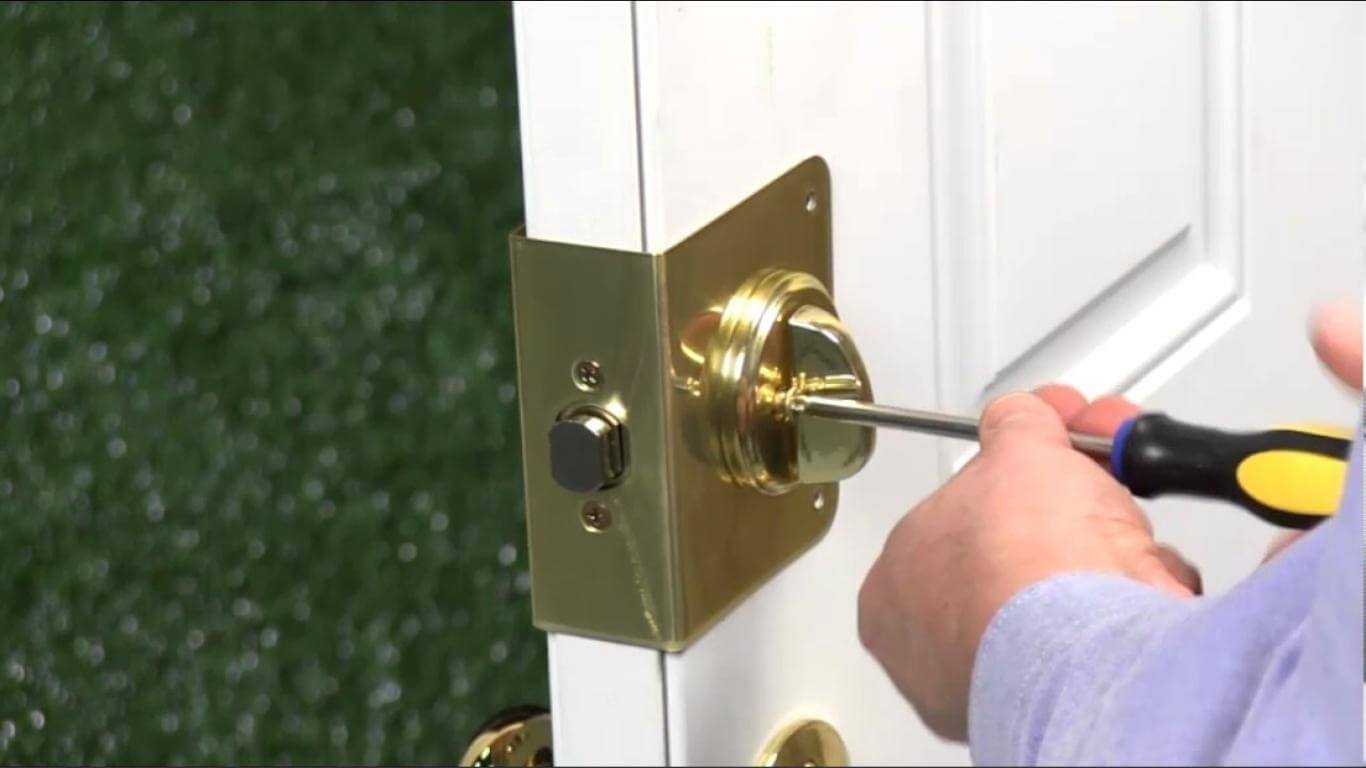
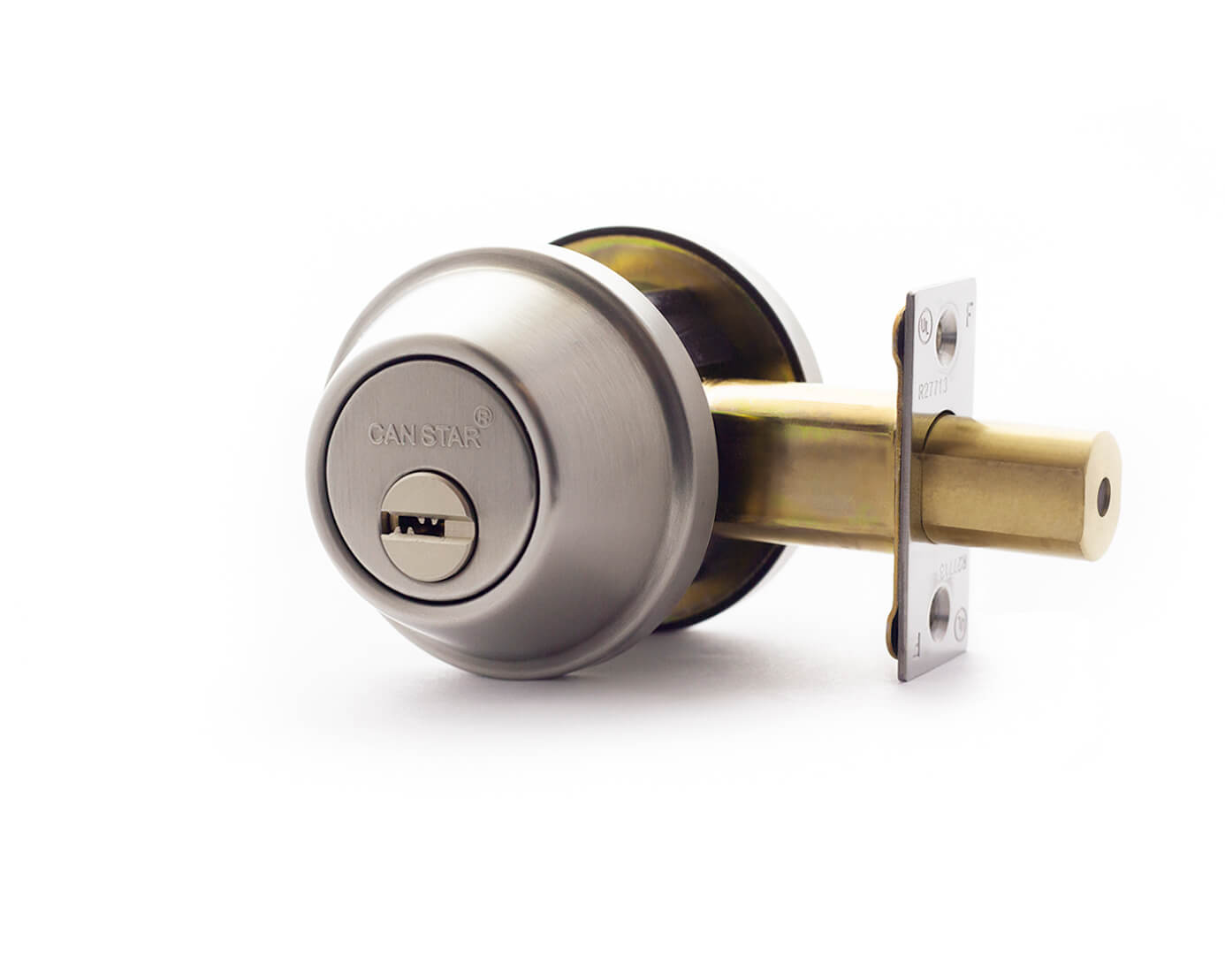
A deadbolt's job is simple: a solid bolt slides out of the door and into the frame, so the door cannot open without breaking something. How far that bolt extends, known as the throw, decides how much of it is actually holding the door. A bolt that only just enters the frame is much easier to defeat than one that reaches deep into solid wood.
Throw is one of the least noticed and most important details of a deadbolt.
Throw is the distance the bolt extends beyond the edge of the door when it is fully locked. For most quality residential deadbolts, the standard throw is one inch (about 25 mm). Some cheaper deadbolts have shorter throws, and some high-security and commercial deadbolts have longer ones.
A one-inch throw matters because there is a gap between the door and the frame, and the frame itself has a strike plate and some thickness before solid wood. A short bolt may cross the gap and enter the strike but barely reach the framing behind it.
A deadbolt rated for a one-inch throw only delivers it if the bolt can extend all the way. Common reasons it does not:
The strike hole is too shallow. If the hole drilled in the frame behind the strike is not deep enough, the bolt hits the bottom and stops short. The lock may feel locked while the bolt is only partly out.
The door has moved. If the bolt rubs against the top or bottom of the strike hole, it may stop before full extension. The key or thumbturn feels stiff at the end of its turn.
Paint or debris in the strike. Paint layers and debris reduce the depth of the hole.
A worn or damaged bolt mechanism. Inside the lock, the bolt may not be driven fully out.
On many deadbolts, if the bolt does not extend fully, the lock is not truly deadlocked, and the bolt can be pushed back into the door. That is a significant weakness.
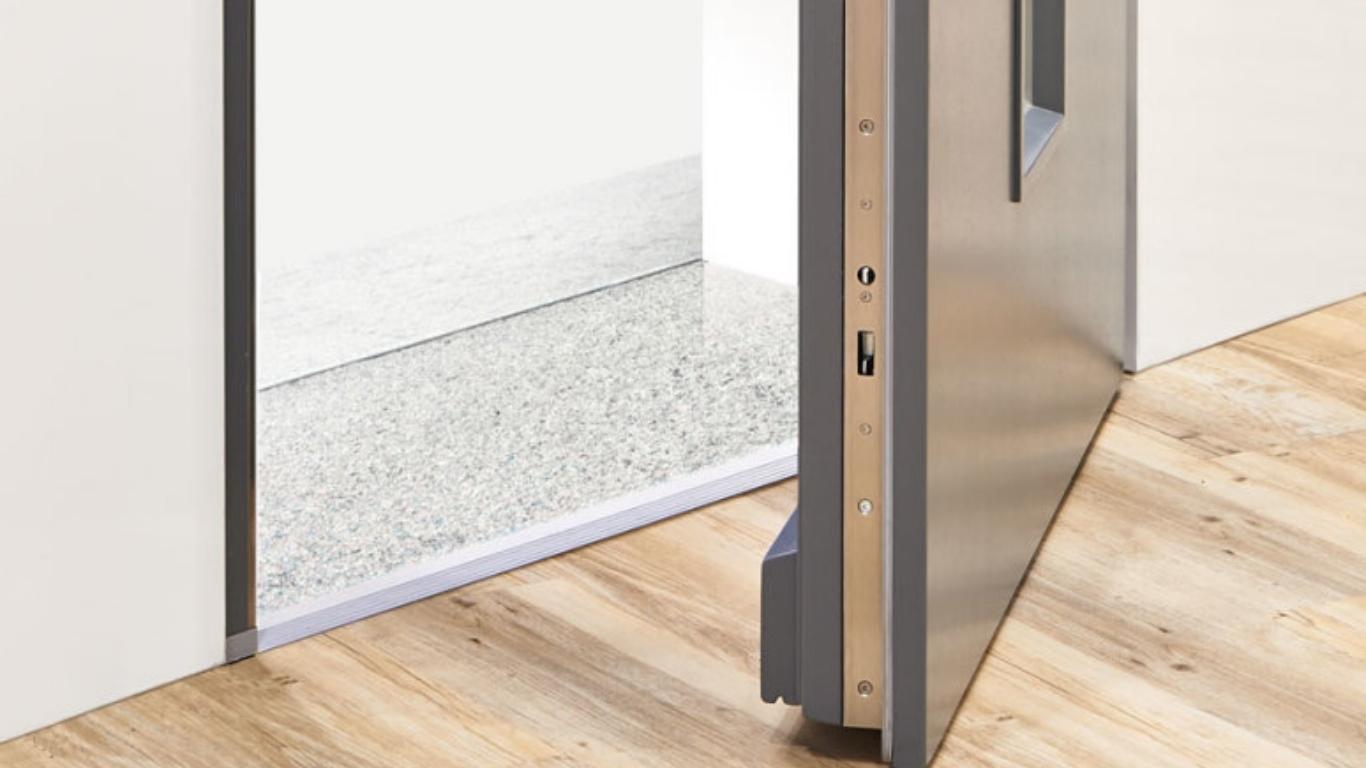
A properly thrown deadbolt is deadlocked: the bolt cannot be pushed back in from its end. That is what distinguishes it from a spring latch. If the bolt stops short of full extension, many mechanisms do not reach the deadlocked position, so the bolt can be forced back with a tool. Making sure the bolt extends fully is therefore not just about depth, but about whether the lock is actually locked.
The bolt goes into the strike, and the strike is only as strong as what holds it. A reinforced strike with long screws reaching the wall framing, and a hole drilled deep enough for the full throw, makes the most of the bolt. A long throw into a thin, splintered jamb fixed with short screws holds very little. The work involved overlaps with door latch and strike plate repair, and the reinforcement options are part of lock repair after a break-in.
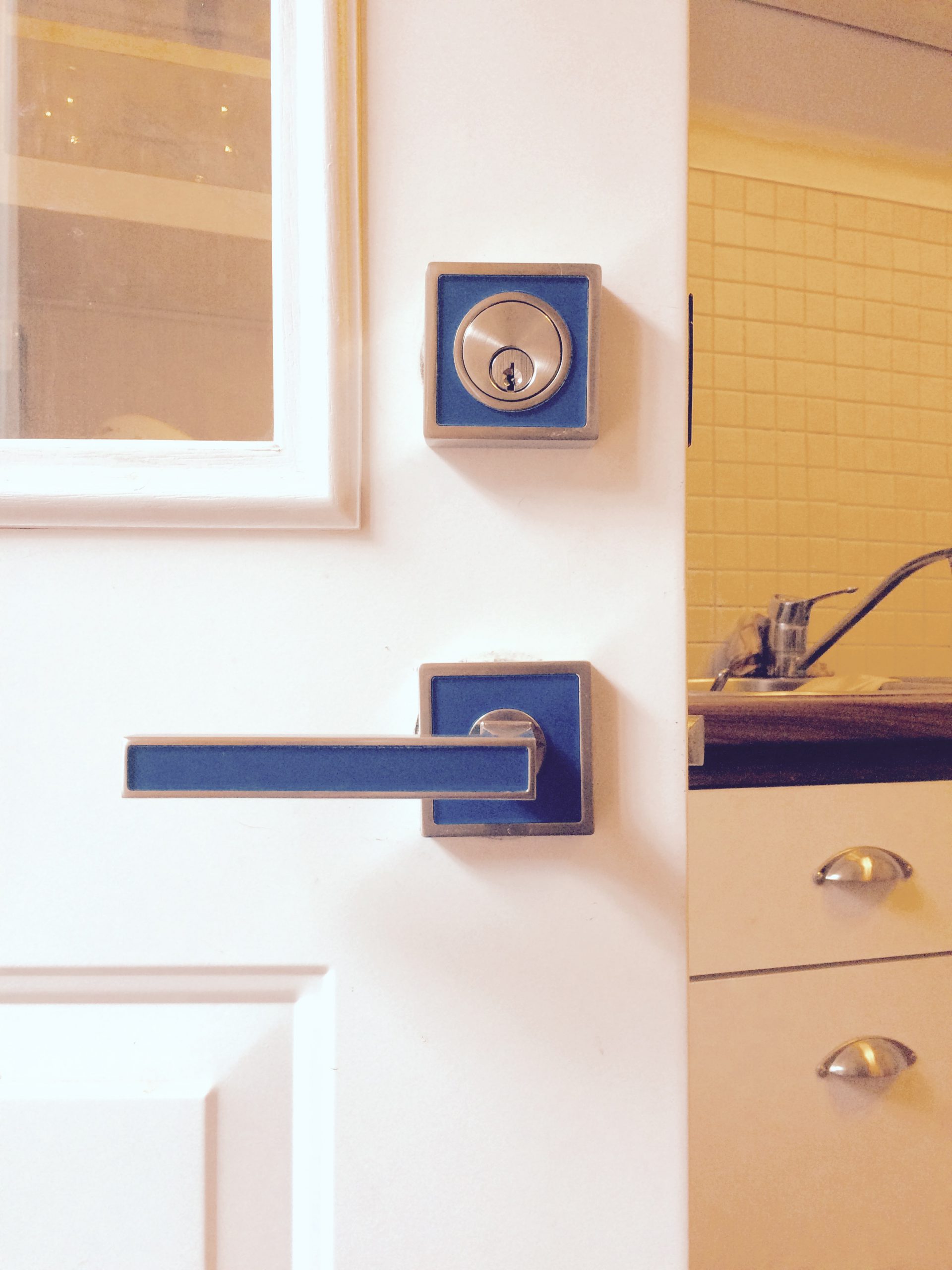
Some deadbolts offer longer throws, and some high-security deadbolts use hardened bolts with rotating steel inserts that resist sawing. A longer throw helps on doors with a larger gap to the frame or a deeper frame. It is not a substitute for a sound frame and strike.
Motorised deadbolts sense resistance. If the bolt meets the bottom of a shallow strike hole or rubs on the strike, the motor may stop early or report a jam, leaving the bolt only partly extended. A smart lock that reports locked while the bolt is short of full extension is a common hidden weakness. Checking the throw with the door closed, and correcting the strike, matters especially for smart locks, as with smart lock repair and troubleshooting.
Lock grades consider the strength of the bolt and how many cycles the lock survives, along with other tests. Higher-grade deadbolts generally have stronger bolts and mechanisms that keep their throw consistent over years of use. What the grades measure is part of lock grades explained.
On double doors, the active leaf's deadbolt goes into the inactive leaf, so the inactive leaf must be firmly bolted top and bottom, or the deadbolt's throw counts for little. Multipoint locks spread the locking across several points, so each hook or bolt can be shorter. Both arrangements depend on correct alignment, as with French doors and double door locks.
After any fix, check again with the door closed: the bolt should extend fully and the key should turn to a firm stop.
Some doors sit with a wider gap than usual between the door edge and the frame, because of warping, settling, weather-stripping or a frame that was never quite square. On these doors, a one-inch bolt may only just reach solid wood. Correcting the gap by adjusting the hinges, adding a door edge strip, or fitting a longer-throw deadbolt helps. A wide gap also makes prying easier, so it is worth addressing for its own sake.
New, thick weather-stripping can push the door away from the stop, so the bolt lines up differently with the strike and may not extend fully. This often settles within a few weeks. If it does not, the strike can be moved slightly to suit. The same issue affects many newly fitted doors in the first season.
Older deadbolts, and some inexpensive ones, have shorter throws, sometimes around half an inch. Replacing them with a modern deadbolt with a one-inch throw, and deepening the strike hole to match, is one of the more worthwhile small upgrades on an older exterior door.
It is worth checking the throw on every exterior door at least once: the front, back, side and garage entry doors. Side and garage doors in particular are often fitted with lighter hardware and shallow strike holes. A short check with the door closed tells you which doors are truly deadlocked and which only appear to be.
Some insurers ask whether exterior doors have deadbolts. A deadbolt that does not throw fully may not do what the insurer expects. Making sure each deadbolt extends properly, and keeping an invoice for any work, supports meeting home insurance lock requirements.
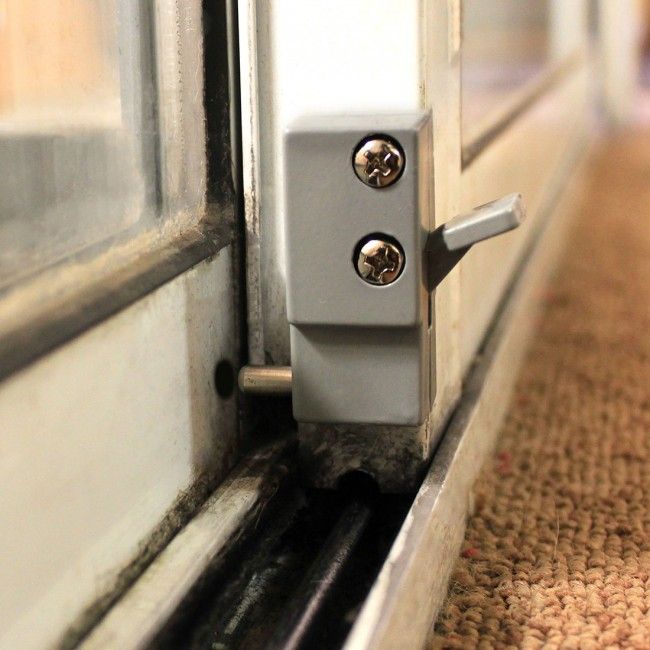
Sliding patio doors do not use a deadbolt with a throw in the same way. Their hook bolts swing up into a keeper, and how far they engage depends on the door's height adjustment and the keeper position. A sliding door whose hook only just catches the keeper can be lifted or pried open. Adjusting the rollers and keeper so the hook engages fully is the equivalent of checking throw on a hinged door, as with patio door locks and handles.
Side doors, garage entry doors and basement walkout doors are where short throws are most often found, because they were fitted with lighter hardware or the frame has moved. Including them in any check gives a much fuller picture of how secure the house really is.
Each is a sign to check the throw again before the bolt stops deadlocking.
Commercial mortise locks often have a deadbolt with a one-inch throw built into the lock body, and many have a deadlocking latch as well. Their strikes are usually box strikes in steel frames. The same principle applies: the bolt must extend fully into a deep enough strike for the lock to hold.
Rim deadlocks mounted on the inside face of a door throw their bolt into a keeper on the frame rather than a strike hole. The keeper must be fixed firmly, often with long screws, and positioned so the bolt engages fully. On older doors, the keeper is often the weak point.
Tenants can check their own deadbolt's throw in a minute with the door open and closed. If it does not extend fully, report it to the landlord in writing, since a deadbolt that does not deadlock is a maintenance issue in a rental unit.
Tell us which doors, what deadbolts are fitted, and whether the key feels stiff with the door closed. Photographs of the bolt extended with the door open, and of the strike, help.
We can check and correct the throw on each door, deepen and reinforce strikes, adjust doors, and replace deadbolts that cannot throw fully. That work is part of deadbolt repair.
Keep reading
The distance the bolt extends beyond the door edge when locked. For most quality residential deadbolts it is about one inch.
The distance the bolt extends beyond the door edge when locked. For most quality residential deadbolts it is about one inch.
With the door open, the bolt should extend about one inch. With the door closed, the key or thumbturn should turn fully to a firm stop without extra force.
The strike hole is too shallow or out of line. The bolt hits the frame and stops short when the door is closed.
Yes. A bolt that does not extend fully may not deadlock, so it can be pushed back into the door, and it holds less of the frame.
When a fully thrown deadbolt cannot be pushed back in from its end. A bolt that stops short often does not reach that position.
Yes. Motorised locks can stop early if the bolt meets resistance. Checking the throw with the door closed and fixing the strike solves it.
A longer throw helps on doors with larger gaps or deeper frames, but it does not replace a strong frame and reinforced strike.
Usually by deepening the strike hole, adjusting the strike or hinges, clearing debris, or replacing a worn deadbolt.
GTA Lockman Mobile Locksmith Services is a mobile locksmith working on homes, businesses and vehicles across Toronto and the GTA, in the trade since 2010. Every review is written by a customer on Google, where you can read them in full.
Areas served: Toronto, North York, Scarborough, Etobicoke, Vaughan, Richmond Hill, Markham, Stouffville, Newmarket, Mississauga, Brampton, Oakville, Milton, Halton Hills, Pickering, Ajax, Whitby, Oshawa, Uxbridge.
Describe the door, hardware and service address. Contact GTA Lockman Mobile Locksmith Services to confirm the scope and scheduling for your location.