Locksmith services are always 10% off for seniors.
Open Mon–Thu 8:30 AM–9 PM, Fri 8:30 AM–4 PM, Sun 9:30 AM–9 PM
Locksmith services are always 10% off for seniors.
Open Mon–Thu 8:30 AM–9 PM, Fri 8:30 AM–4 PM, Sun 9:30 AM–9 PM
GTA Lockman Mobile Locksmith Services · Toronto & GTA
Why loose hinges cause stiff deadbolts, and how long screws, security pins and continuous hinges strengthen a door.
Related services
Investigate why the door will not catch or release cleanly, including latch wear and frame alignment.
Learn moreTreat the door from an attached garage as an exterior entrance, with a lock that suits daily use and fire separation.
Learn moreSecure a forced door, repair damaged locks and frames, and document the work for your police report and insurer.
Learn moreA yearly check of doors, locks, keys and closers that catches small faults before they become failures.
Learn moreRepairs, rekeying and replacement hardware for homes, condos and apartments, with attention to the whole door.
Learn moreLock and door service for offices, shops and managed properties. Plan access around the way your business operates.
Learn more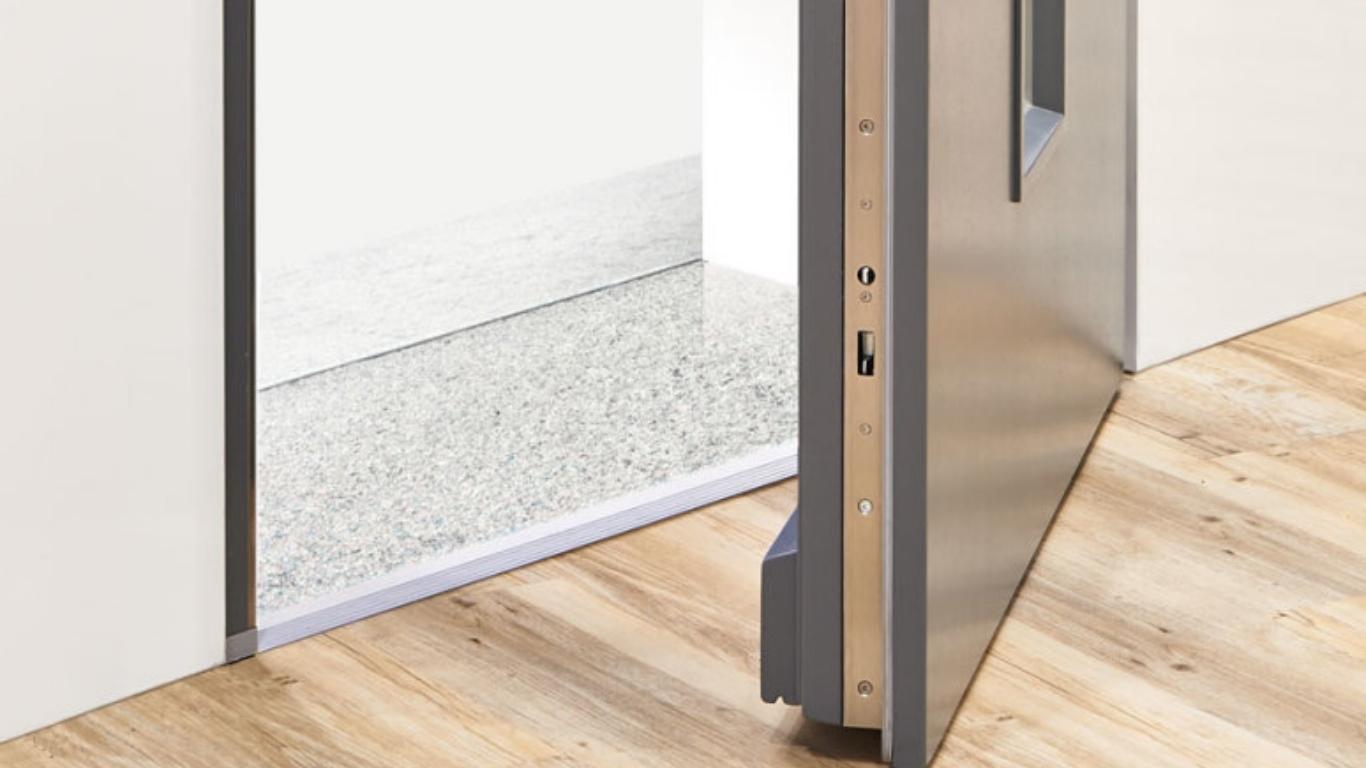
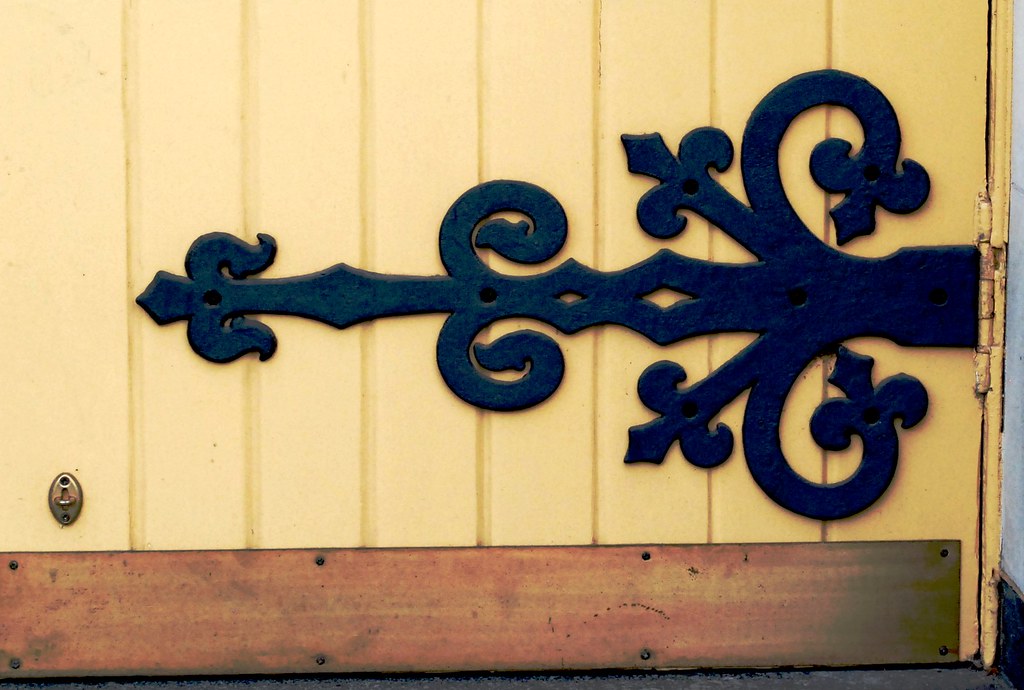
When people think about door security, they think about the lock. But a door is held in its frame on two sides: the lock side and the hinge side. A strong deadbolt does little good if the hinges are held by short screws into thin trim, if the hinge pins can be lifted out from outside, or if the frame behind the hinges is split.
Hinges also decide how well the lock works. A door that sags on worn or loose hinges drops at the latch side, and the deadbolt starts to rub against the strike. Many "lock problems" are really hinge problems.
A door hangs from its hinges. When the top hinge loosens, the weight of the door pulls the top away from the frame and the latch side drops. The symptoms appear at the lock: the latch catches on the strike, the deadbolt needs the door pushed or lifted before it will throw, and the door rubs at the top corner on the lock side.
Tightening the top hinge screws, or replacing short screws with long ones that reach the framing behind the jamb, often lifts the door back into line. That single adjustment fixes a large share of stiff deadbolts, and it is the first check before any work on the strike, the same order followed for door latch and strike plate repair.
Most residential hinges are fixed with short screws that reach only the jamb, the thin board lining the door opening. Behind the jamb is a gap, then the wall framing. Short screws hold the hinge to the jamb, but in a forced entry the jamb can split away from the framing, taking the hinges with it.
Replacing at least one screw in each hinge, ideally the one nearest the stop, with a long screw that passes through the jamb into the framing makes a real difference. The same principle applies to the strike on the lock side. Together they are the most cost-effective strengthening most exterior doors can get.
Take care not to overtighten long screws: if there is a gap behind the jamb, drawing the screw too tight pulls the jamb inwards and binds the door. Shims behind the jamb at the screw position prevent that.
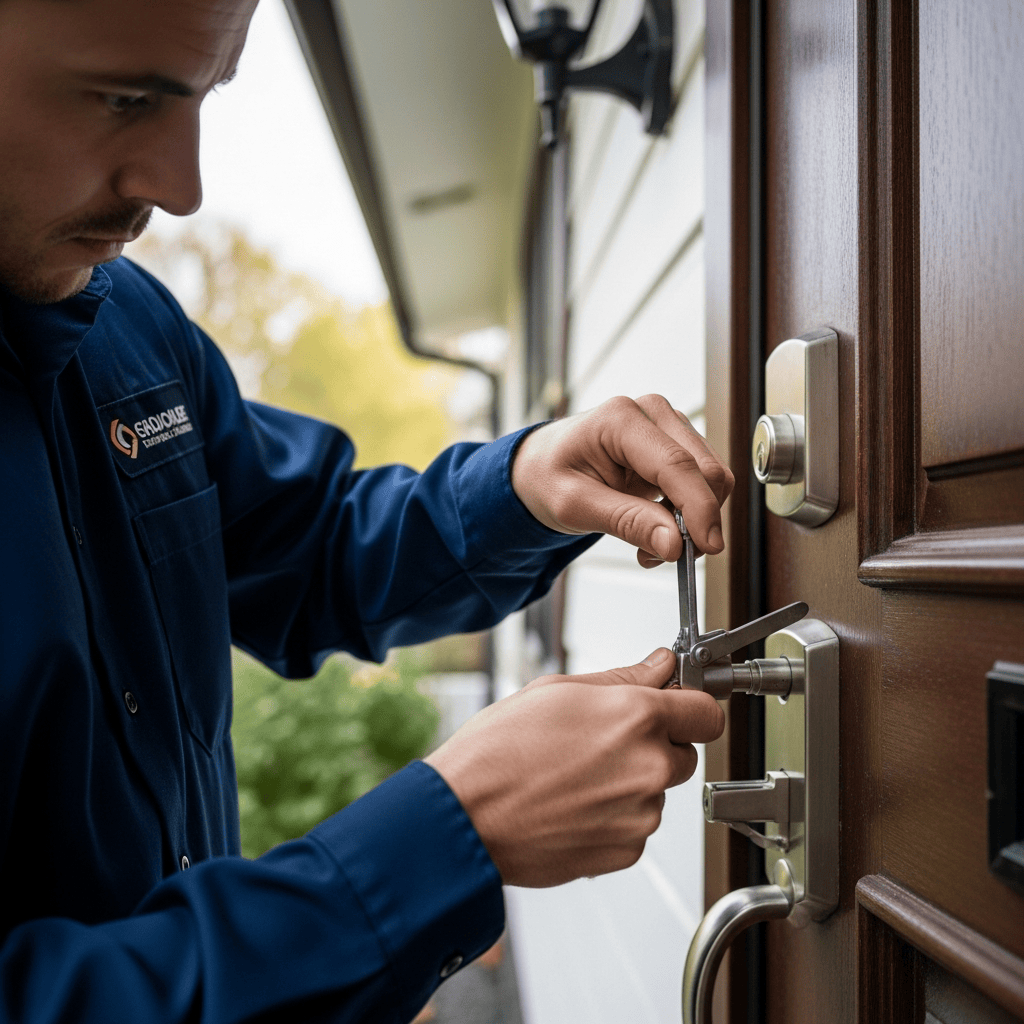
Most house doors swing inwards, so their hinge pins are on the inside. Some doors swing outwards, including many storm doors, some side and garage doors, many commercial doors and certain doors onto decks. On those doors, the hinge knuckles and pins are on the outside.
A removable pin on an outside hinge can, in principle, be tapped out and the door lifted from the hinge side even while it is locked. There are several ways to prevent that:
Security hinges with non-removable pins. The pin is fixed in place and cannot be driven out while the door is closed.
Hinge studs or dogs. A stud on one hinge leaf engages a hole in the other when the door closes, so the door cannot be lifted out even if a pin is removed.
Set screws in the knuckle. Some hinges have a small screw that locks the pin in place, reachable only when the door is open.
Hinge bolts. Separate bolts fitted in the hinge edge of the door that engage the frame when the door closes.
A continuous hinge, sometimes called a piano hinge on light doors or a geared continuous hinge on commercial ones, runs the full height of the door. It spreads the door's weight along the whole edge instead of across three or four points, which stops sagging on heavy or heavily used doors.
Continuous hinges are common on commercial entrances, school and clinic doors, and heavy storefront doors. They also leave no gap on the hinge side to pry at, which adds security. On a busy commercial door that keeps dropping and dragging on its lock, replacing butt hinges with a continuous hinge is often the lasting fix.
Solid wood, steel and fibreglass entrance doors can be heavy, and doors with large glass panels heavier still. Heavy doors need hinges rated for the weight and, often, a fourth hinge. Ball-bearing hinges wear far more slowly than plain hinges under a heavy door and keep the door swinging smoothly.
Signs that hinges are struggling include a door that drops over the months after adjustment, black dust or wear on the knuckles, squeaking that returns soon after lubrication, and a gap at the hinge side that widens towards the top.
Spring hinges close a door automatically without a separate closer. They are often used on doors between a garage and a house, where a self-closing door may be a building requirement, and on some apartment and suite doors. The spring tension is adjustable, and a door that no longer closes and latches on its own usually needs the tension increased, not a new lock.
A garage entry door that does not latch is a common weak point, and it connects with the wider set of checks for garage-to-house door locks.
Door reinforcement kits usually include plates for the lock edge and the hinge side of the frame. On the hinge side, a long steel plate behind the hinges ties them to the framing over a greater length. These kits make most sense on doors that have already been forced once, or on doors where the frame is weak, and they are often fitted as part of lock repair after a break-in.
Forced entry from the hinge side is less common than at the lock, but it happens, particularly on out-swinging doors and doors with weak frames. The signs are split wood around the hinges, bent hinge leaves or pins, and a door that no longer sits flat in the frame.
The repair usually involves replacing the damaged hinges, repairing or replacing the split section of jamb, fitting long screws into the framing and, on out-swinging doors, fitting security hinges or hinge studs.
A few minutes a year keeps hinges working:
These checks fit easily into an annual door and lock maintenance check.
Out-swinging doors are common on storm doors, some rear and side doors, garage service doors and most commercial exits. Beyond the exposed hinge pins, they have another weakness: the latch and bolt sit on the outside face of the stop, so the gap between door and frame is where someone would pry.
A latch guard, a metal plate fixed over the gap on the outside, covers the latch and makes prying much harder. Combined with security hinges on the hinge side, it closes off both edges of an out-swinging door.
Fire-rated doors, such as the door between an attached garage and the house, suite doors in apartment buildings and many commercial doors, must be hung on hinges suitable for fire doors. Replacing a hinge on a fire door with a light residential hinge, or with a spring hinge that is not rated, can compromise the door. Where a fire door needs new hinges, use hinges of the same type and rating, and keep any self-closing function working.
A squeaking hinge is usually just dry, and a small amount of lubricant on the pin solves it. A hinge that binds, where the door resists swinging or springs back slightly, is different: the hinge leaves may be bent, the screws may be proud and catching the other leaf, or the door may be hinge-bound, pressing against the frame on the hinge side. Hinge-bound doors put strain on the hinges and pull the door away from the lock side, so the lock starts to misbehave. Checking that the hinge leaves sit flush in their recesses and that nothing is catching usually cures it.
Interior doors usually hang on two light hinges, and they sag too, especially heavier solid-core doors fitted during a renovation. A sagging interior door rubs the floor or the head of the frame, and its latch stops catching. The same fix applies: tighten the screws, lengthen the top hinge screws into the framing, and add a third hinge to a heavy door.
Tell us which door is involved, which way it swings, what it is made of, and what you have noticed: a sagging door, a stiff lock, exposed pins or damage after an attempted entry. Photographs of the hinge side, the knuckles and the gap at the top of the door help.
We will adjust or replace the hinges, fit long screws into the framing, add security hinges or hinge studs where the pins are exposed, and check that the lock throws cleanly once the door is back in line. Other work on house doors comes under our residential locksmith services, and commercial doors under our commercial locksmith services.
Keep reading
Yes, and often. A loose top hinge lets the door drop at the latch side, so the bolt rubs against the strike. Tightening the hinge screws, or fitting long screws into the framing, frequently fixes a stiff deadbolt without touching the lock.
Yes, and often. A loose top hinge lets the door drop at the latch side, so the bolt rubs against the strike. Tightening the hinge screws, or fitting long screws into the framing, frequently fixes a stiff deadbolt without touching the lock.
It passes through the jamb into the wall framing behind it. Standard short screws hold only the thin jamb, which can split away from the framing in a forced entry. One long screw per hinge strengthens the hinge side considerably.
Only if the hinges are on the outside, which happens on out-swinging doors. Security hinges with non-removable pins, hinge studs or set screws stop the door being lifted out even if a pin is removed.
A small stud on one hinge leaf that engages a hole in the other when the door closes. It holds the hinge side of the door in the frame even if the pin is taken out.
A hinge that runs the full height of the door. It spreads the door's weight along the whole edge, which stops heavy or heavily used doors from sagging, and leaves no gap to pry on the hinge side.
Usually not. If the door has spring hinges, the tension may need increasing. If it has a closer, the closer may need adjusting. Once the door closes fully, the latch normally catches without any change to the lock.
Signs include a door that drops again soon after adjustment, black dust around the knuckles, squeaks that return soon after lubrication, and a gap at the hinge side that widens towards the top.
On heavy solid, steel or heavily glazed doors, a fourth hinge or ball-bearing hinges rated for the weight help prevent sagging and keep the lock lined up.
GTA Lockman Mobile Locksmith Services is a mobile locksmith working on homes, businesses and vehicles across Toronto and the GTA, in the trade since 2010. Every review is written by a customer on Google, where you can read them in full.
Areas served: Toronto, North York, Scarborough, Etobicoke, Vaughan, Richmond Hill, Markham, Stouffville, Newmarket, Mississauga, Brampton, Oakville, Milton, Halton Hills, Pickering, Ajax, Whitby, Oshawa, Uxbridge.
Describe the door, hardware and service address. Contact GTA Lockman Mobile Locksmith Services to confirm the scope and scheduling for your location.