Locksmith services are always 10% off for seniors.
Open Mon–Thu 8:30 AM–9 PM, Fri 8:30 AM–4 PM, Sun 9:30 AM–9 PM
Locksmith services are always 10% off for seniors.
Open Mon–Thu 8:30 AM–9 PM, Fri 8:30 AM–4 PM, Sun 9:30 AM–9 PM

GTA Lockman Mobile Locksmith Services · Toronto & GTA
Locks, frames and fire ratings on insulated residential and hollow metal commercial doors.
Related services
Keep fire doors latching and exits releasing, with hardware suited to the assembly and no added bolts.
Learn moreWhat each type of exit device does, how the outside trim and dogging change its behaviour, and what has to stay true on every exit.
Learn moreSecure a forced door, repair damaged locks and frames, and document the work for your police report and insurer.
Learn moreMake the back door close, latch and lock every time while keeping it a safe exit for staff and customers.
Learn moreWhy loose hinges cause stiff deadbolts, and how long screws, security pins and continuous hinges strengthen a door.
Learn moreLock and door service for offices, shops and managed properties. Plan access around the way your business operates.
Learn more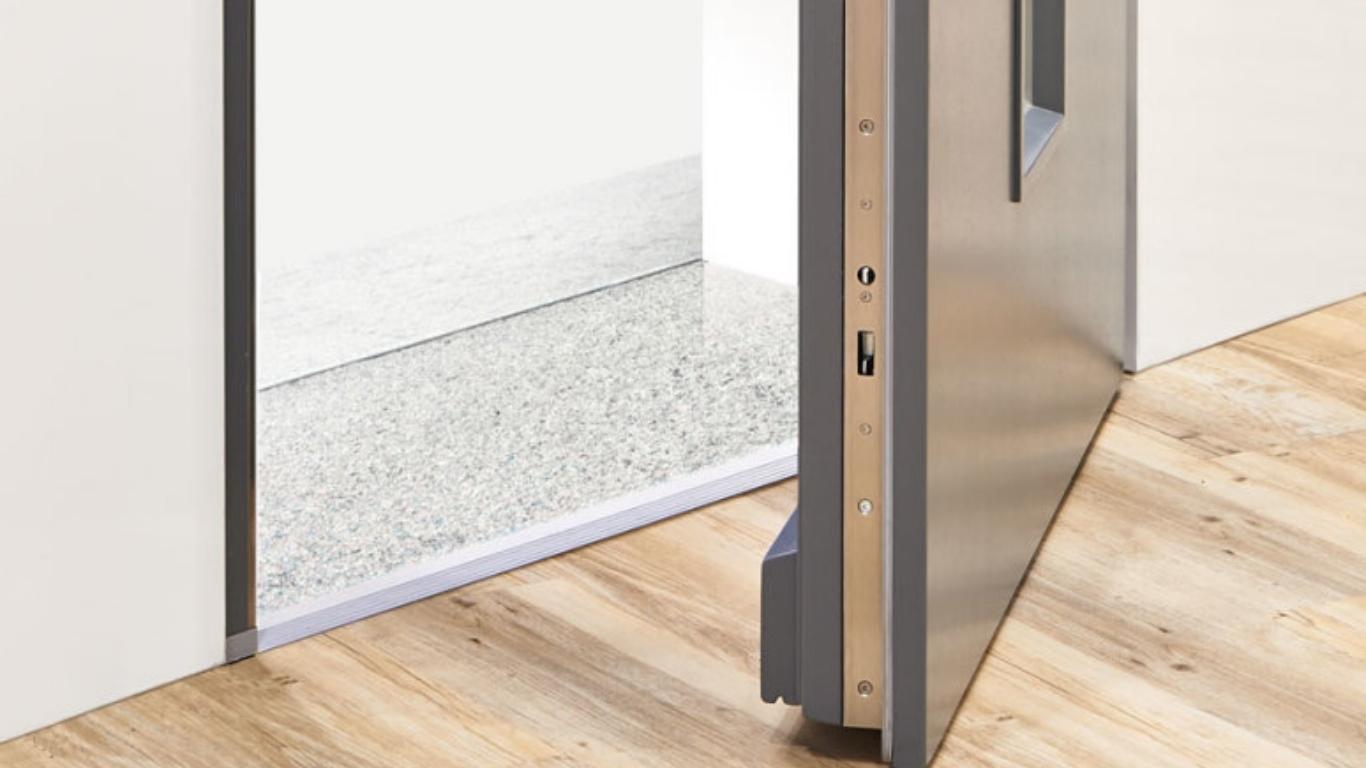
Steel doors are common across the GTA. On houses, insulated steel entrance doors with a foam core are a popular, inexpensive choice for front, side and garage entry doors. On commercial buildings, hollow metal doors in steel frames are standard for rear exits, service doors, stairwells and fire doors. Both are strong, but they behave differently from wood when it comes to fitting and repairing locks.
A typical residential steel door has thin steel skins over a foam core, with wood or composite stiles along the edges and a lock block where the hardware goes. The steel skin resists denting and weather well; the foam provides insulation.
Things to know when fitting locks:
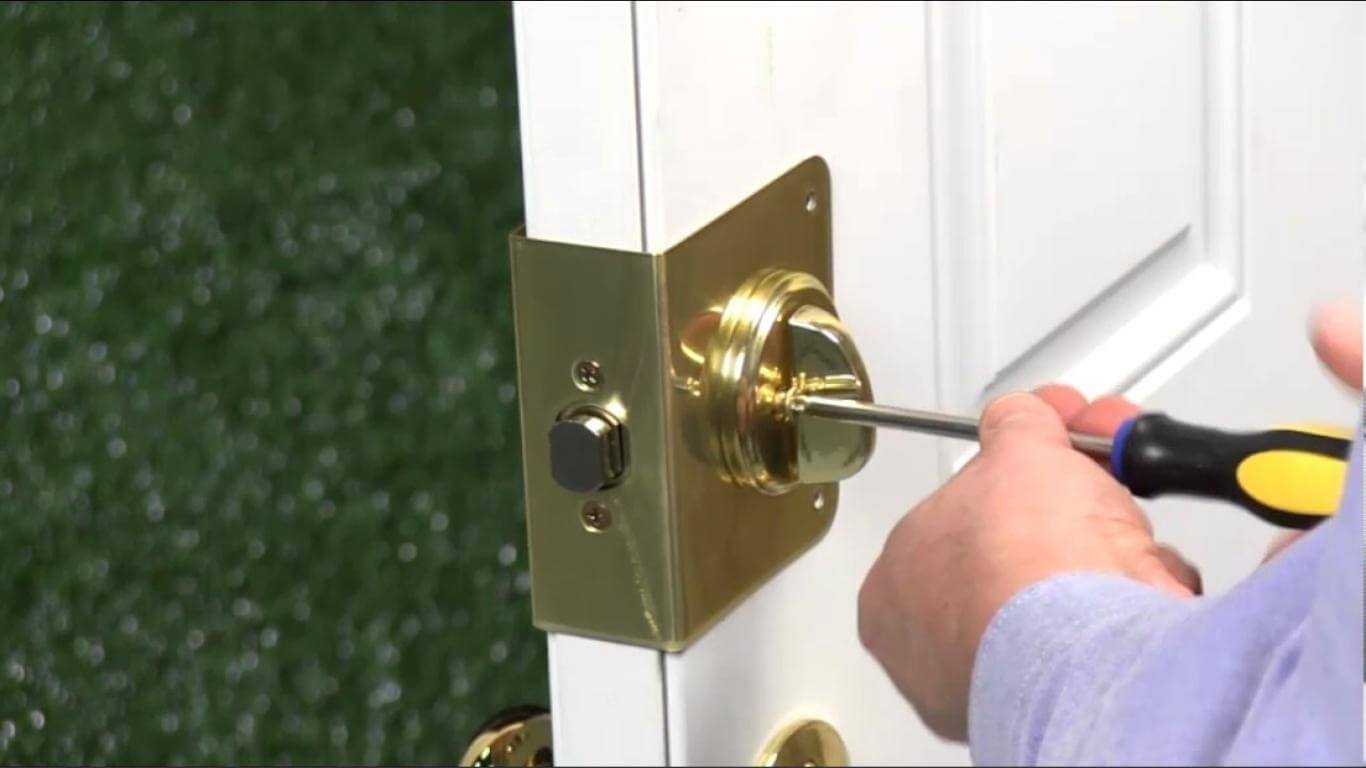
A residential steel door is often stronger than the wood frame it sits in. Reinforcing the strike and hinges into the framing is usually the most valuable improvement.
Commercial hollow metal doors are made of heavier-gauge steel, often with internal reinforcement for the lock, closer and hinges, and are hung in welded or knock-down steel frames. They are designed for heavy use and often for fire ratings.
Their hardware is prepared to standard templates: mortise locks, cylindrical locks, exit devices, closers and hinges all fit reinforced preparations in the door and frame. Replacement hardware usually needs to match the existing preparation, or the door must be re-prepared.
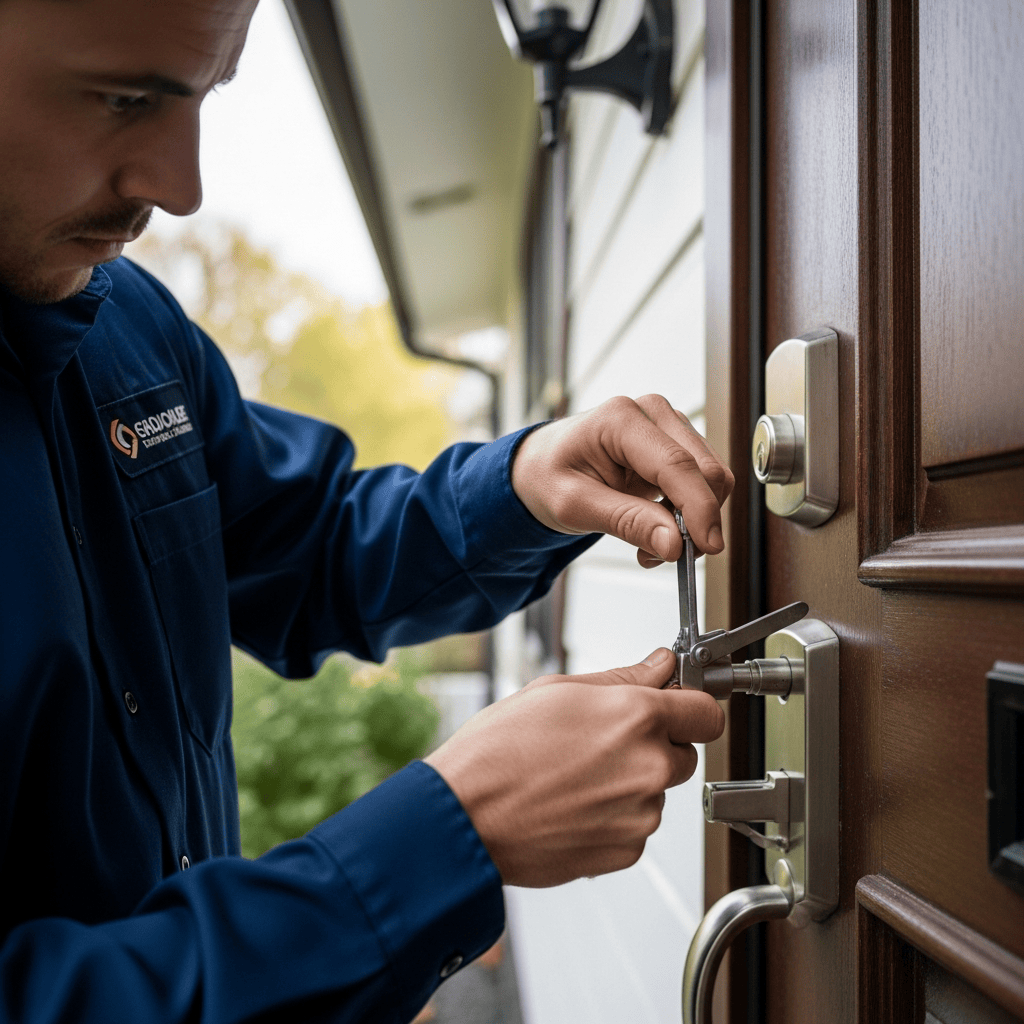
Drilling steel needs the right tools and care, because the skin can tear or deform and swarf can damage the finish. Holes must be deburred so cylinders and trim seat properly.
Fixings into thin steel skins hold poorly without reinforcement. Through-bolted hardware or fixings into internal reinforcement plates hold far better.
Adding a second lock to a residential steel door is possible, but the position must be checked against the internal structure so the new lock has solid material behind it.
Mortise preparations in commercial doors are specific; a new mortise lock must match the pocket and faceplate size.
Wood frames on steel doors. On houses, the strike side of the frame is the usual failure point in a forced entry. A reinforced strike and long screws into the framing, plus long screws in the hinges, are worth fitting on any steel entrance door.
Steel frames. Commercial steel frames are strong, but they must be anchored to the wall and, for fire-rated assemblies, grouted or fixed as the rating requires. A frame that has come loose from the wall flexes, and the latch may not hold. Strikes in steel frames are fitted to prepared cut-outs.
Many steel doors in commercial buildings and some in homes, such as the door from an attached garage into the house, are fire-rated. A fire-rated door must:
Replacing hardware on a fire door with unrated parts, or drilling unapproved holes, can compromise the rating. Labels, closers and latching all matter with fire door hardware for businesses, and exits that must open in one motion use panic bars and exit devices.
Steel doors near the ground, especially rear and service doors, can rust at the bottom edge, around the lock and where paint has chipped. Rust around the lock weakens the fixing points and can seize hardware. Keeping the paint intact, fitting a door sweep and keeping salt and water away from the bottom of the door all help. Badly rusted doors are often better replaced than patched.
A steel door that has been pried or struck often shows dents near the lock and strike. Light dents can be left; deformation that stops the latch or bolt engaging properly needs correcting. Common repairs include replacing a bent strike, fitting a wrap-around reinforcer over the damaged area, or replacing the door. The broader steps follow lock repair after a break-in.
Rear doors on shops and restaurants are often steel doors opening outwards onto a lane. They need security hinges or hinge pins that cannot be removed, a latch guard covering the gap, and a lock or exit device suited to the door's role as a fire exit. These doors take a lot of abuse, and their particular weaknesses are part of rear door security for shops and restaurants.
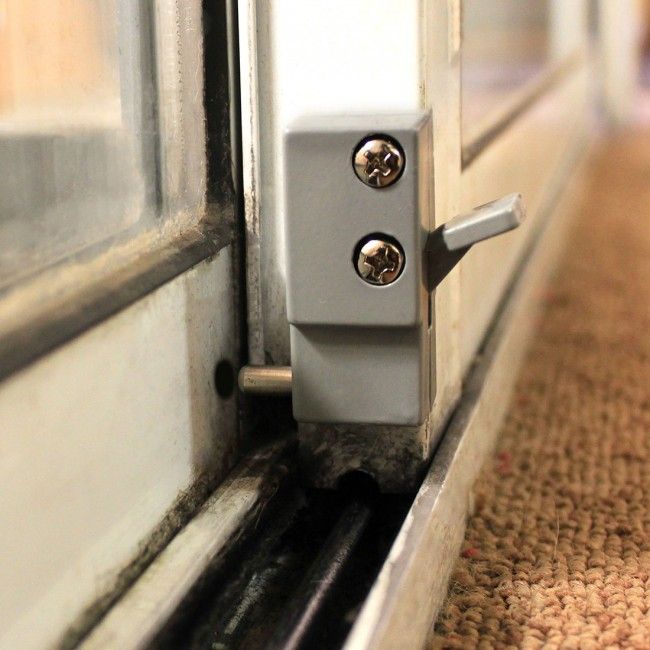
Insulated steel doors can show condensation or frost on the inside face in very cold weather, especially around the lock where the metal of the hardware conducts cold through the door. Moisture around the lock can lead to corrosion and stiffness over time. Good weather-stripping, a warm, dry entrance and a dry lubricant on the lock in autumn help. Persistent condensation may point to a failed seal or a door that no longer closes tightly.
Steel doors can be painted, but the hardware should come off first rather than being masked, so the paint edge does not trap moisture around the lock. After painting, check that the latch and deadbolt still move freely, since paint on the edge of the door or the strike can make them bind.
Fitting a viewer to a steel door means drilling through both skins and the core. It is straightforward with the right tools, but the position should avoid any internal reinforcement and the hole should be sealed to keep moisture out of the core.
Commercial steel service doors are often fitted with heavy closers to make sure they shut and latch. A closer that is too strong makes the door hard to open; one too weak lets it stand open. Adjusting the closer so the door closes fully and latches every time, without slamming, protects both the door and the lock.
When a residential steel door is replaced, choose one pre-bored for the hardware you intend to fit, or one left unbored so the locks can be placed correctly. Pre-hung doors come with a new frame, which is the moment to fit a reinforced strike and long hinge screws so the new door and frame start out strong.
Steel doors are heavy, especially commercial hollow metal doors, and their hinges carry a lot of weight. Worn hinges let the door drop, so the latch and bolt stop lining up with the strike. Commercial doors often use heavy-duty ball-bearing hinges or continuous hinges for this reason. On residential steel doors, long screws into the framing in at least the top hinge keep the door from sagging, as with door hinges and security.
Suite doors in many apartment buildings are steel or fire-rated doors with mortise or cylindrical locks, often on the building's master key system. Changing a suite lock usually needs the building's agreement and a cylinder that fits the master system. Tenants and owners should check the building's rules first.
On fire-rated commercial openings, steel frames are often filled with grout or fixed to the wall in a specific way to keep the rating and to stop the frame flexing. A frame that sounds hollow and flexes at the strike may be weaker than intended. Fixing a loose frame properly is more effective than fitting a heavier lock to it.
Residential steel doors usually take standard tubular deadbolts and handlesets in the pre-bored positions. Grade 1 or a strong Grade 2 deadbolt suits a front door. Because the door skin is thin around the bore, a deadbolt with a solid outer rose and through-bolts holds better than one fixed only with short screws into the skin.
In GTA winters, the steel skin of an exterior door gets very cold, and the hardware conducts that cold inside. Choosing hardware with good seals and keeping the weather-stripping in good condition reduces condensation and ice around the lock, which keeps the lock working smoothly in the coldest weeks.
Commercial steel doors should be checked regularly: closers, hinges, latching, exit devices, and the frame's fixing to the wall. A door that no longer latches on a fire exit or a rear entrance is both a security and a safety problem, and finding it during an inspection is better than after an incident.
Steel doors can take door viewers, kick plates and mail slots, but each needs holes or fixings through the skin. Planning all the hardware together, before drilling, keeps the number of holes down and makes sure each item has solid material to fix into.
Tell us whether the door is residential or commercial, whether it is fire-rated, what is fitted now and what you want to change. Photographs of both faces, the door edge and the frame help.
We can fit and replace locks on residential and commercial steel doors, reinforce wood frames, repair or replace strikes and hinges, fit latch guards and security hinges, and fit rated hardware to fire doors. Commercial work is part of our commercial locksmith services, and household doors are part of our residential locksmith services.
Keep reading
The door itself is strong, but on most homes it hangs in a wood frame, which is usually the weak point. A reinforced strike and long screws into the framing make the biggest difference.
The door itself is strong, but on most homes it hangs in a wood frame, which is usually the weak point. A reinforced strike and long screws into the framing make the biggest difference.
Usually, but the position must be checked against the door's internal structure so the new lock has solid material behind it.
A commercial steel door, usually with internal reinforcement for hardware, hung in a steel frame. It is built for heavy use and often for fire ratings.
Not without care. Unapproved holes or unrated hardware can compromise the fire rating. Use rated hardware fitted to approved preparations.
Water, salt and chipped paint at the bottom edge cause rust. Keeping paint intact, fitting a door sweep and keeping salt away help.
Light dents can be left. If the damage stops the lock or bolt engaging, a new strike, a wrap-around reinforcer or a new door may be needed.
With security hinges, a latch guard over the gap, and a lock or exit device suited to its role as a fire exit.
They must be properly anchored to the wall. A loose frame flexes, and the latch may not hold.
GTA Lockman Mobile Locksmith Services is a mobile locksmith working on homes, businesses and vehicles across Toronto and the GTA, in the trade since 2010. Every review is written by a customer on Google, where you can read them in full.
Areas served: Toronto, North York, Scarborough, Etobicoke, Vaughan, Richmond Hill, Markham, Stouffville, Newmarket, Mississauga, Brampton, Oakville, Milton, Halton Hills, Pickering, Ajax, Whitby, Oshawa, Uxbridge.
Describe the door, hardware and service address. Contact GTA Lockman Mobile Locksmith Services to confirm the scope and scheduling for your location.