
GTA Lockman Mobile Locksmith Services · Toronto & GTA
Understand what a double-cylinder deadbolt does, the fire-safety concern, and alternatives for doors with glass.
Related services
Restore reliable locking on the doors people use most, and strengthen the frames that are easiest to force.
Learn moreSecure a forced door, repair damaged locks and frames, and document the work for your police report and insurer.
Learn moreSet up suite, shared and interior door locks that respect both households, safe exit and the tenancy rules.
Learn moreMake the back door close, latch and lock every time while keeping it a safe exit for staff and customers.
Learn moreDiagnose resistance, incomplete bolt travel and failed connections without assuming every deadbolt needs replacing.
Learn moreReduce the keys you carry where cylinders and access requirements allow a suitable keyed-alike arrangement.
Learn more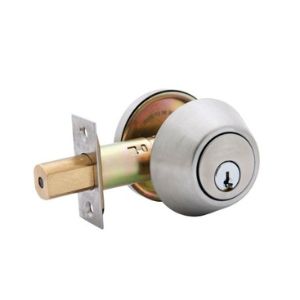
A standard single-cylinder deadbolt has a key cylinder on the outside and a thumbturn on the inside. A double-cylinder deadbolt replaces the inside thumbturn with a second key cylinder, so a key is needed to lock or unlock the door from both sides.
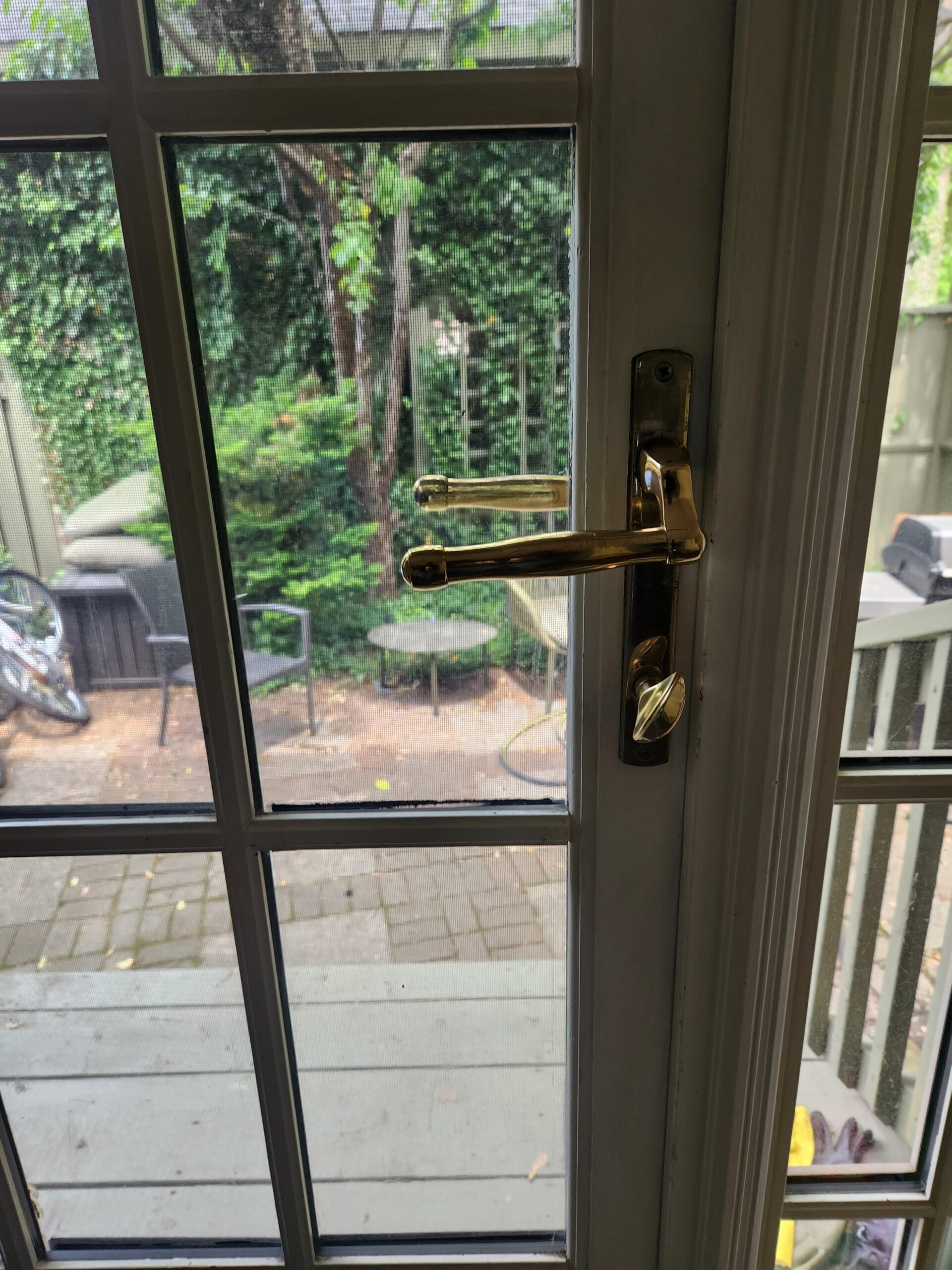
The reason people consider one is usually glass. If a door has a glass panel in it or beside it, someone may be able to break the glass, reach in and turn the thumbturn. With a double-cylinder deadbolt, there is no thumbturn to reach. The idea is sound, but it comes with a serious trade-off: the people inside also need a key to get out.
In a fire, occupants need to get out, often in smoke or darkness. A door that requires a key to open from inside can slow or prevent escape if the key is not within reach. Children, visitors and older family members may not know where the key is kept. This is the main reason double-cylinder deadbolts are discouraged on doors that serve as exits.
Building and fire requirements in Ontario address exit doors in many types of occupancy, and requirements for rental units and secondary suites can be stricter than for a single-family home. Before installing a double-cylinder deadbolt, check with your municipality or a fire-safety professional whether it is permitted on that door. A locksmith can explain the hardware, but they cannot override those requirements.
Some homeowners choose a double-cylinder deadbolt on a door that is not a primary exit, where glass makes the thumbturn easy to reach and there are other ways out of the home. If you use one, the household should agree on a routine: a key left in the inside cylinder or on a hook right beside the door whenever someone is home, and removed only when the house is empty.
That routine only works if everyone follows it. If it is likely to be forgotten, the safety risk may outweigh the security benefit. The technician can discuss the door, the household and the alternatives before any decision is made.
Often the glass itself is the better thing to address. Options include replacing the glass with laminated or tempered glass that resists breaking, applying security film that holds broken glass together, or fitting a decorative grille on the inside. Each reduces the chance of someone reaching the thumbturn while keeping a simple exit.
Moving the lock is sometimes possible if the glass is close to it. Another option is a deadbolt with a thumbturn that can be removed or locked when the house is empty, and left in place when people are home. Keypad deadbolts avoid the reach-in problem for the outside but still have an inside turn.
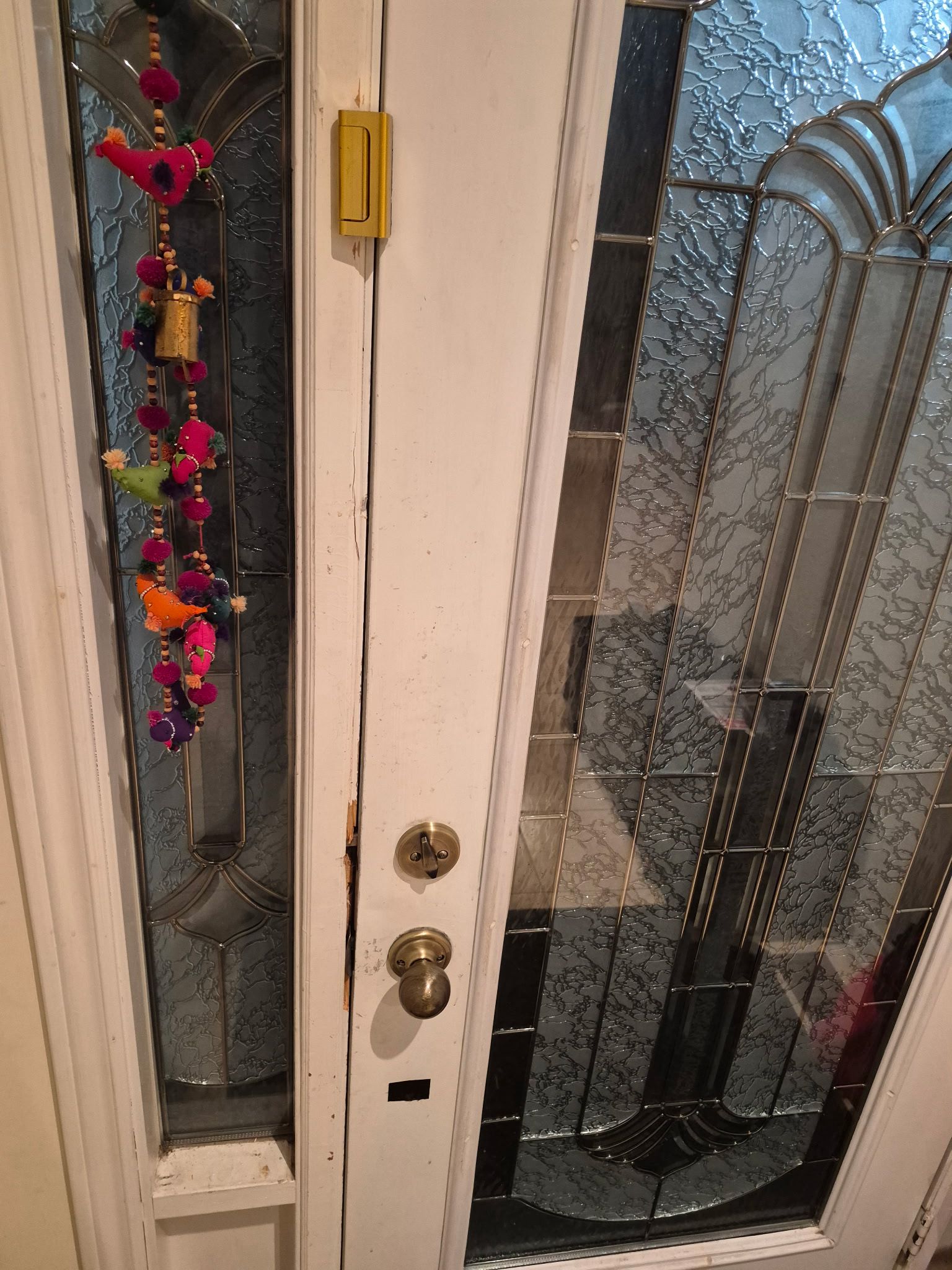
Frame reinforcement matters too. Many forced entries succeed by breaking the frame rather than the glass. A reinforced strike fixed into the wall framing strengthens the door regardless of which deadbolt is used. The page on side and back door lock repair explains frame reinforcement.
Landlords should be particularly cautious. Tenants need to be able to exit their unit without a key, and requirements for rental units and secondary suites may prohibit double-cylinder hardware on exit doors. The page on basement apartment entrance locks discusses exit considerations for suites.
In commercial premises, exit doors are governed by stricter rules and double-cylinder locks are generally not suitable for doors that serve as exits while the building is occupied. The rear door security page explains exit hardware options for businesses.
Photos
Photographs from GTA Lockman Mobile Locksmith Services work across Toronto and the GTA. Send a picture of your own door and we can tell you what the visit would involve.
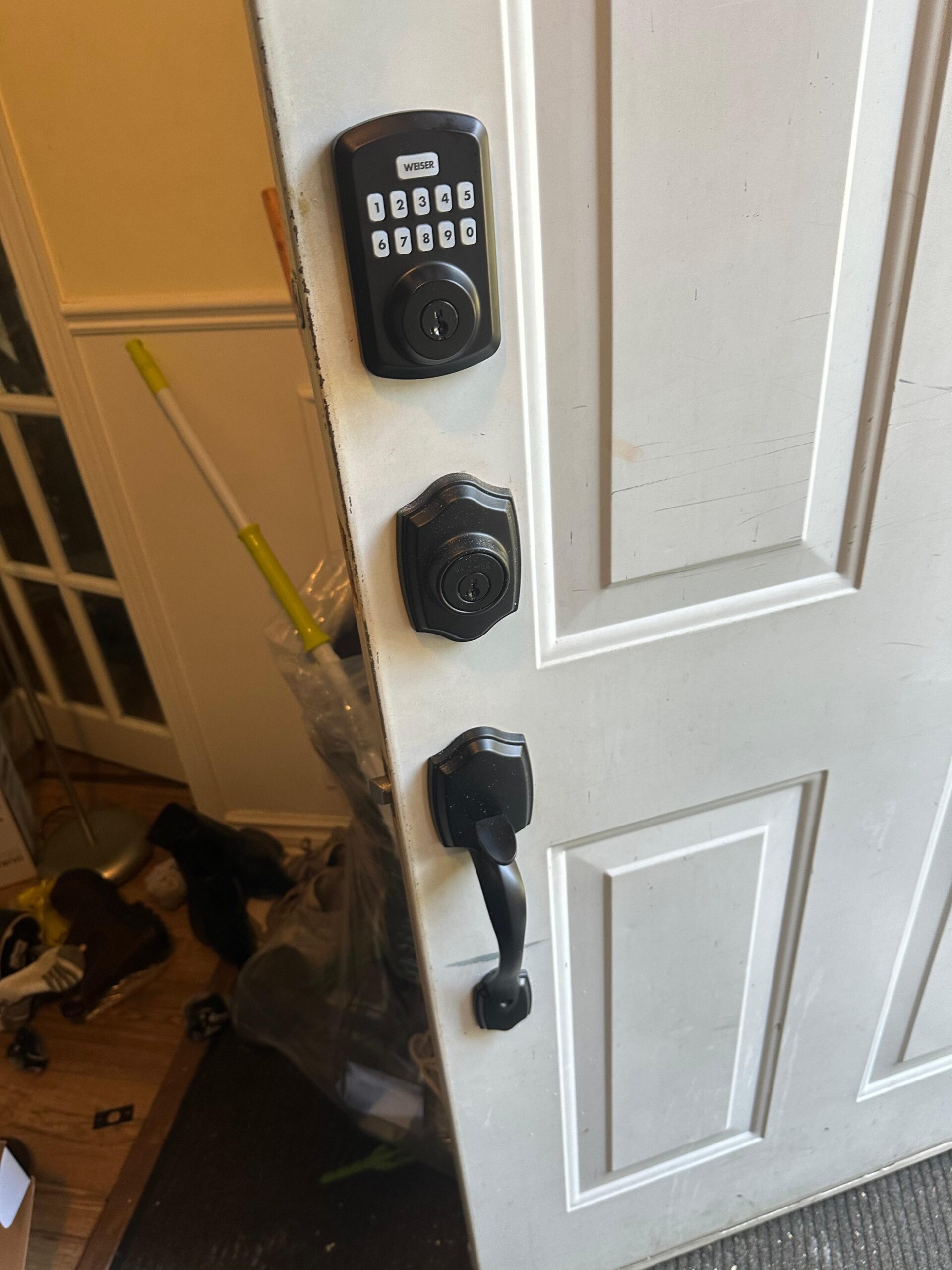
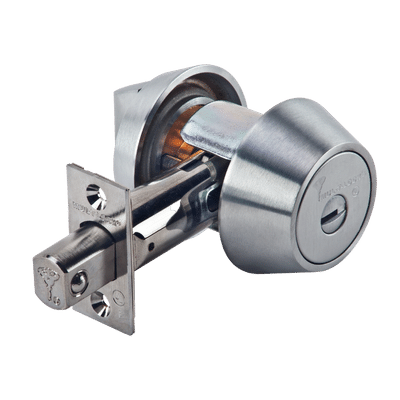
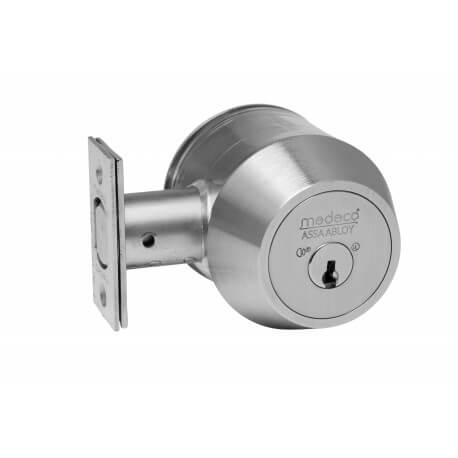
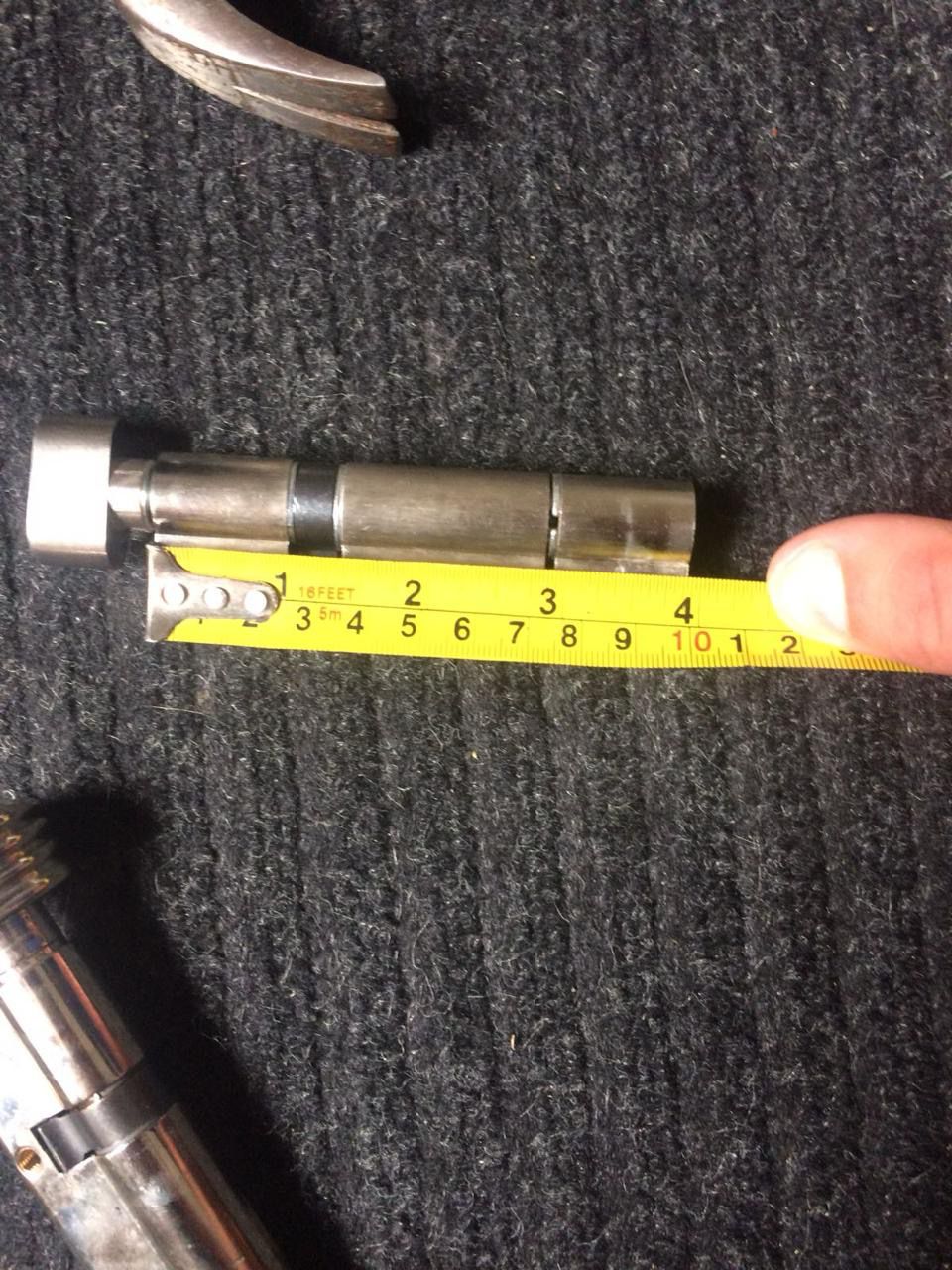
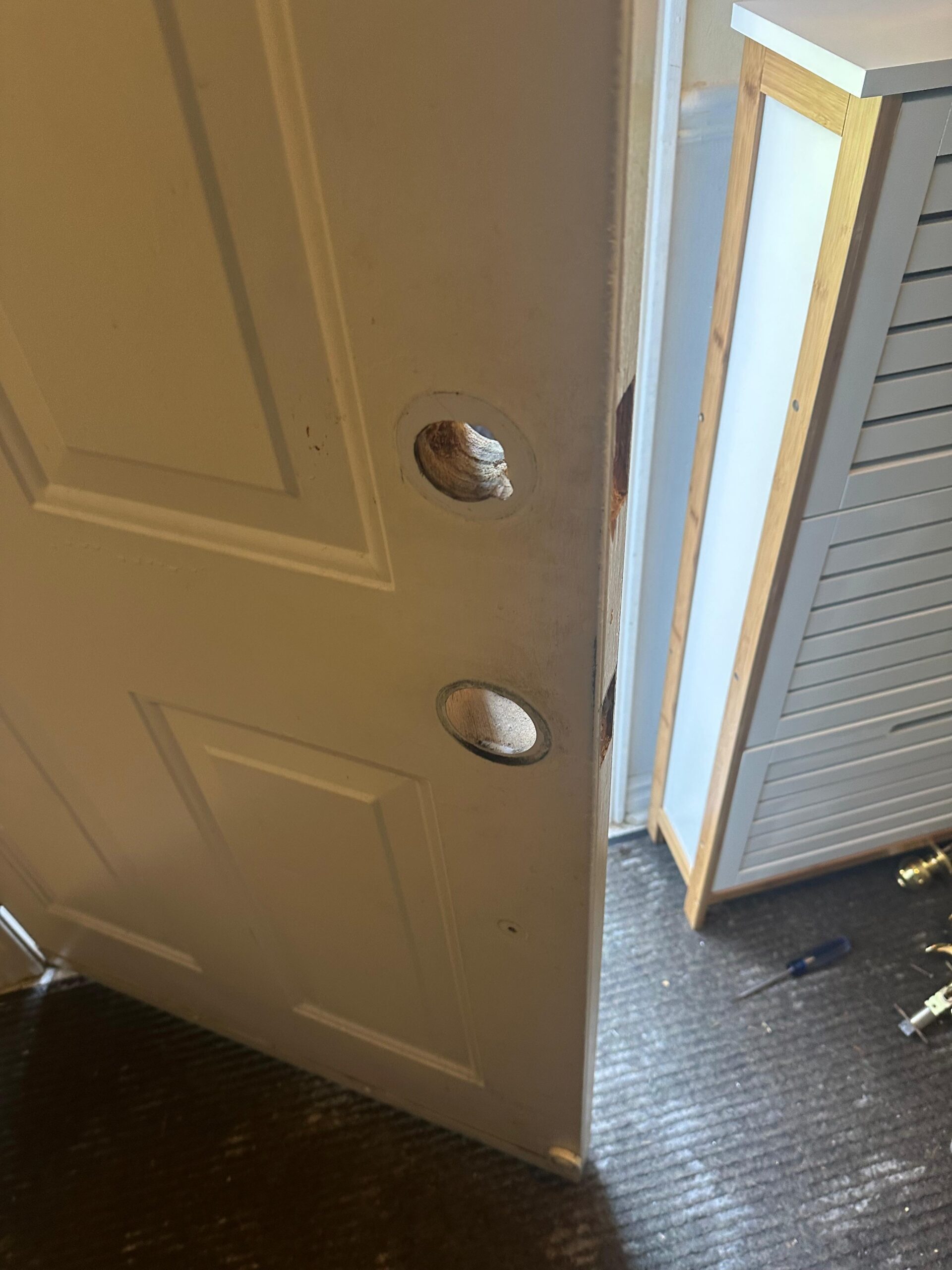
Many deadbolts are available in both versions using the same door preparation, so converting is usually straightforward. If you have a double-cylinder deadbolt and want to change it to a single-cylinder model, it is often a simple replacement. The same applies in reverse, subject to the safety considerations above.
The new deadbolt can be keyed to match the other locks in the house. The page on one key for every door explains keyed-alike arrangements.
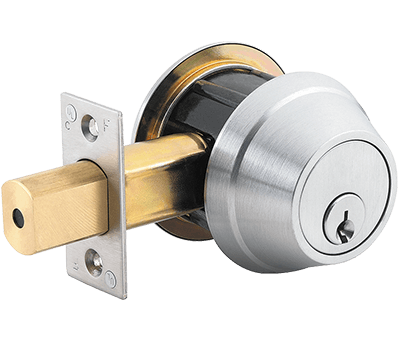
If someone has broken glass to reach a thumbturn, contact the police first. The lock may be undamaged, but the glass and possibly the frame need repair. The page on lock repair after a break-in covers what to expect. Consider the alternatives above before choosing a double-cylinder deadbolt as the response.
Some older Toronto homes have original mortise locks or doors with large glass panels that were fitted with double-cylinder hardware decades ago. When updating these doors, owners often choose to convert to a single-cylinder deadbolt and address the glass instead. The original door may need its preparation adapted for modern hardware, which the technician can assess before recommending a change.
If the door is heritage or has decorative glass, consider interior grilles or security film rather than replacing the glass, so the character of the door is kept while the reach-in risk is reduced.
A storm door in front of the main door adds a layer that someone must get through before reaching the glass. It does not replace a proper lock on the main door, but combined with good glass and a reinforced strike it can reduce the appeal of reaching in. Make sure the storm door does not interfere with the main door's latch or deadbolt.
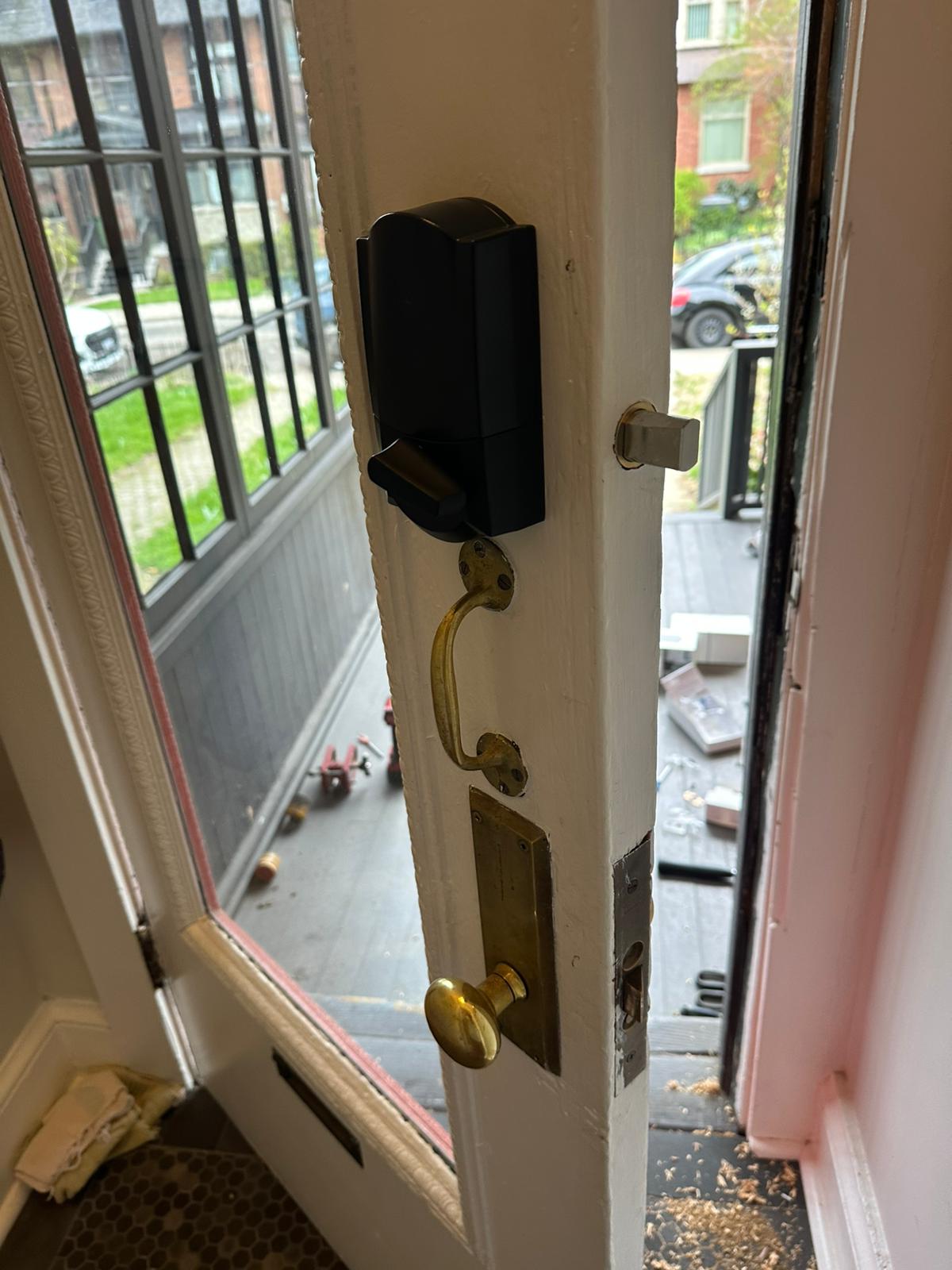
The decision about a double-cylinder deadbolt affects everyone who lives in or visits the home. Talk it through with the household, including how children, older family members and guests would leave in a fire. If a double cylinder is chosen, practise the routine for the key. If the routine seems unlikely to be followed, choose an alternative that keeps a simple exit.
When you ask about a double-cylinder deadbolt, the technician will look at the door, the glass, the frame and how the door is used. They will check whether the existing preparation suits the lock you are considering, whether the strike and frame are sound, and whether the door is likely to be an exit route. They should explain the trade-offs plainly and suggest alternatives where a double cylinder seems unsuitable. The final choice belongs to the household, within the requirements that apply to the door. Whatever is chosen, the deadbolt should throw fully into a solid strike, and every member of the household should know how to open the door from inside.
If you are unsure whether a door counts as an exit, look at how people would leave the home in a fire from each floor. Doors on the main escape route, including the front door and any door from a bedroom level, deserve particular care. A door that is rarely used and has other exits nearby is a different case, but the decision should still account for everyone who might be in the home. Visitors, babysitters and overnight guests should be included, because they are the people least likely to know where a key is kept. If any of them would struggle to find the key in the dark, that is a strong reason to keep a thumbturn on the inside.
When you call, describe the door, the glass near the lock, how the household uses the door and whether it is a rental. Photographs of both sides of the door help. Our posted hours appear below, and we do not promise a fixed arrival time. The deadbolt repair page covers related deadbolt work.
Keep reading
Requirements depend on the type of building, the use of the door and the municipality. For many exit doors, especially in rental units, secondary suites and commercial premises, hardware that requires a key to exit is generally unsuitable or not permitted. For a single-family home the rules may be different. Check with your municipal building department or a fire-safety professional before installing one. A locksmith can explain the hardware and its trade-offs, but the decision must respect the requirements that apply to your door.
Requirements depend on the type of building, the use of the door and the municipality. For many exit doors, especially in rental units, secondary suites and commercial premises, hardware that requires a key to exit is generally unsuitable or not permitted. For a single-family home the rules may be different. Check with your municipal building department or a fire-safety professional before installing one. A locksmith can explain the hardware and its trade-offs, but the decision must respect the requirements that apply to your door.
The usual reason is glass in or beside the door. If breaking the glass allows someone to reach the inside thumbturn, a double-cylinder deadbolt removes that thumbturn so the lock cannot be opened without a key. That addresses one specific method of entry, but it also means occupants need a key to leave. Addressing the glass itself, or reinforcing the frame, often achieves the security goal without affecting exit.
Leaving the key in the inside cylinder while people are home allows a quick exit, but it largely defeats the purpose of the double cylinder, since someone reaching through broken glass could turn the key. Some households keep the key on a hook beside the door instead. Whatever routine is chosen, everyone in the home, including children and visitors, must know where the key is. If the routine is likely to be forgotten, a single-cylinder deadbolt is the safer choice.
Options include laminated or tempered glass that resists breaking, security film that holds broken glass together, a decorative grille on the inside of the glass, or relocating the lock further from the glass where possible. Reinforcing the strike and frame also helps, since many doors fail at the frame. These approaches improve security while keeping a simple thumbturn exit. The technician can suggest what suits the door.
Usually yes, and it is often a straightforward replacement using the existing holes in the door. Many deadbolt models come in both versions with the same door preparation. The new lock can be keyed to match your other locks. If the door preparation is different, the technician will explain any adjustment needed. Switching is common when a family's circumstances change or when a rental unit needs to meet exit requirements.
Generally no, on doors that serve as exits from the unit. Tenants must be able to leave without a key, and requirements for rental units and secondary suites are often stricter than for owner-occupied homes. A single-cylinder deadbolt with a thumbturn inside is the usual choice. If a landlord is concerned about glass near the lock, addressing the glass or reinforcing the frame is a more suitable approach.
They prevent one method: reaching through broken glass to turn a thumbturn. They do not prevent forcing the frame, attacking the cylinder or entering through a window. Many break-ins succeed by kicking the door at the strike, which a double cylinder does not address. A reinforced strike, solid hinges and good glass often provide more overall benefit. Consider the whole door rather than the deadbolt alone.
Yes, if the cylinders are compatible. Both cylinders on the double deadbolt can be keyed to the same key as your other exterior locks, so the household still carries one key. If the lock comes from a different manufacturer, a compatible cylinder or rekeying may be needed. The technician will confirm compatibility before installation so the new lock fits into the existing key arrangement.
Describe the door, hardware and service address. Contact GTA Lockman Mobile Locksmith Services to confirm the scope and scheduling for your location.