
GTA Lockman Mobile Locksmith Services · Toronto & GTA
Make the back door close, latch and lock every time while keeping it a safe exit for staff and customers.
Related services
Secure the premises at closing while keeping exit routes working, and fix the closer, alignment or lock fault behind it.
Learn moreReview what the departing employee could open, then rekey the affected cylinders and issue new keys with a record.
Learn moreLock and door service for offices, shops and managed properties. Plan access around the way your business operates.
Learn moreSecure a forced door, repair damaged locks and frames, and document the work for your police report and insurer.
Learn moreArrange authorized access to offices and business premises, then address the key or hardware problem behind the lockout.
Learn moreAuthorized entry to shops, restaurants, clinics and offices, with attention to storefront hardware and key control.
Learn more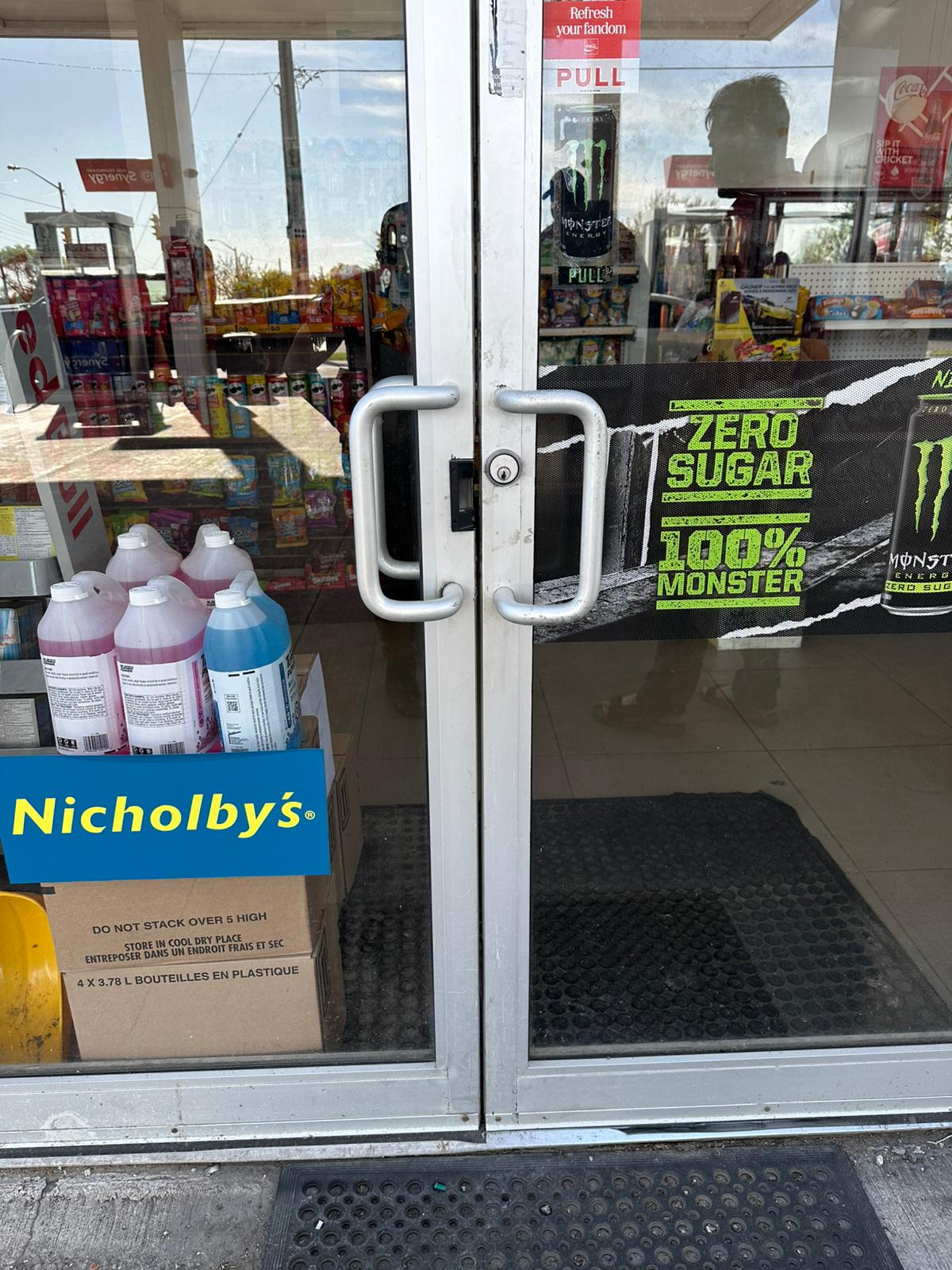
For many shops and restaurants, the front entrance is glass, well lit and watched from the street, while the rear door opens onto a lane, loading area or parking lot. It is used for deliveries, garbage, staff arrivals and smoke breaks. It is propped open during busy periods and slammed shut at the end of the night. That combination of heavy use and low visibility makes the rear door a common weak point.
Rear door security is not about turning the back of the business into a vault. The door must still let staff work efficiently and let everyone leave safely in a fire. The aim is a door that closes, latches and locks reliably every time, resists casual forcing, and gives the business control over who has keys.
Before choosing hardware, describe how the door is actually used. Is it an exit route? Do deliveries arrive through it? Is it opened from outside by staff with keys, or only from inside? Is it left open for ventilation in a kitchen? Does the closer get disconnected so the door stays open?
These details matter because the right hardware depends on the door's function. A door that must serve as a fire exit cannot be locked in a way that prevents people inside from leaving. A door used only by staff with keys needs reliable keyed entry. A delivery door may need a way to be held open safely without wedges.
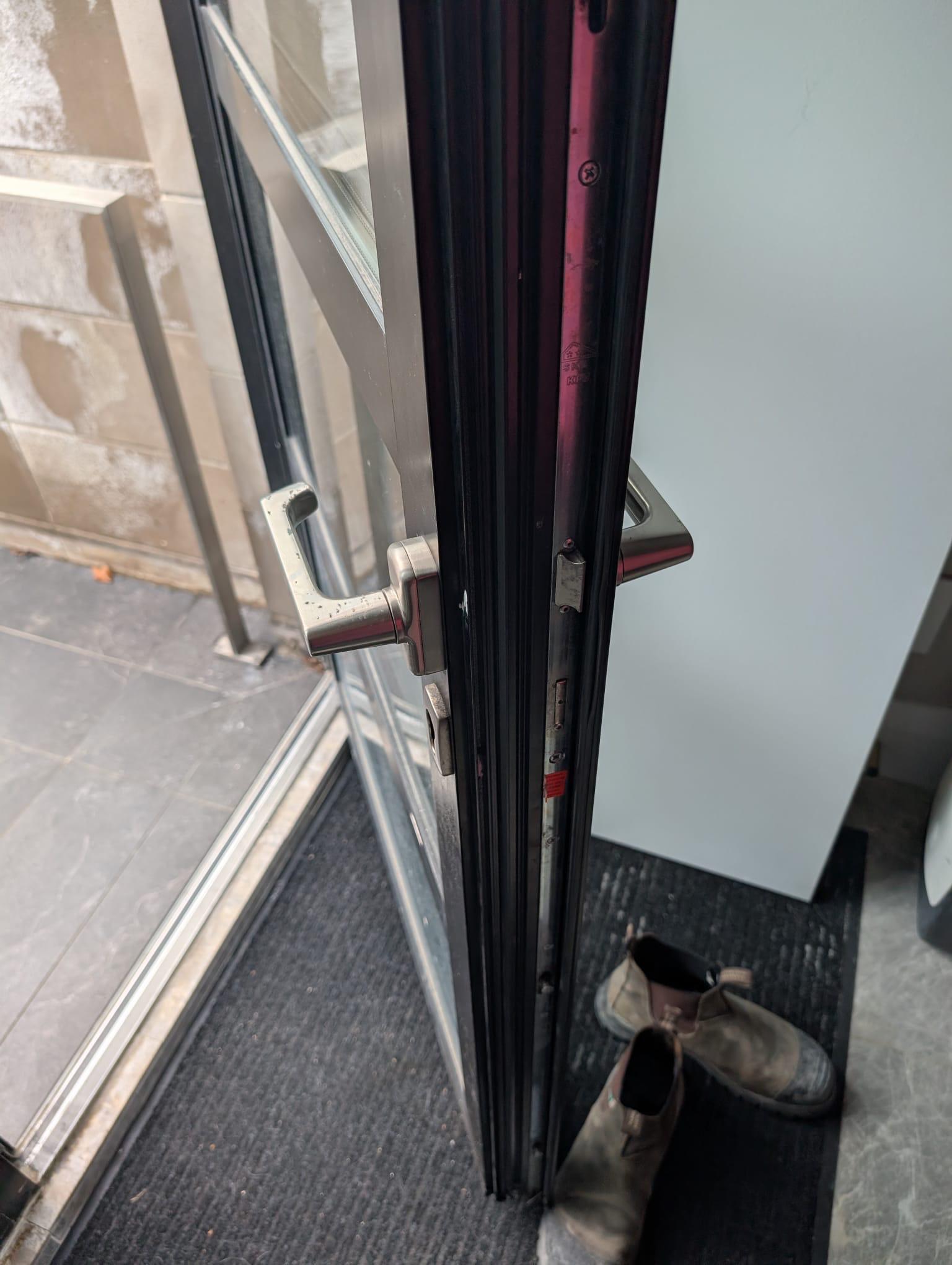
Much rear-door insecurity comes from doors that do not close properly. A closer that has lost its adjustment, hinges worn by constant slamming, or a door bent near the lock can leave a gap where the latch never catches. Staff may assume the door is locked when it is not.
Test the door as staff use it: let it close on its own and check that the latch engages without pushing. If it does not, the closer, hinges or strike need attention. The page on a commercial door that will not lock at closing explains those causes. Correcting the door's operation is often the most useful improvement a business can make.
Rear doors on commercial premises are usually hollow-metal or solid doors in steel frames. Common hardware includes heavy-duty deadbolts, mortise locks and exit devices. A cylindrical lever lock alone offers limited resistance to forcing, and many businesses add a deadbolt or replace the lock with a mortise unit.
A deadbolt should throw fully into a strike that is firmly fixed to the frame. On steel frames, the strike may need reinforcement if the frame has been damaged. Where the door is an exit route, the lock must allow free exit from inside, which is why many rear doors use exit devices with outside key control. The commercial locksmith page describes these options.
On outward-opening doors, the latch is exposed at the gap between door and frame. A latch guard, a steel plate fixed to the outside of the door over the gap, makes it harder to reach the latch with a tool. Hinges on outward-opening doors can be exposed; security studs or non-removable hinge pins prevent the door from being lifted off after the pins are removed.
These are modest additions that do not change how staff use the door. The technician should confirm they suit the door and frame before fitting them.
If the rear door is an exit route, it may use an exit device or panic bar. These must release freely from inside. Never chain, padlock or block an exit device to secure the door; that creates a serious fire-safety risk. If the exit device will not latch, it should be repaired or adjusted so it latches reliably while still releasing.
Some exit devices are fitted with alarms that sound when the door is opened, which can discourage unauthorized use without preventing exit. The technician can explain options that suit the door.
Kitchens and stockrooms often prop the rear door open for air or deliveries. Wedges, bricks and disconnected closers strain the hardware and leave the door open longer than intended. A hold-open arm designed for the closer, or a scheduled delivery routine, keeps the door usable without damaging it.
Consider who checks the rear door at closing. A simple closing checklist that includes testing the rear door lock catches problems before the business is left unsecured overnight.
Rear-door keys circulate widely among kitchen staff, delivery drivers and cleaners. Keep a record of who holds them. When staff leave, collect their keys and consider rekeying if keys are missing; the page on rekeying after an employee leaves explains the process. A restricted keyway can limit unauthorized copies.
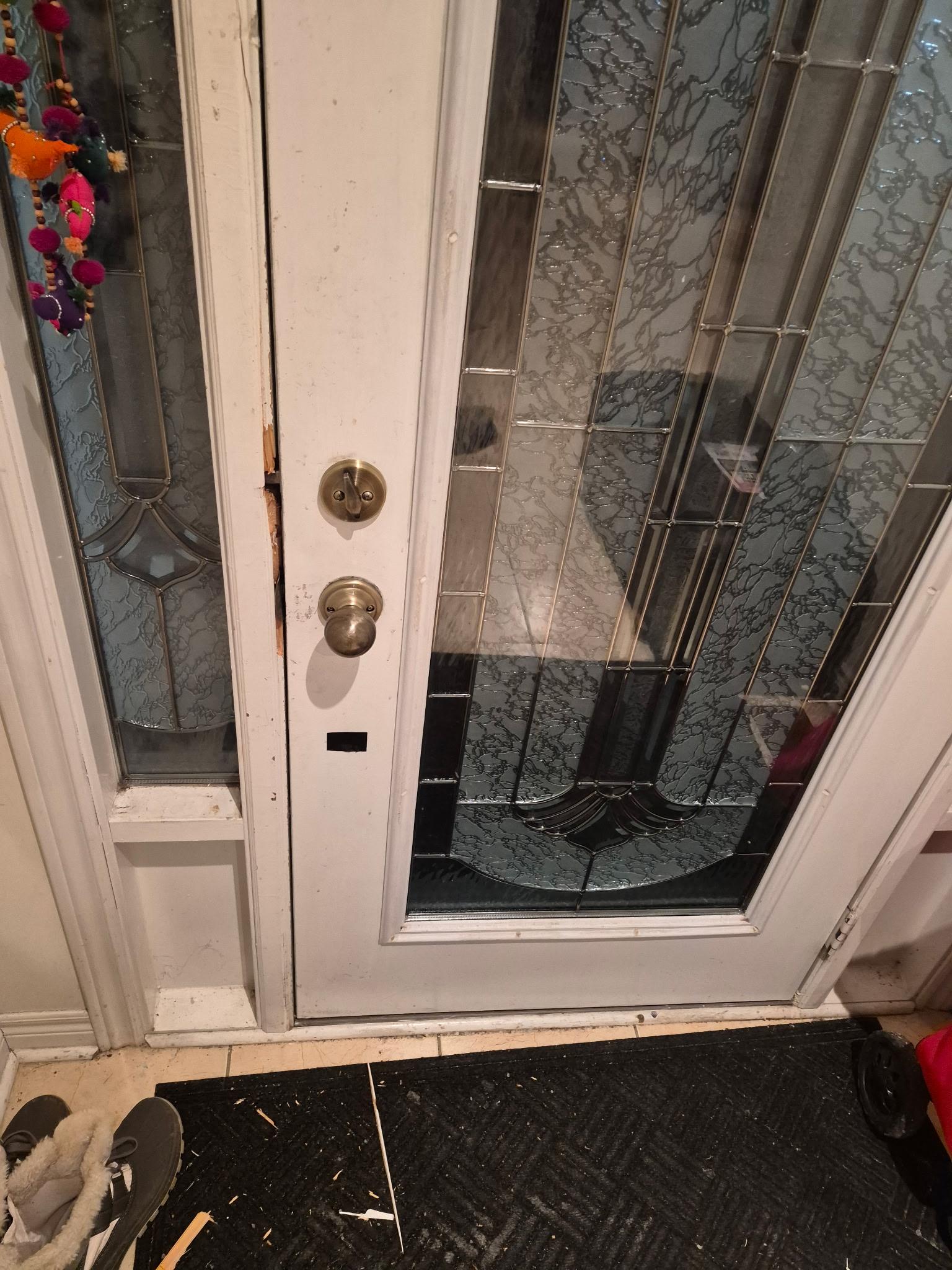
If the rear door shows pry marks, a bent frame or a damaged lock, contact the police first, then arrange a repair. The page on lock repair after a break-in covers what to expect. Ask the technician to identify how the attempt was made so the repair addresses that weakness.
The rear of many GTA shops and restaurants faces a lane or parking area that is dark after closing. Good lighting over the rear door, kept free of stacked boxes and bins, makes it harder for someone to work on the door unseen and makes it easier for staff to check the lock at night. Keep the area right around the door clear so nothing can be used to climb or to hide activity.
These measures are outside the lock itself, but they affect how well any lock performs. A solid door and good lock in a dark, cluttered doorway are more exposed than the same hardware in a well-lit, clear space.
Any change to the rear door, whether a new lock, a latch guard, an exit device adjustment or a closer repair, should be tested the way staff actually use the door. Let it close from fully open, confirm the latch catches, lock it from outside with the key, and open it from inside using the exit hardware. A change that improves security but makes the door hard to use tends to be worked around by staff, which defeats its purpose.
If the business shares a lane or loading area with neighbouring units, talk to them and the landlord about lighting and bins, since changes often benefit every unit along the lane.
When you call, describe the door, its hardware, whether it is an exit route and how it is used. Photographs of both sides of the door help. Our posted hours appear below, and we do not promise a fixed arrival time.
Keep reading
Not if the door is an exit route while anyone is inside. Chains and padlocks on exit doors can trap people in a fire and may breach fire code. Once the premises are empty, the rules for securing an exit door depend on the building and its fire-safety plan, so check with the landlord or a fire-safety professional. The better approach is hardware that locks securely from outside while still releasing freely from inside, such as a properly adjusted exit device with outside key control.
Not if the door is an exit route while anyone is inside. Chains and padlocks on exit doors can trap people in a fire and may breach fire code. Once the premises are empty, the rules for securing an exit door depend on the building and its fire-safety plan, so check with the landlord or a fire-safety professional. The better approach is hardware that locks securely from outside while still releasing freely from inside, such as a properly adjusted exit device with outside key control.
A latch guard is a steel plate fixed to the outside of an outward-opening door so it covers the gap between the door and frame at the latch. It makes it harder to reach the latch with a pry bar or thin tool. It suits many commercial rear doors and does not change how staff use the door. Whether you need one depends on the door, the lock and how exposed the gap is. The technician can assess the door and confirm the guard fits without interfering with the closer or exit hardware.
Yes. If the door does not close and latch by itself, staff may leave it unlatched without realizing. The closer may need adjustment or replacement, the hinges may be worn, or the door may be dragging on the frame or floor. Correcting the closer and alignment is often the most valuable improvement for a rear door. Test the door after the repair by letting it close from fully open and confirming the latch engages without a push.
A cylindrical lever lock alone offers limited resistance to forcing, particularly if the latch is exposed at the gap. Many businesses add a deadbolt with a solid strike or replace the lock with a mortise lock, which is stronger and better suited to heavy use. If the door is an exit route, the chosen hardware must allow free exit from inside. The technician should explain what the existing door and frame can accept, because steel doors and frames may need specific preparation.
Wedges and disconnected closers strain hinges and closers and leave the door open longer than intended. A hold-open arm designed for the closer allows the door to stay open safely when needed and close normally when released. A screen door or ventilation improvement may be worth discussing with the landlord. Make sure staff understand when the door must be closed, and include it in the closing checklist so it is locked at the end of each day.
On outward-opening doors, the hinge pins are often on the outside. Security studs fitted to the hinge edge engage the frame when the door is closed, so the door cannot be lifted out even if the pins are removed. Non-removable hinge pins are another option. Continuous hinges on commercial doors also address this. The technician can check the hinges and recommend a suitable option for the door.
Many exit devices can be fitted with a local alarm that sounds when the door is opened, and stand-alone exit alarms are also available. These discourage casual use of the door without preventing exit. They are separate from a monitored security system. If you need the rear door connected to your monitored alarm, speak with your security provider. The technician can explain which exit hardware supports a local alarm.
Only people who need to use it from outside, such as managers and staff who open or close the business. Keep a register of who holds each key and collect keys when people leave. If keys are missing, rekey the rear door along with any other doors the key opened. A restricted keyway helps limit copies. Delivery drivers usually do not need a key if deliveries are received by staff.
Describe the door, hardware and service address. Contact GTA Lockman Mobile Locksmith Services to confirm the scope and scheduling for your location.