
GTA Lockman Mobile Locksmith Services · Toronto & GTA
Review what the departing employee could open, then rekey the affected cylinders and issue new keys with a record.
Related services
Review every opening affected by the missing keys and establish a documented, authorized change to mechanical access.
Learn moreLock and door service for offices, shops and managed properties. Plan access around the way your business operates.
Learn moreReplace worn or unsuitable hardware with a lock that fits the door, its function and your access needs.
Learn moreReplace the previous tenant's key arrangement with one your business controls, following the lease and building rules.
Learn moreMake the back door close, latch and lock every time while keeping it a safe exit for staff and customers.
Learn moreCompare key-control features and compatible hardware upgrades while keeping the surrounding door in the assessment.
Learn more
When an employee leaves, the keys they carried do not always come back. Some are returned on the last day, some turn up weeks later, and some are never accounted for. Even a returned key may have been copied. The question for the business is not whether the former employee is trustworthy, but whether the business can say with confidence who is able to open its doors.
Rekeying after an employee leaves answers that question for the openings the key operated. The pins inside suitable cylinders are changed so the old key no longer works, and new keys are issued to the people who still need them. The locks themselves stay on the doors when they are in serviceable condition.
The decision is proportionate to the situation. A departure on good terms with every key returned and no copies made may need nothing more than a record update. A departure where keys are missing, or where the person held a master key, calls for a closer review.
Start with the openings, not the key. Write down every door, gate, cabinet and room the departing employee could access: the front entrance, the rear service door, storage rooms, offices, cash rooms, and any padlocks or cabinets. Include doors at other locations if the same key system is shared.
Then note what else the person held. An alarm code, an access card, a fob or a keypad code are separate credentials. Rekeying the mechanical locks does nothing about a code that still works, and deactivating a fob does nothing about a key. Each needs its own action.
If the business has no record of which keys open which doors, this is a good moment to create one. The technician can help identify the cylinders and the keys that operate them.
Many businesses use a master-key system, where each employee's key opens only certain doors while a manager's key opens more. The level of the key that left determines how much of the system is affected. A change key that opened one office affects one cylinder. A master key may affect every lock in the building.
Where a master key is missing, rekeying only the most obvious doors leaves the rest exposed. The technician should review the key plan and explain which cylinders need attention and whether the system can be adjusted without re-issuing every key. Restricted keyways may require the original supplier. The commercial locksmith page describes key systems for businesses in more detail.
Rekeying changes the internal combination and keeps the hardware. It is usually the simplest option when the cylinders are compatible and in good condition. Replacement makes sense when a cylinder is worn, damaged or incompatible with the arrangement the business wants, or when the business decides to move to a restricted keyway where copies are controlled.
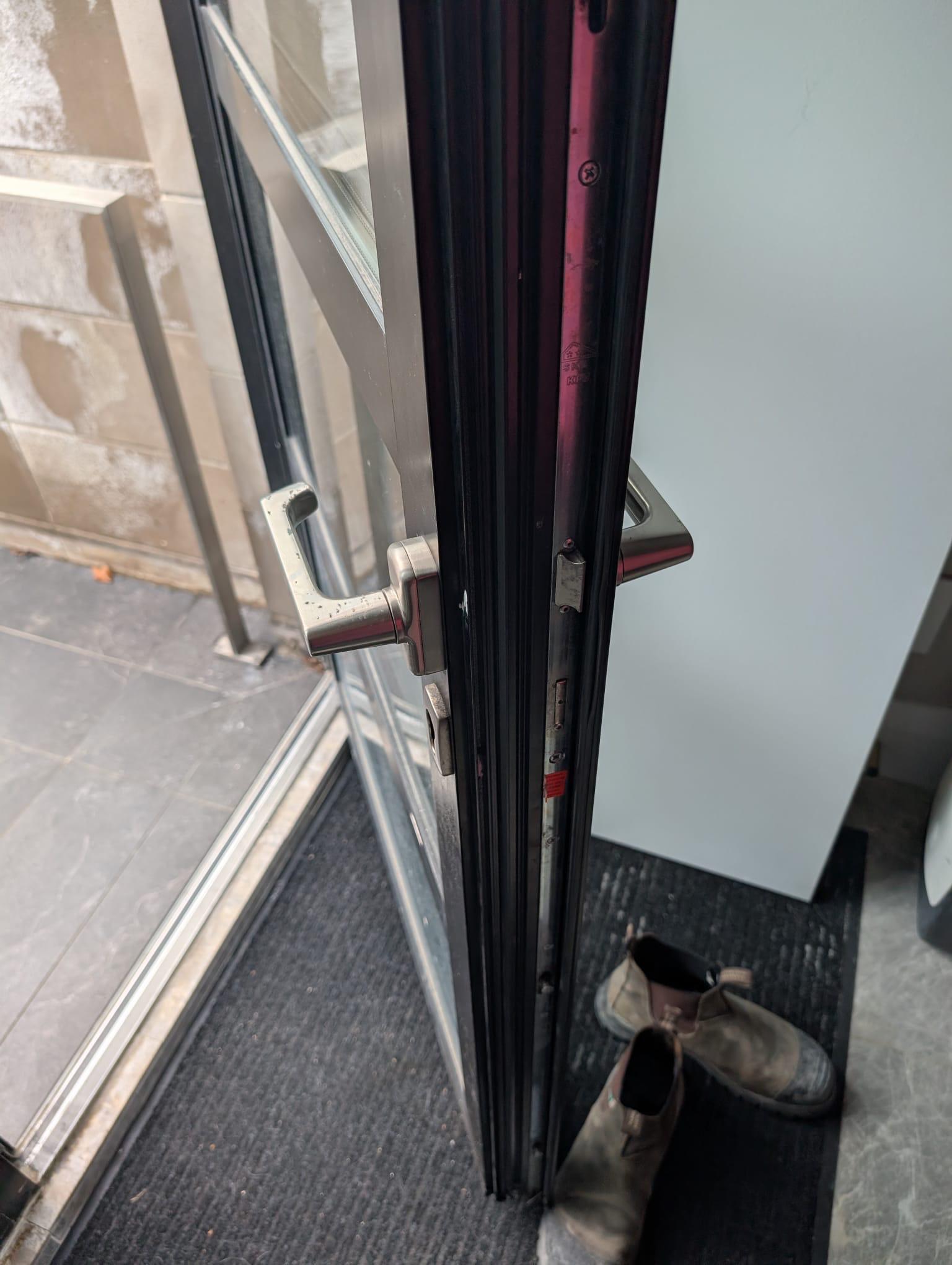
On commercial doors, cylinders are often mortise or rim cylinders in heavier hardware. Some storefront locks use cylinders that are specific to the door manufacturer. The technician should confirm compatibility before starting and explain which option suits each door. The lock change page covers replacement.
Rekeying on the employee's last day, or shortly after, closes the gap between the departure and the change. Where that is not possible, prioritize the openings that matter most: the main entrance, the rear door, and any room holding cash, stock or records.
Plan how new keys will reach staff who still need them. A shift that arrives to find the locks changed and no key waiting creates its own problem. Arrange for the manager to receive and issue the new keys, and record who received each one.
A simple key register reduces the work next time. Record each key's identifying number or mark, the doors it opens, who holds it and when it was issued. Ask departing staff to return keys against the register, and note any that are missing.
Keys stamped "do not duplicate" provide only limited protection, because many copying services disregard the marking. A restricted keyway, where blanks are controlled by an authorized supplier, gives the business more control over copies. The high-security lock upgrade page explains how restricted systems work.
Small businesses often have fewer doors but more informal key sharing. A key may have been lent to a cleaner, a contractor or a family member of the owner. Include those copies in the review. Clinics and pharmacies may have regulatory requirements for rooms holding records or controlled substances; follow those requirements when deciding which locks to change.
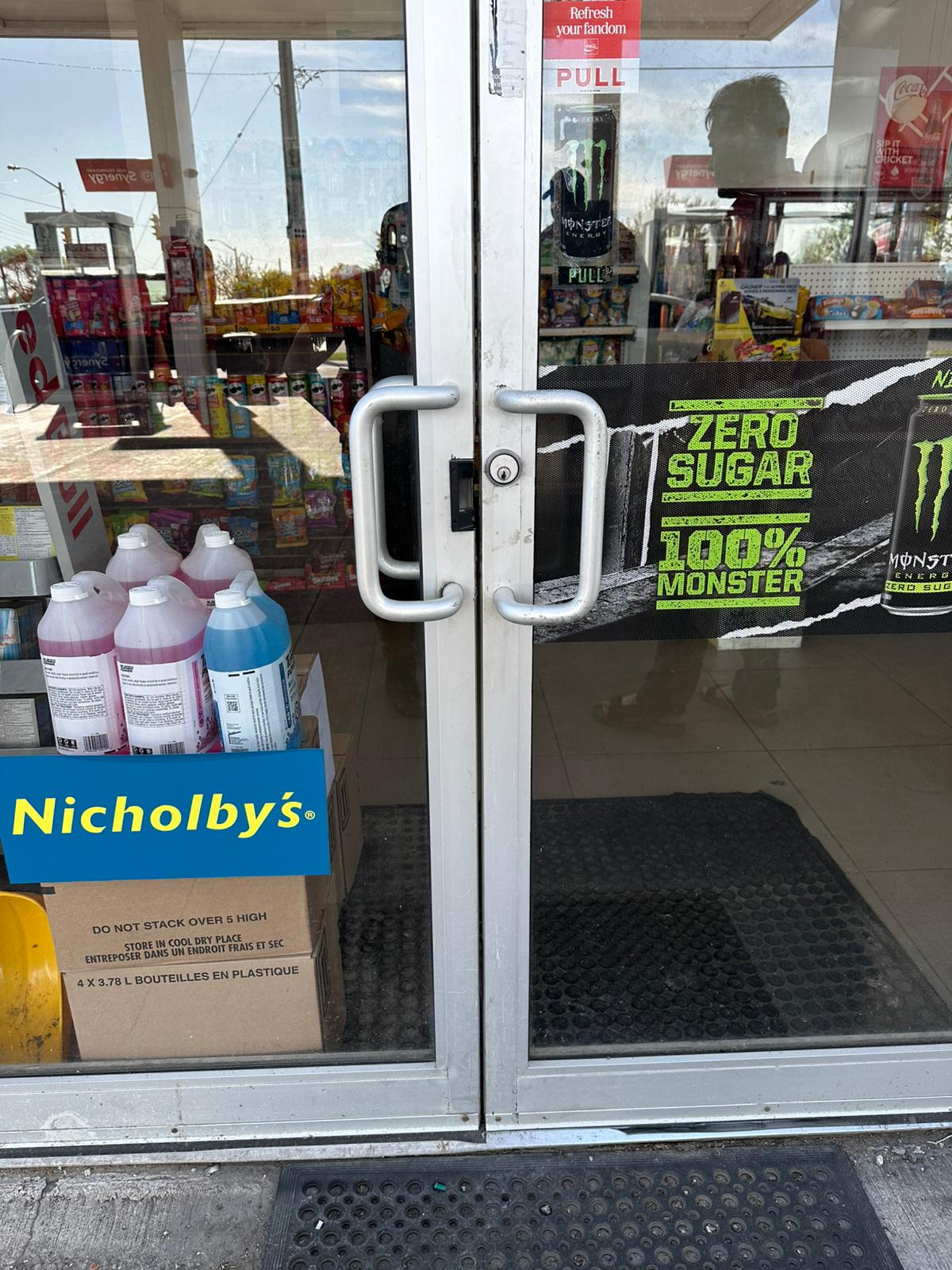
Restaurants frequently rely on a rear door for deliveries and staff entry. That door is often the one most exposed after a departure. Include it, and check that it latches reliably; the page on rear door security for shops and restaurants covers that opening.
If an employee was dismissed or left in circumstances that raise safety concerns, treat the lock change as part of a wider plan. Change alarm codes, remove system access and inform staff as appropriate. A locksmith handles the physical locks; human resources, legal advice and, where there is a threat, the police are separate matters.
Departures are not limited to permanent employees. Cleaning contractors change, seasonal staff finish, and trades who were given a key for a renovation move on to other jobs. Each of these can leave a key in circulation that nobody thinks to recover. Treat the end of any arrangement that involved a key the same way as a staff departure: check the key register, recover the key, and decide whether the affected locks need attention.
Where outside contractors need regular access, consider giving them a key that opens only the doors they need, or a separate keypad code that can be removed when the contract ends. That limits the effect of a lost or unreturned key and makes the next change smaller.
Ask for an invoice that lists each door that was rekeyed or had its cylinder replaced, the number of new keys cut and any door that was reviewed but left unchanged. That record supports the key register and shows which openings the former employee's key can no longer operate. If some cylinders could not be rekeyed during the visit, the invoice should say so and explain what remains to be done.
When you call, describe the number of doors, the type of hardware, whether a master-key system is in use and which keys are missing. Photographs of the cylinders help identify the hardware. Our posted hours appear below, and we do not promise a fixed arrival time. The page on rekeying after stolen keys covers a similar access review when keys are known to have been taken.
Keep reading
Not necessarily. If the key was returned, there is no reason to believe it was copied, and the person held no other credentials, many businesses simply update their key record. The risk rises if the key could easily have been duplicated, if the person worked unsupervised with the key for a long time, or if the departure was difficult. Consider what the key opened and what is behind those doors. The decision is proportionate: a key to a supply closet is different from a key to the cash office or the whole building.
Not necessarily. If the key was returned, there is no reason to believe it was copied, and the person held no other credentials, many businesses simply update their key record. The risk rises if the key could easily have been duplicated, if the person worked unsupervised with the key for a long time, or if the departure was difficult. Consider what the key opened and what is behind those doors. The decision is proportionate: a key to a supply closet is different from a key to the cash office or the whole building.
Every lock the departing employee's key operated. That may be one door or many, depending on the key's level in the system. List the openings before the visit. If the business uses a master-key system and the missing key was a master, the review covers every cylinder that key controls. The technician can inspect the cylinders and help confirm which ones the key fits if your records are incomplete. Rekeying only the front door while the rear door still accepts the old key leaves the gap open.
Usually, if the cylinders are compatible and in good condition. Rekeying changes the internal pins so a new key operates the lock and the old one does not, while the hardware stays on the door. Replacement is appropriate when a cylinder is worn, damaged or unsuitable, or when the business wants to move to a restricted keyway with controlled copies. The technician should explain which option applies to each door before starting, so you are not replacing sound hardware unnecessarily.
Those need separate action. Change alarm codes through the system or the monitoring company. Deactivate access cards and fobs through the access-control provider or building management. Remove the person from any keypad or smart-lock user lists. Rekeying covers the mechanical keys only. A complete change of access after a departure usually involves several of these steps, and it is worth listing them together so none is missed.
That depends on how the business wants access organized. In a simple arrangement, all staff share one key for the main doors. In a master-key system, each person's key opens only the doors they need, while managers hold keys that open more. A departure is a sensible time to review whether the current arrangement still suits the business. The technician can explain what the existing cylinders support and what changes would require new hardware.
They offer limited protection. The stamp is a request rather than a technical barrier, and many copying services will cut the key regardless. A restricted keyway uses key blanks that are controlled by an authorized supplier, so copies can only be made with the business's authorization. That gives much stronger control over who holds keys. Moving to a restricted keyway normally means replacing cylinders, and the cost should be weighed against the value of that control.
Check your lease first. Many commercial leases require the landlord's consent for lock changes or require a key to be provided to the landlord. In buildings with a master-key system, the unit's cylinder may need to stay within that system, and the building's supplier may need to do the work. Contact the landlord or property manager, explain the departure, and ask how they want the change handled. Keep a record of the approval and the work done.
Issue new keys only to people who need them and record each one in a key register with the date and the recipient. Keep spare keys in a locked key cabinet or safe rather than a desk drawer. Limit how many spares exist. When staff leave in future, collect their keys against the register. A small amount of record-keeping makes the next departure much easier to handle and helps the business know, at any time, who can open its doors.
Describe the door, hardware and service address. Contact GTA Lockman Mobile Locksmith Services to confirm the scope and scheduling for your location.